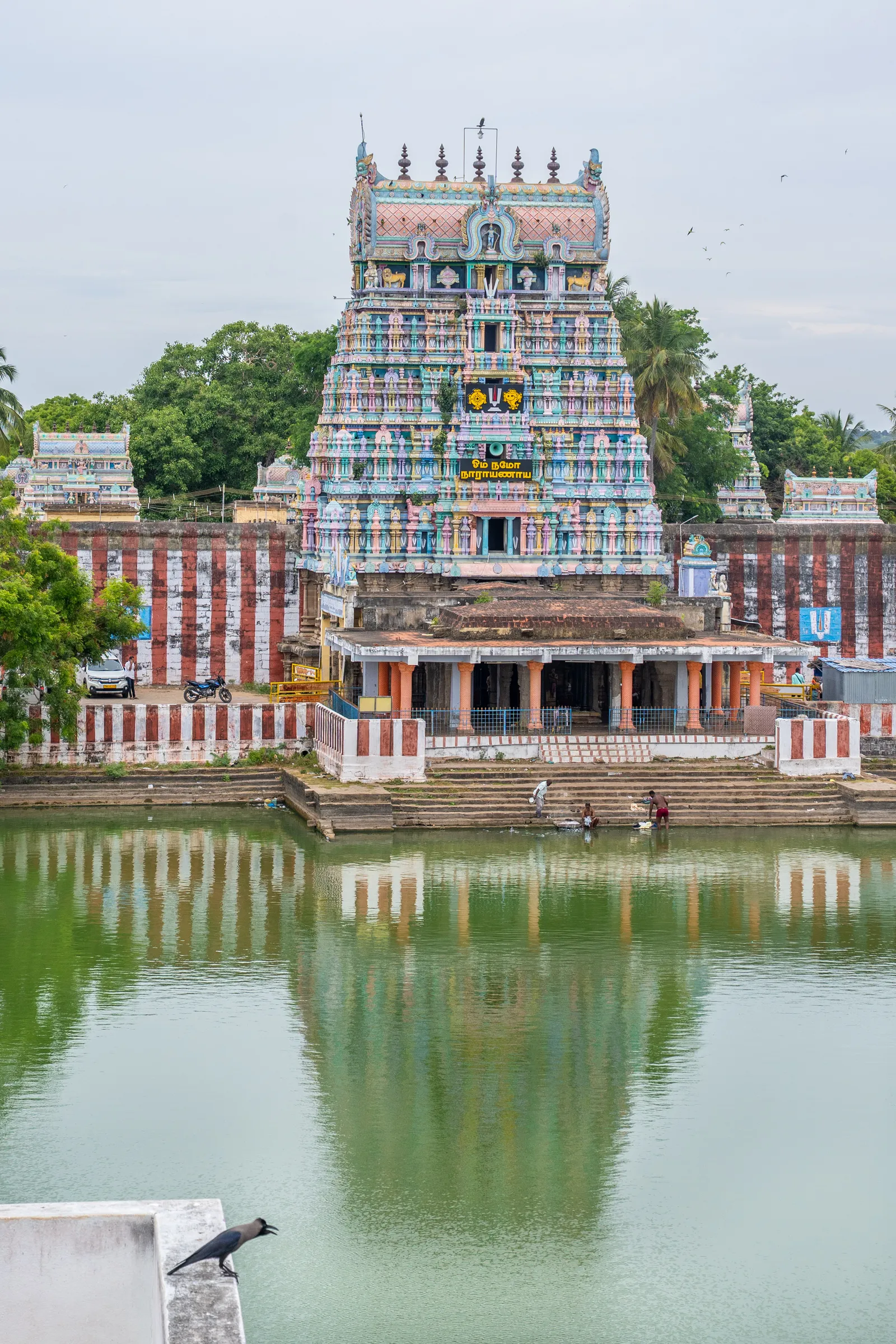
Adi Jaganatha Perumal Temple, photograph
← Pandya Nadu
Entry 064

Adi Jaganatha Perumal Temple

Thiruppullani · Ramanathapuram · Pandya, Chola and Sethupathi

A Divya Desam at Thiruppullani near Ramanathapuram, closely bound to the Ramayana, where Vibishana made his surrender to Rama and where the Lord reposed on darba grass before crossing to Lanka.

The Adi Jaganatha Perumal temple at Thiruppullani is a Divya Desam steeped in the Ramayana, where the surrender of Vibishana and Rama’s repose on the darba grass are told in stone.

The photographs

Plates · 5

Adi Jaganatha Perumal Temple, photograph
© Sai Sanjay Prasath · All rights reserved
Adi Jaganatha Perumal Temple, photograph
© Sai Sanjay Prasath · All rights reserved
Adi Jaganatha Perumal Temple, photograph
© Sai Sanjay Prasath · All rights reserved
Adi Jaganatha Perumal Temple, photograph
© Sai Sanjay Prasath · All rights reserved
01

Architectural

structure & vocabulary

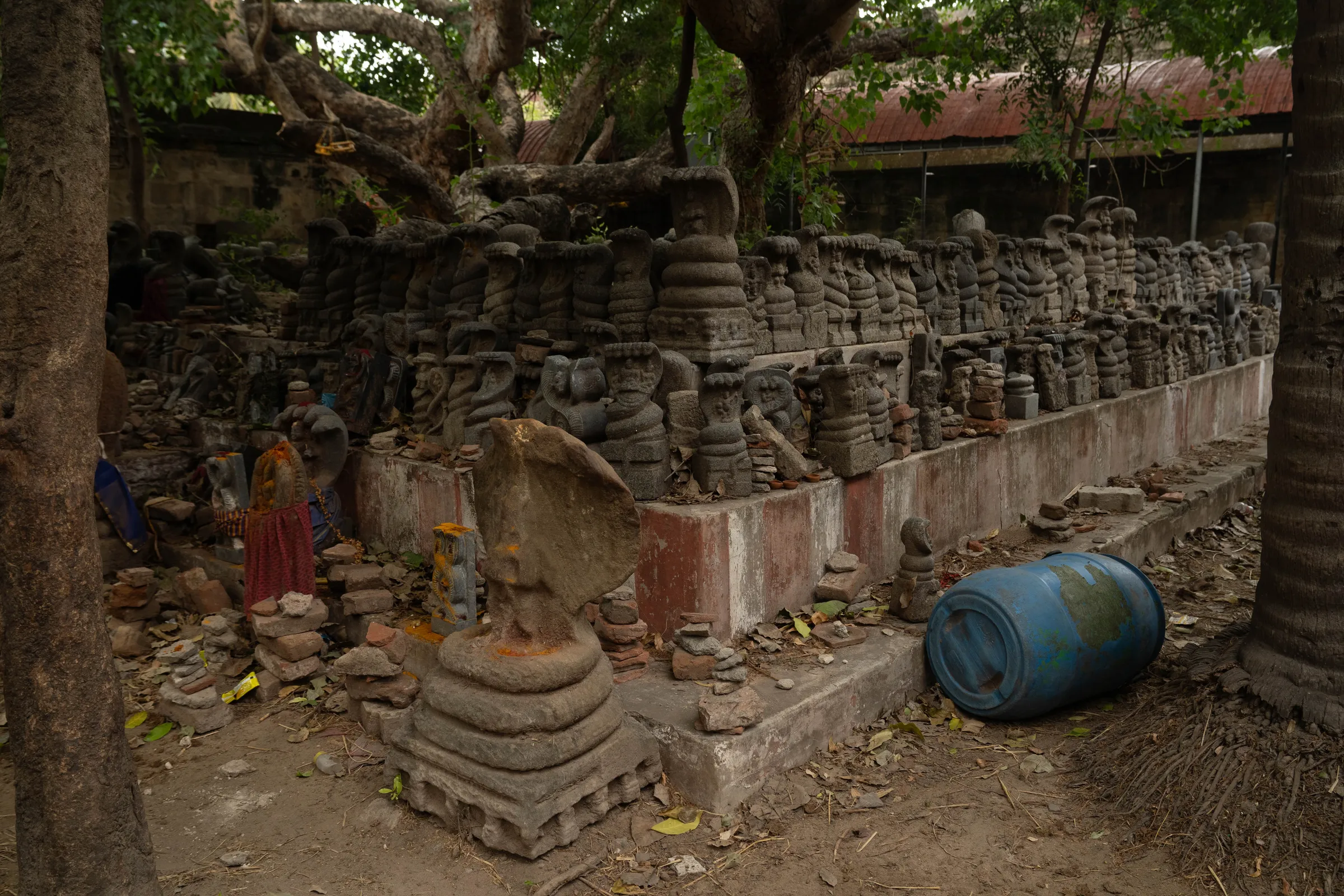
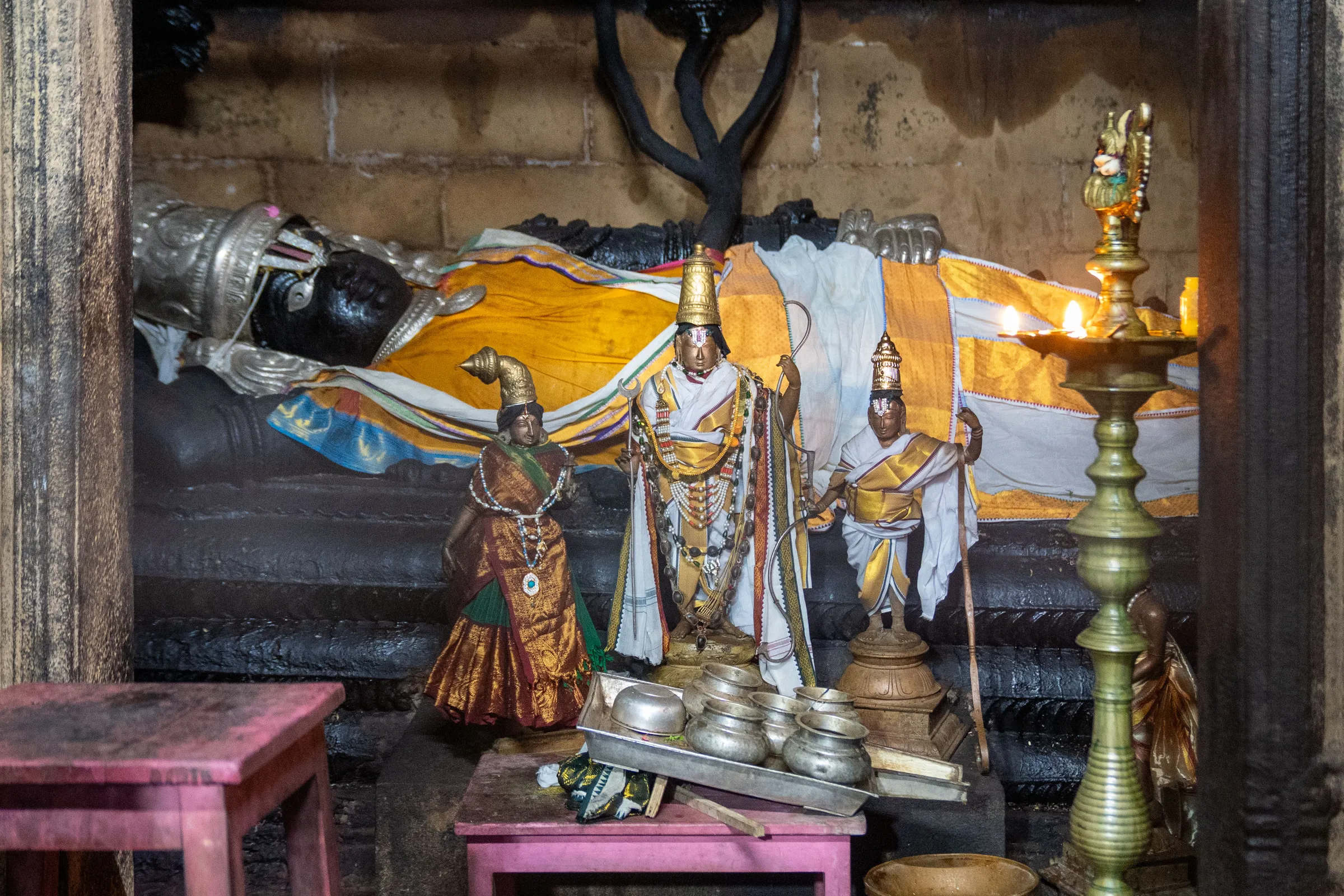
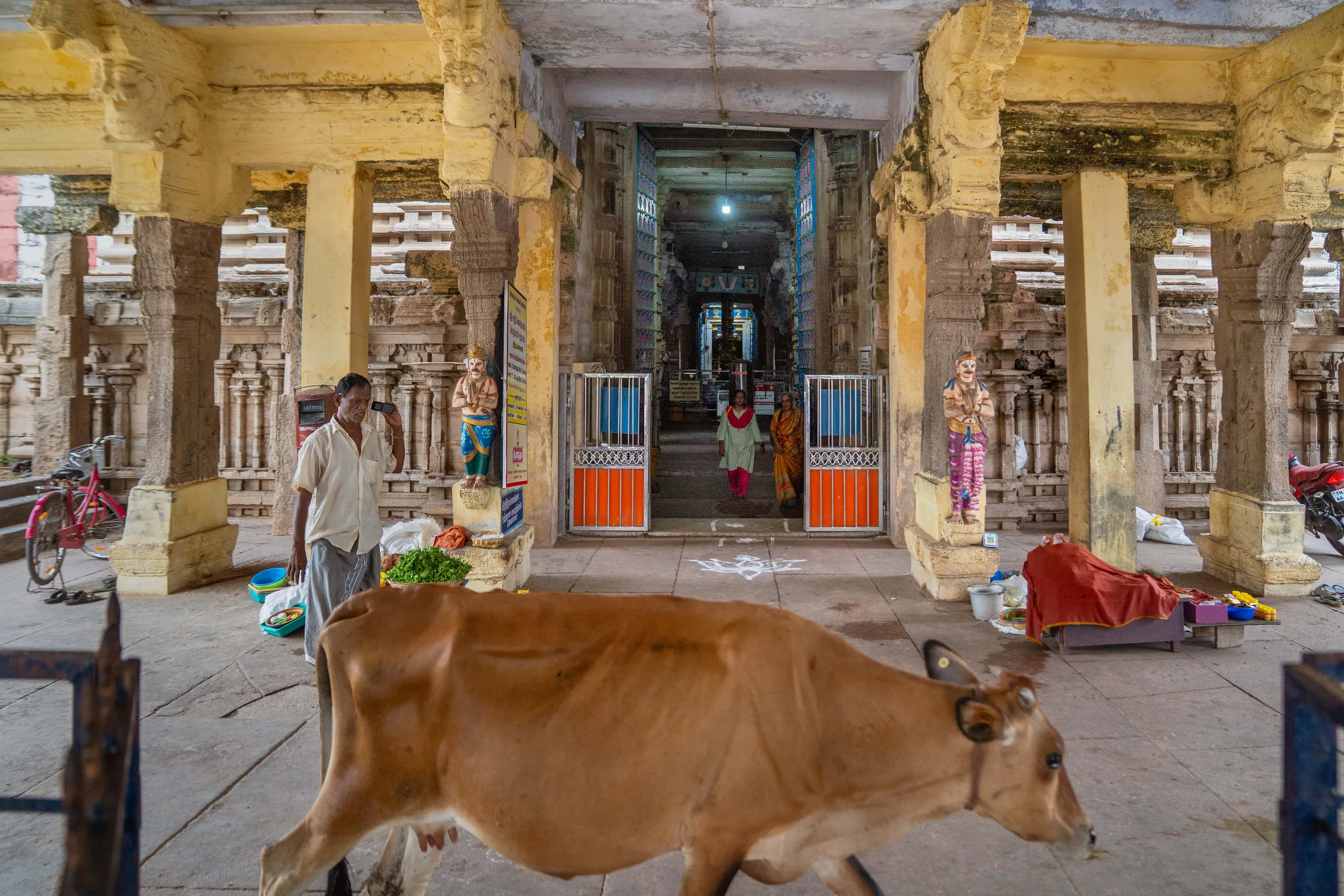
The temple is not large and all its sanctums can be covered in under an hour. The Thayar, Padmasani, has a separate sanctum. The main sanctum holds Adi Jagannatha Perumal, seated with his consorts on either side; the festival deity is Kalyana Jagannatha Perumal. A corridor around the main shrines passes a small sanctum for Andal and then the sanctum of Dharbasayanam Ramar, where Sri Rama lies on a bed of sacred darba grass with Lakshmana as Adi Sesha forming the bed, and a sculpture of Vibishana stands outside. The sthala vriksha is an imposing peepal tree. Re-entering, one finds a sanctum for Pattabhi Rama with Sita, Lakshmana and Hanuman.

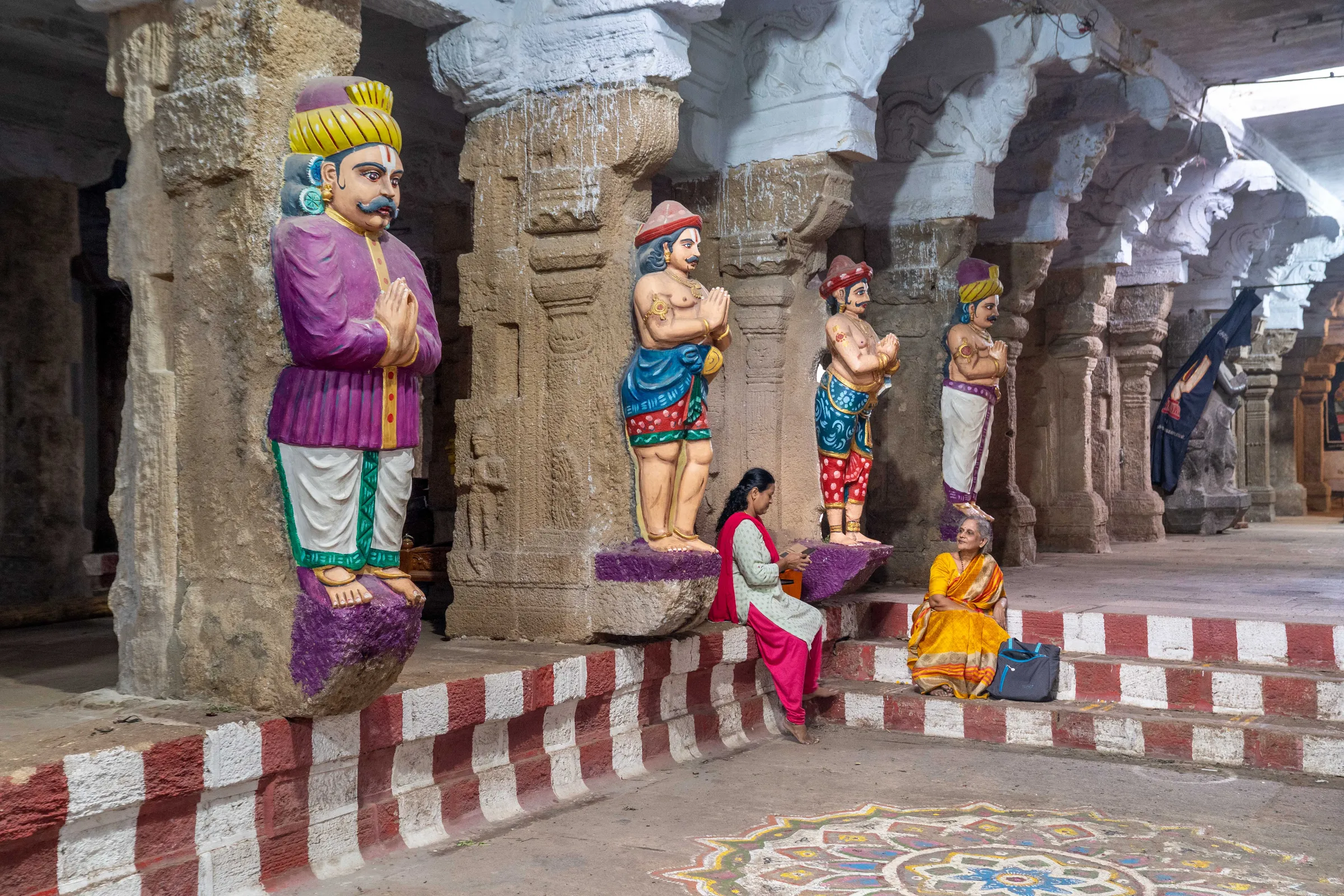
Dharbasayana Ramar, under the Pushpaka Vimanam, reclines, with majestic, heavily-moustached dwarapalas at the sanctum door. Rama appears as the Lord of the Milky Ocean: from his navel rise three lotus stems, the central lotus bearing Brahma flanked by Sun and Moon. Sculpted on the wall are Madhu-Kaitabha, Lakshmi, Kausthubam and Sundopasundas, with Garuda and Markanda by the crown, and at his feet Sukha, Sarana and Hanuman. Vibishana stands with a mace at the southern side of the ardha mandapa, the Emperor of the Ocean and his wives surrendering on the north. On the outer mandapa is a small shrine to Santhana Gopalan, the Nagar Mandapa Santhana Krishna Mandapa, where Krishna sits on Adisesha resting on a tortoise, ringed by eight elephants and eight serpents.

02

Archaeological

dated & cited

The temple is one of the oldest in the region, on par with the Ramanathaswamy temple at Rameswaram. The present temple is believed to have been built in the sixth or seventh century, with later additions and renovations by the Pandyas, Cholas and the Sethupathi kings of Ramanathapuram (inferred). It finds mention in the Puranas and in the Tamil Akananooru, is sung by Thirumangai Alvar in his pasurams, and is referred to in the Kamba Ramayana. Inscriptions of the Pandya period in the temple record visits of Arab traders who dealt in pearls and pepper.

Dating
Begun6th or 7th century CE · inferred

The present temple is believed to date to the sixth or seventh century, with later additions and renovations.

03

Mythological

as transmitted

Thiruppullani is closely tied to the Ramayana. Here Vibishana made his saranagati, his surrender, to Lord Rama. On Vibishana's counsel, Rama reposed on the darba grass for three days and asked the Samudra Raja, Emperor of the Oceans, to give way to Lanka. When the sea-god refused and angered him, Rama took up his bow and warned that he would dry up the waters, at which the frightened Samudra Raja and his wives rushed to surrender. Because of the surrender made here the place is called Sharanagati Kshetram, and because the Lord reposed on darba grass he is named Dharbasayanam Ramar.

Rama is said to have worshipped Adi Jagannatha Perumal at this Divya Desam before setting out for Lanka, and the Lord gave him a bow that he used in the final fight with Ravana. It is believed that childless couples will be blessed with a child if they worship the deity with an offering of paalpayasam, sweet milk porridge; this delicacy was given to King Dasaratha, who prayed here for progeny and was answered with the birth of Rama and his brothers. About 3 km away is the Sethukarai seashore, also called Adhisethu or Ratnaakaram, held to be where Rama built the bridge to Lanka, the Nala Sethu named for Nala the monkey-architect.

Register interest in prints Buy the book
Improve this entry

This is an open, reviewed record. If you have spotted an error or have something to add — a correction, a date, a source, a name in another script — propose it. Every change is reviewed before it joins the record.

“Suggest an edit” opens this entry on GitHub and turns your change into a pull request. “Share feedback” opens a short form. Both go through review.