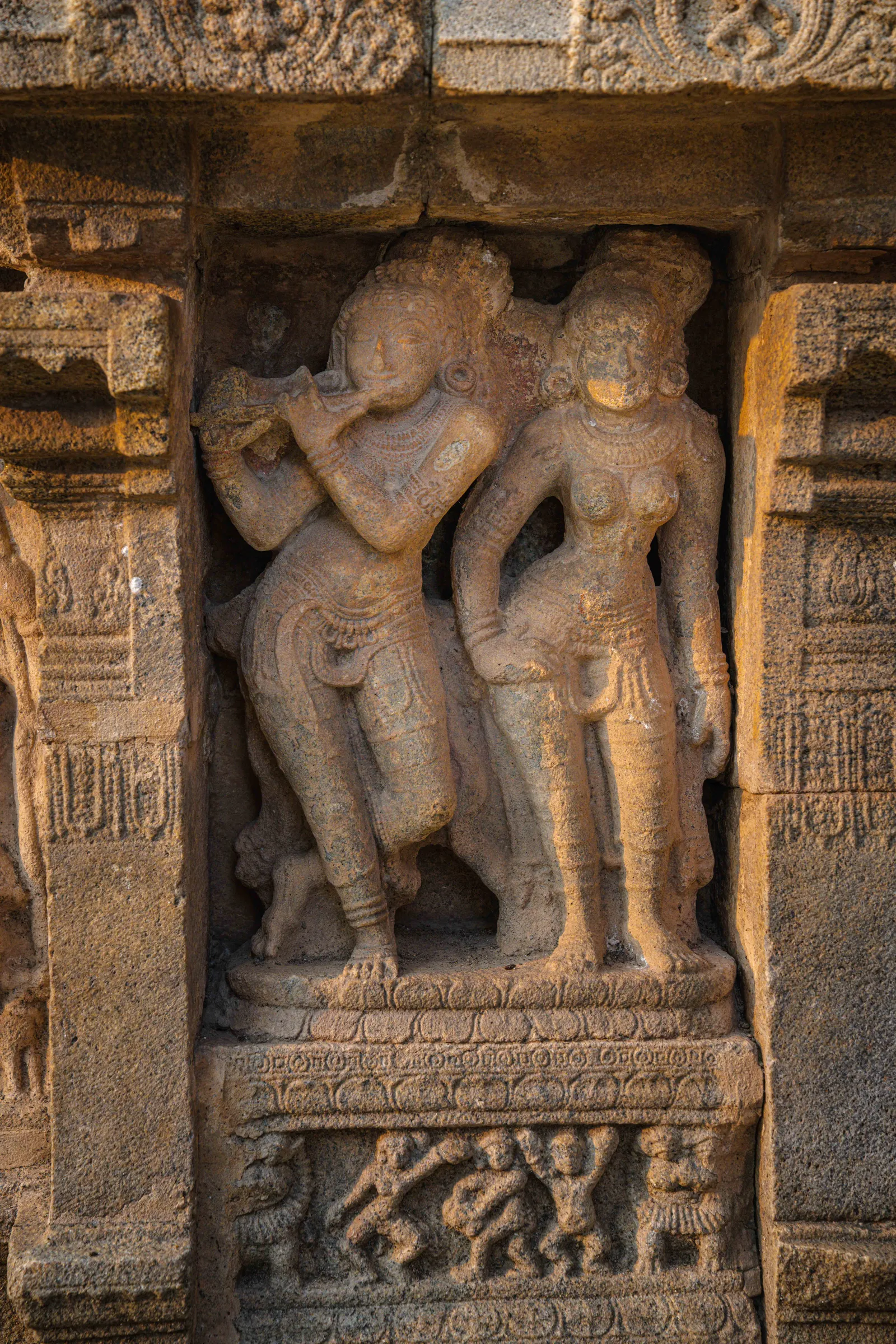
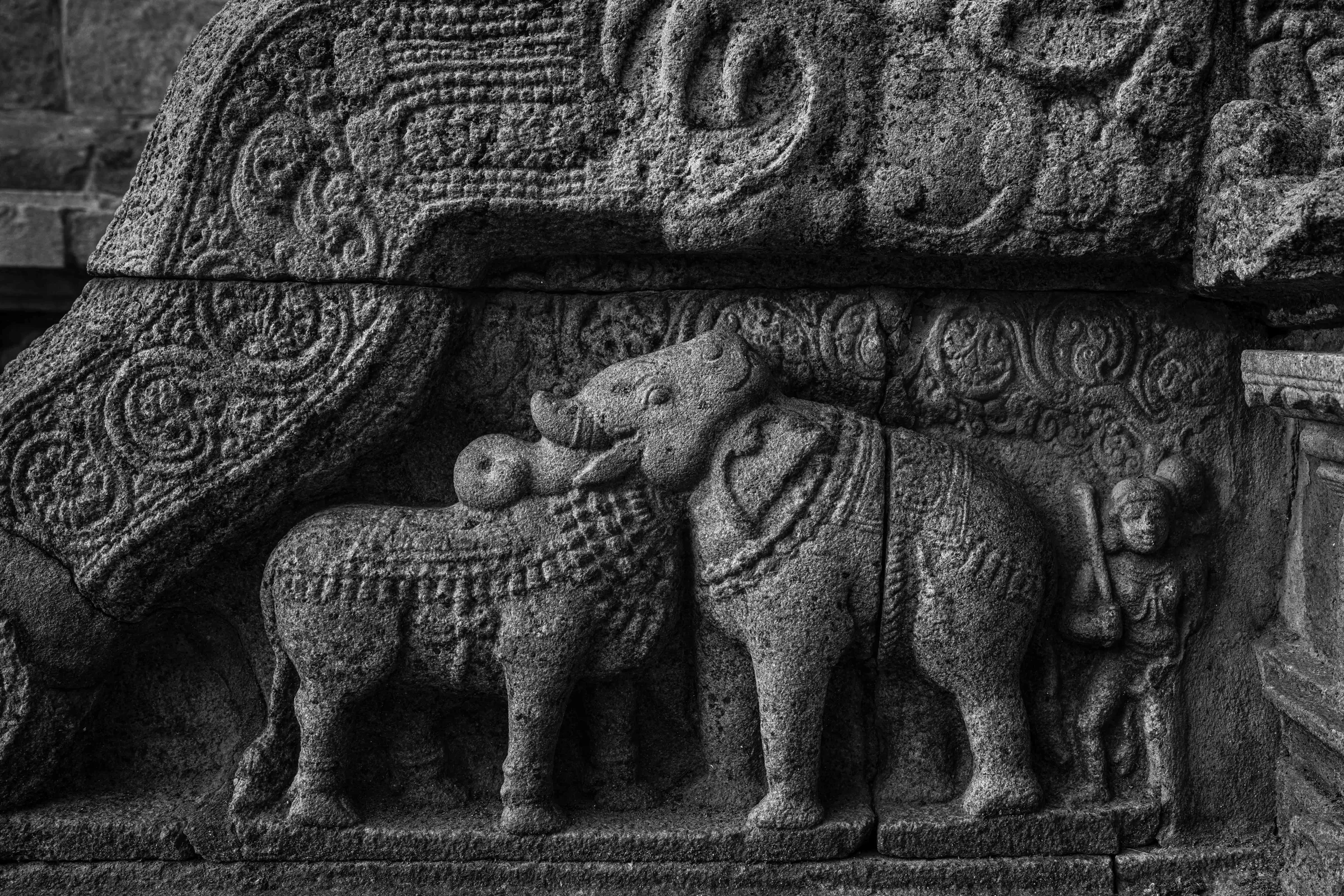
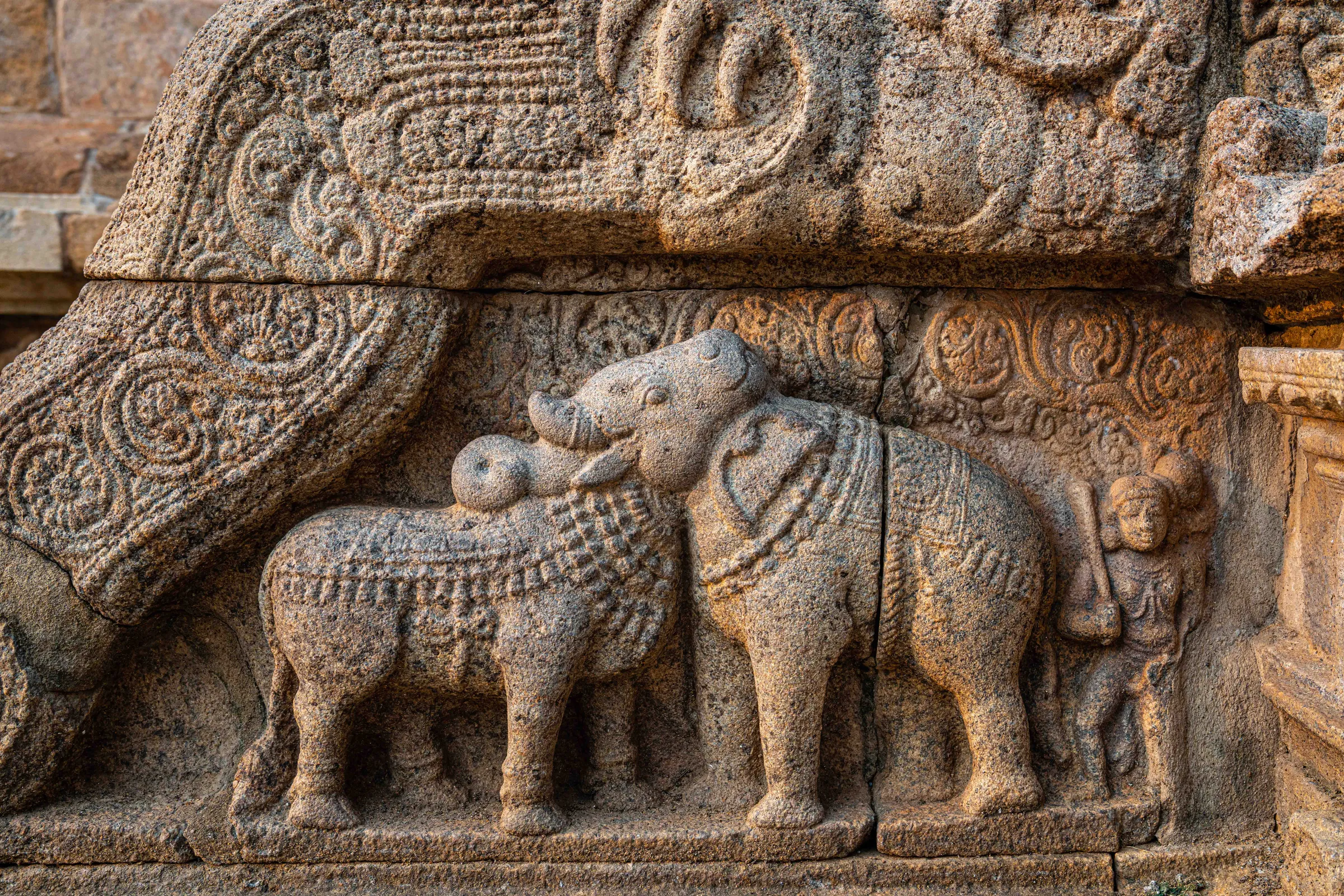
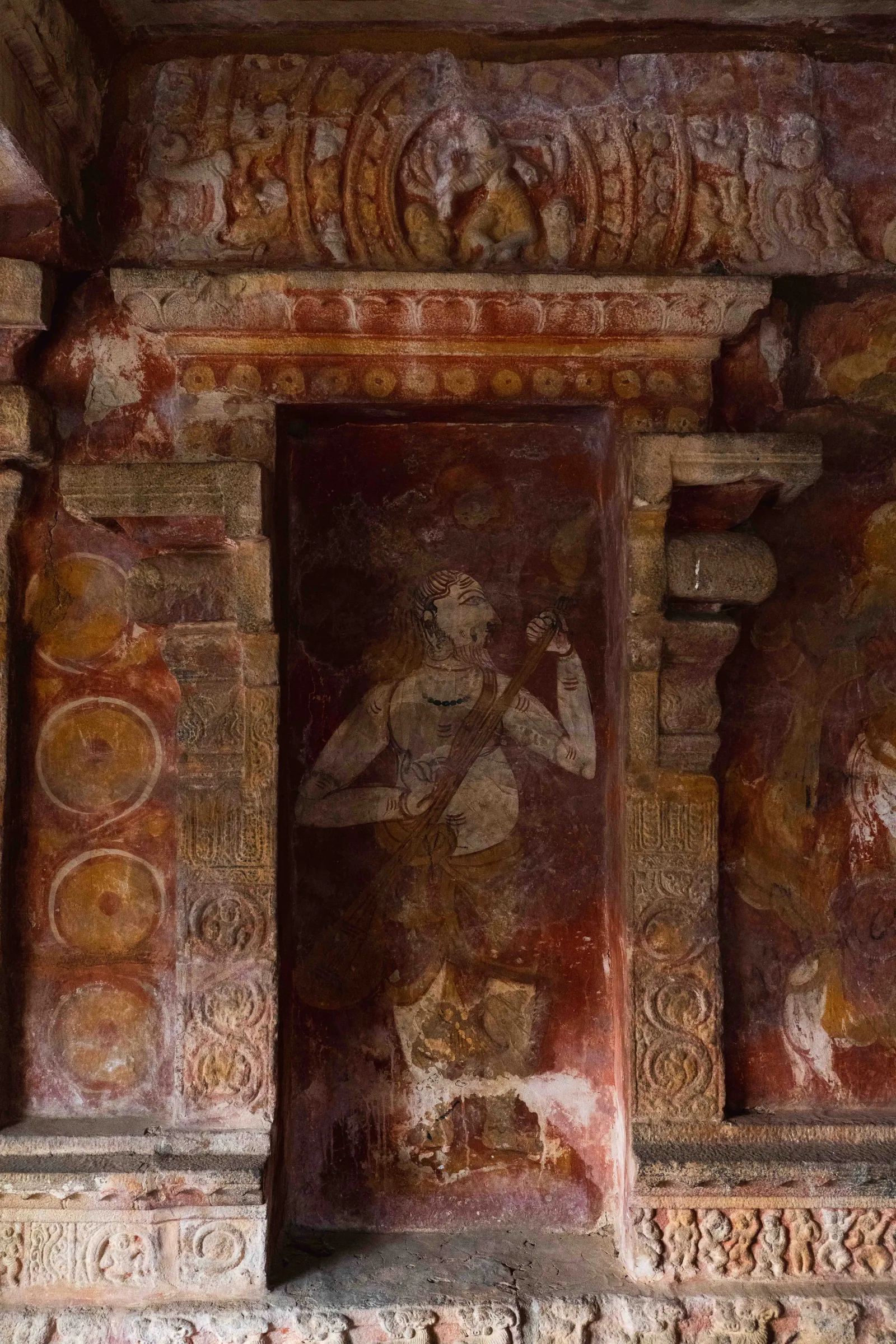
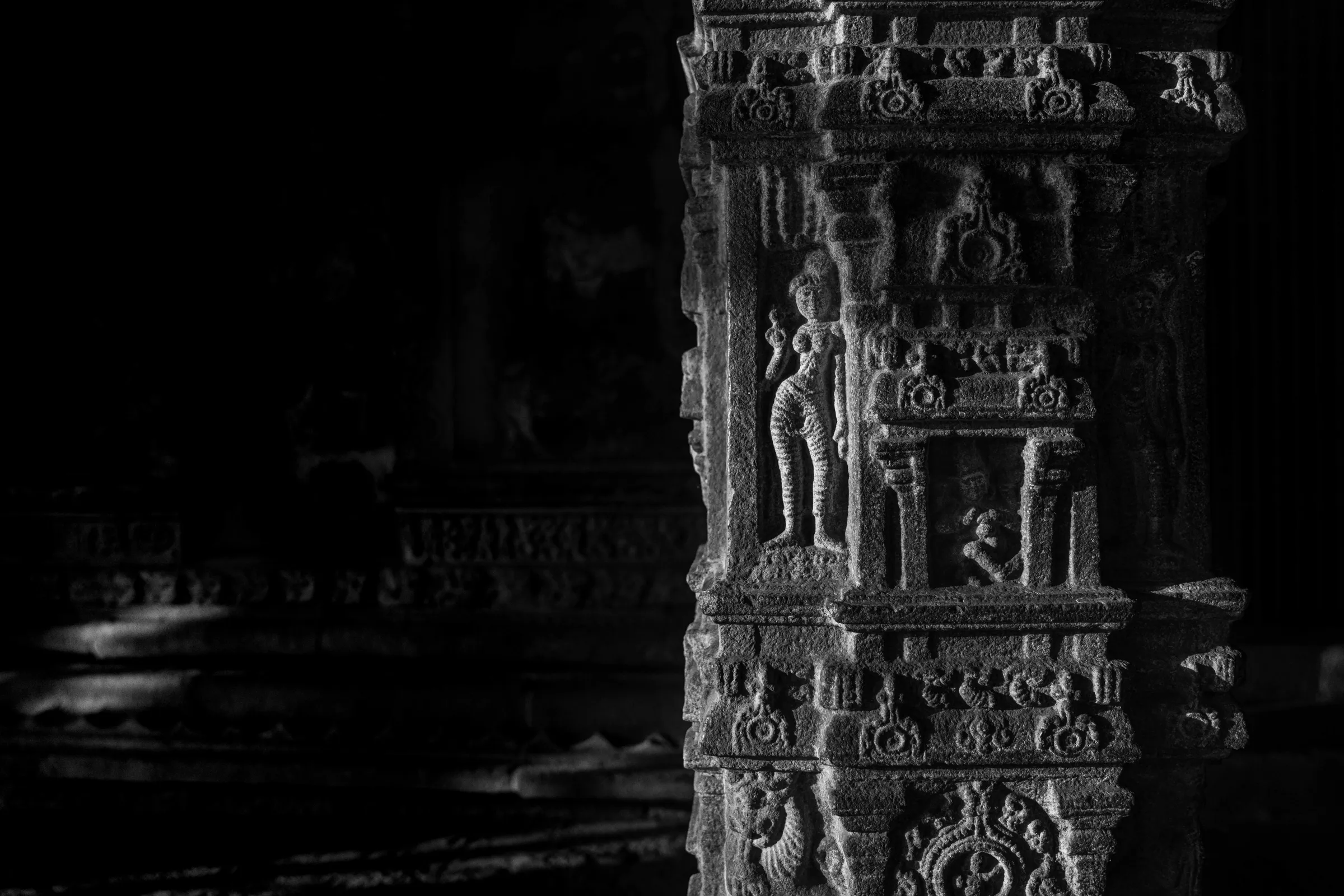
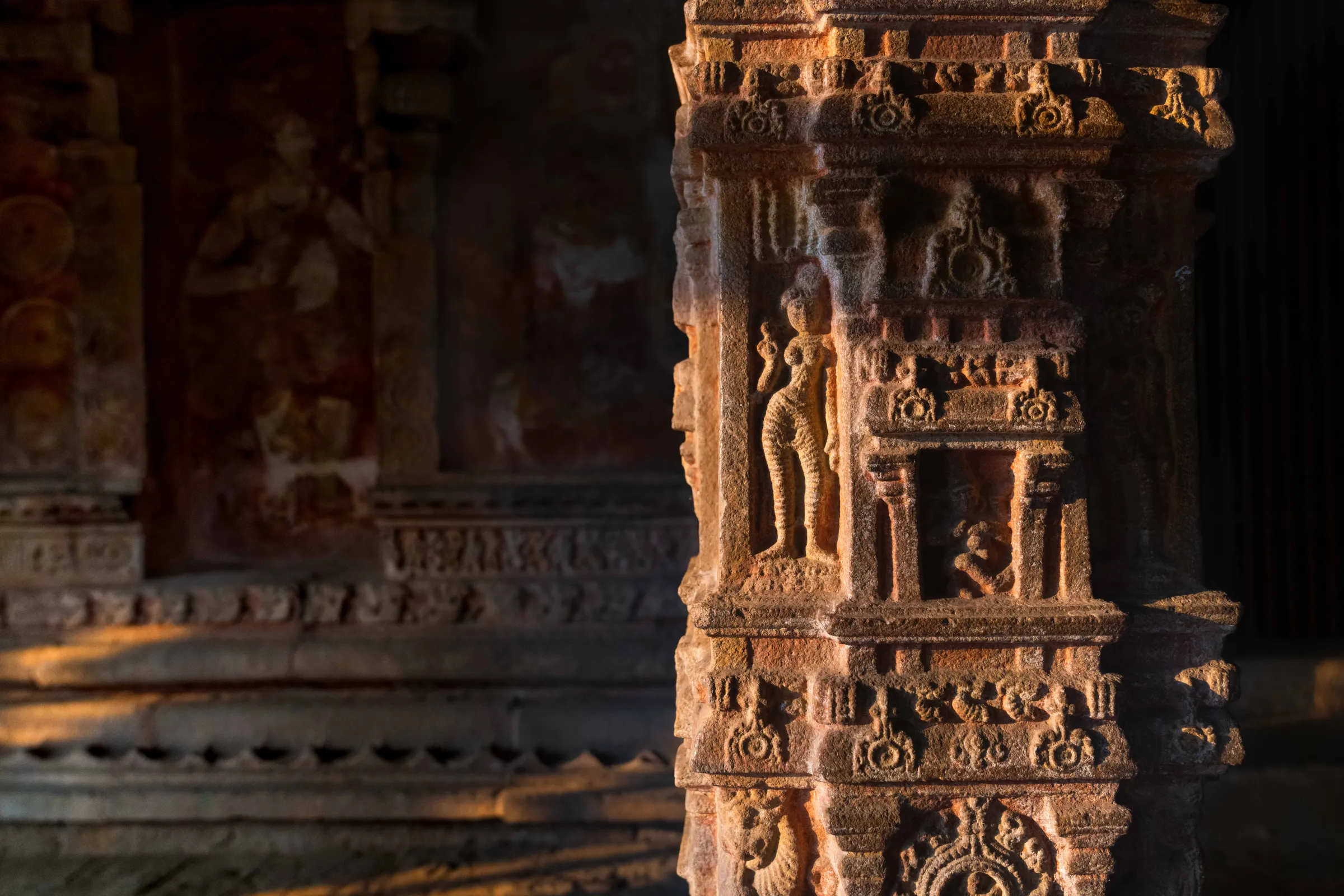
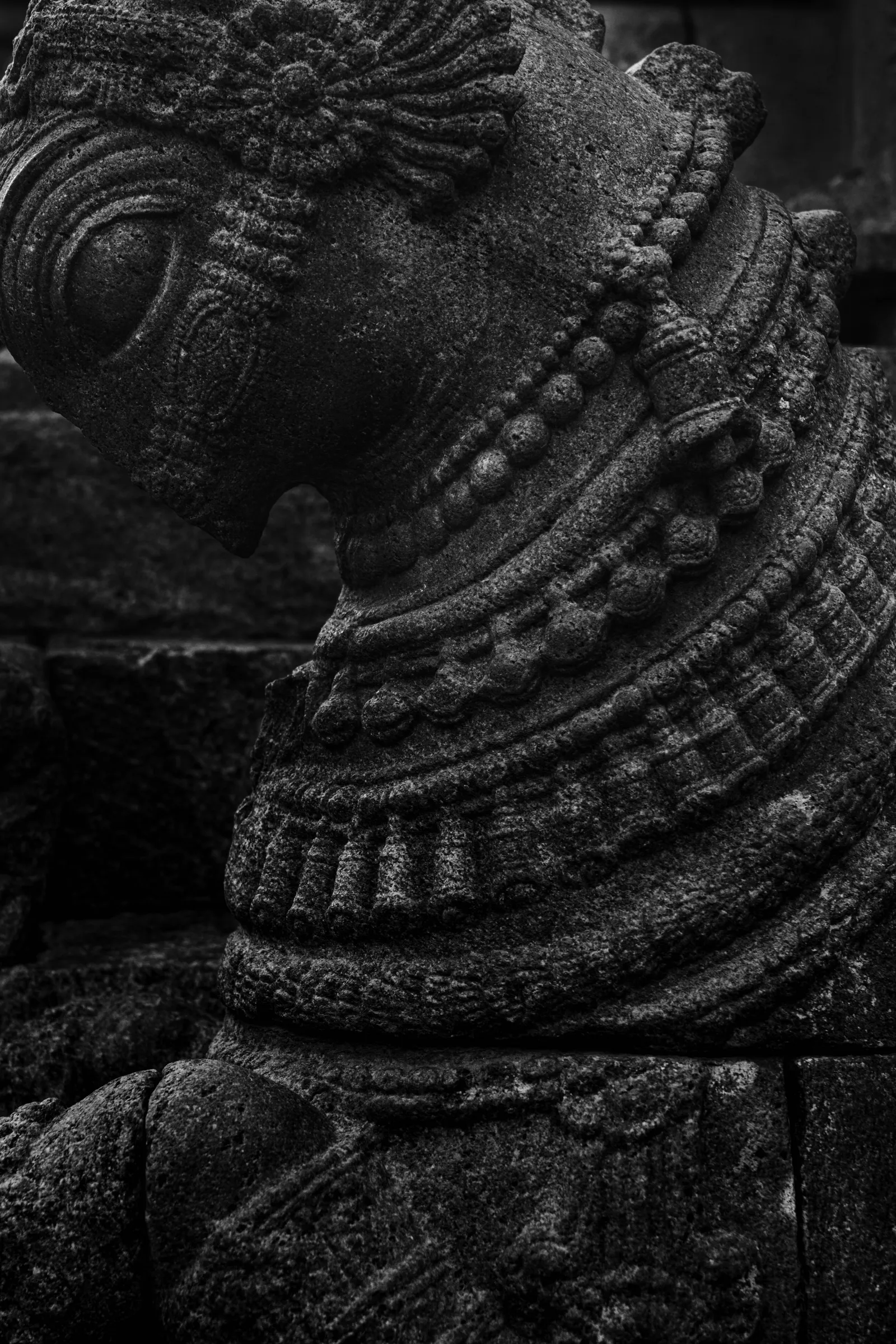
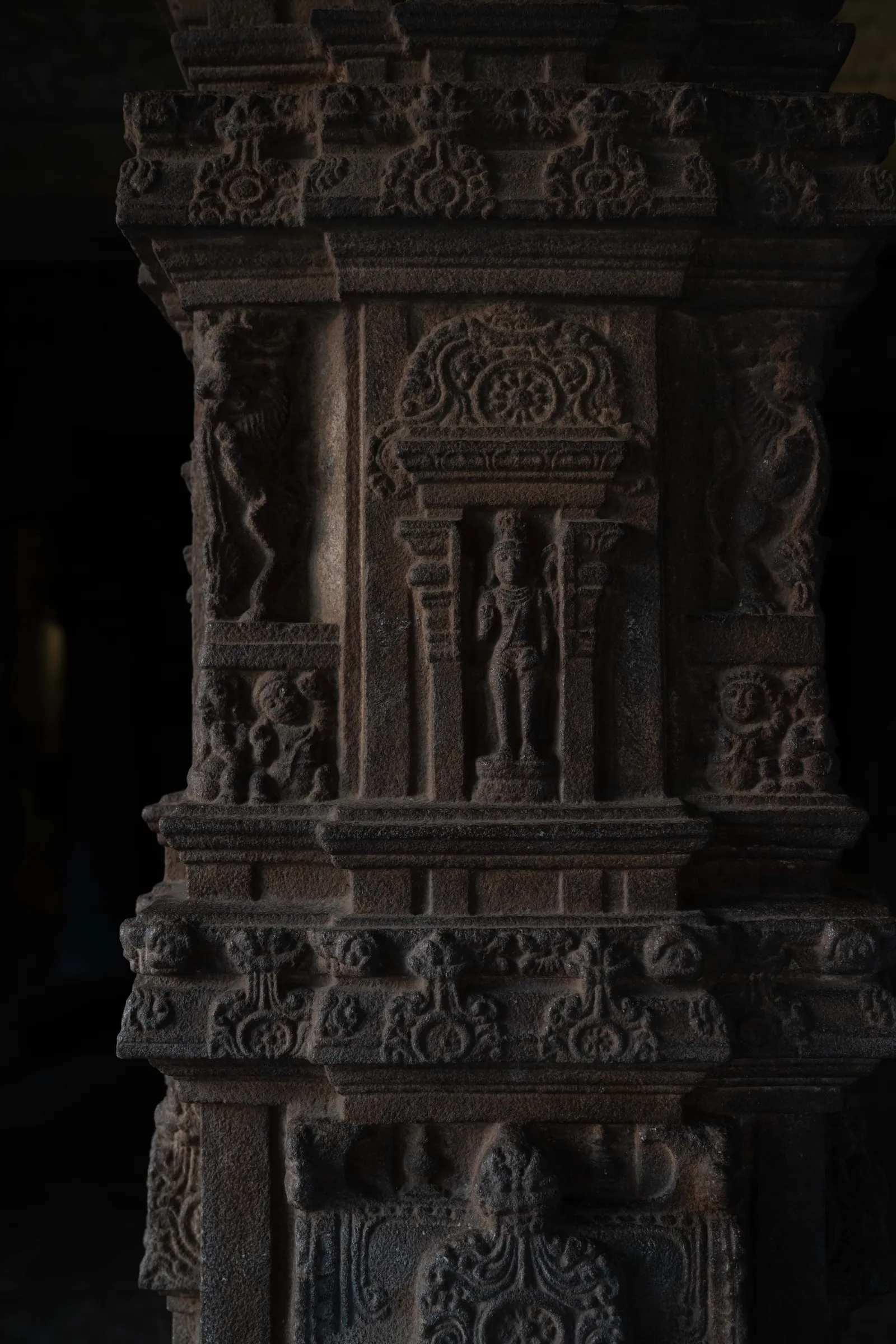
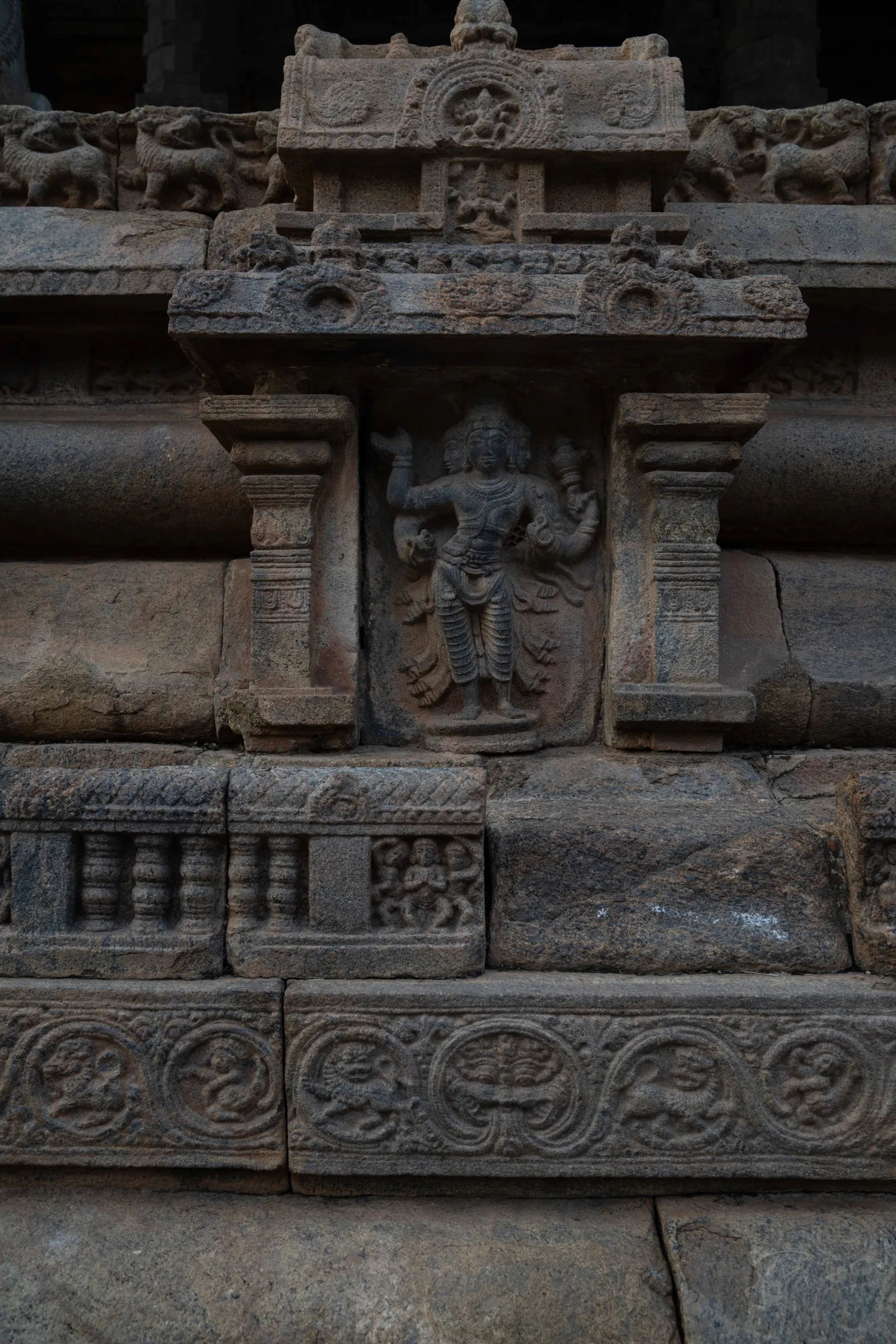
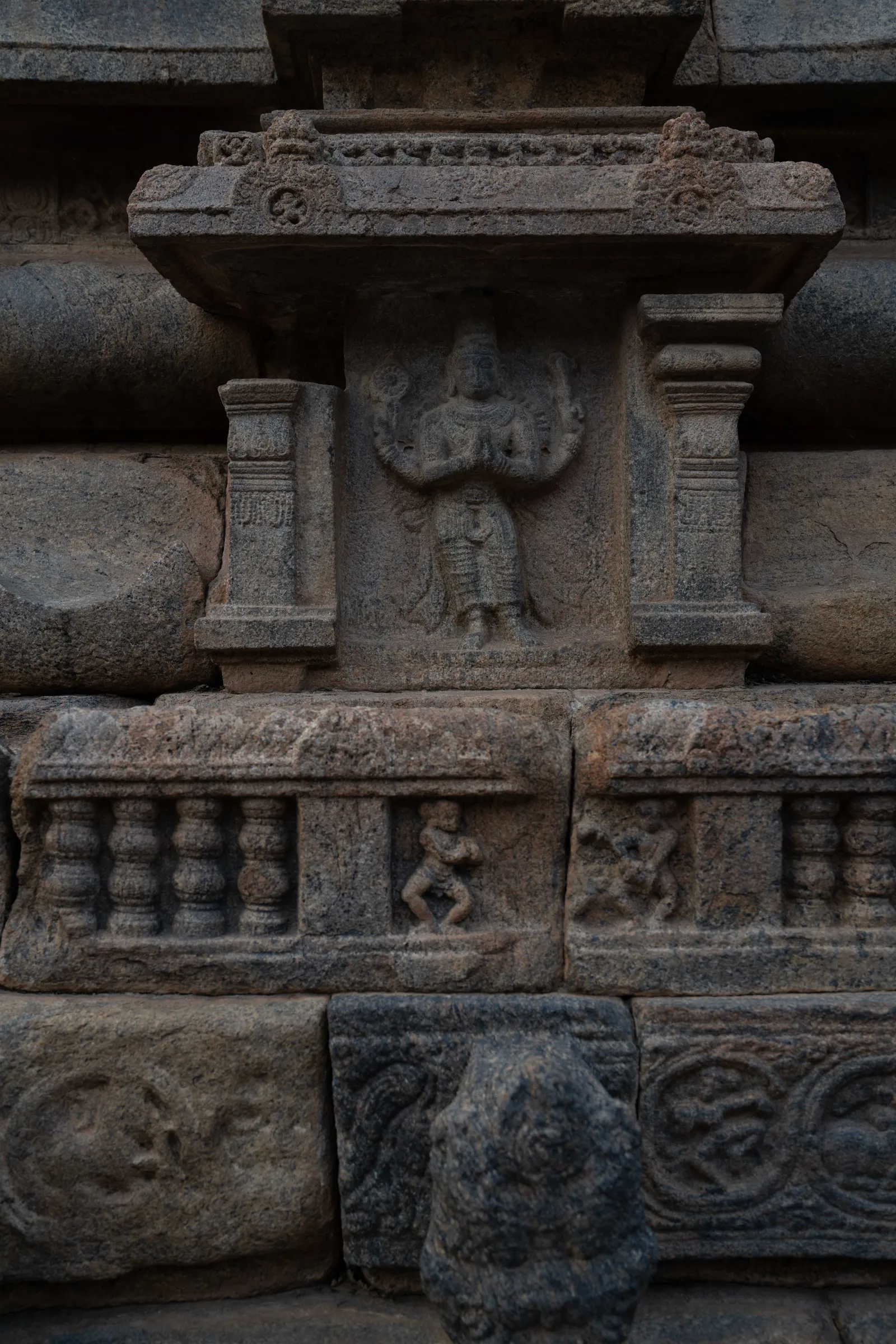
A Śiva temple at Darasuram built by Rāja Rāja II in the late 12th century, one of the three Great Living Chōḷa Temples on the UNESCO list, conceived not for scale but as a jewel box of miniature sculpture.
01 Architectural
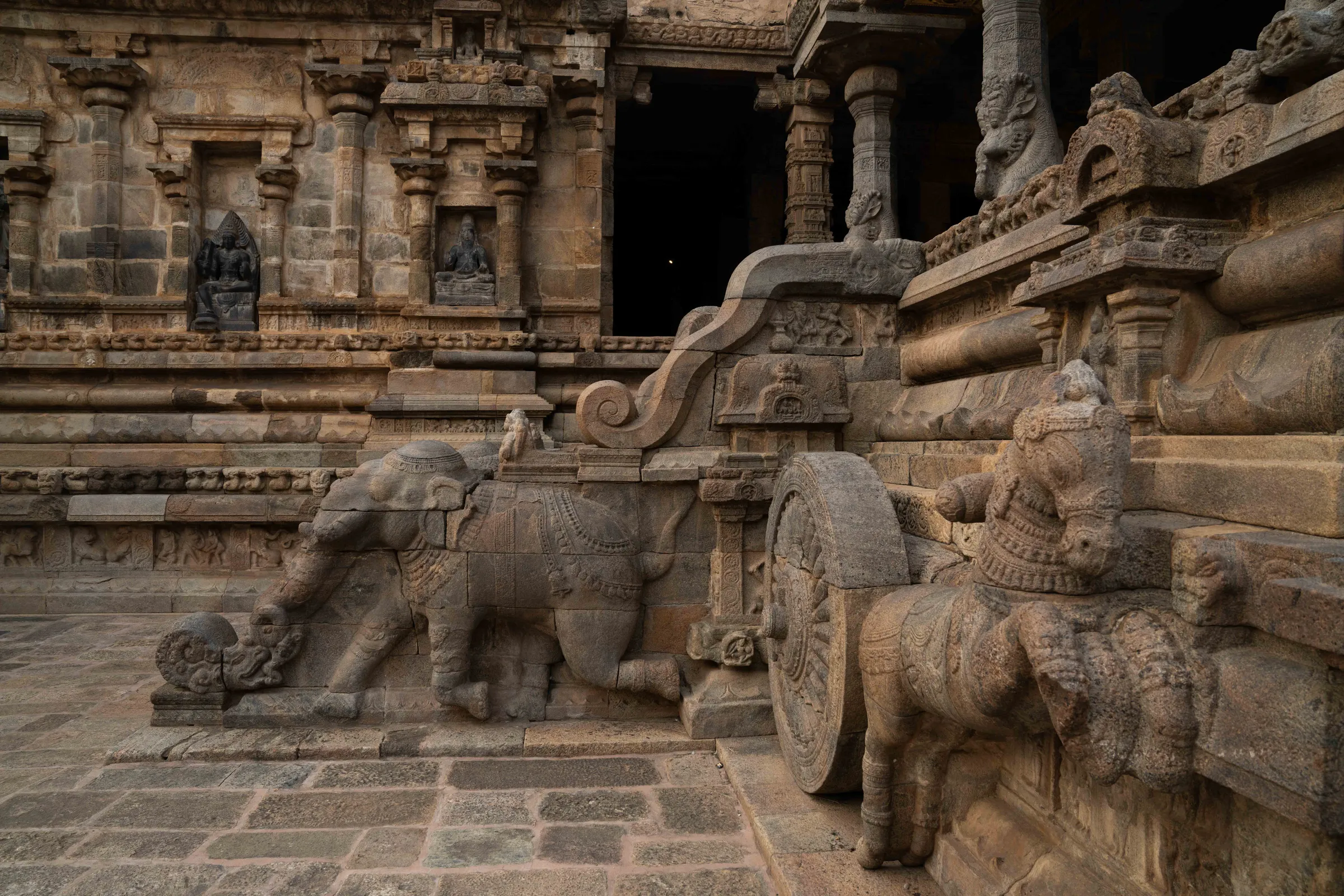
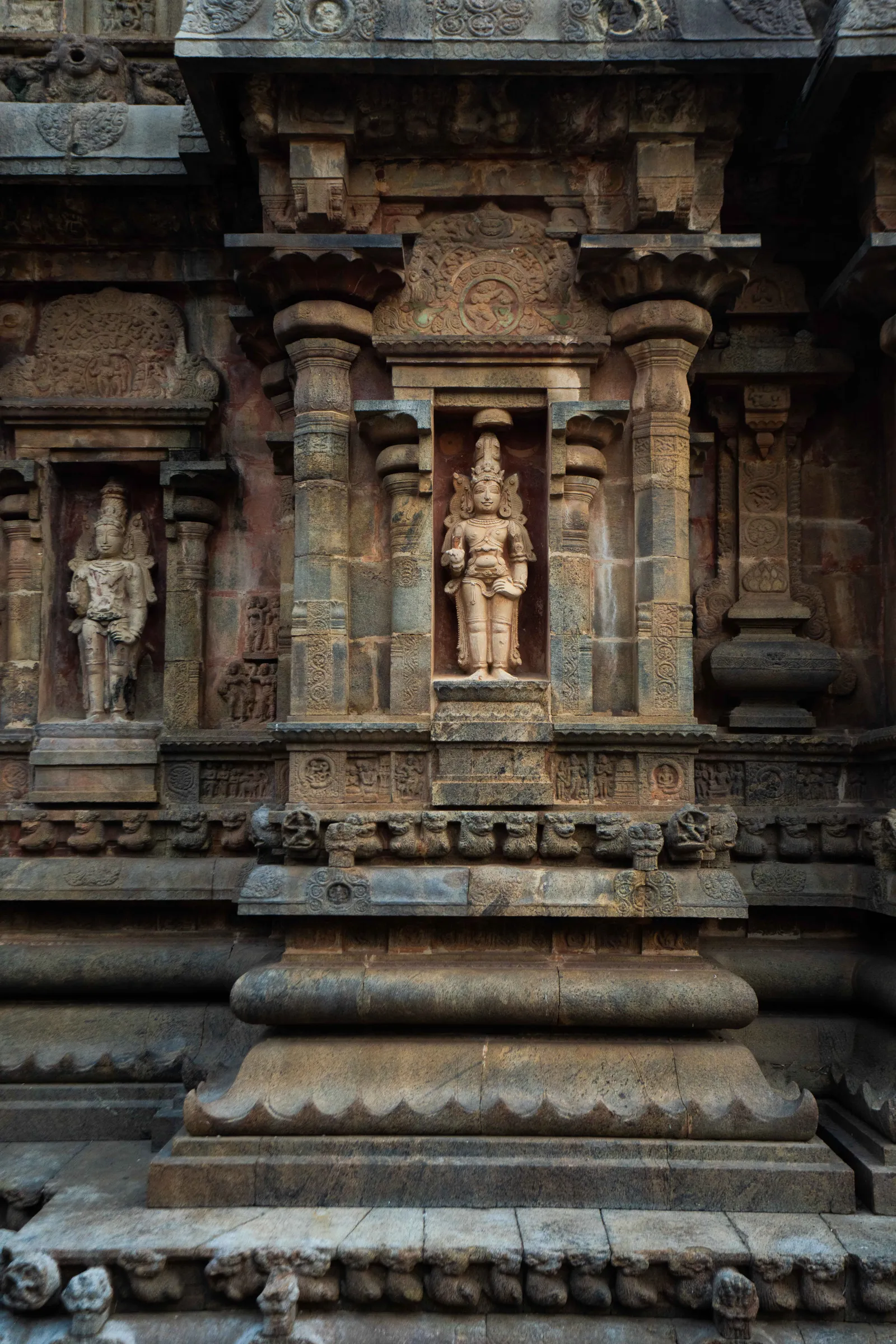
structure & vocabulary Unlike the two larger Chōḷa temples on the UNESCO list, this one is built for detail rather than size, every wall covered with sculptures, most of them miniatures about a hand span or less. One enters down a flight of steps. The bali pīṭham outside, open to the sky, recalls the region's ancient divinity from before the Vedic deities, a reminder that the temple was raised with the permission of the land and its plants and animals. The stone steps are rare lithophones that ring to the notes of the ragas when tapped with wood.
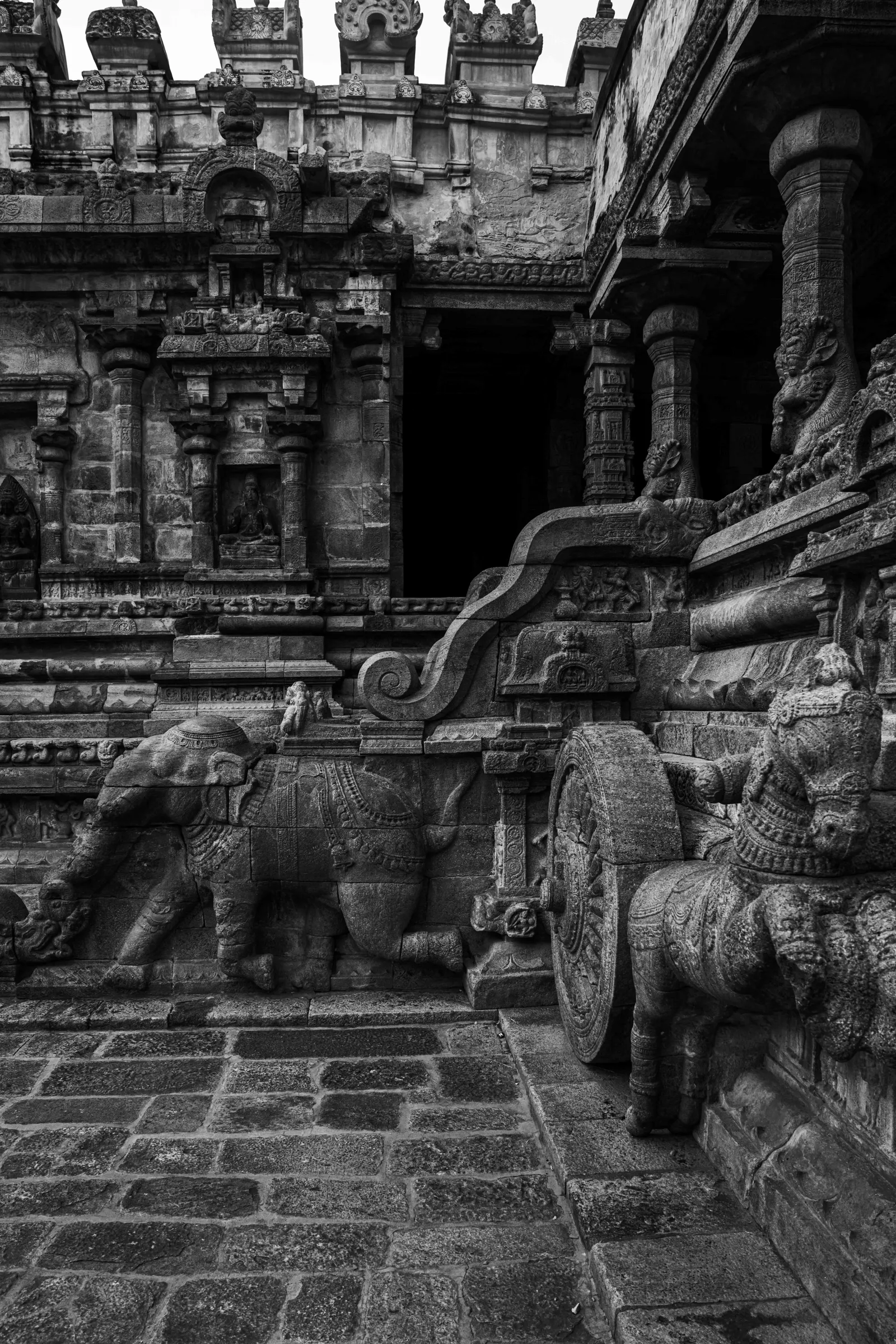
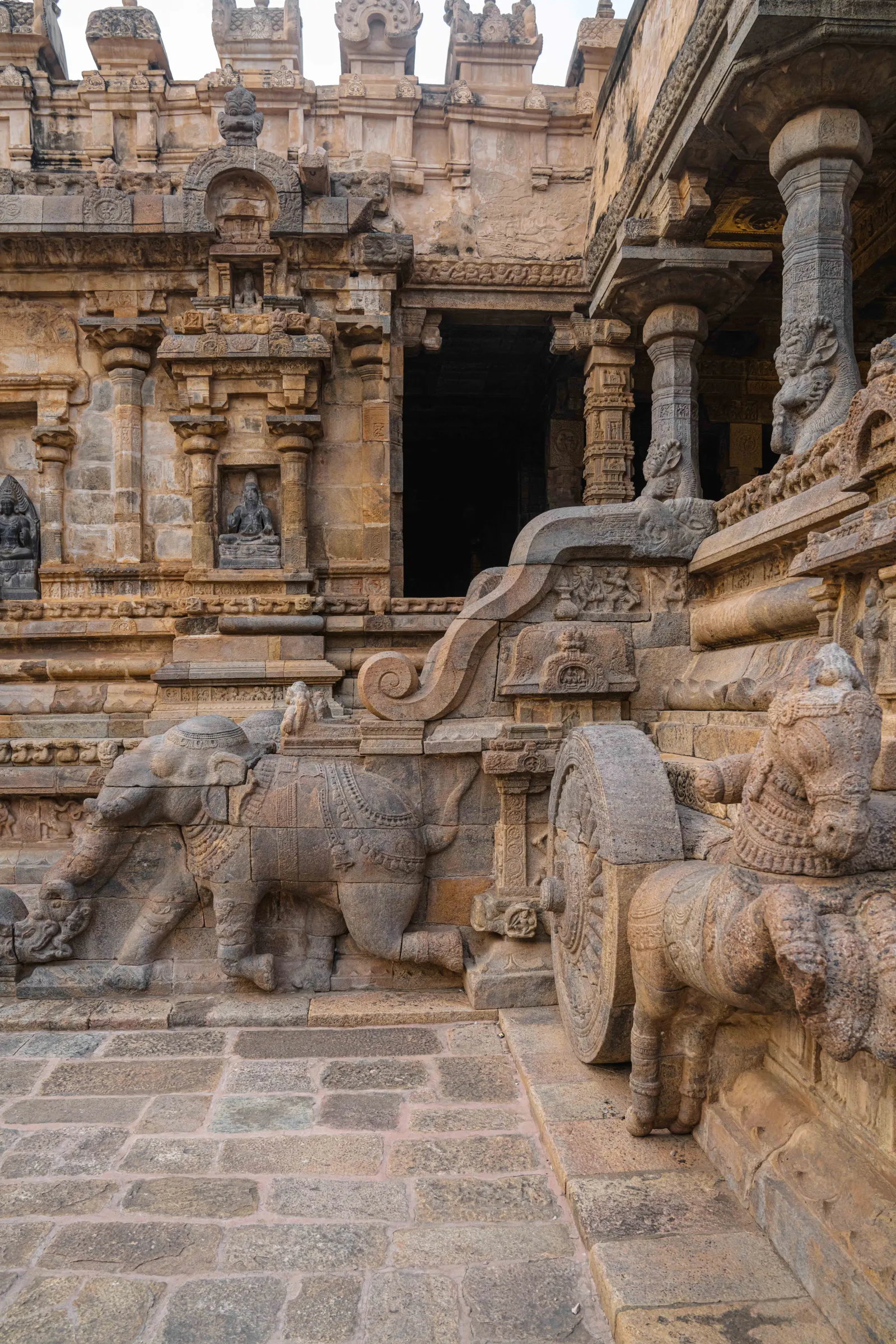
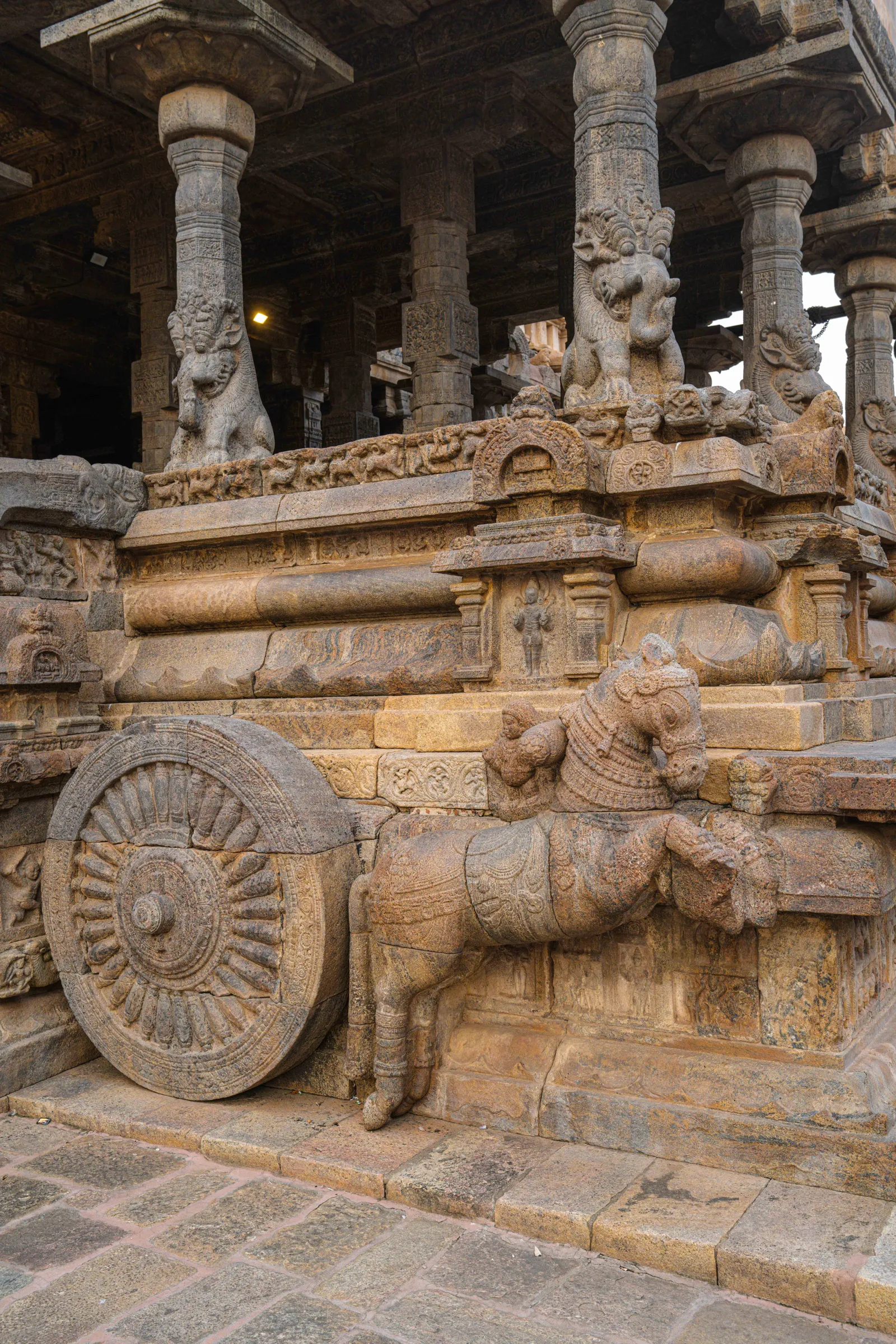
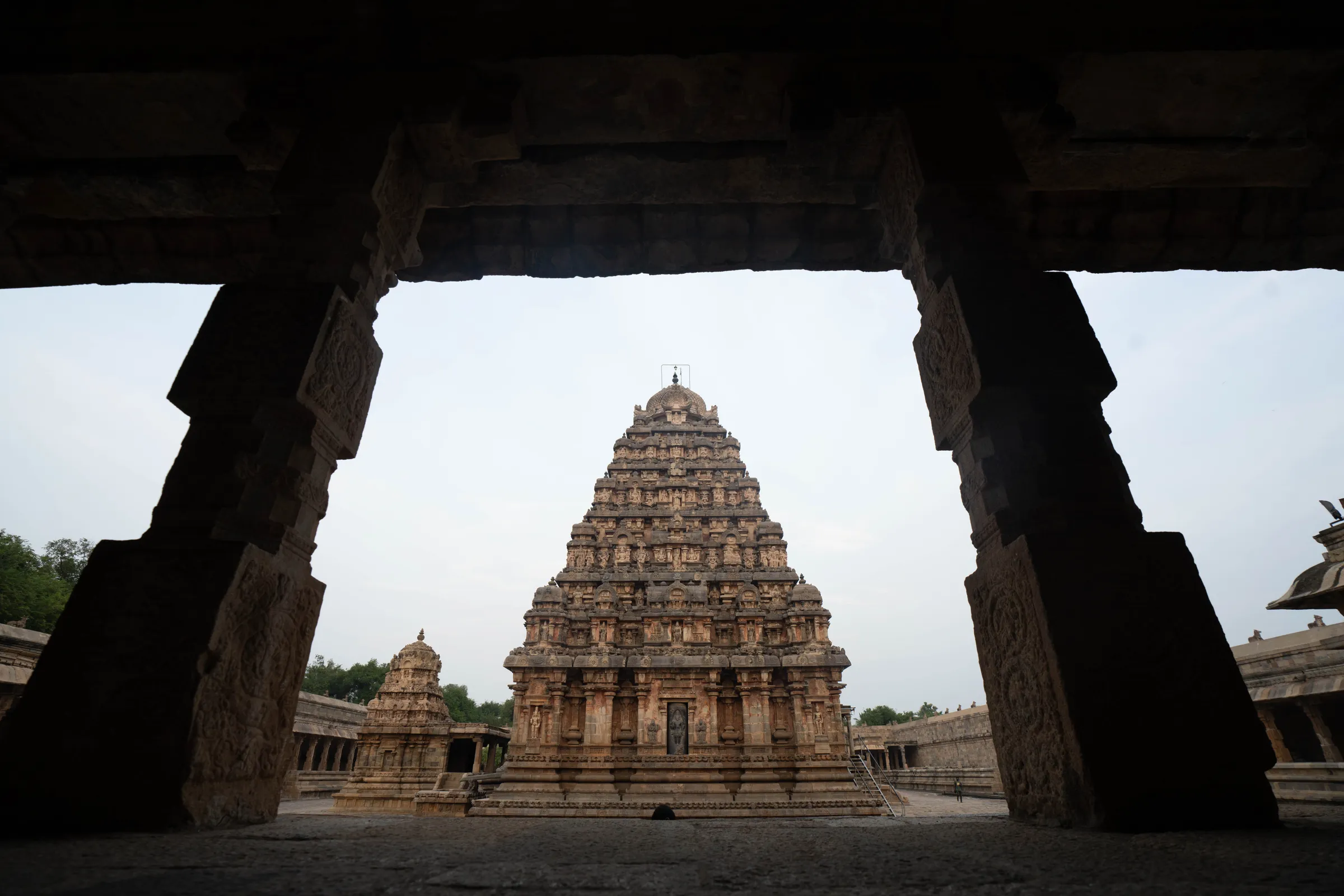
The main temple has a garbhagṛha, a connecting ardha maṇḍapa and the mukha maṇḍapa. The front porch, named for Rāja Rāja II, is conceived as a chariot of the sun, older than the Konārk temple but younger than the nearby Melakkadambūr. Around the base of the vimāna run the stories of the 63 Nāyaṉmārs, whose lives Sēkkiḻār, patronised by the king's father, compiled into the Periya Purāṇam. The kōṣṭas carry labels but their sculptures are lost; the entrance porch pillars, however, hold stunning miniatures, including the marriage of Pārvatī, the birth of Muruga and Śiva's attack on Manmatha. The Tiruchutrumāligai along the boundary wall has fine stone jālī windows bored through hard granite. An adjacent goddess shrine is of much later date and less elaborate.
02 Archaeological
dated & cited The temple was built by Rāja Rāja II (1146 to 1172 CE), when Gangaikoṇḍacholapuram was still the Chōḷa capital, a time of stability and prosperity in which money once spent on border wars went instead to building temples and providing employment. His court poet Ottakkūthar composed the Rāja Rāja Cholan Ula and the Takkayāga Barani, both celebrating his lineage and prowess across a reign of 26 years. Historians debate whether the jālī windows came from Chalukya country or were made locally.
Dating
Begun1146 to 1172 CE · reign of Rāja Rāja II
Built by Rāja Rāja II (1146 to 1172 CE), when Gangaikoṇḍacholapuram was still the Chōḷa capital.
Protection & condition
GroupGreat Living Chōḷa Temples (UNESCO list)
Improve this entry
This is an open, reviewed record. If you have spotted an error or have
something to add — a correction, a date, a source, a name in another script —
propose it. Every change is reviewed before it joins the record.
“Suggest an edit” opens this entry on GitHub and turns your change into a pull
request. “Share feedback” opens a short form. Both go through review.