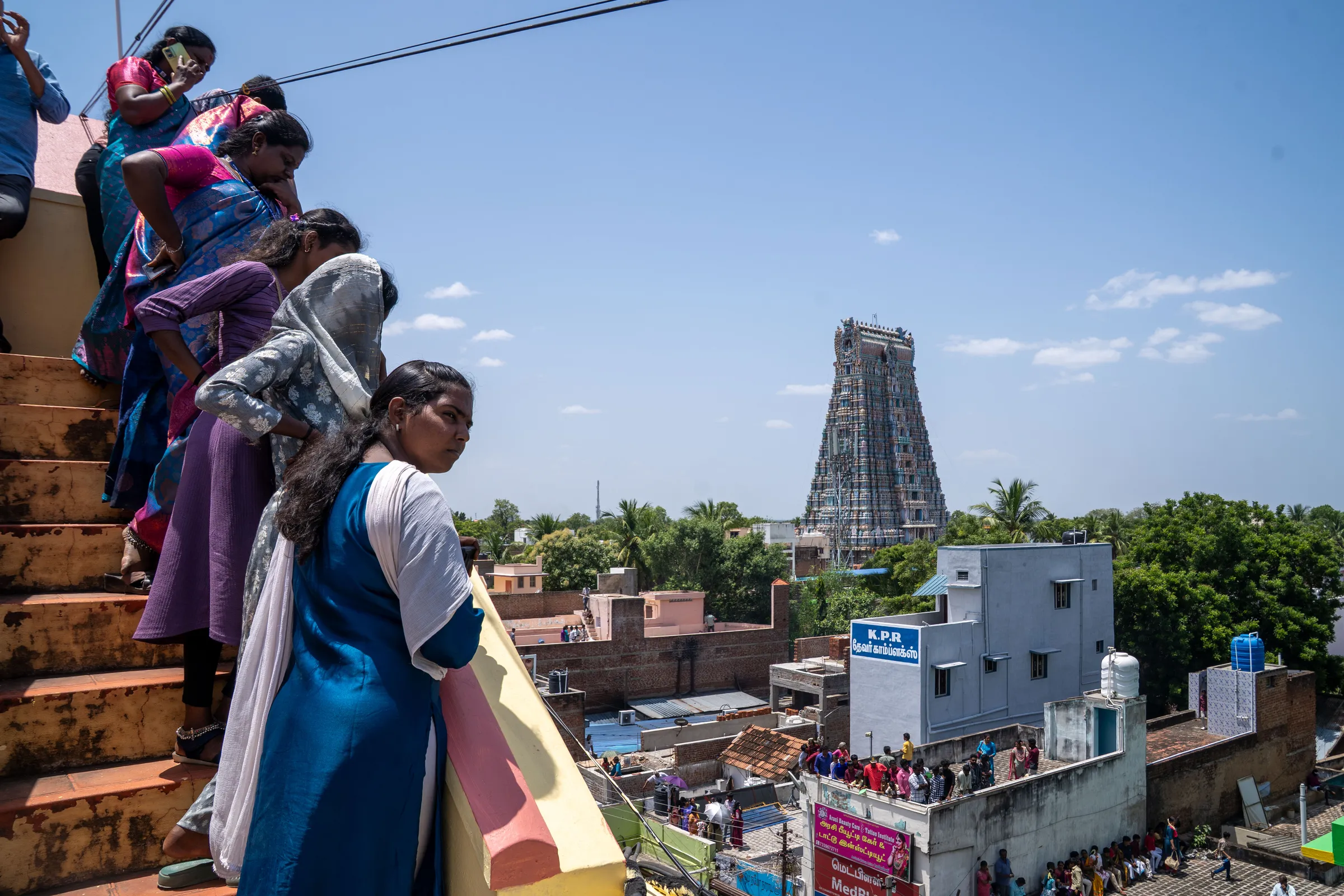
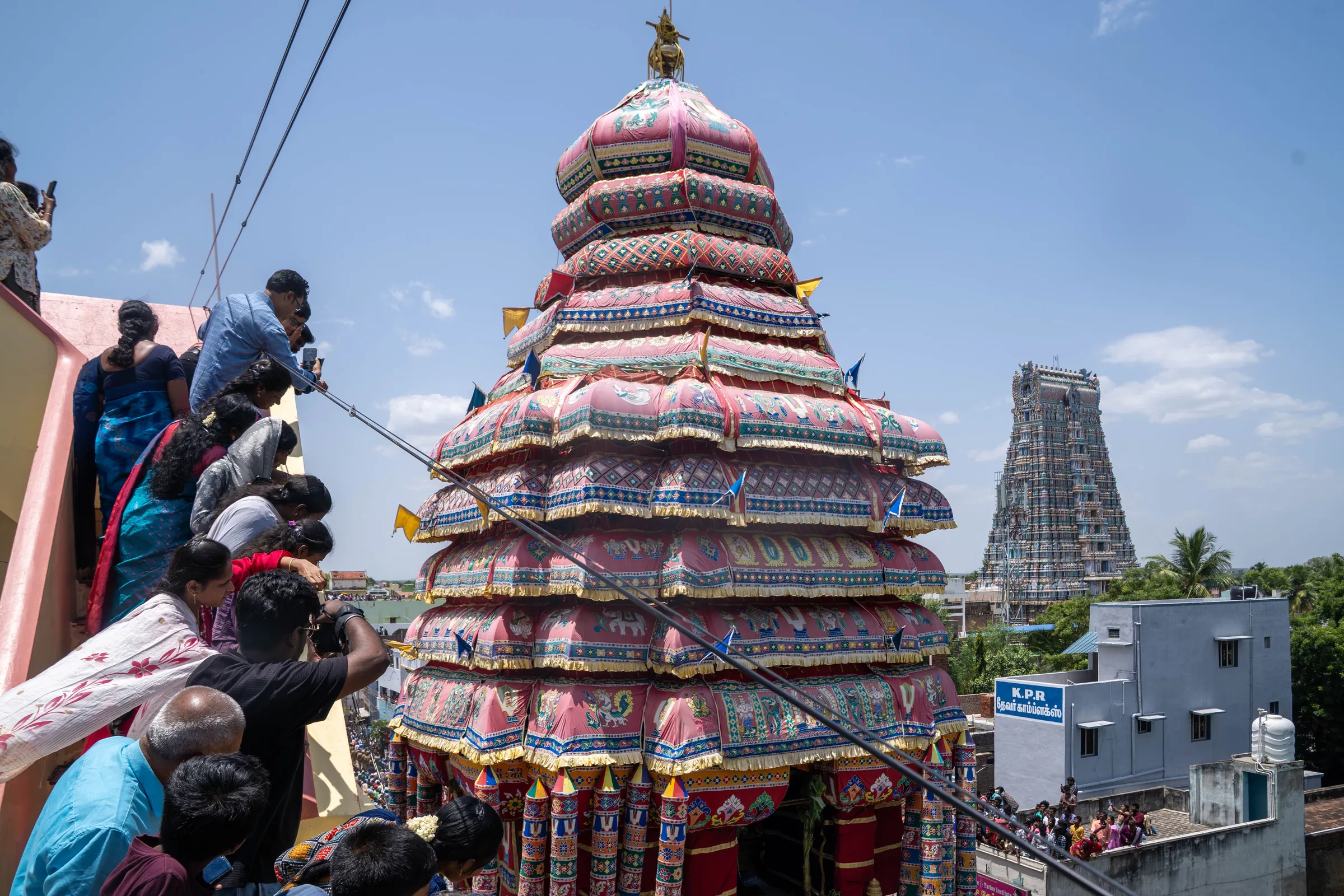
01 Architectural
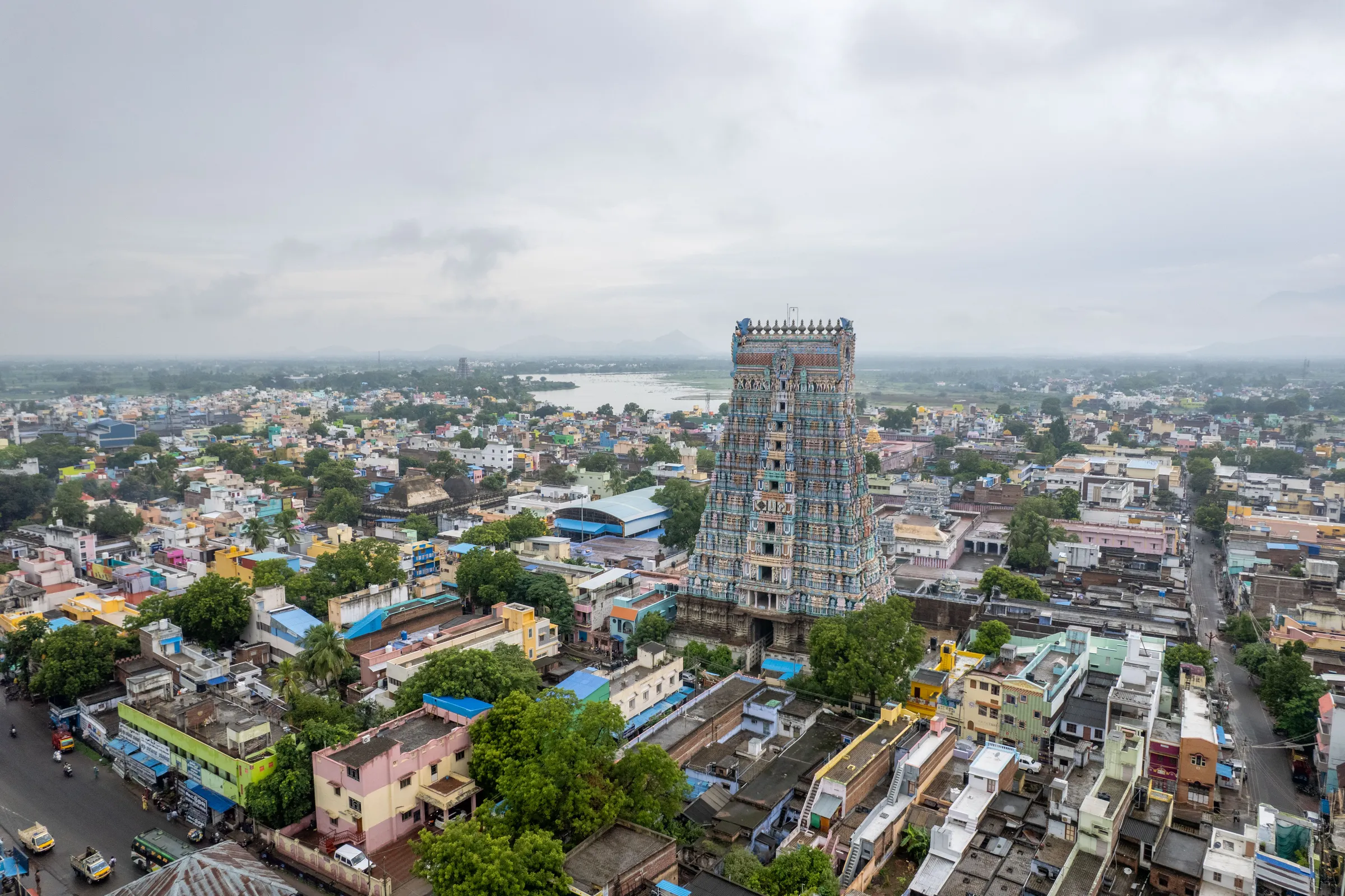
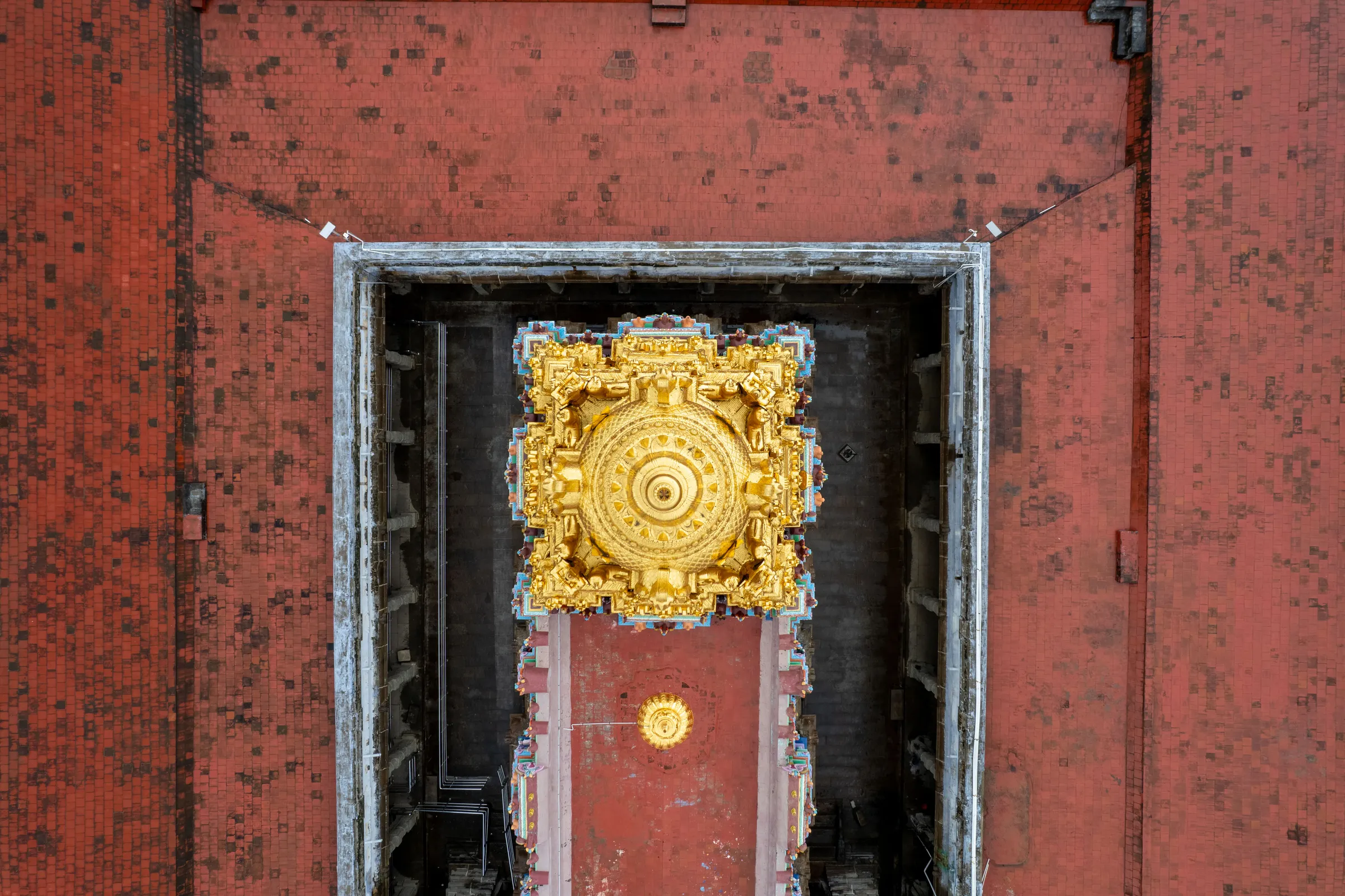
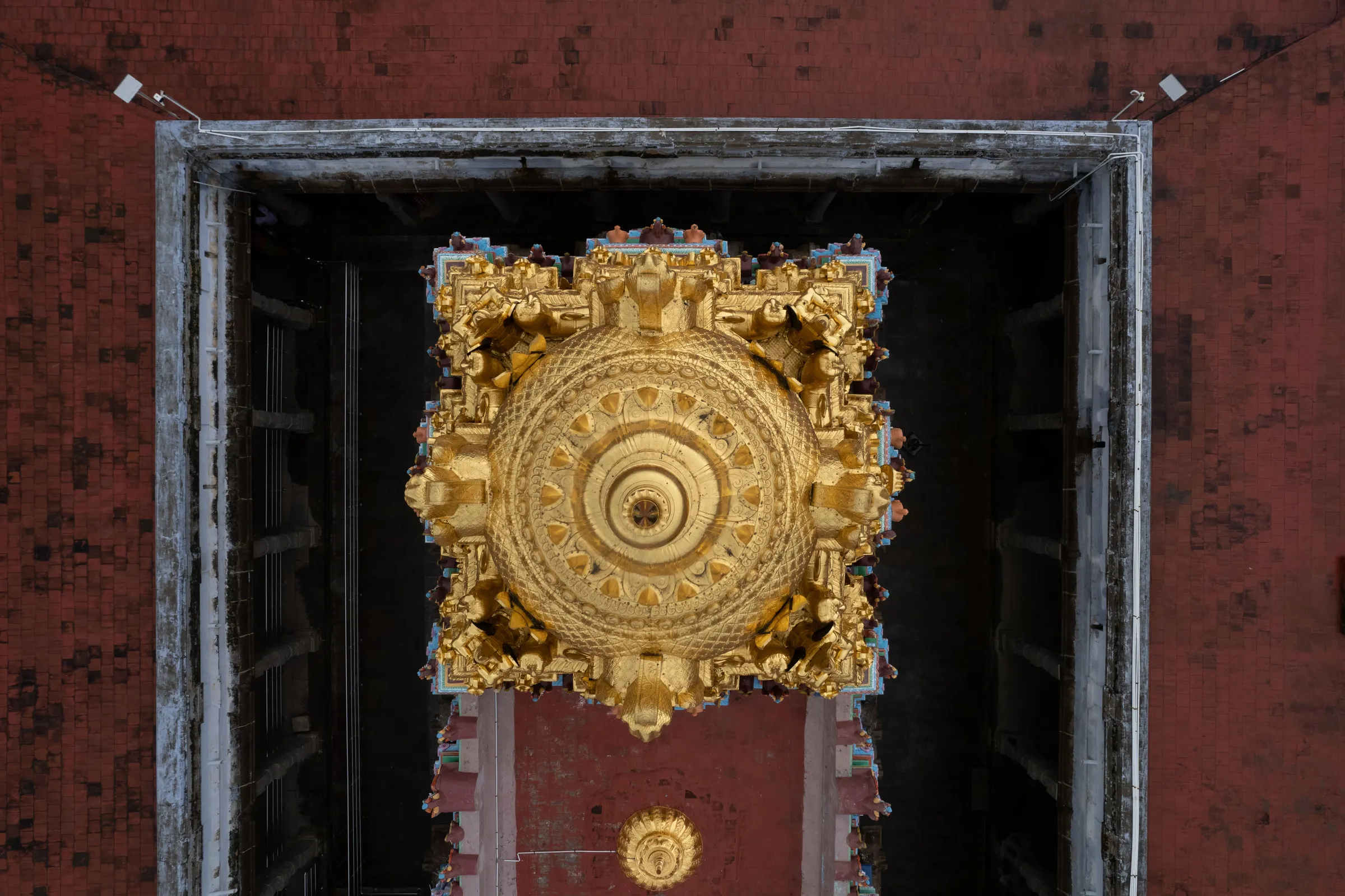
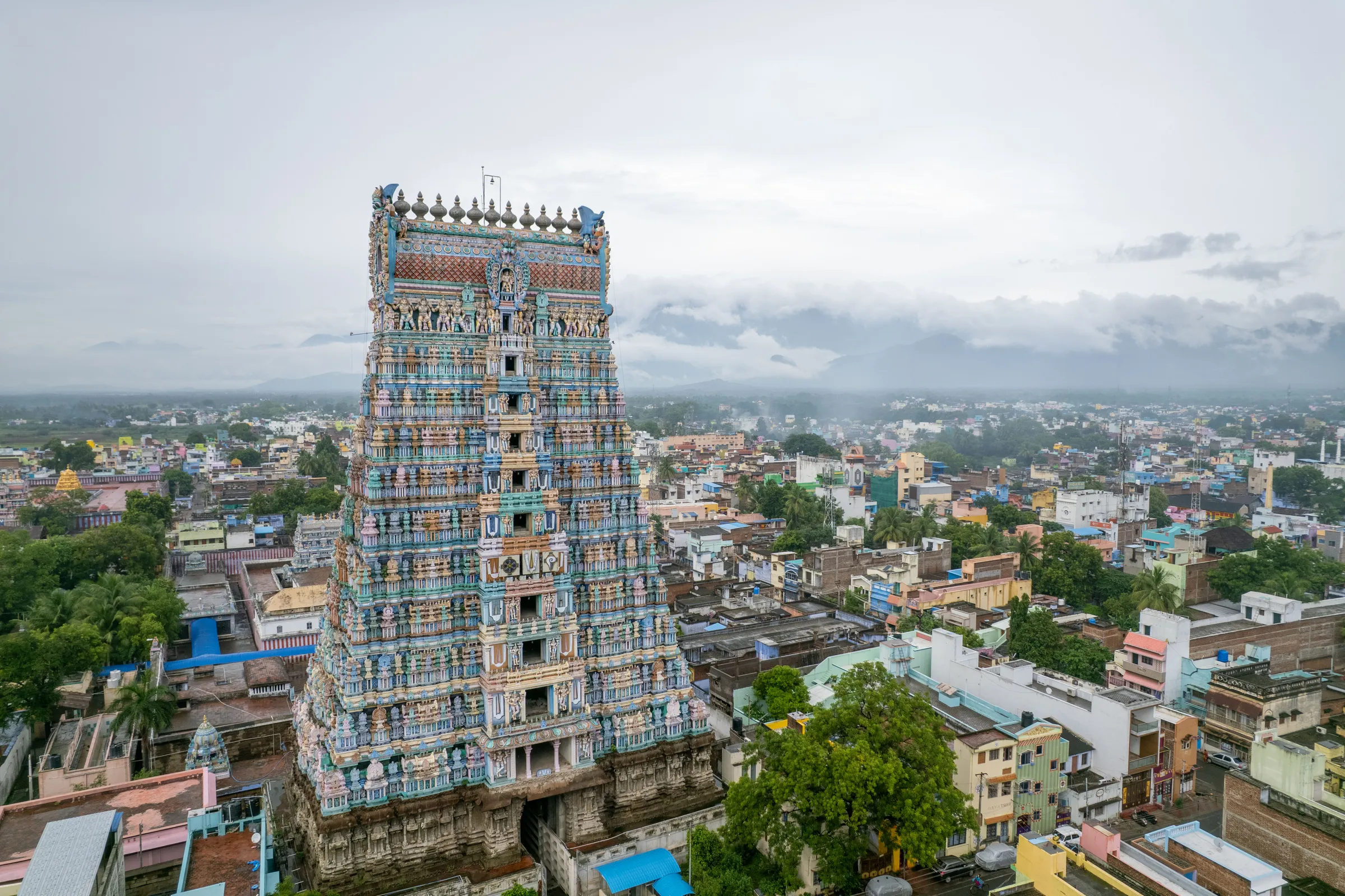
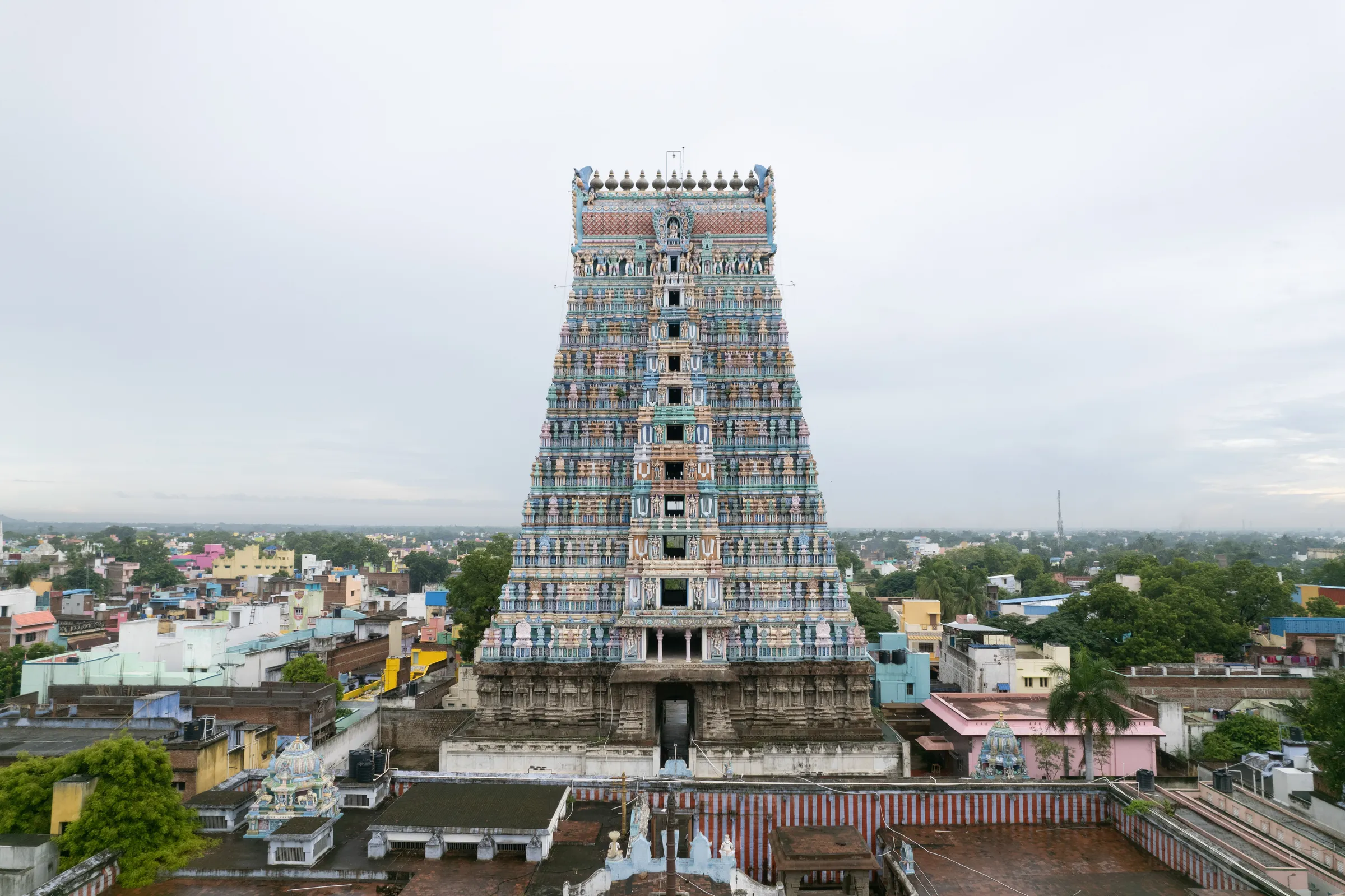
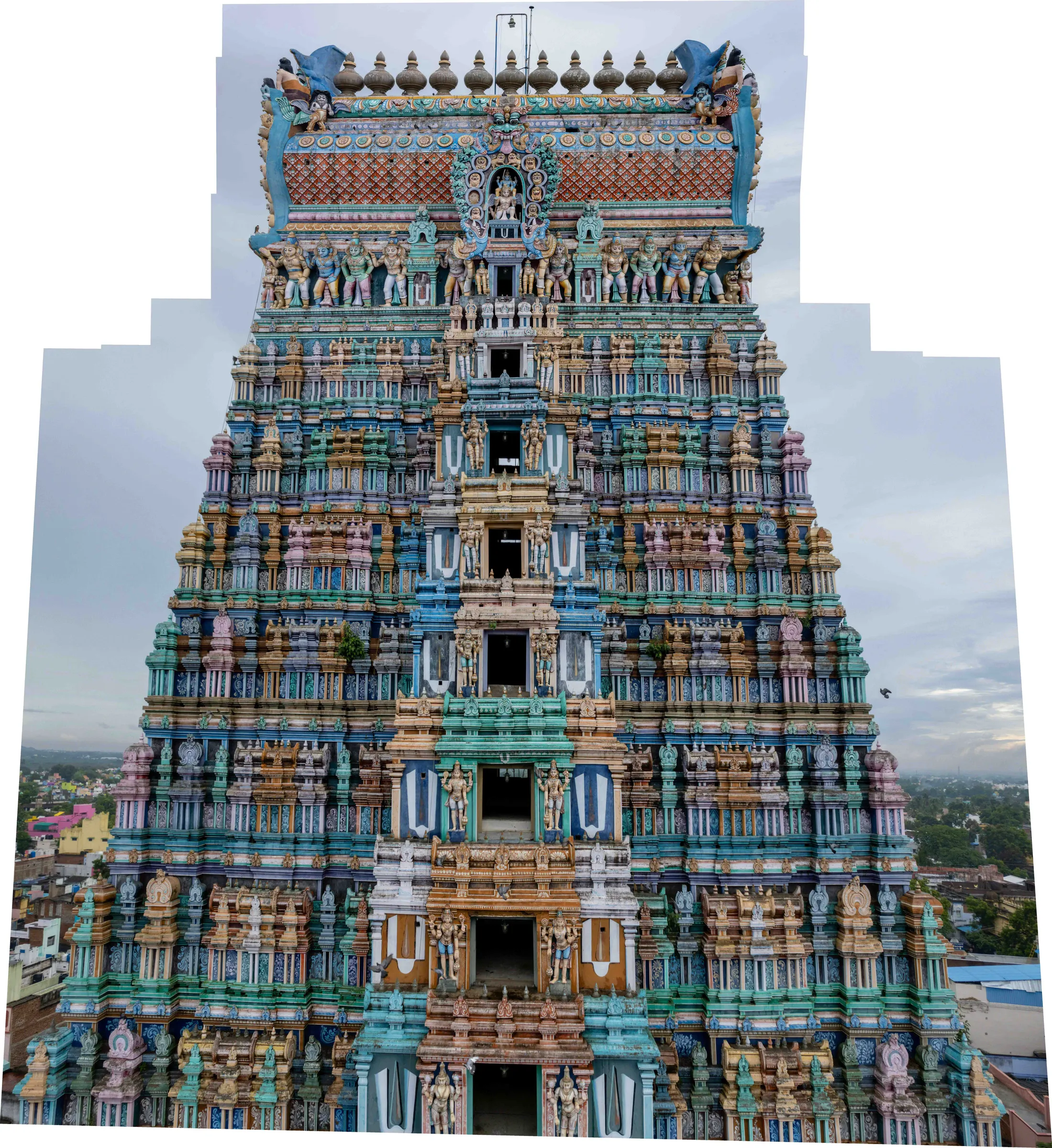
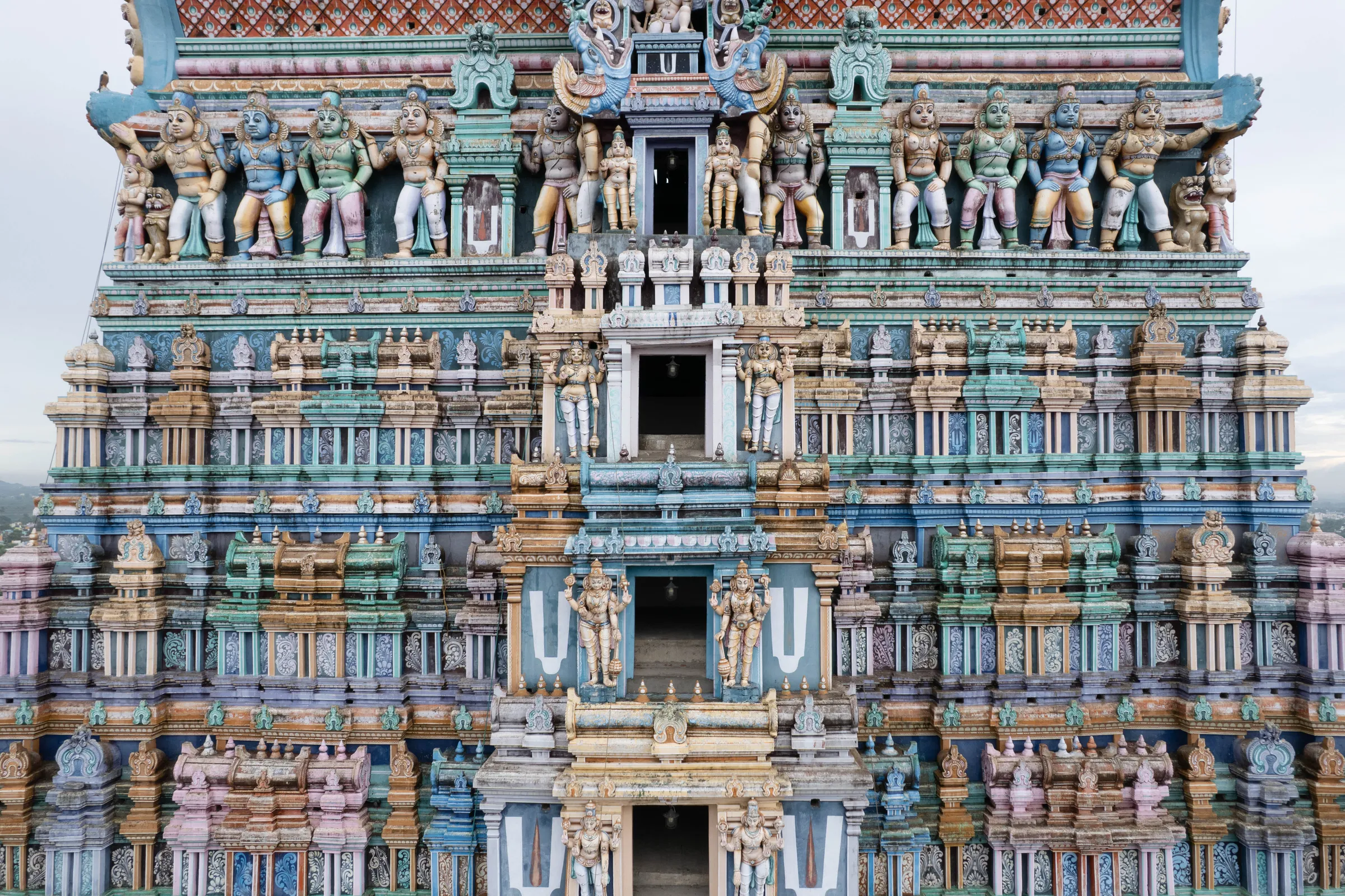
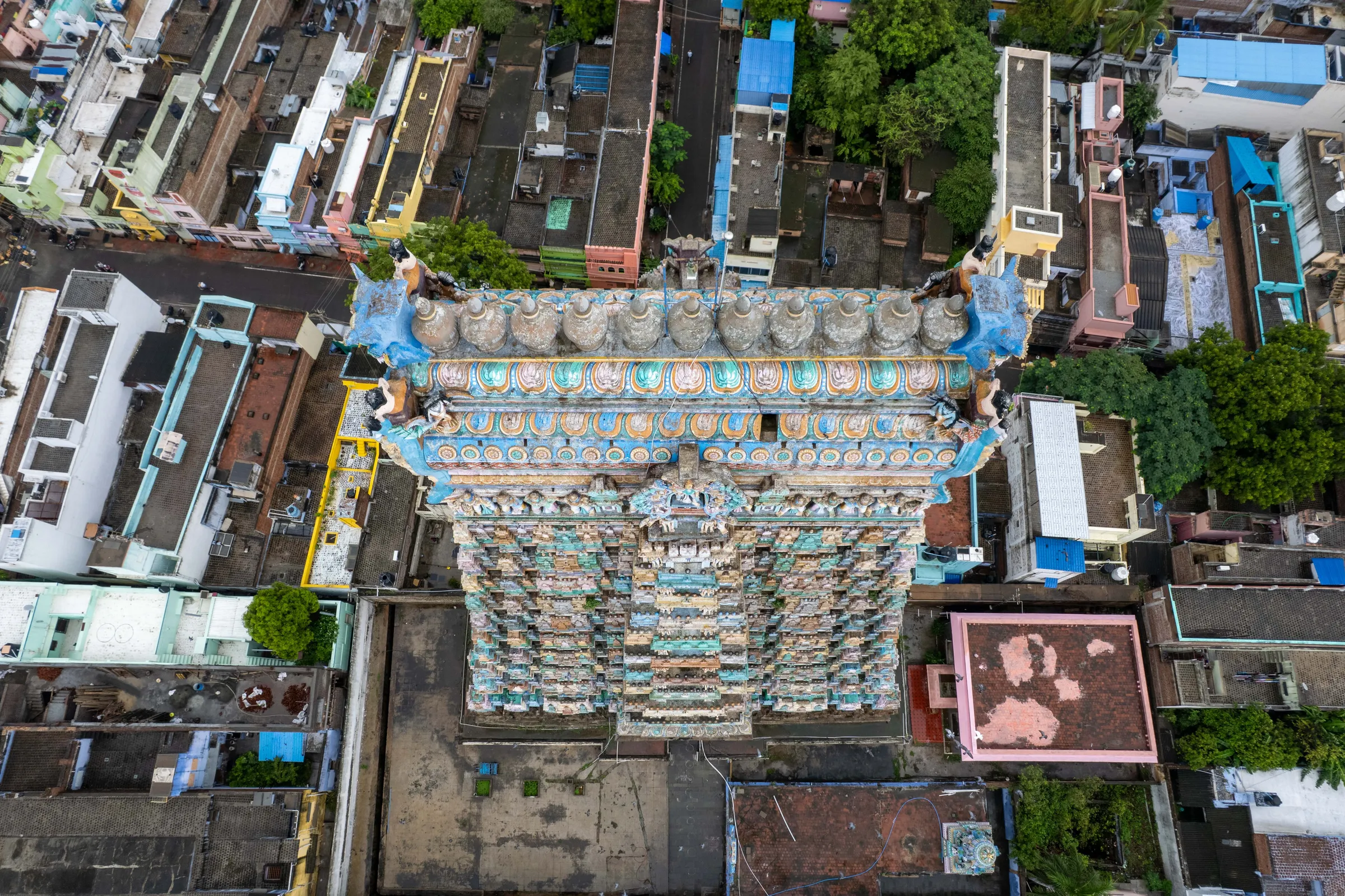
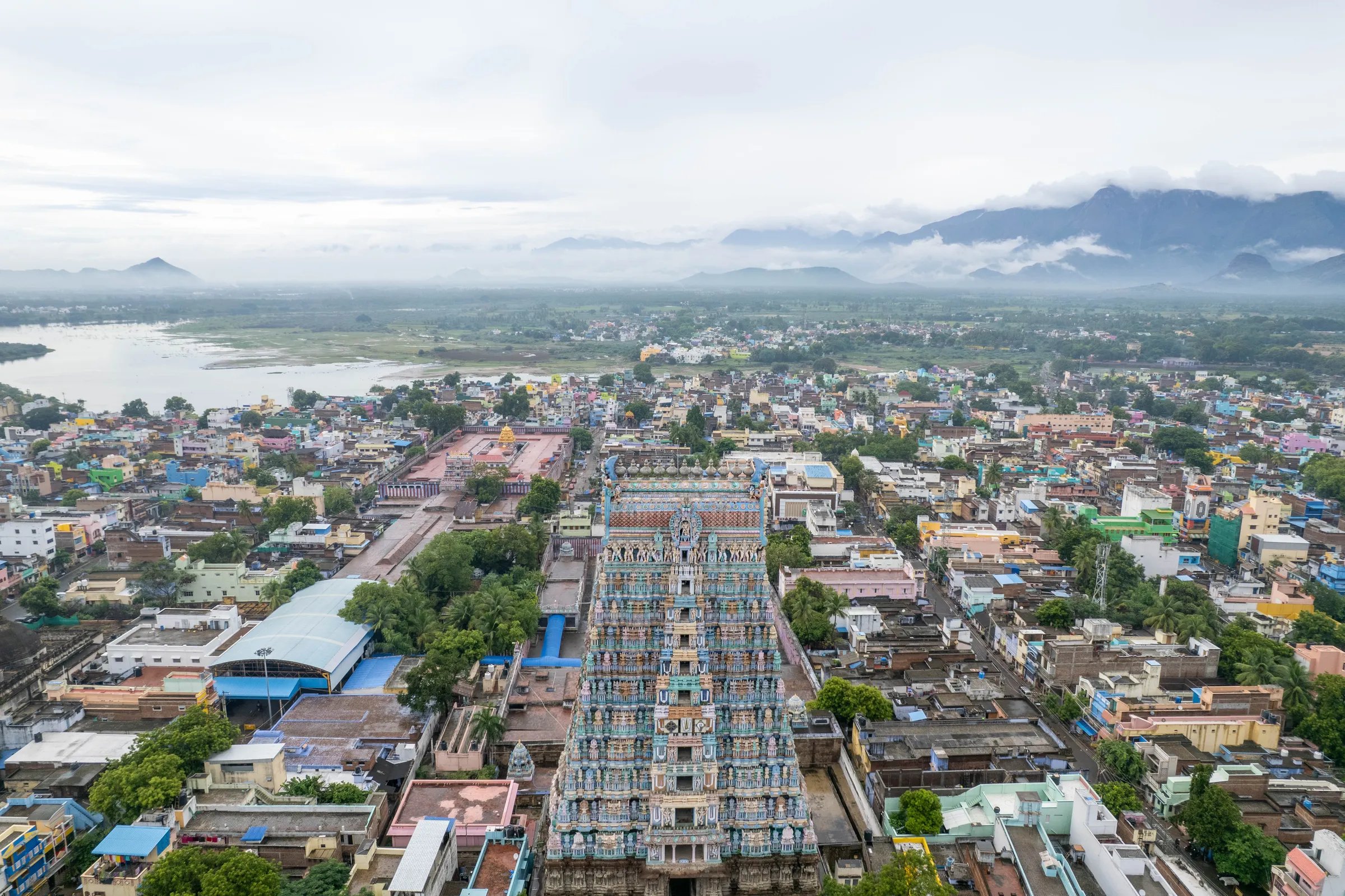
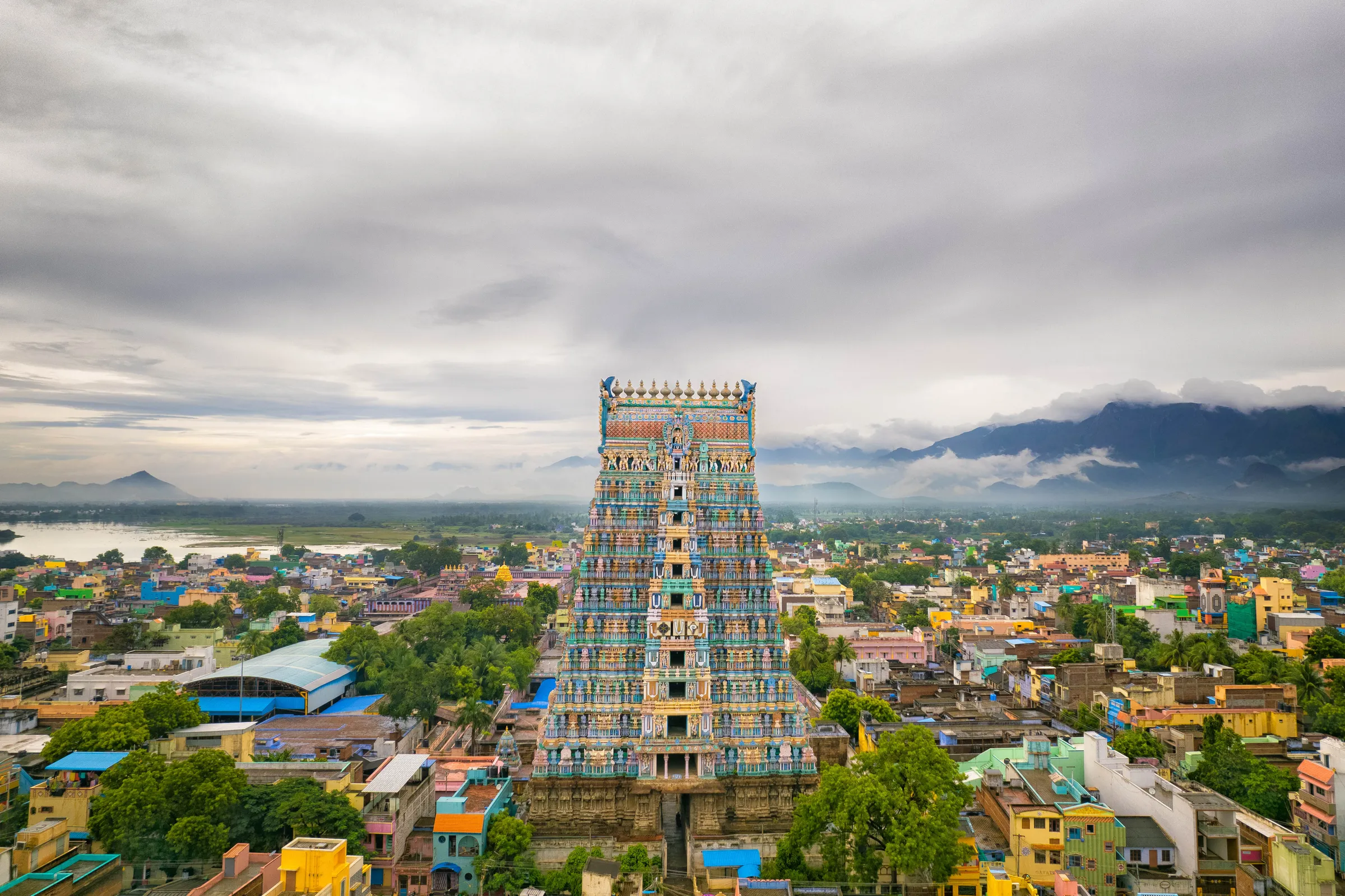
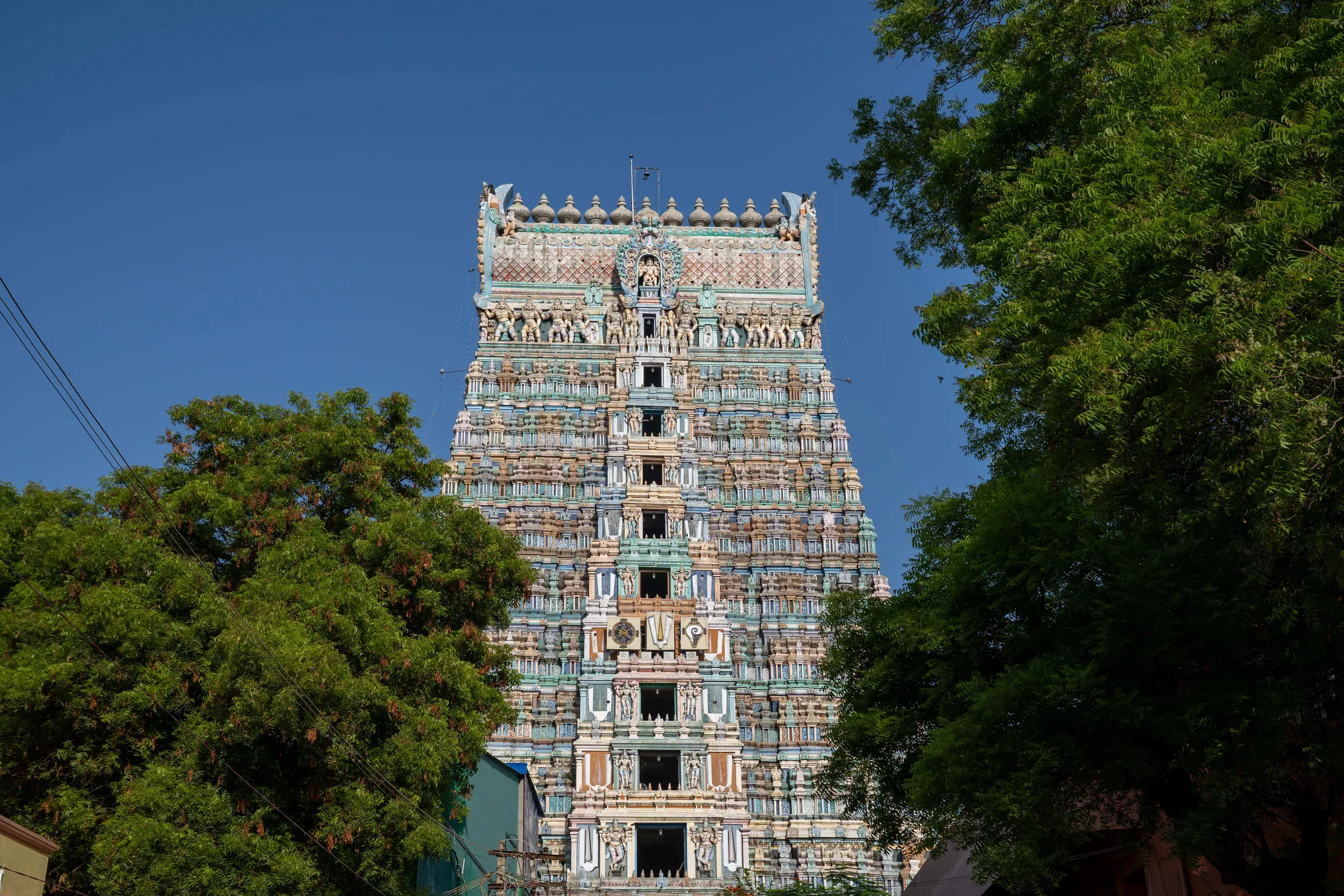
structure & vocabulary A granite wall encloses all the shrines, the temple garden and two water bodies. The temple has two parts: Andal in the southwest and Vatapatrasayi in the northeast. Andal, Rangamannar and Garuda stand in the Andal shrine, whose walls carry paintings of Andal's life. The Kalyana Mandapa, the second hall from the entrance, holds life-size sculptures of Mohini, Rathi, Rama and Kama.
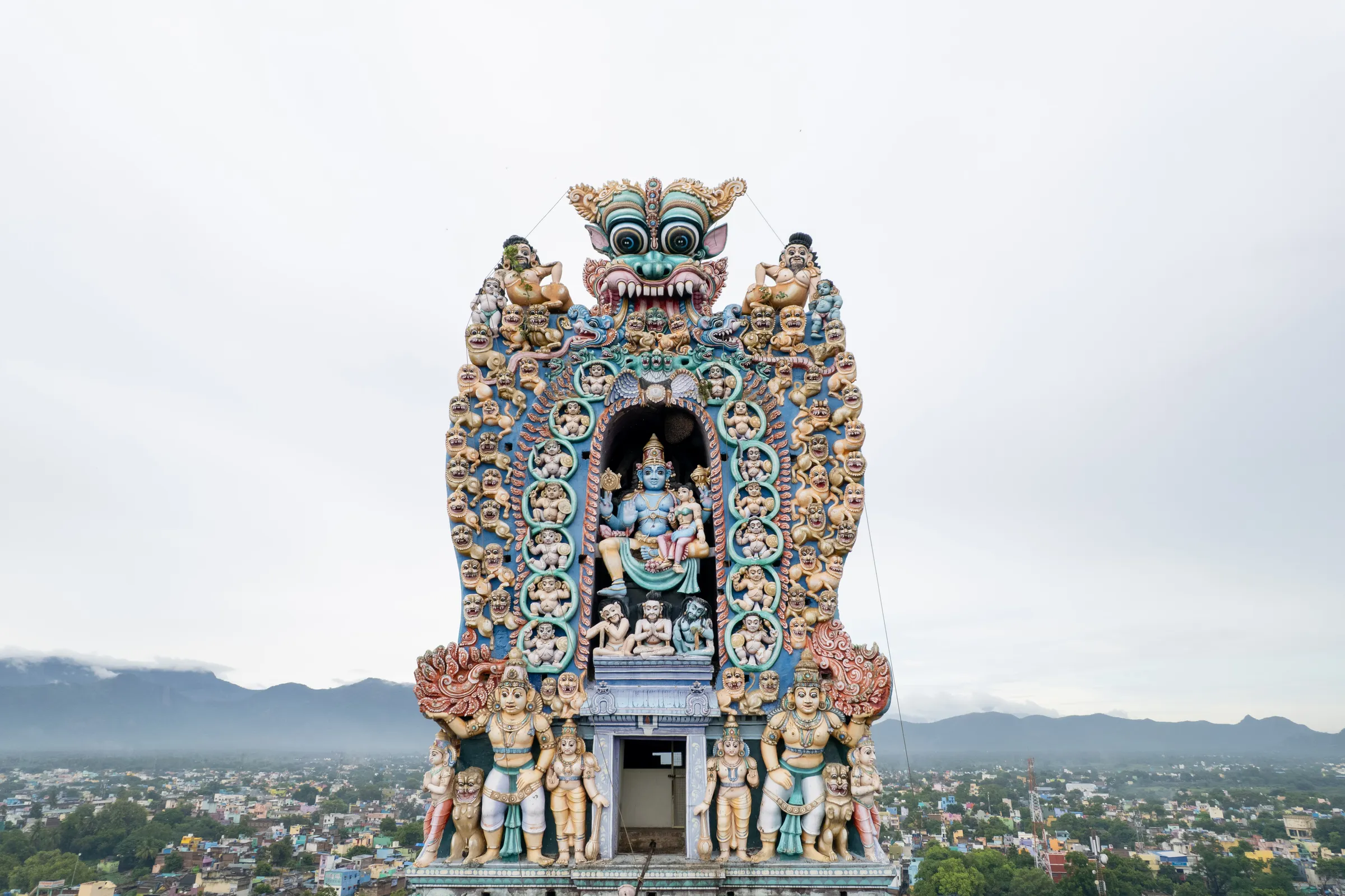
At the sanctum of Vatapatrasayi the Lord reclines facing east with Sridevi and Bhudevi at his feet; Bhrigu stands near his head and Markandeya at his feet, with the banyan tree behind Bhrigu, and Villi, Kandar, Garuda, Sanku and Chakra also present. The vimana carries stucco sculptures of Yoga Narasimha, Lakshmi Narasimha and Śiva. Among other mandapas are the Artha, Maha and Pagal Pathu Mandapas, with teak carvings of the Dasavathara and well-crafted roof carvings on the hall to the sanctum.
The sculpture, in stone and in metal, is finely detailed. The stone Krishna dancing on the hood of Kaliya on the outer wall of the eastern gopuram, dated to the 16th century, is shown with kesa-bandha, broad kanthi, a tight channavira with a central tassel, armlets, vajibandha, shorts with three waistbands and padasaras. A second fine image shows Andal as a young bride, her hair in a kesa-banda, holding a flower and wearing patrakundalas and delicate bahulamalas.
02 Archaeological
dated & cited The temple is held to have been built by the early Pāṇḍyas; as seen today it is a contribution of Pāṇḍya, Pallava, Vijayanagara and Nāyaka rulers. A Jatavarma Sundara Pandya I inscription of 1218 CE refers to Andal as the Bagavathi Vinnagara Alwar temple. A Maravarman Kulasekara Pandya I inscription of 1291 CE on the Vatapatrasayanaperumal temple calls the Andal Koil the Choodikodutharuliya Nachiyar Koil. Two inscriptions of Jatavarma Kulasekara Pandya of 1453 CE were found in the sanctum of Andal.
A research thread turns on Andal's Tiruppavai itself: her image of Jupiter setting and Venus rising in the early morning of Margazhi (v. 13) gave scholars a datable astronomical event, with 27 November 850 AD one option and a date in 731 AD another. Her father Periyalvar names a king Nedumaran (Maravarman) and Abhimanatungan, possibly a title. Scholars such as M. Raghava Ayyangar argue that Maravarman Rajasimha I, of the first half of the 8th century, could be the Pāṇḍya king Vishnuchita speaks of; this is inferred, not fixed. The Annual Report of Epigraphy for 1926 to 1927 discusses the question and hoped for more data, which the loss of inscriptions from the walls has since made remote.
03 Mythological
as transmitted Mythology tells of Queen Malli and her son Villi, an archer who built a new place, Villi Pudur, which became Srivilliputhur, hailed as a Varaha Kshethra. To rescue the sages Bhrigu and Markandeya from Kalaneri, Viṣṇu stayed in the forest on a banyan leaf upon his serpent bed; the place became Vadaveshwarapuram and the God Vatapatrasayi, who reclines on the banyan leaf, and the shrine remains.
It is told that the childless Vishnuchita of Srivilliputhur found a girl child under a Tulsi plant, named her Kothai, and raised her a devotee of Viṣṇu. She would wear the garland her father made before it was offered to God. Vishnuchita, finding her so, was upset and offered a fresh garland, but God rejected it and said in his dream that he would have only the garland Kothai had worn. She was called Chudikodutha Sudarkodi, the girl who wore the garland before offering, and so got the name Andal.