Srimushnam · Cuddalore · Vijayanagara, with Thanjavur Nāyaka patronage
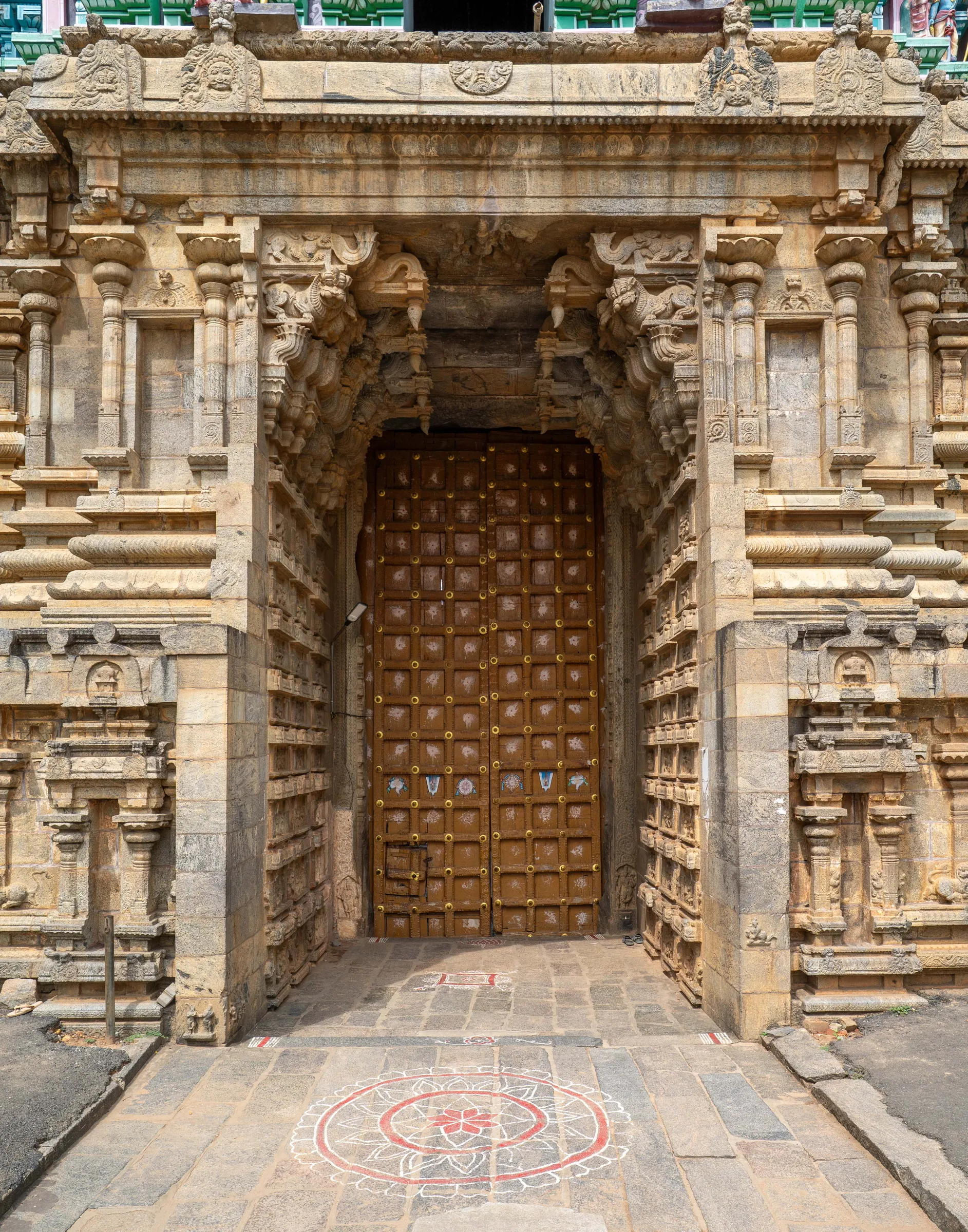
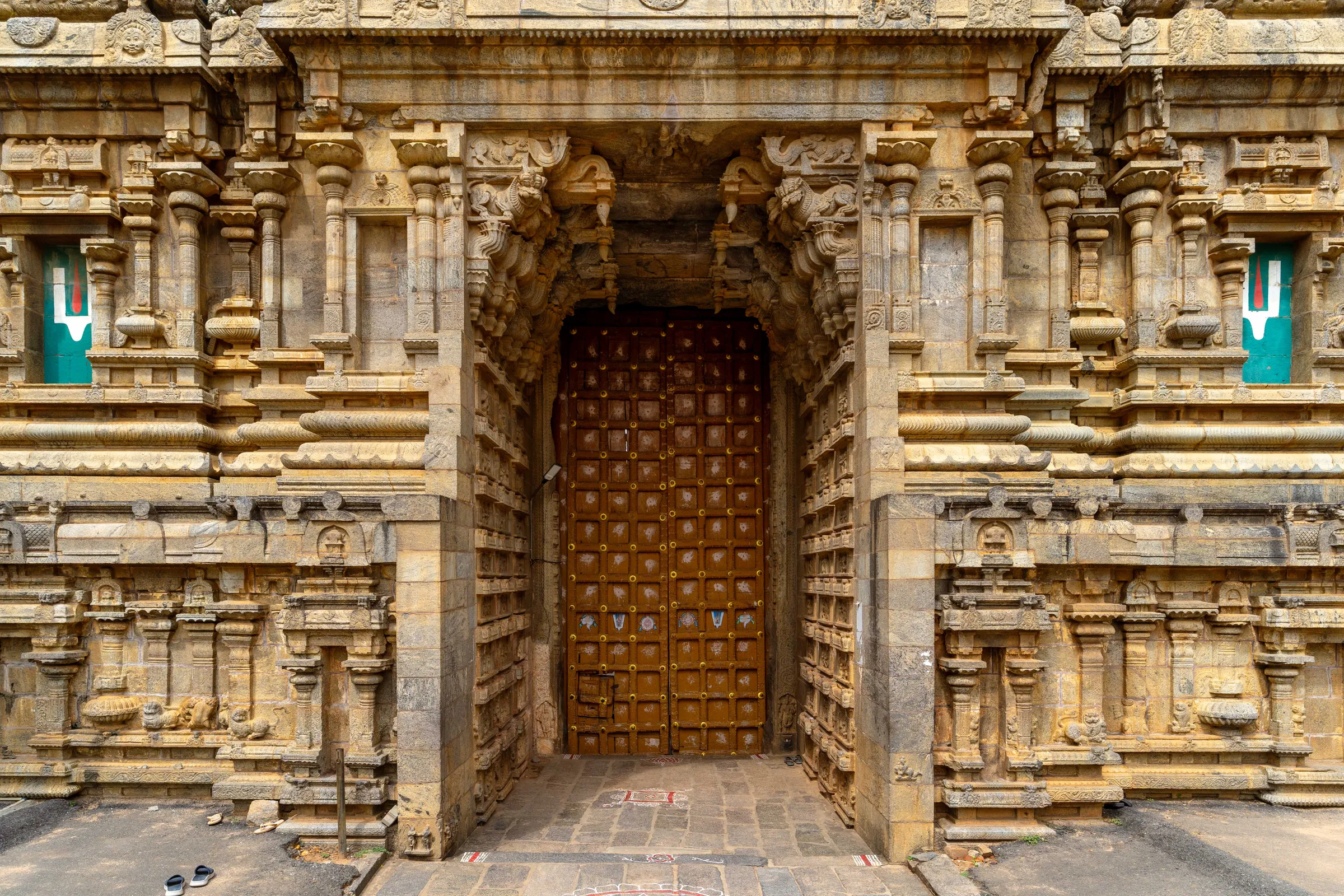
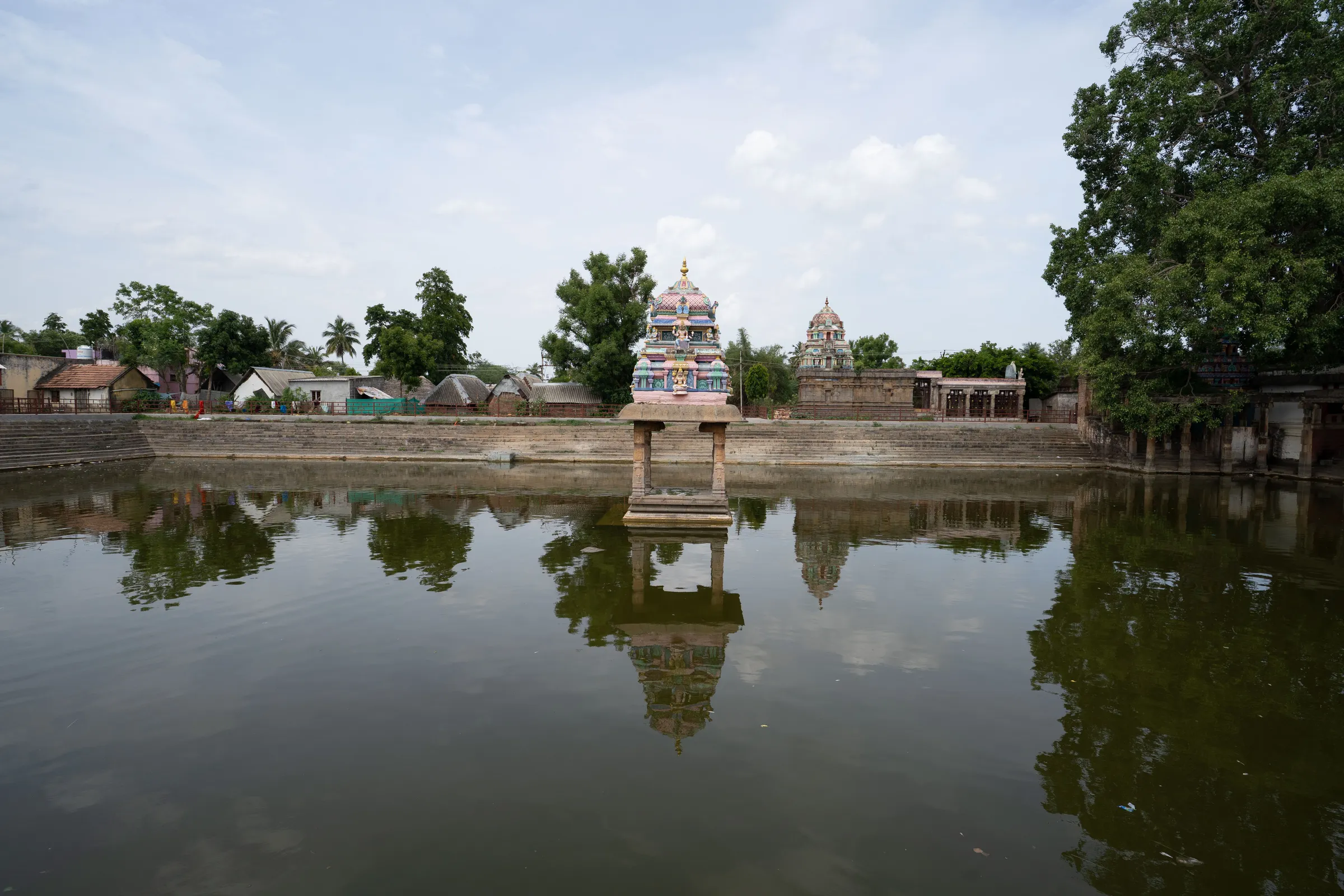
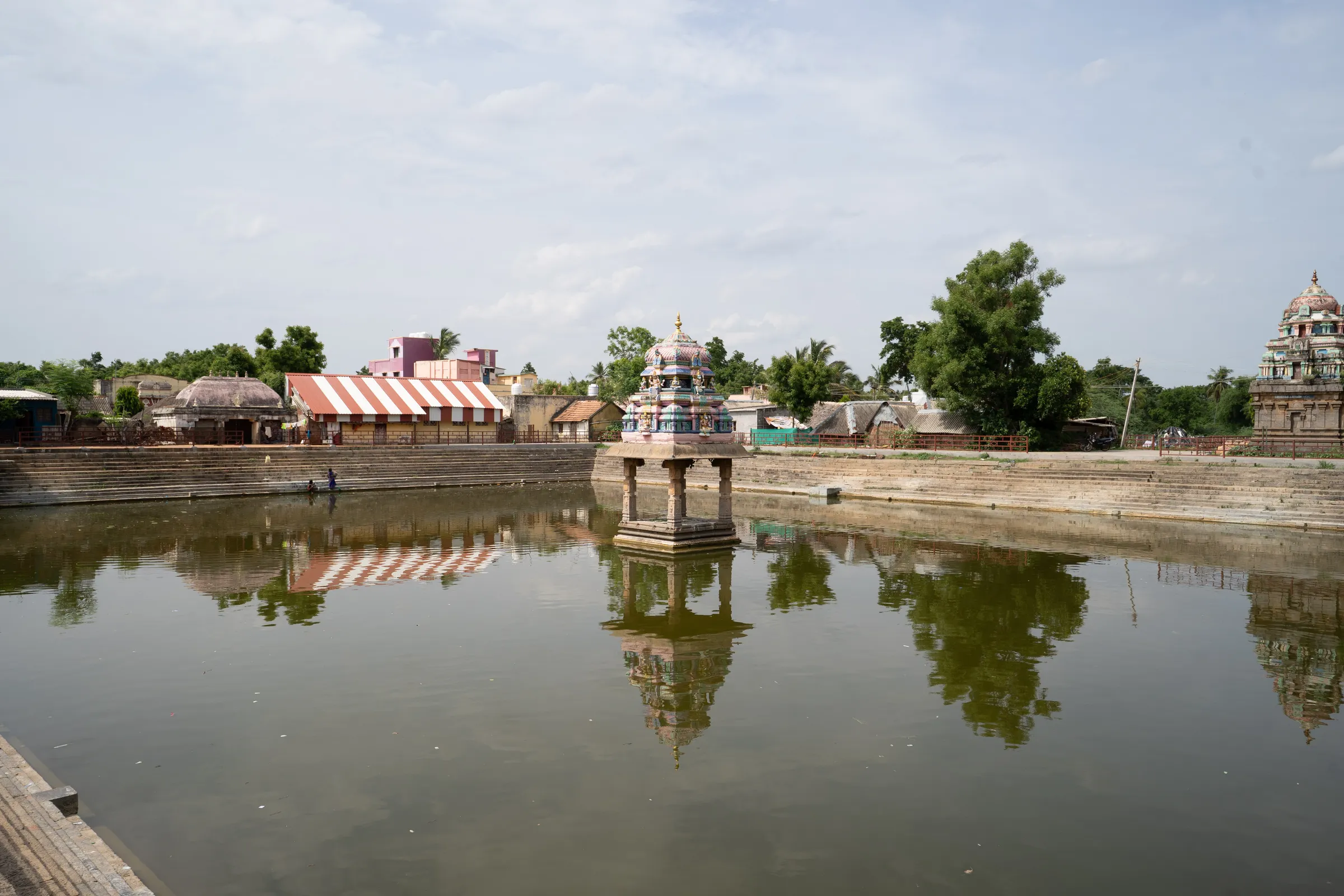
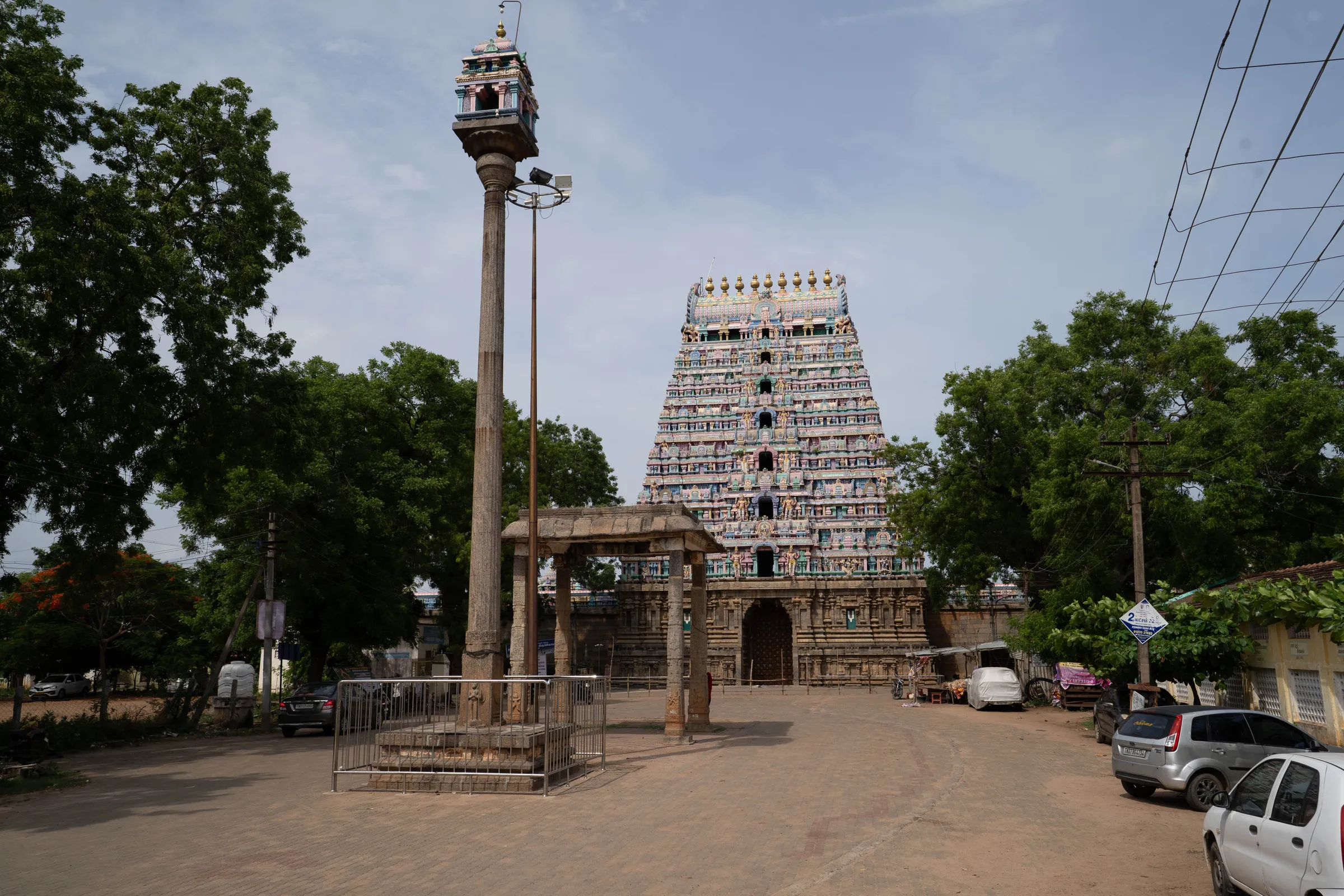
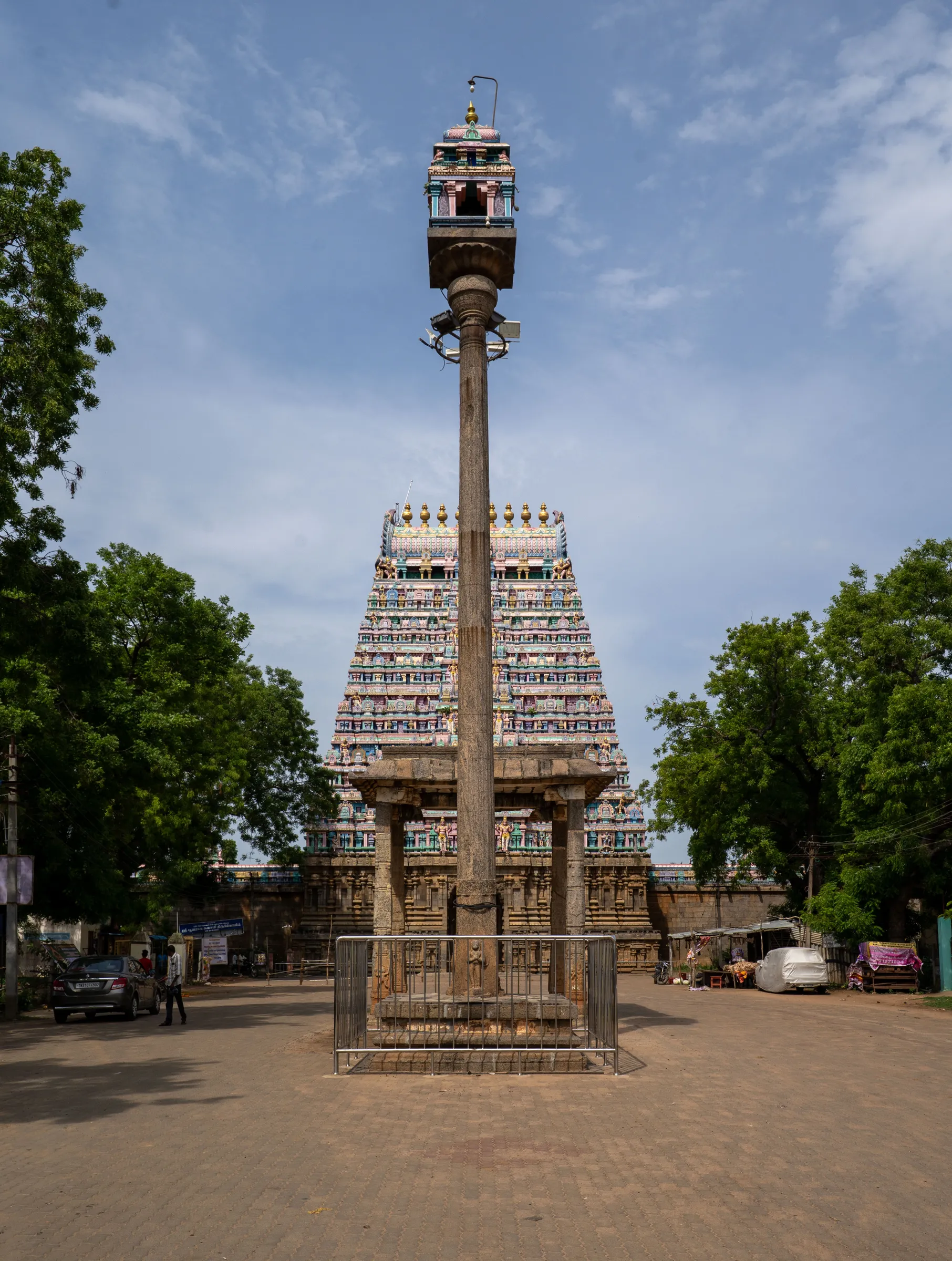
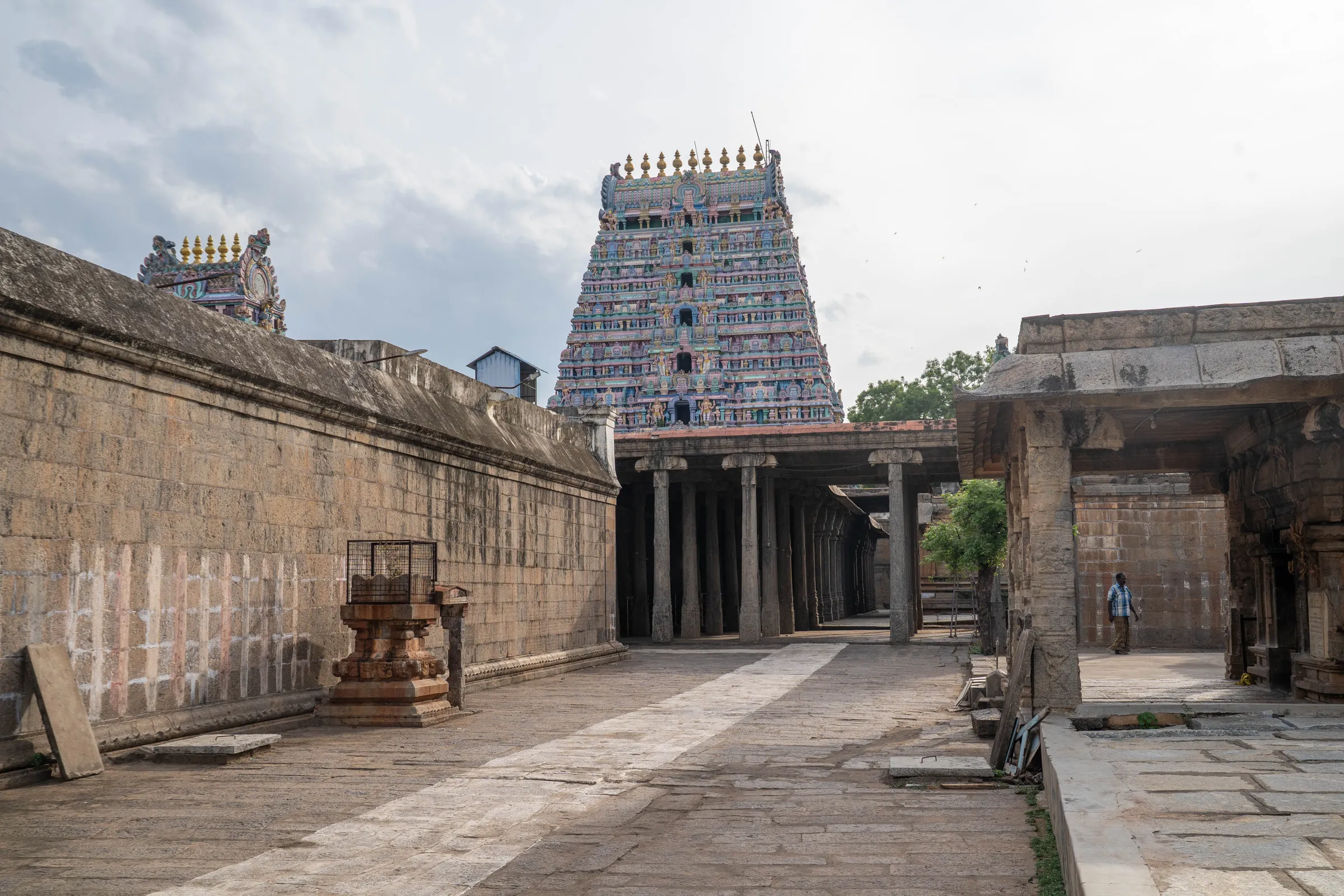
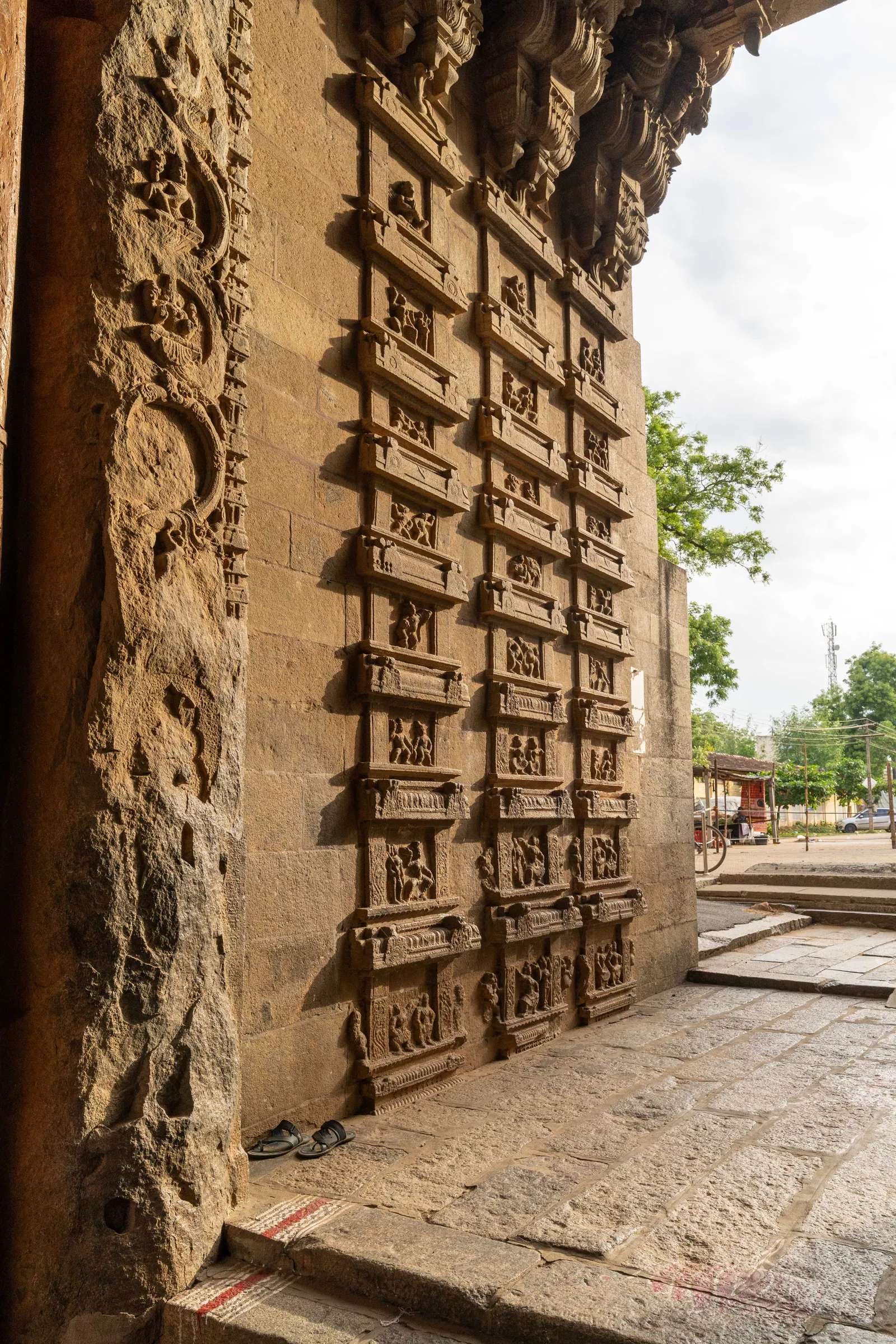
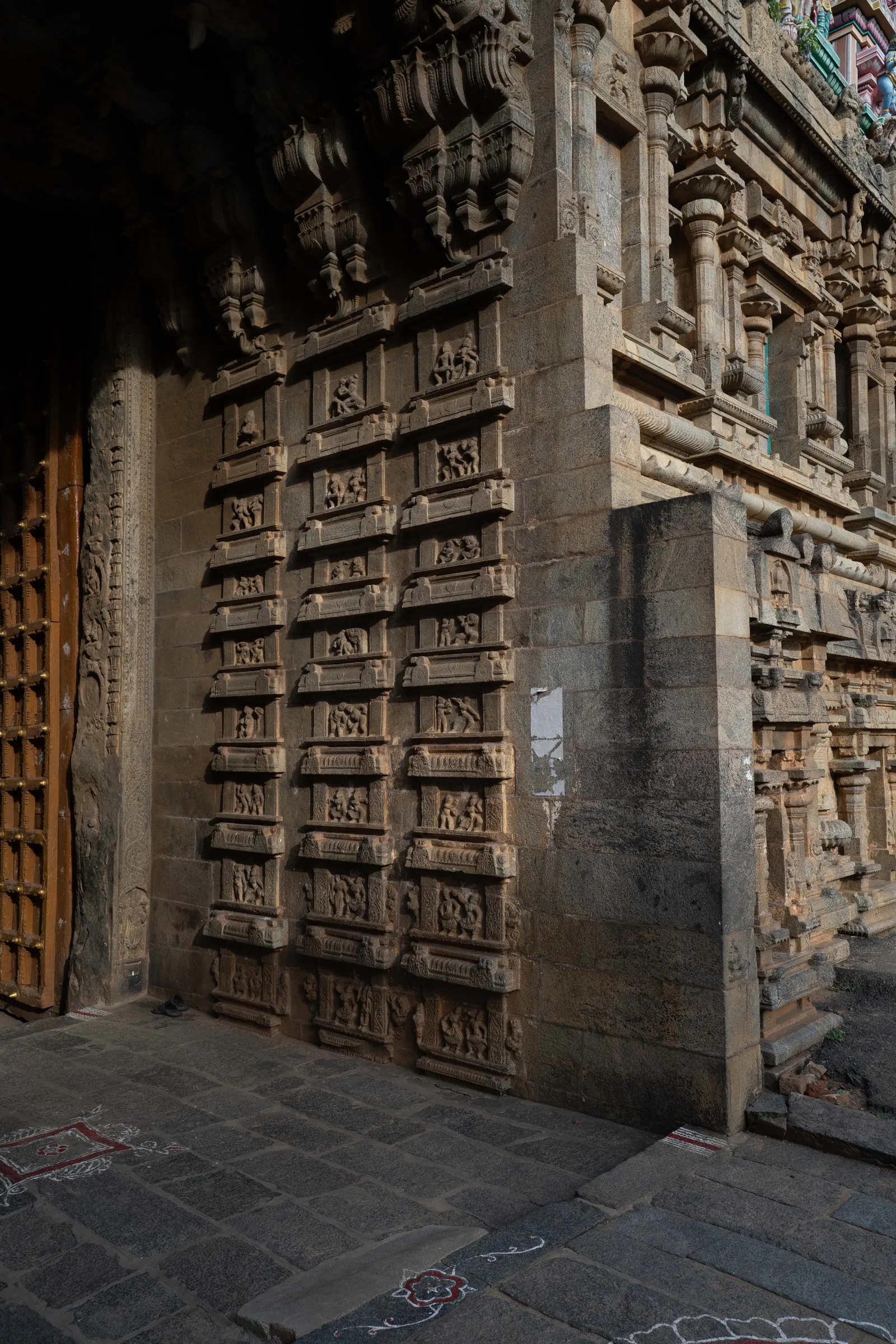
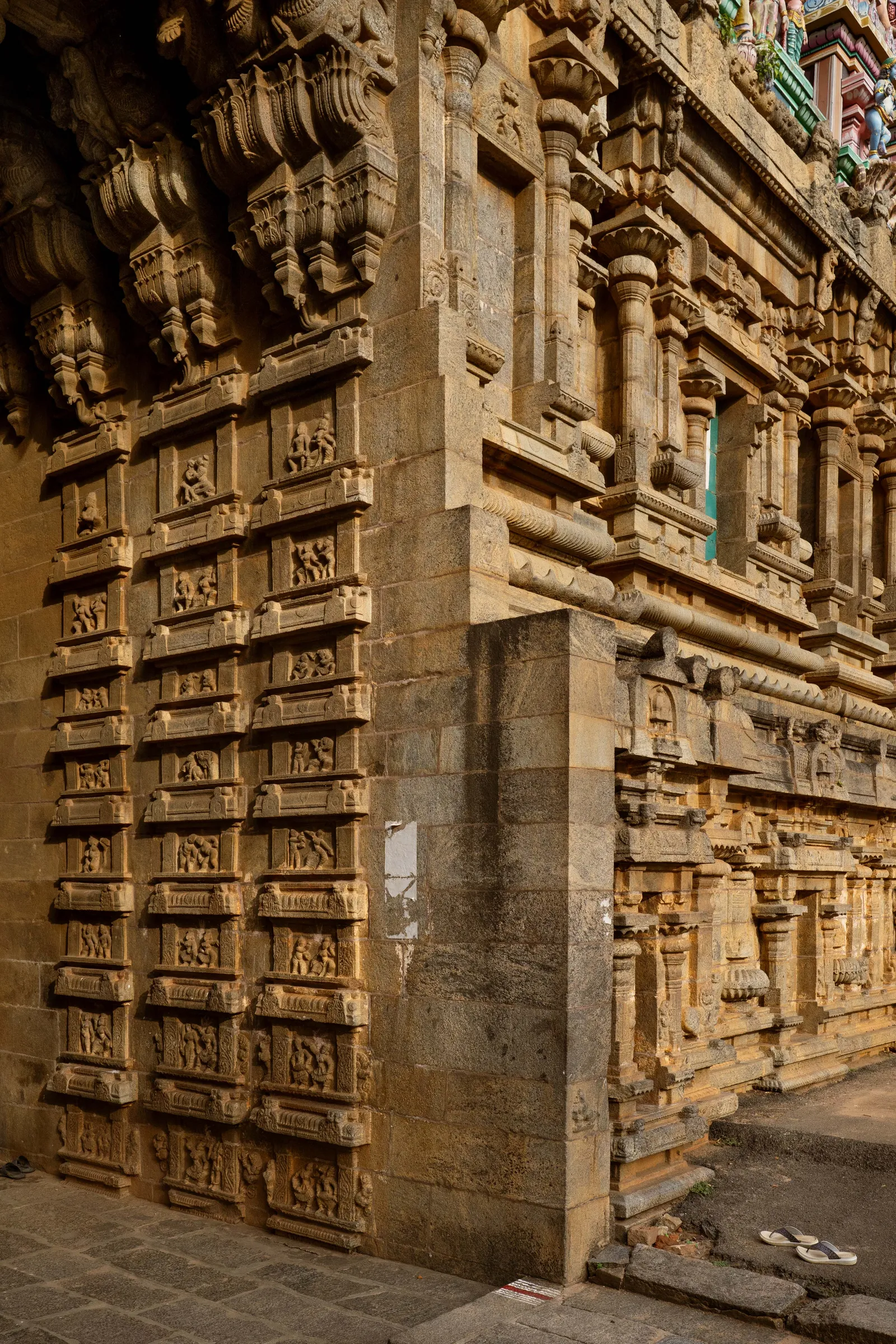
Near Cuddalore, the Bhuvaraha Swami temple at Srimushnam is the largest and most ornate of the Varāha temples, honouring the boar avatāra of Viṣṇu who raised the earth from the waters.
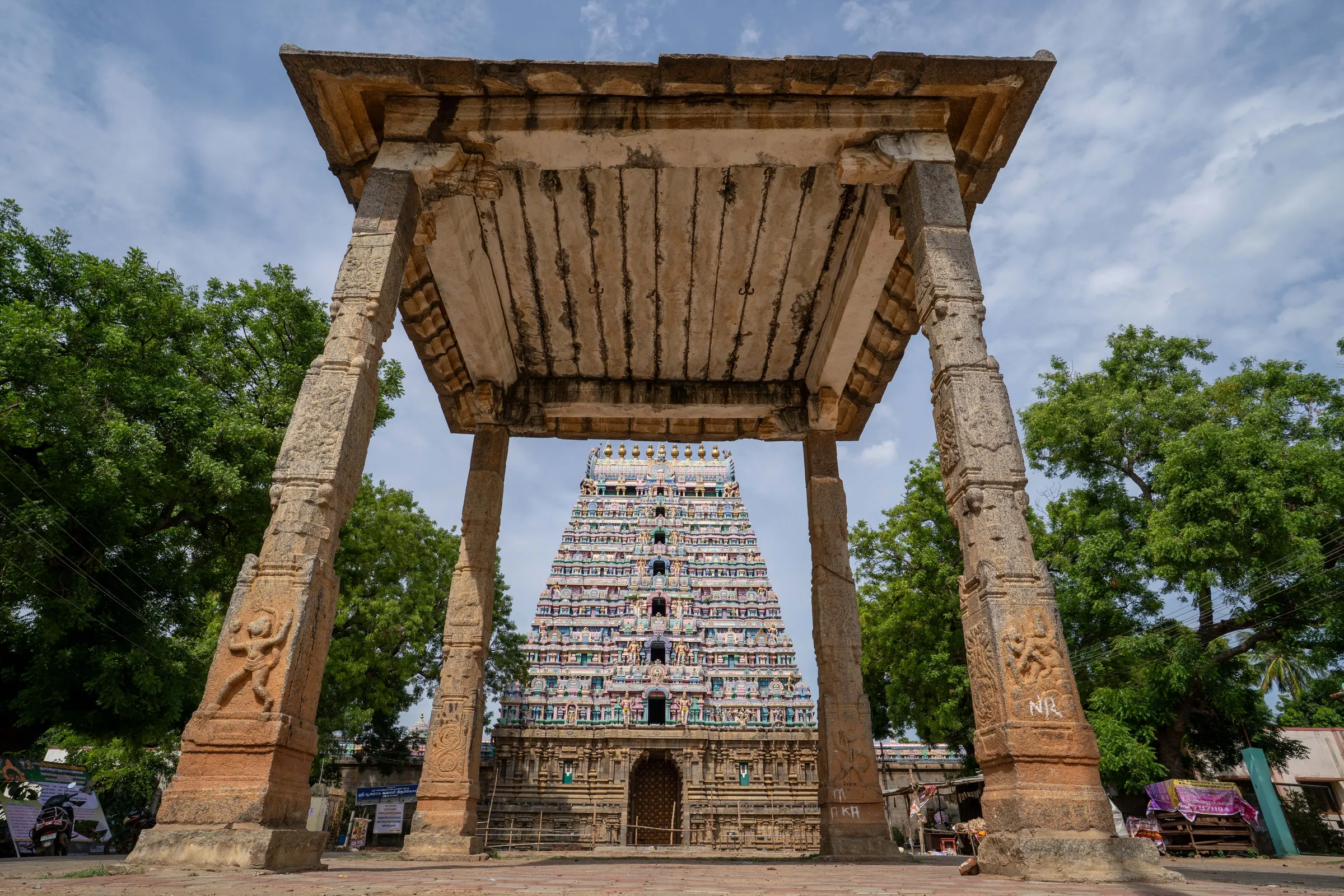
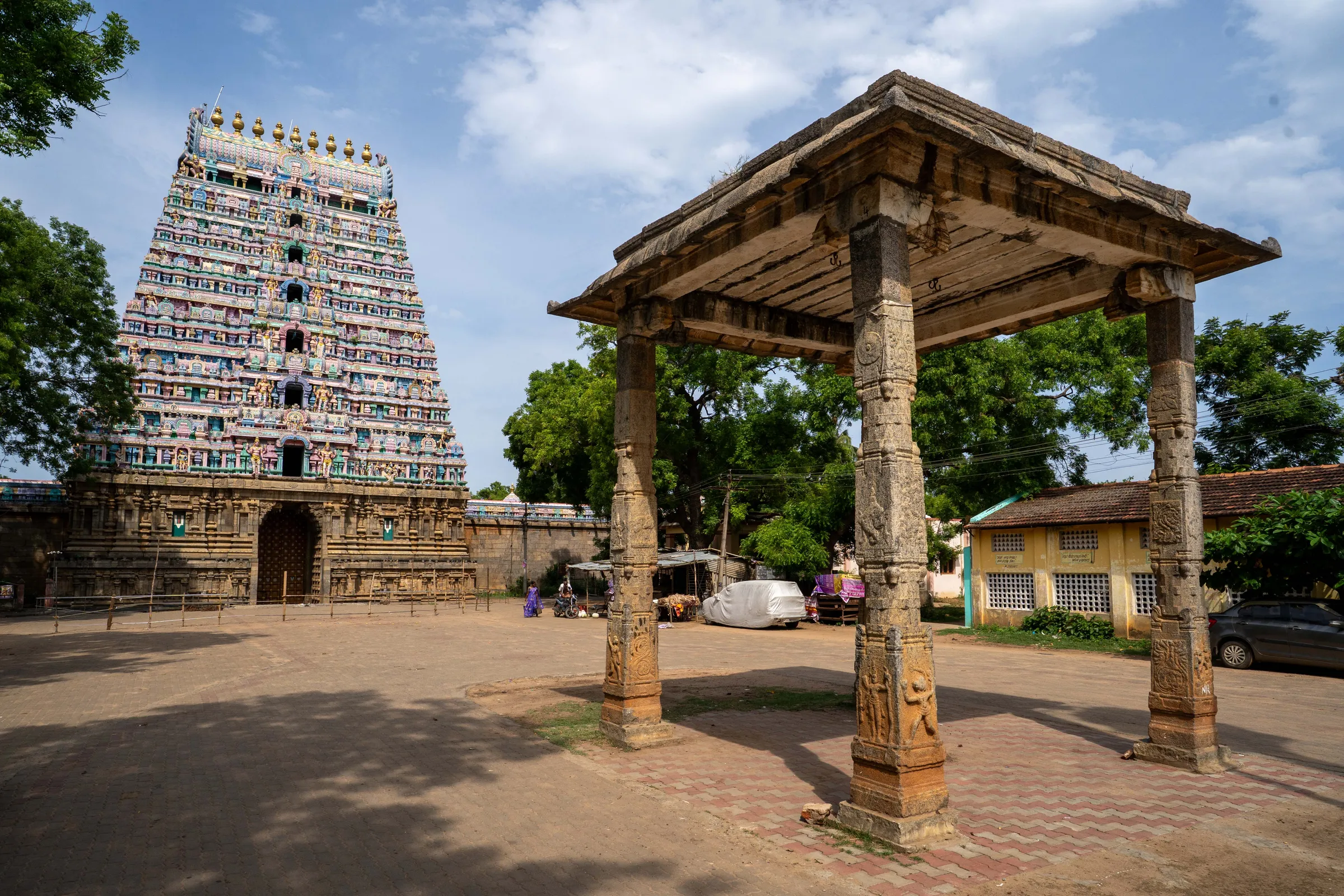
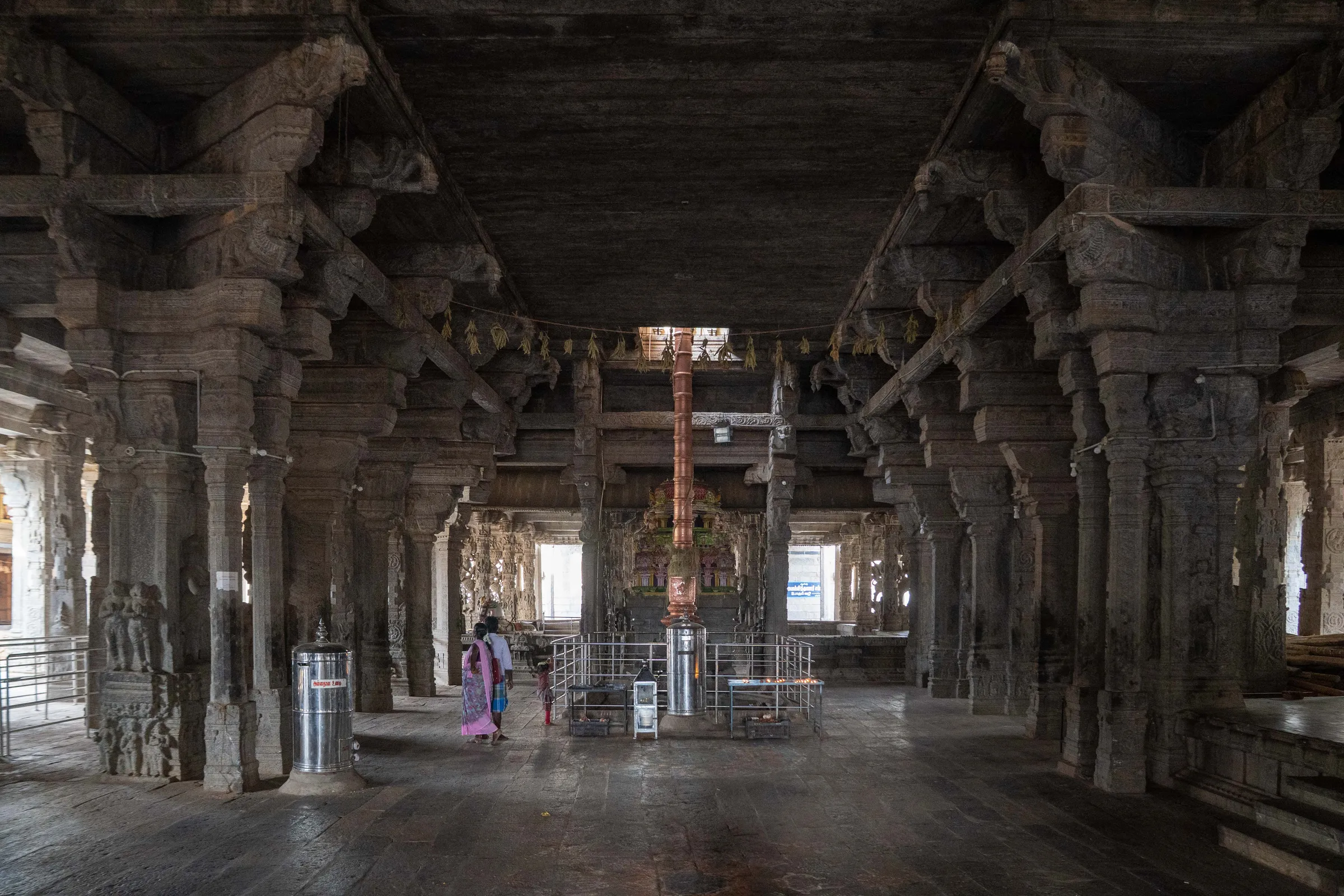
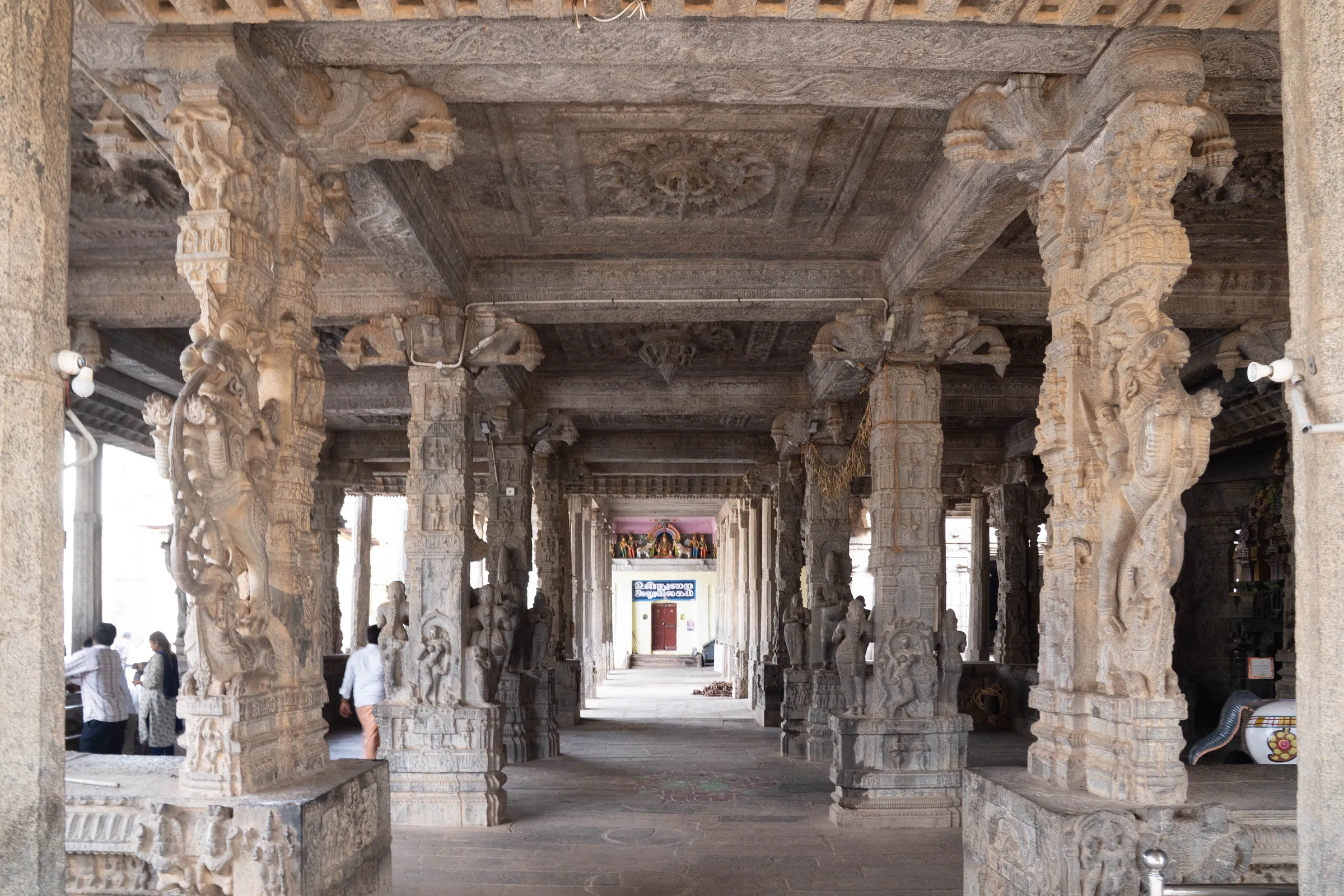
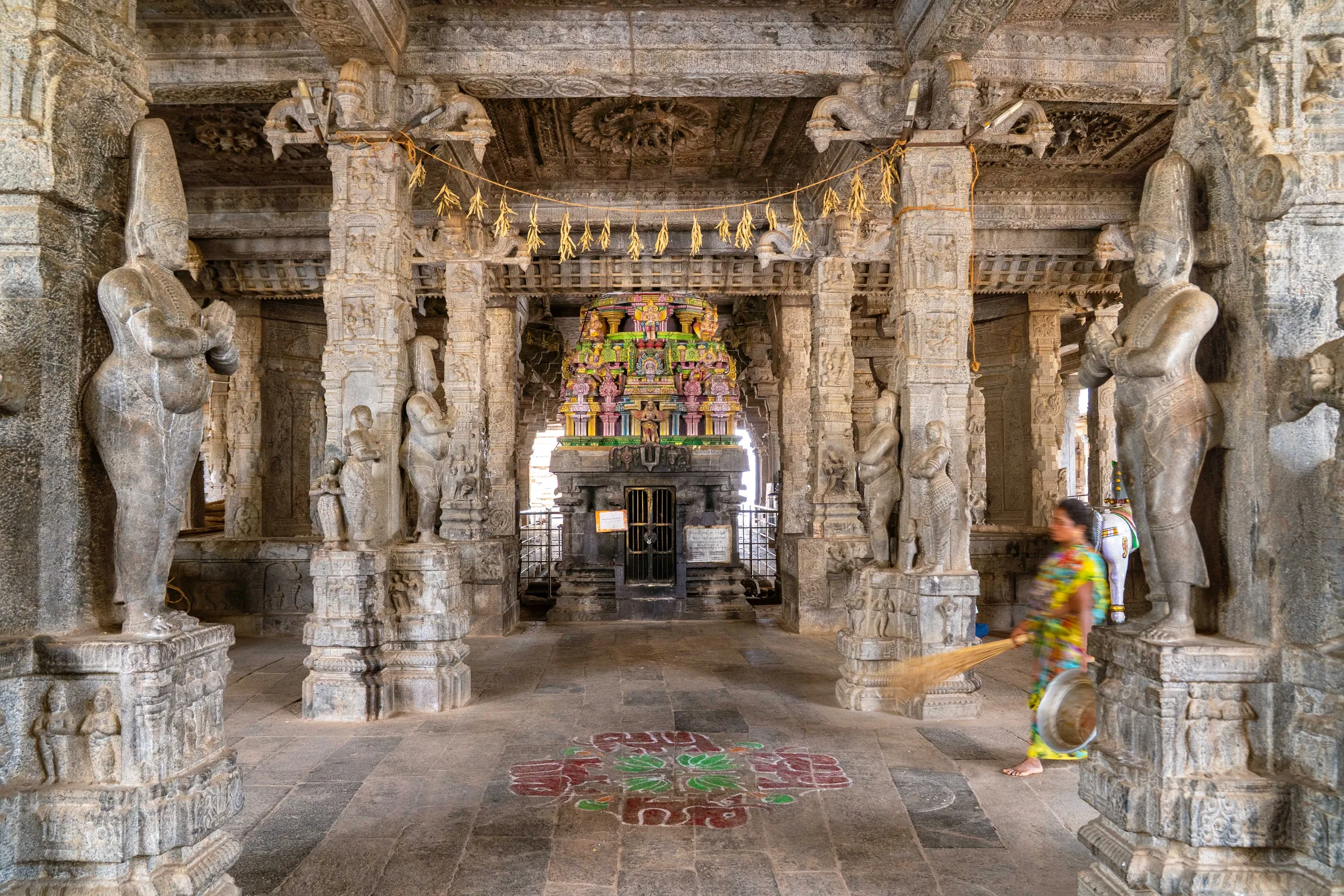
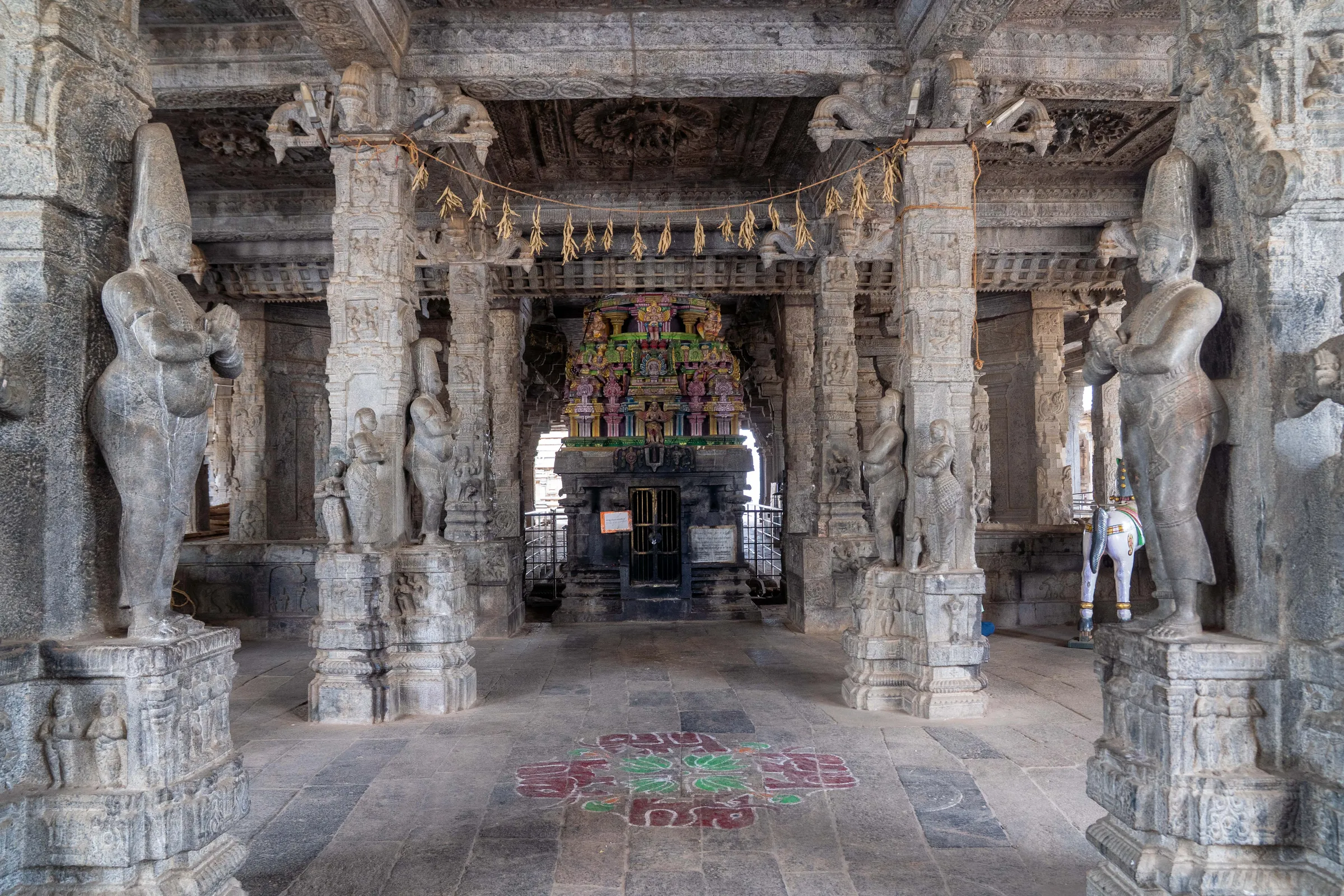
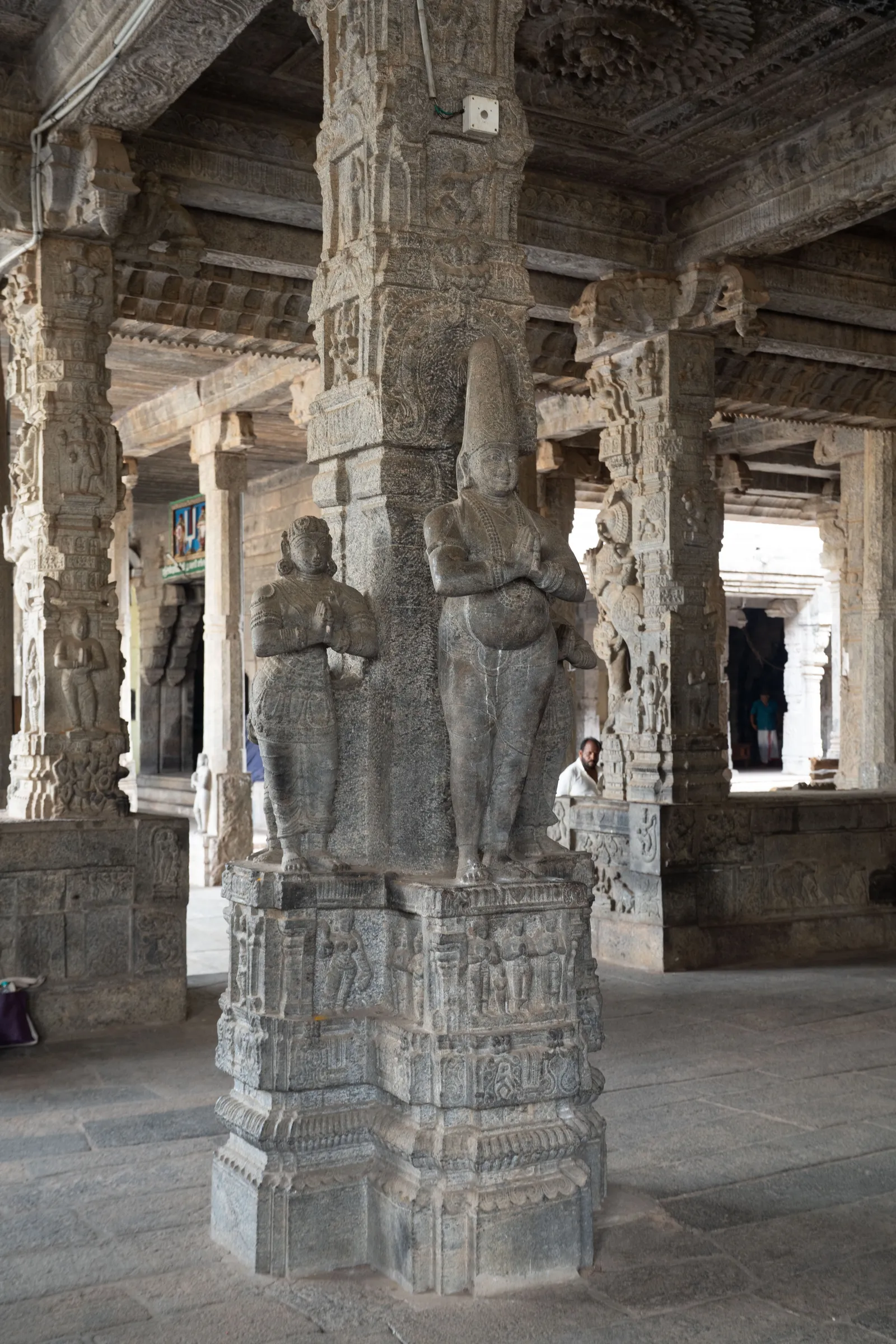
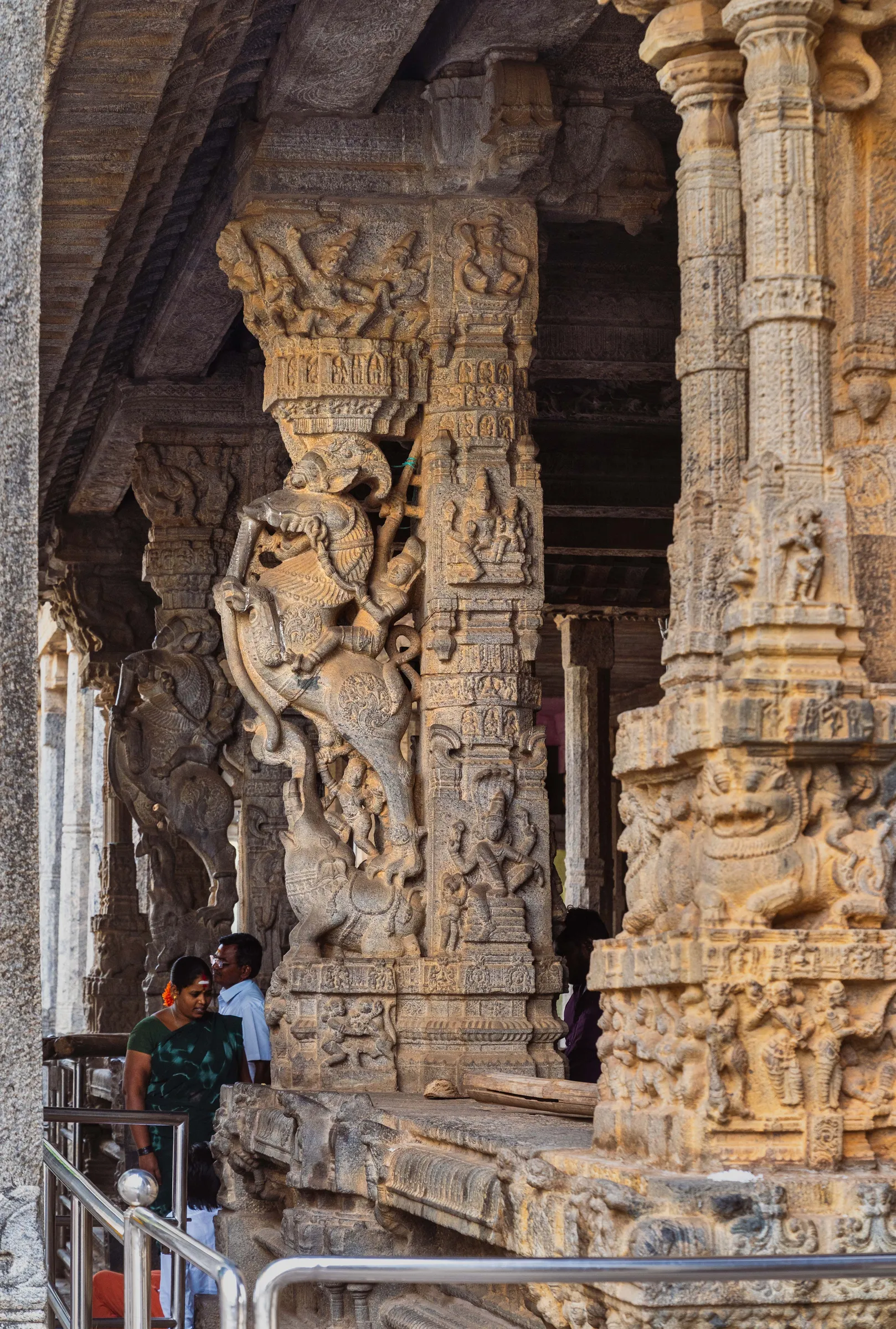
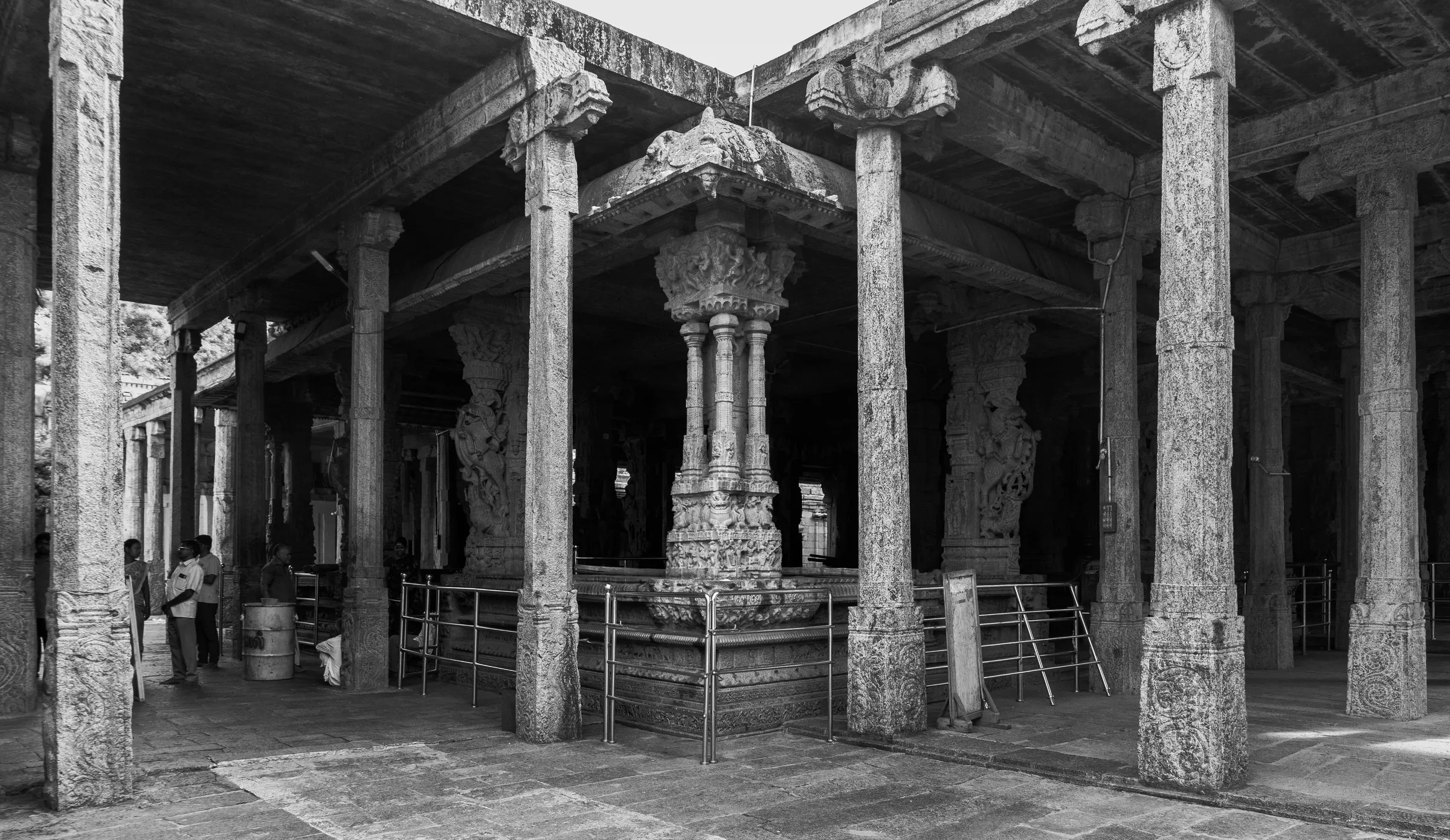
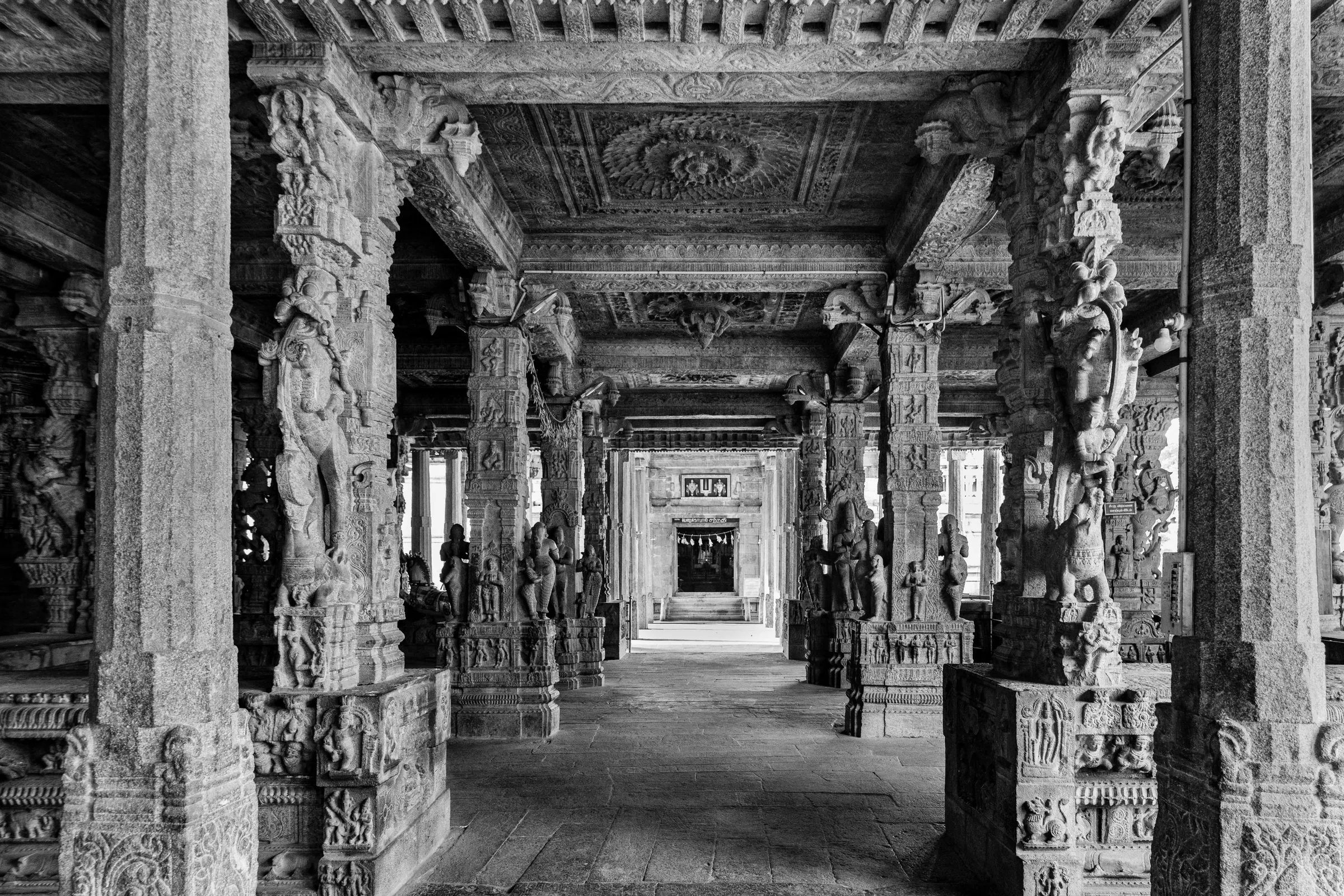
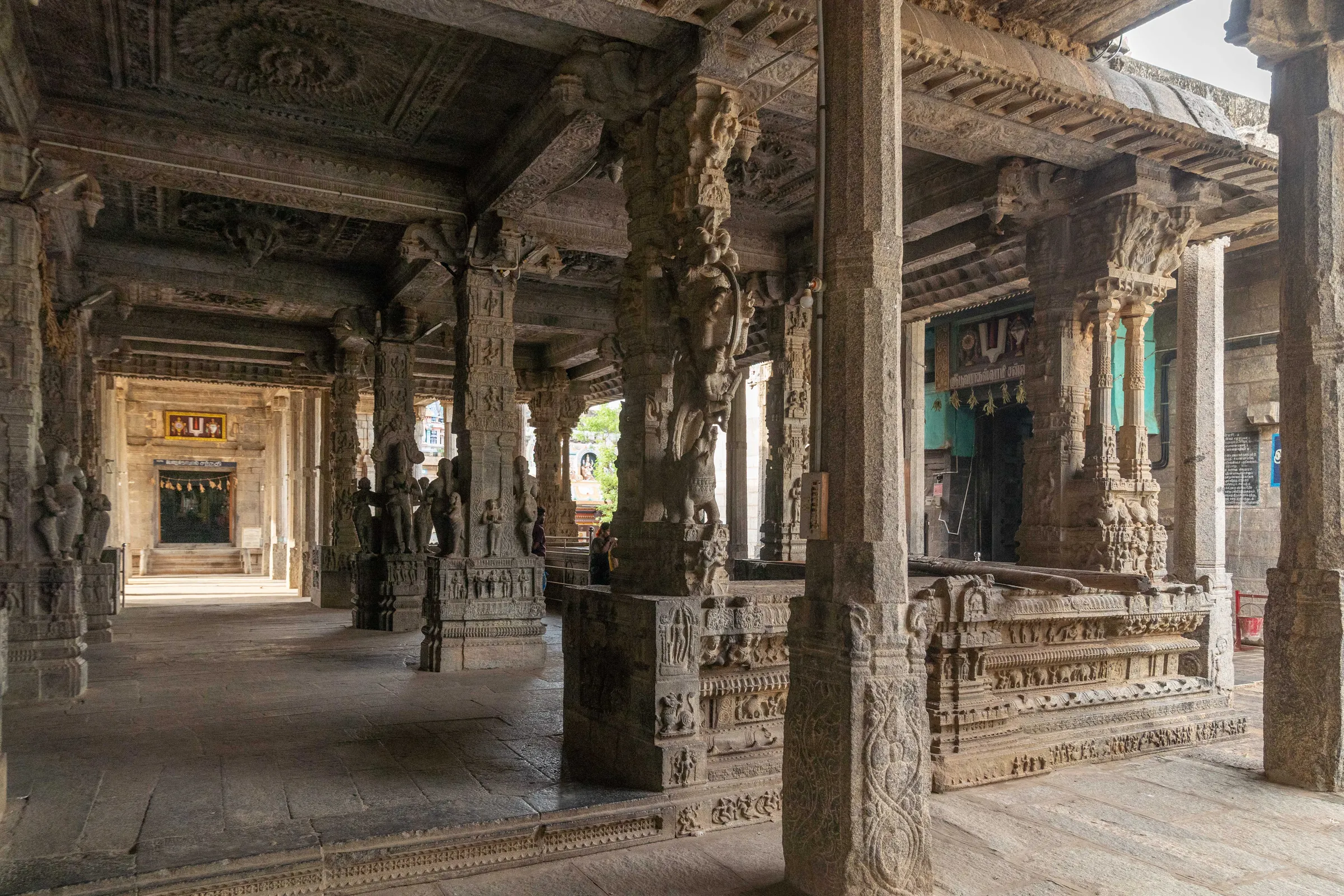
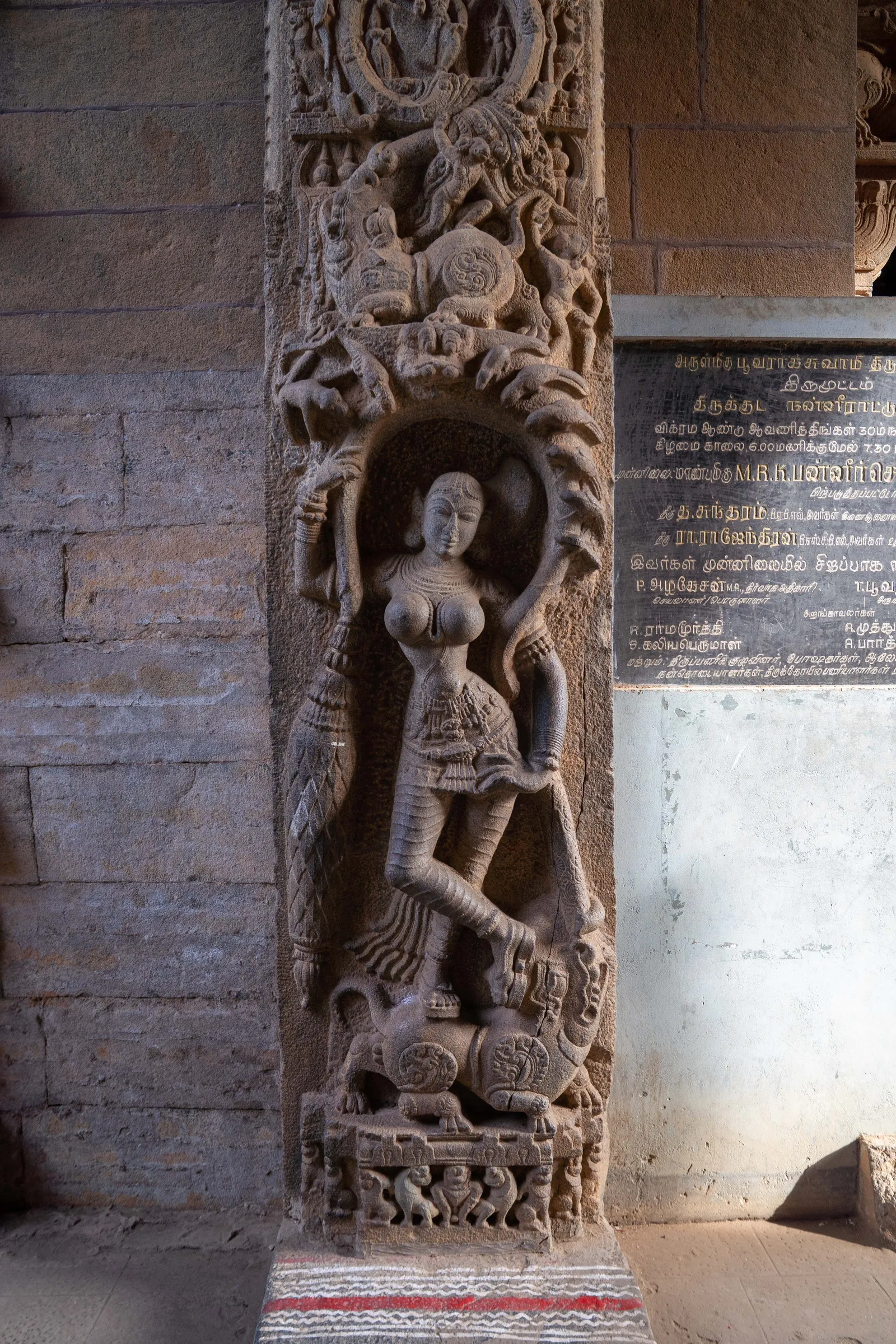
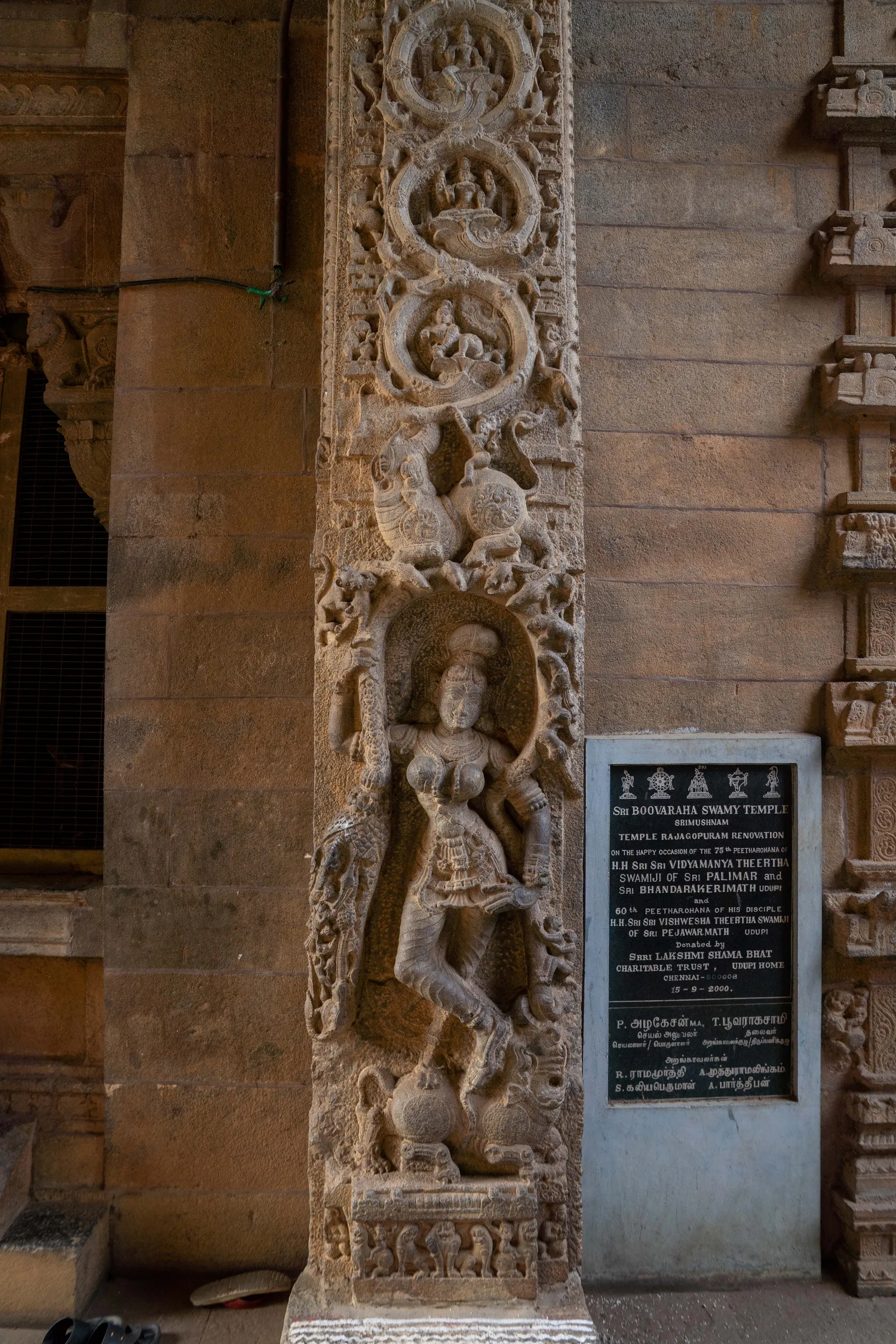
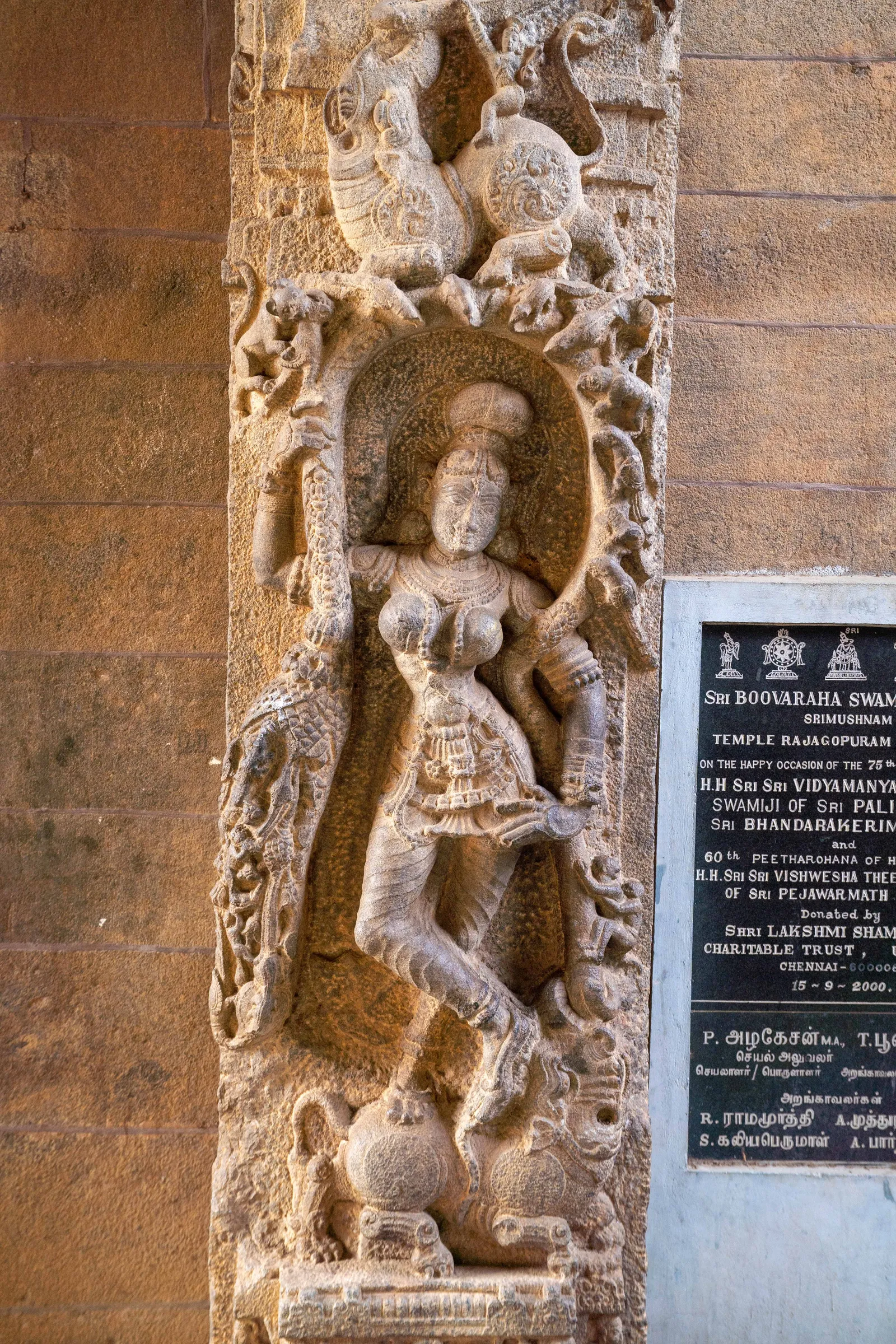
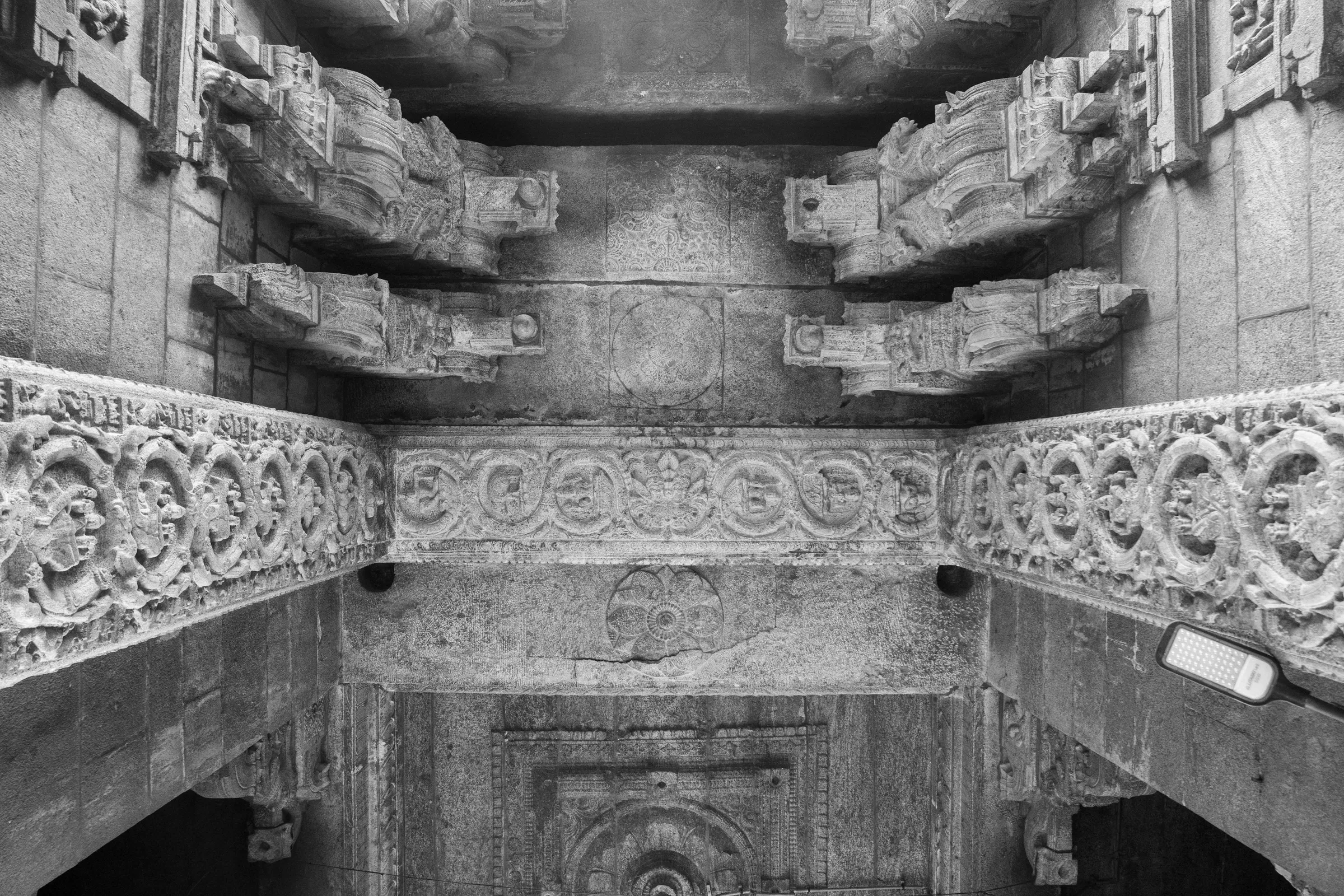
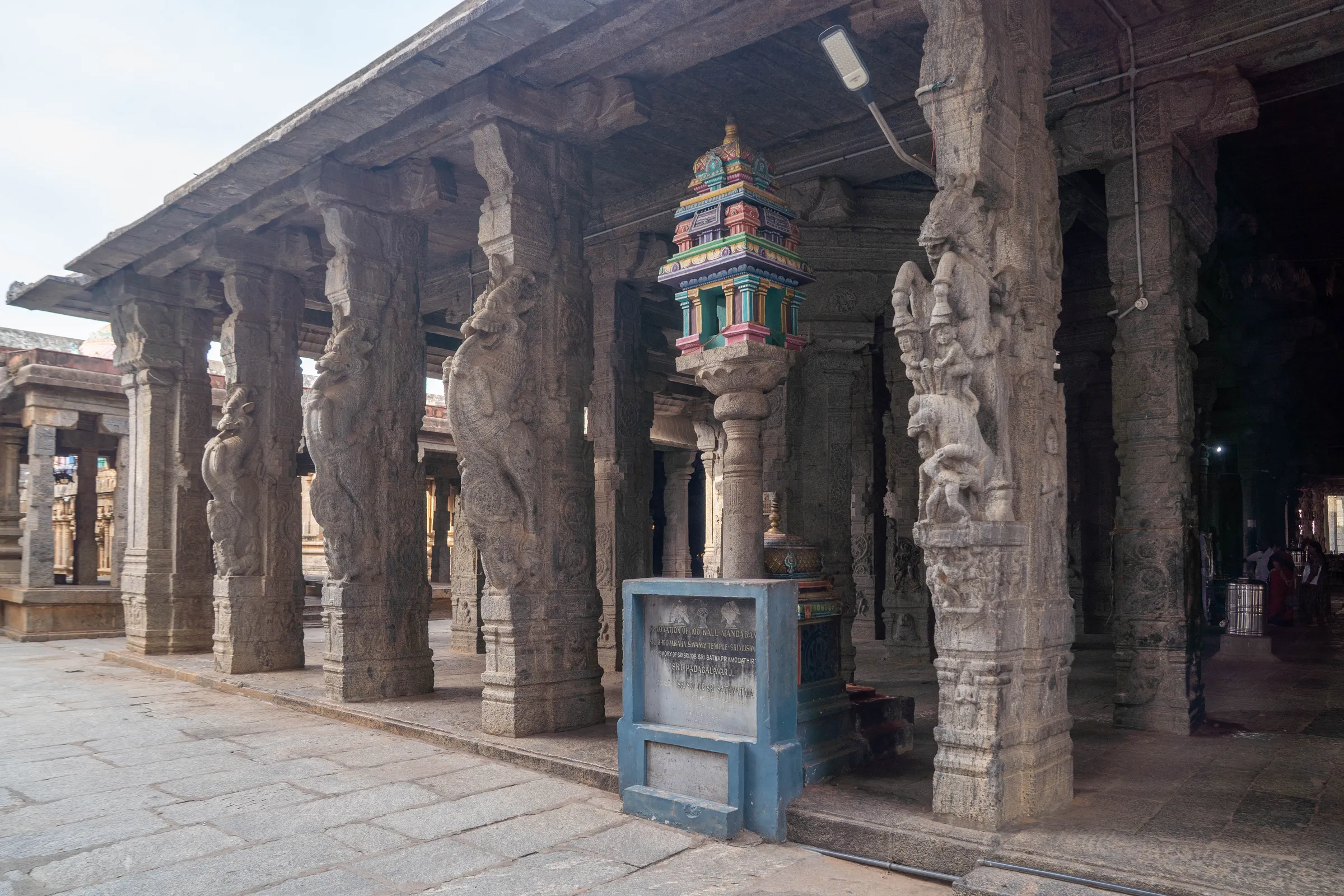
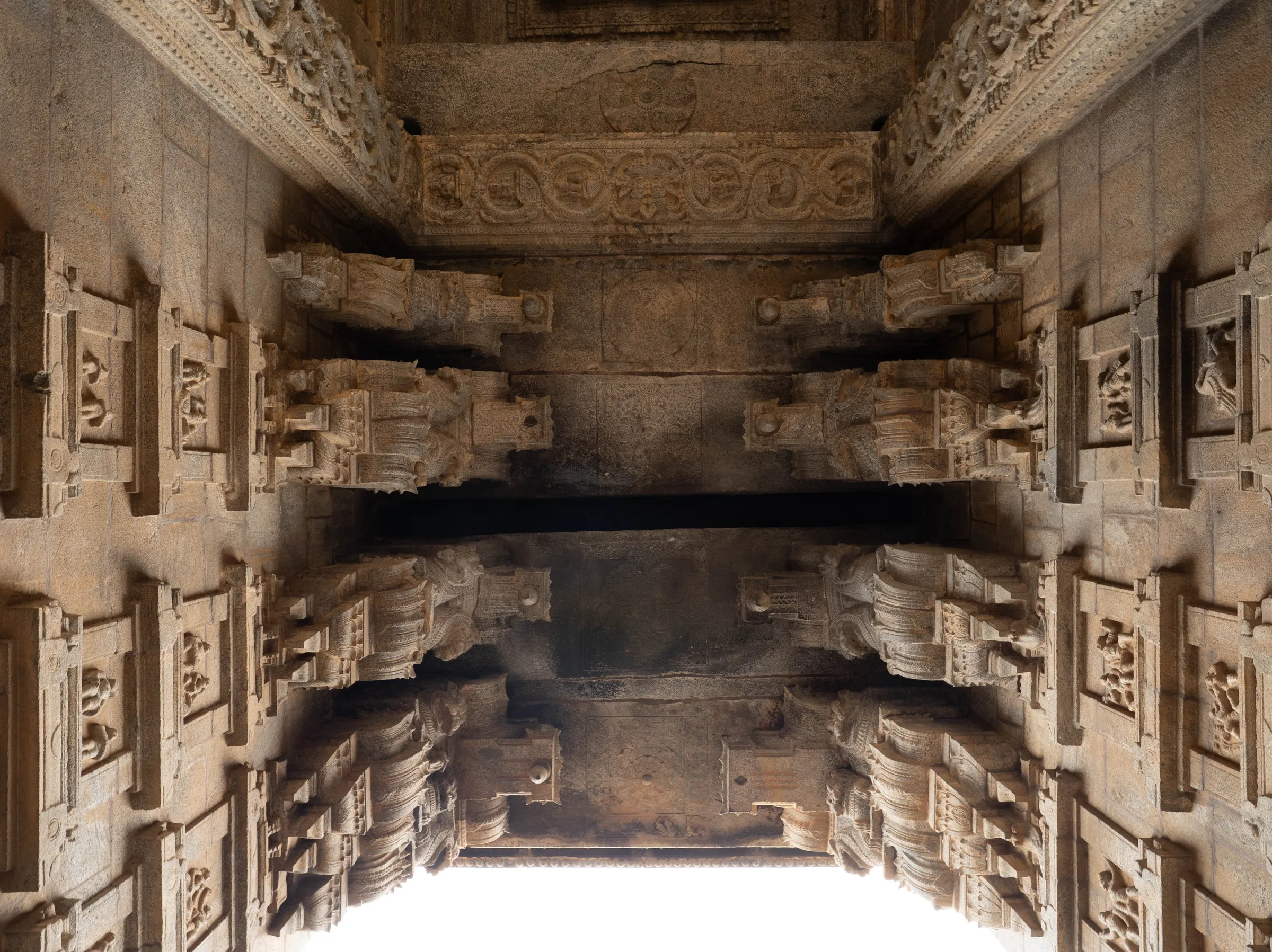
Before the main shrine, beside the shrine of the Thayar Ambujavalli, stands the celebrated mandapa: a 16 pillared hall of nine equal squares in solid granite, called the Purusha Sukta Mandapa. Its ceiling is among the most stunning examples of artisanship, and on the low parapet are several parrots carved in such detail in hard granite that a finger can pass between the wall and the tail feathers. The outer pillars carry rearing equestrians showing great detail of the weapons and armour of the Hindu kingdoms, and the four inner pillars hold images of royal men and their wives.
The four inner figures bear no inscriptions, so their identities are unknown. The tallest is either the Vijayanagara king Rama Raya, who ruled 1542 to 1565, or the Thanjavur Nāyaka Achyutappa, who ruled 1560 to 1604, wearing the conical royal cap, the kullayi. The temple also has a rare painted palanquin and metal Dwarapalakas, and the size of the temple and main deity is unusual.
02
Archaeological
dated & cited
An inscription on the inner wall mentions a mandapa built in the complex in 1432 CE, placing the innermost area in the fifteenth or at earliest the fourteenth century. In 1582 the larger walls were built by Vaiappa Krishnappa Nayaka, an important figure in the Vijayanagara kingdom then ruled by the Aravidu dynasty. In 1583 a massive enlargement was funded from the income of 72 villages, the inscription naming the taxes used.
03
Mythological
as transmitted
The worship of a boar headed god was a tribal tradition absorbed into the Vedic fold, where the figure became part of Vishnu as Varāha and the female aspect Varāhi part of the sapta matrika, the seven mother goddesses. Why the Srimushnam hall is called the Purusha Sukta Mandapa is unclear, perhaps for the role of Varāha in saving the earth from Hiranyaksha and so becoming the primordial god who recreated the earth.
The temple has a festival in Maasi, mid February to mid March, when the processional deity goes to Killai for a sea bath. On the route, at the village of Thaikkal, whose population is largely Muslim, the dignitaries receive the deity with cloth and flowers and join the procession, which pauses at the Hazrath Syed Shah Rahmathulla dargah, where a garland from the deity is draped on the grave and camphor merged with that burning within. The custom arose after the saint settled at Killai in 1720 and a local official, Uppu Venkatarao, helped demarcate the dargah lands, in gratitude for which the trustee leased land to the temple trust. The main deity is served a unique offering, Mustha Choornam, made from the flour of a tuber favoured by boars mixed with rice flour, sugar, ghee and cardamom.
This is an open, reviewed record. If you have spotted an error or have
something to add — a correction, a date, a source, a name in another script —
propose it. Every change is reviewed before it joins the record.