Architectural
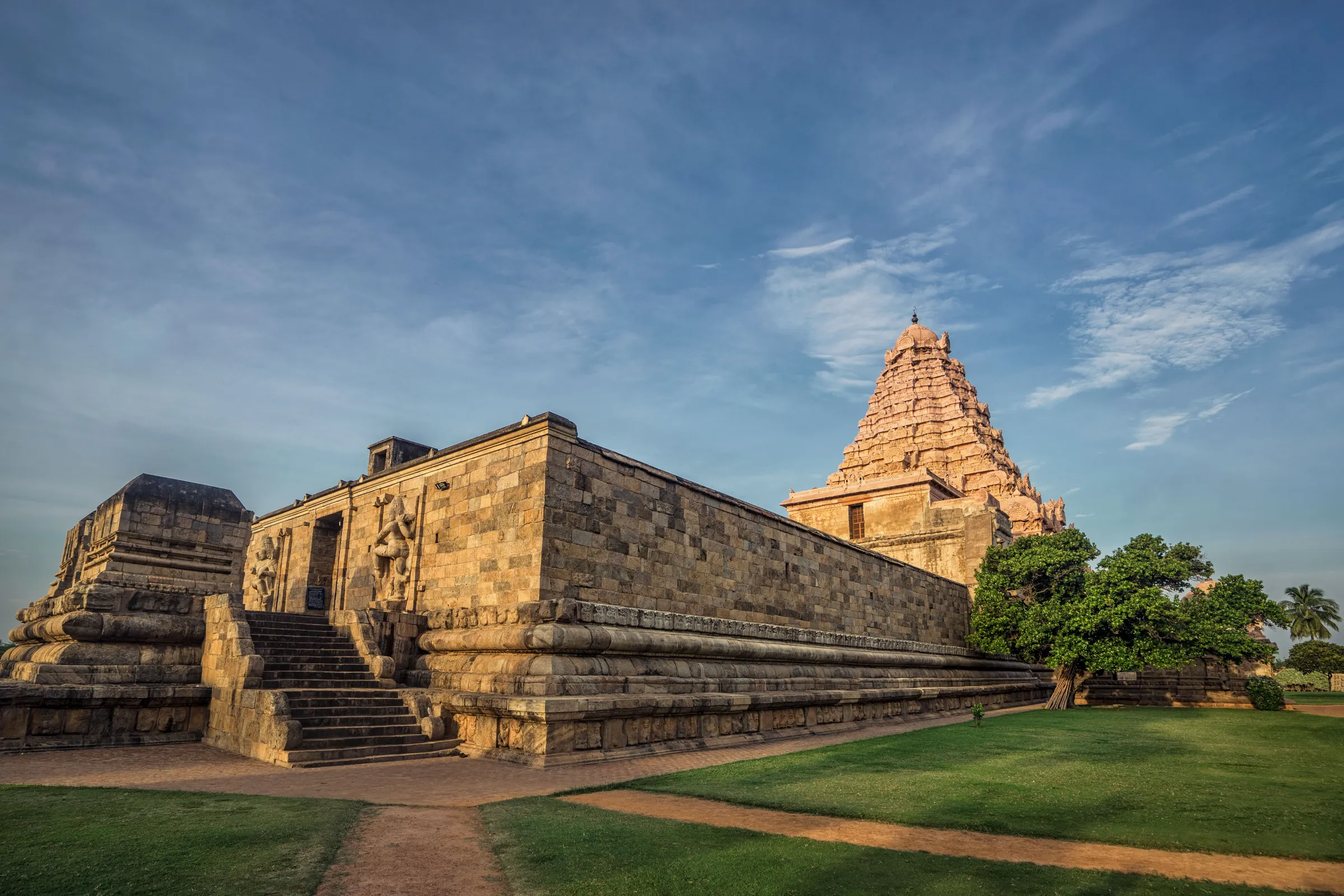
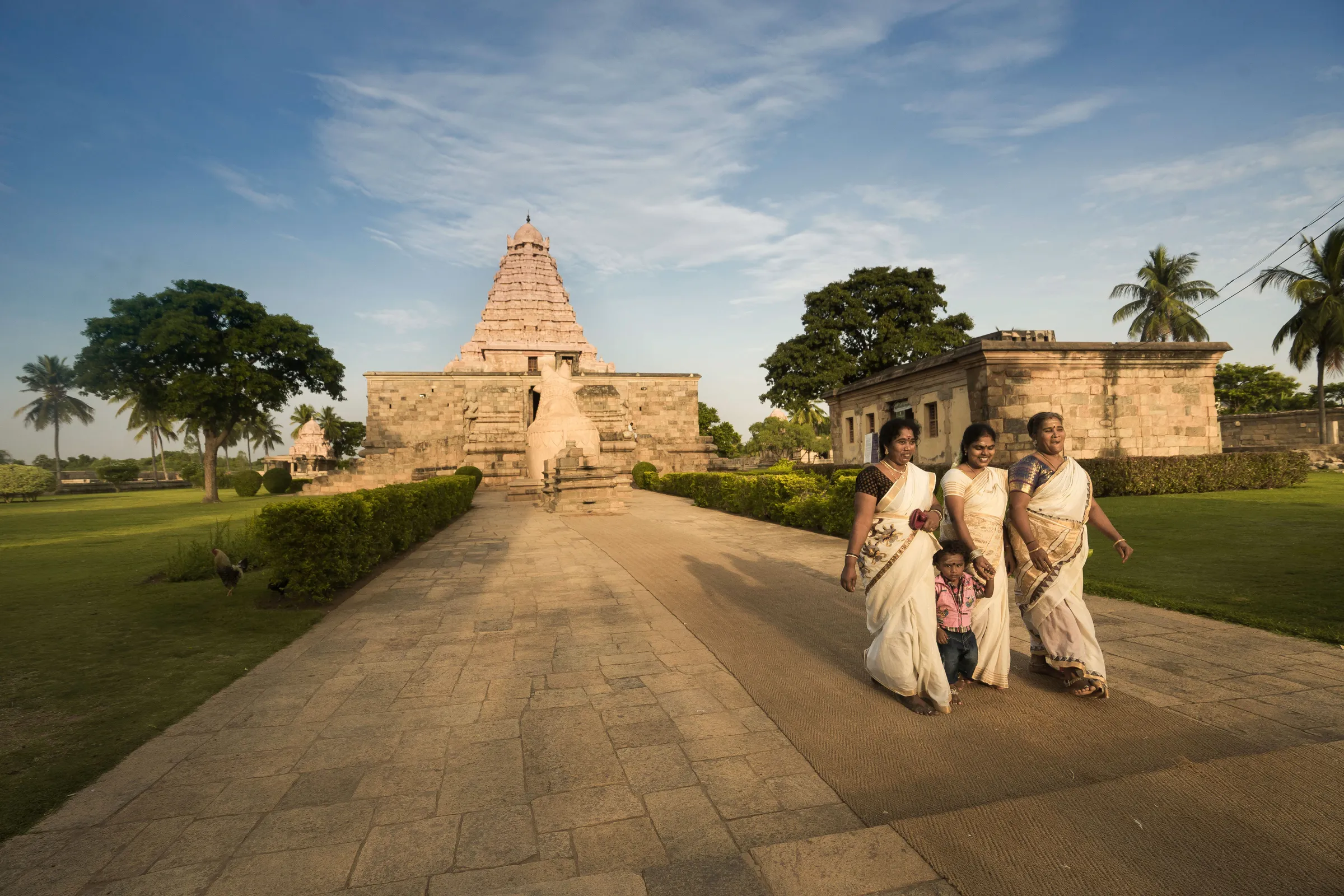
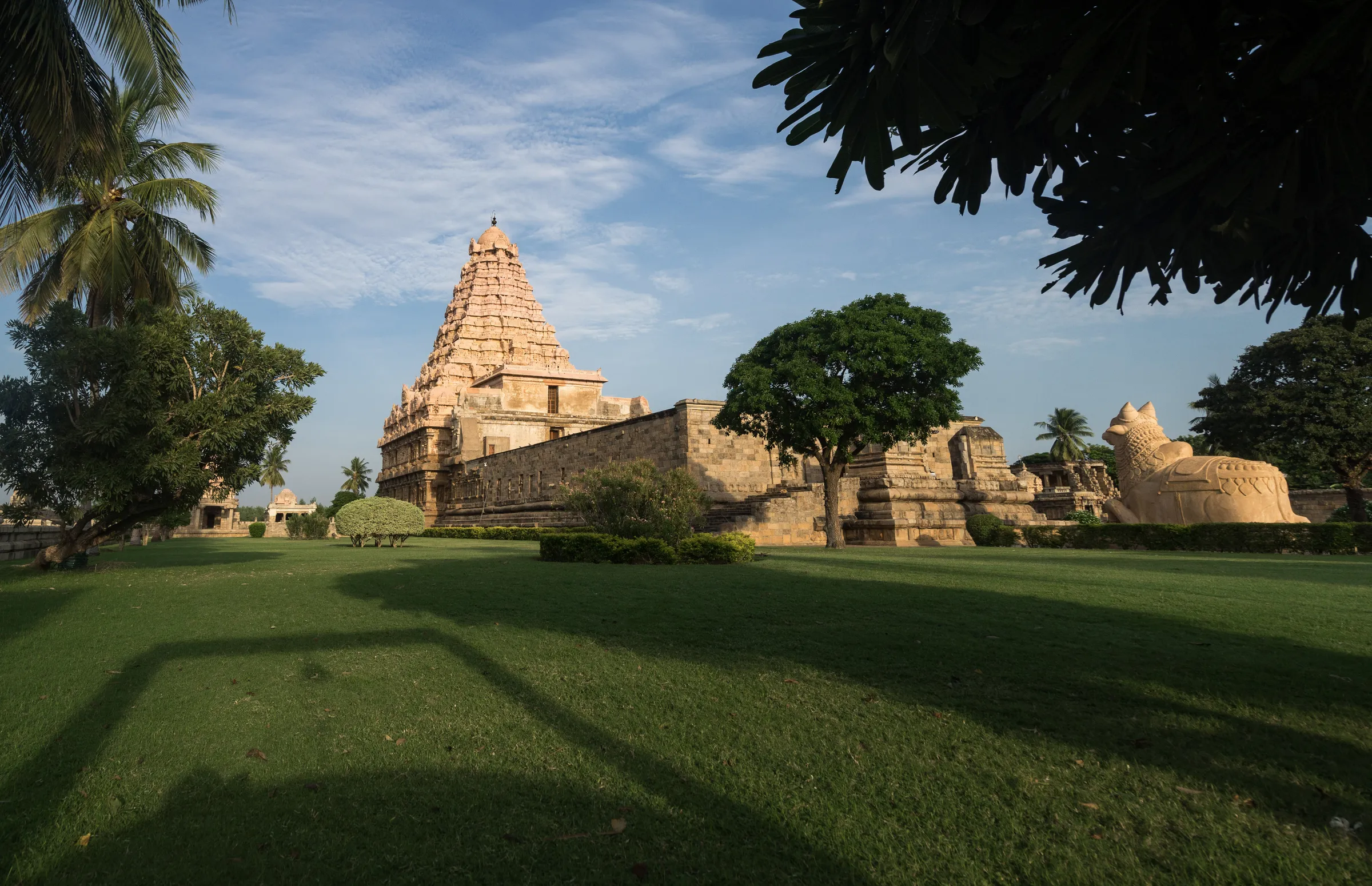
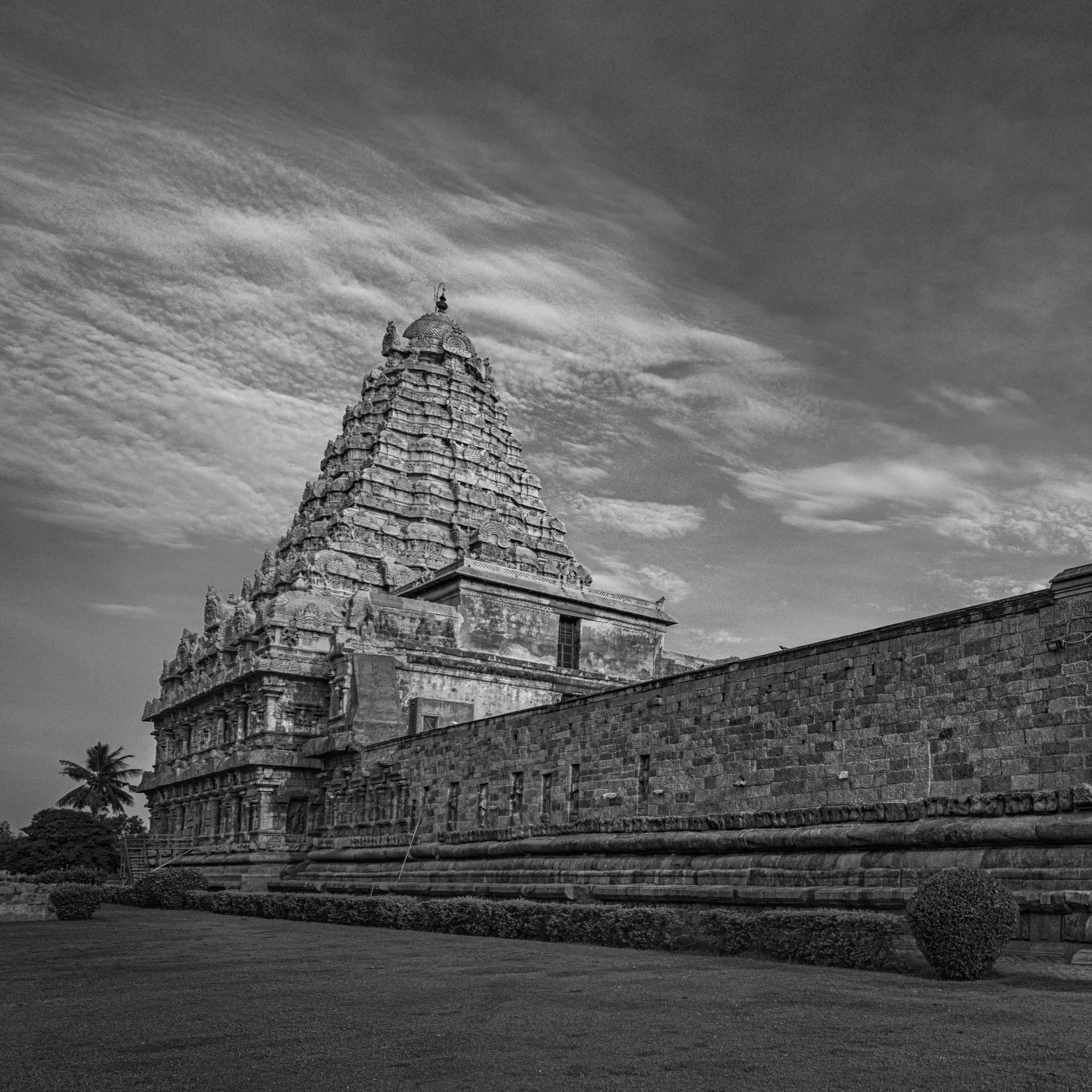
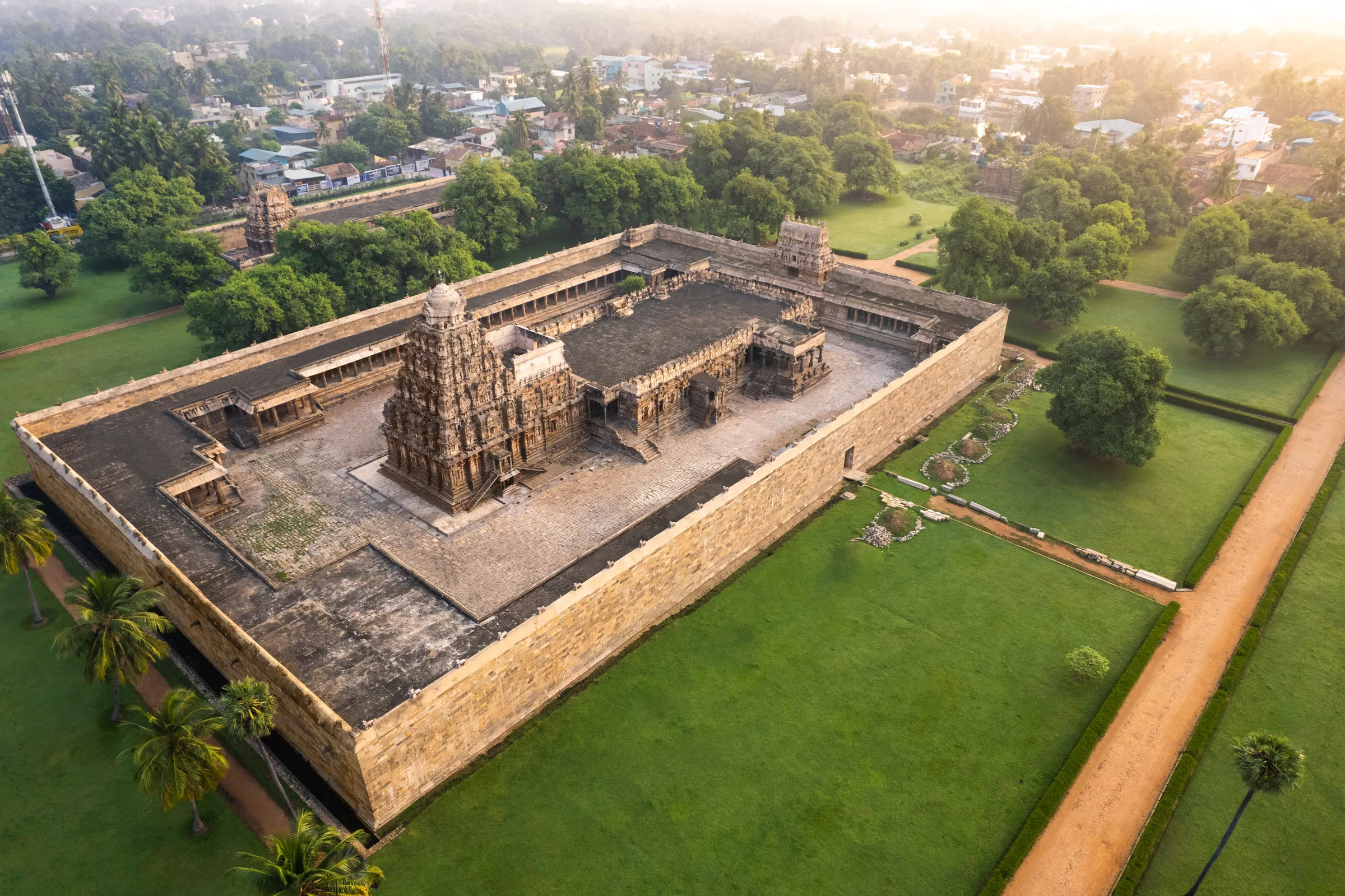
structure & vocabularyThe śrīvimāna is about 30 feet high, and historians read the temple as a gentler counterpart to the Thanjavur Bṛhadīśvara, with a soft angle of rise and many sculptures set within kōṣṭas or alcoves. The talas of the vimāna repeat one pattern in descending sizes to create an overall harmony. The walls of the sanctum stand at two levels before the vimāna begins, and here are the temple's fine kōṣṭa devas, of which Śiva honouring Chaṇḍēśa, Naṭarāja and Sarasvatī are the finest and untouched by vandals.
To the rear of the garbhagṛha in the west are a Viṣṇu and a Liṅgōdbhava, and, rarely, the guardians of the eight directions, Agni, Yama, Nirṛti, Varuṇa, Vāyu, Sōma and Īśāna, with Indra not represented. The Dvārapālakas are noteworthy. Inside on the right, against a wall, is the Saura pīṭha, a single stone Navagraha that was war booty from the Cālukyas and possibly Tamil Nadu's first Navagraha shrine as known today. An adjacent Mahiṣāsuramardhinī is also a war trophy from Rājēndra's Cālukya campaigns.