Architectural
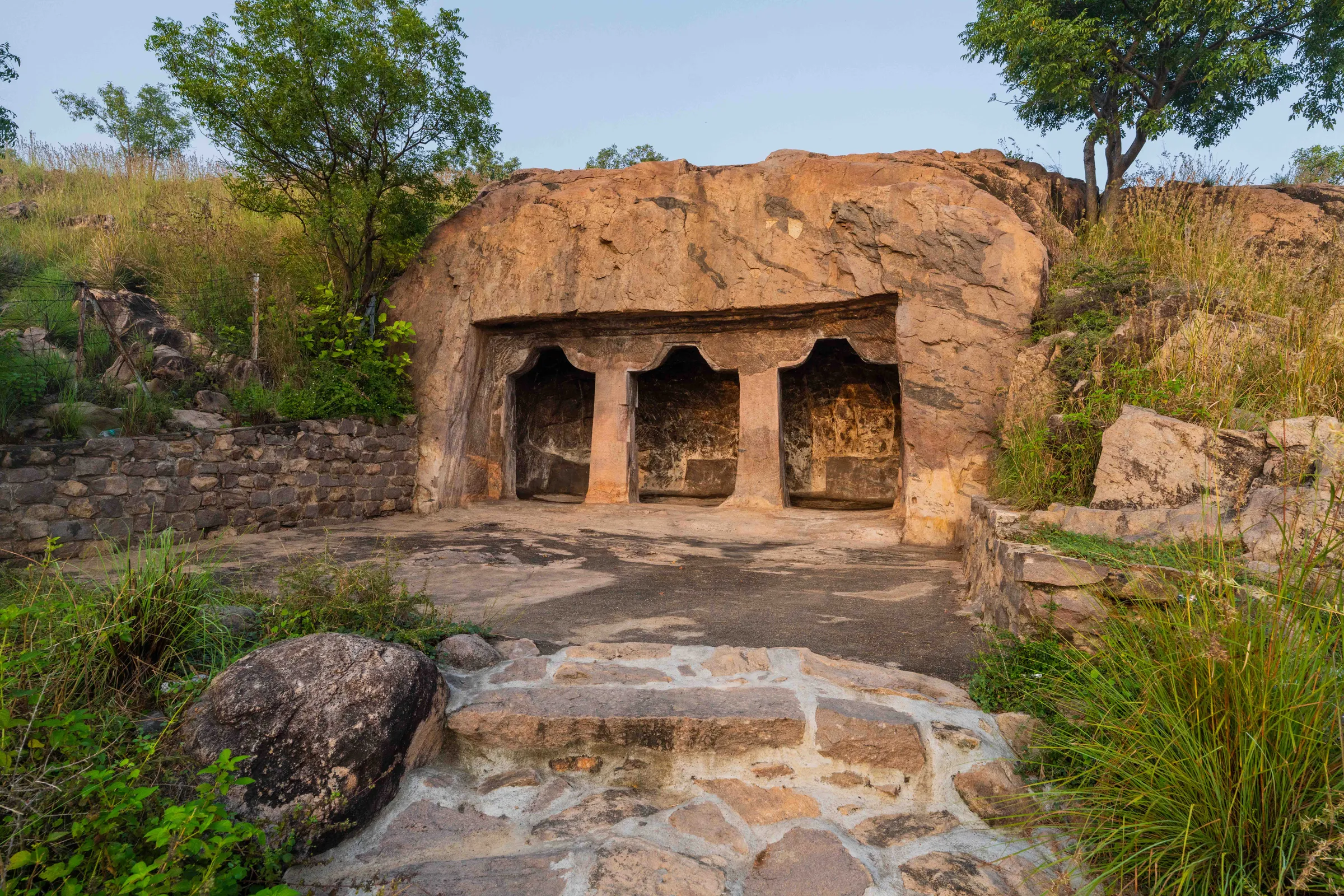
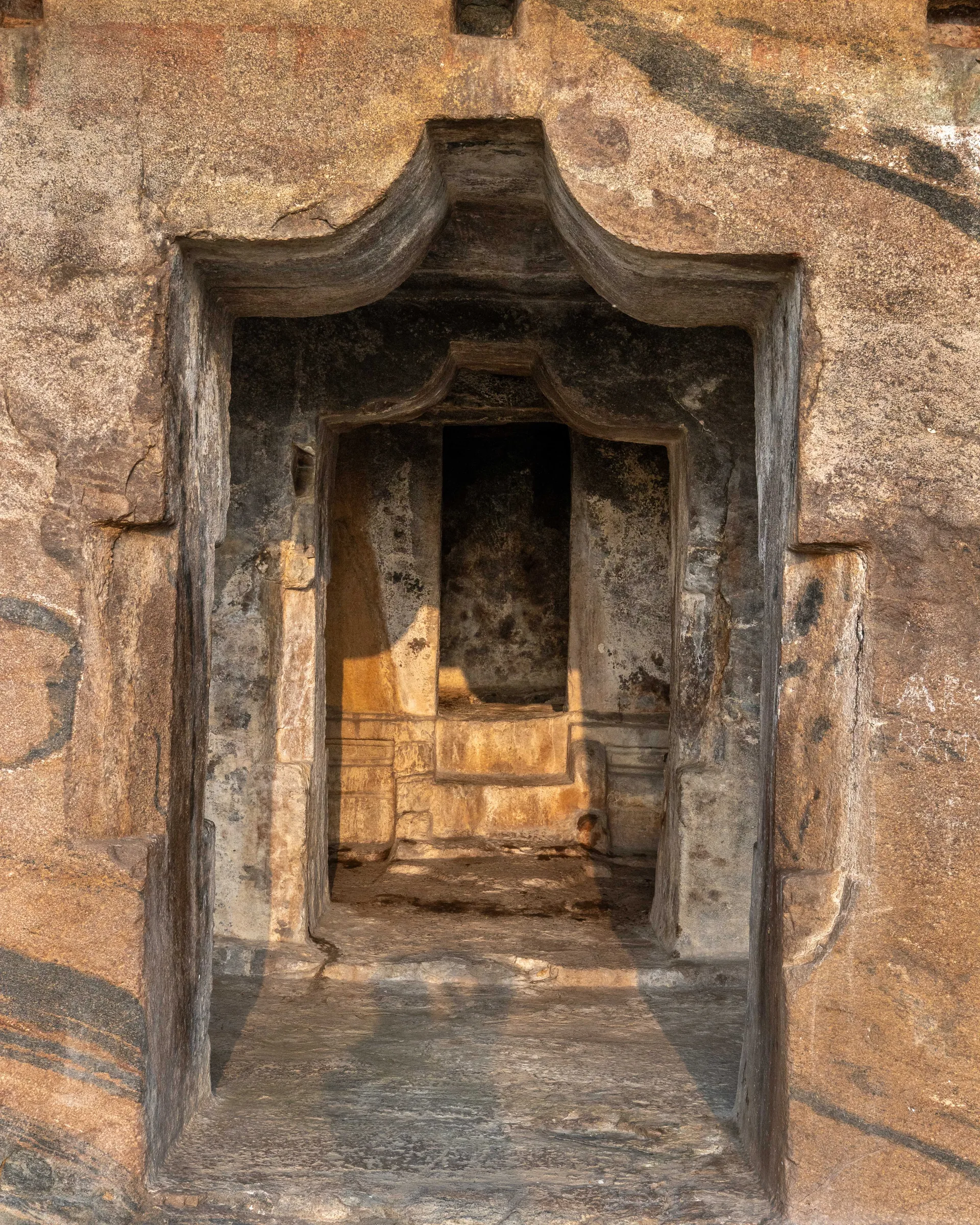
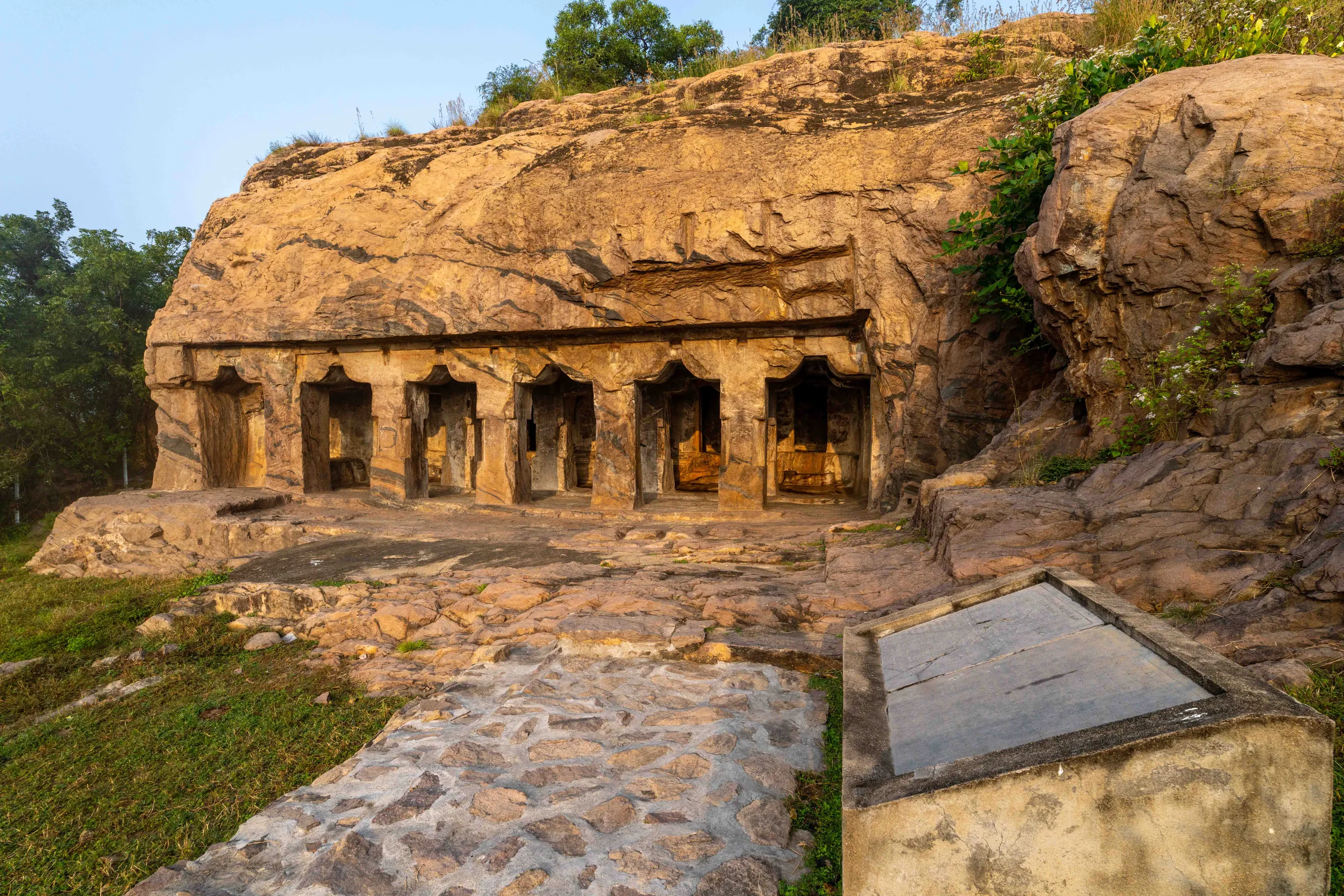
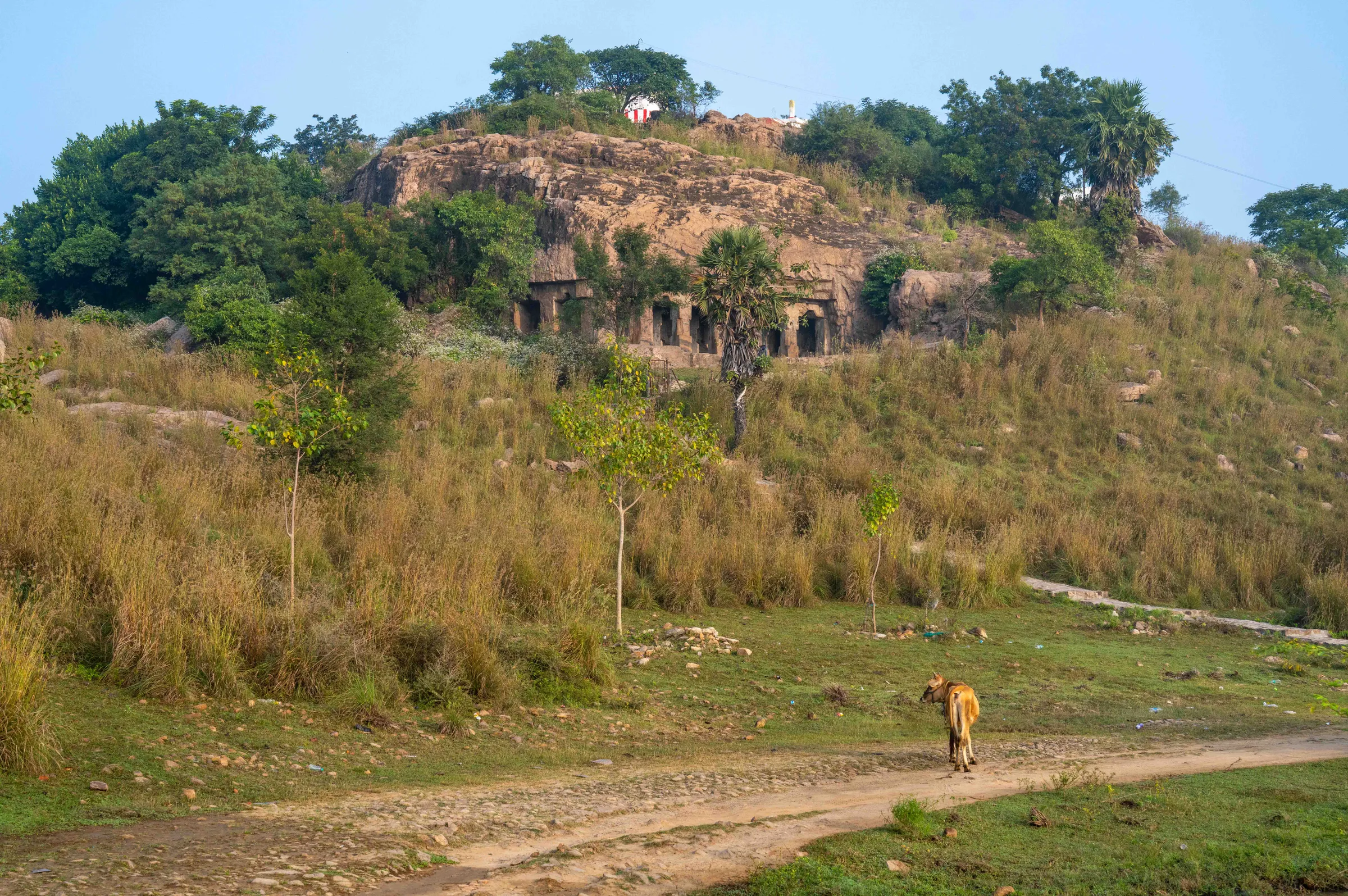
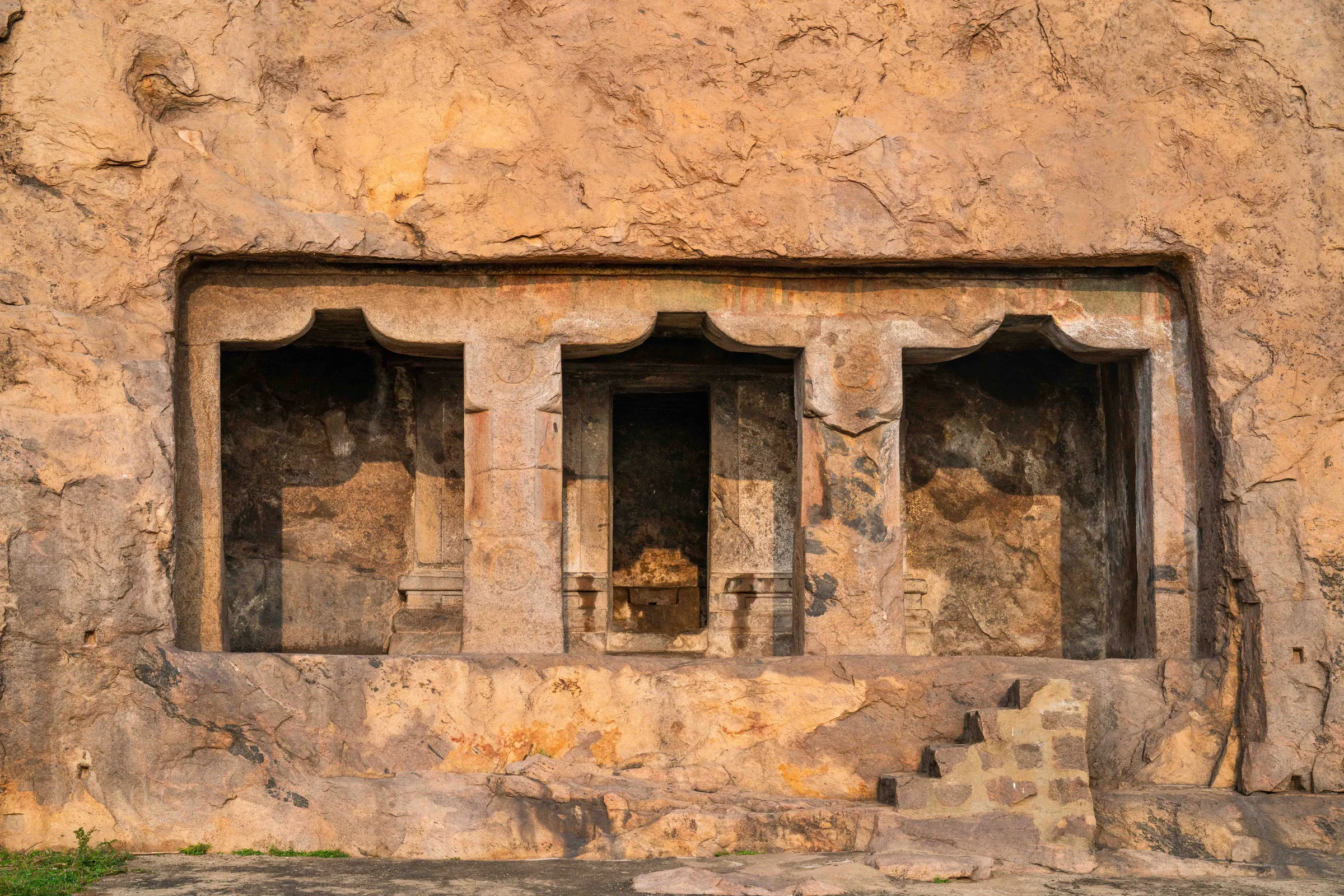
structure & vocabularyAbout 10 km from Kanchipuram, the four cave temples were excavated on the eastern face across three hillocks common to both villages. Per the ASI they are numbered 1 to 4, with 1 and 2 complete, in Mamandur, and 3 and 4 left unfinished, in Narasamangalam. Cave Temple I, the northern-most, has one shrine on the back wall with a noticeable absence of dvarapalas and a mandapa in front, its entrance carrying two pillars in the middle and two pilasters at the extremes in the early Pallava style with cubical top and base, an octagonal middle and a curved potika. The pillars bear inscribed lotus medallions with traces of red paint, similar to a carpet-canopy at Sittanavasal, and the cell retains remnants of paint.
Cave Temple II, the Rudravaliswaram Cave Temple, lies to the south of the first and is slightly larger, its back wall holding three shrines each flanked by a pair of bas-relief dvarapalas, fronted by ardha and mukha mandapas. The central shrine houses a Shiva lingam, the other two, now empty, likely dedicated to Vishnu and Brahma. The two rows of pillars are simple with broad curved potika and geometric shaft, with no lotus medallions, and the facade of two pillars and two pilasters appears unfinished. The shrines show remains of plaster and paint and square recesses cut in the floor to hold the idol in place.
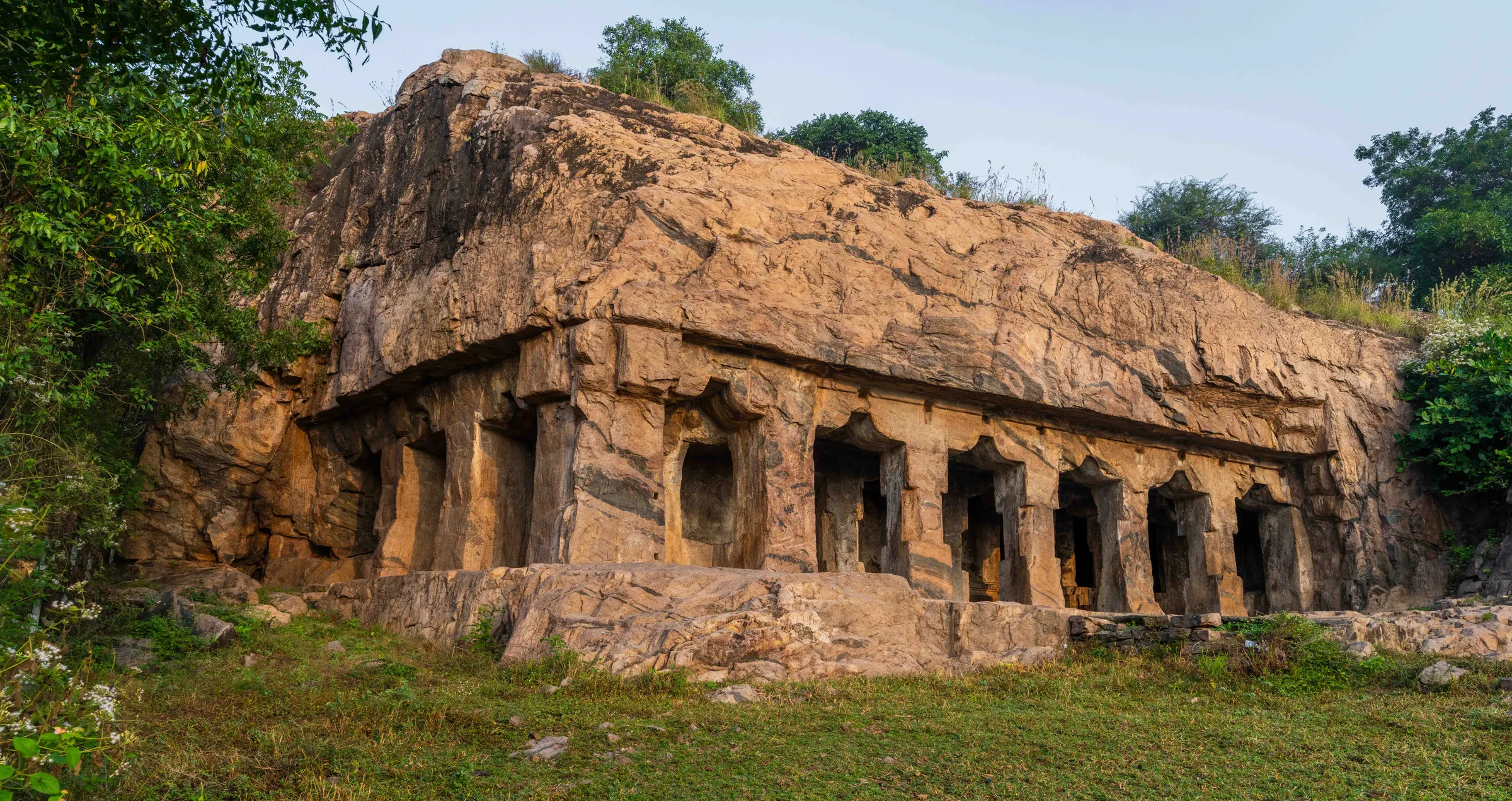
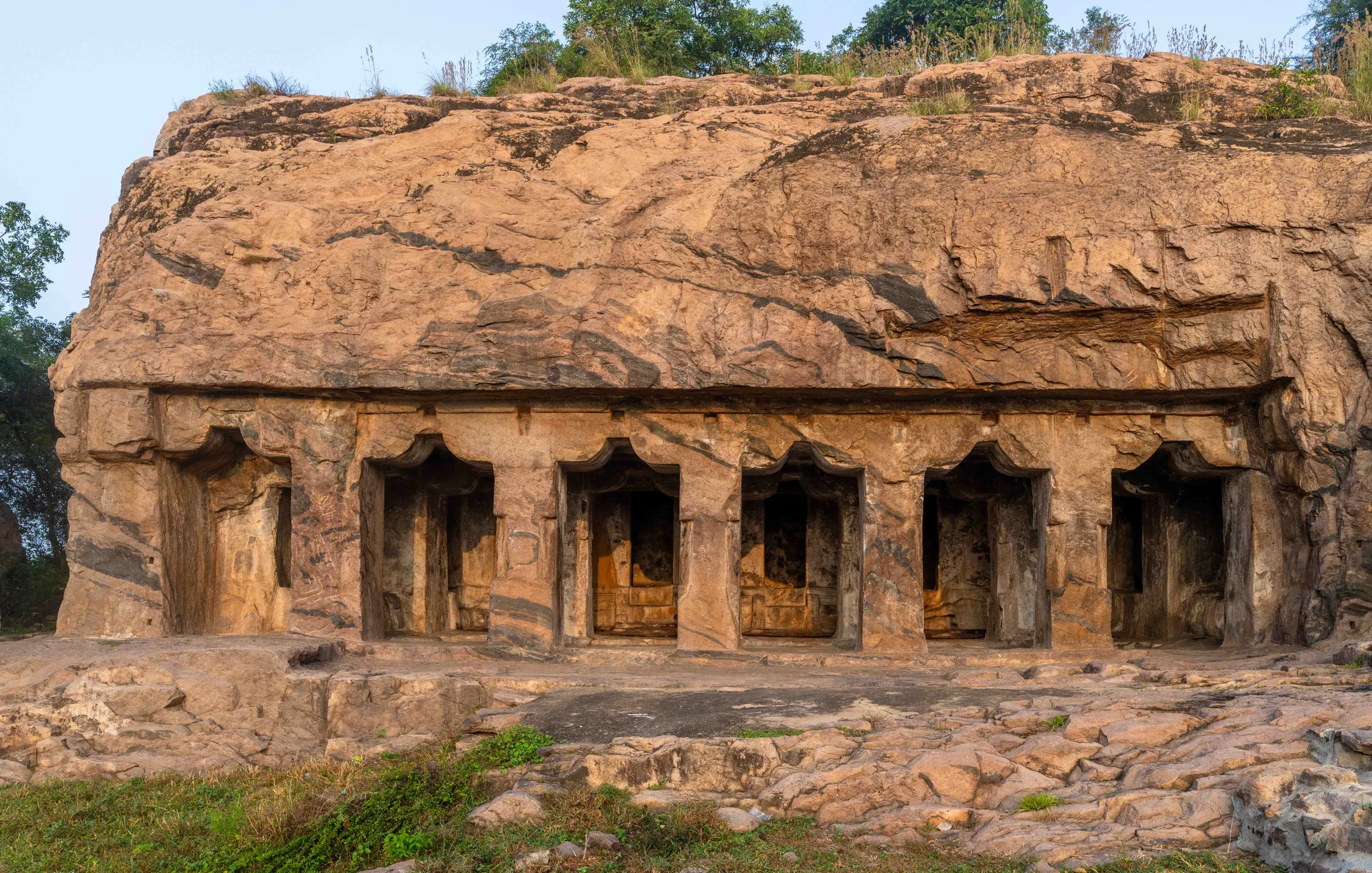
Cave Temple III, to the south of the first two, is the largest and unfinished, open on the east and south, the eastern facade longer with five pillars and two pilasters and the southern side supported by two pillars and two pilasters. It has five shrines on the back wall, reminiscent of the caves at Mamallapuram, again with an absence of dvarapalas, and its ardha and mukha mandapas show attempts at similar shrines, suggesting a much larger temple complex was envisioned. Cave Temple IV, the southernmost, is the smaller of the two unfinished excavations, probably abandoned because of a natural fault in the rock from the top of the southern side passing through the frontal pillars; chisel markings on the back wall indicate it was meant to contain three cells.