01 Architectural
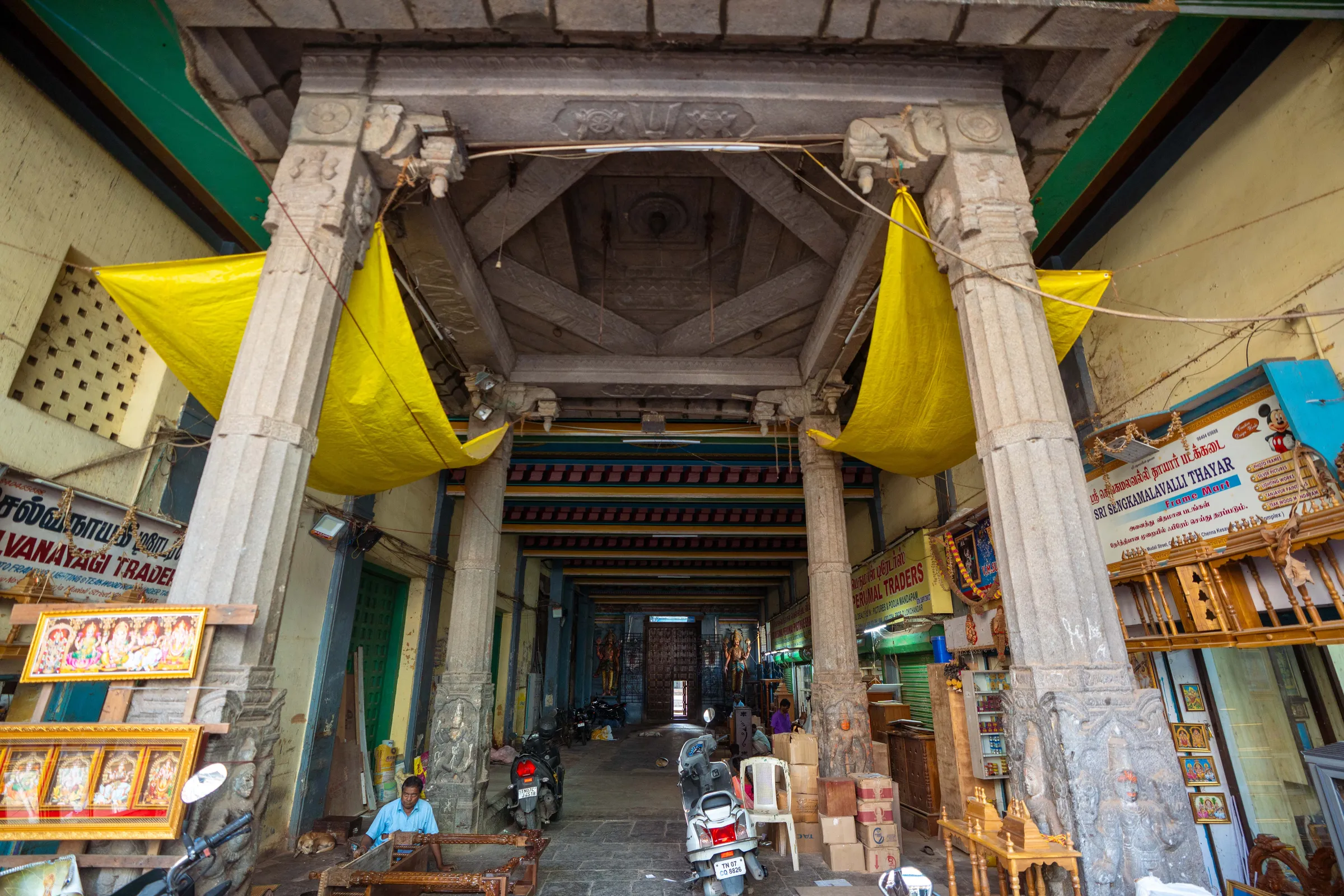
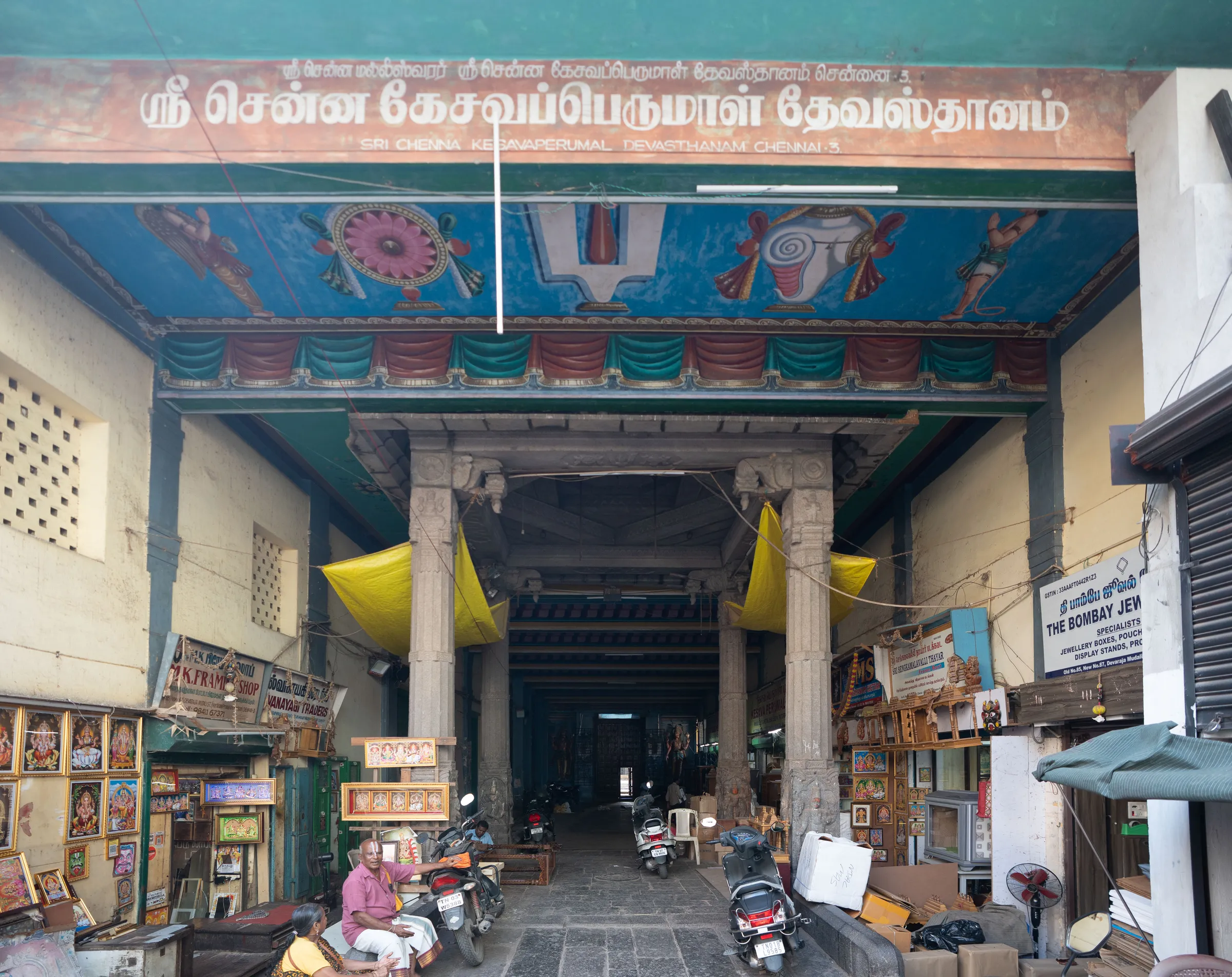
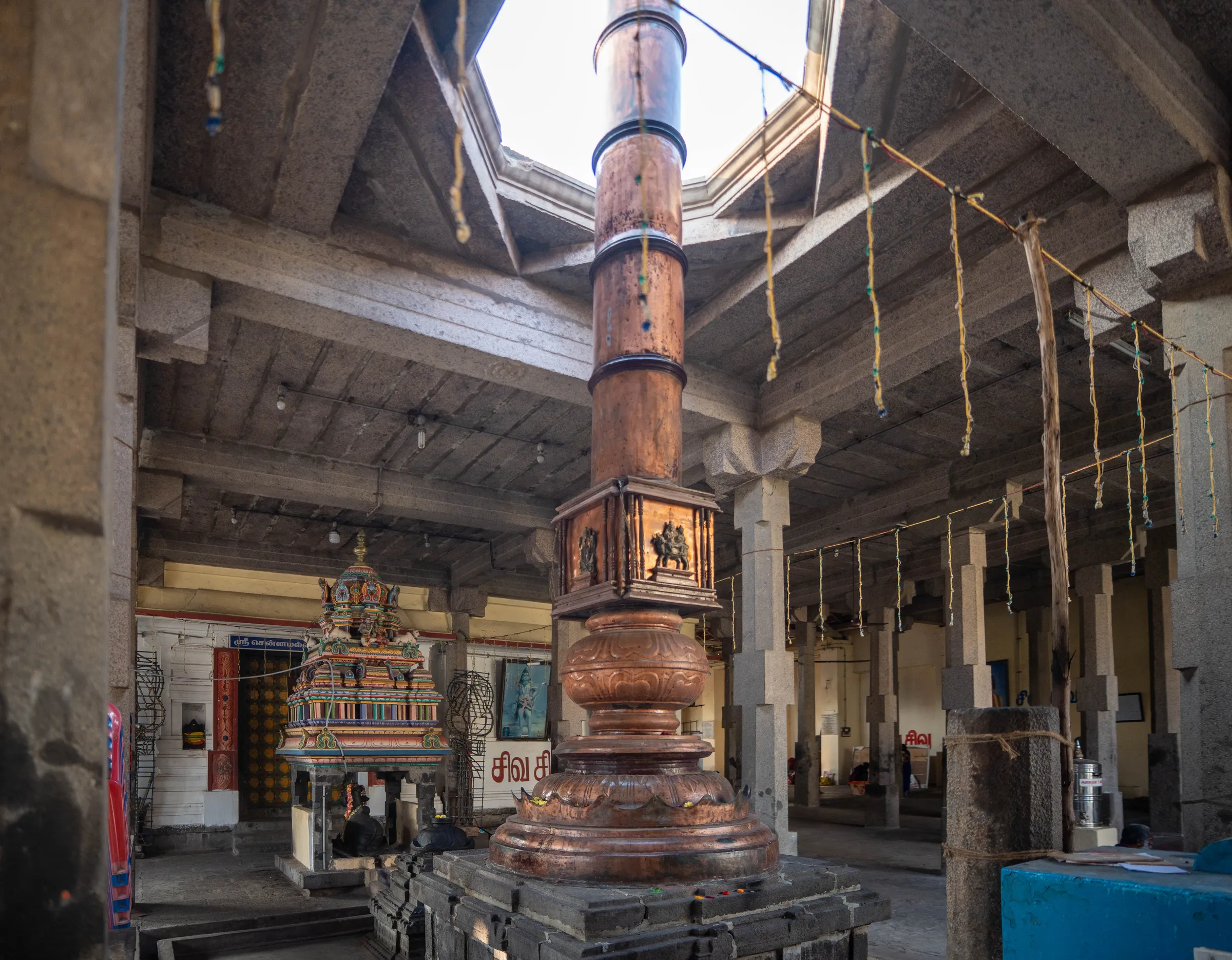
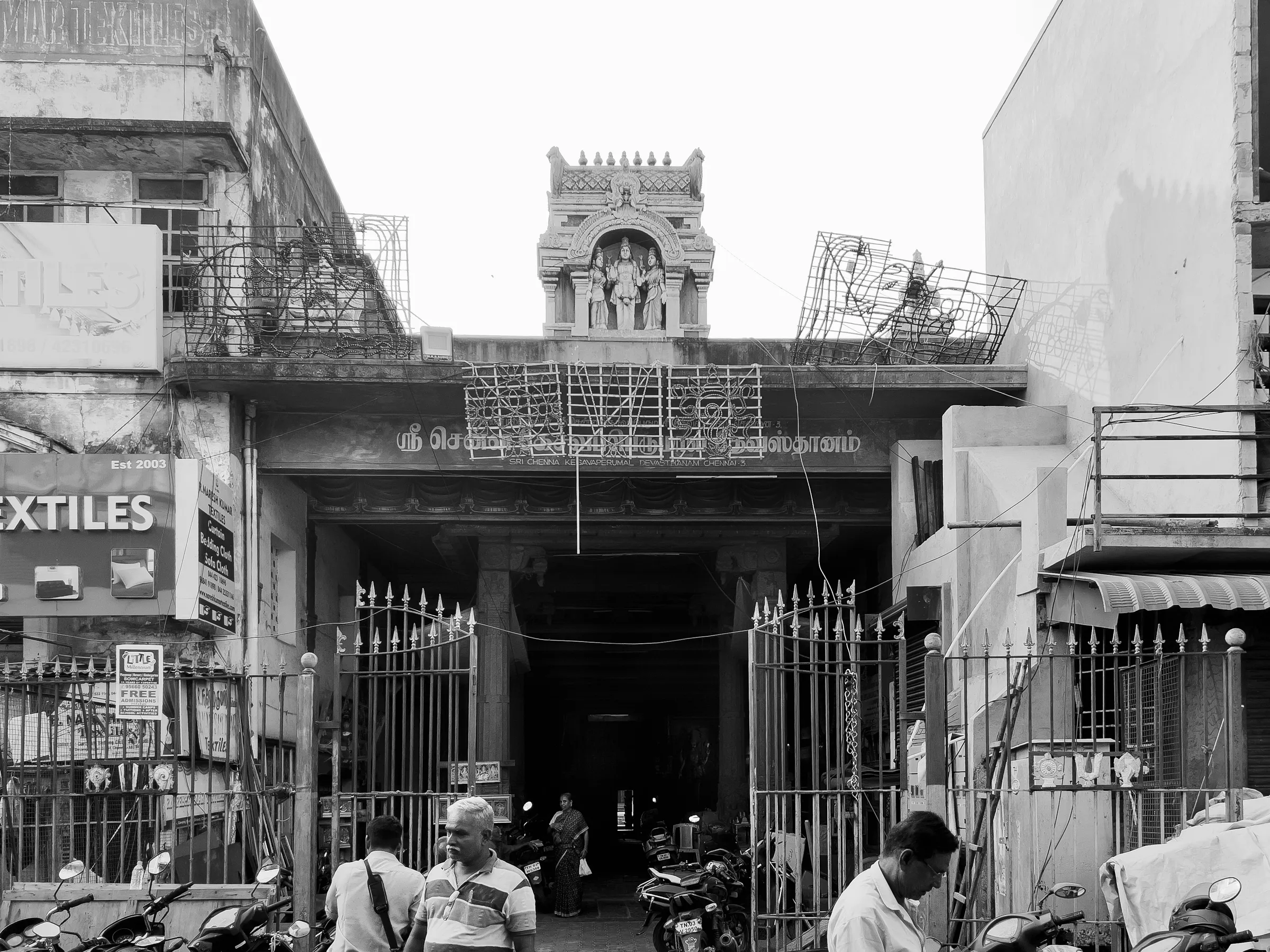
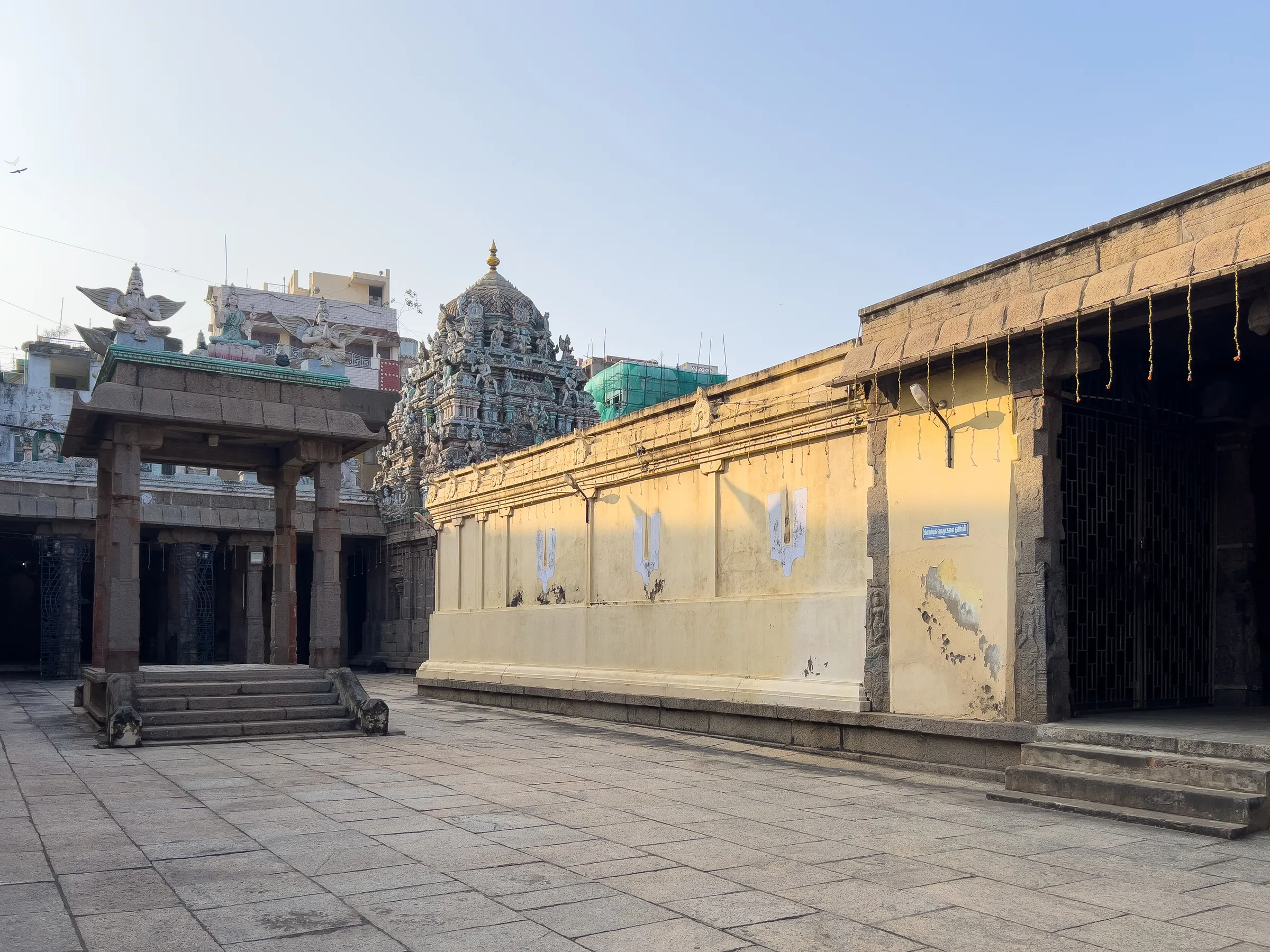
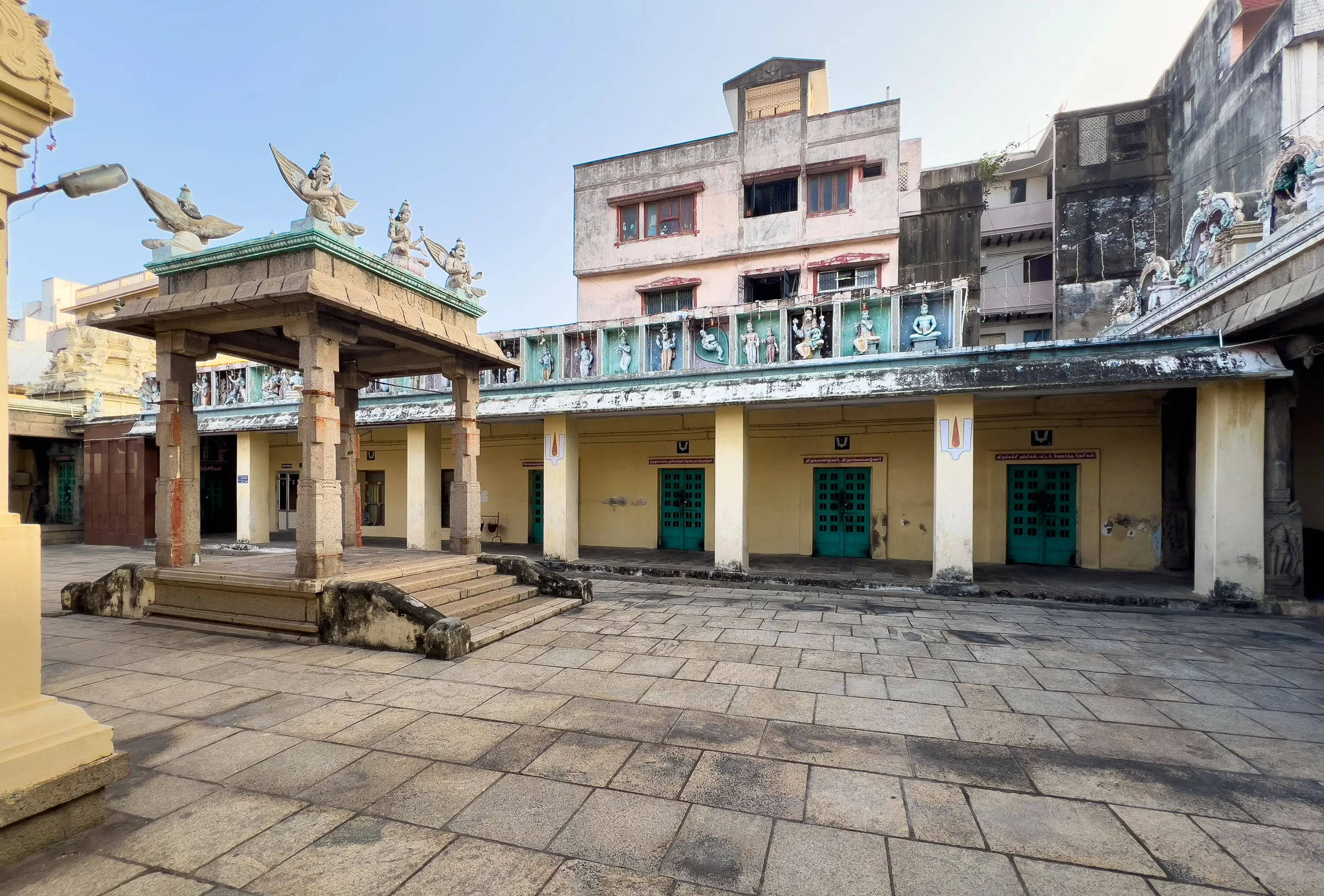
structure & vocabulary Entering from the narrow streets of George Town, the premises open with a large mandapa of tall pillars leading to the main gopuram, an area that today holds a few shops selling wooden artefacts, idols and religious items. Before the gopuram, at the far end of the mandapa on the right, is a modestly sized temple tank shared with the Chenna Malleeswara temple. On entering, one finds the pradakshina pada, in the center of which is another pillared mandapa leading to the garbhagriha.
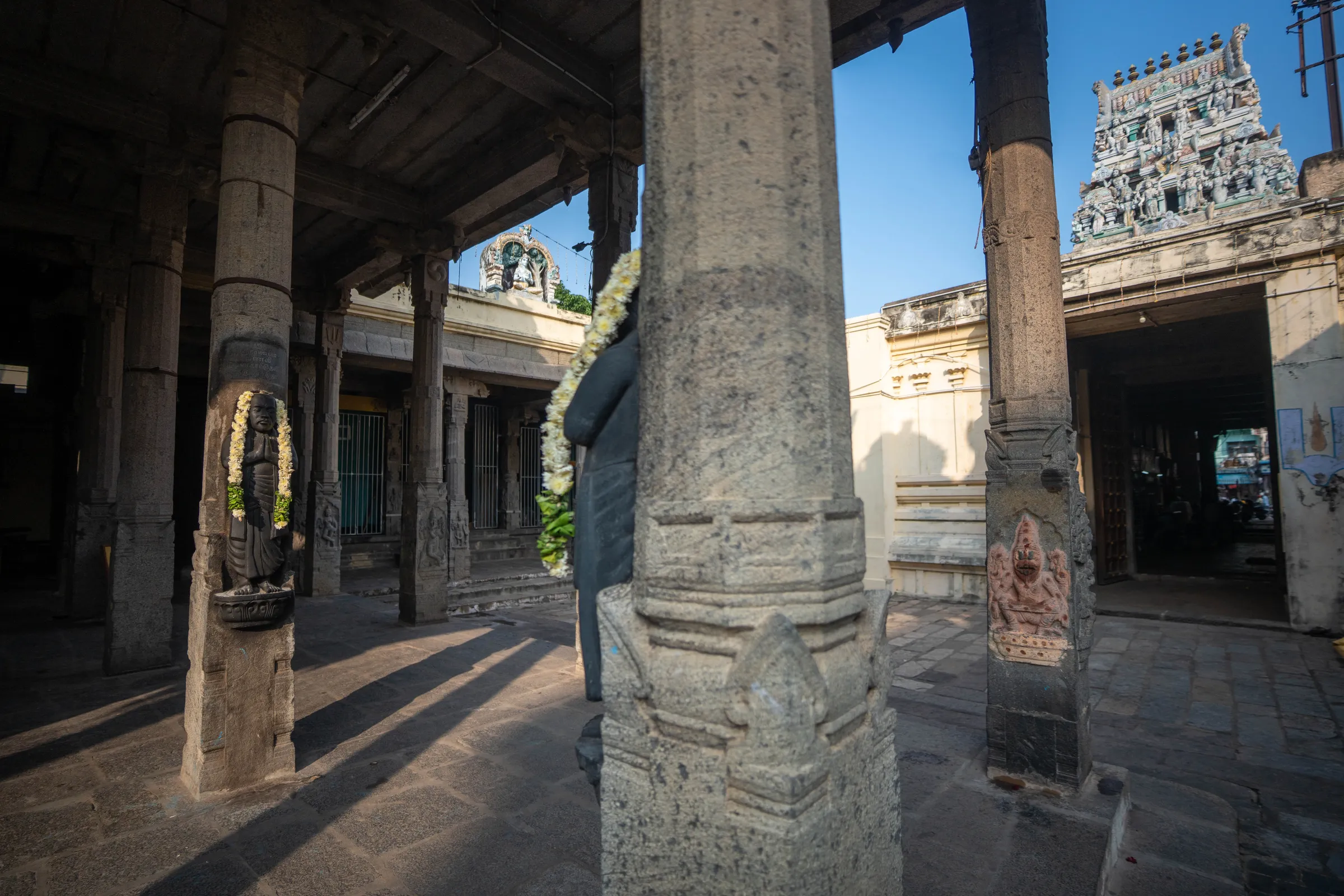
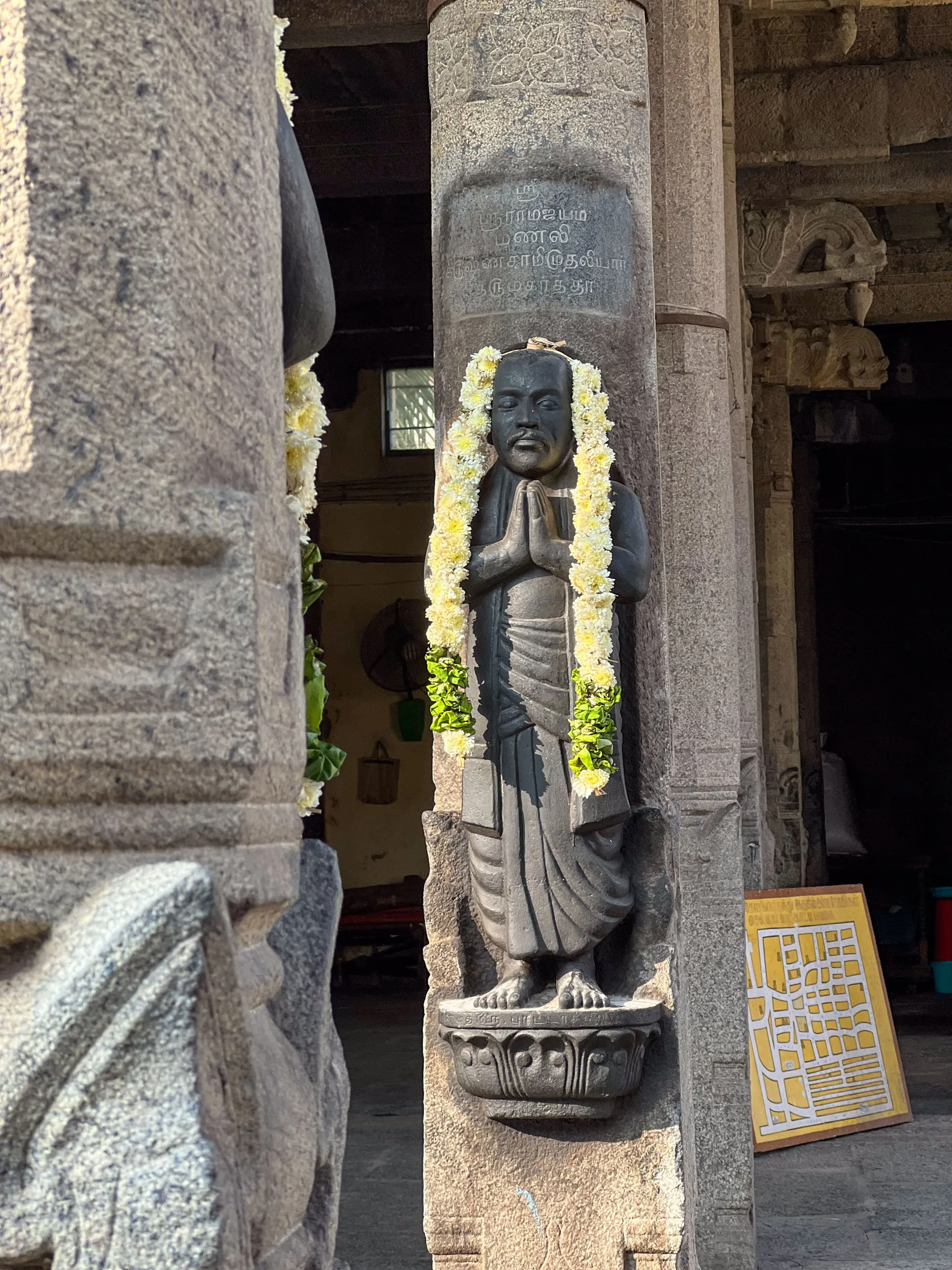
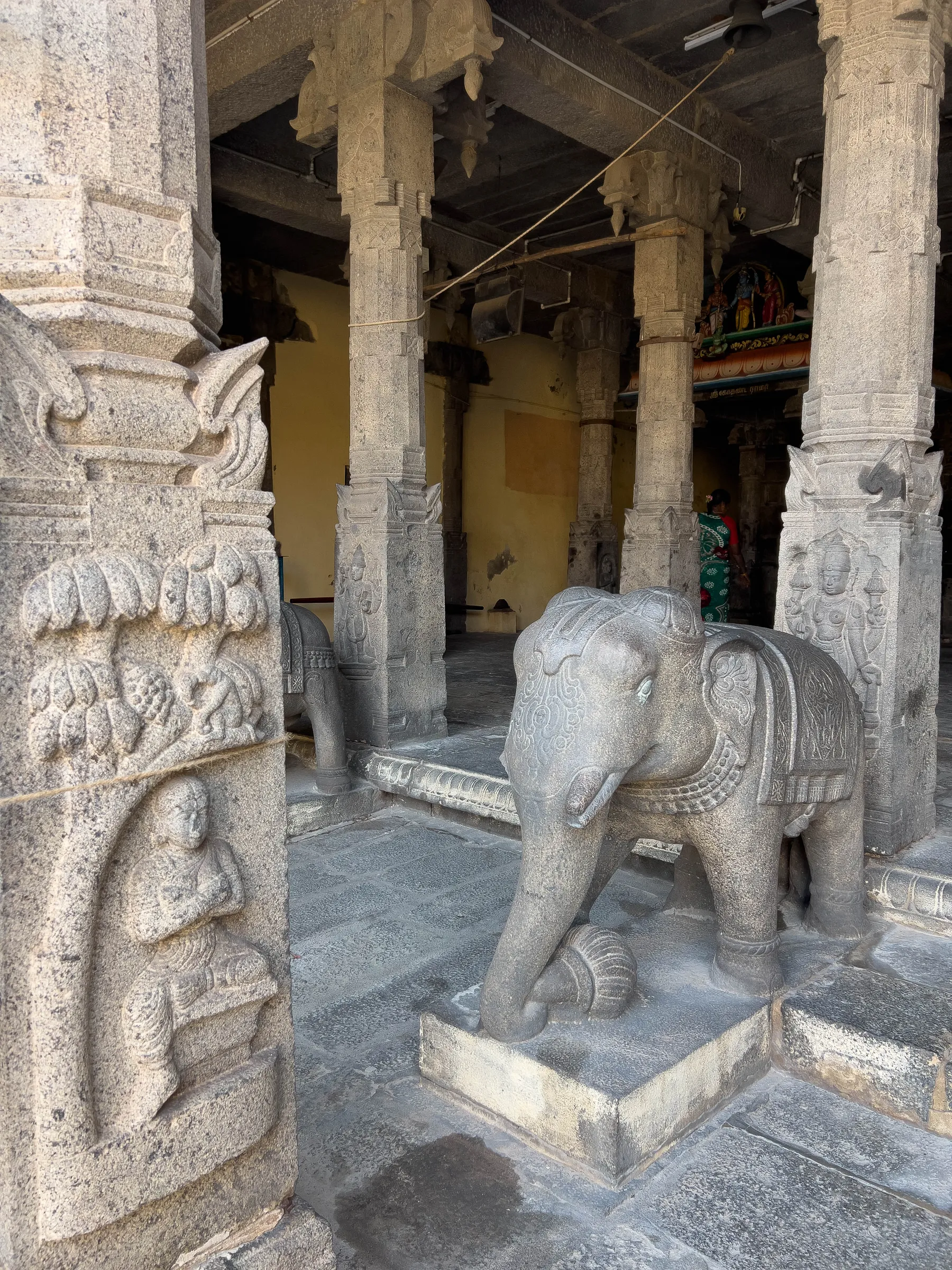
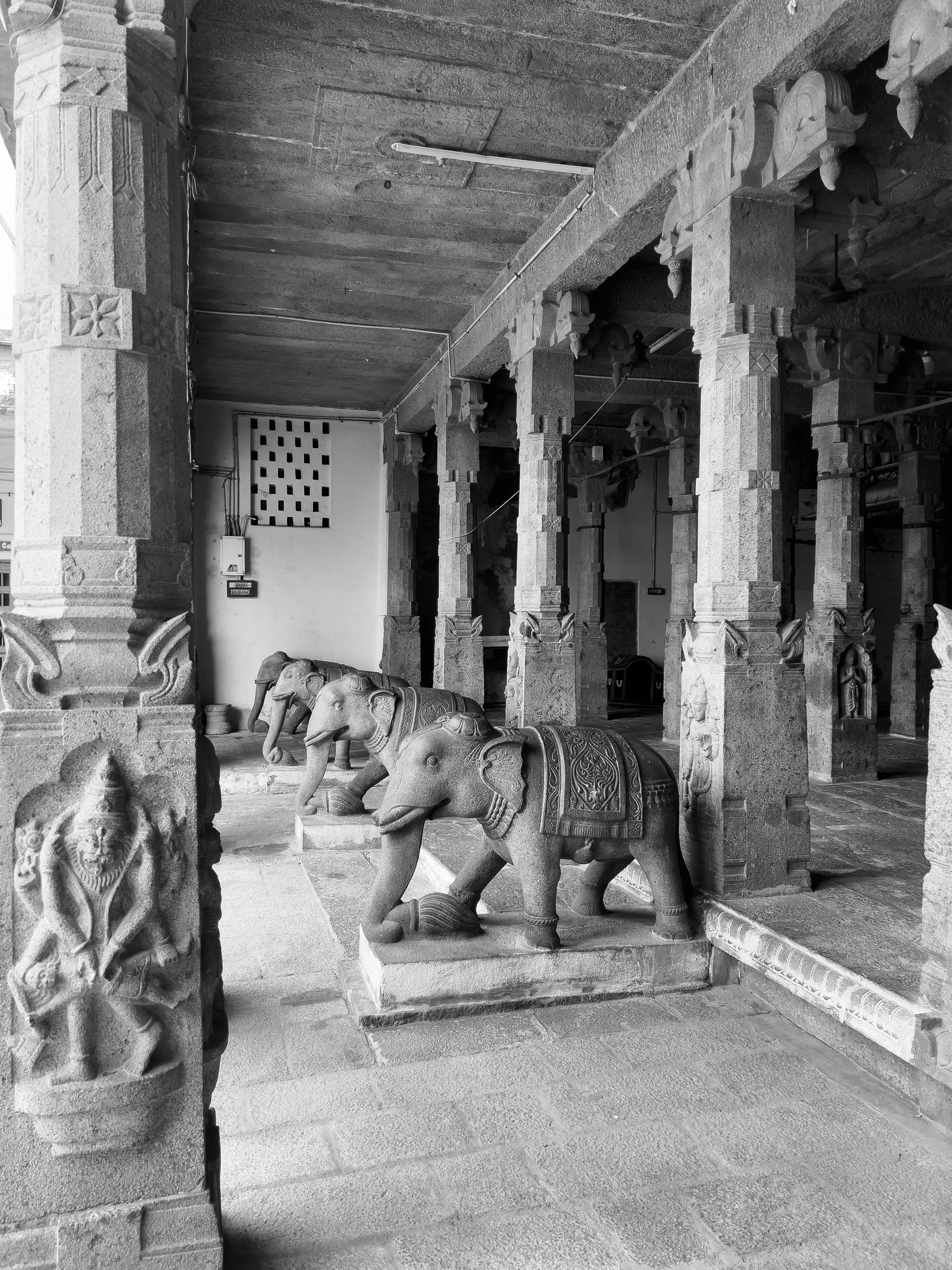
Each pillar carries finely carved relief sculptures of Vishnu's incarnations, Hanuman, floral and geometric motifs, and mythical creatures. The most unique are two notable figures, Manali Saravana Mudaliyar and Manali Krishnaswami Mudaliar, who served the temple and helped raise funds for its rebuilding, carved in high relief on smoothly polished granite pillars at the beginning of the mandapa.
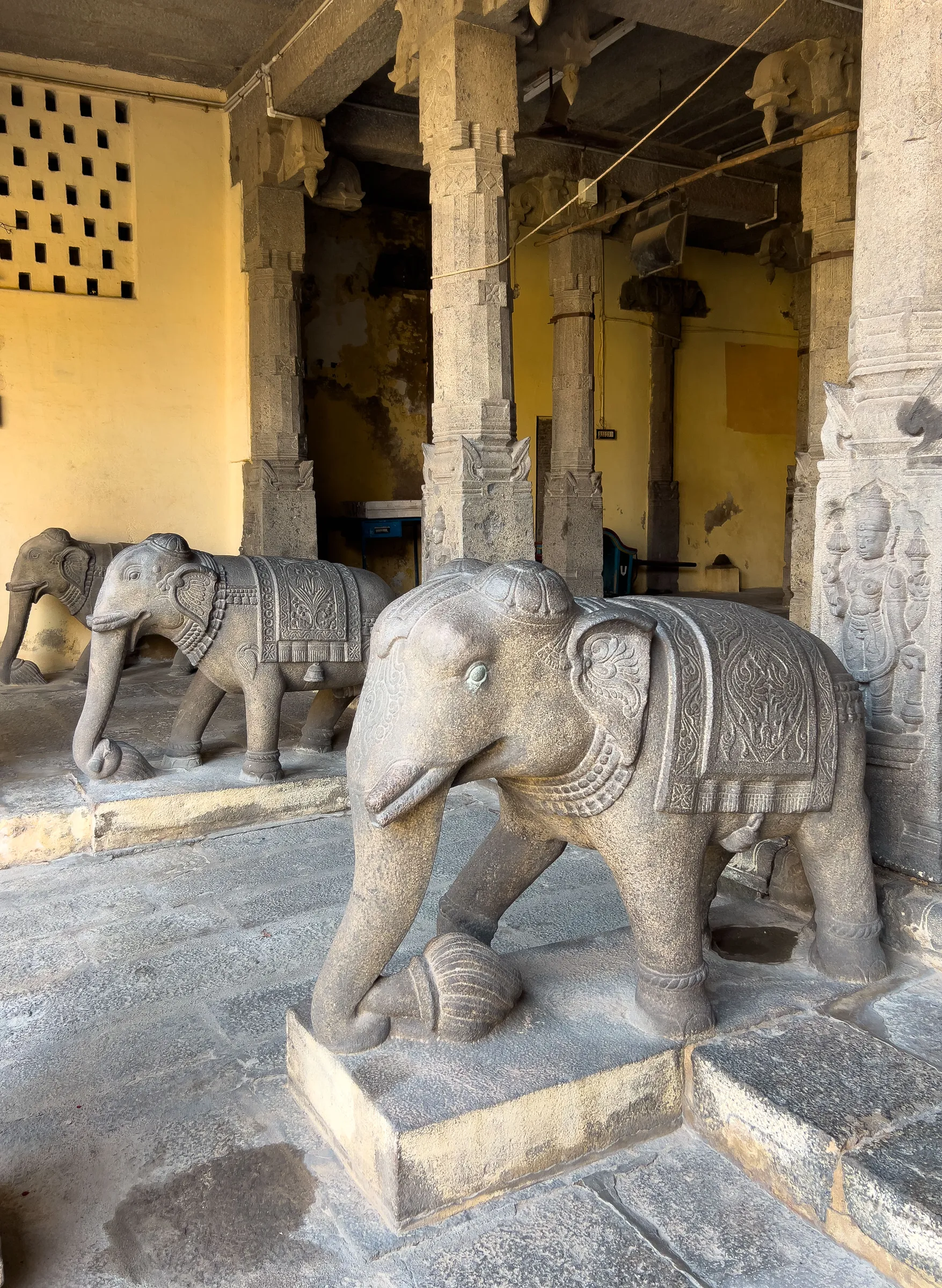
The main shrine houses an idol of Lord Chenna Kesava, flanked by his two consorts, Sri Devi and Bhu Devi. Walking clockwise around the main cell leads to subsidiary shrines of the twelve Azhwars, goddess Senkamalavalli Thayar, Kodandaraman and Andal, with carvings on the stone doorways and mandapa ceilings, freestanding elephant sculptures, and those outside the Andal shrine. Subsidiary shrines also include those of the goddess Bhramaramba, Ganesha, Subramanya, the 63 Nayanmars and the Navagrahas. Lord Chenna Malleeswara is in the form of a Lingam in the sanctum sanctorum.
02 Archaeological
dated & cited The Chenna Kesava temple was originally located where the present High Court stands. Beri Thimmappa, an interpreter and chief negotiator for two agents of the English East India Company, and Naga Battan, a gunpowder maker for the Company, were two locals instrumental in the founding of modern Madras on 22 August 1639, today celebrated as Madras Day. There are records of Naga Battan endowing the Chenna Kesava temple to Beri Thimmappa and subsequently to one Narayanappa Ayyar in 1759.
The English East India Company then demolished the temple along with a portion of Madrasapatnam to create a new esplanade to protect Fort St. George. The town was relocated to the present-day Sowcarpet area, called the New Black Town and eventually George Town, and the temple moved with it, now entered from Devaraja Mudali Street. When the temple shifted, it was decided that a temple to Śiva would also be opened in the same premises, the inception of Chenna Malleeswara; the two share a compound wall, with the main entrance for the latter on NSC Bose Road. The Chenna Malleeswara temple is said to have had a strong Devadasi connection until it was legally banned, with names of at least 14 women linked to this god, and songs specifically composed for the primary deity now held by the Madras University's Music Department.
Dating
Tied to the founding of modern Madras on 22 August 1639; Chenna Kesava temple endowed and later relocated; Chenna Malleeswara founded at the new site.
03 Mythological
as transmitted It is even believed that Chenna Kesava gave rise to the name Chennapatnam and hence Chennai. The histories of both temples, especially that of Chenna Kesava Perumal, and of the city itself are held to be so intertwined that one cannot be told without the other.