Devanathaswamy Temple, photograph
← Thondaimandalam
Entry 013

Devanathaswamy Temple

Tiruvahindrapuram · Cuddalore · Chōḷa; later Pandya and Vijayanagara

A Divya Desam of Lord Vishnu at Tiruvahindrapuram near Cuddalore, its Chola core sung by the Azhwar saints and bound to the great Vaishnava teacher Vedanta Desikar, who lived here for forty years.

Devanathaswamy Temple at Tiruvahindrapuram is a Divya Desam of Lord Vishnu, its Chola core bound to the teacher Vedanta Desikar. The three registers below are held apart, as the book records them.

The photographs

Plates · 6

Devanathaswamy Temple, photograph
© Sai Sanjay Prasath · All rights reserved
Devanathaswamy Temple, photograph
© Sai Sanjay Prasath · All rights reserved
Devanathaswamy Temple, photograph
© Sai Sanjay Prasath · All rights reserved
Devanathaswamy Temple, photograph
© Sai Sanjay Prasath · All rights reserved
Devanathaswamy Temple, photograph
© Sai Sanjay Prasath · All rights reserved
01

Architectural

structure & vocabulary

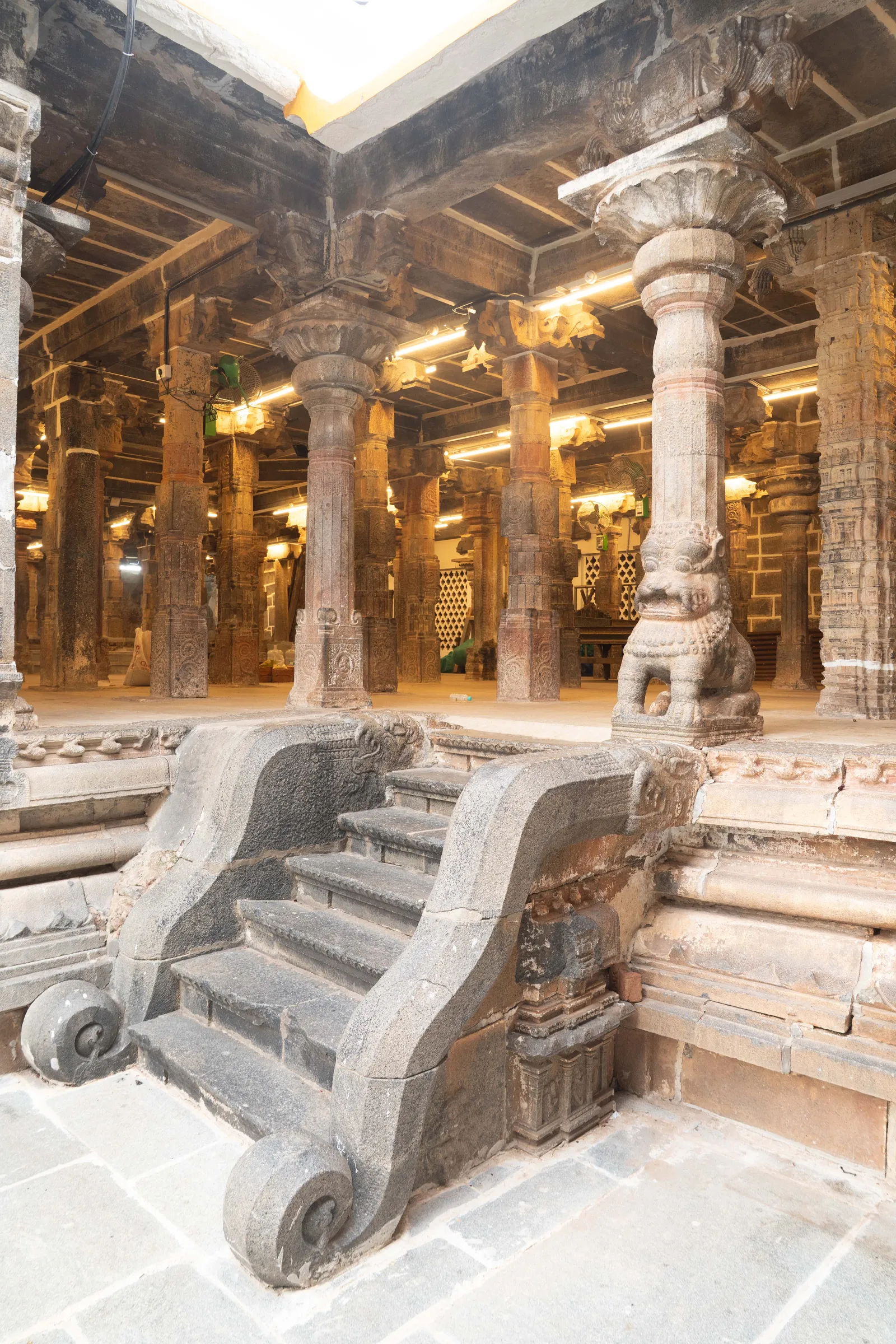
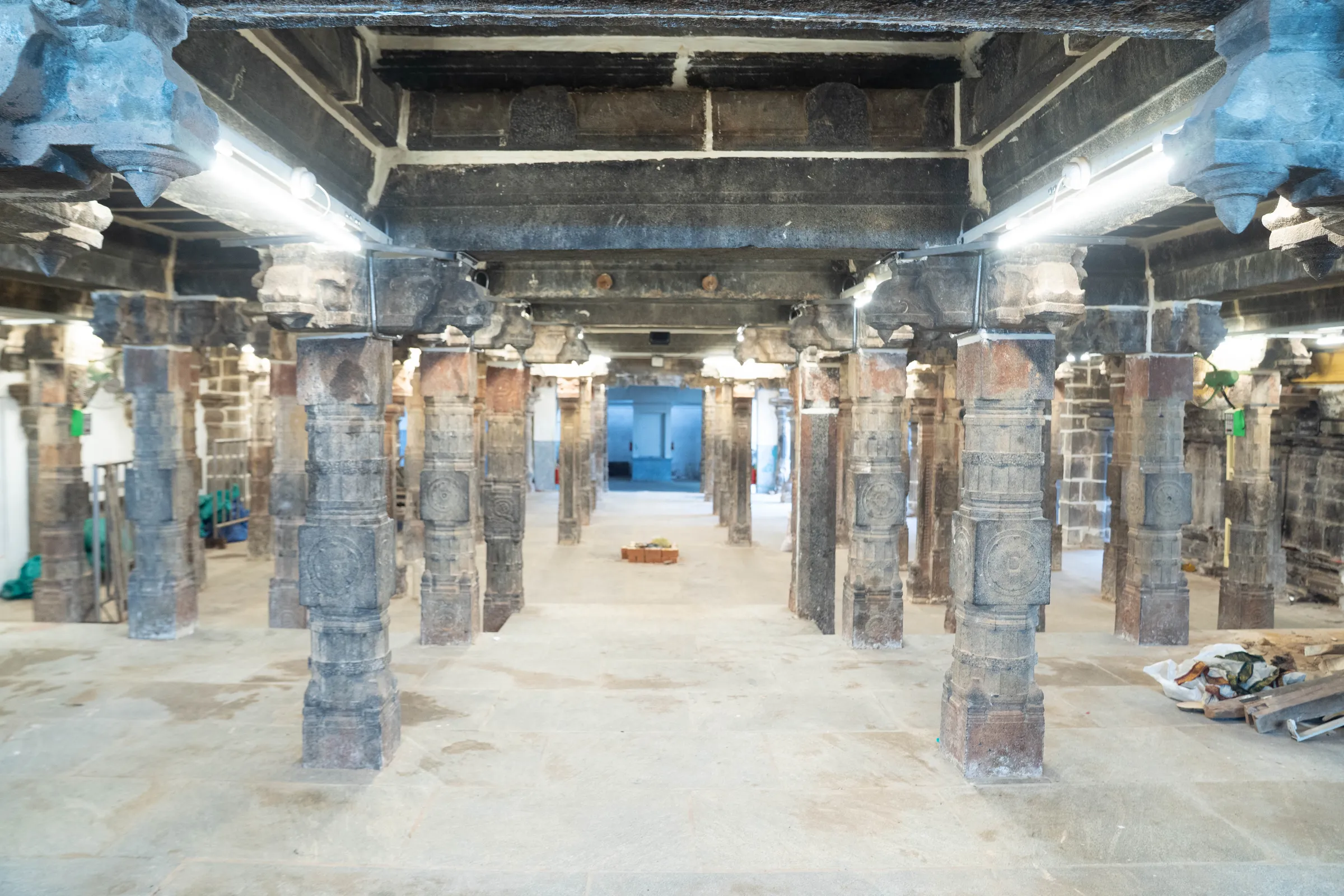
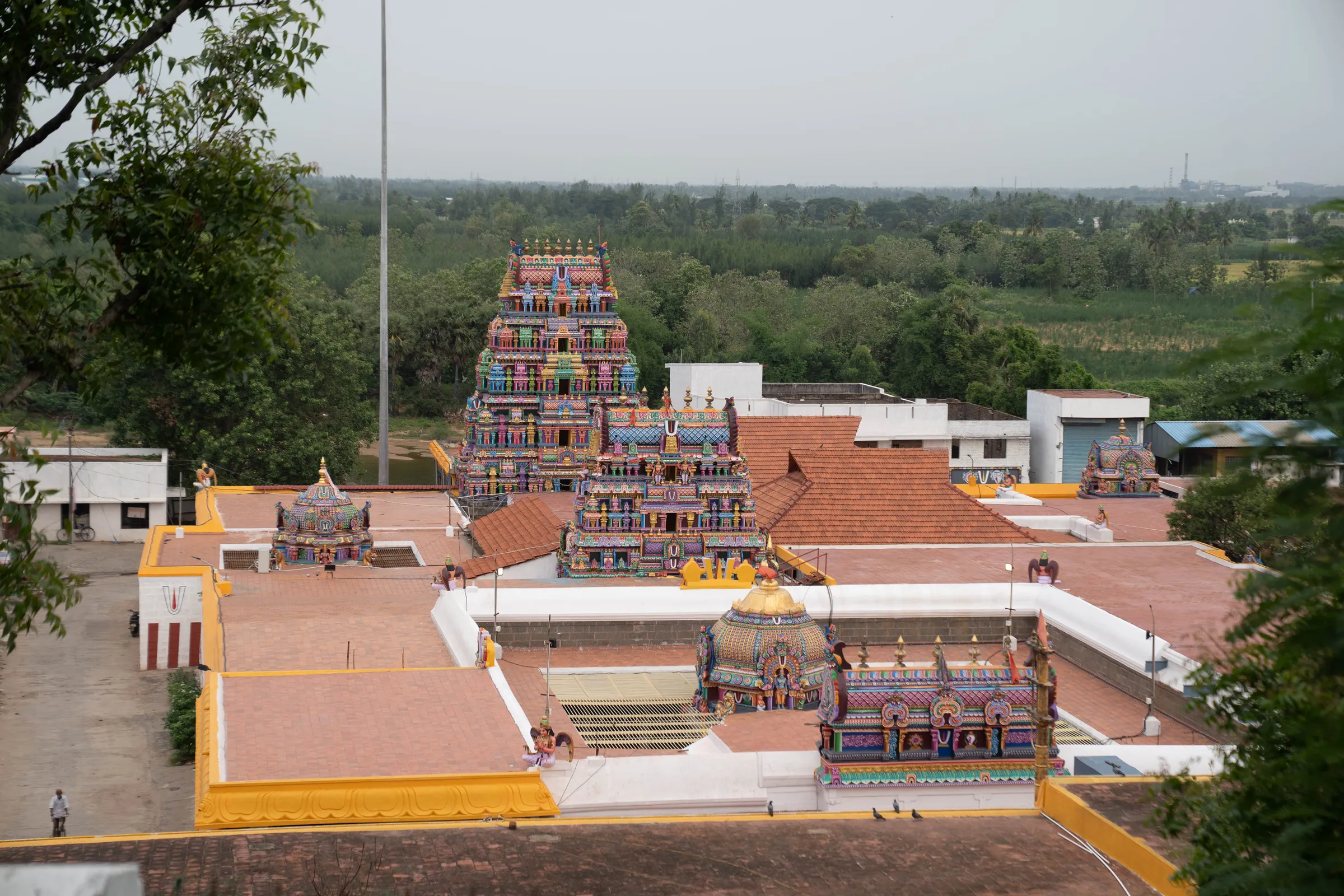
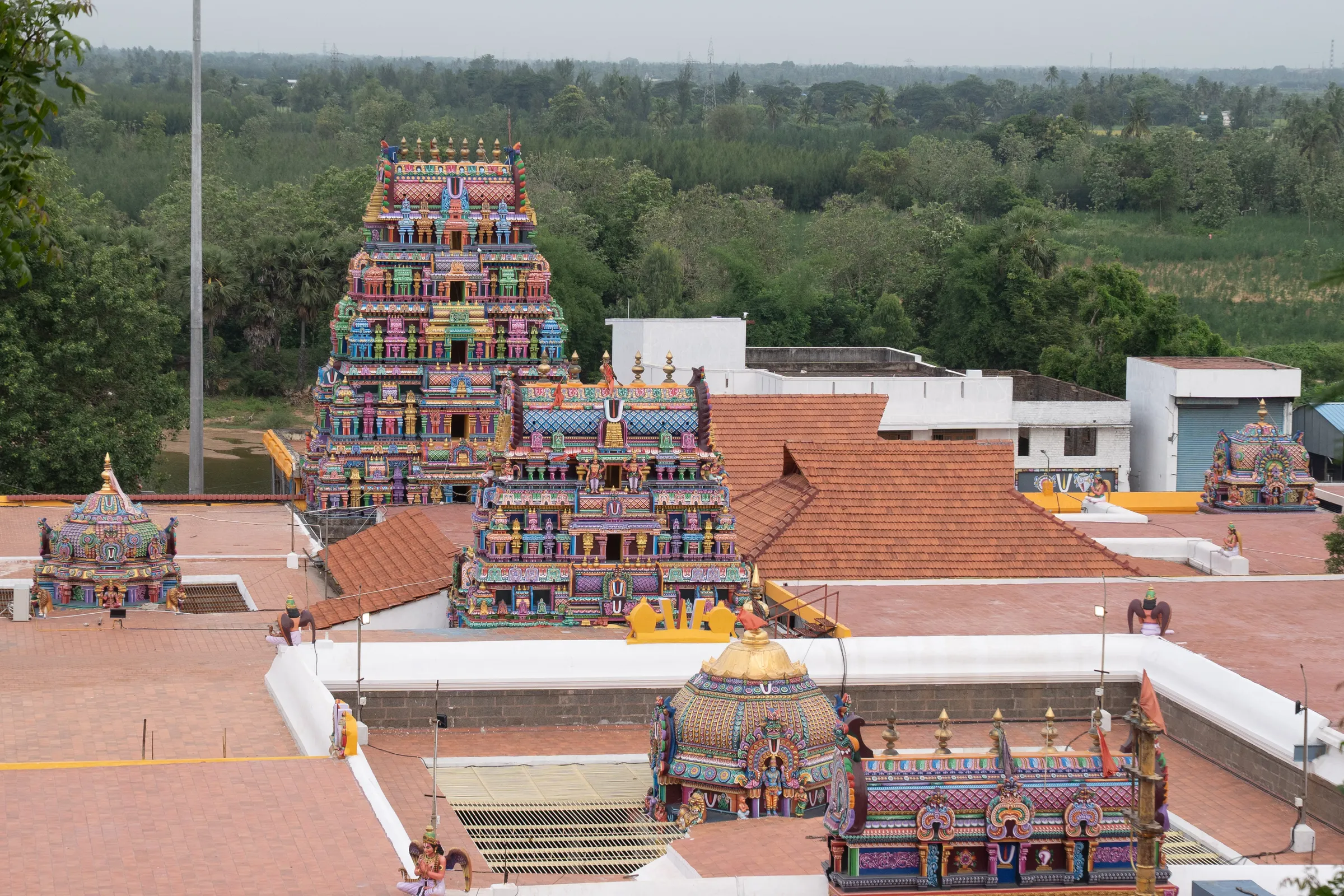
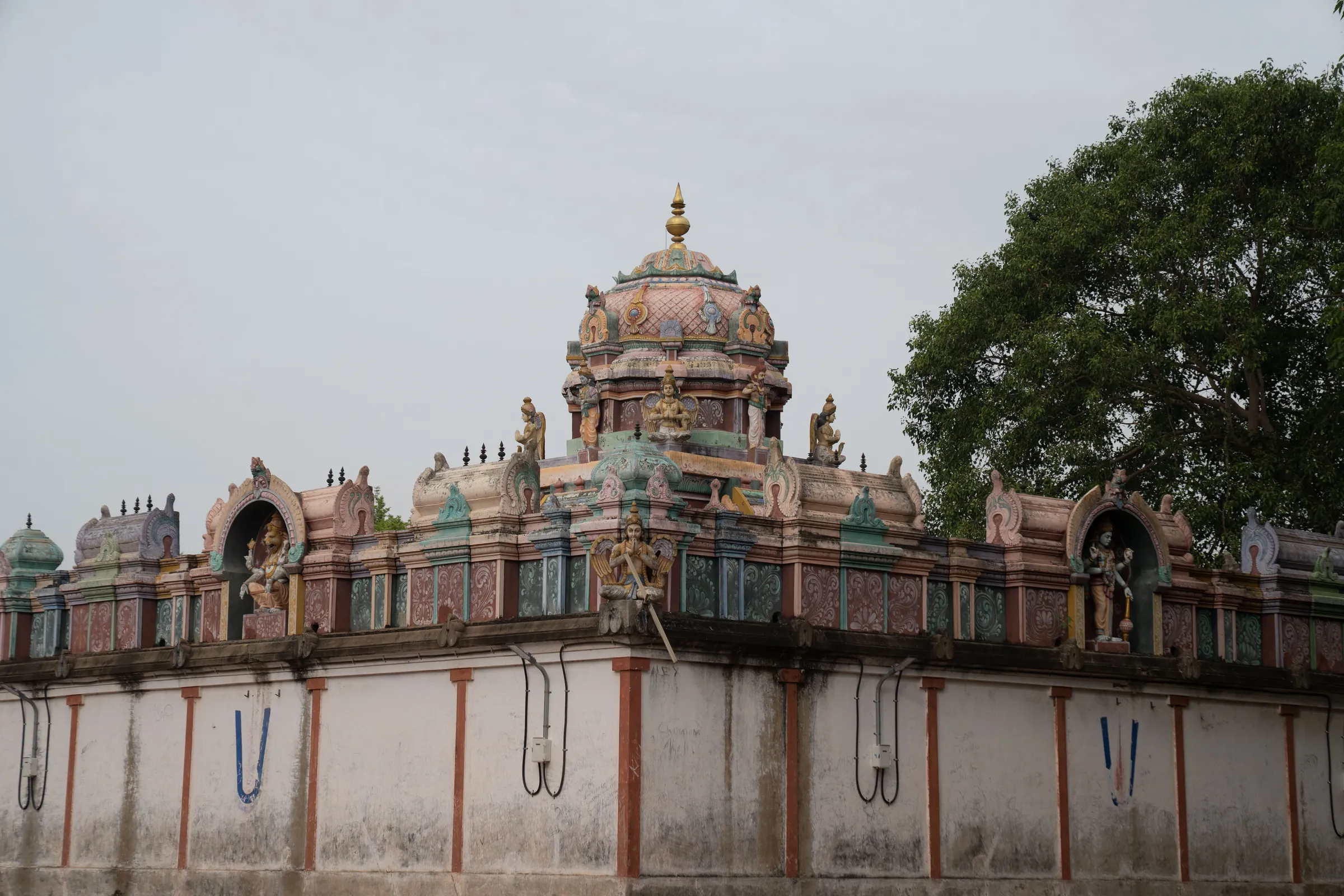
The temple is entered through a five-tiered Rajagopuram facing the west. The main structure is of the Chola period, evident from the cuboidal potika on the pillars in the mandapa leading to the main shrine. It stands at the base of Oushadagiri, a hillock.

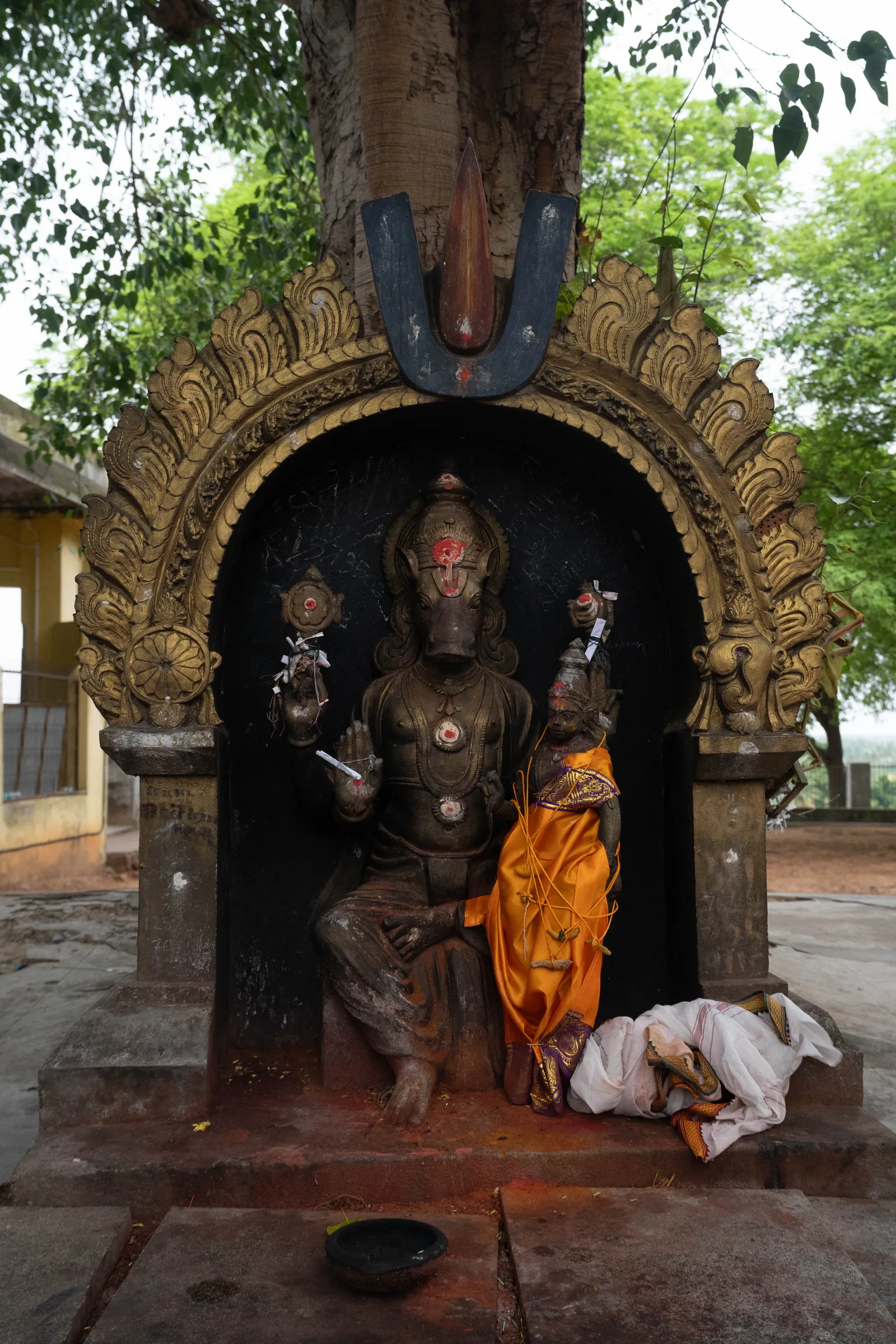
The main deity is also called Moovaraghia oruvan, referring to him as all three of the trinity combined. There are representations of Devanathaswamy bearing the attributes of both Brahma (a lotus in hand) and of Shiva (third eye and matted hair), along with his own conch and discus, to iterate that all three are equal. Atop Oushadagiri is a temple to Hayagriva in the form of Lakshmi Hayagriva, the first of its kind, with a rare depiction of Thayar seated on Perumal's right lap rather than the usual left.

02

Archaeological

dated & cited

The main structure is of the Chola period, the earliest inscriptions attributing it to Kulothunga Chola I (1070 to 1120 CE). The complex was further added to and expanded by the subsequent Pandya and Vijayanagara dynasties.

Apart from more than 50 inscriptions belonging to the Cholas, others name kings spanning centuries, including Vikrama Chola, Raja Raja Chola III, Jatavarman Sundara Pandyan, Vikrama Pandyan, Achyuta Deva Raya and Kopperunchinga.

Dating
BegunKulothunga Chola I (1070 to 1120 CE)

The main structure is of the Chola period; earliest inscriptions are attributed to Kulothunga Chola I.

Protection & condition
GroupOne of the 108 Divya Desam temples
03

Mythological

as transmitted

The temple is one of the 108 Divya Desam temples dedicated to Lord Vishnu as Devanatha Perumal. Oushadagiri is believed to be a piece of the legendary Sanjeevani Mountain that Hanuman carried to Lanka to save Lakshmana. The place-name splits into Thiru (a prefix of respect), Vahindra (after Adisesha, believed to have made the Sesha Teertham by boring into the ground with his tail) and Puram (a settlement). The nearby river Kedilam is said to have been created by Garuda; both Adisesha and Garuda made water here to quench the thirst of Lord Vishnu, as told in the Sthala Puranas.

The temple is sung in the Nalayira Divya Prabandham, the Tamil text of the Azhwar saints of the 6th to 9th centuries. Tirumangai Azhwar poetically praised Devanatha Perumal and Tiruvahindrapuram in ten stanzas of the Periya Tirumozhi, Moondram Pathu, telling of the wonder Lord who swallowed the seven worlds and lay on a fig leaf, residing where dense madavi bowers grow over senbakam trees and lotus blossoms fill the water tanks.

The great Vaishnava guru, poet, philosopher and mathematician Sri Vedanta Desikar (1268 to 1369 CE) is associated with this temple. Believed to be a human incarnation of Lord Vishnu's bell, he lived here for 40 years worshipping Narasimha, Garuda and Hayagriva, wrote the Vaishnava Sampradayam, and composed hymns on Devanathaswamy and Hayagriva. An idol of Desikar stands within the temple. His Paduka Sahasram, on the theme of complete surrender to god, employs a Chitrakavya technique whose poetic meter, in calculated permutations, solves the Knight's tour problem on the chessboard.

Register interest in prints Buy the book
Improve this entry

This is an open, reviewed record. If you have spotted an error or have something to add — a correction, a date, a source, a name in another script — propose it. Every change is reviewed before it joins the record.

“Suggest an edit” opens this entry on GitHub and turns your change into a pull request. “Share feedback” opens a short form. Both go through review.