Architectural
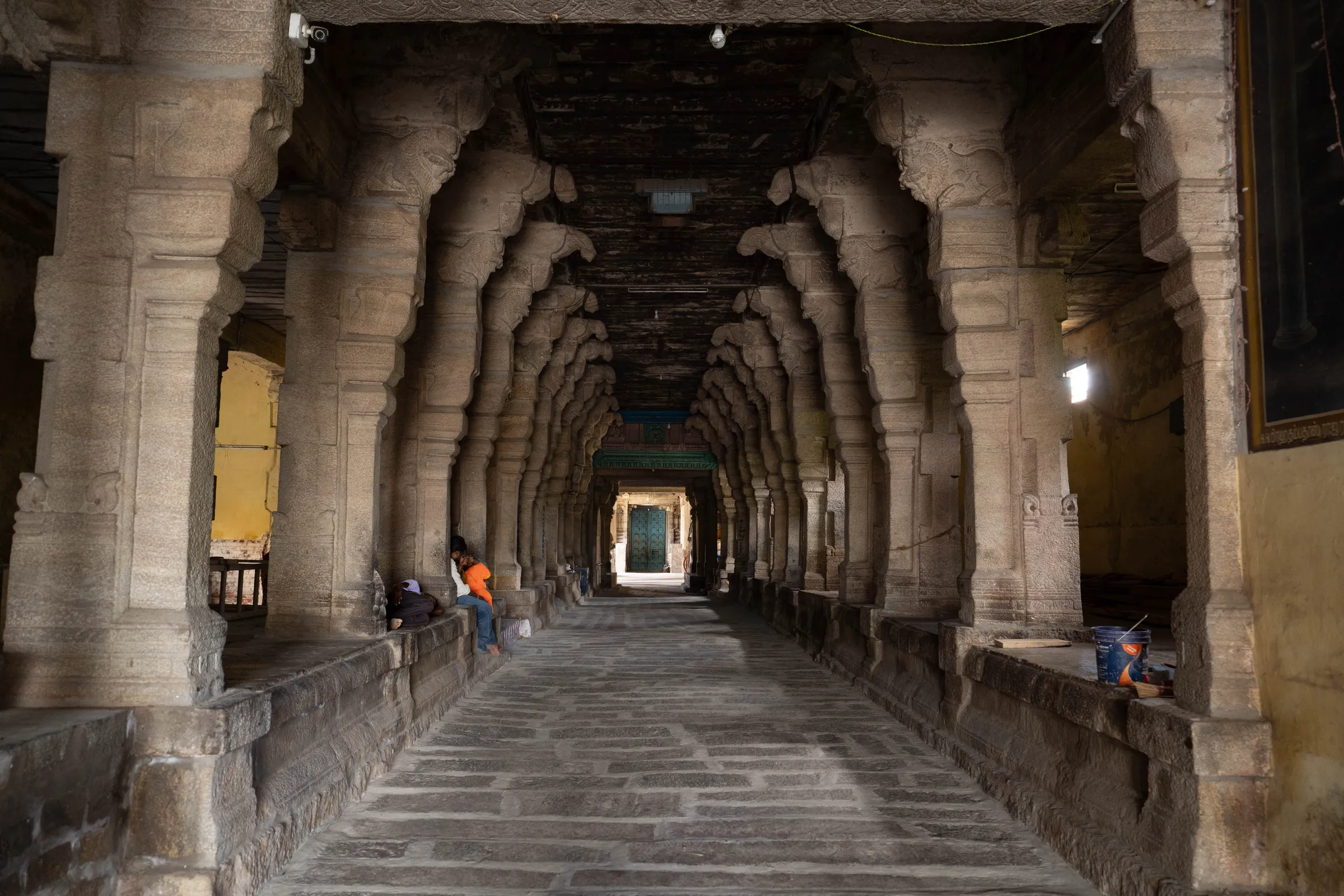
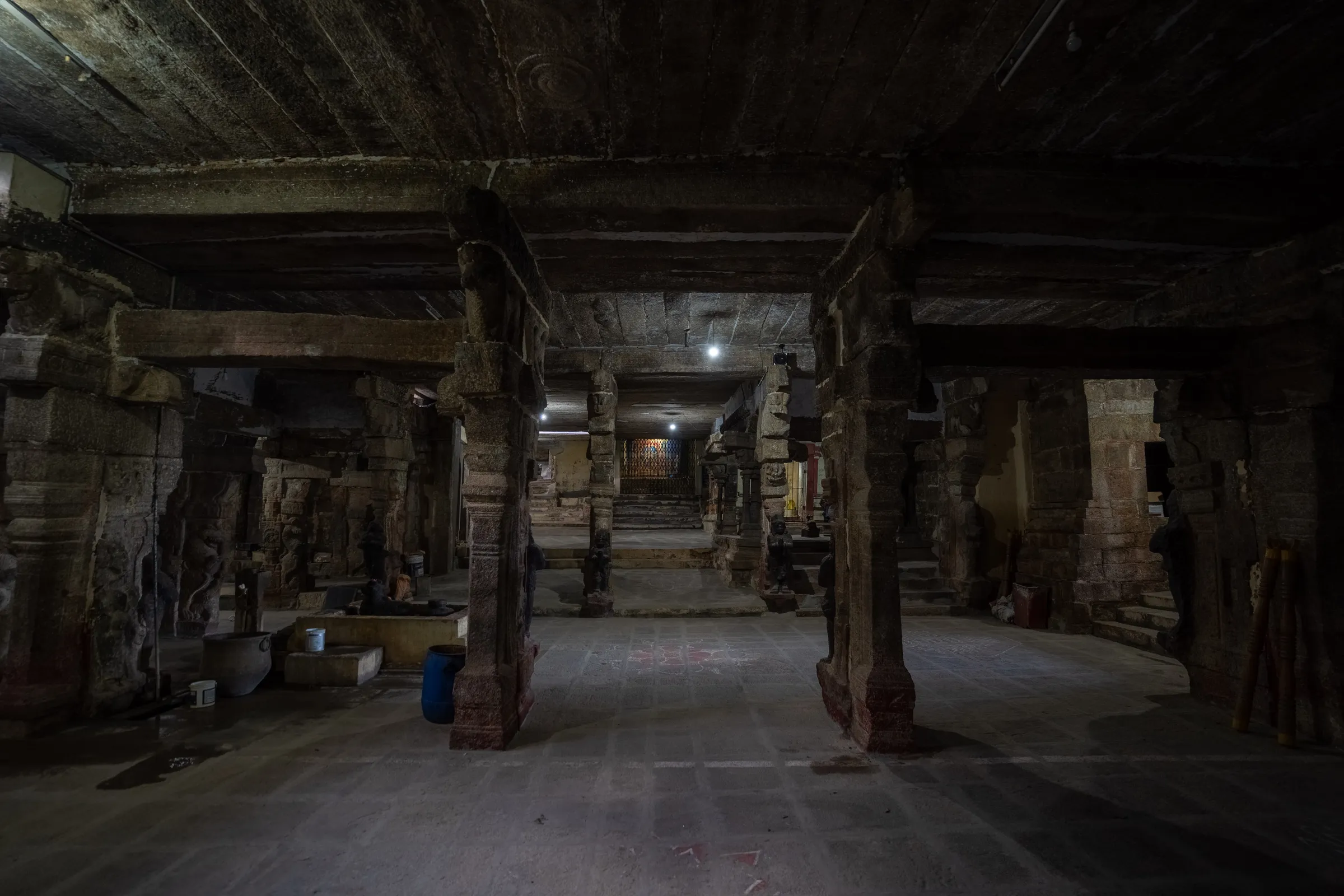
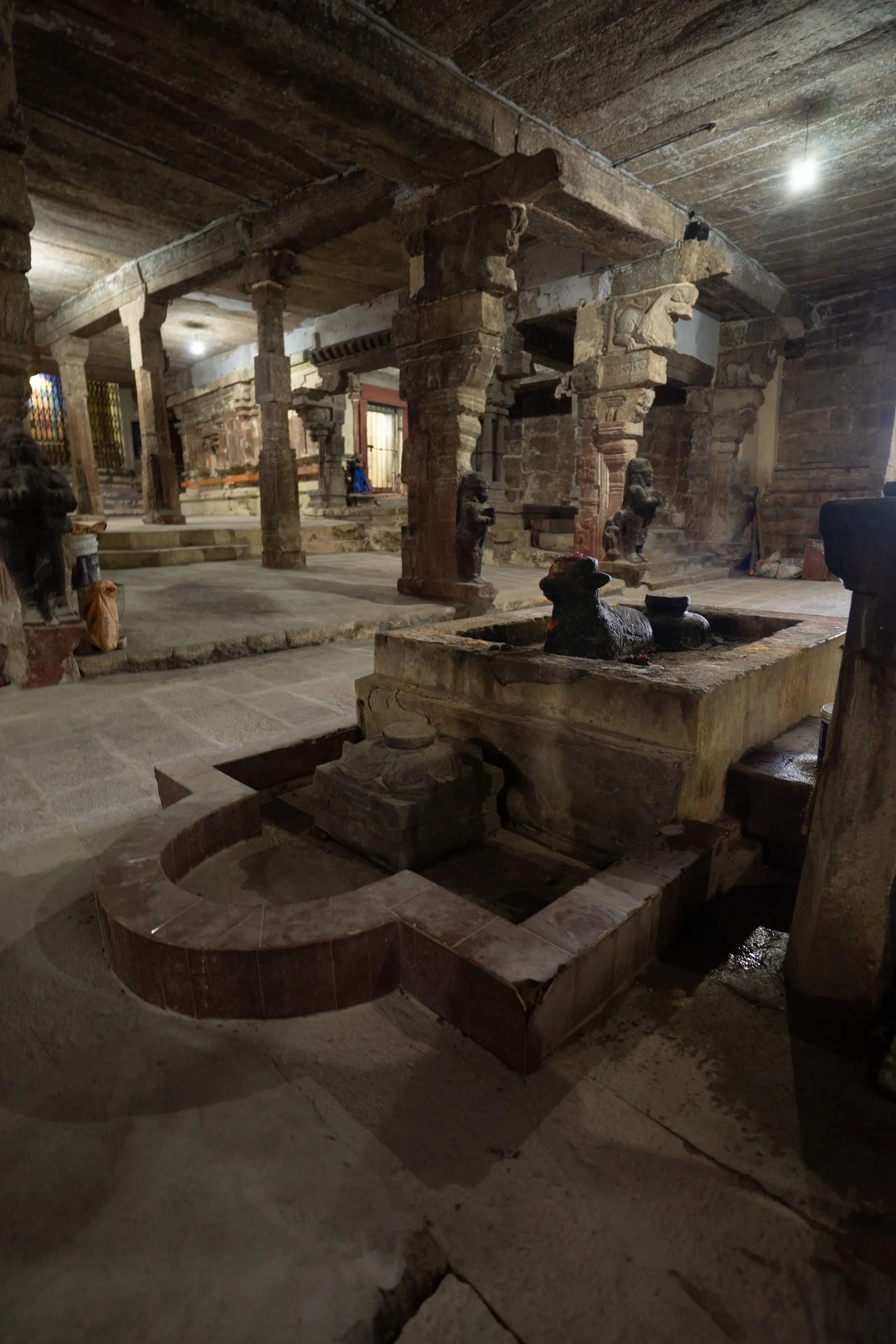
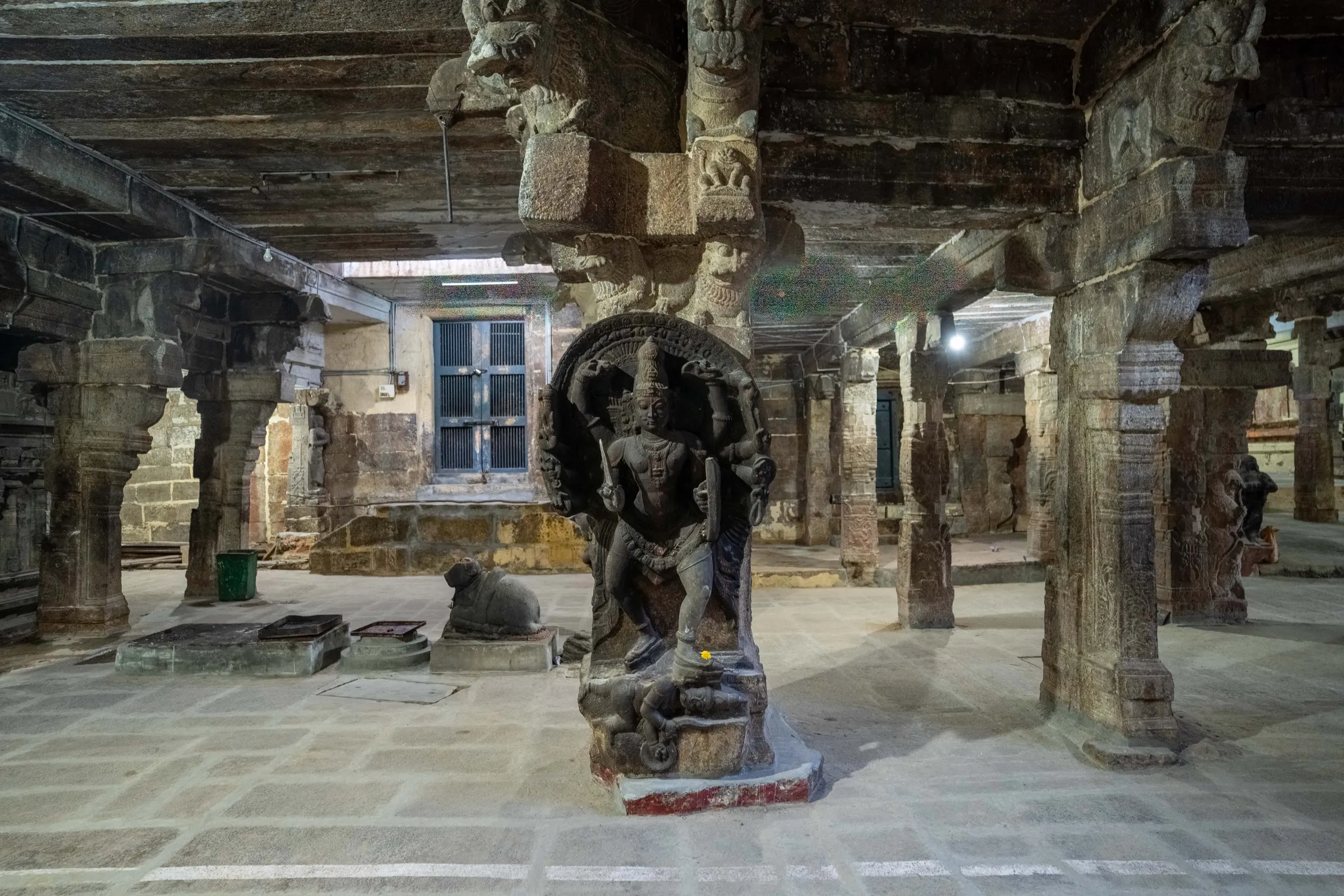
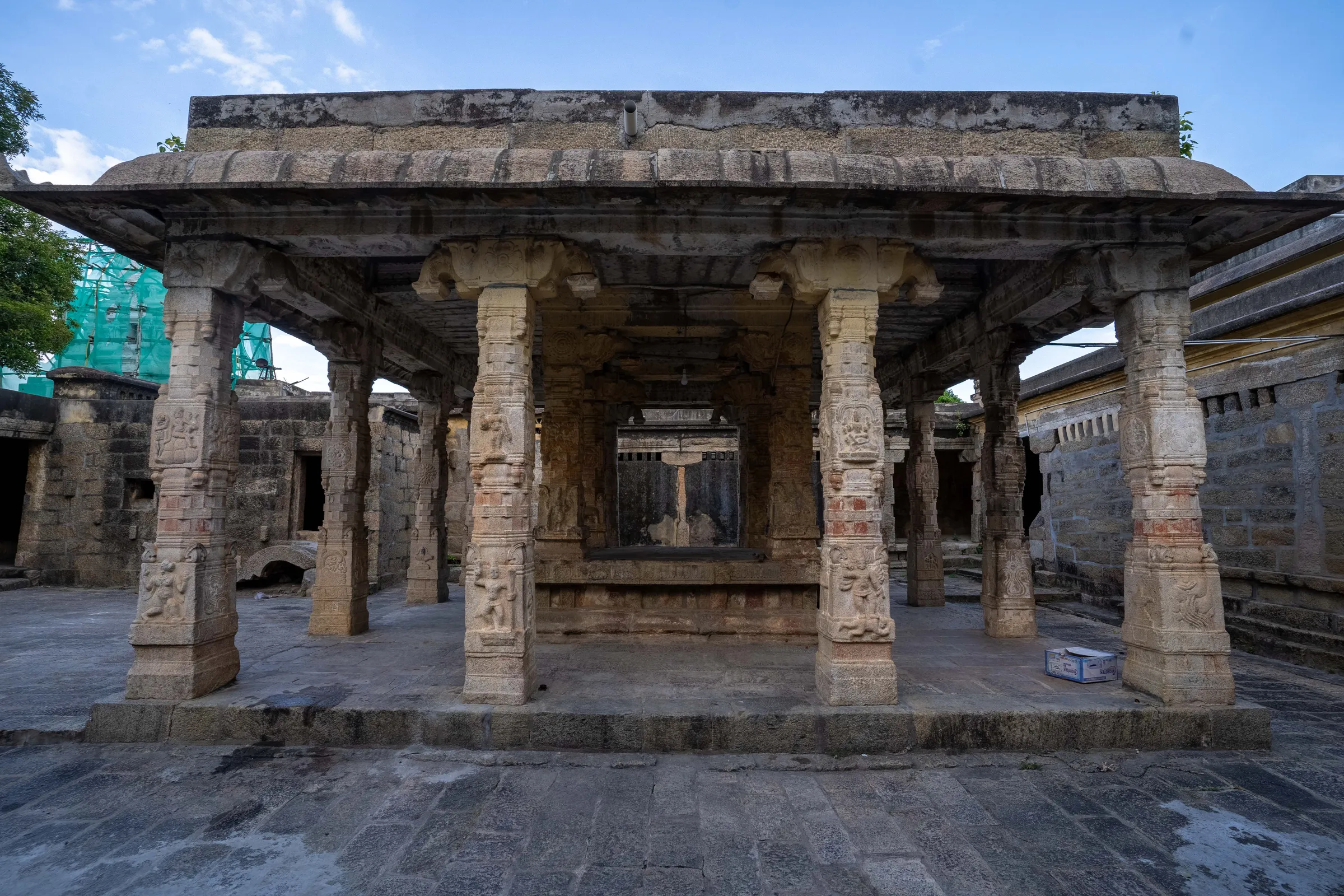
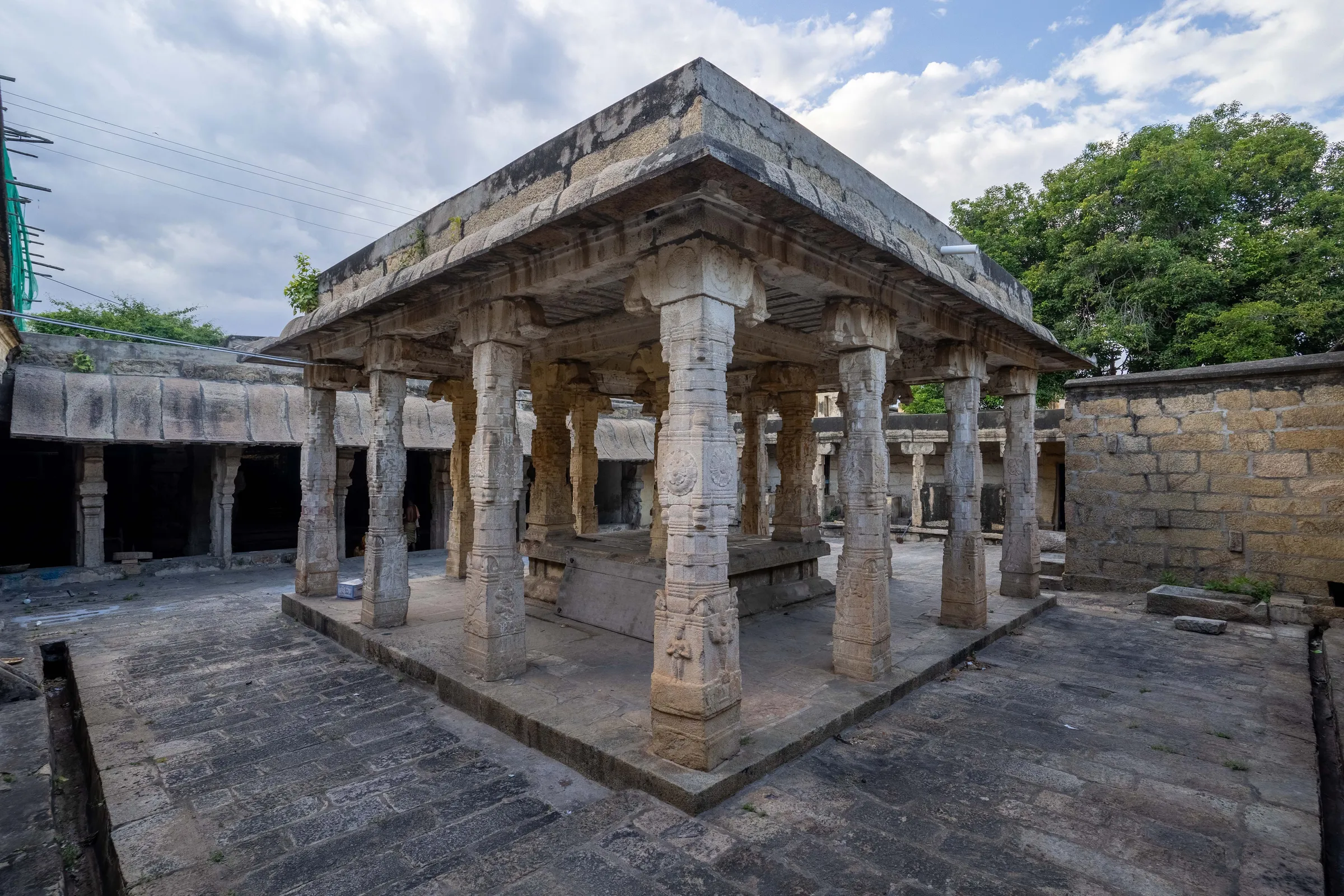
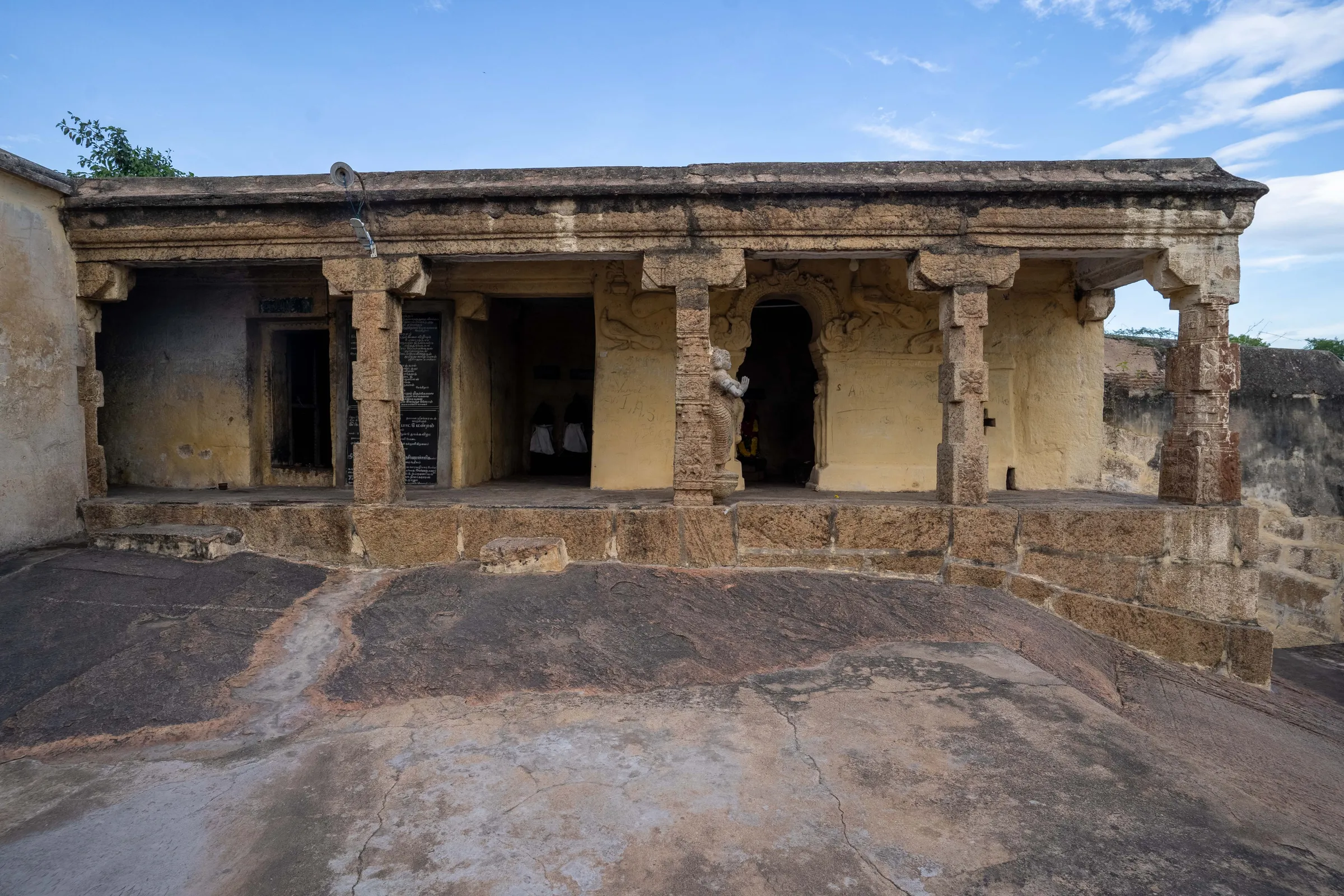
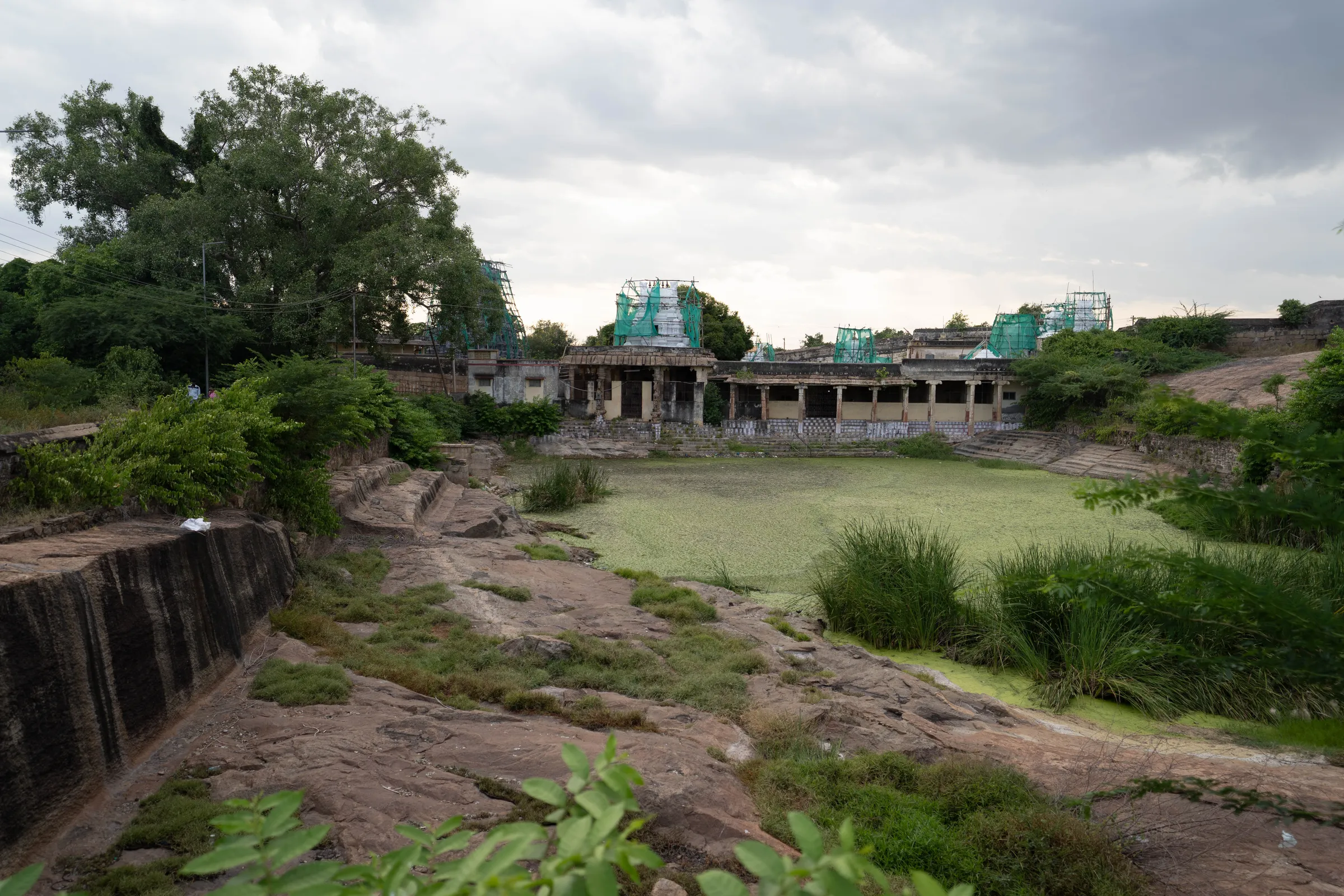
structure & vocabularyThe Tirugokarnam temple is a rock-cut temple of notable workmanship, located in a suburb of Pudukkottai town, a hub that flourished under the Thondaimans. It began as a simple excavation in the low-lying rock and was added to over centuries to its present size of multiple shrines and mandapas, the maha mandapa and other mandapas being structural rather than rock-cut.
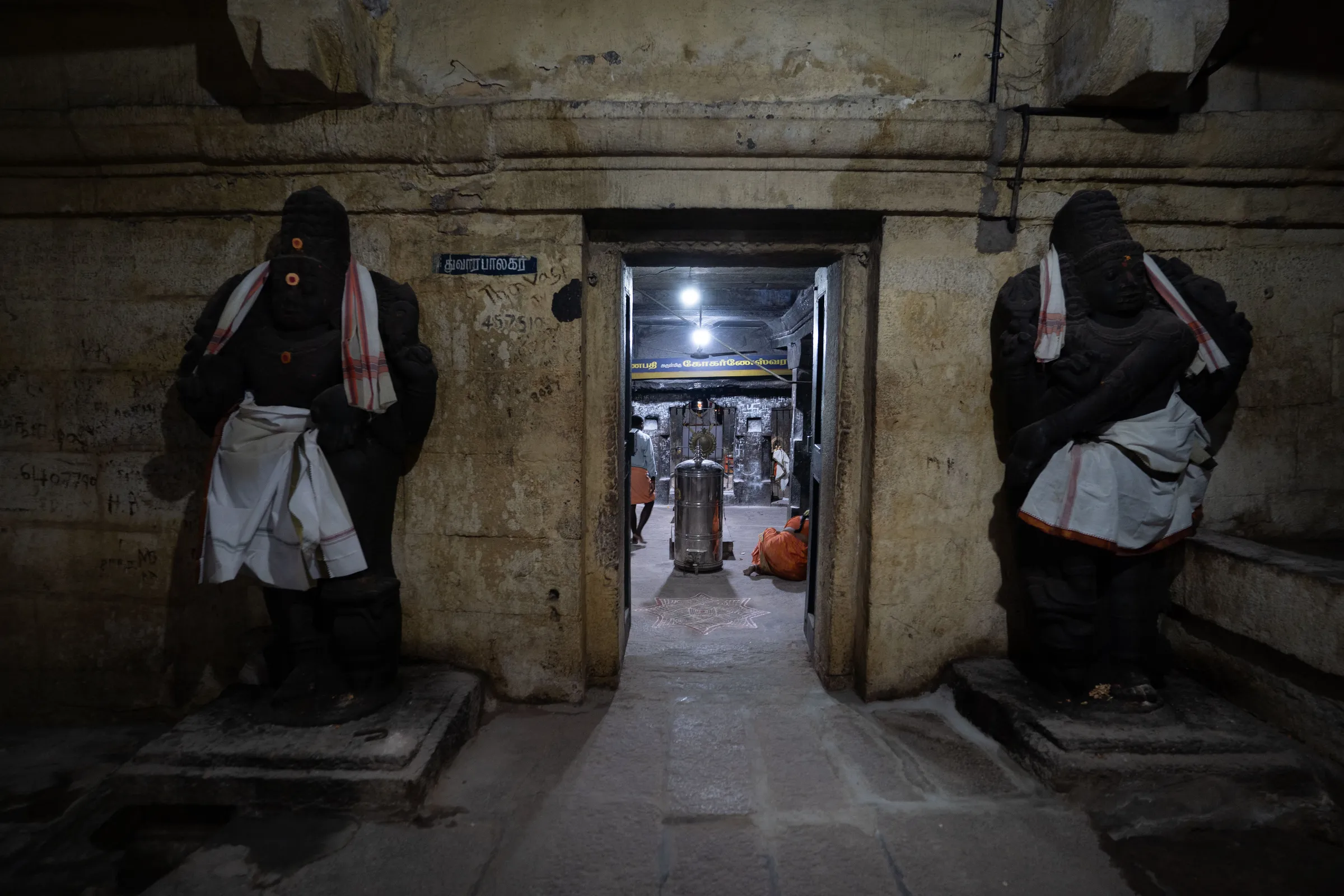
The main sanctum is a cubical cell housing a lingam called Gokarnesa. The rectangular verandah in front resembles those at the cave temples of Sitthanavasal and Kudumianmalai, both within a 20 km radius, and its walls carry large bas-reliefs of Ganesha and Gangadharamurti. The top floor holds subsidiary shrines for Durga, Lakshmi, Sarasvati, Subramanya, Bhairava and Jvarahareshwara, the destroyer of fever. The shrine of Brihadamba is a newer addition, probably not older than 200 to 250 years; the mandapa opposite it and the corridor from the street are in the Madurai Nayaka style, and the mandapa ceiling carries 17th to 18th century murals of the Ramayana with labels in Telugu. The sacred tree is the Magizha Maram, the Bakula or Spanish Cherry tree.