Jalakanteswara Temple, photograph
← Thondaimandalam
Entry 010

Jalakanteswara Temple

Vellore · Vellore · Vijayanagara

The Śiva temple standing within the Vellore Fort, raised in 1566 by the Nayaka chieftain Chinna Bommi Reddy, famed for its Kalyana Mandapa whose carved pillars a historian once described as a museum on its own.

Jalakanteswara Temple stands within the Vellore Fort, built in 1566 by the Vijayanagara chieftain Chinna Bommi Reddy. This entry holds the architectural, archaeological, and mythological registers apart, as the book records them.

The photographs

Plates · 6

Jalakanteswara Temple, photograph
© Sai Sanjay Prasath · All rights reserved
Jalakanteswara Temple, photograph
© Sai Sanjay Prasath · All rights reserved
Jalakanteswara Temple, photograph
© Sai Sanjay Prasath · All rights reserved
Jalakanteswara Temple, photograph
© Sai Sanjay Prasath · All rights reserved
Jalakanteswara Temple, photograph
© Sai Sanjay Prasath · All rights reserved
01

Architectural

structure & vocabulary

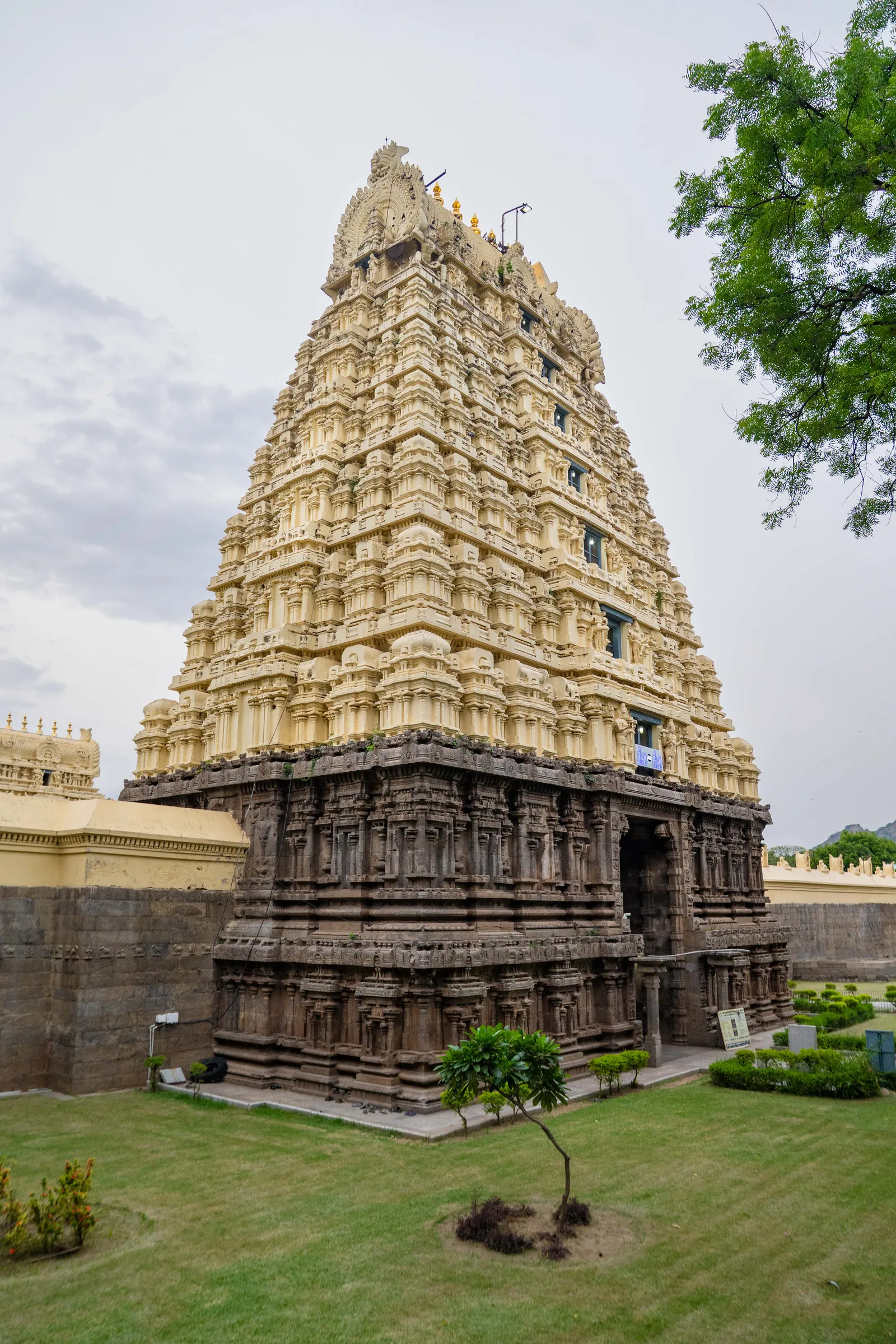
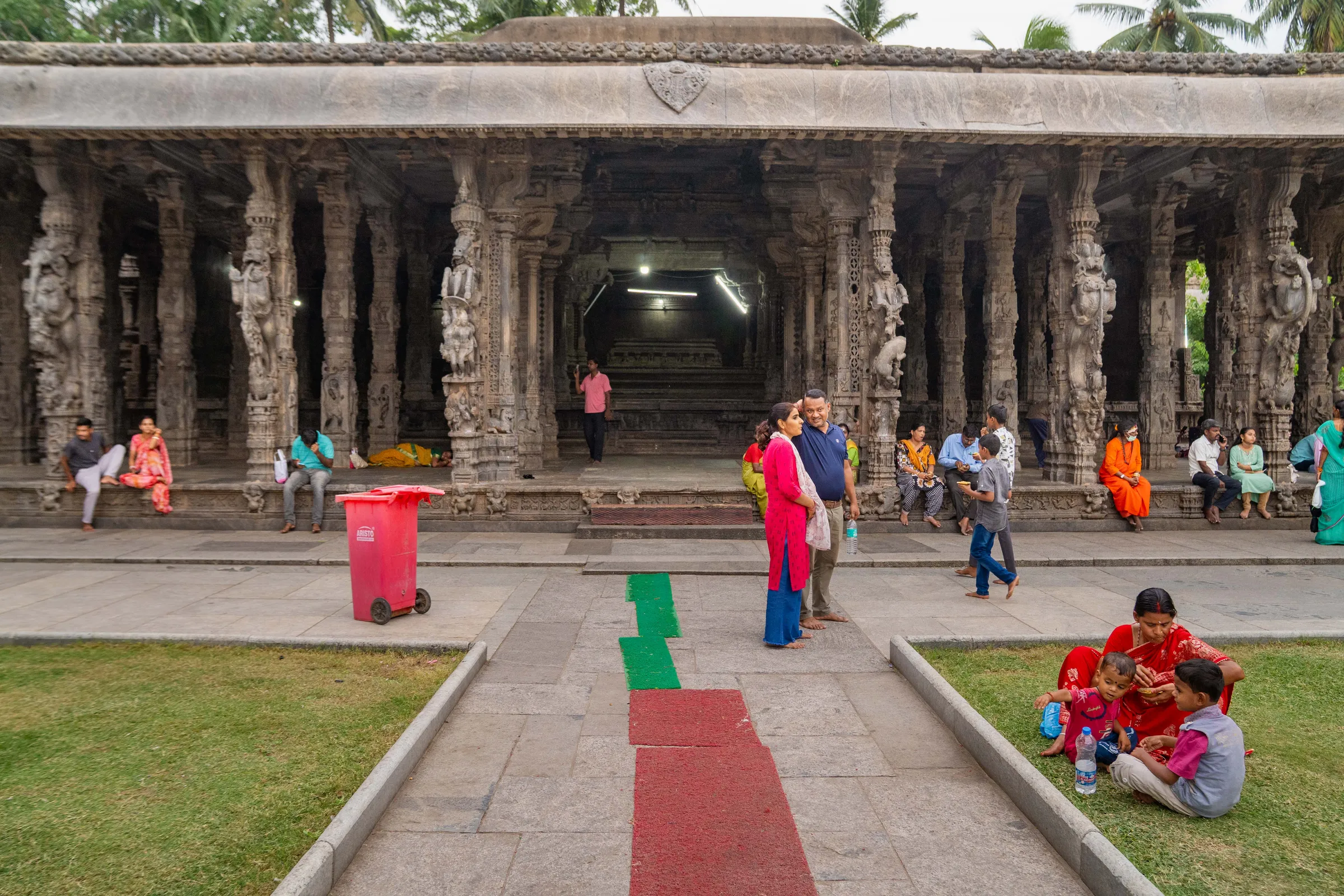
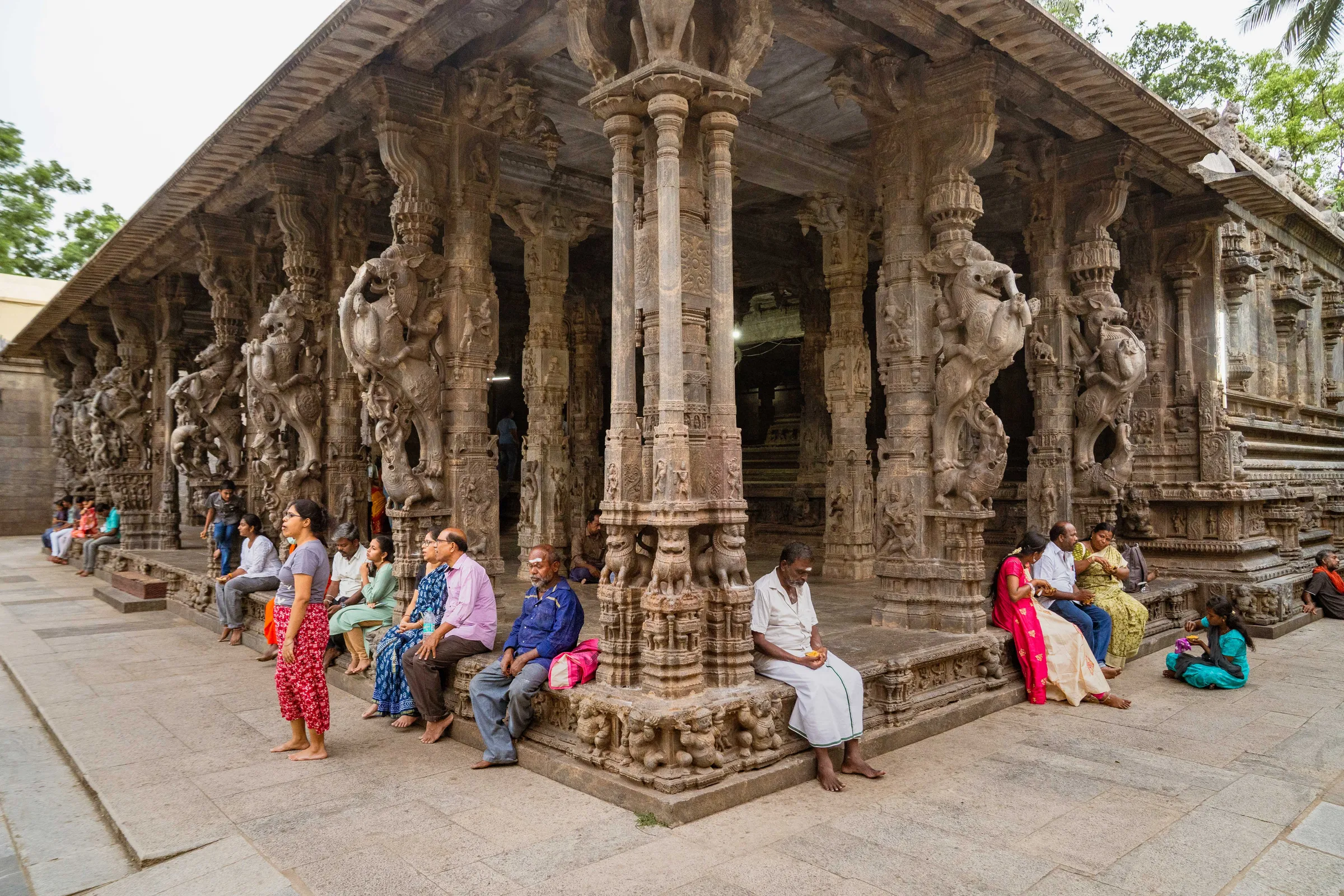
One crosses a giant entrance into a courtyard facing a further gopuram that opens to the main shrine. The courtyard surrounds the shrine of Jalakanteswara. On the right is the pushkarini, and on the left the Kalyana Mandapa, a later addition counted among the most beautiful buildings in Vellore.

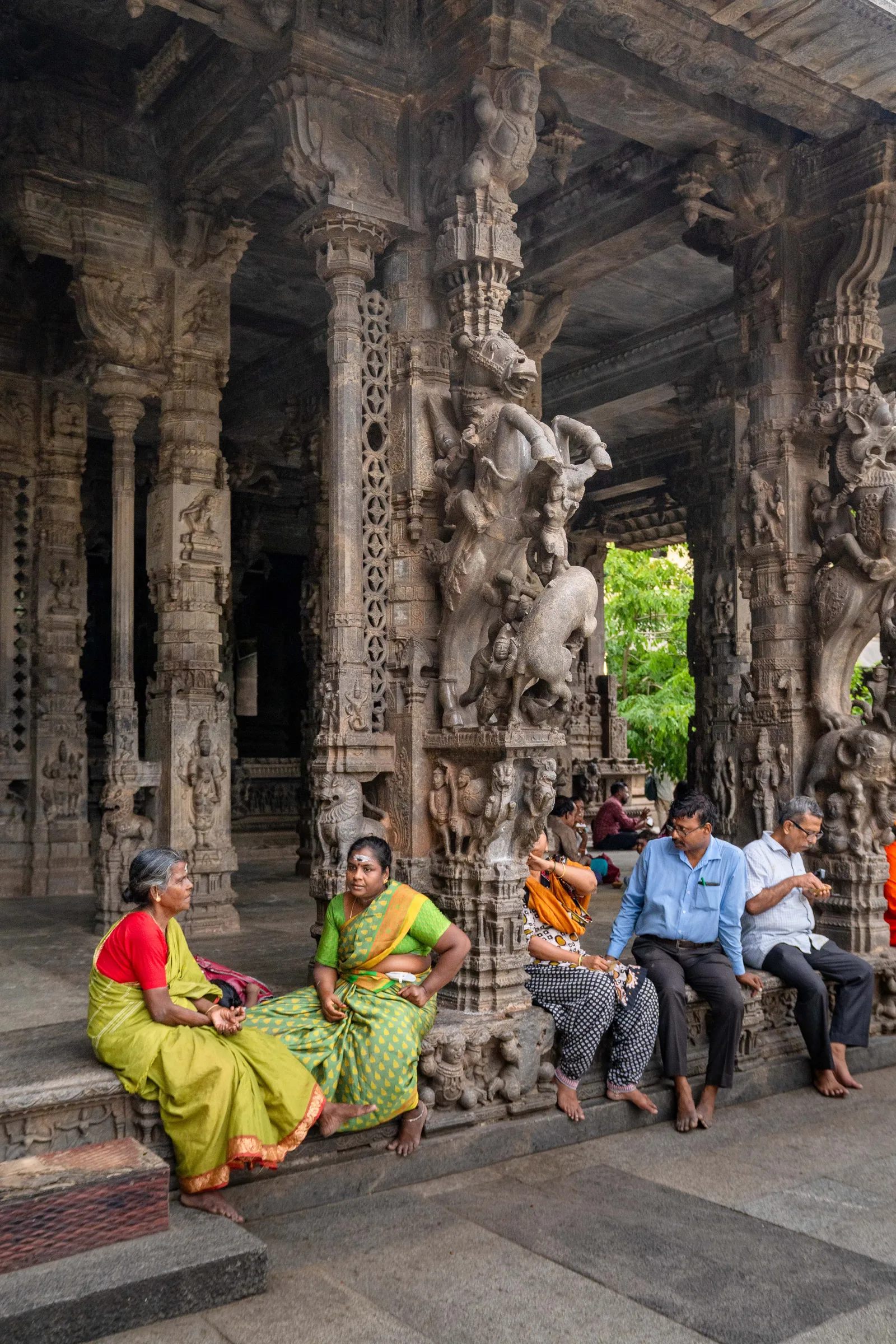
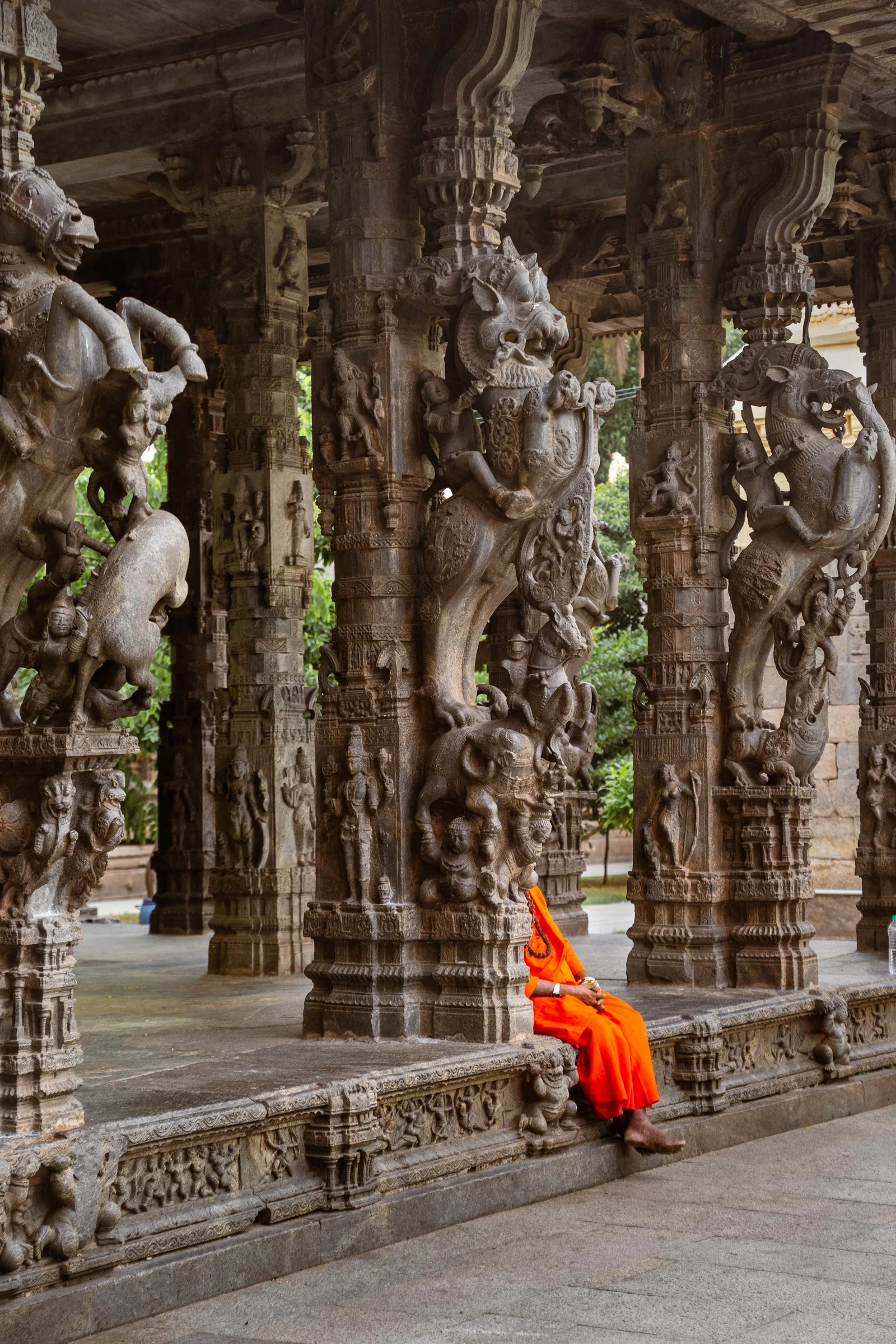
The pillars of the Kalyana Mandapa are intricate and anatomically proportioned. The outer pillars, carved from black soapstone, fall into three types: Yali riders, Sharabha riders, and Horse riders, rendered with a war-like expression of bulging eyes and protruding teeth. One celebrated pillar depicts a leopard being hunted: six hunters and a crowned chieftain on horseback engage the beast.

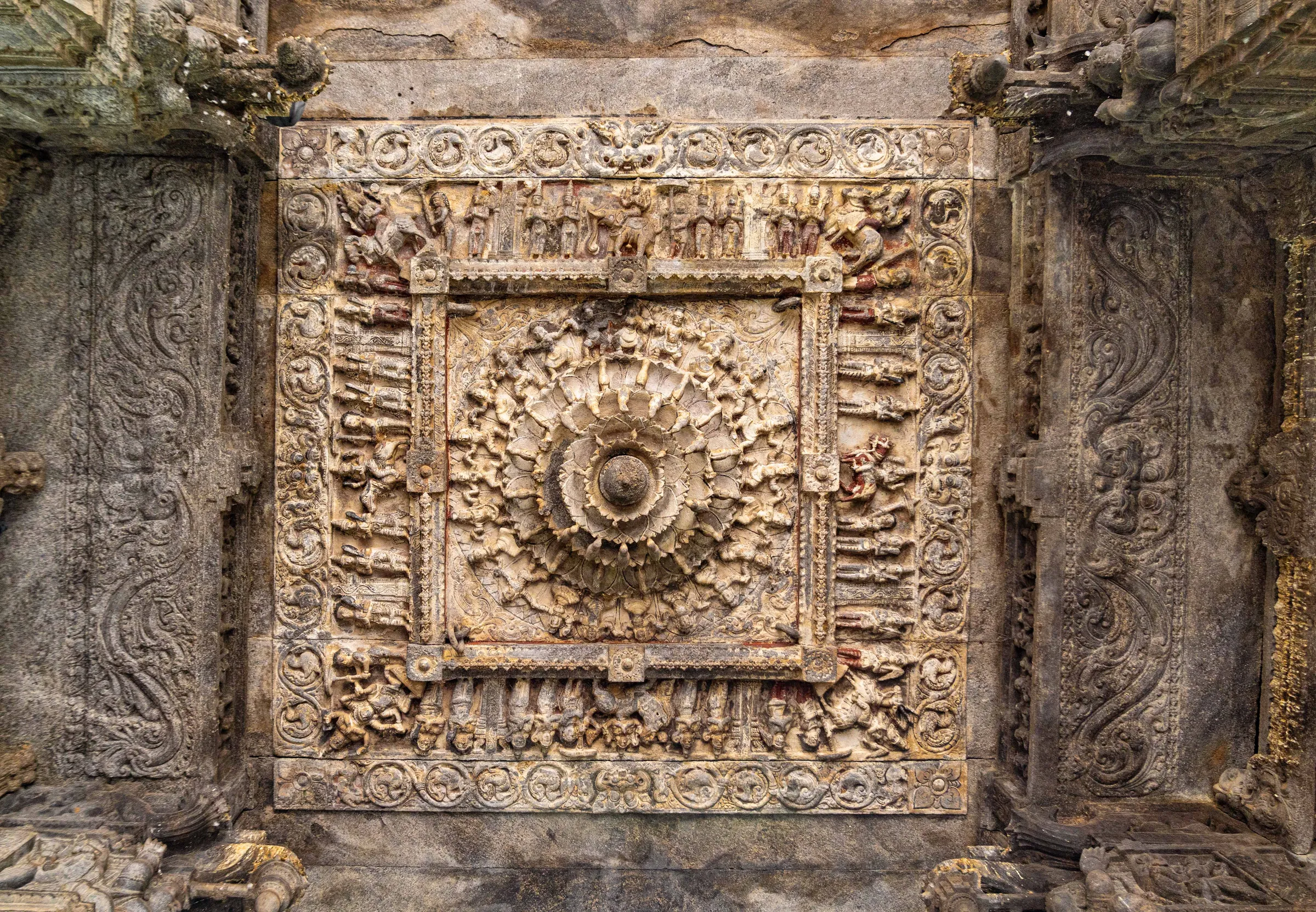
The tallest platform in the Mandapa carries a smaller Kurma platform at its center, the tortoise facing east with elephants and the Ashta Digpalas helping it hold the platform. The roofs bear intricate mandalas comparable to the Hoysala temples, with couples dancing around a central lotus, and carvings of the guardians of the directions: Yama on a buffalo, Agni on a ram, Indra on Airavata, Isana on a bull, Kubera on a horse, Vayu on a gazelle, Varuna on a Makara, and Nirti on a human corpse.

The second Gopuram is smaller but finely worked, its doorframe decorated with scenes from the Ramayana and Mahabharata. On crossing it, one faces Vinayaka set against the eastern wall of the main shrine.

02

Archaeological

dated & cited

The fort and temple were built in 1566 CE by Chinna Bommi Reddy, a local Nayaka and subordinate chieftain of the Vijayanagara king Sadashiva Raya, after the Battle of Talikota. The fort was surrounded by deep trenches said to hold thousands of crocodiles.

The sculptures of the Kalyana Mandapa were described by the historian Percy Brown as a museum on their own. A governor of the English East India Company, impressed by the workmanship, planned to dismantle and ship the Mandapa to London; the stones were numbered and drawings made, but the special ship sank in rough seas and the plan was abandoned.

As ownership changed hands after the fall of the Nayakas, the temple passed through difficult years. When Vellore fell to the Sultanates the Śiva liṅga was moved and hidden in a nearby village named Sathuvachari, leaving the temple without its deity for close to 200 years. Most idols were desecrated or thrown into the fort trenches, and the temple served as a military garrison under the Sultanates and the British Raj. The liṅga was reconsecrated and the Vigraha re-established in 1981.

Dating
Begun1566 CE · the fort and temple

Chinna Bommi Reddy, a subordinate chieftain of the Vijayanagara king Sadashiva Raya, built the fort of Vellore in 1566 after the Battle of Talikota.

Protection & condition
ConditionIn worship; the liṅga was reconsecrated in 1981 after close to 200 years without its deity
03

Mythological

as transmitted

The temple lent its name to the lord Jalakanteswara, the deity of the shrine that the great courtyard surrounds.

Tradition holds that the East India Company ship carrying the dismantled Mandapa sank by the grace of Lord Varuna on its journey to Britain, so that the stones never left India.

Register interest in prints Buy the book
Improve this entry

This is an open, reviewed record. If you have spotted an error or have something to add — a correction, a date, a source, a name in another script — propose it. Every change is reviewed before it joins the record.

“Suggest an edit” opens this entry on GitHub and turns your change into a pull request. “Share feedback” opens a short form. Both go through review.