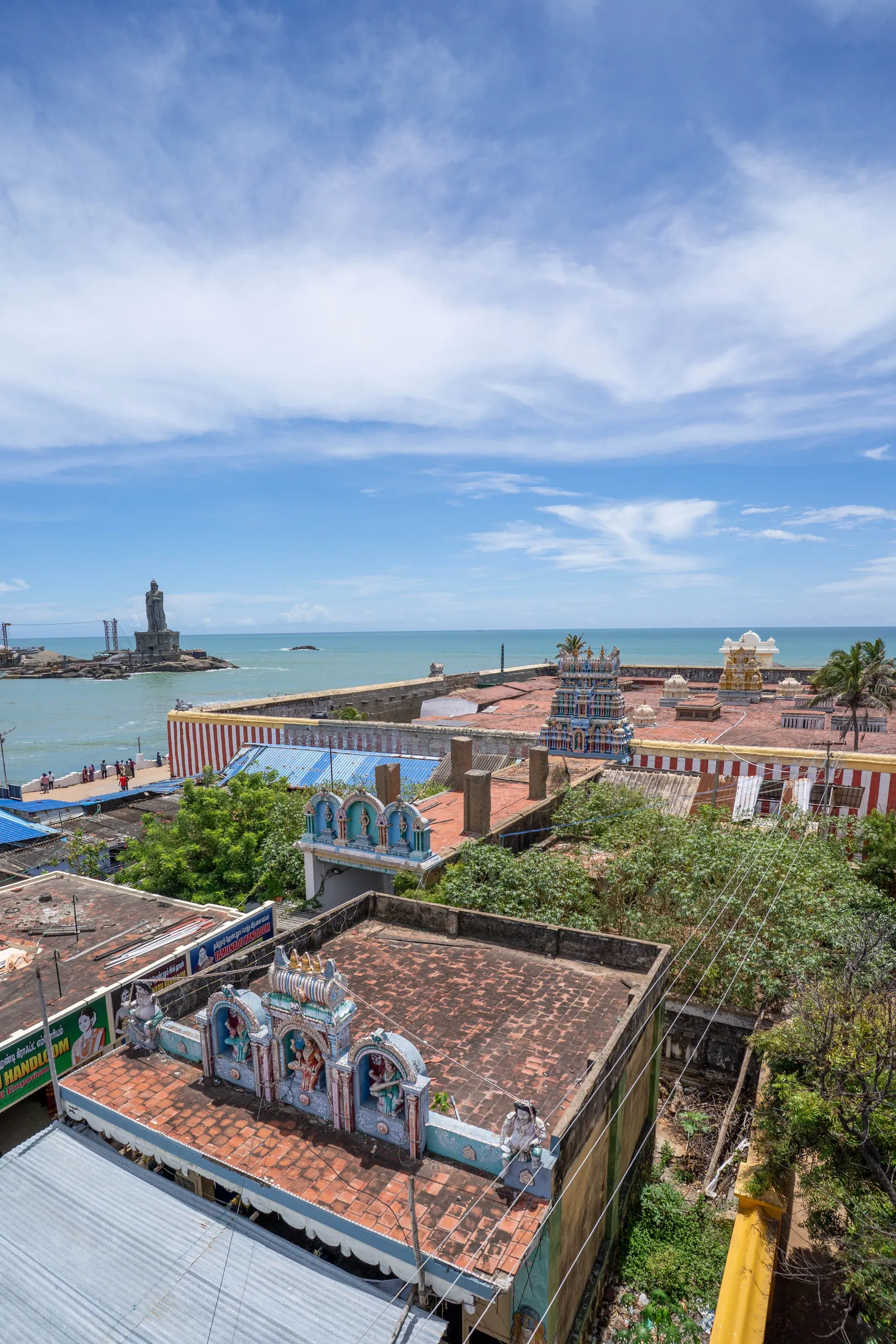
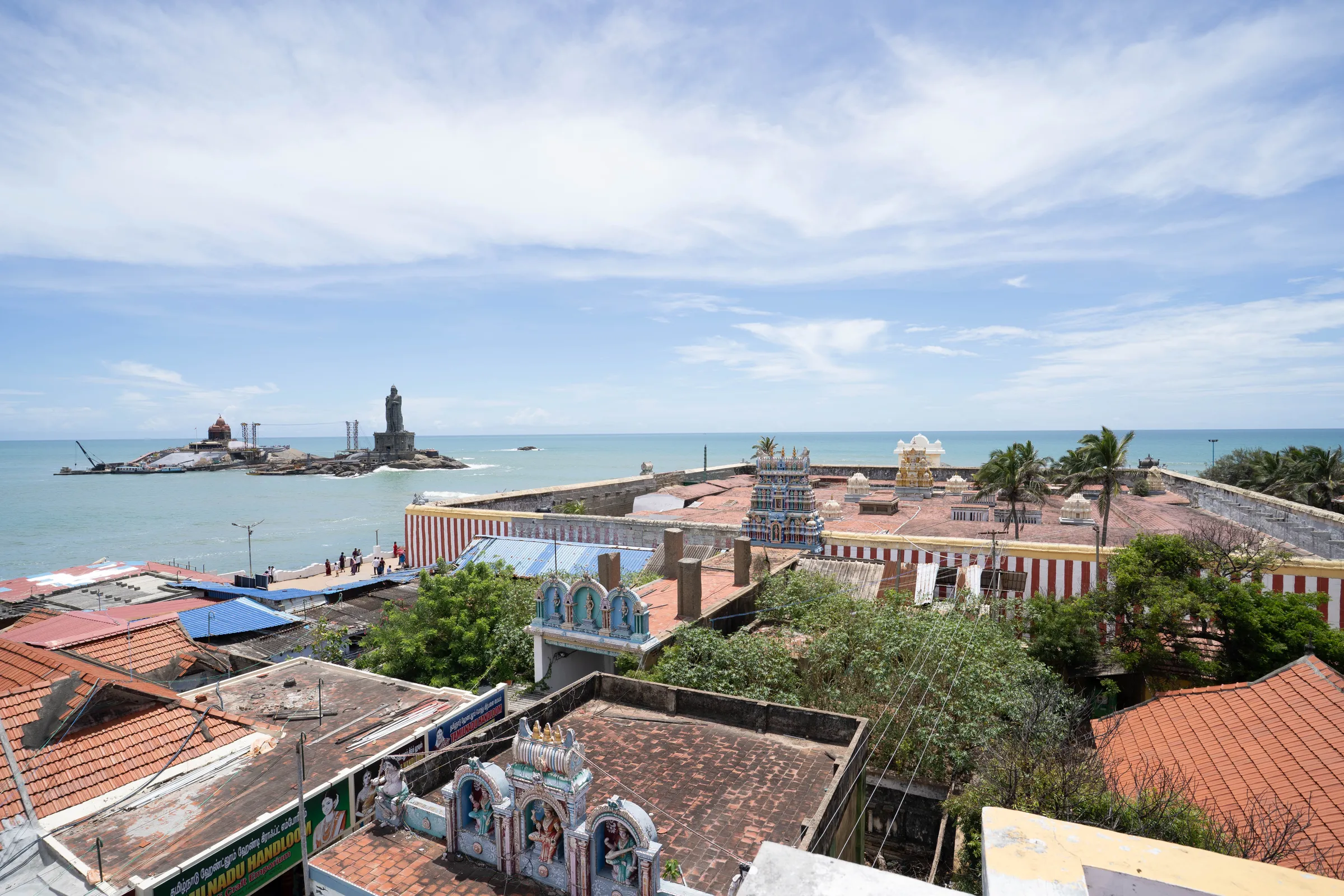
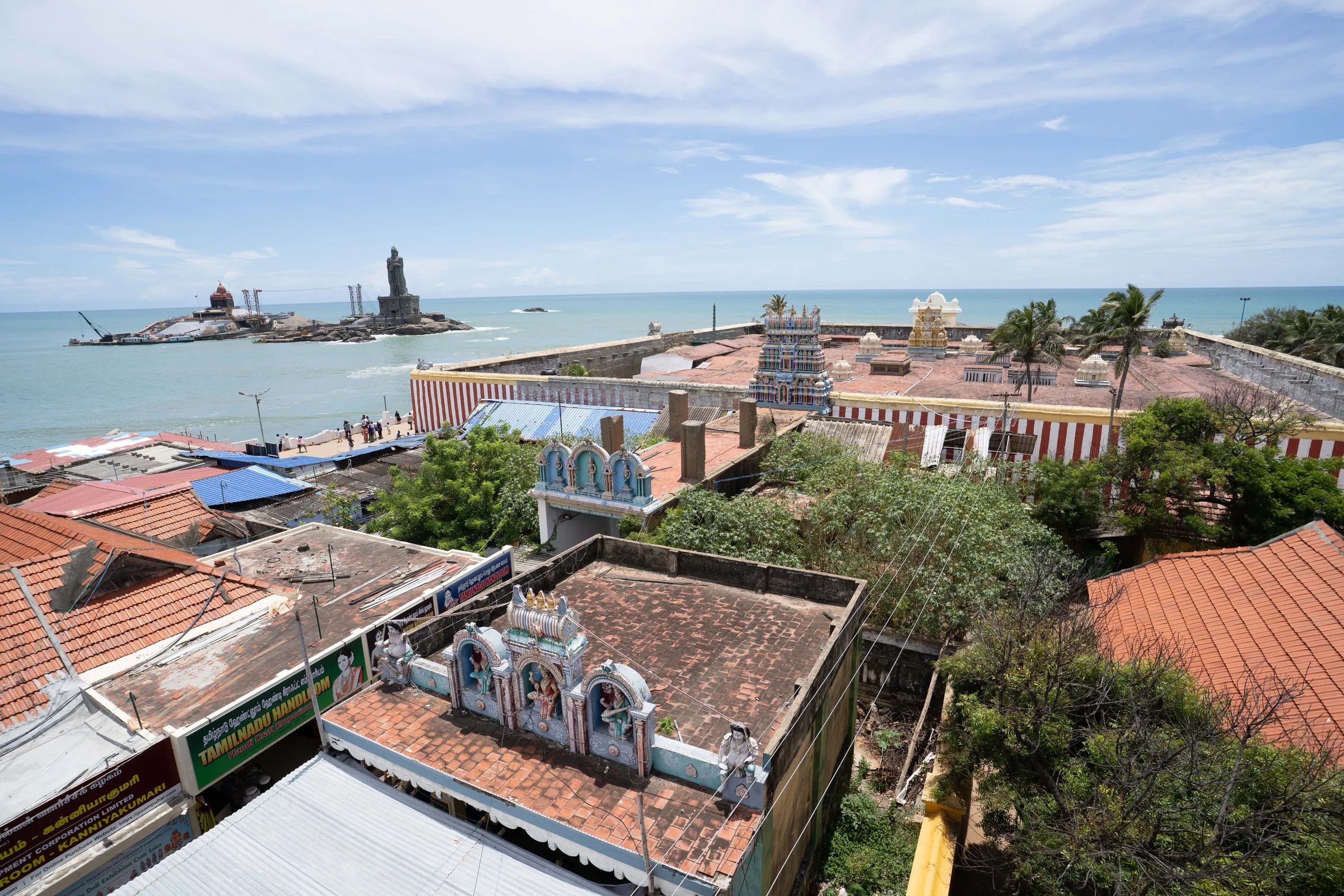
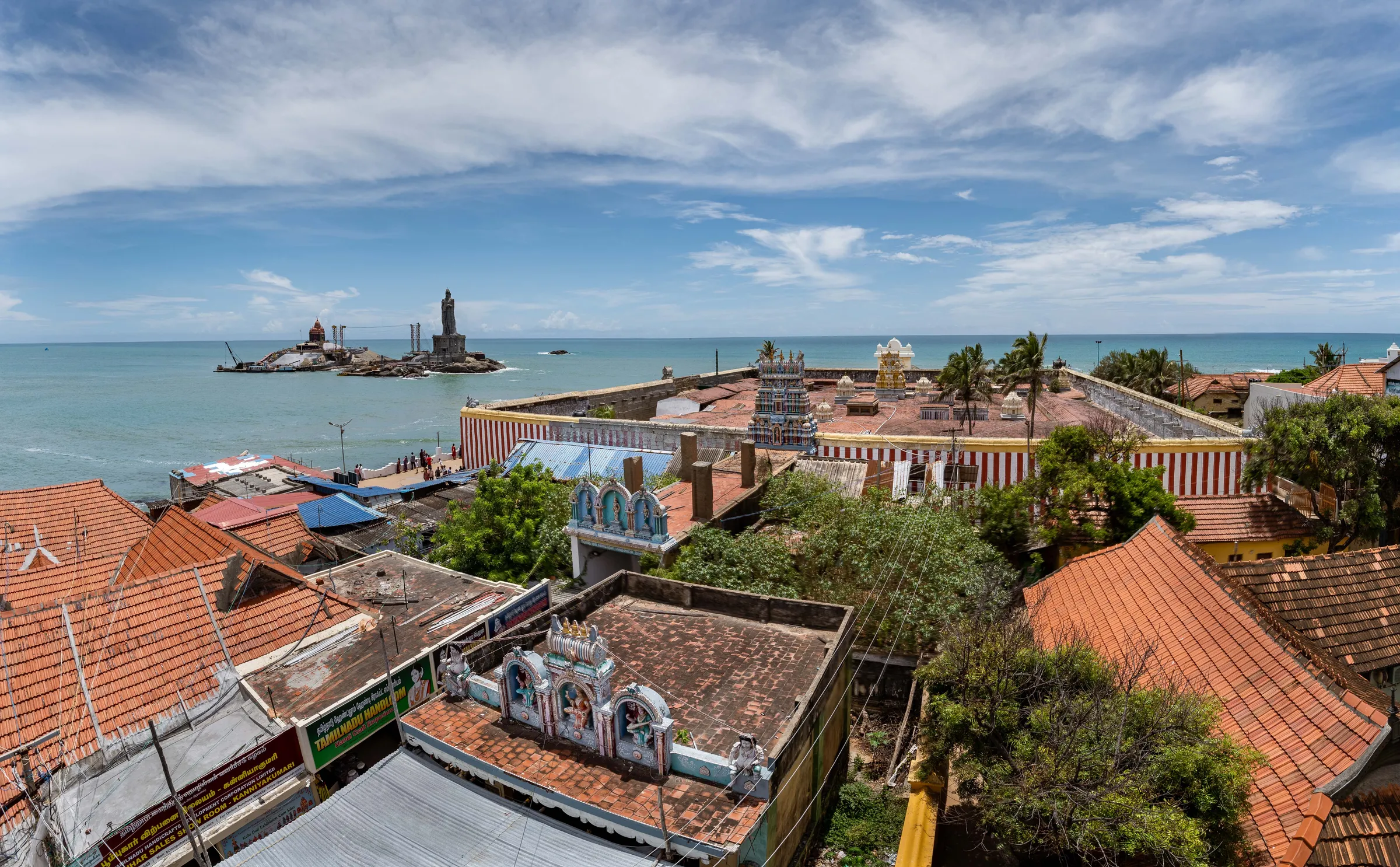
Kanyakumari Amman Temple, photograph
← Pandya Nadu
Entry 094

Kanyakumari Amman Temple

Kanyakumari · Kanyakumari

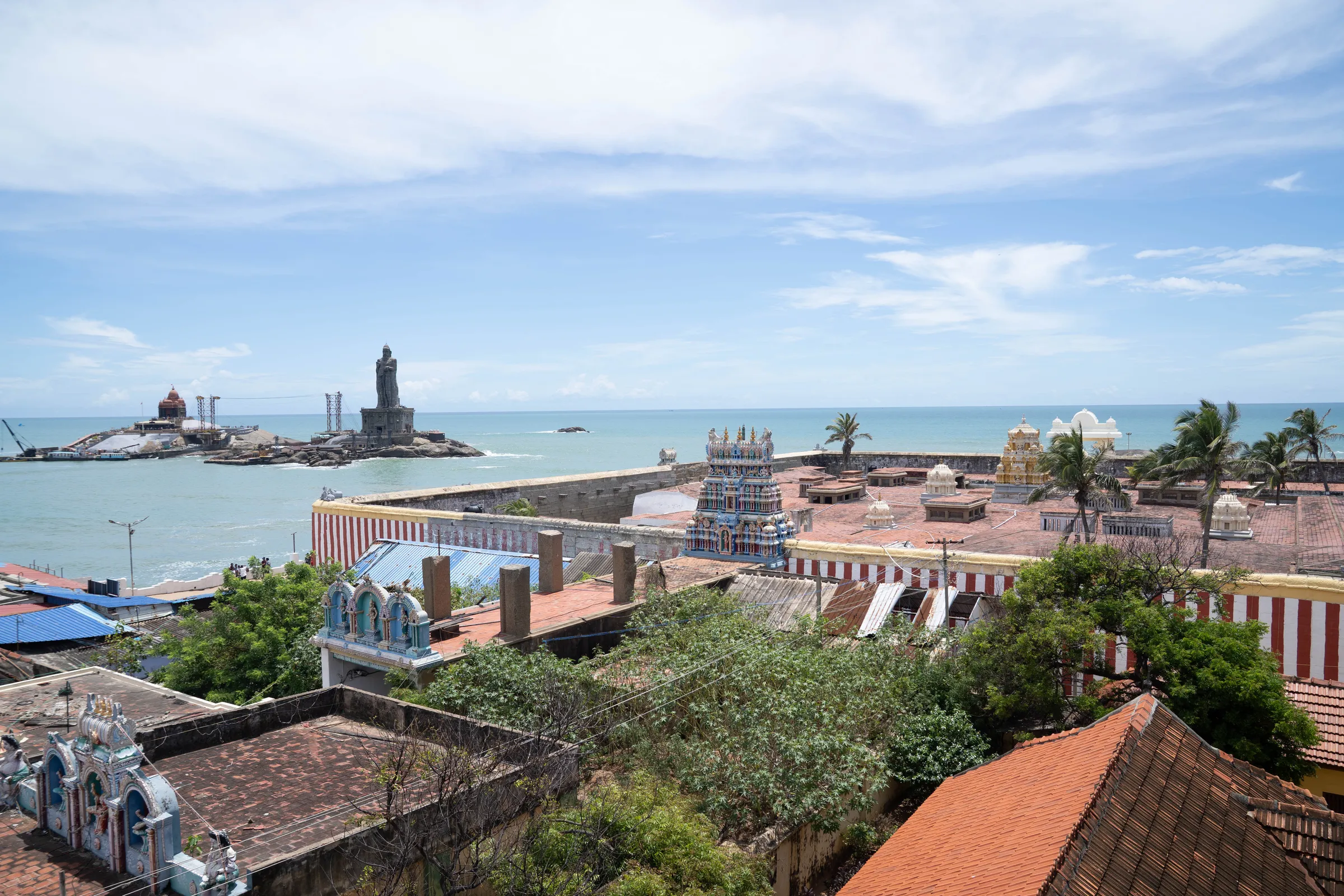
At the tip of the subcontinent, where the Bay of Bengal, the Indian Ocean and the Arabian Sea meet, this is one of the larger temples to an independent Devi in the old tradition: a virgin goddess, powerful in her own right.

One of the larger temples to an independent Devi in the old tradition stands at Kanyakumari, at the tip of the subcontinent, where she is the primary goddess, a virgin powerful in her own right. This entry holds three registers apart: what stands, what can be dated and cited, and what is told.

The photographs

Plates · 8

Kanyakumari Amman Temple, photograph
© Sai Sanjay Prasath · All rights reserved
Kanyakumari Amman Temple, photograph
© Sai Sanjay Prasath · All rights reserved
Kanyakumari Amman Temple, photograph
© Sai Sanjay Prasath · All rights reserved
Kanyakumari Amman Temple, photograph
© Sai Sanjay Prasath · All rights reserved
Kanyakumari Amman Temple, photograph
© Sai Sanjay Prasath · All rights reserved
Kanyakumari Amman Temple, photograph
© Sai Sanjay Prasath · All rights reserved
Kanyakumari Amman Temple, photograph
© Sai Sanjay Prasath · All rights reserved
01

Architectural

structure & vocabulary

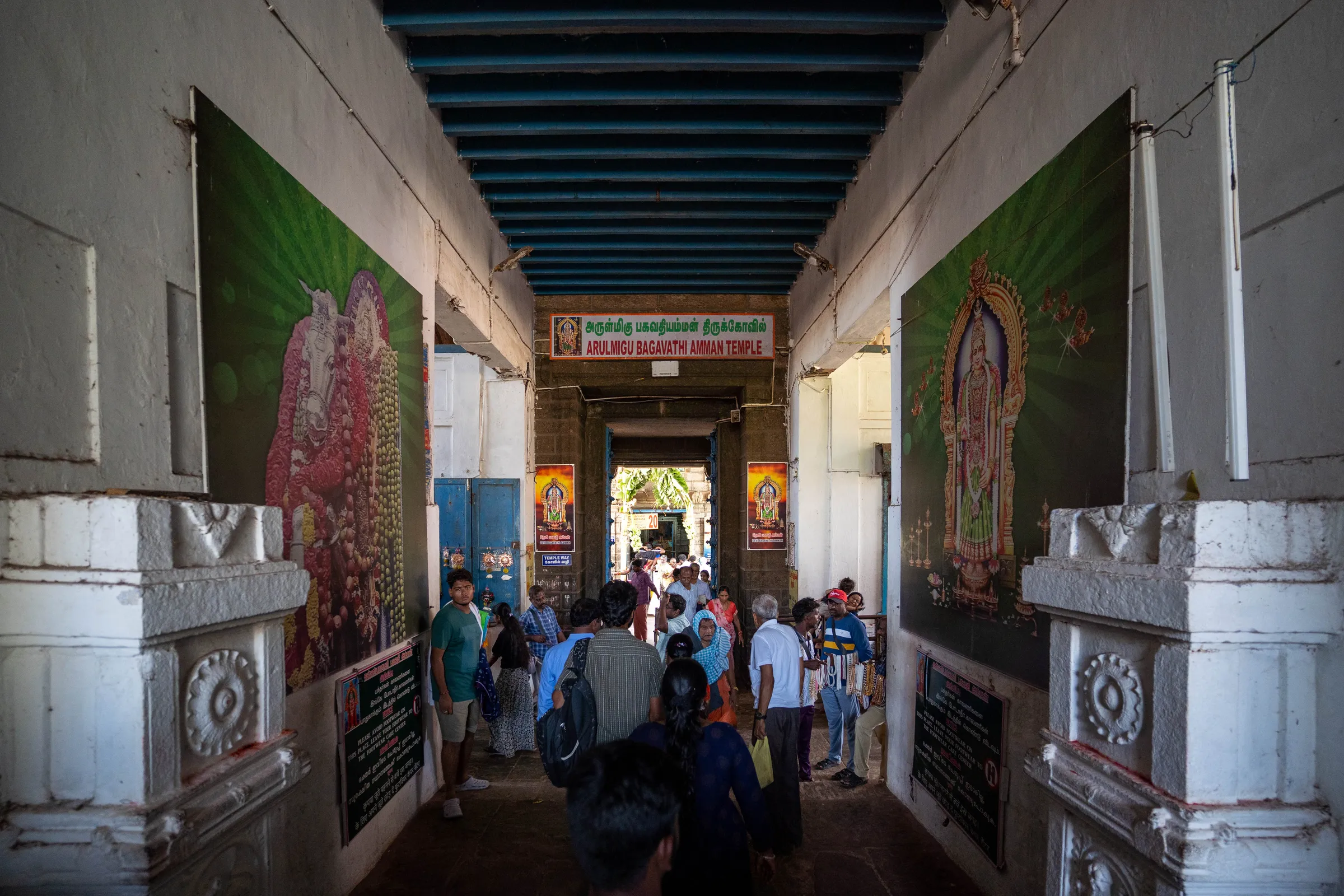
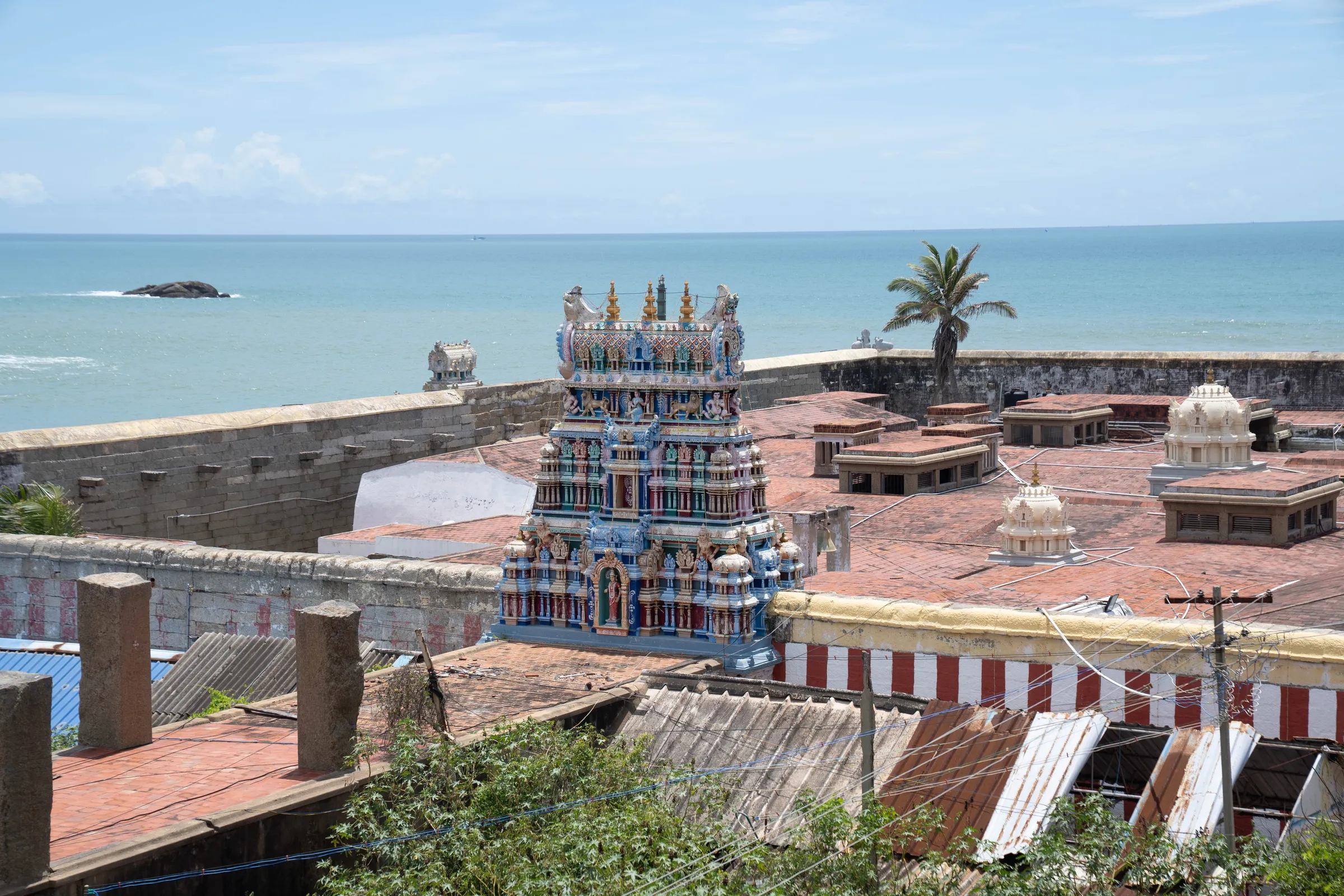
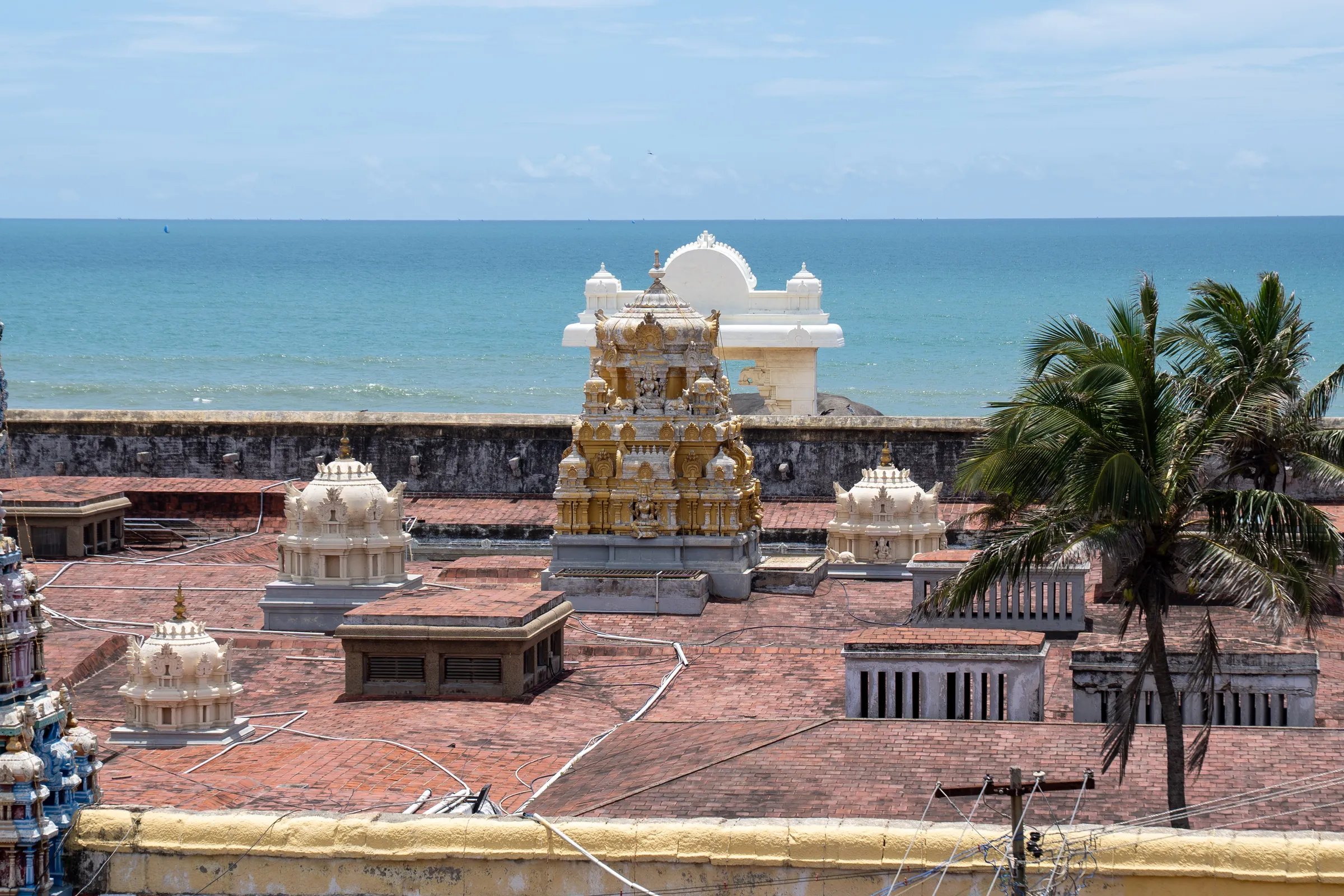
The temple stands at Kanyakumari, in the land known in Sangam times as Nanjil Naadu, where three waters meet. The eastern gate is kept shut, said to be so that the goddess's radiance does not distract sailors. The temple follows many Kerala systems of worship. The Guhanatha Swamy temple is adjacent to it.

02

Archaeological

dated & cited

Eleventh-century inscriptions of the Pandya kings, Kulotunga Chola I and Marthanda Varma show the goddess as a favourite, even an ishta or kula devam to some kings. An inscription of 1000 CE, in the reign of Raja Raja, records the gift of a lamp; here the deity is called Kanya Padari, Pidari being an old Sangam-period name for the mother goddess. An eleventh-century inscription of an unknown dynasty records a gift for offering curd rice and ghee rice on Mahanavami days. A 1055 CE inscription records that this temple, with the Gangaikondacholapuram temple, received gifts from Rajendra Chola on his wife's birthday, calling her Kanya Pidari rather than Kanya Padari.

The Silappathikaram and Manimekalai epics of the 3rd century CE mention the waters of the temple as sacred. Subramania Bharathiyar has sung of this temple, and Vivekananda set out abroad from here.

Dating

Pandya, Chola and Venad inscriptions from the 11th century; an inscription of 1000 CE records a gift of a lamp in the reign of Raja Raja.

03

Mythological

as transmitted

As the agrarian society took deeper root and the family became the basic unit of community, there was little place for unmarried women and bachelor gods, and many stories were created to explain why she remained single. Also called Bhagavathy, from the root Bhaga, to give, she is an important goddess in southern Kerala as well. The goddess's nose ring, no longer present, was said to have guided sailors.

Register interest in prints Buy the book
Improve this entry

This is an open, reviewed record. If you have spotted an error or have something to add — a correction, a date, a source, a name in another script — propose it. Every change is reviewed before it joins the record.

“Suggest an edit” opens this entry on GitHub and turns your change into a pull request. “Share feedback” opens a short form. Both go through review.