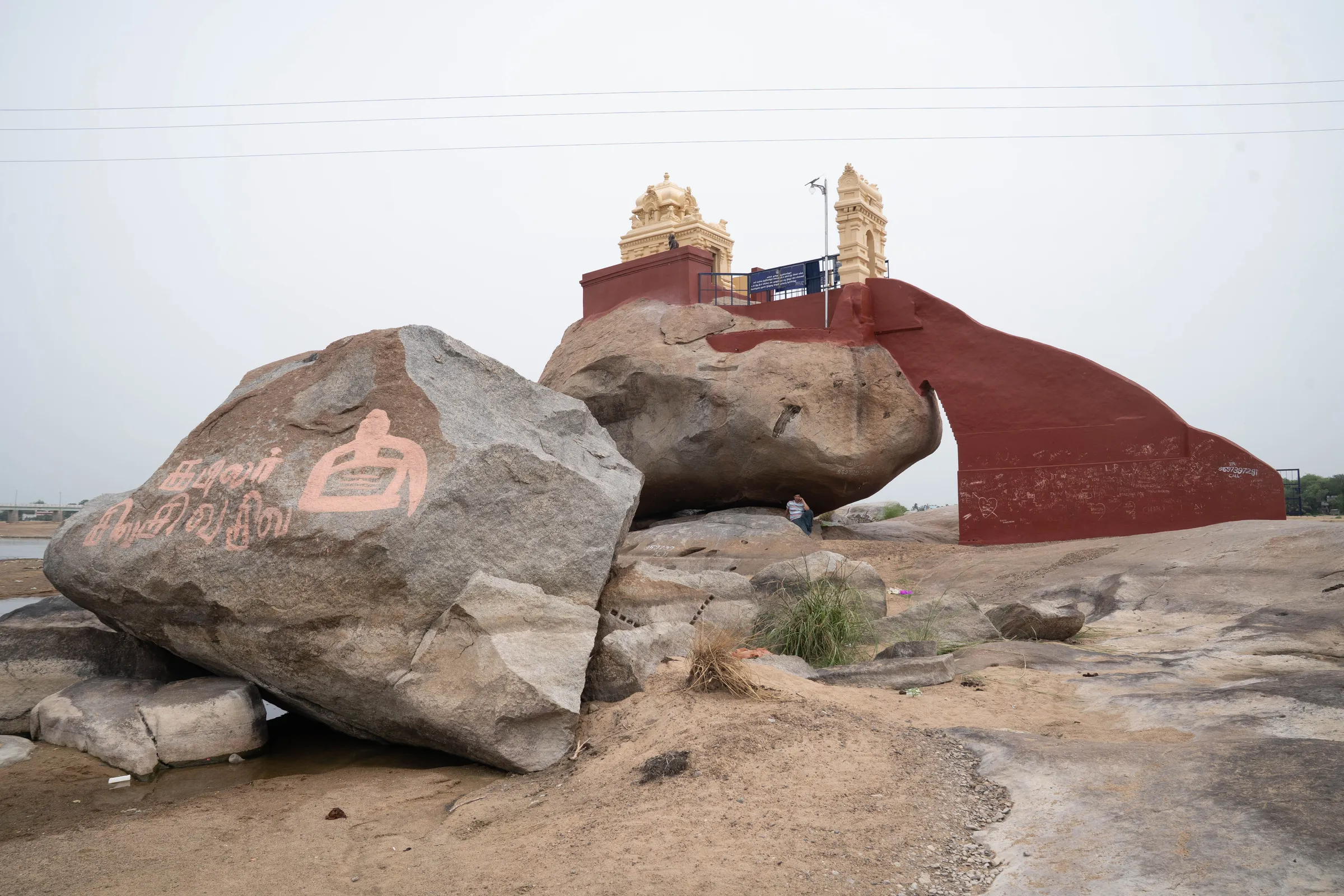
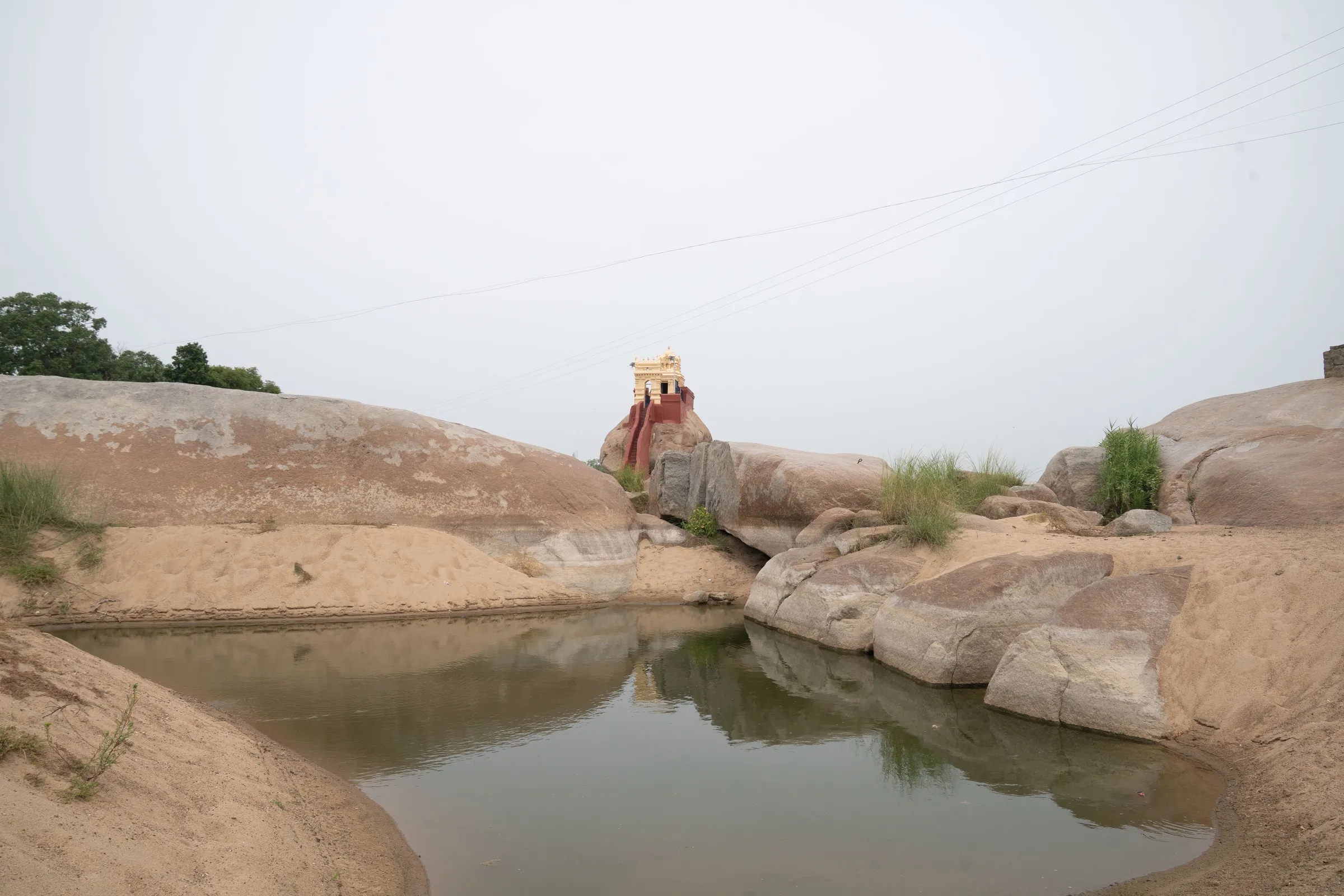
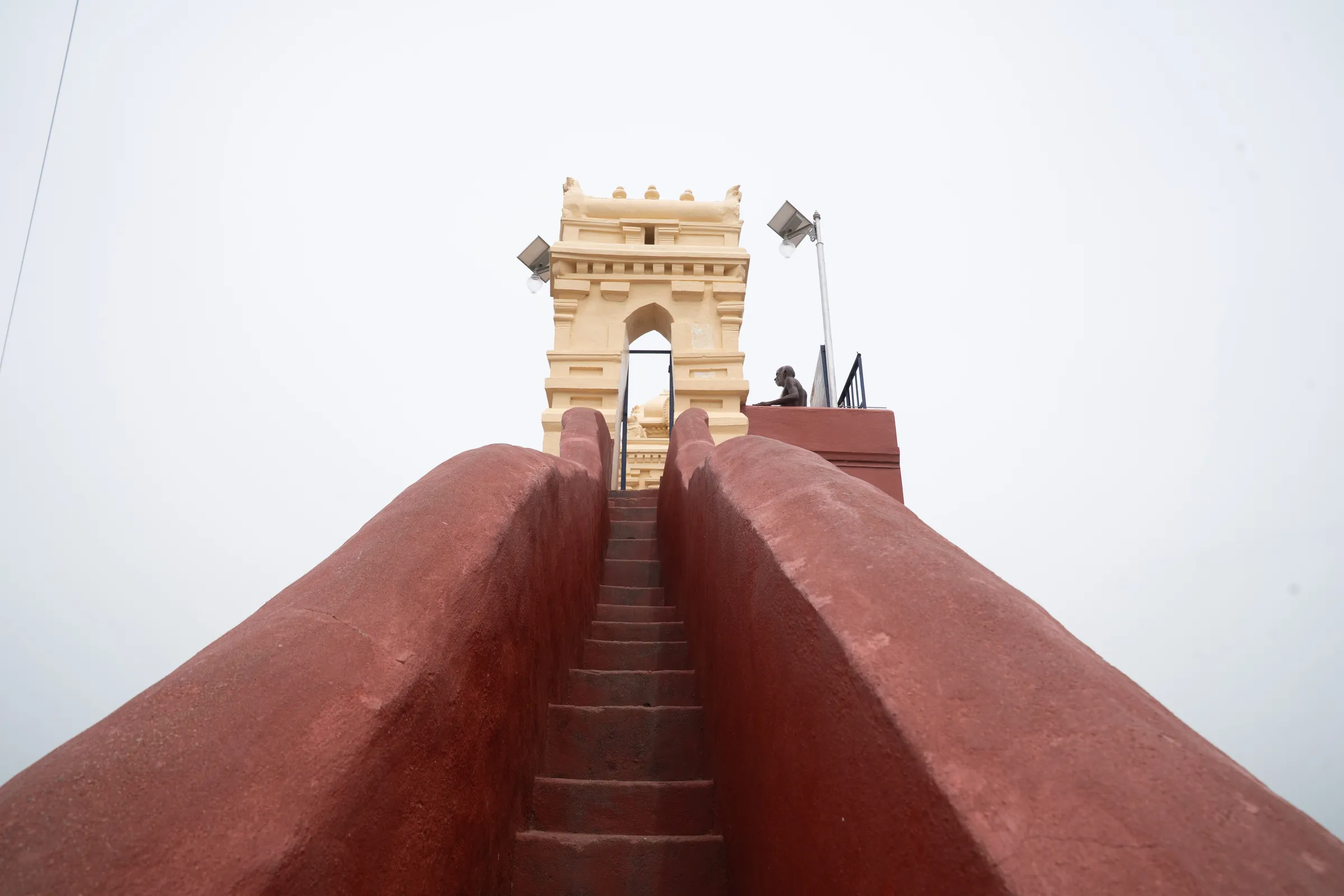
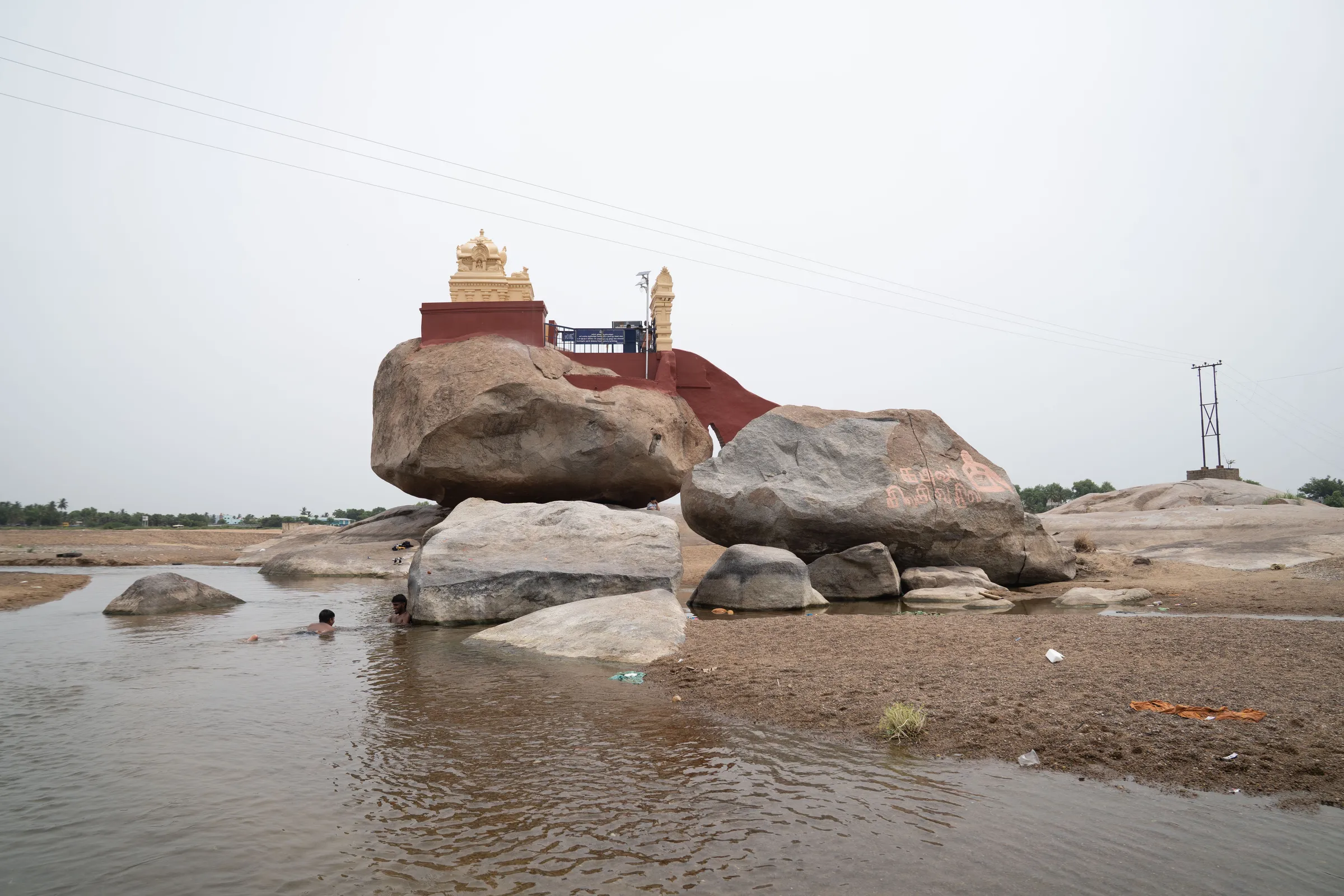
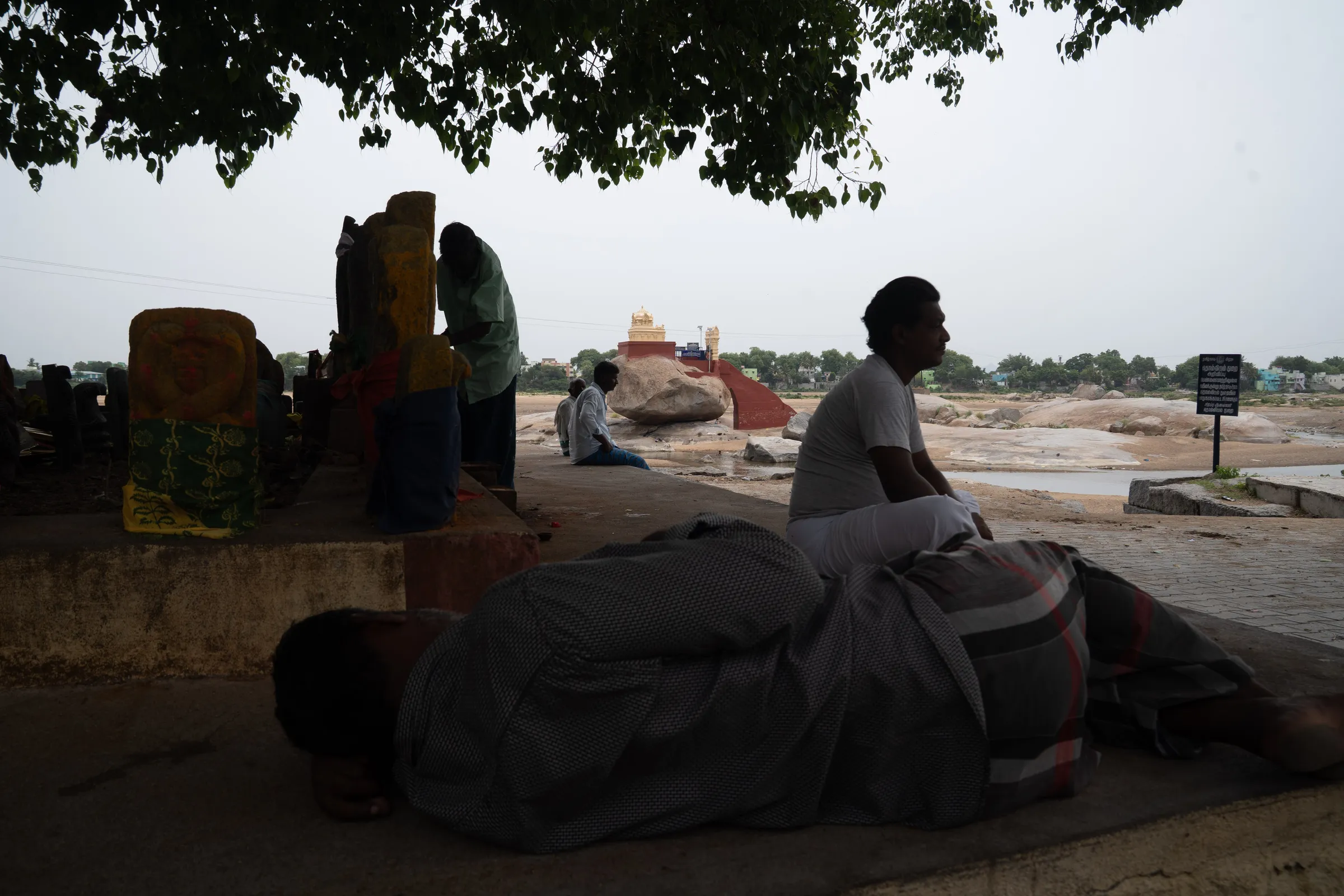
Kapilar Kundru Temple, photograph
← Thondaimandalam
Entry 025

Kapilar Kundru Temple

Tirukoilur · Villupuram

A rock formation on the southern bank of the Pennaiyar near Tirukoilur, remembered as the place where the Sangam poet Kapilar, friend and minister of the chieftain Vel Pari, met his end. An ASI-protected monument with a small Śiva shrine on top.

This entry documents the monument across three registers, held deliberately apart: the architectural reading of what stands, the archaeological reading of what can be dated and cited, and the mythological reading of what is told.

The photographs

Plates · 5

Kapilar Kundru Temple, photograph
© Sai Sanjay Prasath · All rights reserved
Kapilar Kundru Temple, photograph
© Sai Sanjay Prasath · All rights reserved
Kapilar Kundru Temple, photograph
© Sai Sanjay Prasath · All rights reserved
Kapilar Kundru Temple, photograph
© Sai Sanjay Prasath · All rights reserved
01

Architectural

structure & vocabulary

Kapilar Kal, also called Kapilar Kundru, carries a small Śiva temple on top of the rock, with a praharam, a path to circumambulate, around the shrine. From the structure of this brick temple archaeologists believe it belongs to the 14th century. The two female figures on the temple-top could be Pari's daughters, and the two male figures their spouses. The steps to the temple are so narrow that only one person can go up or come down at a time.

02

Archaeological

dated & cited

The rock formation lies two kilometres from Tirukoilur on the southern bank of the Pennaiyar, near the Veerattaneswar temple, and is referred to as Kapilar Kal in the inscriptions. It is a protected monument under the Archaeological Survey of India. An inscription on the Veerattaneswar temple sanctum wall, traced to Raja Raja Chola I (947-1014 CE), mentions that Kapilar died of self-immolation, making his end at this spot undeniable.

Dating

Brick shrine attributed by archaeologists to the 14th century; Kapilar referred to in an inscription of Raja Raja Chola I (947-1014 CE) on the Veerattaneswar temple sanctum wall.

Protection & condition
ASIProtected monument under the Archaeological Survey of India
03

Mythological

as transmitted

Kapilar was a great poet of the Sangam period whose songs are found in the Pura Nanooru, an anthology of 400 songs. A contemporary and friend of the poets Avvai and Paranar, he was born at Tiruvadhavur in Pandya Nadu and became a poet in the Pandya court, then left Madurai to travel through various kingdoms. Hearing of the generosity of Vel Pari, he came to Parambu Nadu and became his friend and minister. Researchers vary in fixing his period, with estimates hovering around 100 BCE.

King Pari was known for his charity; legend has it that he left his chariot for a jasmine creeper to spread over when he saw it struggle in the wind. The Chera, Chola and Pandya rulers, bent on expansion, made the Velir kings surrender or eliminated them. When Pari refused to surrender, the three kings finally killed him through treachery. Kapilar wished to end his life, unable to bear the separation, but first sought to see Pari's daughters Angavai and Sangavai married; after he approached many chieftains in vain, Malayaman accepted them in marriage.

Kapilar then climbed a hillock, set up a fire and entered it, observing Vadakkirtal, the practice of fasting until death. Since then the hillock has been known as Kapilar Kal. His Inna Narpadhu is a didactic work on 40 undesirable things, included in the Pathinenkeezh Kanakku, and his Kurinjipattu, a 261-line poem written to explain the beauty of Tamil poetry to a North Indian king, Brahdatta, describes mountainous terrain and names 100 plants.

Register interest in prints Buy the book
Improve this entry

This is an open, reviewed record. If you have spotted an error or have something to add — a correction, a date, a source, a name in another script — propose it. Every change is reviewed before it joins the record.

“Suggest an edit” opens this entry on GitHub and turns your change into a pull request. “Share feedback” opens a short form. Both go through review.