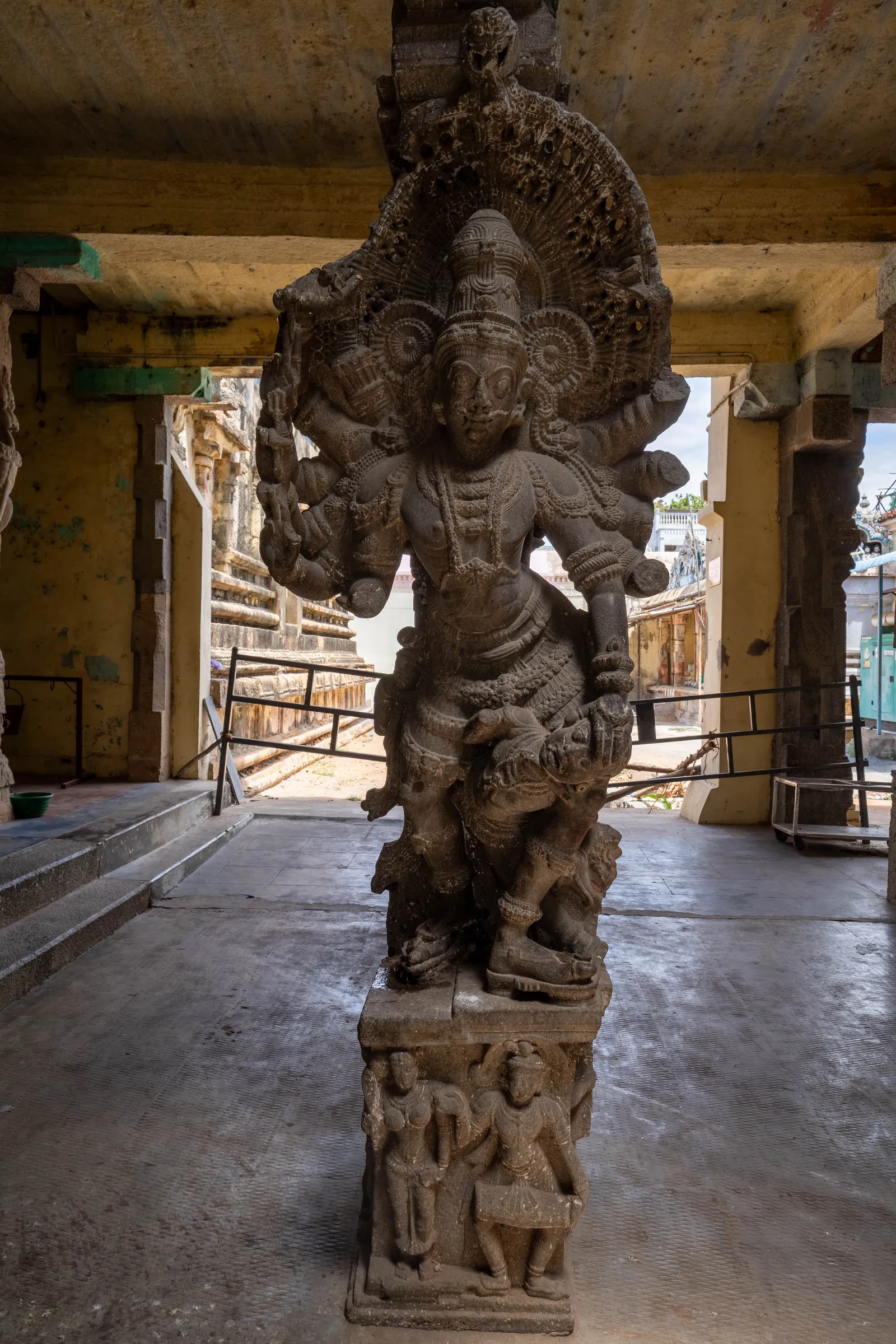
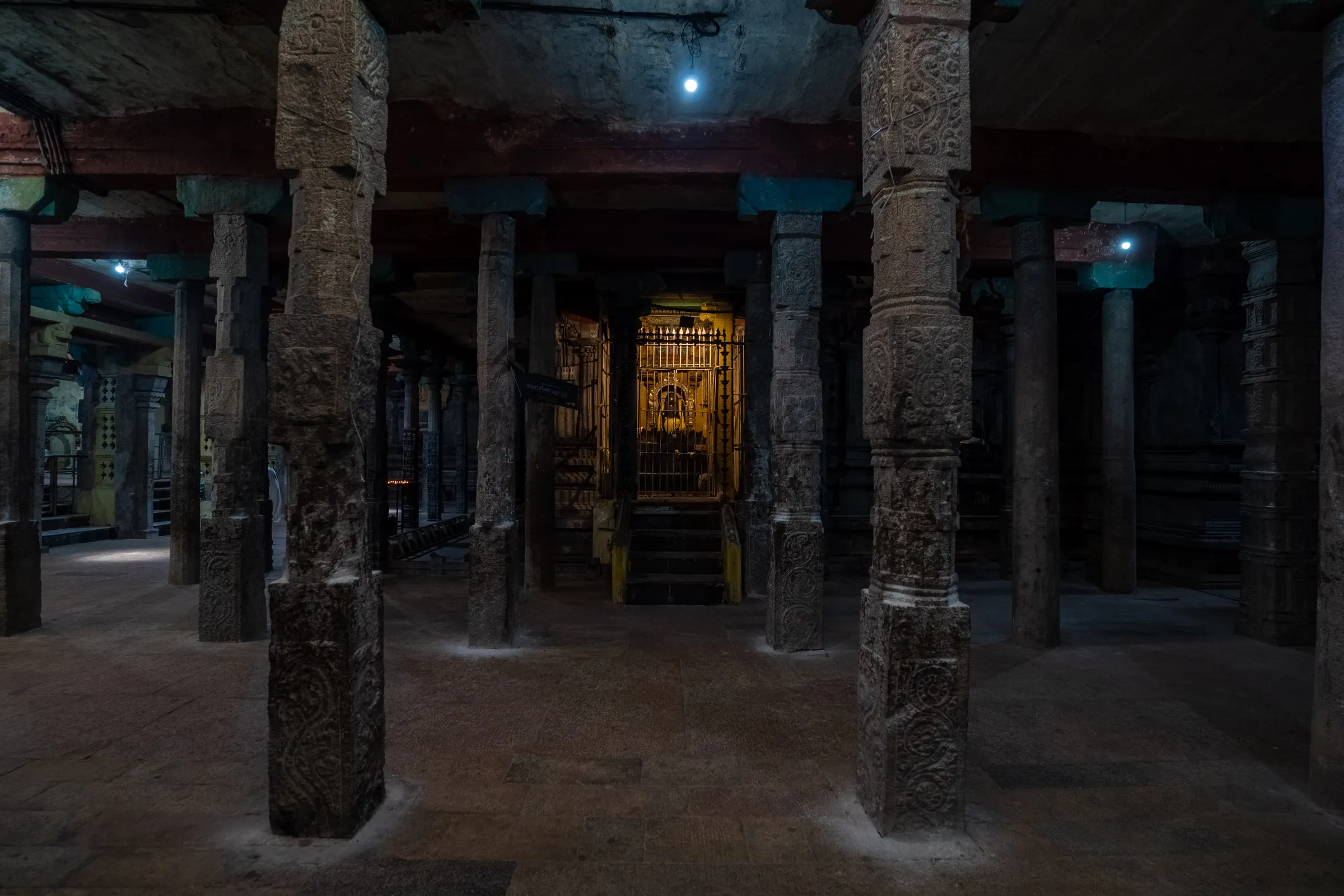
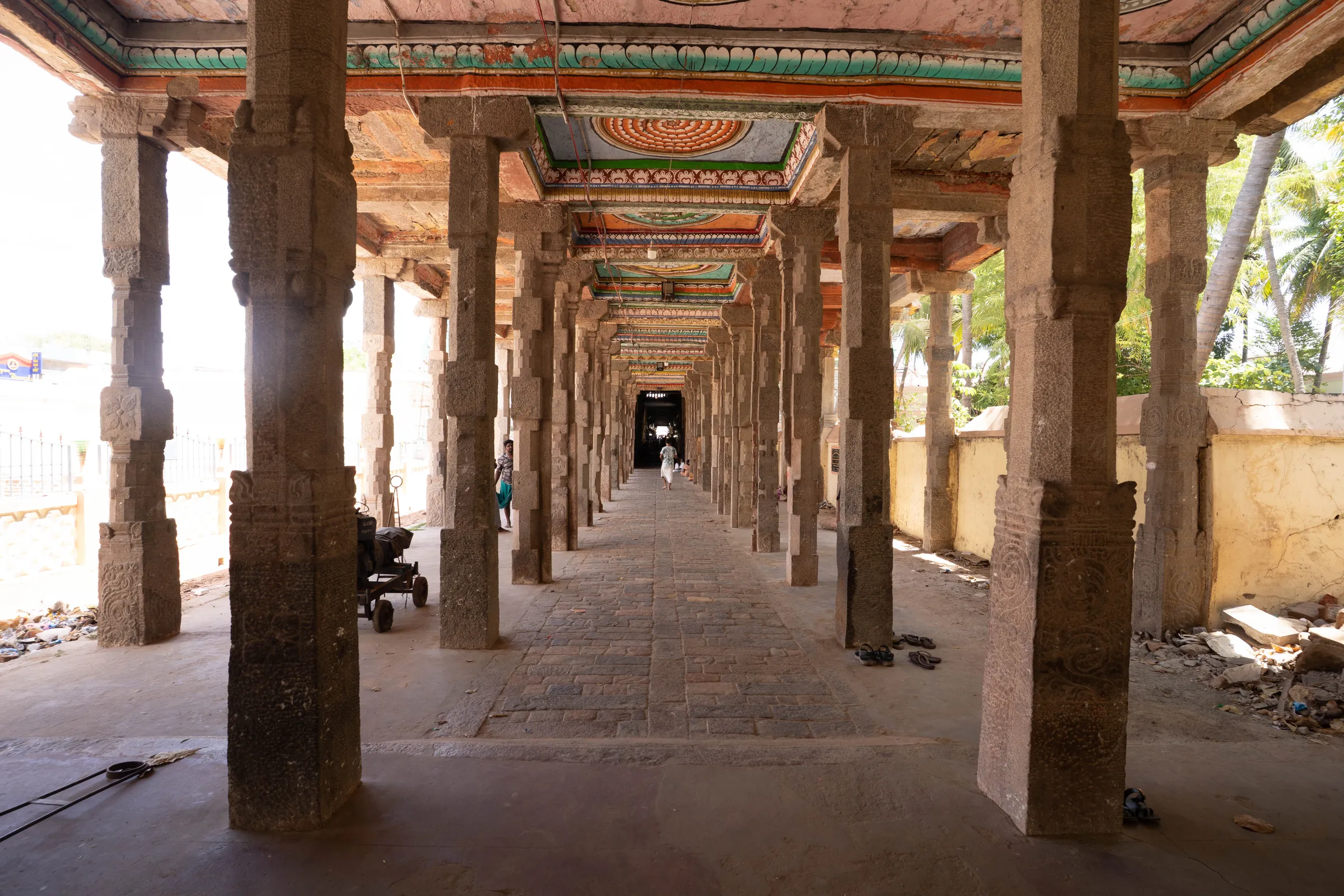
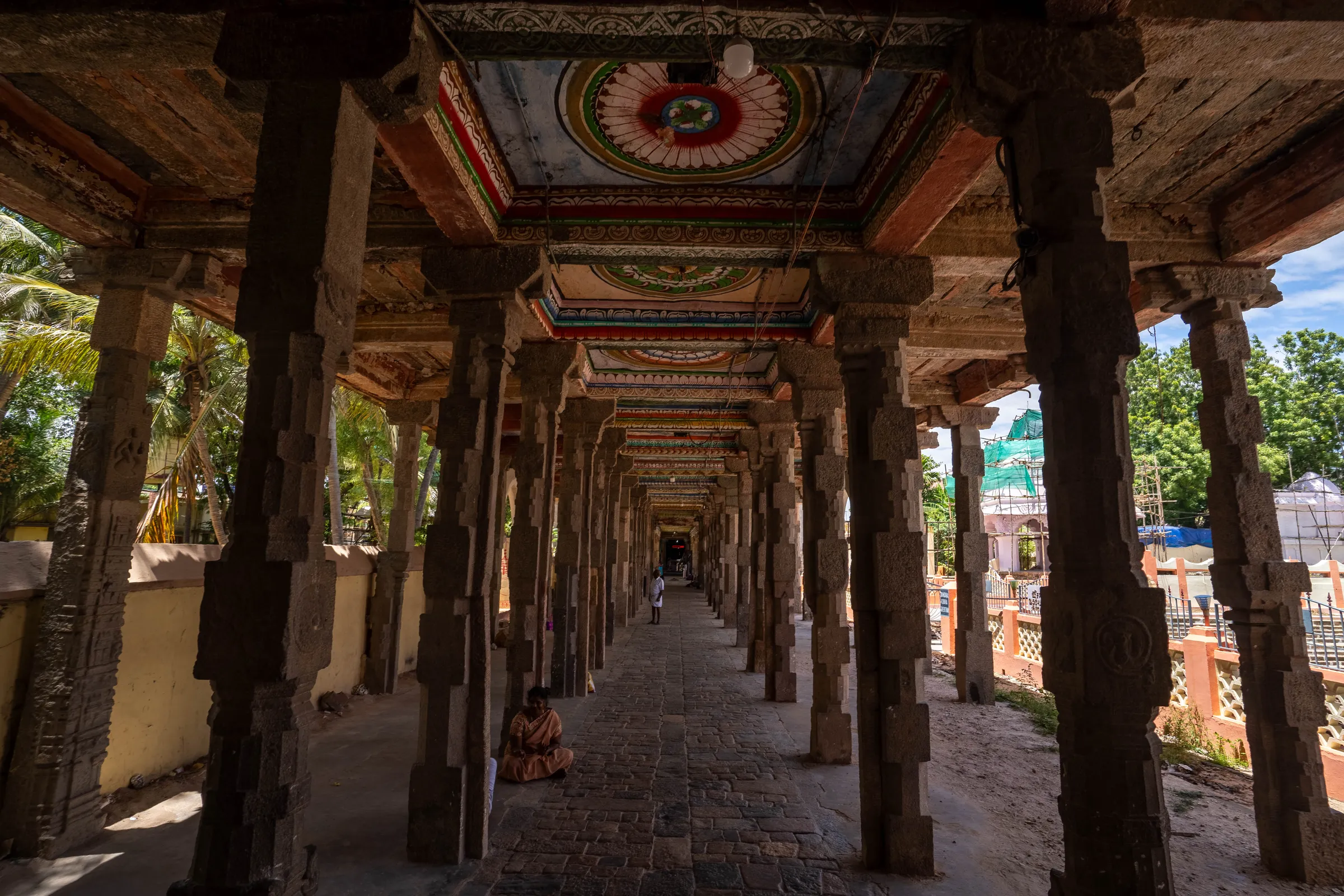
Kumbheswara Temple, photograph
← Chola Nadu
Entry 046

Kumbheswara Temple

Kumbakonam · Thanjavur · Chōḷa, Nāyaka

The foremost Śiva temple of Kumbakonam, where the goddess is Maṅgaḷāmbā. Sung by Sambandar in the 7th century and much enlarged under the Nāyakas, it is bound to the great Mahāmaham bathing festival held once in twelve years.

The photographs

Plates · 4

Kumbheswara Temple, photograph
© Sai Sanjay Prasath · All rights reserved
Kumbheswara Temple, photograph
© Sai Sanjay Prasath · All rights reserved
Kumbheswara Temple, photograph
© Sai Sanjay Prasath · All rights reserved
01

Architectural

structure & vocabulary

The temple is spread over more than 4 acres and has an impressive nine storied gopuram, with three prākāras holding several shrines. Much of its size is likely from the time of the Nāyaka kings of Thanjavur (15th to 17th centuries). The Śiva liṅga has a shape to its top. Within the precincts is a small temple for Sūrya, and the temple tank is called Sūrya Puṣkariṇī. The metal plated vāhanas are notable, and 19th century photographs show very high levels of repoussé work.

02

Archaeological

dated & cited

The temple was already large in the 7th century when Sambandar sang of it. Several sthala purāṇas exist, some as recent as the 19th century. An inscription of Sevappa Nāyaka (1532 to 1580) records that Brahmins of Tirumalairasapuram dug a new canal across land belonging to the Buddhist temple of Tiruvalanthurai, and Sevappa ordered compensatory land; the record is of note since Buddhism was thought extinct in Tamil Nadu by then.

Protection & condition
ConditionIn worship
03

Mythological

as transmitted

One popular tradition holds that after one of the cyclical floods that destroy and recreate the earth, the pot of nectar settled here, or was captured here by Śiva dressed as a hunter, giving the temple its name and specialty. Once in twelve years the deity has a sacred bath in the Mahāmaham tank, when bathing there was held equal to bathing in all the sacred rivers.

Sambandar describes Tiru Kuḍamukku, his name for Kumbakonam, ringed by groves of mango, coconut and jackfruit and clumps of bamboo, with the Kāvēri as loud as Vedic chant. Tirunāvukkarasar also describes the deity as the primal light and sound, worshipped by Brahmā, Sarasvatī and others, and mentions a musical instrument, the Kokkarai, no longer in the tradition here.

Sources
  • Pradeep Chakravarthy, 100 Timeless Tamil Nadu Temples
Register interest in prints Buy the book
Improve this entry

This is an open, reviewed record. If you have spotted an error or have something to add — a correction, a date, a source, a name in another script — propose it. Every change is reviewed before it joins the record.

“Suggest an edit” opens this entry on GitHub and turns your change into a pull request. “Share feedback” opens a short form. Both go through review.