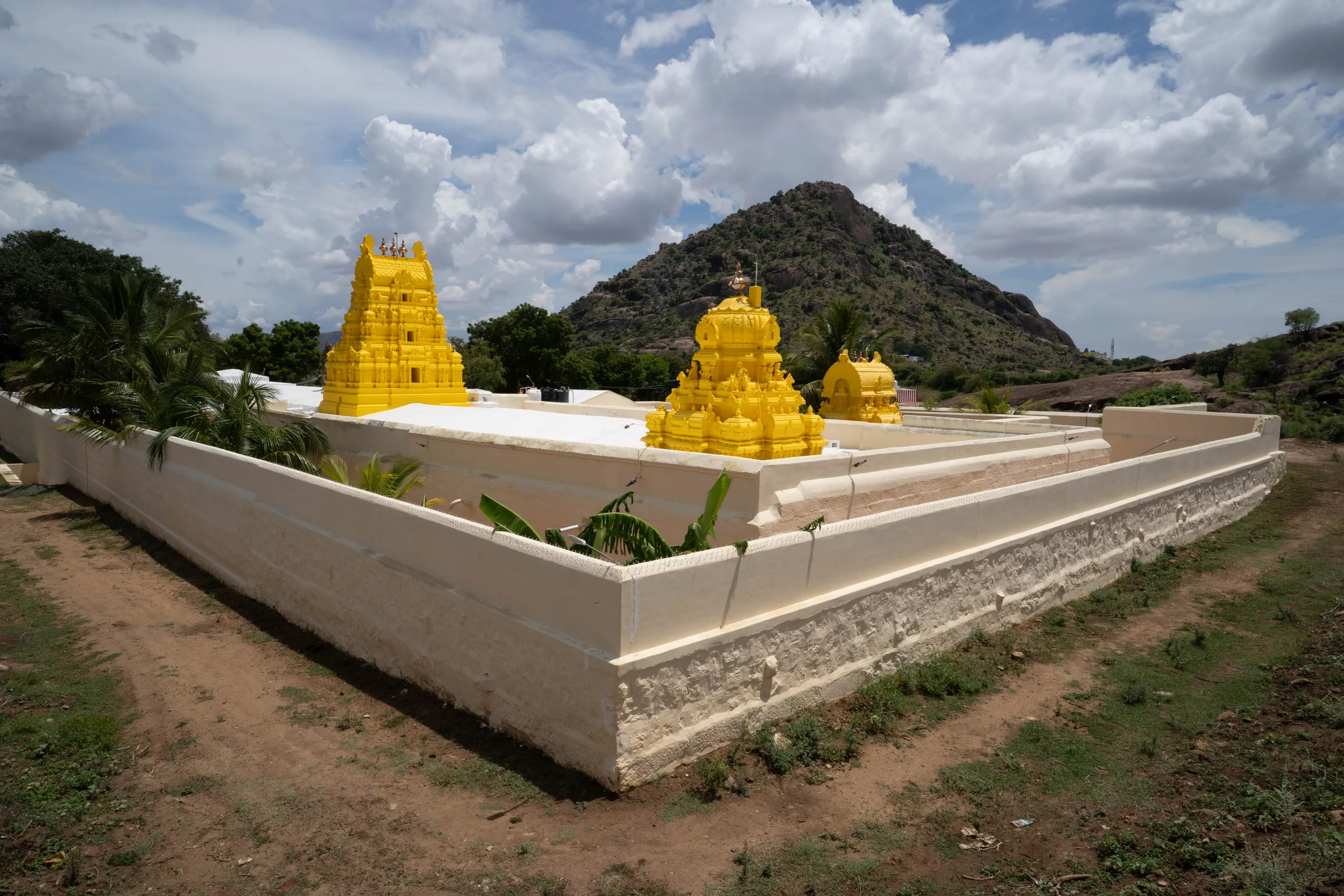
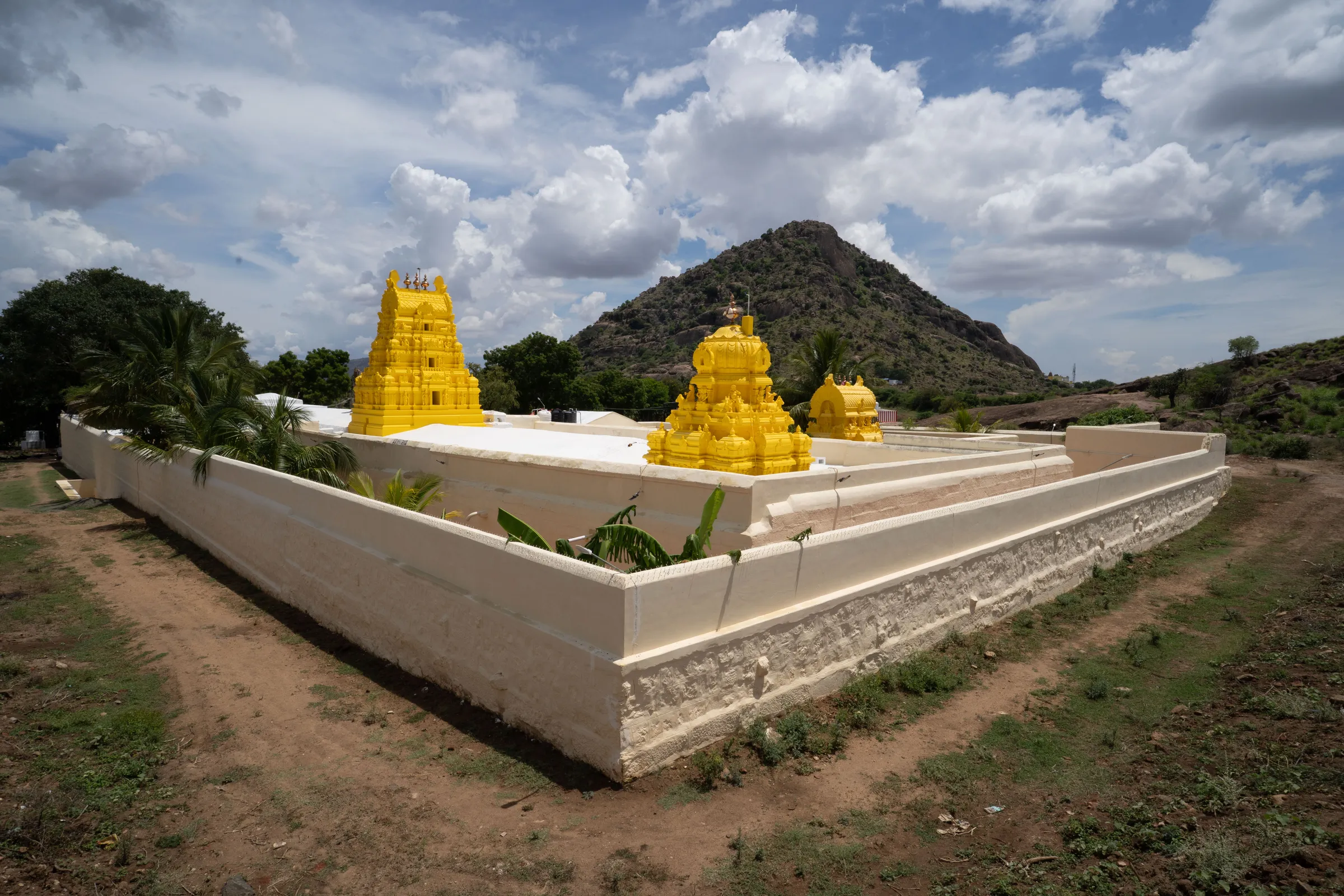
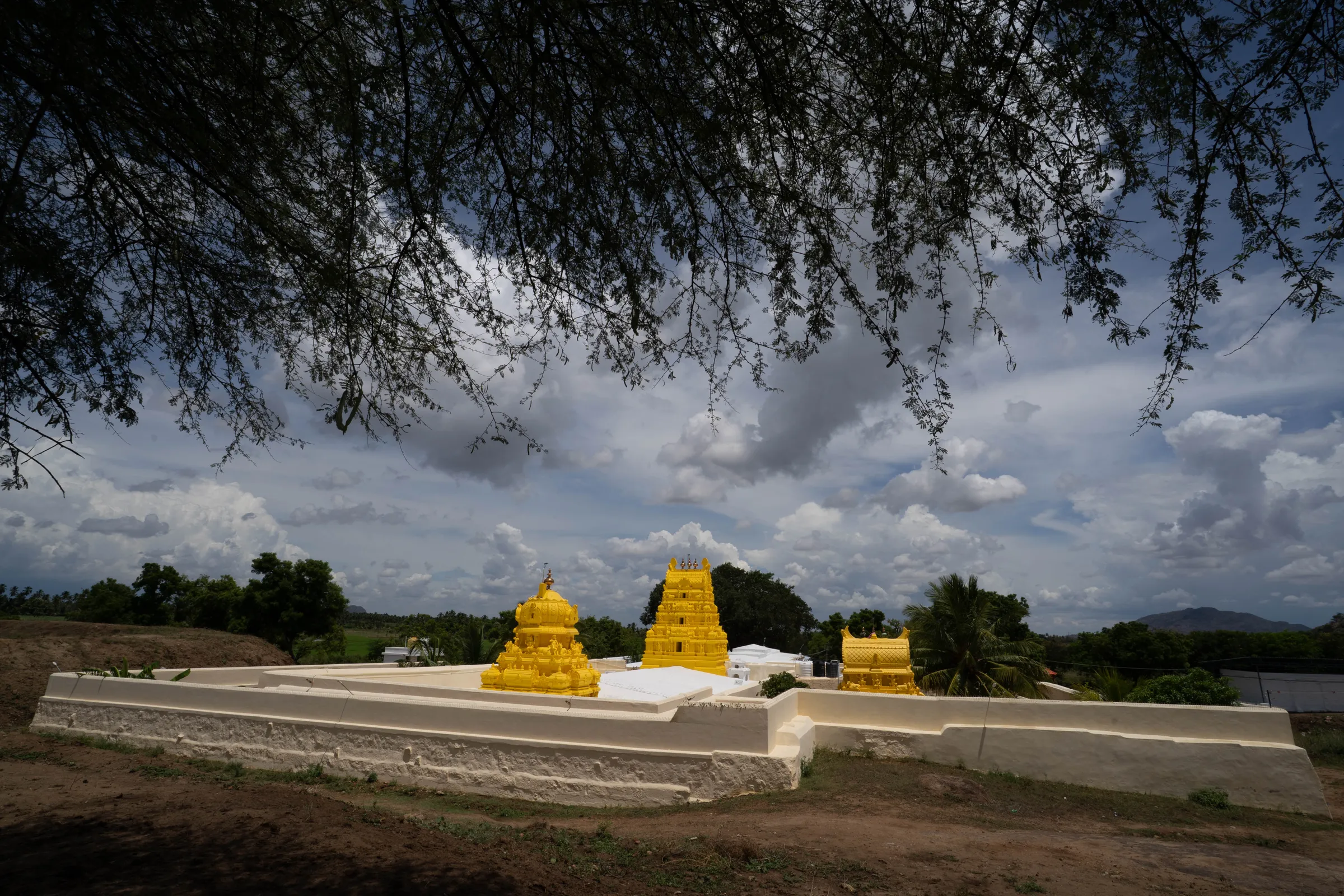
Madhyasthanathar & Mahadeva Temples, photograph
← Pandya Nadu
Entry 065

Madhyasthanathar & Mahadeva Temples

Malaiyadikurichi / Darukapuram · Tirunelveli · Pandya, with later Nayaka additions · 637 CE · cave excavation fixed by inscription

Two temples of different periods near Rajapalayam in the Tirunelveli district: an early Pandya rock-cut cave to Mahadeva Swamy at Malaiyadikurichi, and a structural temple to Madhyasthanathar, a Pancha Bhoota water sthalam, at Darukapuram.

At Malaiyadikurichi and Darukapuram in the Tirunelveli district stand two Shiva temples of different ages: an early Pandya rock-cut cave dated by inscription to 637 CE, and a structural Pancha Bhoota water sthalam re-consecrated by a Pandya king.

The photographs

Plates · 7

Madhyasthanathar & Mahadeva Temples, photograph
© Sai Sanjay Prasath · All rights reserved
Madhyasthanathar & Mahadeva Temples, photograph
© Sai Sanjay Prasath · All rights reserved
Madhyasthanathar & Mahadeva Temples, photograph
© Sai Sanjay Prasath · All rights reserved
Madhyasthanathar & Mahadeva Temples, photograph
© Sai Sanjay Prasath · All rights reserved
Madhyasthanathar & Mahadeva Temples, photograph
© Sai Sanjay Prasath · All rights reserved
Madhyasthanathar & Mahadeva Temples, photograph
© Sai Sanjay Prasath · All rights reserved
01

Architectural

structure & vocabulary

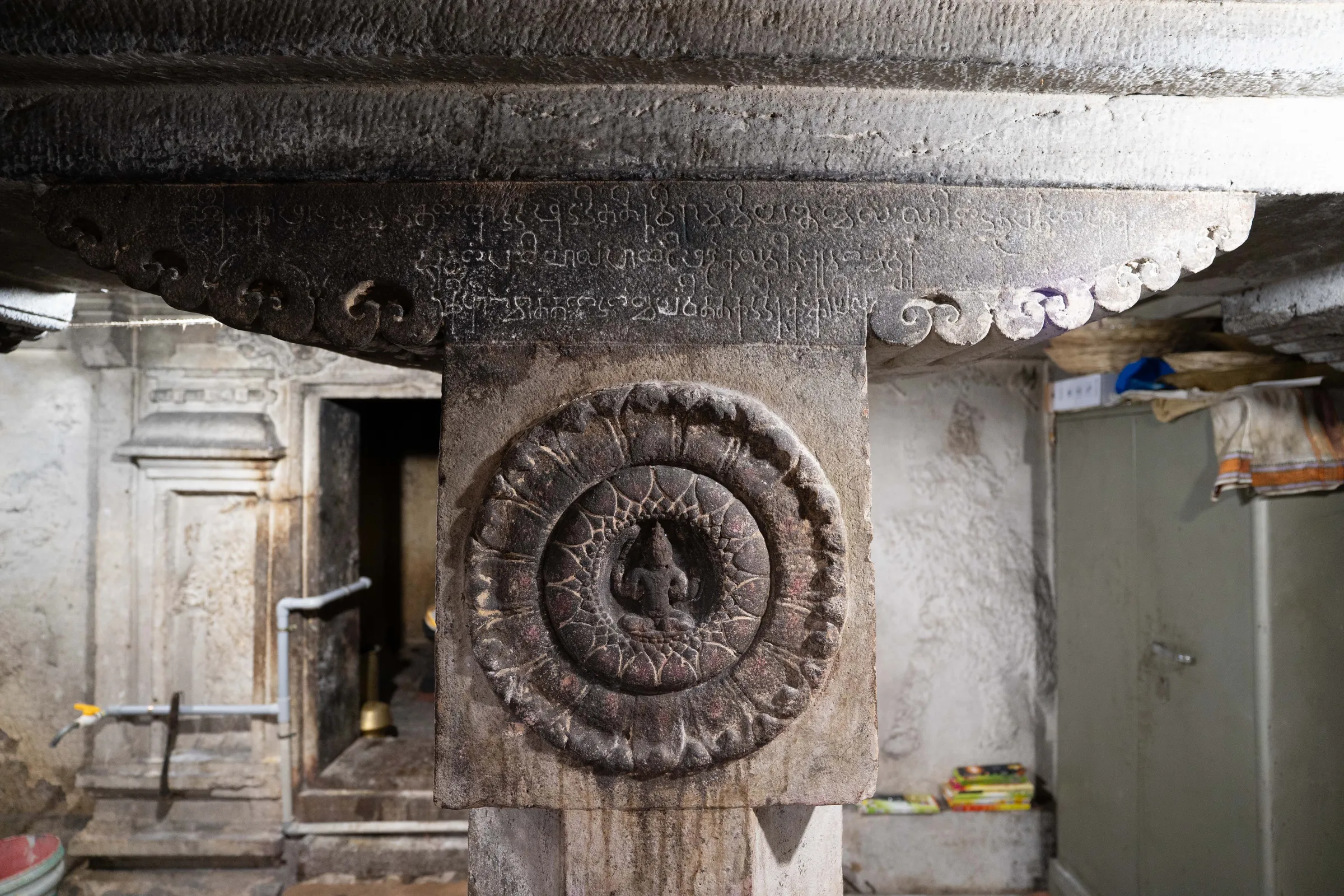
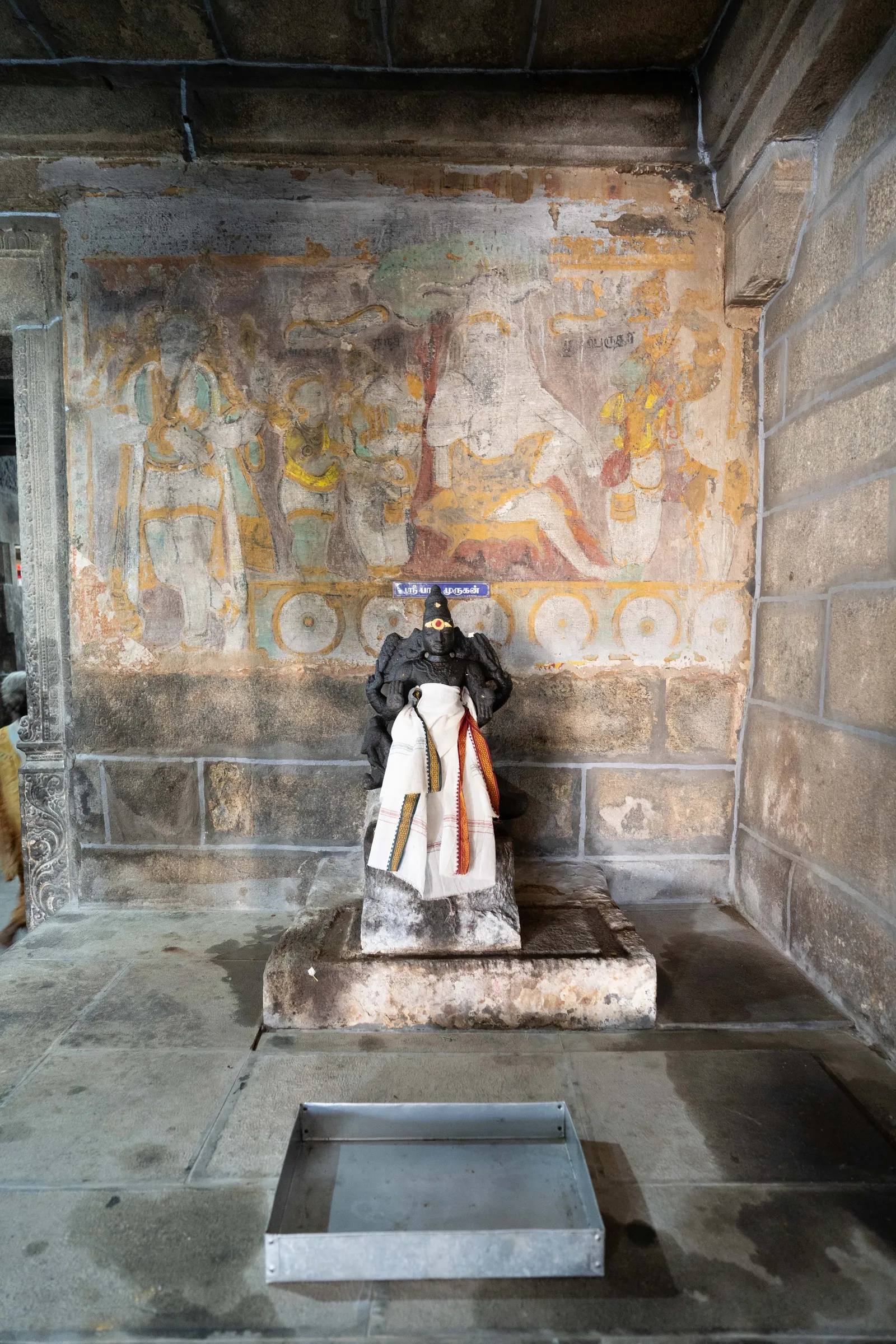
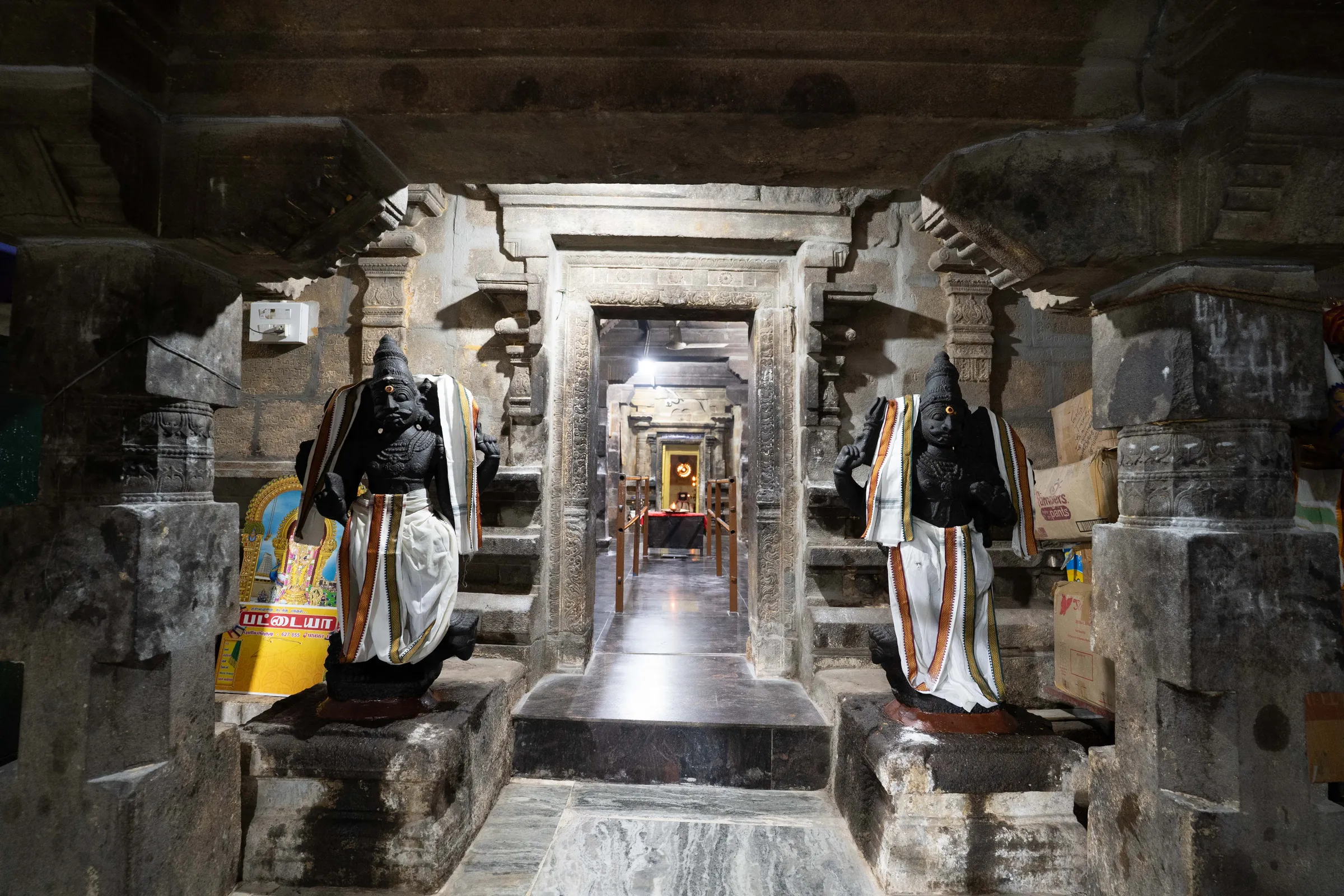
The Malaiyadikurichi cave temple, dedicated to Mahadeva Swamy in the form of a lingam, is of the early Pandya style of excavation. It has two entrances, one east and one south, with two Nandi idols outside the southern entrance, and doorframes embellished with small nagabandhas, torana and a lotus medallion. The plan is a sanctum with a pillared mukhamandapa before it, and a mahamandapa near the eastern entrance; the mahamandapa is a later Nayaka addition, its pillar potikas in a modified Chola style. A south-facing sanctum is dedicated to Maragathavalli Amman, consort of Mahadeva Swamy.

Above the main sanctum entrance is a Makara Torana, a floral torana emerging from the mouths of mythical crocodile heads. Here, unusually, there are four makaras, two flanking the central floral circle of the lintel and two at the far end facing north and south. The floral decorations are very contemporary in style; some believe they are stylized Kalpavriksha, the wish-fulfilling tree, a sacred Jain motif, making it likely the temple was originally Jain. Below, on either side of the doorway, are the scraped remnants of bas-relief images, probably dwarapalas.

At the nearby structural Madhyasthanathar temple, the style of the pillars connects it to the Pandya dynasty. In the pillared colonnade with the Dhwajastambam, the rows of pillars carry simple relief patterns, but the stylized potika nearer the ceiling holds a seated yali on each, accompanied by a Pushpa potika, an auspicious floral motif resembling a plantain flower. This bud-like motif, begun by the Pandyas, was carried further and made more ornate by the Vijayanagara and Madurai Nayaks, and marks an important transition in the history of temple pillars.

02

Archaeological

dated & cited

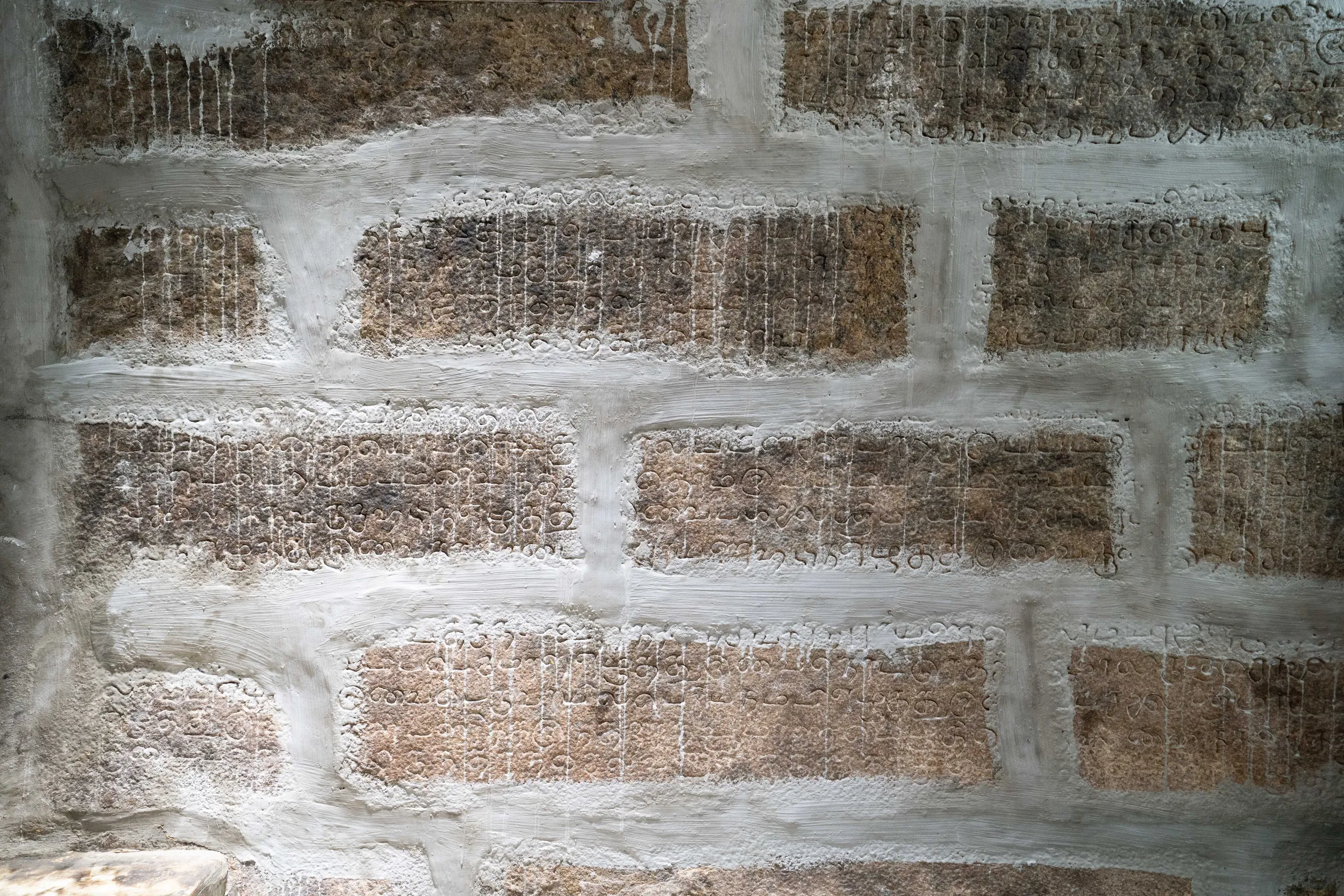
The Malaiyadikurichi cave is of the 7th century early Pandya style; the hill itself is much older, holding several unexcavated Stone Age burial sites. Inscriptions on the northern wall of the mukhamandapa date from the time of the Pandya king Sri Vallabha, and the temple as a whole carries many more in Tamil from the 7th to 10th centuries, recording land tax exemptions, gifts, royal orders, land-measuring units and irrigation canals in the Pandya lands.

About a kilometre away is the structural temple to Madhyasthanathar and his consort Akilandeshwari, one of the Pancha Bhoota Sthalams, where the Shiva lingam embodies one of the five elements: it is the neer, or water, sthalam. The date of its first building is unknown, but there is evidence that it was re-consecrated by a Pandya king.

Dating
Consecrated637 CE · cave excavation fixed by inscription

An inscription dates the excavation of the Malaiyadikurichi cave to 637 CE; the structural Madhyasthanathar temple was re-consecrated by a Pandya king, its first building undated.

Inscription · Malaiyadikurichi cave, mukhamandapa

One inscription helps fix the excavation of the cave to 637 CE. It records that Nathan Eeran of Sevur excavated this cave temple for the Pandya king Ko Maran Sendan in the seventeenth year of the king's rule.

Register interest in prints Buy the book
Improve this entry

This is an open, reviewed record. If you have spotted an error or have something to add — a correction, a date, a source, a name in another script — propose it. Every change is reviewed before it joins the record.

“Suggest an edit” opens this entry on GitHub and turns your change into a pull request. “Share feedback” opens a short form. Both go through review.