Mamallapuram, photograph
← Thondaimandalam
Entry 021

Mamallapuram

Mamallapuram · Pallava

The old Pallava seaport, named after the wrestler-king Narasimha Varman I, Mamalla. Its rock-cut rathas, bas-reliefs and structural shore temple are a world-famous gallery of Pallava stone art.

This entry documents the monuments across three registers, held deliberately apart: the architectural reading of what stands, the archaeological reading of what can be dated and cited, and the mythological reading of what is told.

The photographs

Plates · 8

Mamallapuram, photograph
© Amar Ramesh and team · All rights reserved
Mamallapuram, photograph
© Amar Ramesh and team · All rights reserved
Mamallapuram, photograph
© Amar Ramesh and team · All rights reserved
Mamallapuram, photograph
© Amar Ramesh and team · All rights reserved
Mamallapuram, photograph
© Amar Ramesh and team · All rights reserved
Mamallapuram, photograph
© Amar Ramesh and team · All rights reserved
Mamallapuram, photograph
© Amar Ramesh and team · All rights reserved
01

Architectural

structure & vocabulary

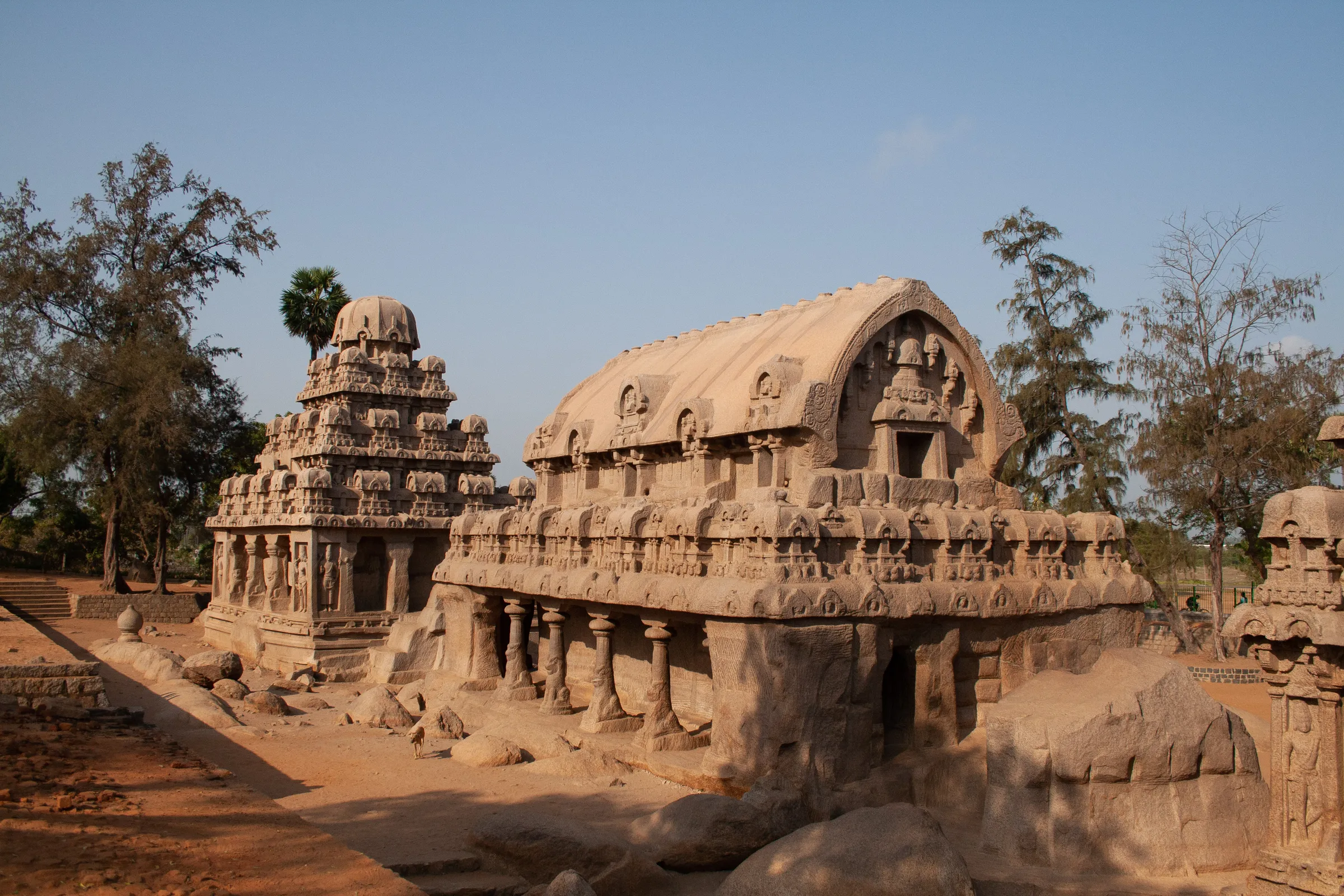
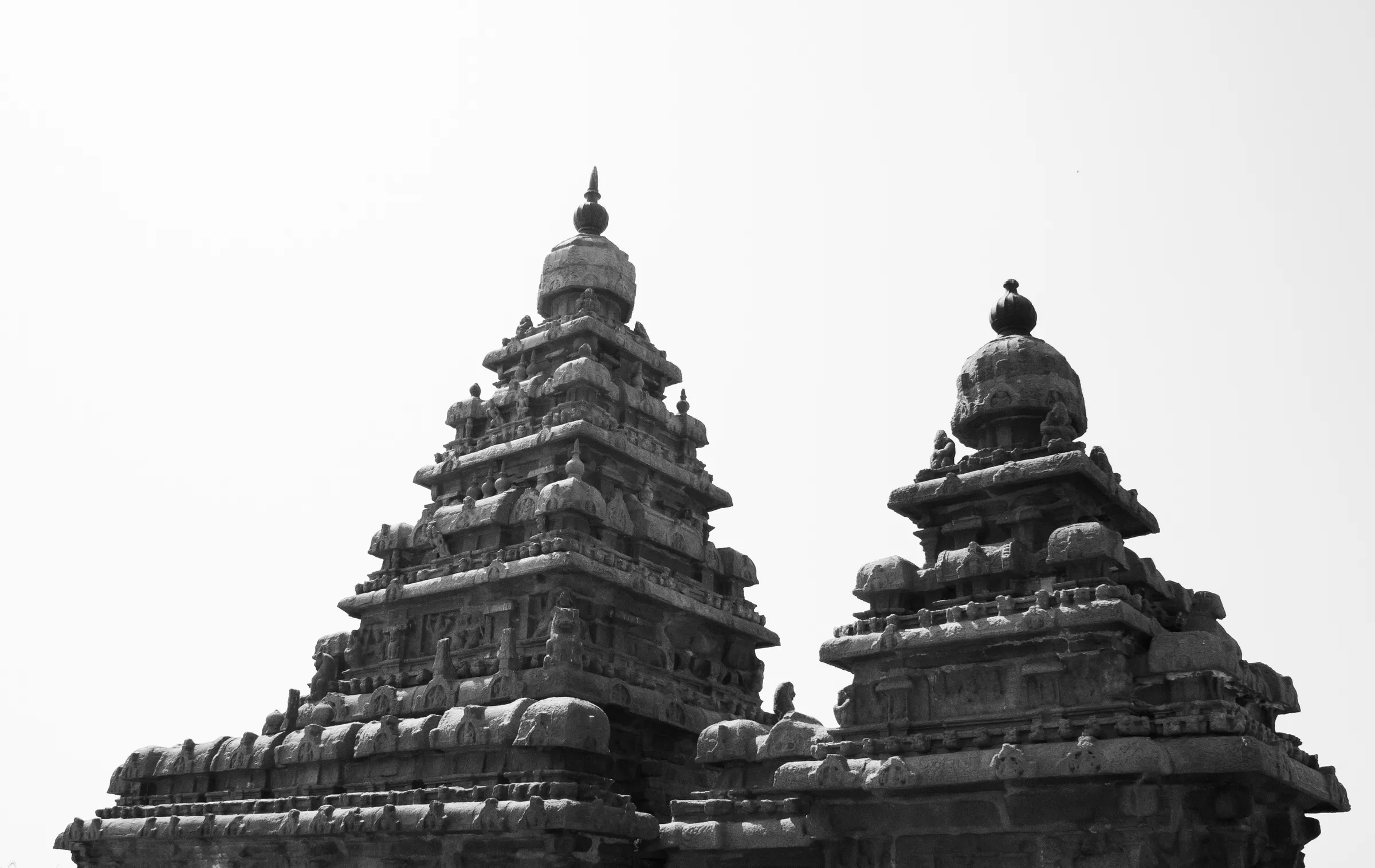
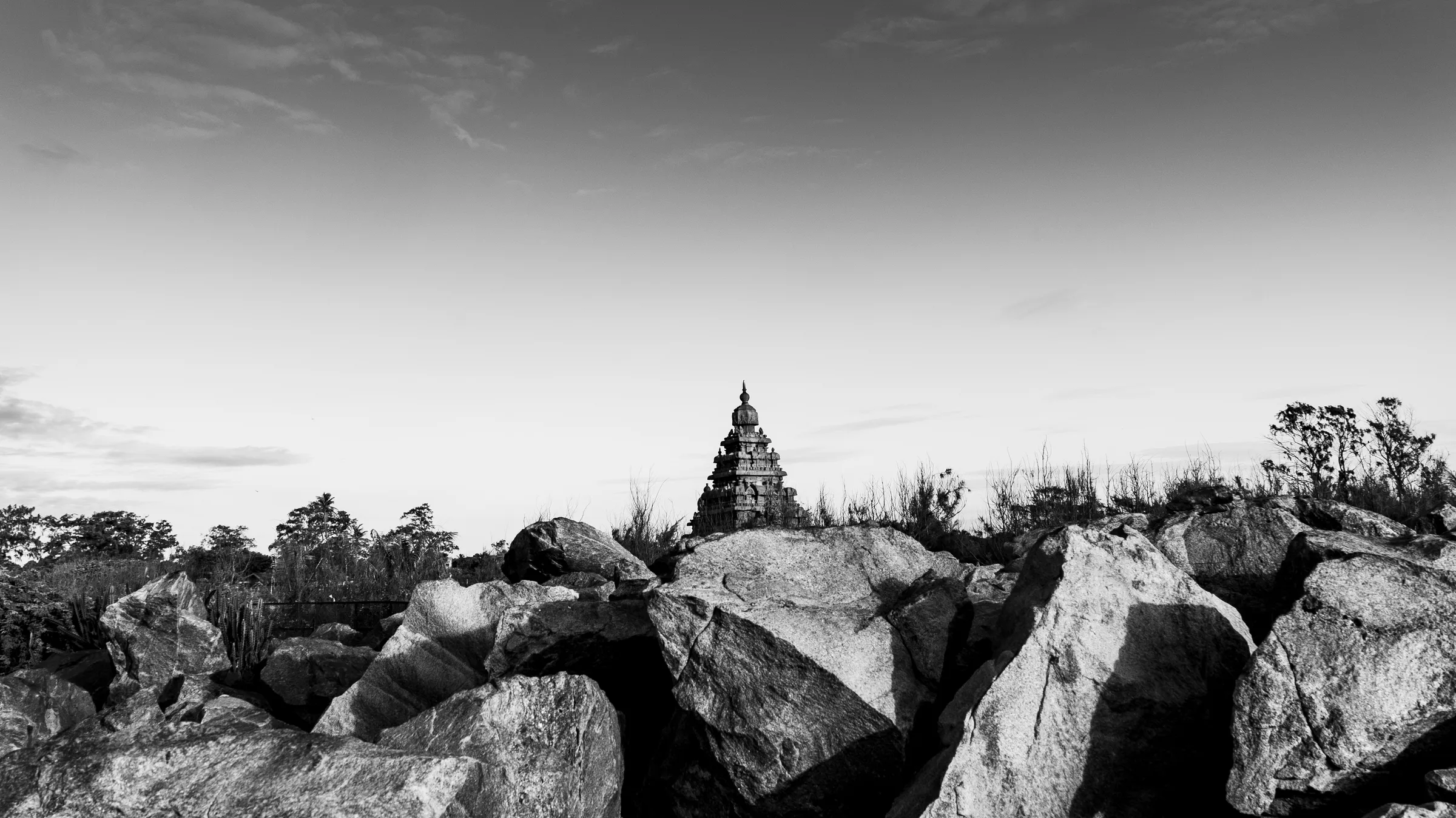
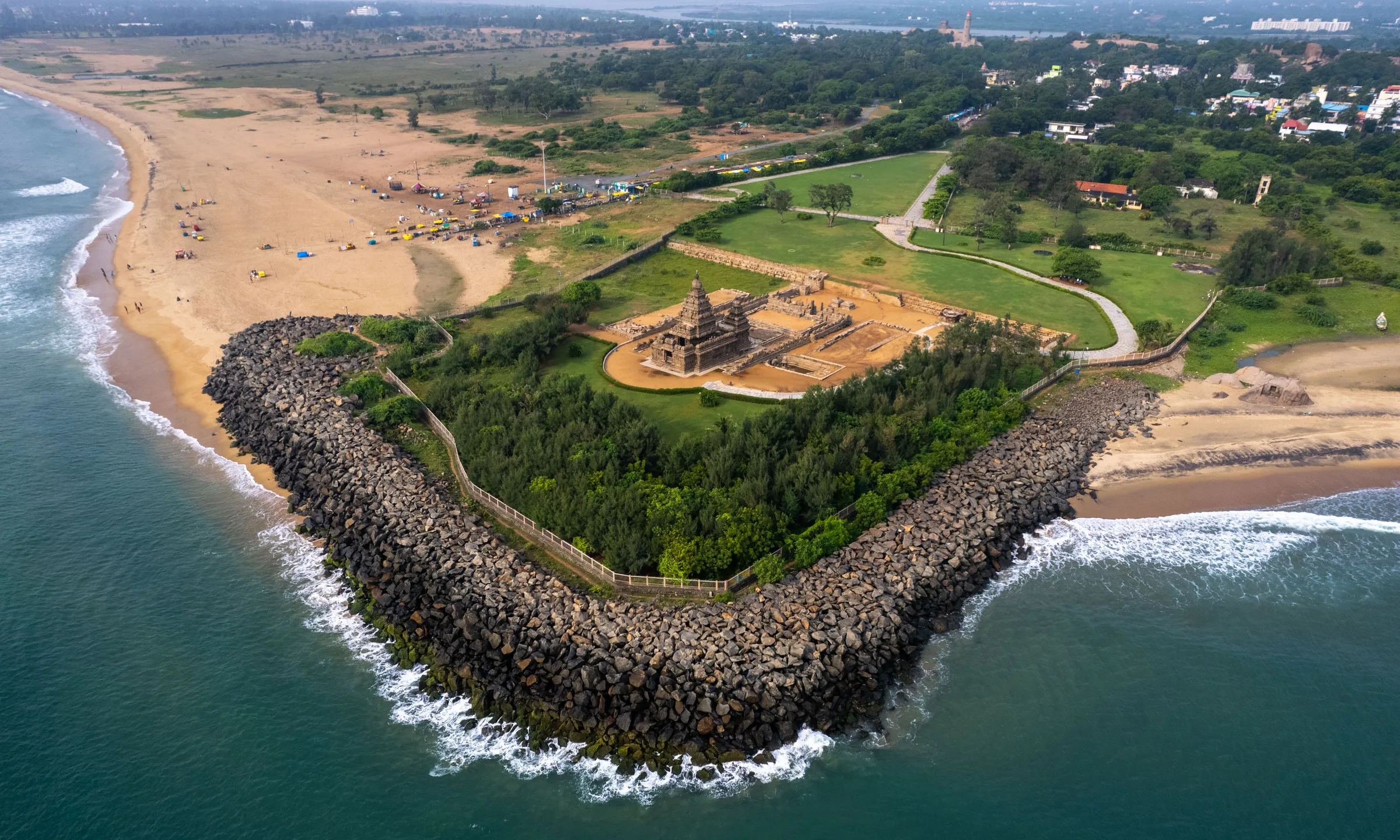
Mamallapuram has ten rathas, two bas-reliefs, ten excavated temples in varying states of completion and three structural temples, most believed to be of Rajasimha's period. The Pancha Rathas are five monolithic temples that showcase different temple types and have nothing to do with the Pandavas. Draupadi Ratha shows the vimāna called Kuta; Arjuna's is a development of the Kuta stacked in layers; Bhima Ratha is Vesara or rectangular; Dharmaraja Ratha is the multi-layered Ashtanga; and Nakula-Sahadeva is the Gajaprishta, like the back of an elephant. Dharmaraj's Ratha is the biggest; Bhima's has a rent said to be due to lightning.

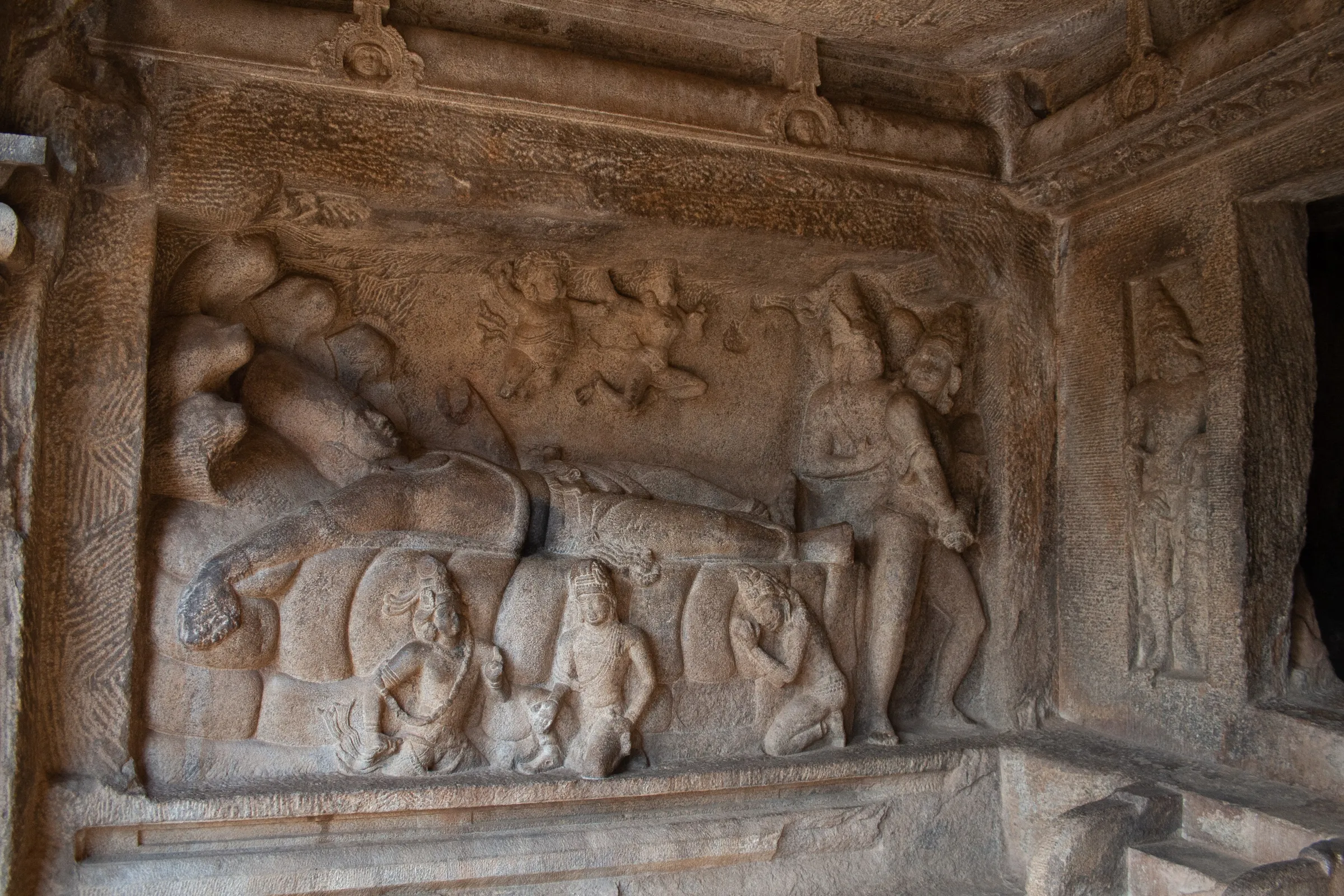
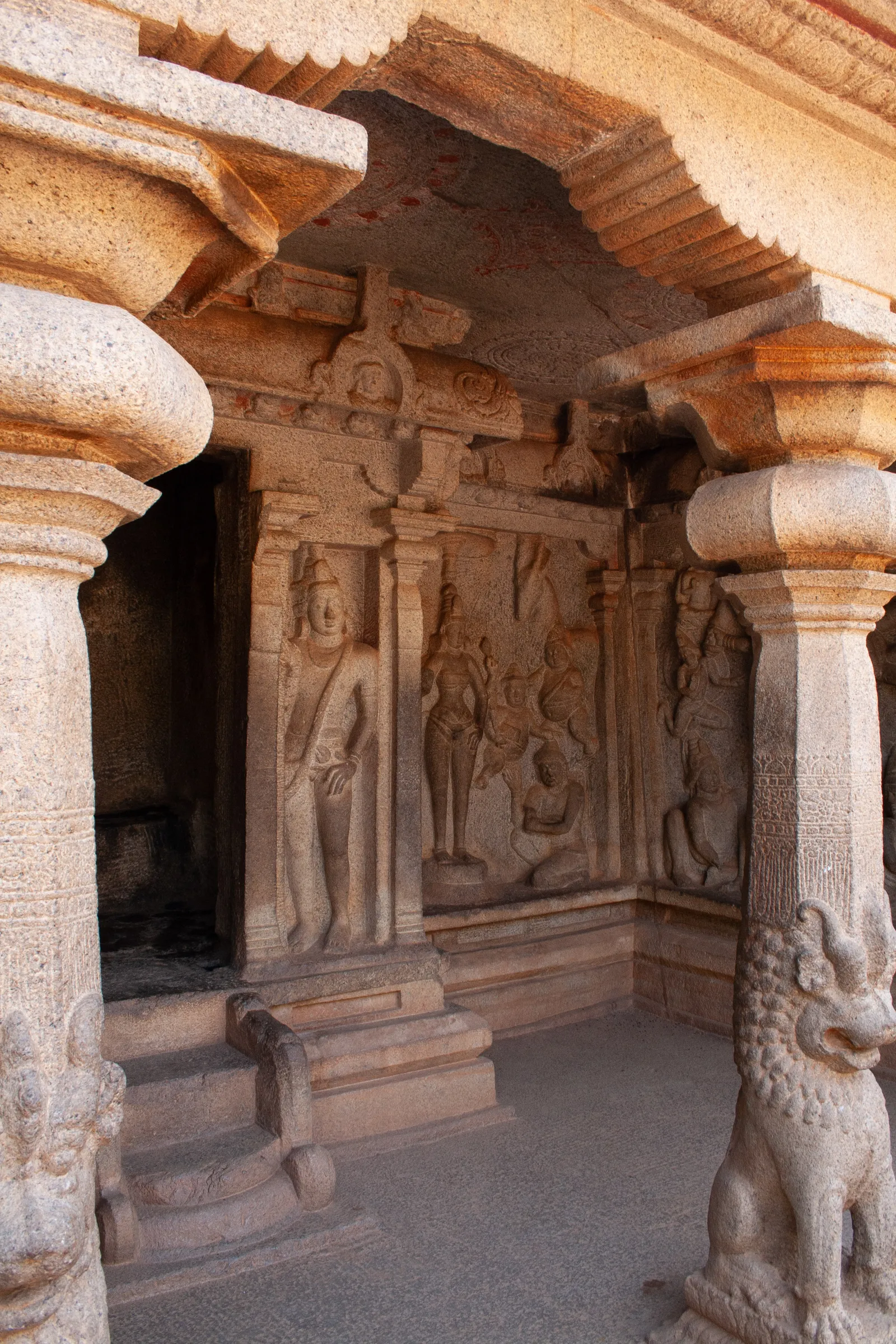
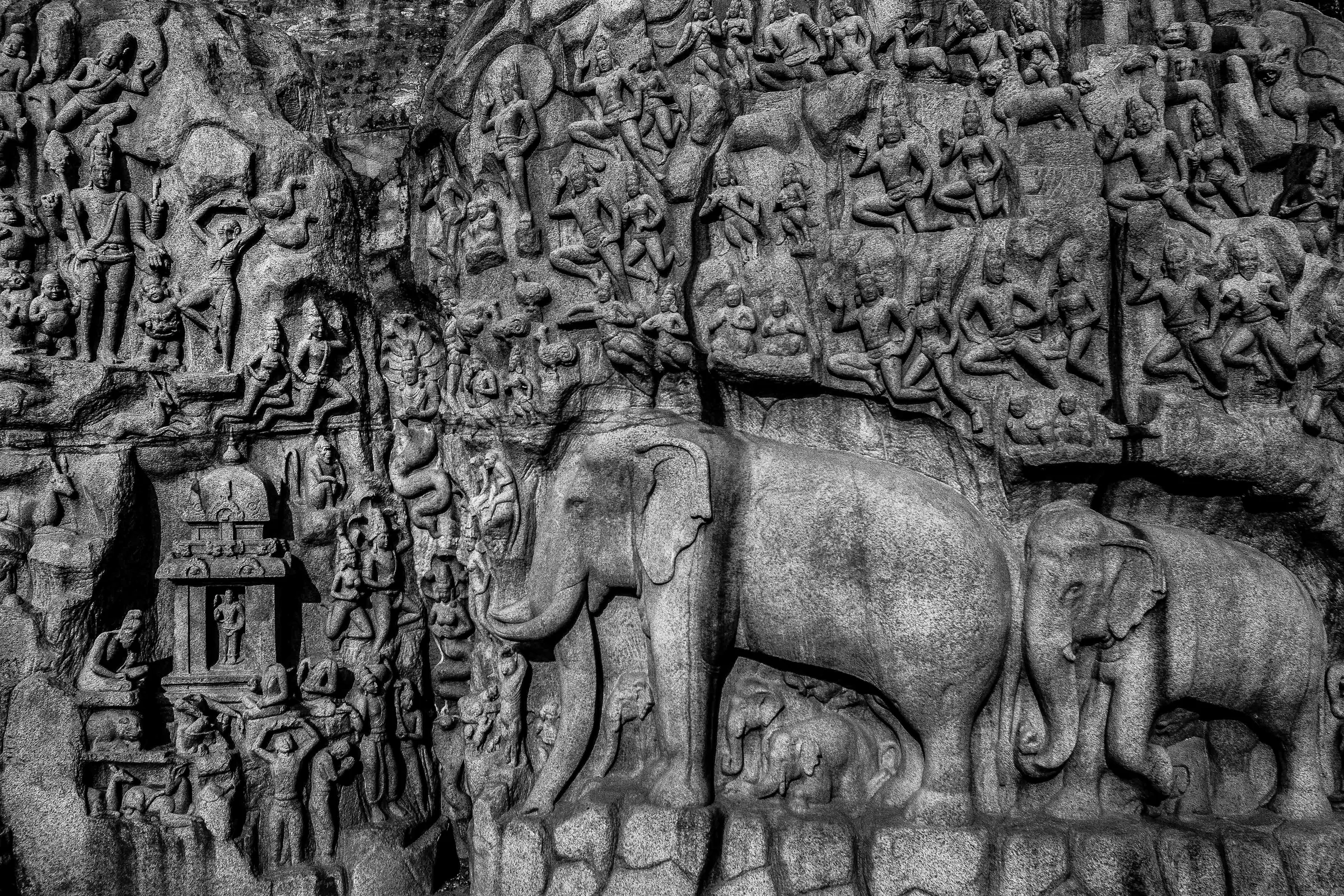
There are over ten rock-cut cave temples of the 7th century CE, important ones being Varaha, Adi Varaha, Krishna and Mahishasuramardhini. Olakkanesvara is a structural temple, and there is a lighthouse, Draupadi's tank and Krishna's butterball. Adi Varaha is the only complete cave temple in the town. The Descent of Ganga, also called Arjuna's Tapas, is considered the world's largest open-air rock relief. The Krishna Mandapa depicts a pastoral landscape with Krishna holding the mountain as an umbrella over the cowherds.

The famous Stala Sayana Perumal temple, also called Tirukadalmallai, is one of the 108 Divya Desams. The presiding deity reclines without Adiśeṣa, with Saint Pundarika at his feet. The temple near the shore was later shifted to its current location by Tirumala Nayak, who built a square enclosure with four mada veethis around it; its processional deity is named Ulaguyyaninran and his consort Nilamangai.

02

Archaeological

dated & cited

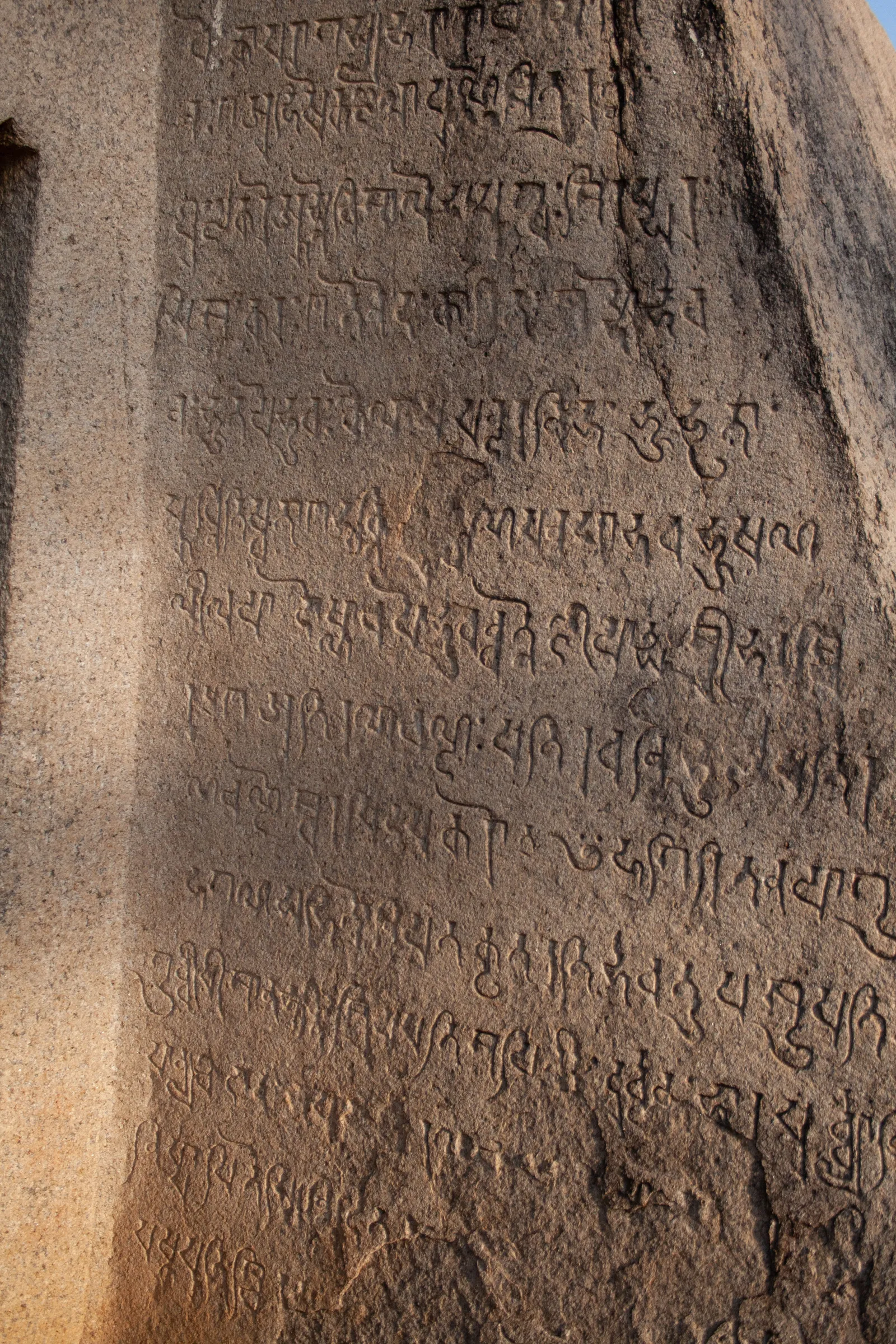
The hamlet was once a bustling seaport called Mamallapuram, named after the Pallava king Narasimha Varman I to honour his prowess as a wrestler, Mamallan. Mamallapuram was largely adorned with unique rock sculptures and bas-reliefs under Narasimha Varman II, better known as Rajasimha, during his reign of 691-729. In Puncheri, on the outskirts, some inscriptions are found, one preserving the names of seven artists involved in the work.

The Chittoor plate of Nrupatunga affirms that Narasimhavarman I built a temple for the one who holds a lethal discus, Viṣṇu, near the shore. The successive Pallavas after Nandivarma were not passionate about art and left the monoliths unfinished. The Chōḷas and Pandyas followed, and when the Vijayanagara Empire took control of Pallava Nadu there was some renovation and extension. In 1639 the English established themselves in Madras and the Dutch built Sadras nearby; foreign rule changed the face of Mamallapuram. Recent excavations have revealed more of the lost structures.

Dating

Mostly of Rajasimha's reign (691-729 CE); the Stala Sayana Perumal temple attributed to Narasimhavarman I (630-668 CE) by the Chittoor plate of Nrupatunga.

Protection & condition
ConditionWorld-famous monuments; some lost structures revealed by recent excavation
03

Mythological

as transmitted

Marco Polo, approaching from the sea, described seven structures as seven pagodas in his memoirs, though it is unlikely he saw them and whether seven ever stood remains a mystery.

The Stala Sayana Perumal temple is regarded as the birthplace of Boothathalwar, who sang in praise of the deity and the temple, and Tirumangaialwar too has sung on Stala Sayana. The Karukatthamman on the outskirts towards Tirukazhkundram is regarded as an Ellai Deivam, a guardian of the boundary, watching over the shore city.

Register interest in prints Buy the book
Improve this entry

This is an open, reviewed record. If you have spotted an error or have something to add — a correction, a date, a source, a name in another script — propose it. Every change is reviewed before it joins the record.

“Suggest an edit” opens this entry on GitHub and turns your change into a pull request. “Share feedback” opens a short form. Both go through review.