Mariamman Temple, photograph
← Chola Nadu
Entry 034

Mariamman Temple

Punnainallur · Thanjavur · Thanjavur Maratha

Six kilometres from Thanjavur, Punnainallur was once a forest of punnai and neem. Its eighteenth century temple honours the goddess Māriamman, worshipped for healing, especially of the skin, with metal replicas of body parts offered in plea for a cure.

The photographs

Plates · 3

Mariamman Temple, photograph
© Sai Sanjay Prasath · All rights reserved
Mariamman Temple, photograph
© Sai Sanjay Prasath · All rights reserved
01

Architectural

structure & vocabulary

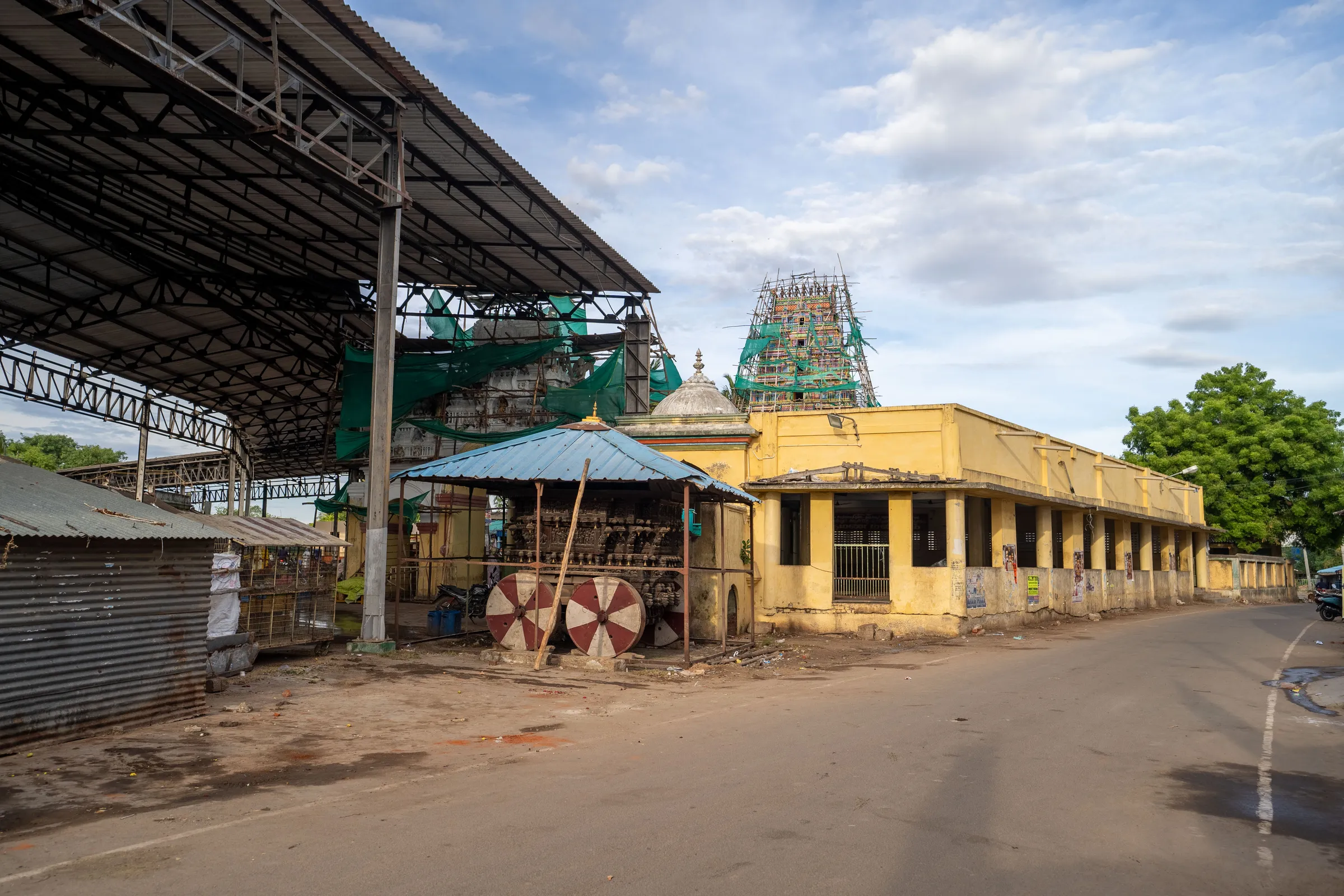
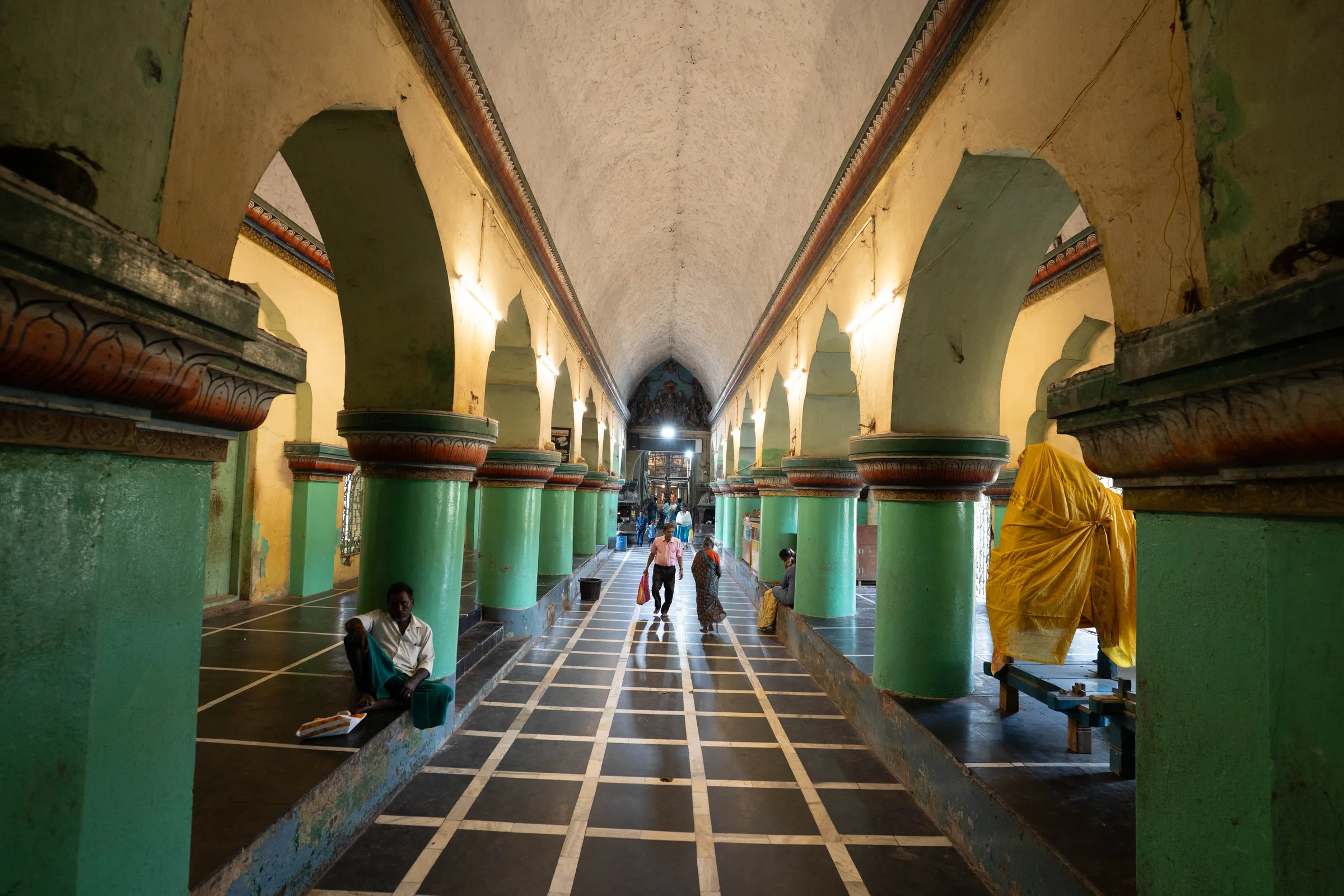
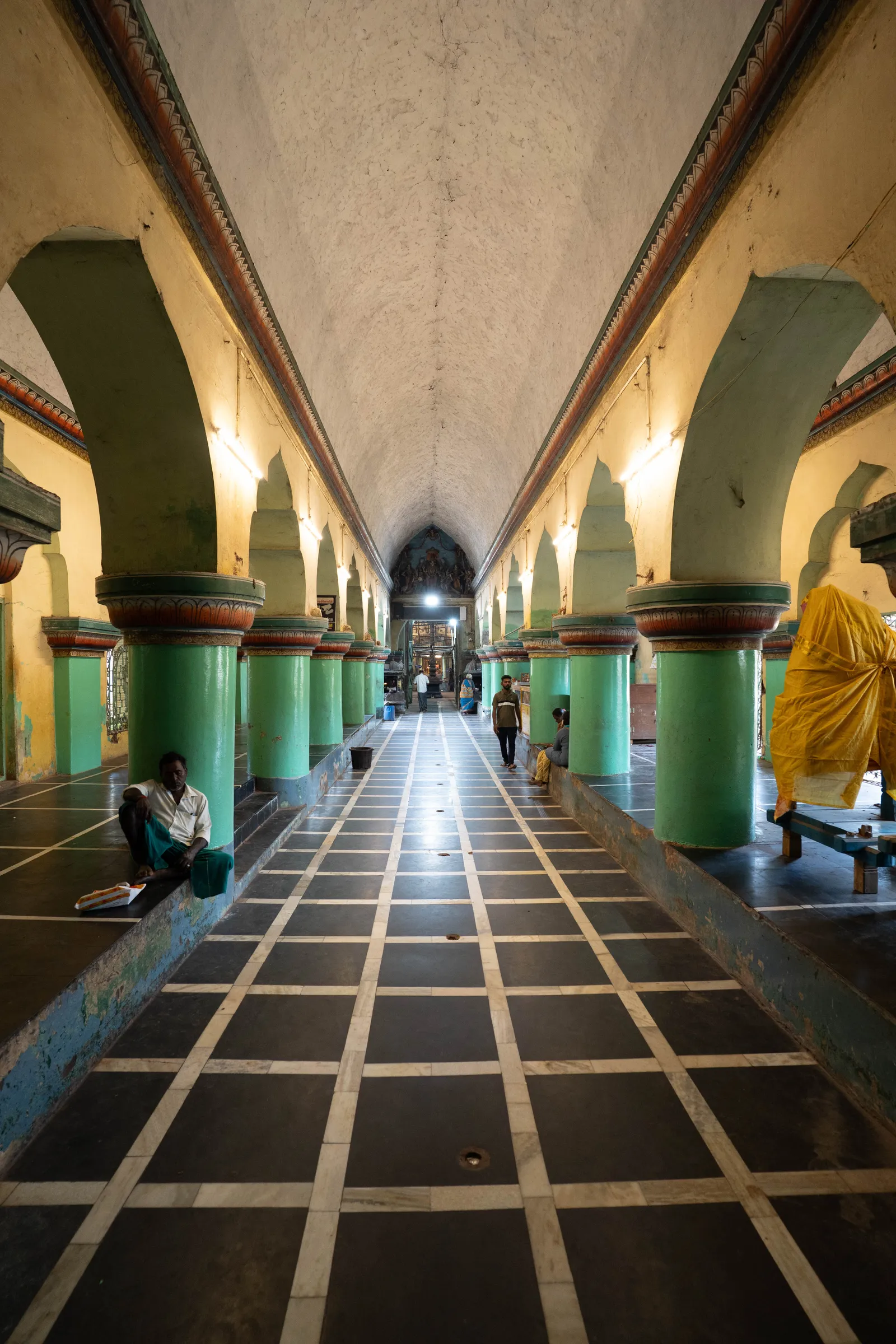
The temple is a blend of Maratha and Drāviḍa styles, evident at the entrance where the gopuram's base is composed of three rounded arches, the central one larger than the two flanking it, each capped with a small Drāviḍa gopuram. Inside, along the inner mandapa and prakara, are a variety of arches: rounded, domed and scalloped.

02

Archaeological

dated & cited

By legend the temple was founded after the Maratha king Venkoji Maharaja went on pilgrimage in 1680 and was directed in a dream to build a shrine in the punnai forest near Thanjavur, where he found the goddess in the form of a white anthill. The saint Sadashiva Brahmendra Swamy shaped the anthill into the form of Māriamman seen today. Later Maratha kings expanded the site: Thuljaji Maharaja, who ruled 1738 to 1787, built a larger masonry structure, and Sarfoji Maharaja, who ruled 1800 to 1830 and was a patron of arts, medicine and education, further enlarged the complex. Under Sarfoji the Kumbabishekam of both the Brihadeeswara and the Punnainallur Mariamman temples were performed.

03

Mythological

as transmitted

Māriamman is a form of Shakti, the worship of the feminine or divine mother as the supreme energy that creates, preserves and destroys. By legend Venkoji Maharaja, resting on pilgrimage, saw the goddess in a dream claiming she resided in a punnai forest near his capital, and asking him to build her a shrine. After much search his people found her as a white anthill, around which the king built a shrine and performed rituals.

Register interest in prints Buy the book
Improve this entry

This is an open, reviewed record. If you have spotted an error or have something to add — a correction, a date, a source, a name in another script — propose it. Every change is reviewed before it joins the record.

“Suggest an edit” opens this entry on GitHub and turns your change into a pull request. “Share feedback” opens a short form. Both go through review.