
Narambunathaswamy Temple, photograph
← Pandya Nadu
Entry 097

Narambunathaswamy Temple

Tirupudaimarudur · Tirunelveli · Early Pandya, with Vijayanagara-Nayaka and Venad additions

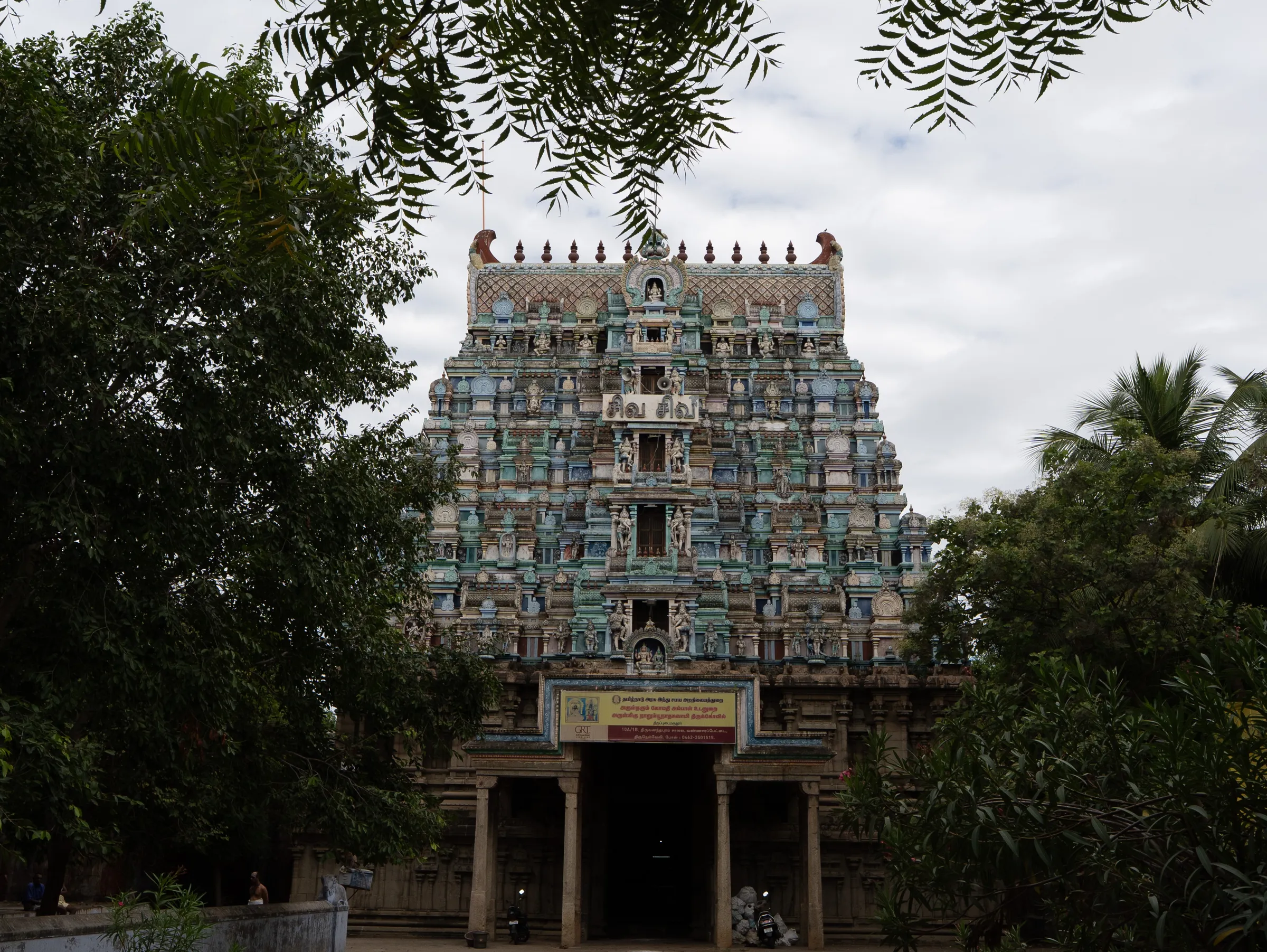
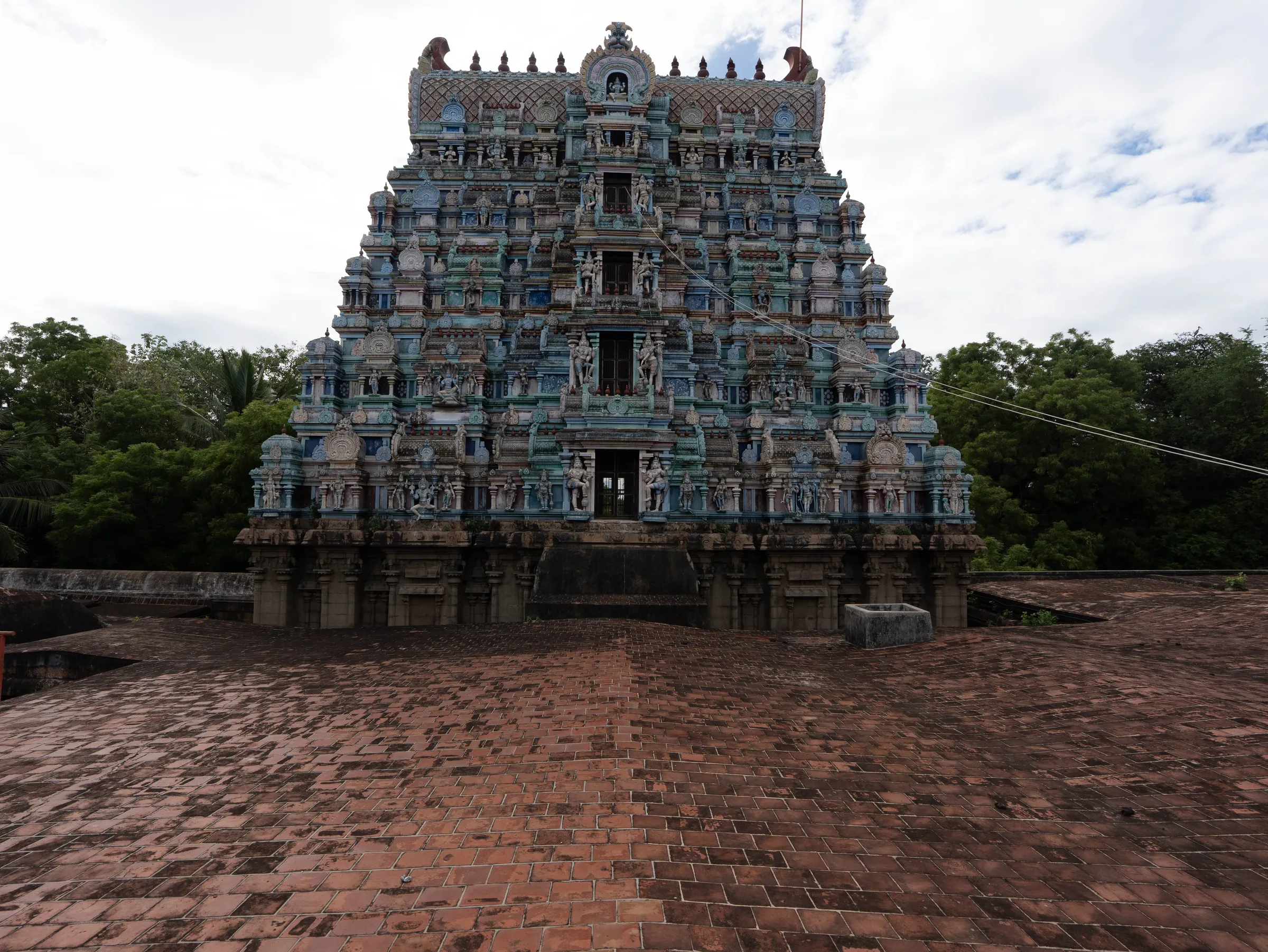
A roughly nine-acre Shiva temple on the banks of the Tambraparni at Tirupudaimarudur, with a five-tier Chitra gopuram whose interior carries mural paintings and woodcarvings of the 14th to 17th centuries.

The Narambunathaswamy temple stands beside a whirlpool on the Tambraparni at Tirupudaimarudur, a roughly nine-acre Shiva temple whose five-tier Chitra gopuram holds murals and woodcarvings of the 14th to 17th centuries. This entry holds three registers apart: what stands, what can be dated and cited, and what is told.

The photographs

Plates · 9

Narambunathaswamy Temple, photograph
© Amar Ramesh · All rights reserved
Narambunathaswamy Temple, photograph
© Amar Ramesh · All rights reserved
Narambunathaswamy Temple, photograph
© Amar Ramesh · All rights reserved
Narambunathaswamy Temple, photograph
© Amar Ramesh · All rights reserved
Narambunathaswamy Temple, photograph
© Amar Ramesh · All rights reserved
Narambunathaswamy Temple, photograph
© Amar Ramesh · All rights reserved
Narambunathaswamy Temple, photograph
© Amar Ramesh · All rights reserved
Narambunathaswamy Temple, photograph
© Amar Ramesh · All rights reserved
01

Architectural

structure & vocabulary

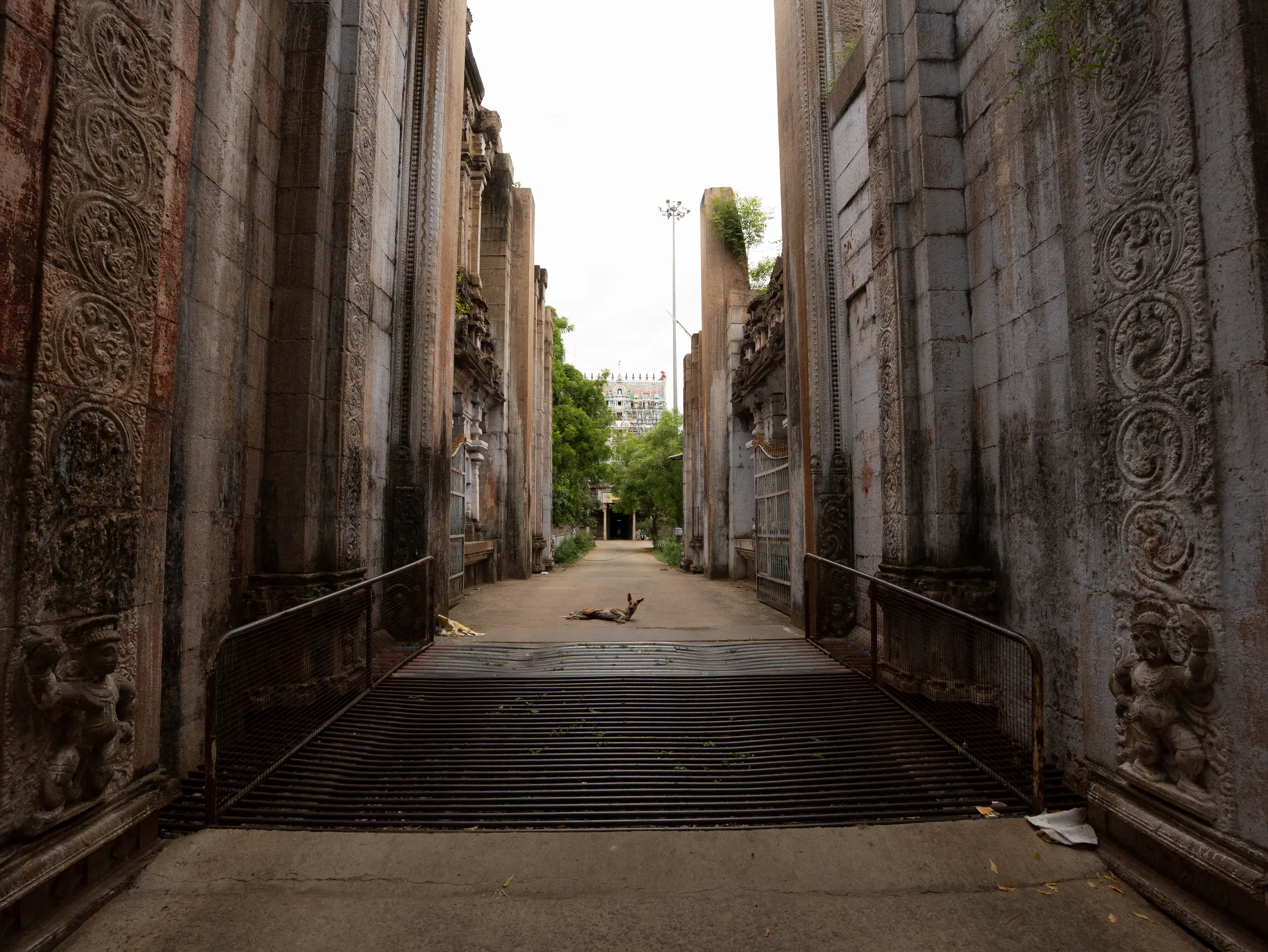
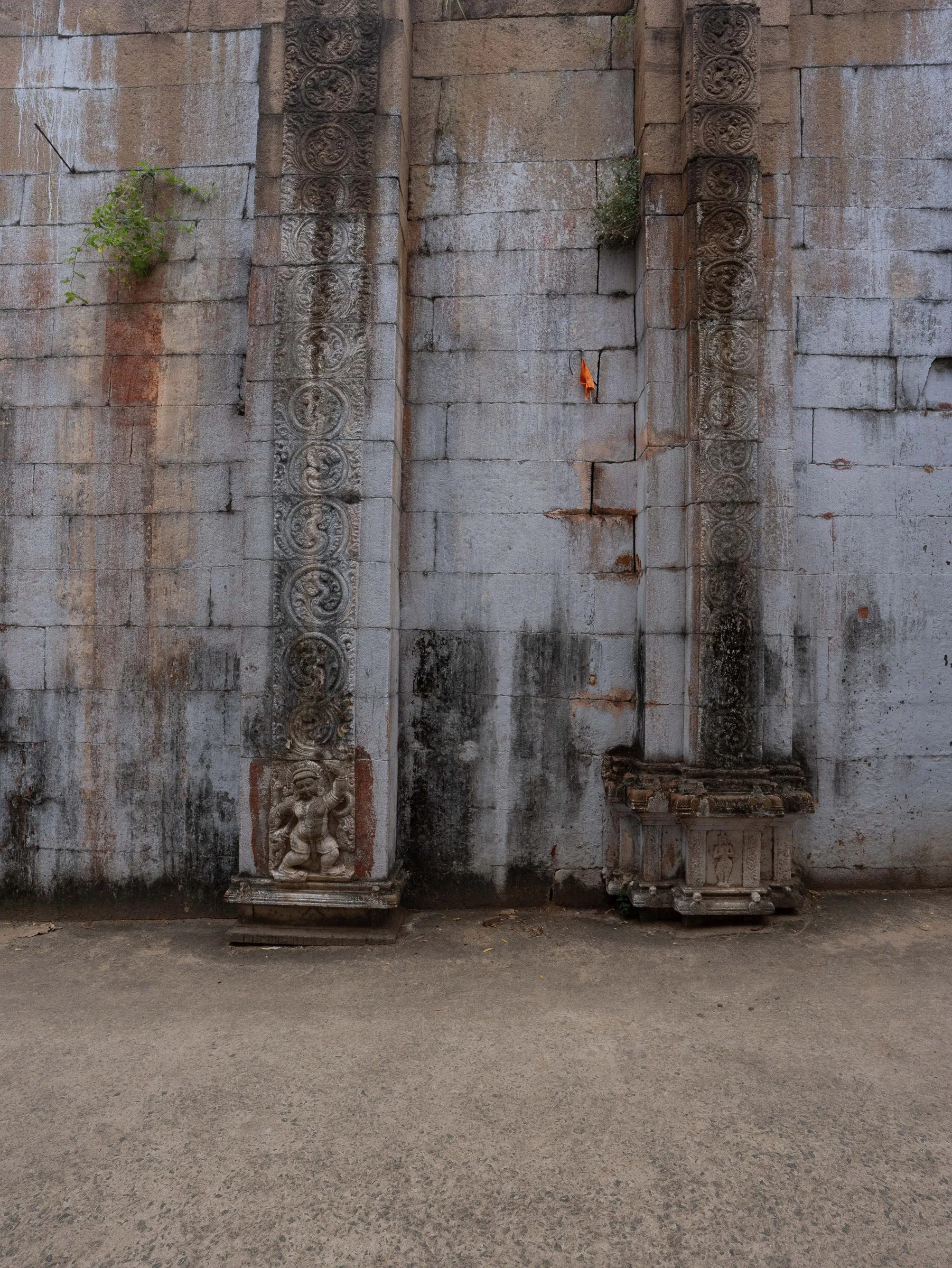
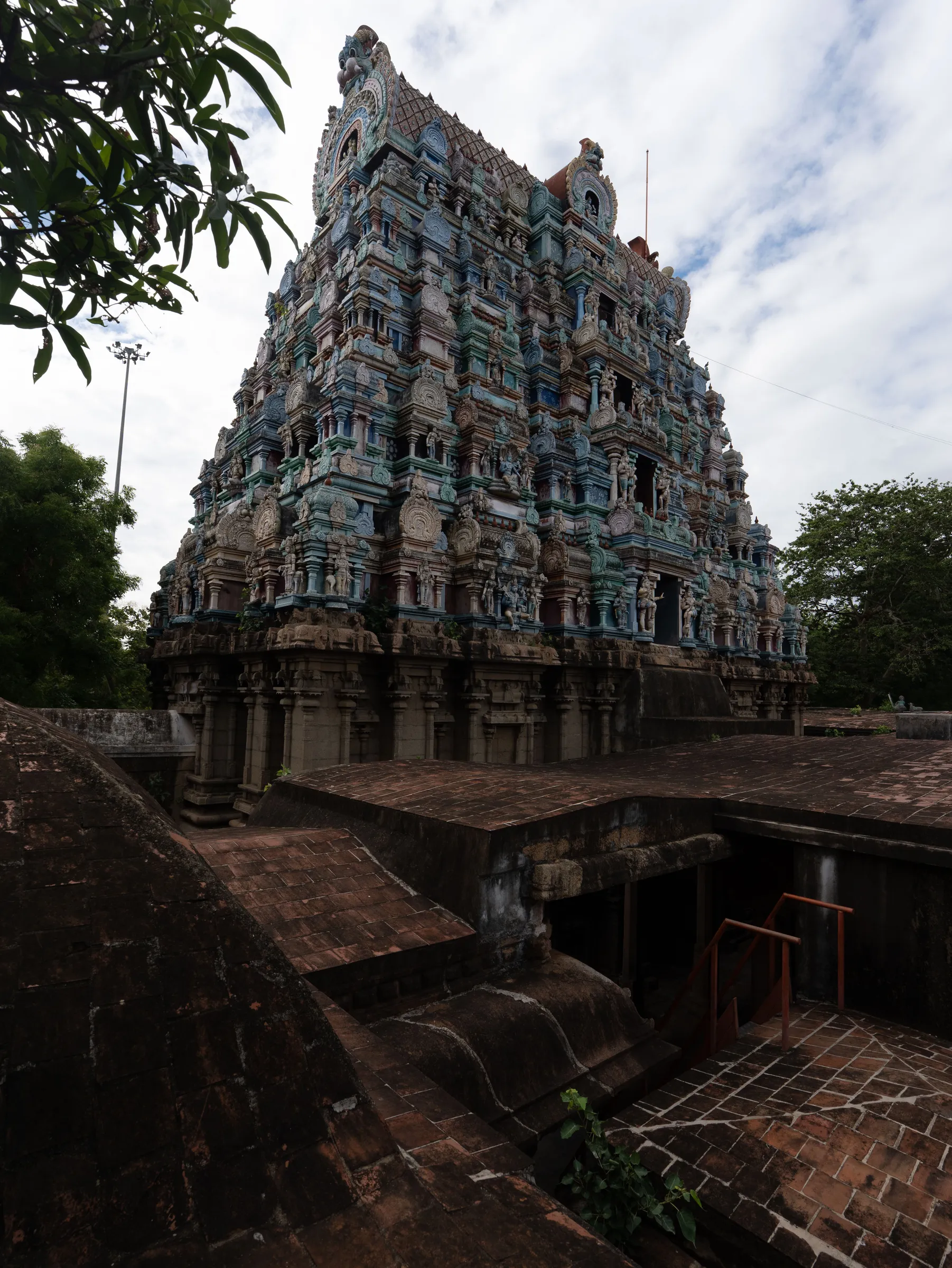
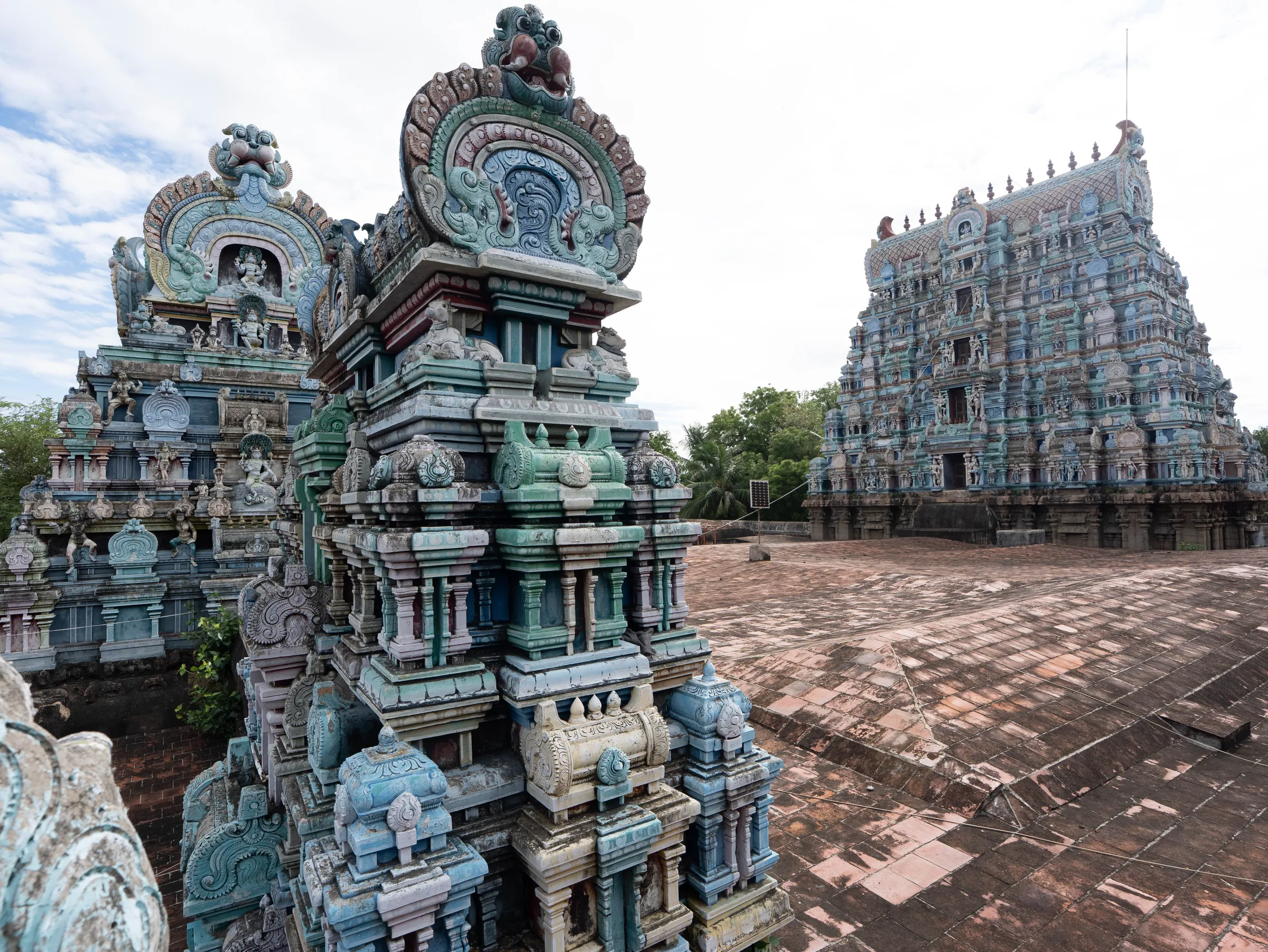
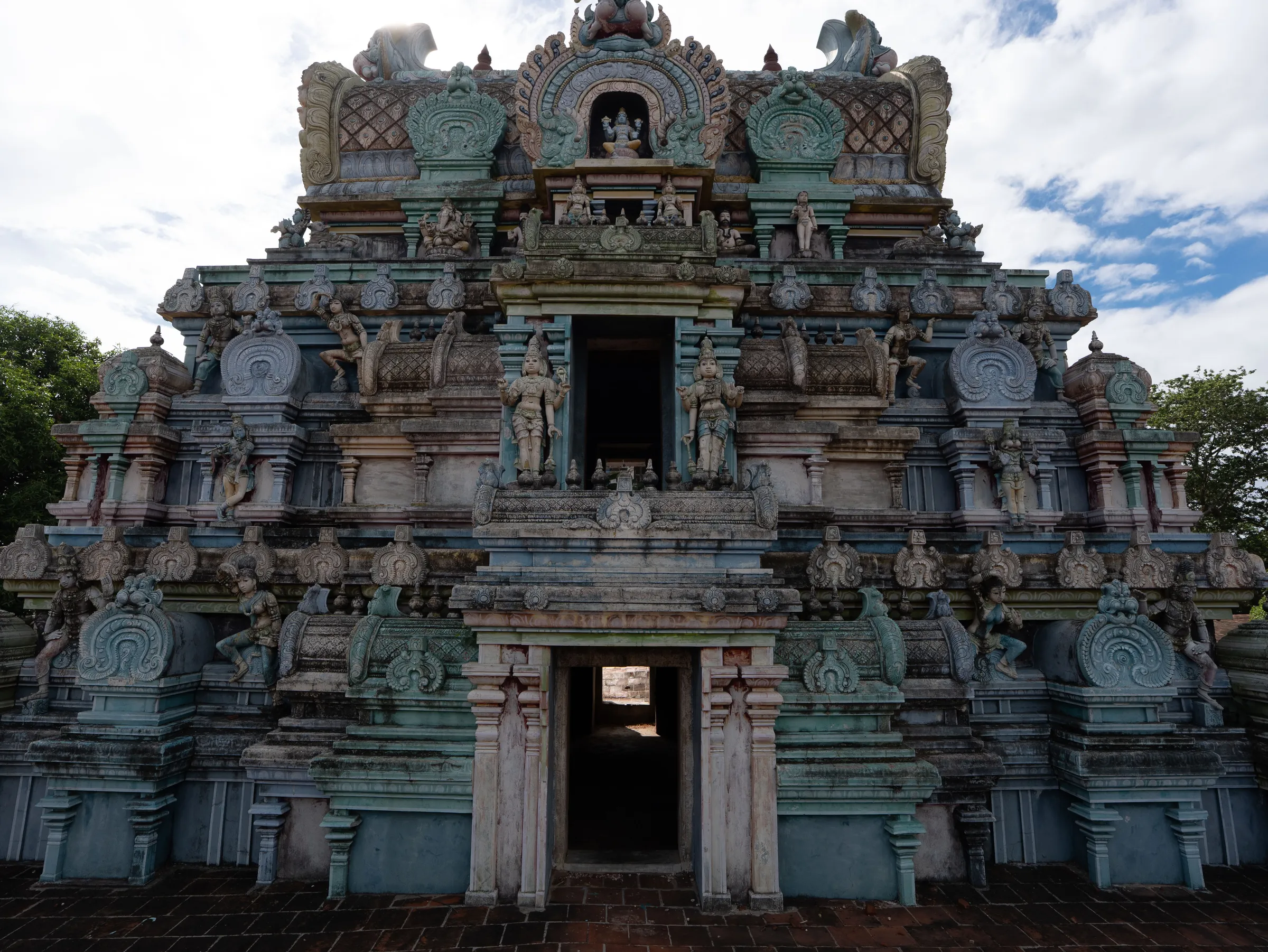
The temple stands beside a whirlpool on the banks of the Tambraparni and covers about nine acres, the goddess being Gomathi, with Marudu trees growing in plenty. The outer courtyards once served as barracks. The main gopuram, five tiers tall, holds excellent mural paintings and woodcarvings, both dating from the 14th to 17th centuries, and is the reason to visit.

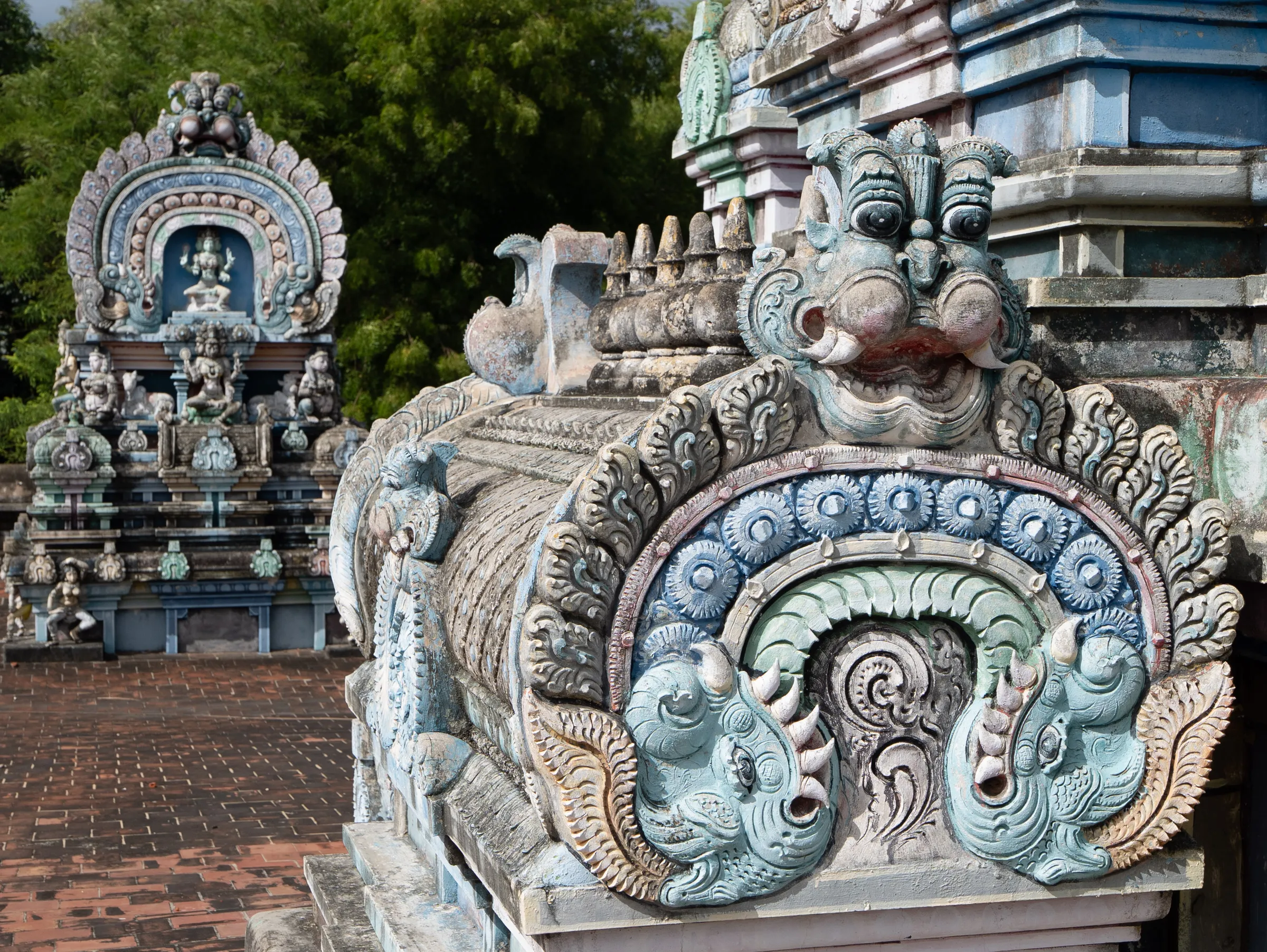
On the left as one enters is a tall sculpture of a Kerala king, with no inscription to name him; a similar statue stands in nearby Athazhanallur. The gopuram murals run across several levels: warriors and Ramayana scenes; the Narasimha avatara and the war of the rebel king Sellappa against the Vijayanagara king; scenes from the Tirupudaimarudur Sthala Purana and the Tiru Vilayadal; and panels of Kumari Bhagavathi, Subramanya and Bhadrakali. The sala-shaped roof suggests how boats and ships of the time were built. Each tier carries woodcarvings, with Portuguese warriors and endless-knot designs of special interest.

02

Archaeological

dated & cited

The early Pandyas first built the temple and the Pandyas enlarged it; the present structure is mostly from the Vijayanagara-Nayaka and Venad rulers of Kerala. The Venad king Vira Kodai Sri Aditya Varma (1468 to 1484 CE) set up his capital in nearby Kallidaikurichi, and a successor, Udaya Marthanda Varma, went on to found the Travancore kingdom. Several inscriptions survive, the earliest from the time of Raja Raja Chola recording a gift of land, with more from the 14th and 15th centuries under the Pandya kings, one recording an agreement reached with the temple's musicians.

The murals and woodcarvings are dated to the 14th to 17th centuries. One sequence depicts the Battle of Aralvaimozhi of 1532 CE, when Sellappa was defeated, Sri Vallabha was restored to the Pandya throne in Tenkasi, and Sri Vallabha gave his daughter in marriage to Achyuta Raya, the Vijayanagara king.

Dating
BegunEarly Pandya · original construction

Originally built and enlarged by the Pandyas; the present structure is mostly of the Vijayanagara-Nayaka and Venad rulers, with murals and woodcarvings of the 14th to 17th centuries.

Protection & condition
ConditionLesser known, lightly visited
03

Mythological

as transmitted

Among the gopuram murals are scenes from the Tiru Vilayadal, the sports of Shiva, including those set in Madurai where Shiva, as a bangle seller, helps a poet called Darumi, alongside scenes from the temple's own Sthala Purana.

Register interest in prints Buy the book
Improve this entry

This is an open, reviewed record. If you have spotted an error or have something to add — a correction, a date, a source, a name in another script — propose it. Every change is reviewed before it joins the record.

“Suggest an edit” opens this entry on GitHub and turns your change into a pull request. “Share feedback” opens a short form. Both go through review.