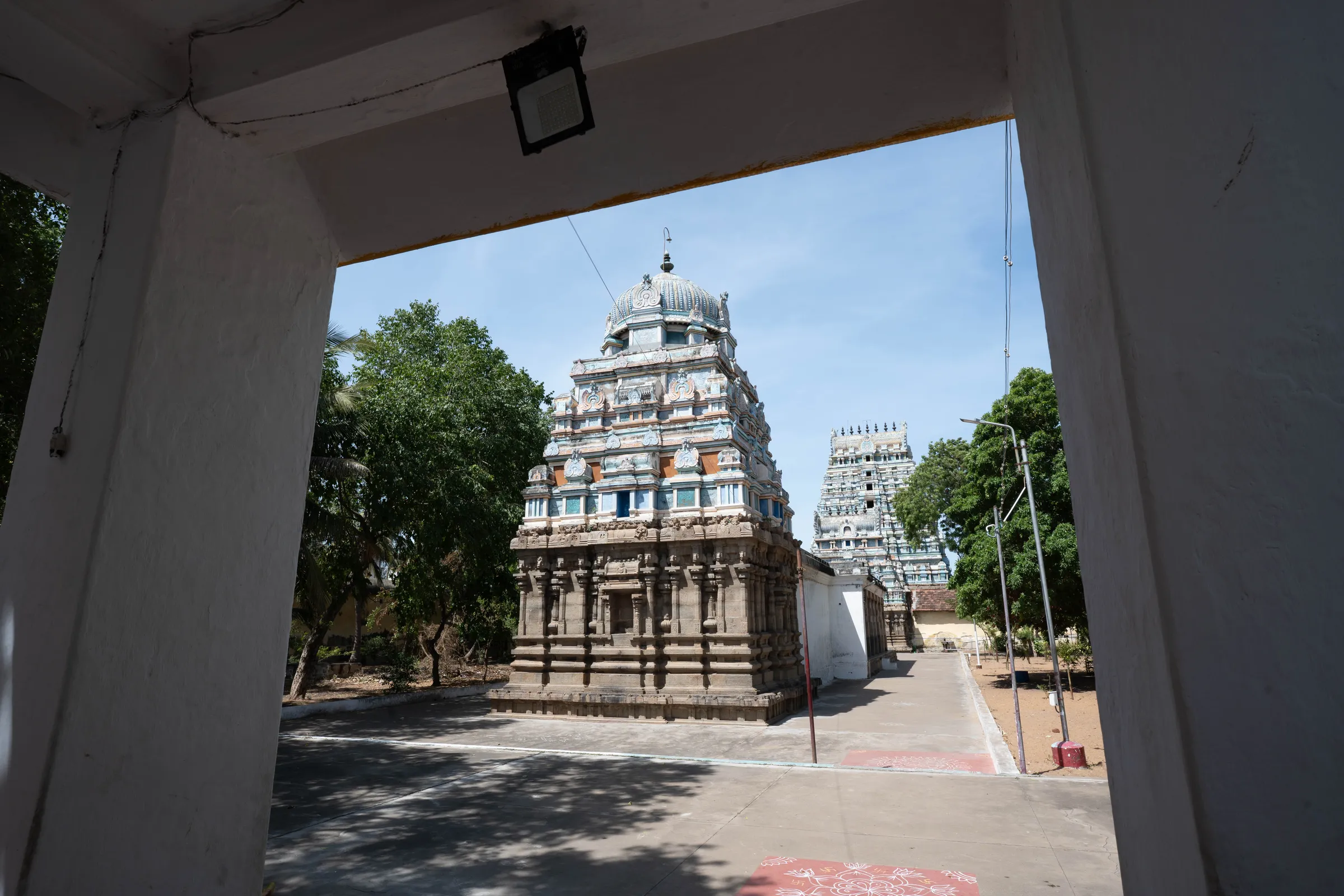
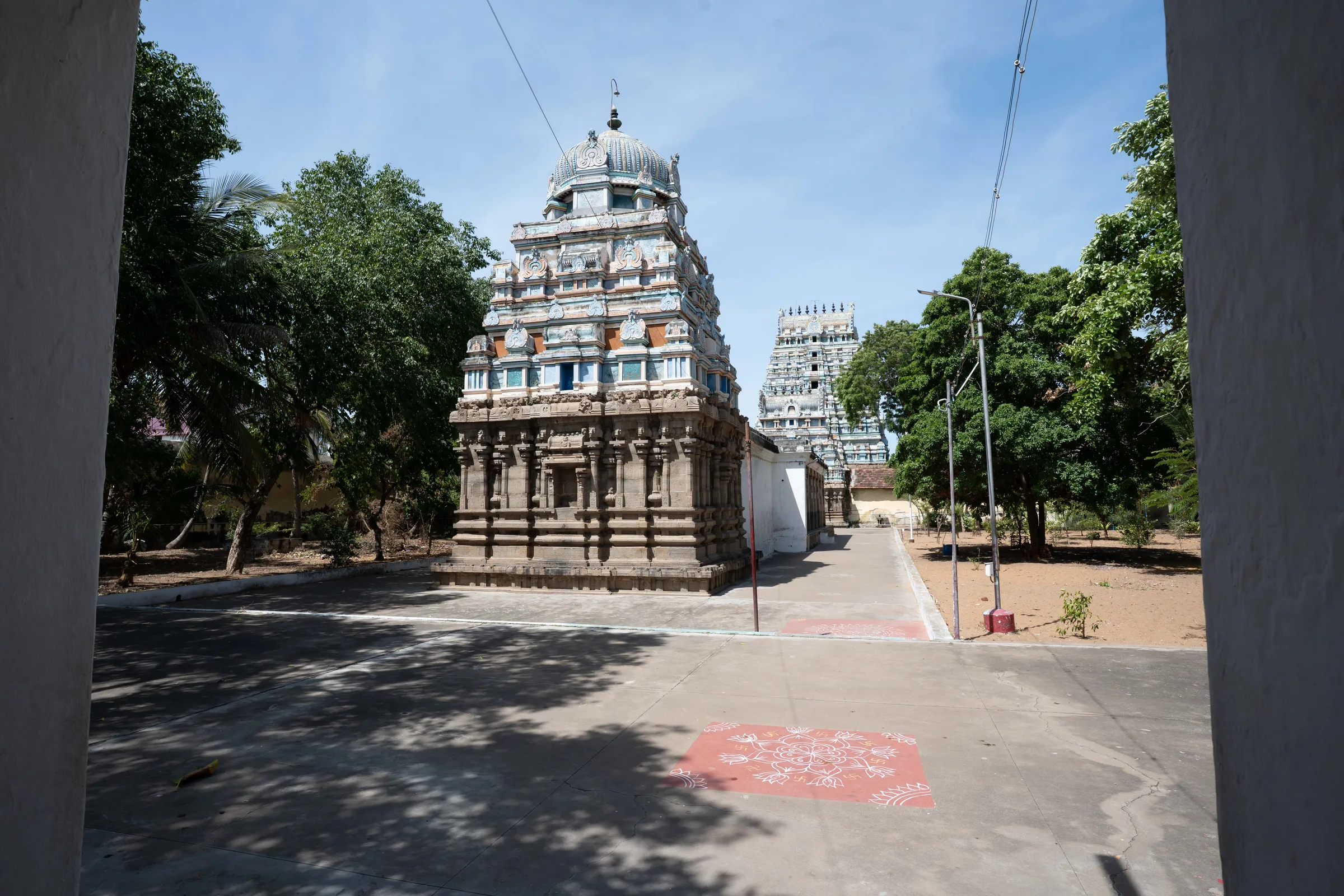
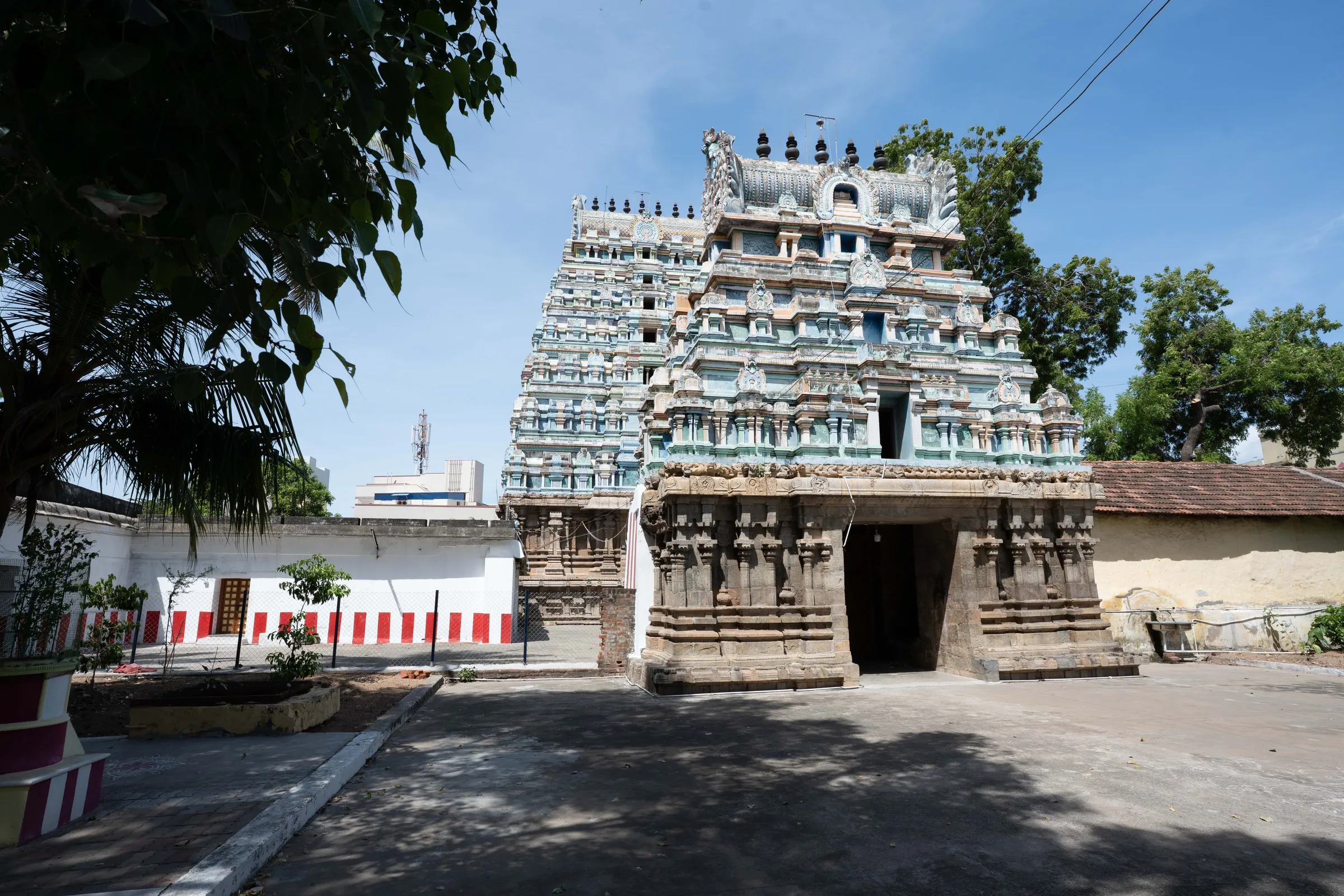
A temple in the North Main Street of Thanjavur, likely the Nāyakas' first Rajagopala shrine before attention moved to Mannargudi. It holds a rare assemblage of Maratha and other deities and is bound up with the fall of the last Nāyaka king.
The temple stands in a small street off North Main Street. As one enters, on the right is an image of the Nāyaka king Vijayaraghava Nāyaka. To the back left are shrines for the Maratha deity Shivendra and, in a small room, images of Govinda Dīkṣitar and his wife Nāgambāḷ. In the front right are rooms holding many deities, large and small, among them Khaṇḍōbā, also called Mārtāṇḍa Bhairava, a favoured Maratha deity.
The Rājagōpāla once here was replaced with the Sudharśana that is worshipped today, said to have been installed for a yajña. These gods and goddesses still stand, and the assemblage is considered rare and worth the visit.
02
Archaeological
dated & cited
The temple has a few inscriptions from the Nāyaka times. An inscription of Achyutappa Nāyaka (1560 to 1600), dated 1539, praises the king as a hunter of elephants and a great conqueror; the area was then called Tirumalai Amman Pettai. It records the consecration of the main image of Perumāḷ together with Madana Gōpāla and sanctions a long list of food offerings, with betel leaves and nuts as a separate endowment costing five Paṇam.
Another inscription grants tax free lands from the villages of Chiruvambur and Sendhamangalam. A further one records the grant of three houses in the main street towards the cost of building the gopuram, given by the son of Govinda Bhaṭṭa of Neelameghan. Two lines from the Maratha period read Śrī Rāma Prathāpa and give the date 1847, near the Garuḍa shrine, possibly from a renovation.
Protection & condition
ConditionIn worship
03
Mythological
as transmitted
Two traditions are told of how the assembled deities came about. In the time of Sivaji II (1832 to 1855) the king needed money, and a tantra magician was invited by the scholar priest Jambunātha Bhaṭṭrāṇḍike; the deities were installed for abhicāra hōma, rituals from the Atharva Veda done with malefic intent. The other version says Kāmākṣi Bāyi, the wife of Sivaji II, did it to repel the British. The rituals were said to have failed, and as late as the 1960s devotees feared to enter for the malefic intentions held there.
Sources
Pradeep Chakravarthy, 100 Timeless Tamil Nadu Temples
This is an open, reviewed record. If you have spotted an error or have
something to add — a correction, a date, a source, a name in another script —
propose it. Every change is reviewed before it joins the record.