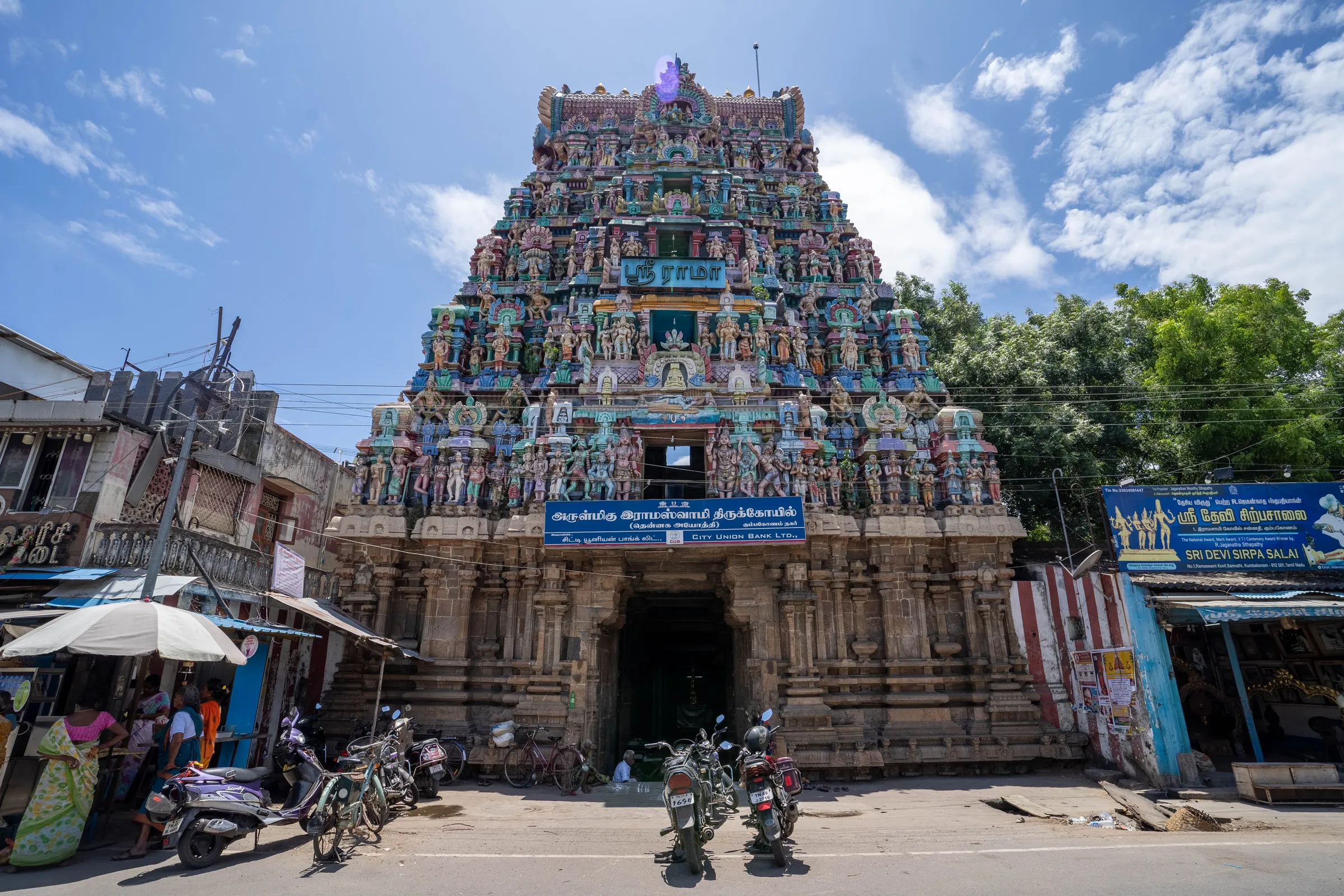
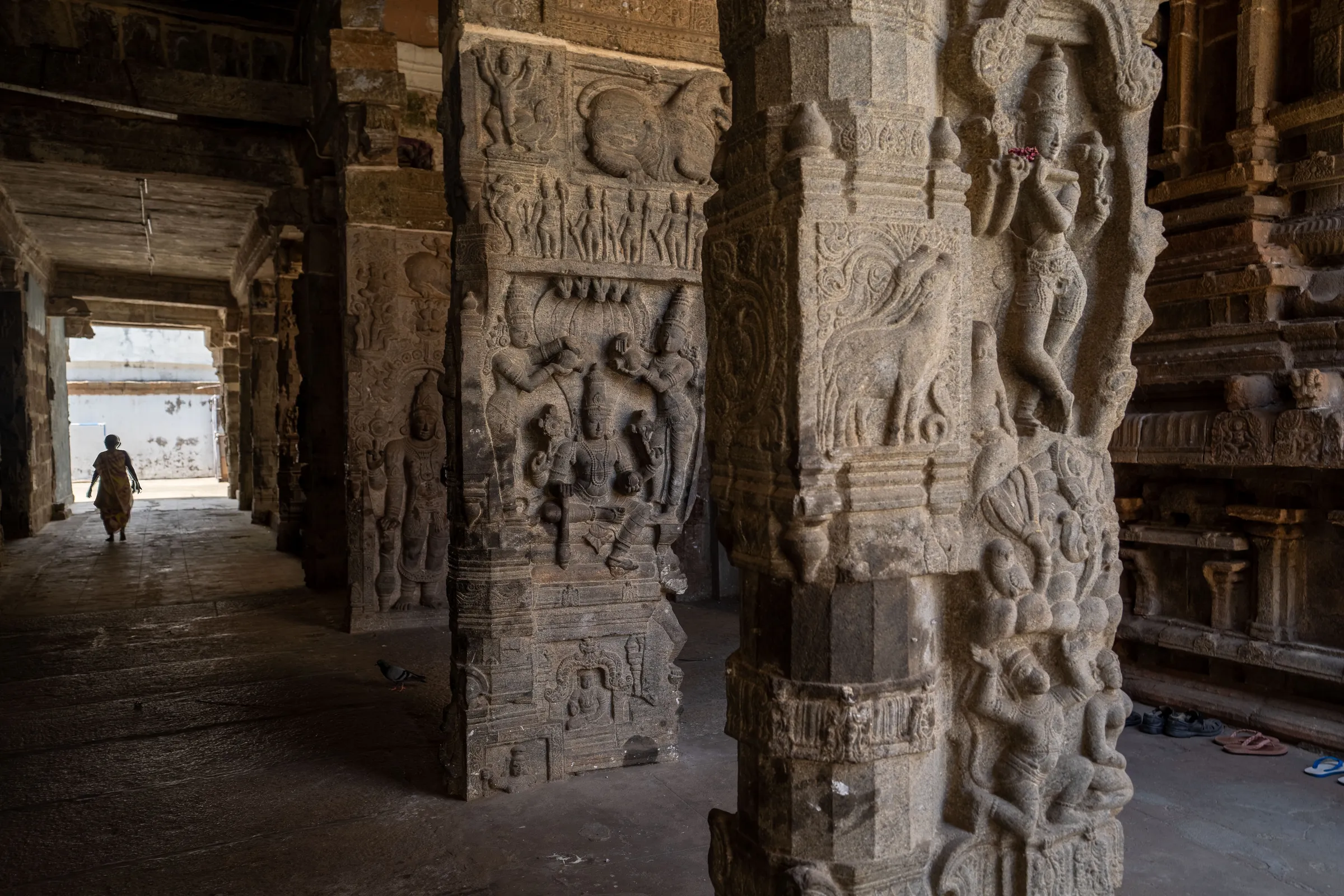
A Viṣṇu temple at Kumbakonam built by Govinda Dīkṣitar, minister to the Thanjāvūr Nāyakas, famous for the carved pillars of its mukha maṇḍapa in the finest Thanjāvūr Nāyaka manner.
The temple holds a large garbhagṛha with images of Rāma, Sītā and Lakṣmaṇa, with Hanumān holding the Rāmāyaṇa, and Bharata and Śatrughna also present. It is not counted among the Divya Deśam, the temples sung by the Āḻvārs.
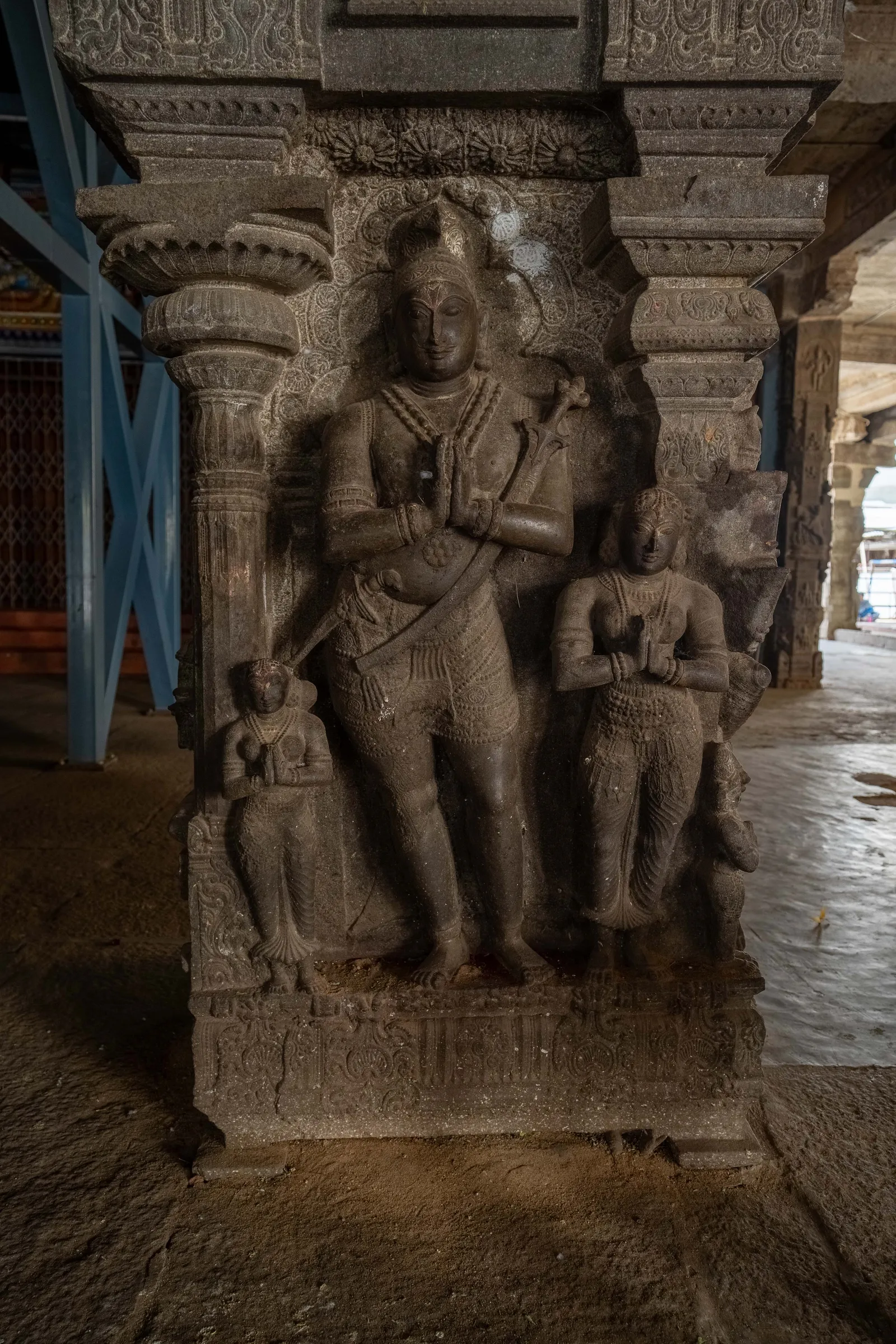
The mukha maṇḍapa is the temple's chief glory, its pillars carved in the best Thanjāvūr Nāyaka style. Among the most striking panels are Trivikrama with Bhūmā Devī supporting his planted leg, the coronation of Vibhīṣaṇa, the coronation of Sugrīva, and a panel of Rāma taking Sītā's hand in marriage with Lakṣmaṇa and Viśvāmitra present. Beneath that marriage panel stands a nobleman with a staff, attended by sages and his son, with his wife, an infant, a daughter and a dog, believed to depict Govinda Dīkṣitar. Many further sculptures show Kṛṣṇa.
02
Archaeological
dated & cited
The temple was built by Govinda Dīkṣitar, prime minister to several Thanjāvūr Nāyaka kings and advisor to Raghunātha Nāyaka. Using the Kāveri canal network he developed Kumbakonam into the commercial capital of the kingdom. He is also credited with renovating the Pateśvaram temple and with re-conceiving the Mahāmakam festival held once in twelve years. The area once held many Tamil Jains, and it was here that U. V. Swaminatha Iyer got his first lead toward recovering lost Tamil Jain and Buddhist literature.
Dating
Built by Govinda Dīkṣitar, prime minister to the Thanjāvūr Nāyaka kings (16th to 17th century CE).
03
Mythological
as transmitted
The Rāma story was current in the Tamil country by the first century CE, referred to in Sangam poems and in the Silappadikāram. The Āḻvārs sang of several Rāmāyaṇa episodes, Kulaśēkhara Āḻvār composing on Daśaratha's grief at parting from Rāma. Images of Rāma become common in the Tamil country only from the early Chōḷa period, and the Pattābhiṣēka, the coronation, becomes common only after the 14th century. Under the Vijayanagara kings Rāma stood for Rāma-rājya, the ideal king, which renewed the making of Rāma temples and images.
This is an open, reviewed record. If you have spotted an error or have
something to add — a correction, a date, a source, a name in another script —
propose it. Every change is reviewed before it joins the record.