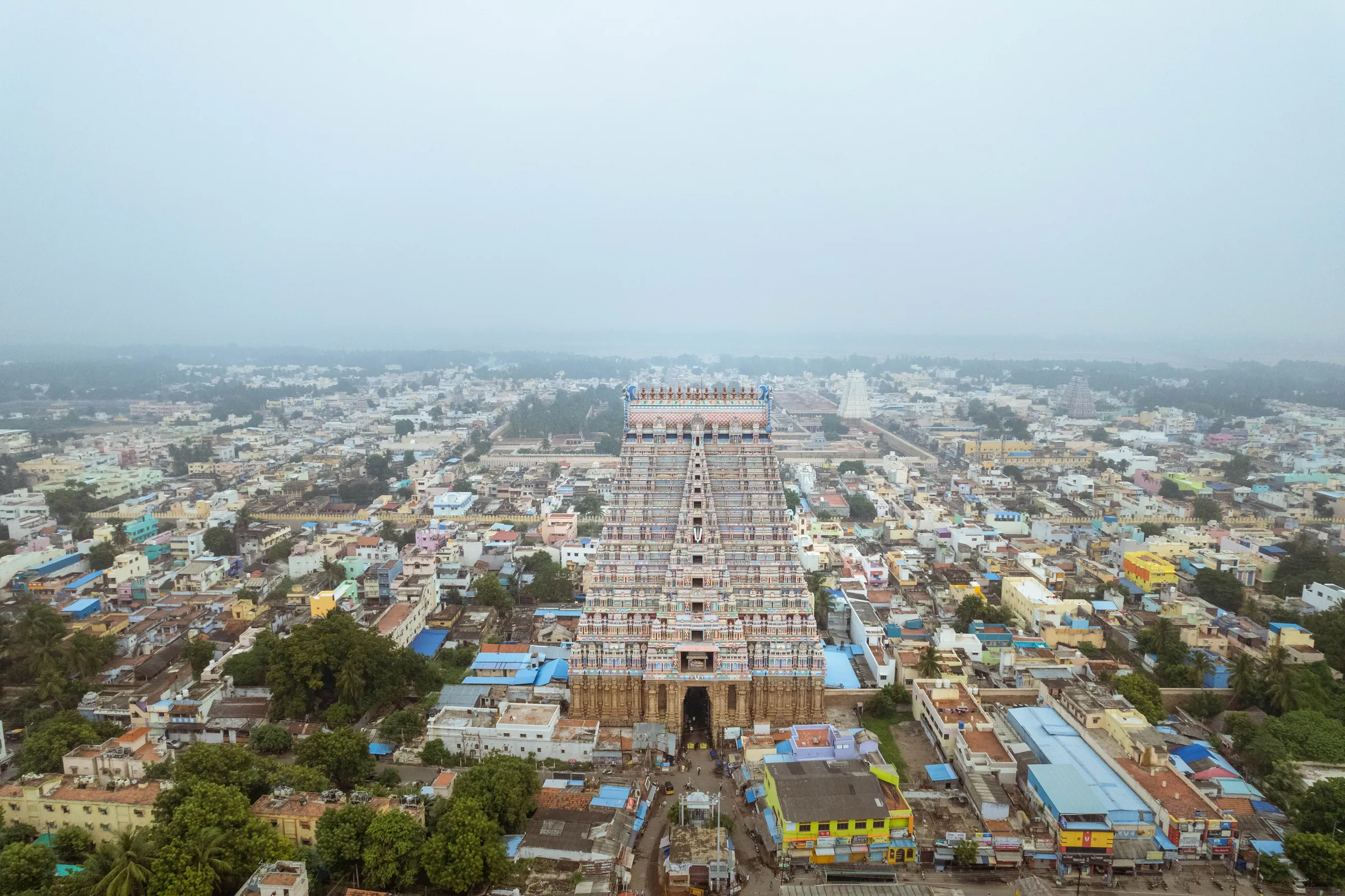
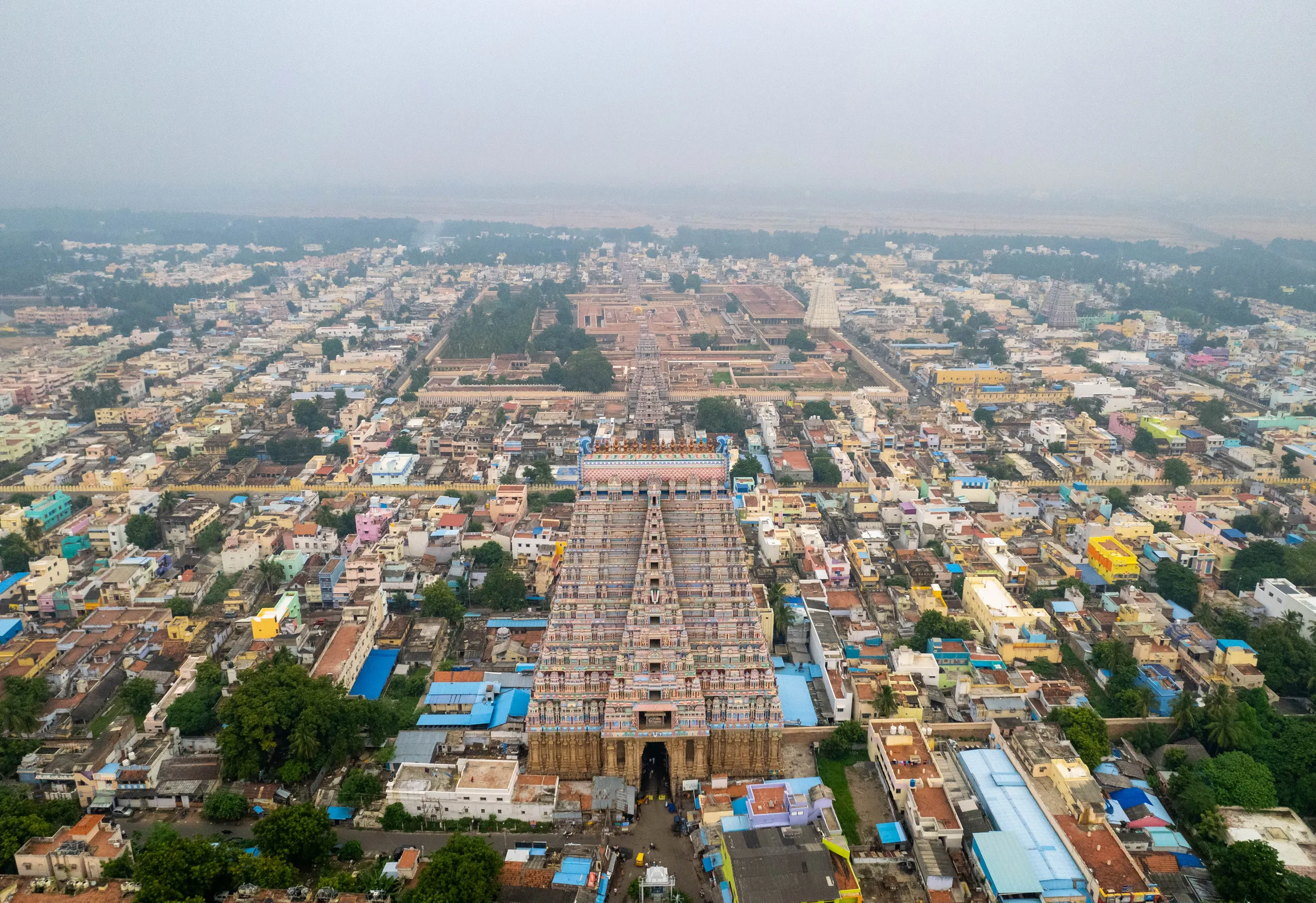
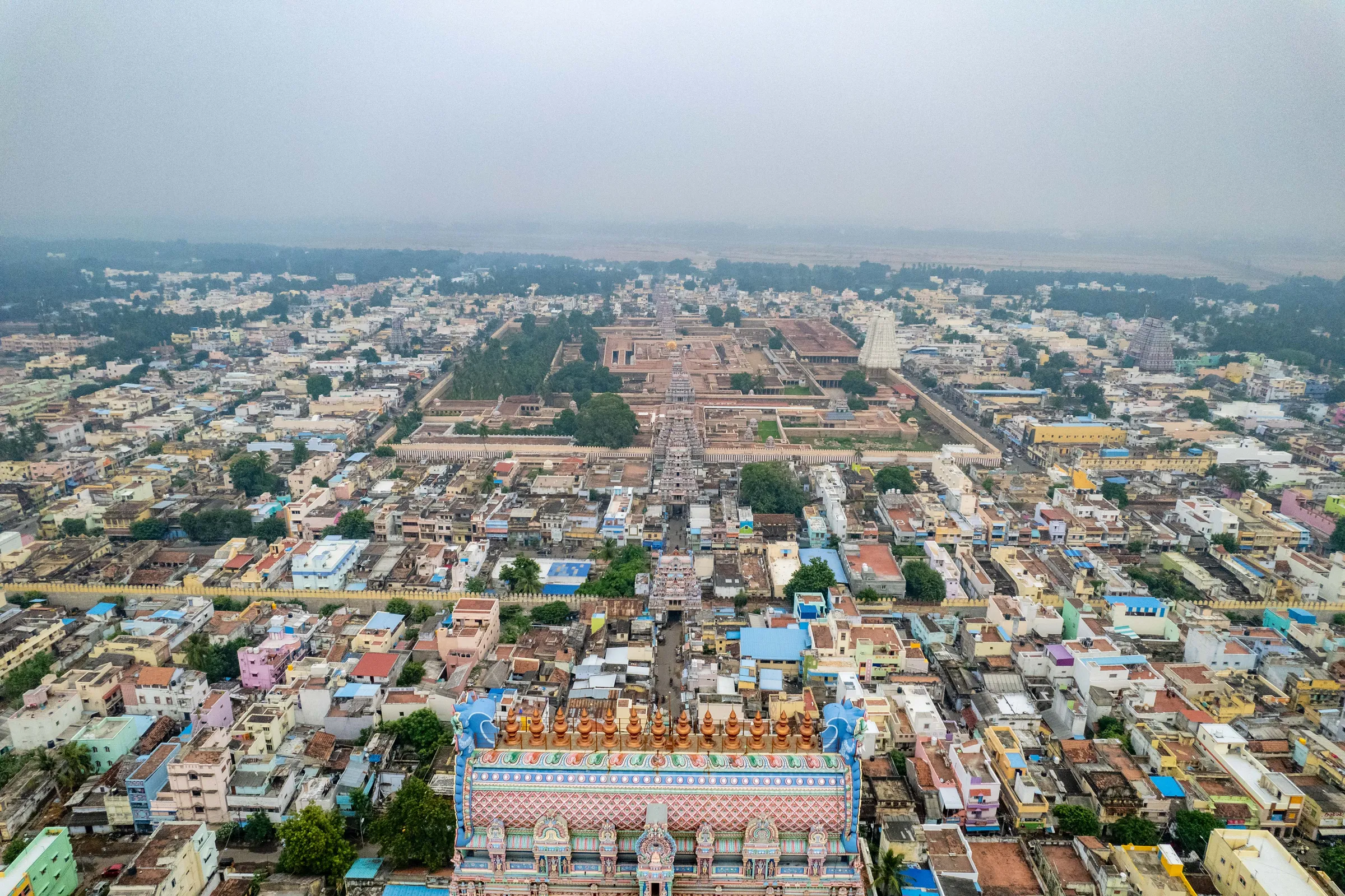
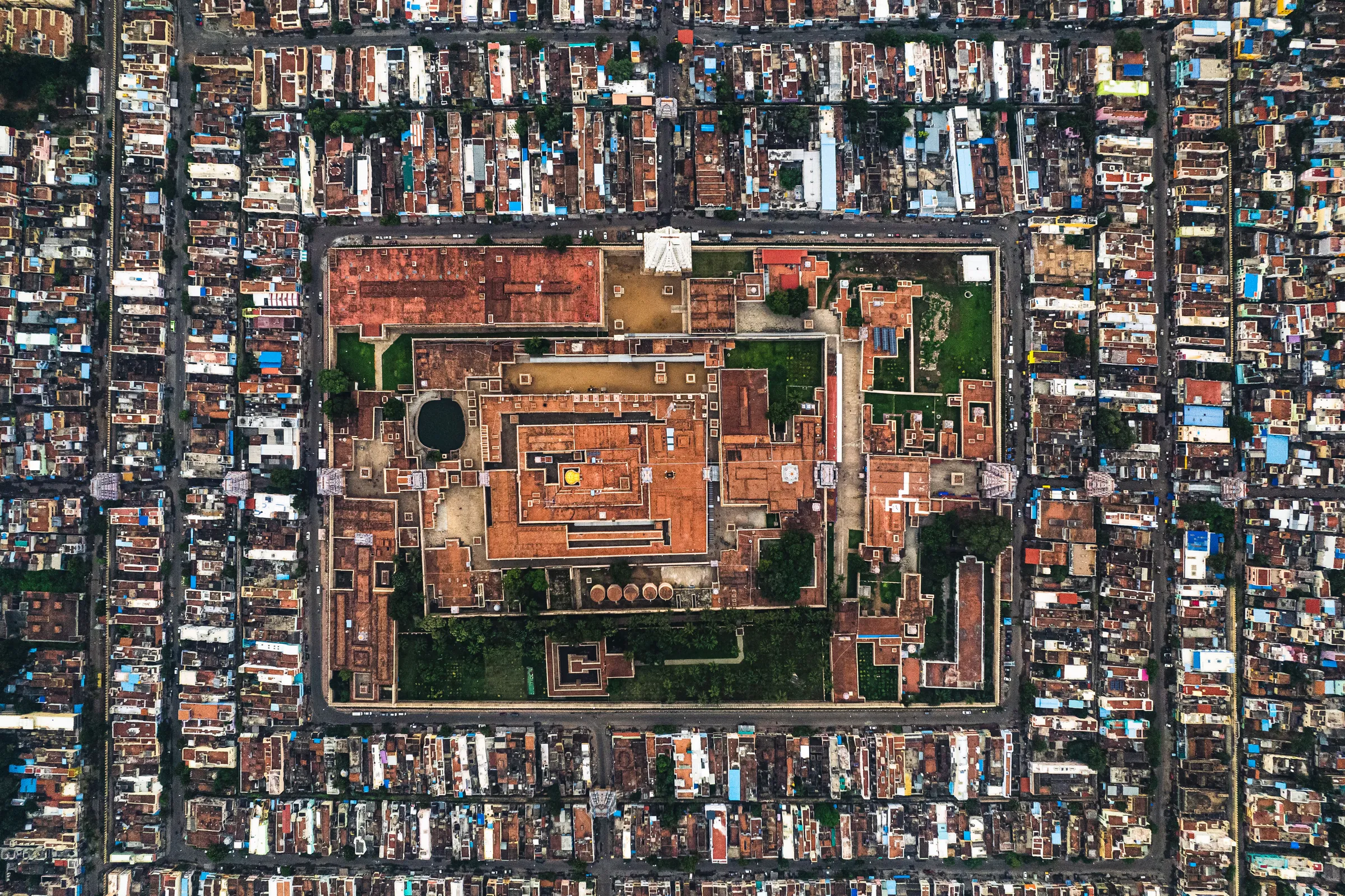
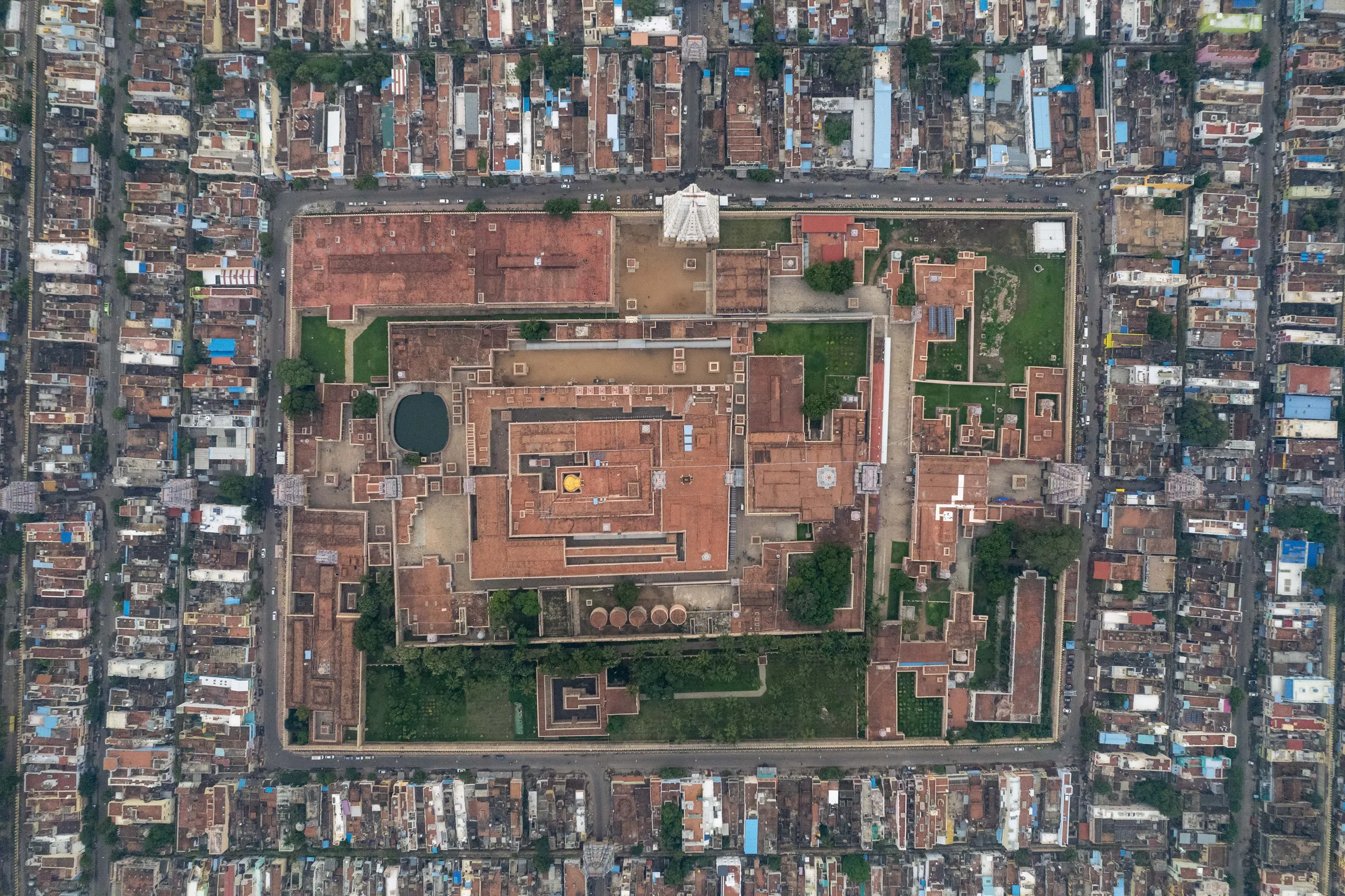
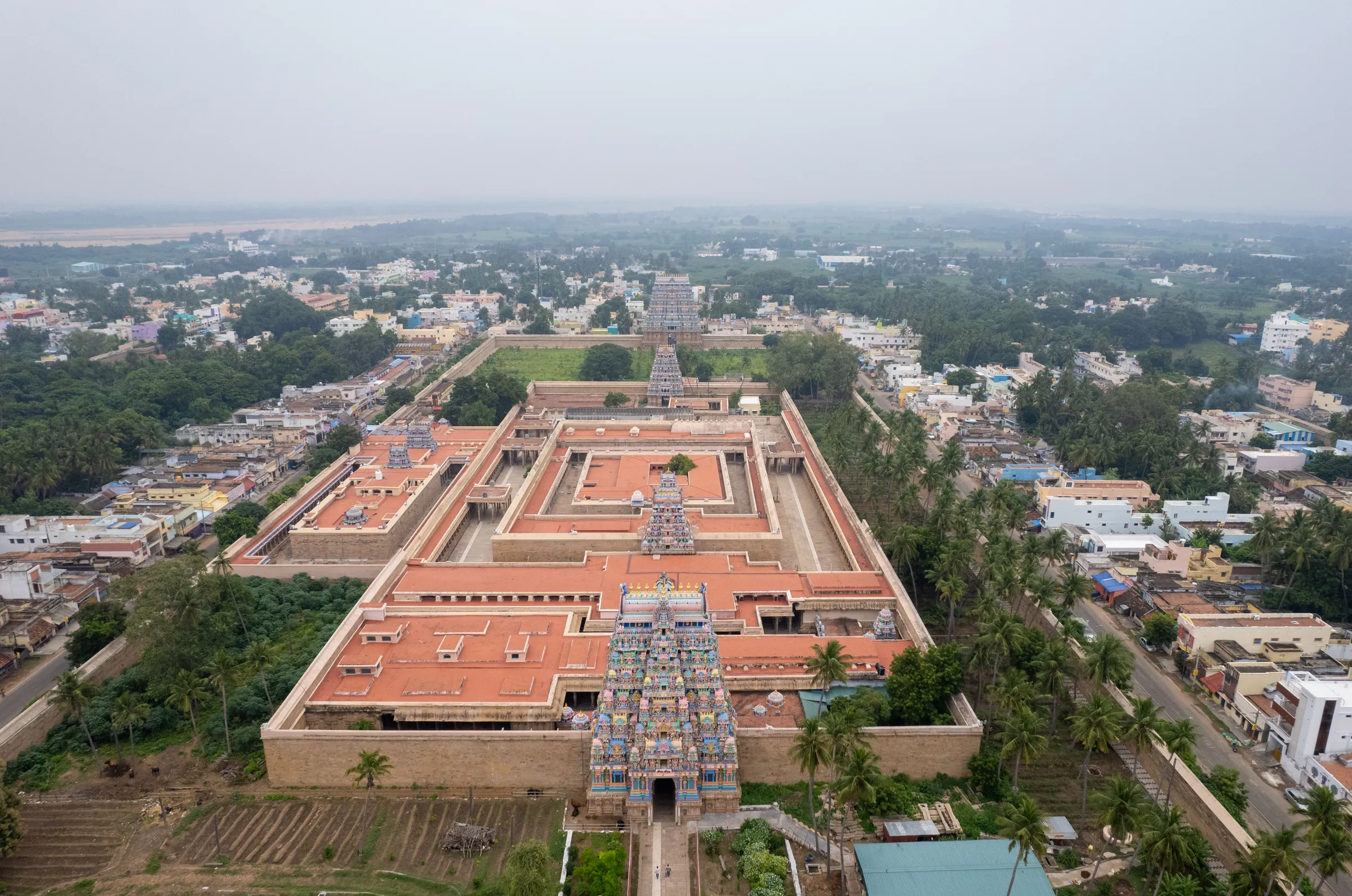
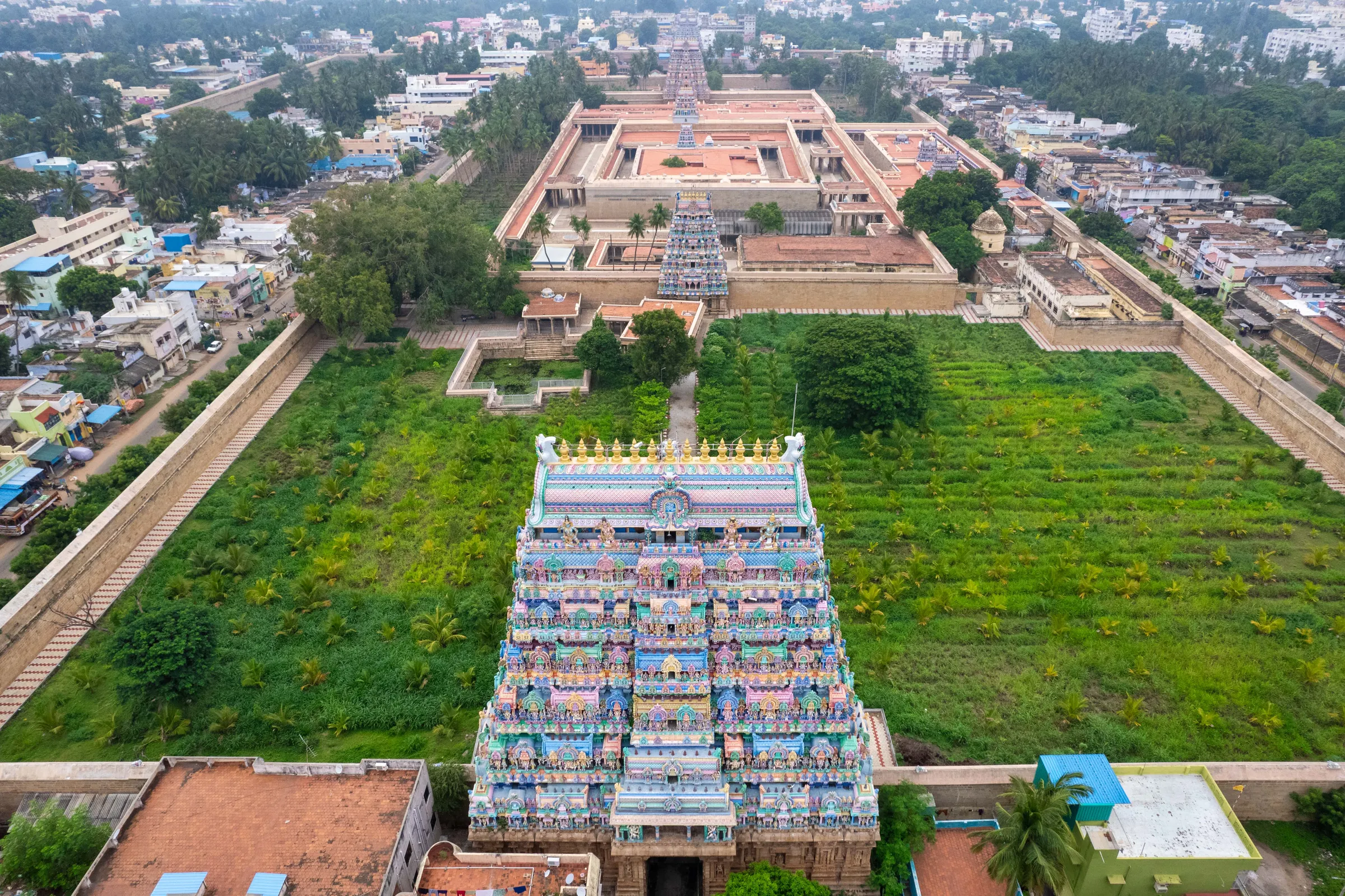
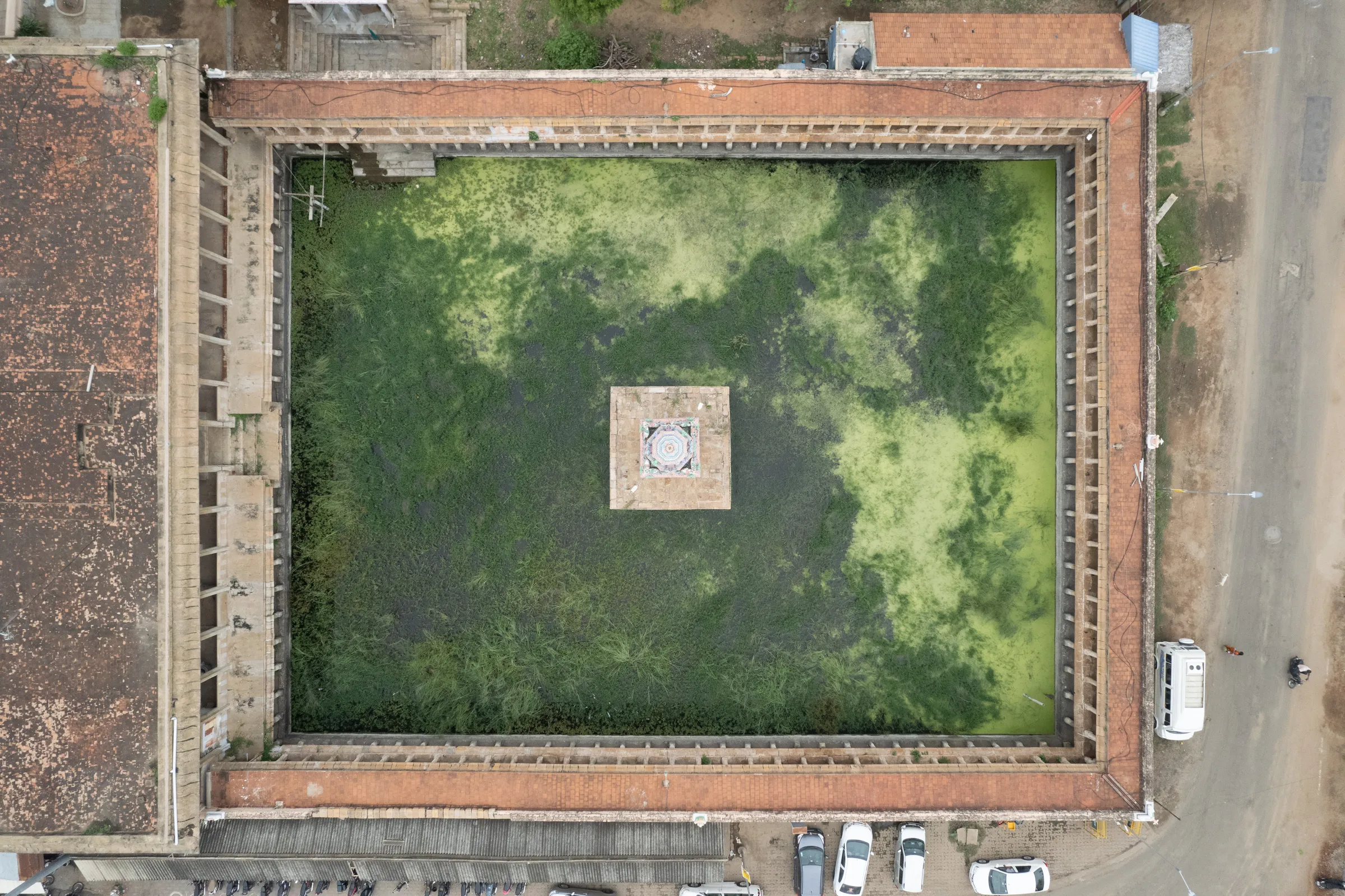
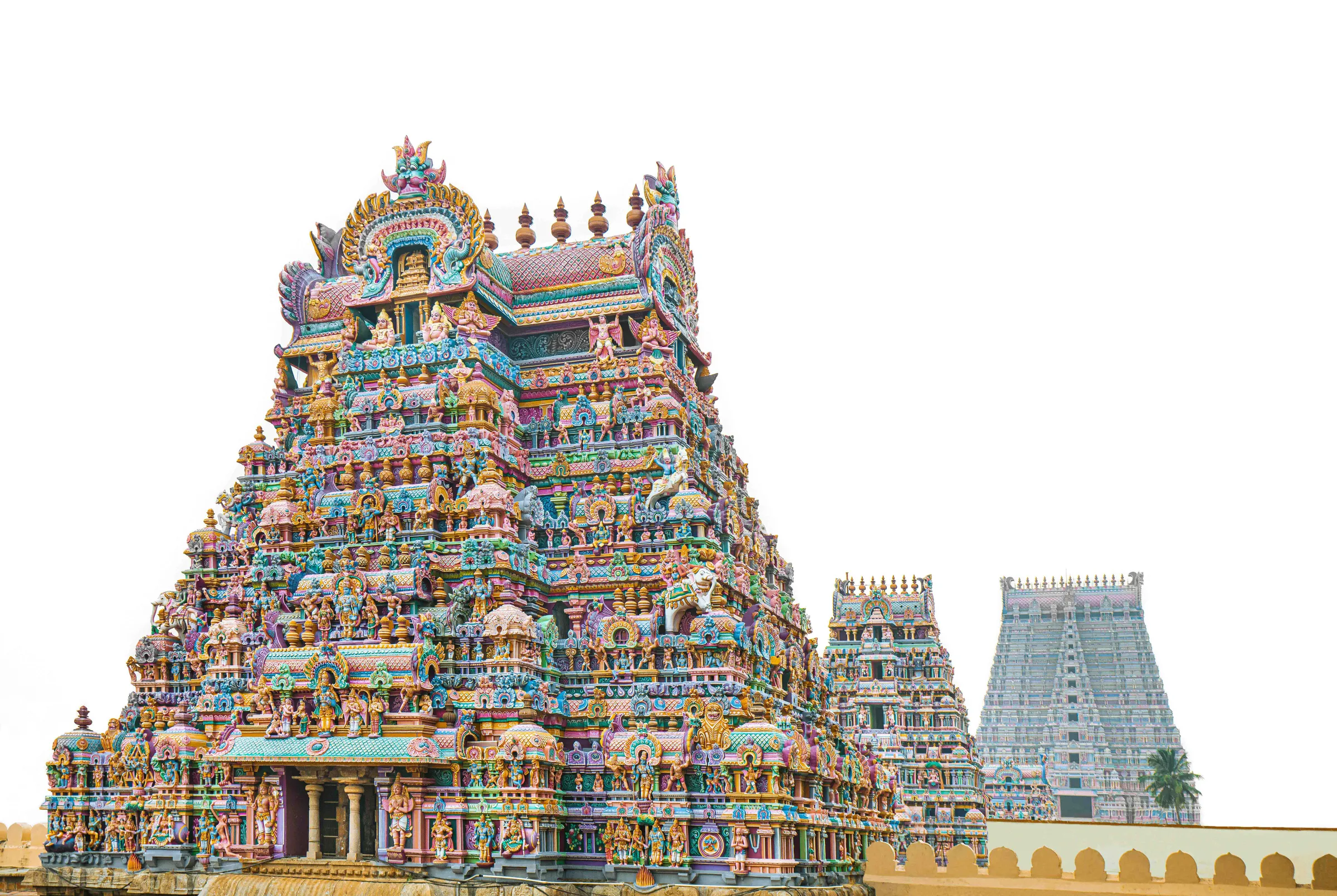
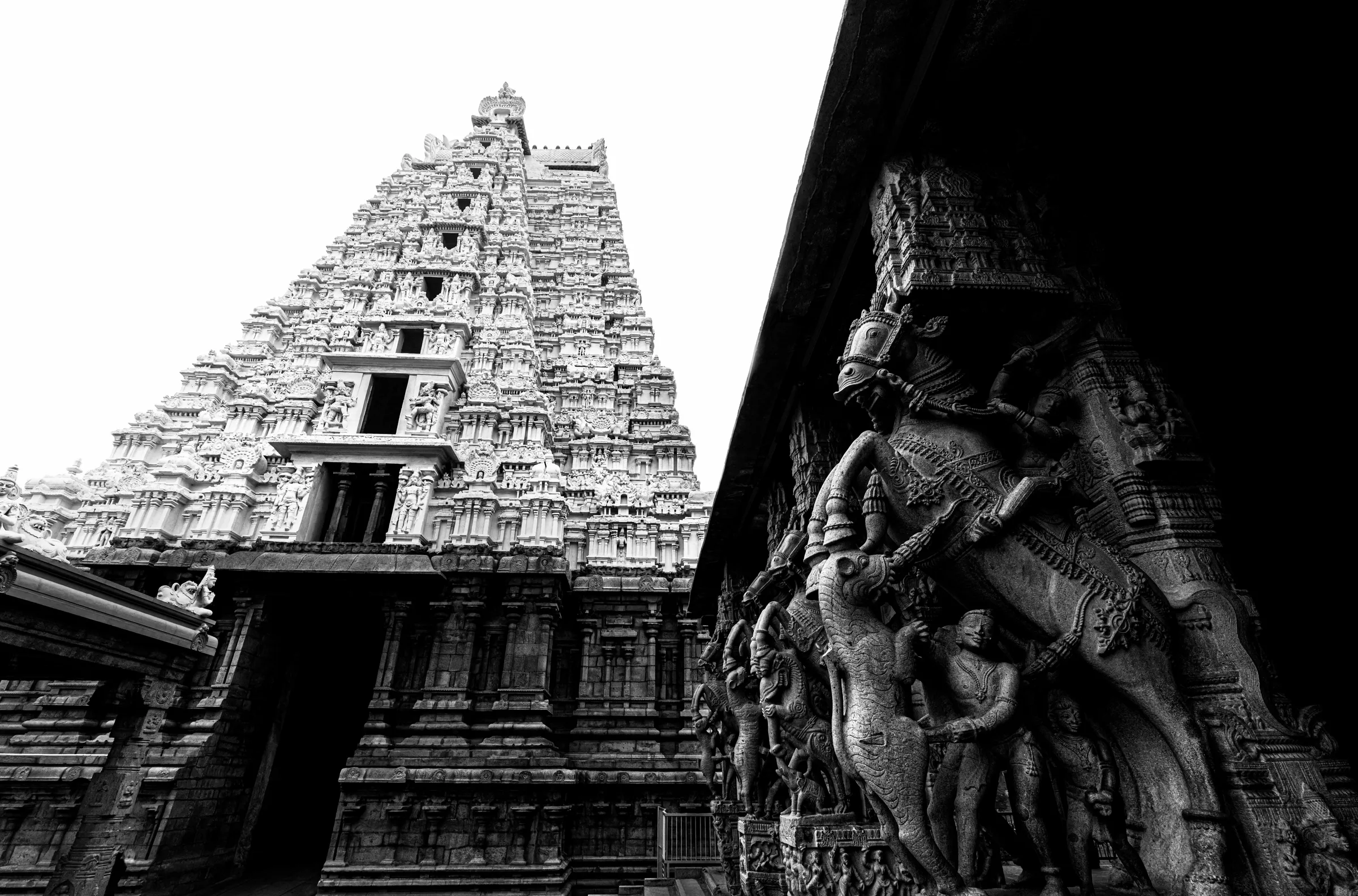
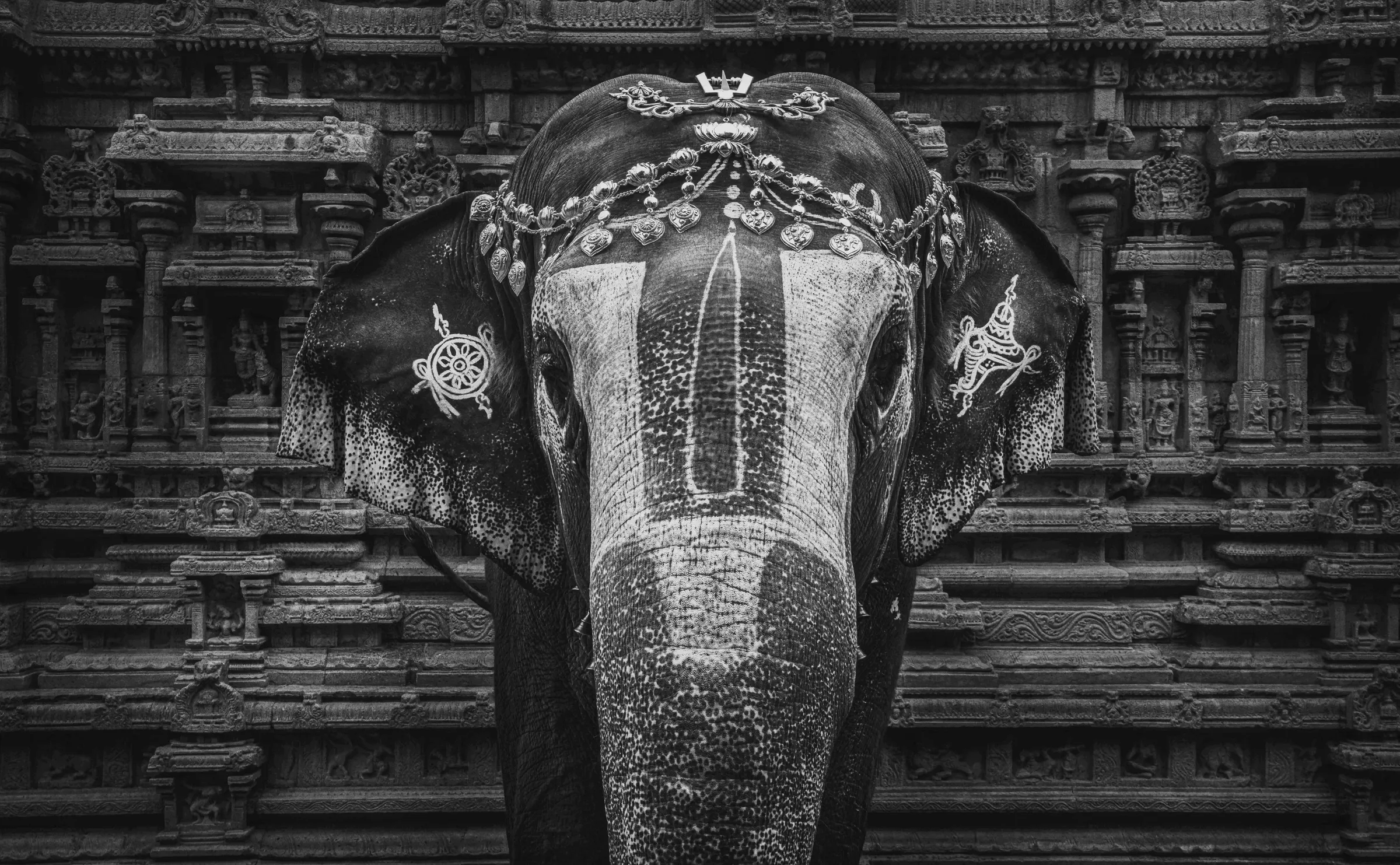
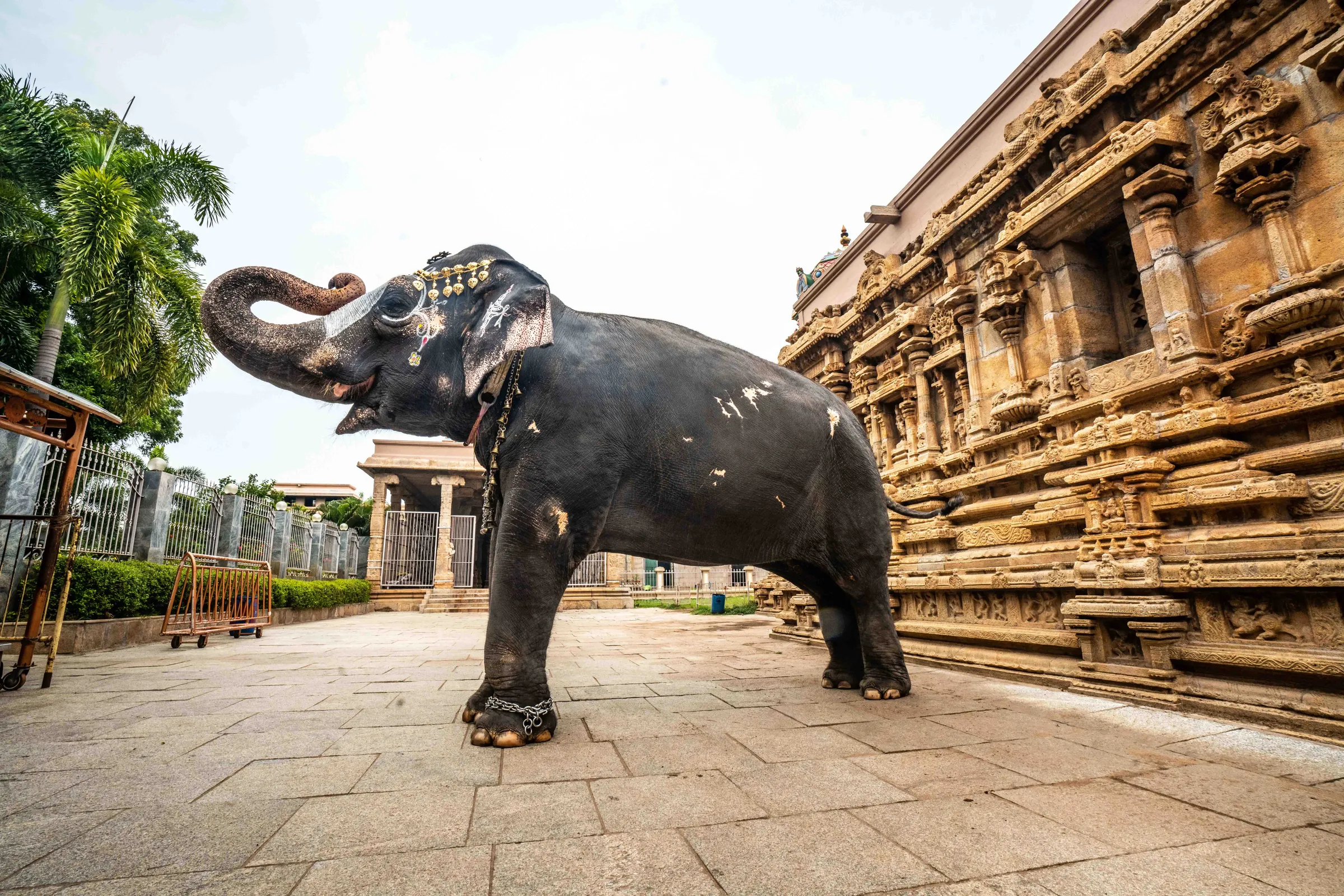
The foremost shrine of Viṣṇu in the Tamil country, set on a river island near Tiruchirappalli. At 156 acres with seven concentric prākāras it is the largest functioning Hindu temple, glorified by the Āḻvārs and codified by Rāmānuja.
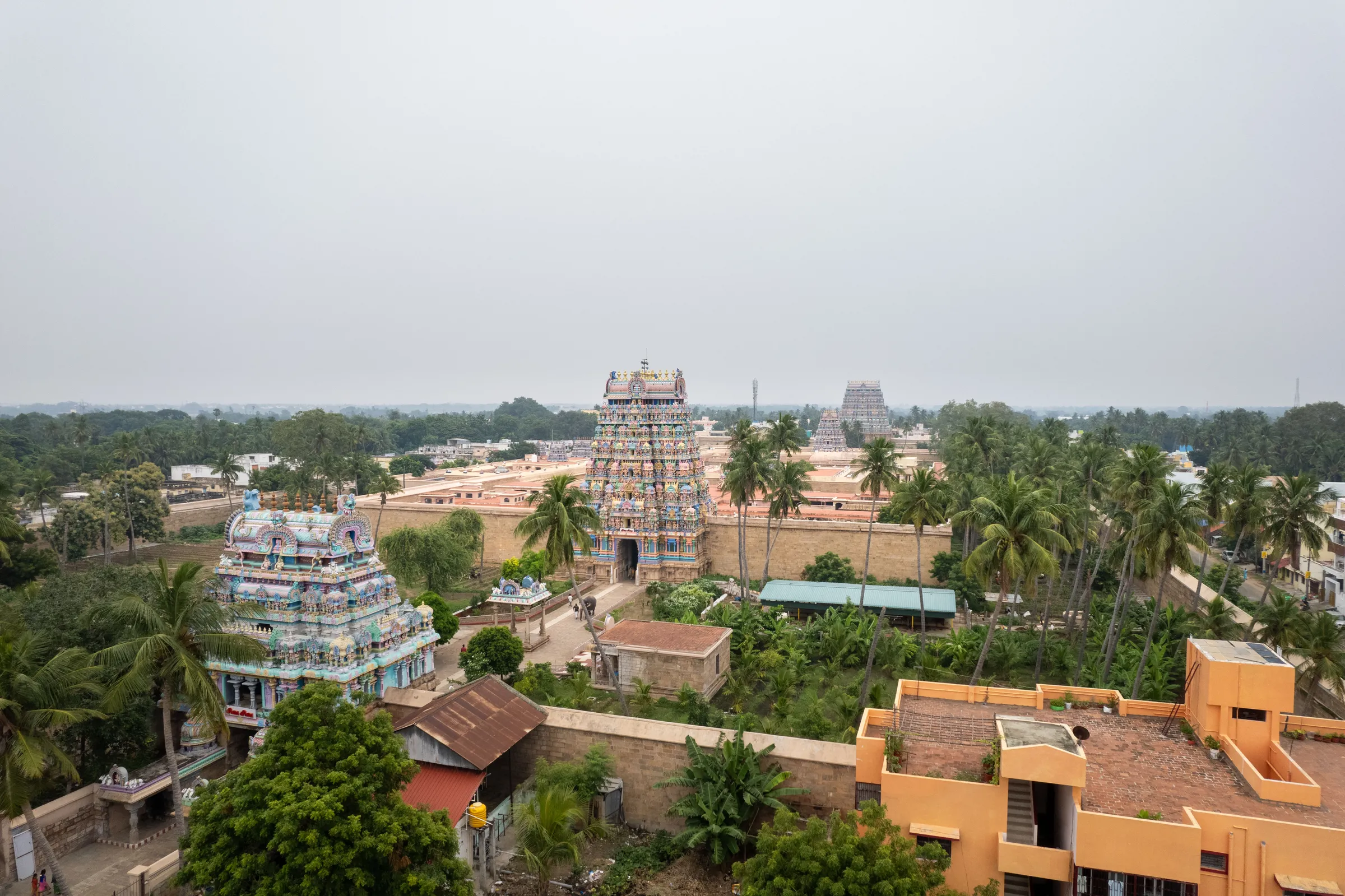
The temple is set on 156 acres and is the largest functioning Hindu temple. It is well planned, with seven enclosures, or prākāras, counting from the inside. The sanctum faces south and carries a golden vimāna on top, modelled on the syllable Aum and called the Praṇava vimāna. This imposing vimāna is a unique feature of the shrine.
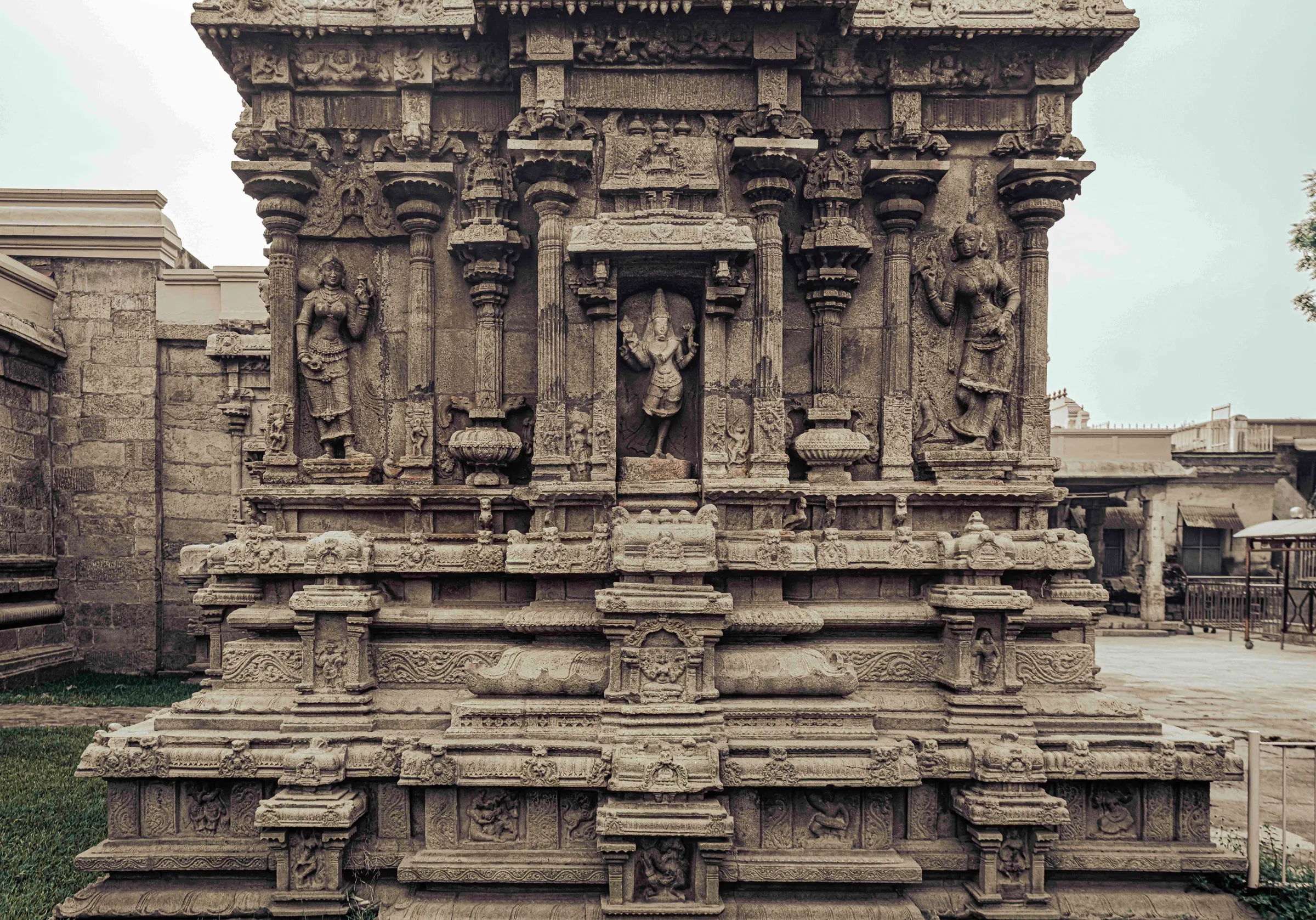
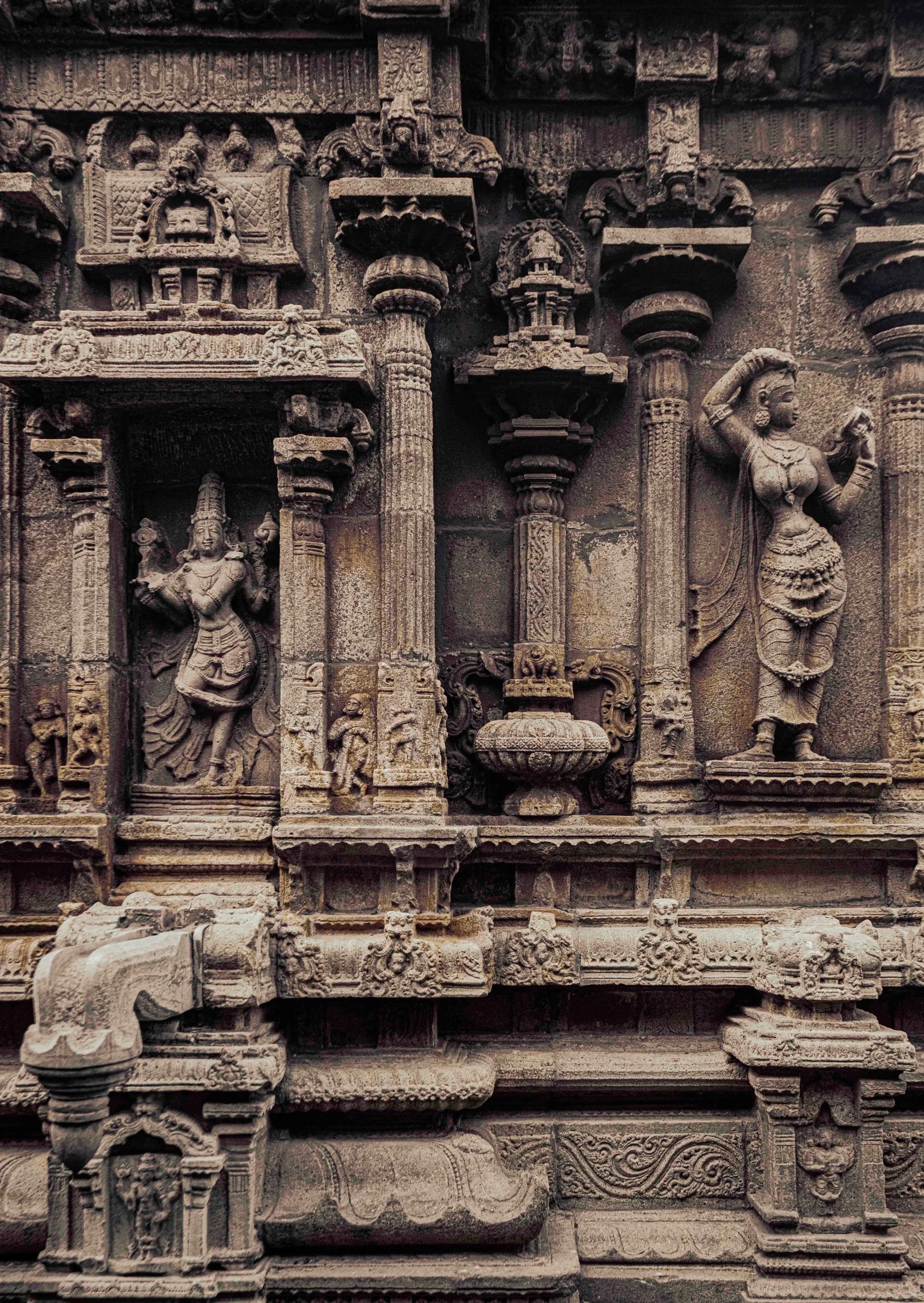
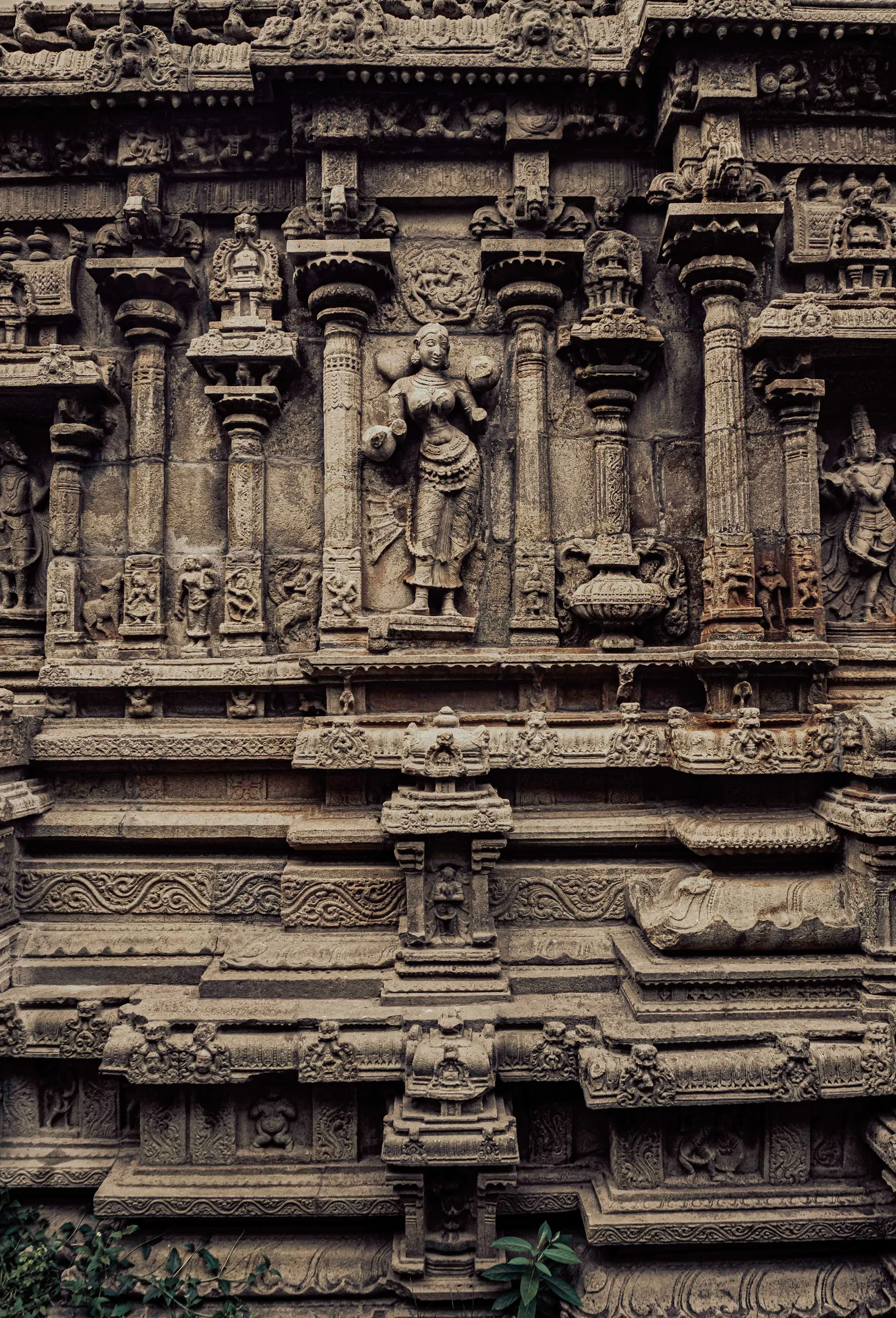
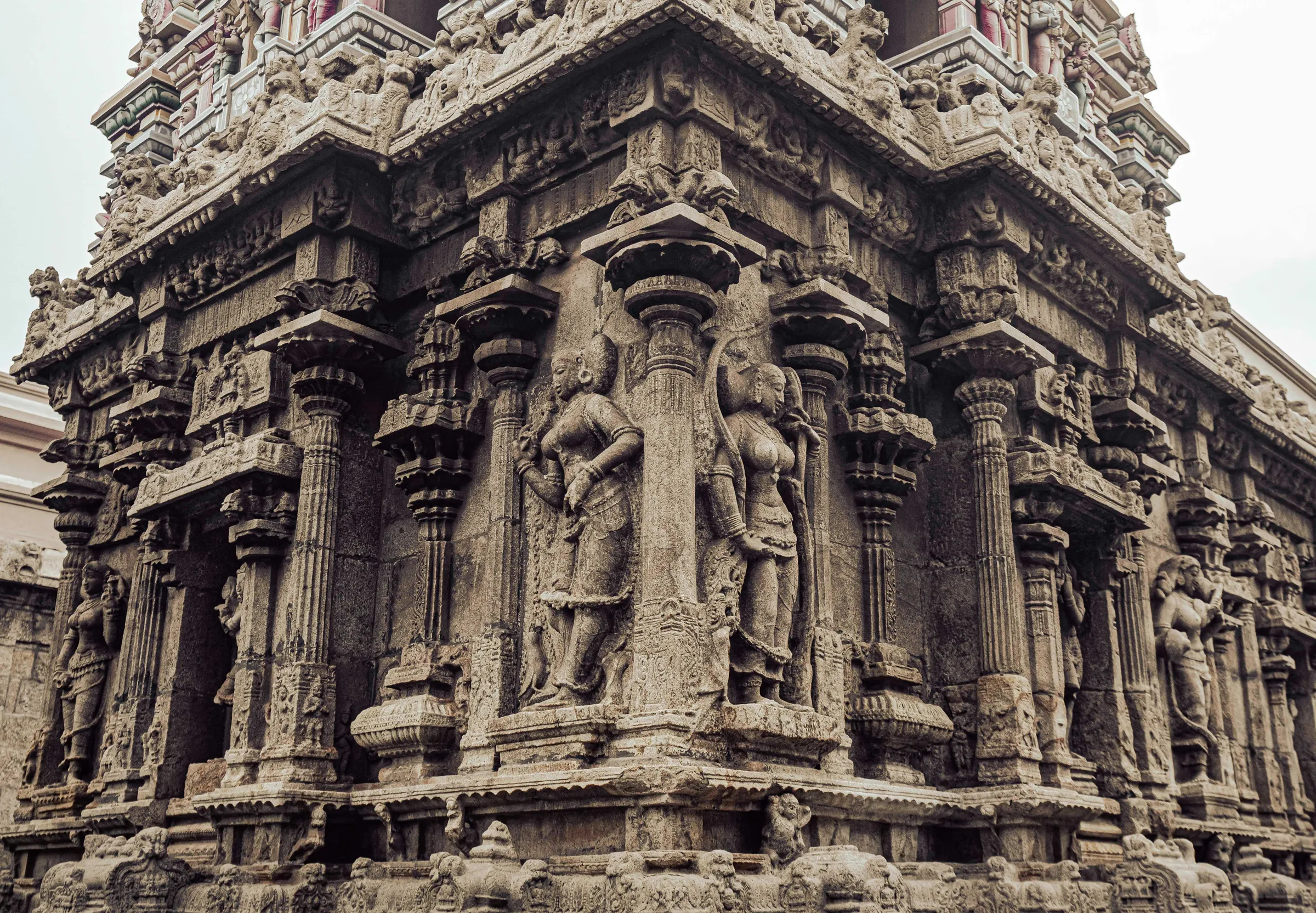
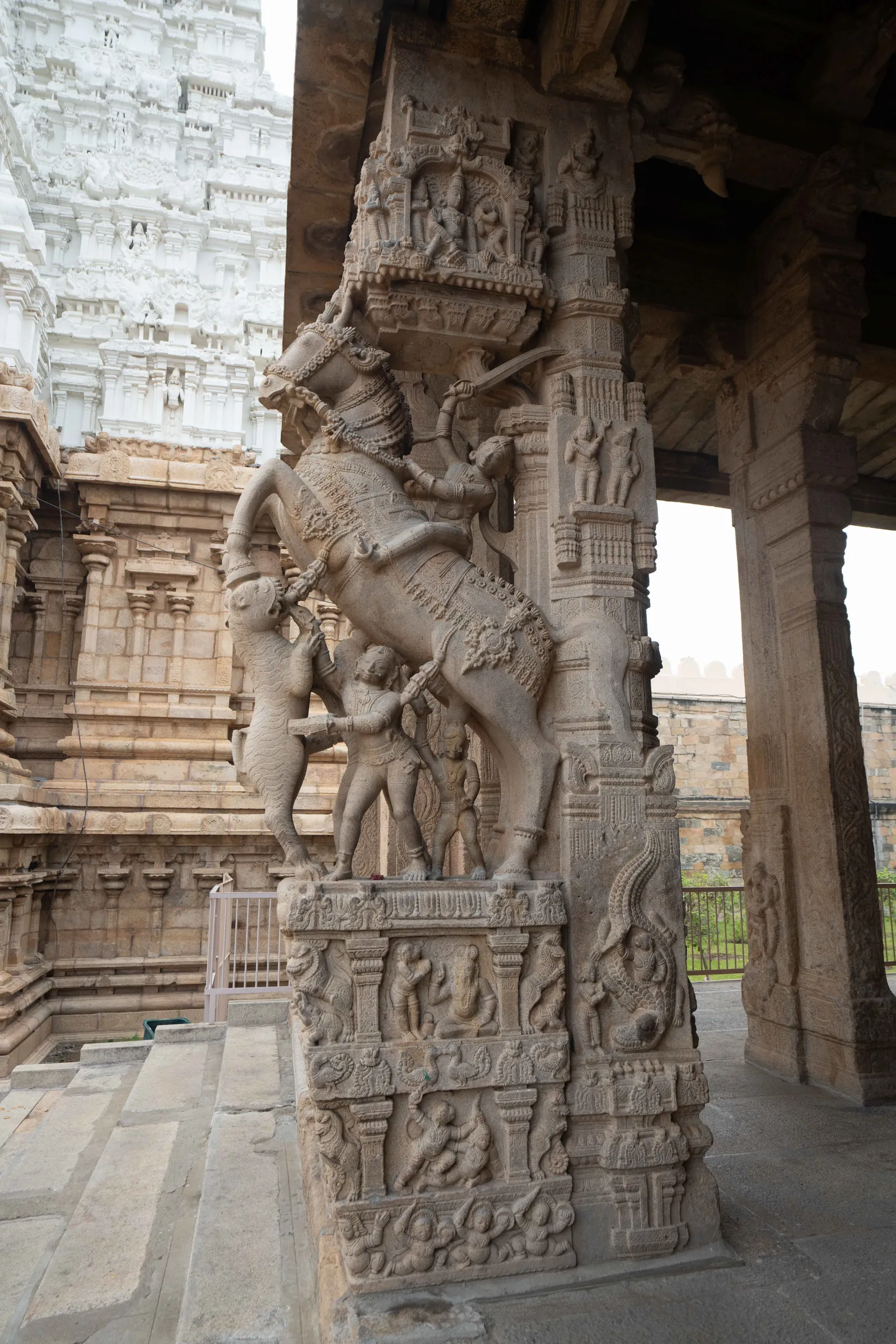
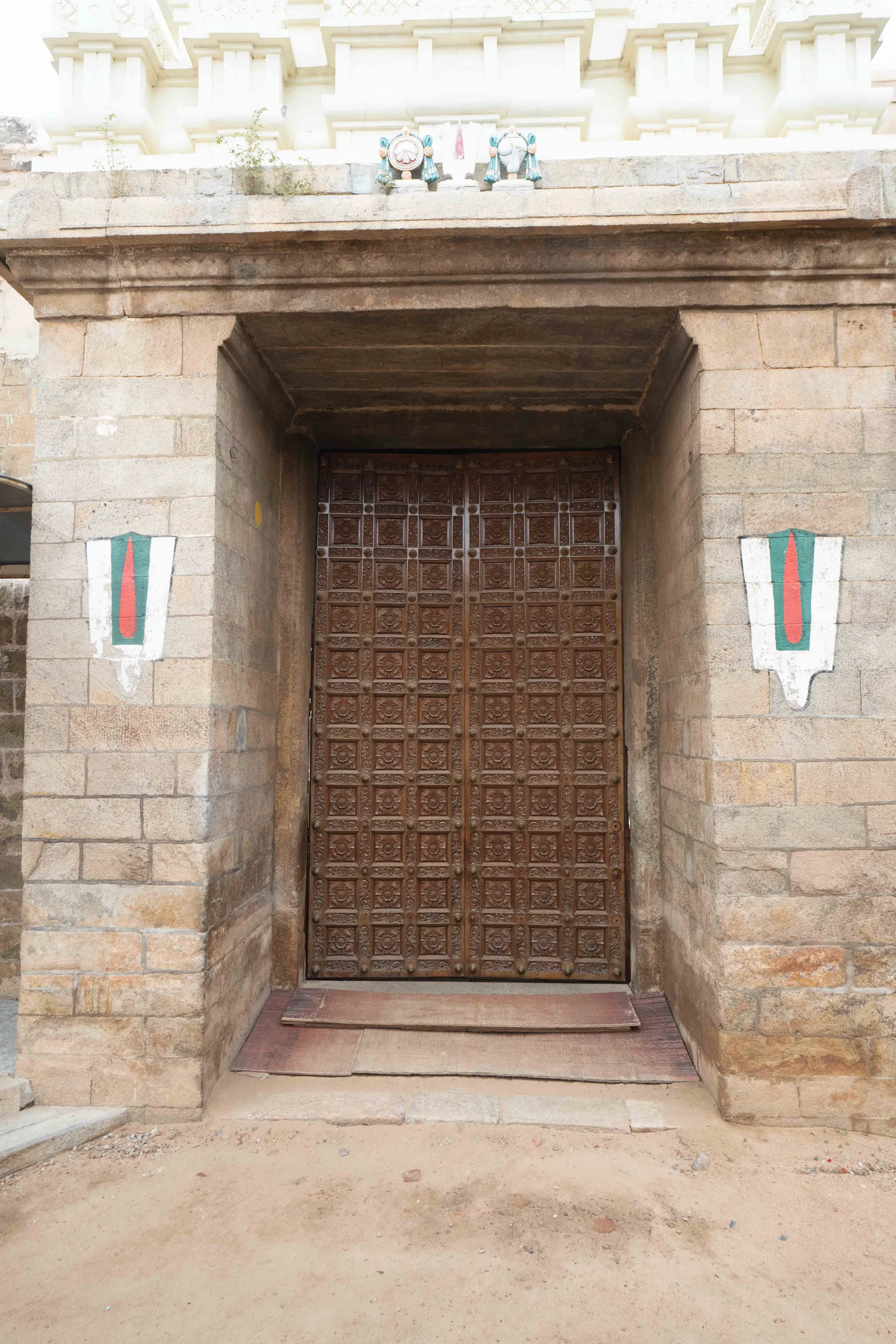
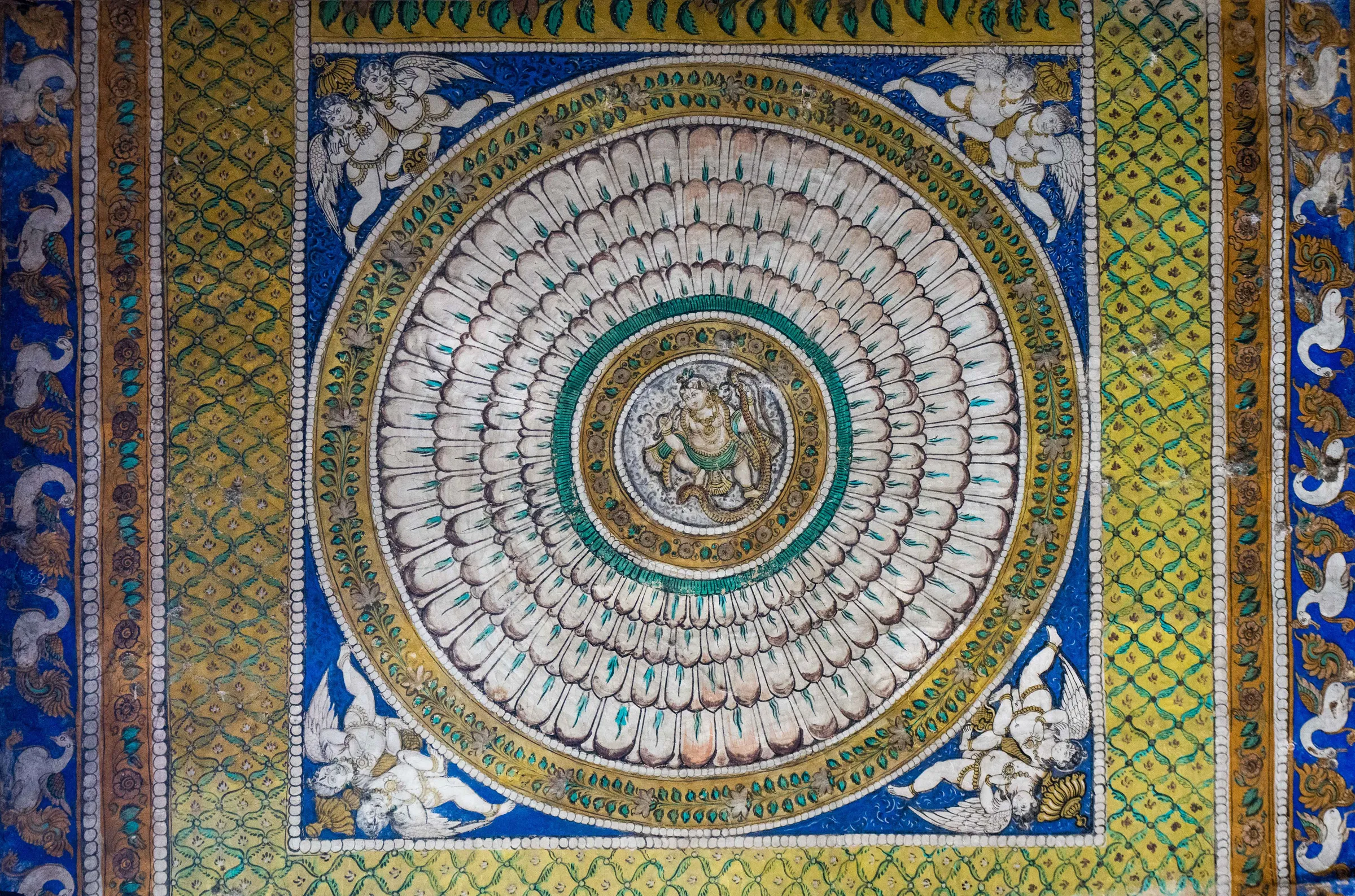
Stone sculpture of many eras is scattered through the temple. The Chōḷa period pillars with a lion base are classic examples. The Sēsha Rāya Maṇḍapa has eight pillars in the Vijayanagara manner. Notable sculptures include Hanumān seated on his coiled tail and Murugan on an elephant, and the Dhanvantari shrine is unique to Srirangam. Bronze is used widely for lamps, vessels and instruments, among them two large Pāvai viḷakkus. The entrance and the Thāyār and Uḍayavar sannidhis carry painted vāhanas and frescoes, including the story of Dhruva.
02
Archaeological
dated & cited
The earliest mention of the temple is in the Silappadhikāram of the 2nd century, which describes the location and the beauty of Paḷḷi Koṇḍa Perumāḷ. The Chōḷa kings, particularly Kulōttuṅga I (1070 to 1122), gave the temple gold and land; cultivators paid a share of produce to the deity Pallikoṇḍān Marakkāl, and goats and ghee were given for an eternal lamp.
Among the Pāṇḍyas the greatest benefactor was Jaṭāvarman Sundara Pāṇḍya I (1251 to 1268), who gave jewellery, built a large kitchen and offered a golden image of Raṅganātha modelled on his own likeness. A Hoysaḷa inscription records a hospital maintained to the north of the Eḍutha Kai Aḻagiya Nāyanār gopuram. Most South Indian dynasties endowed the temple, with inscriptions in many languages, including one in Oriya.
From 1311 to 1371 the temple was invaded and desecrated and its jewels looted; Vēdānta Dēśika saved the processional images and reunited the community. Normalcy returned in 1371, when the Vijayanagara king and his Nāyaka vassals of Madurai and Thanjavur rebuilt the temple. Much of what now stands is of the 15th and 16th centuries; administration later passed to the British.
Protection & condition
GroupDivya Dēśam (108 Vaiṣṇava shrines)
ConditionIn worship
03
Mythological
as transmitted
The deity, formally Aḻagiya Maṇavāḷan or Handsome Bridegroom, is fondly called Raṅga. He is one of the 108 Vaiṣṇava deities known as Divya Dēśams. The Āḻvārs, all but Madhurakavi, glorified the shrine: Tiruppāṇāḻvār, Thoṇḍaraḍippoḍiyāḻvār, Periyāḻvār, Āṇḍāḷ and Kulaśēkharāḻvār, king of Kēraḷa, who is said to have spent his last days here and married his daughter to the deity.
The great Rāmānuja of the 12th century served at Srirangam, sang in praise of the Lord and codified the temple administration. He held that anyone could be initiated into Vaiṣṇavism through Pañca Saṃskāra and propagated Viśiṣṭādvaita; his body is preserved in his shrine within the temple. The Kamba Rāmāyaṇam was first read out here. Srirangam is held to be a svayamvyaktha kṣetra, where God manifested of his own accord, and so is regarded as Bhūlōka Vaikuṇṭha.
Sources
Pradeep Chakravarthy, 100 Timeless Tamil Nadu Temples
This is an open, reviewed record. If you have spotted an error or have
something to add — a correction, a date, a source, a name in another script —
propose it. Every change is reviewed before it joins the record.