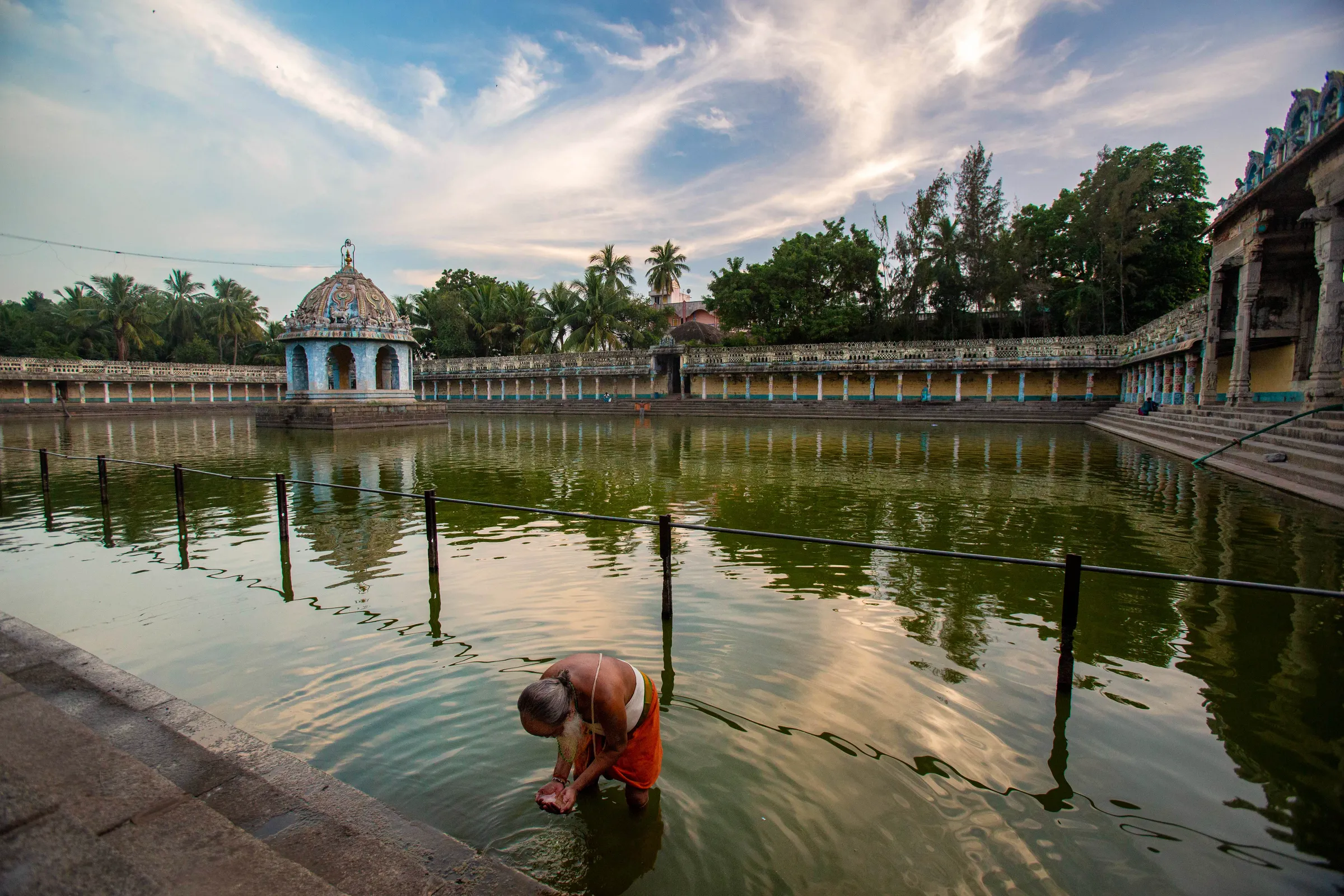
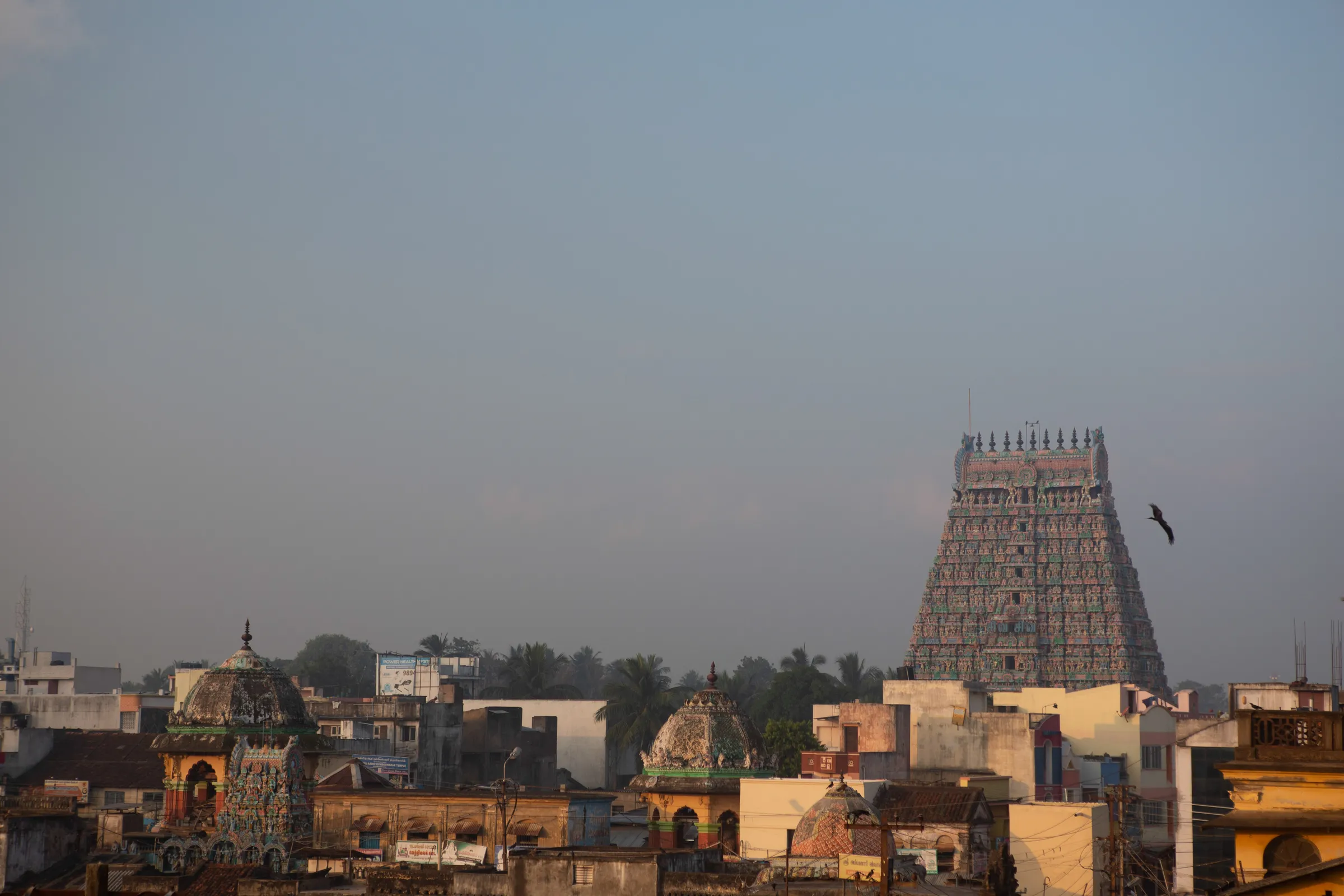
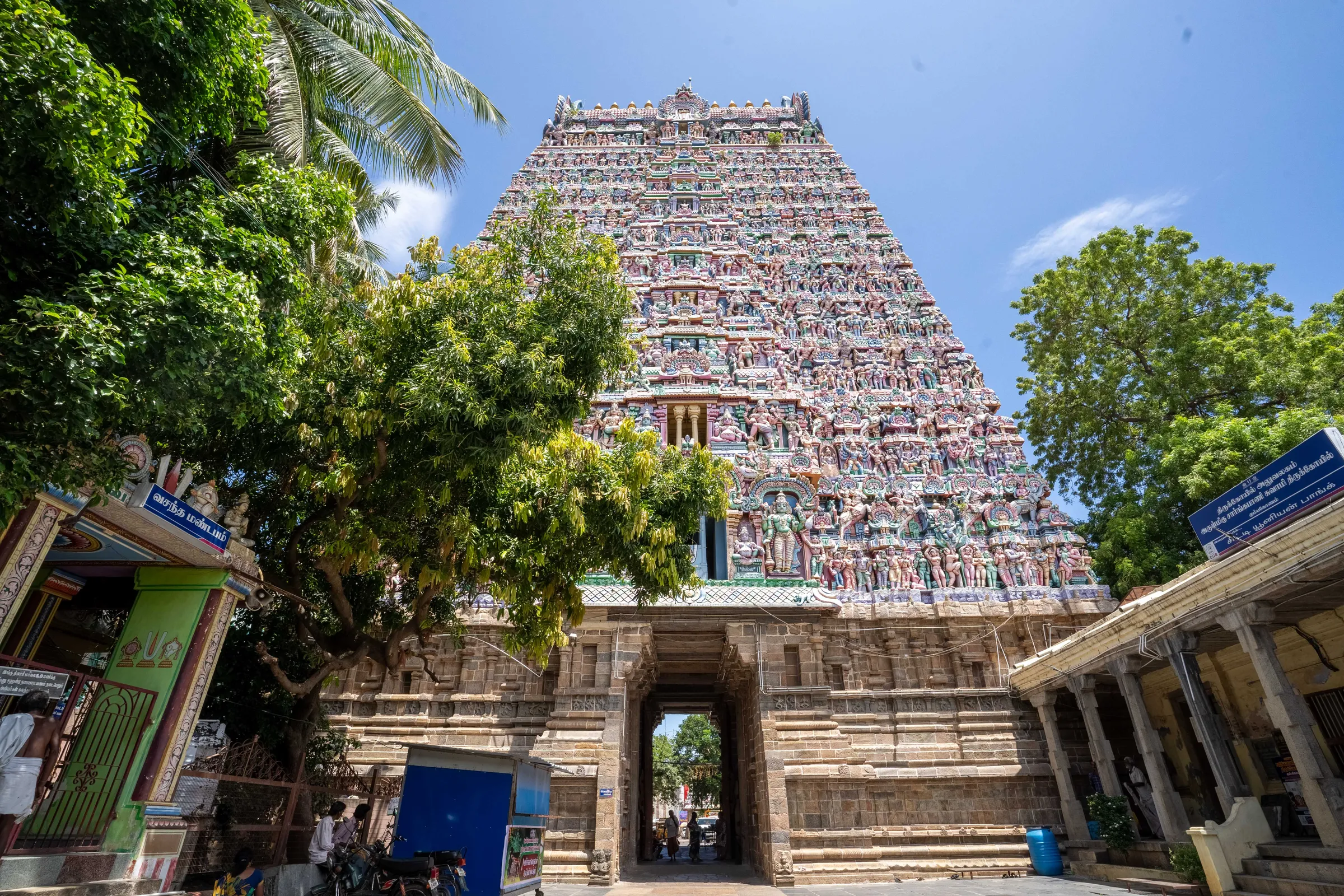
The foremost Vaiṣṇava temple of Kumbakonam, its main shrine shaped as a great chariot for the sun god. After Srirangam and Tirupati it carries the most Āḻvār verses of any Viṣṇu shrine.
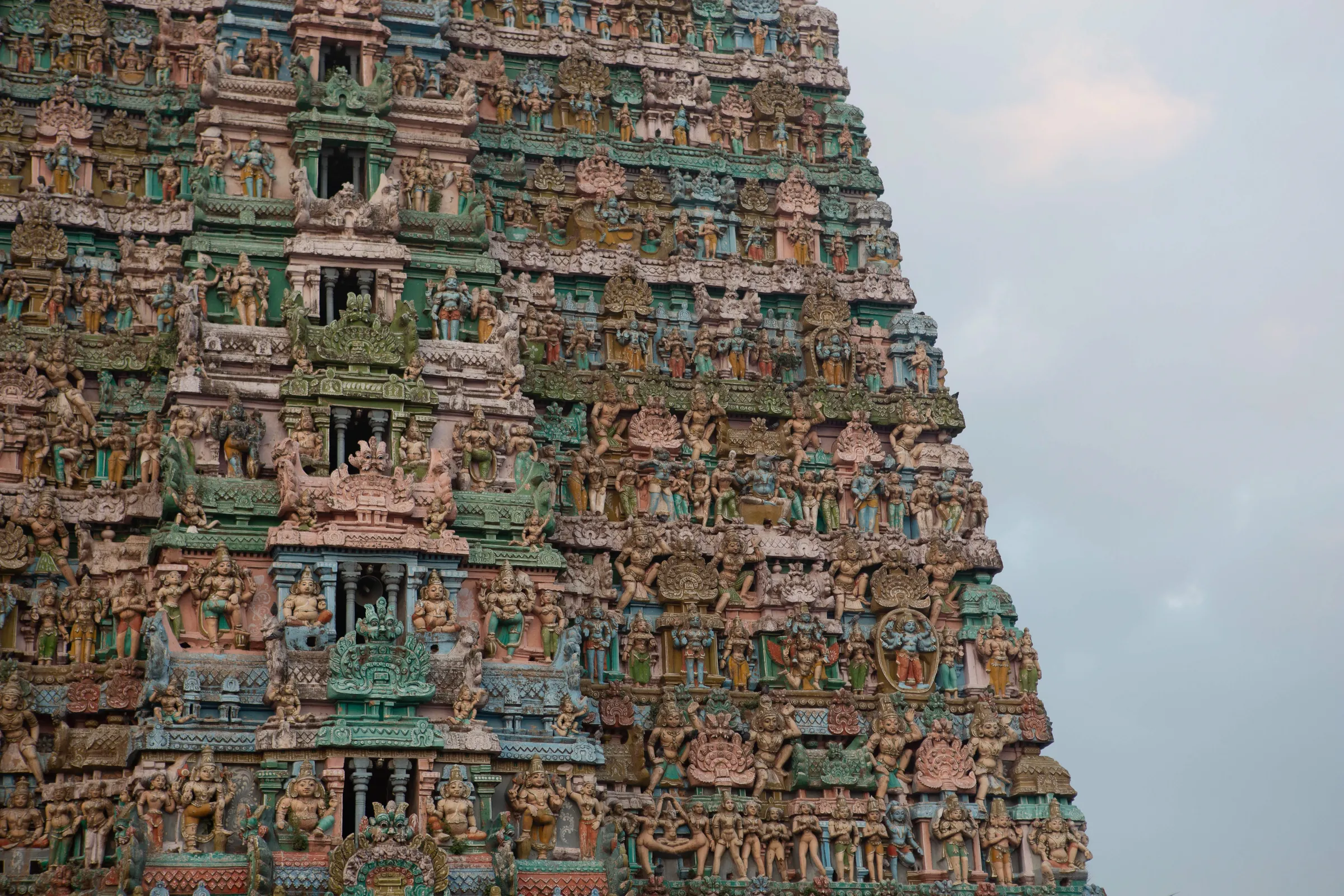
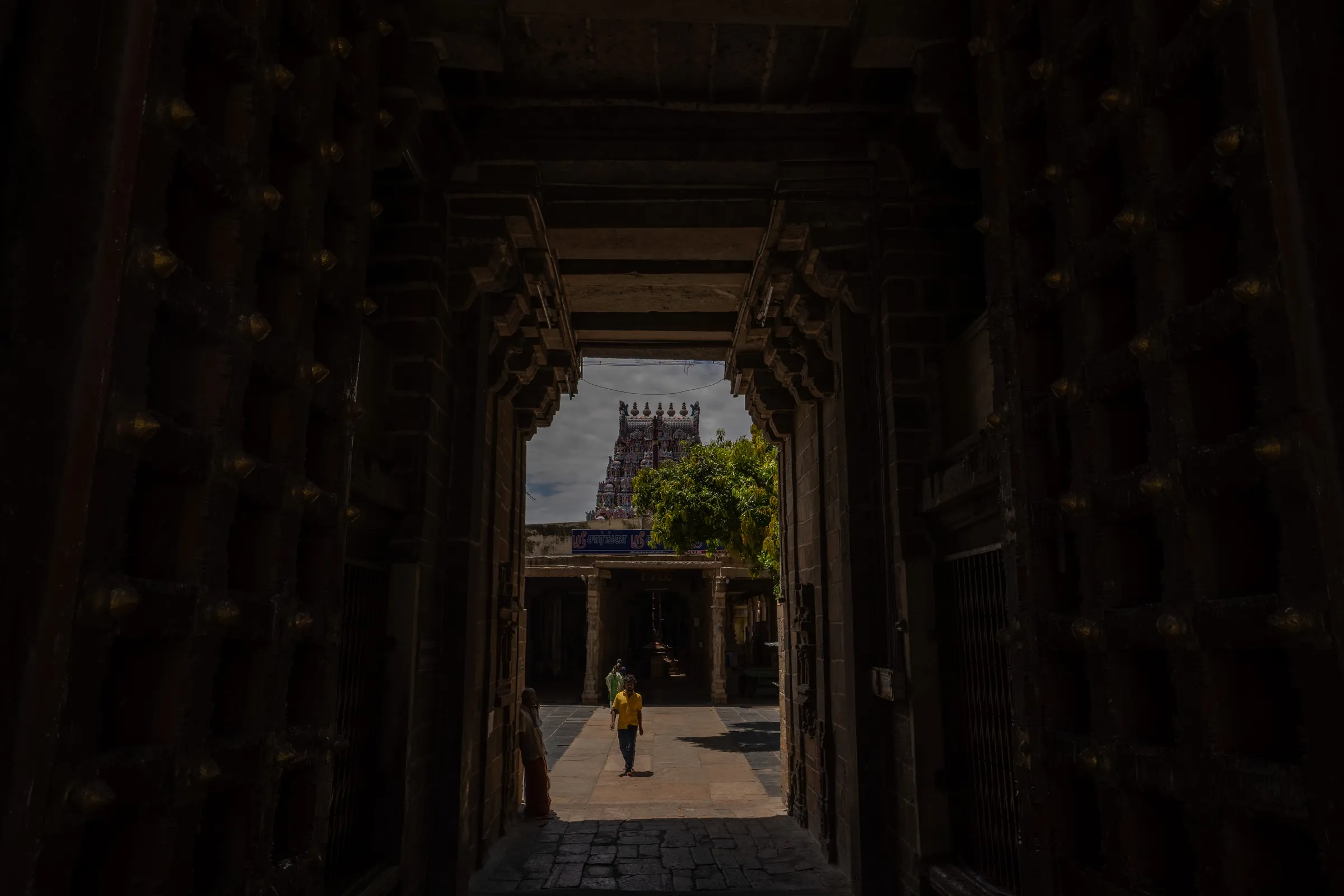
The entrance is through a grand gopuram filled with stucco figures, and the walls are carved with the dance karaṇas as at Chidambaram and the Bṛhadīśvara temple. The most notable feature is the main shrine, shaped like a grand chariot for the sun god. One entrance is used for Uttarāyaṇa, the northward movement of spring and summer, and the other for Dakṣiṇāyana, the southward movement of monsoon and winter. The deity reclines, holding a great bow called the Śārṅgam, and the processional deity is also called Śārṅgapāṇi.
03
Mythological
as transmitted
The temple is sung by the three first Āḻvārs of about the 6th century, and by Tirumaṅgai Āḻvār, Nammāḻvār, Tirumaḻisai Āḻvār and Āṇḍāḷ. It is said the temple chariot was once given by Tirumaṅgai Āḻvār, whose song Tiruvehukutrirukai can be written in the form of a chariot, painted on the wall.
Nāthamuni heard Nammāḻvār's verses on this temple in the 8th or 9th century and, longing for the full set of a thousand songs, went to Tiru Kurugur's Adinātha temple, where, reciting beneath the tamarind tree, all the verses of the Āḻvārs were revealed to him. So the temple holds a special place among those who recite the 4,000 verses of the Āḻvārs. Here U. Ve. Swaminatha Iyer discovered the sweet Kummāyam that helped him read the Jīvaka Cintāmaṇi Jain epic.
Sources
Pradeep Chakravarthy, 100 Timeless Tamil Nadu Temples
This is an open, reviewed record. If you have spotted an error or have
something to add — a correction, a date, a source, a name in another script —
propose it. Every change is reviewed before it joins the record.