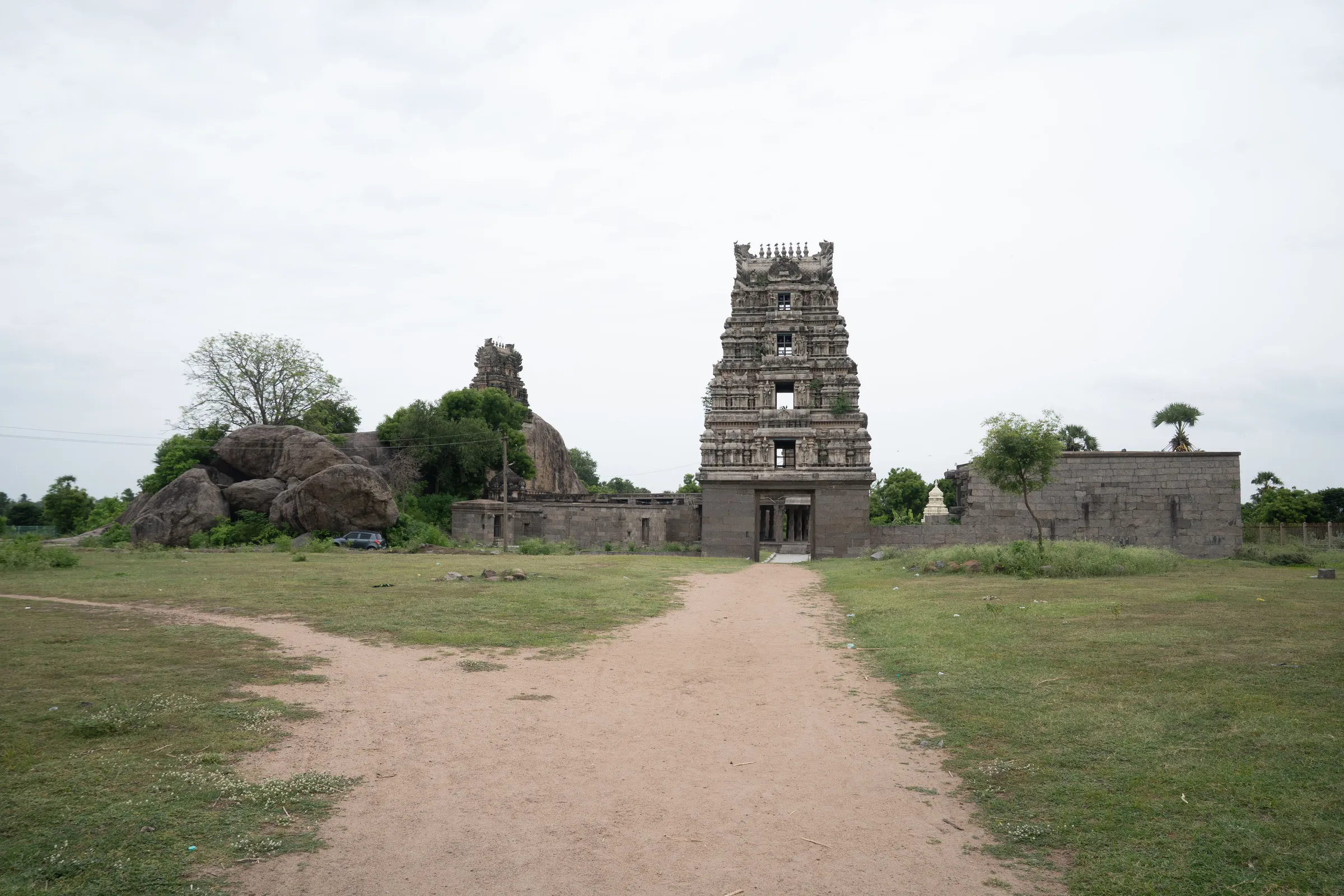
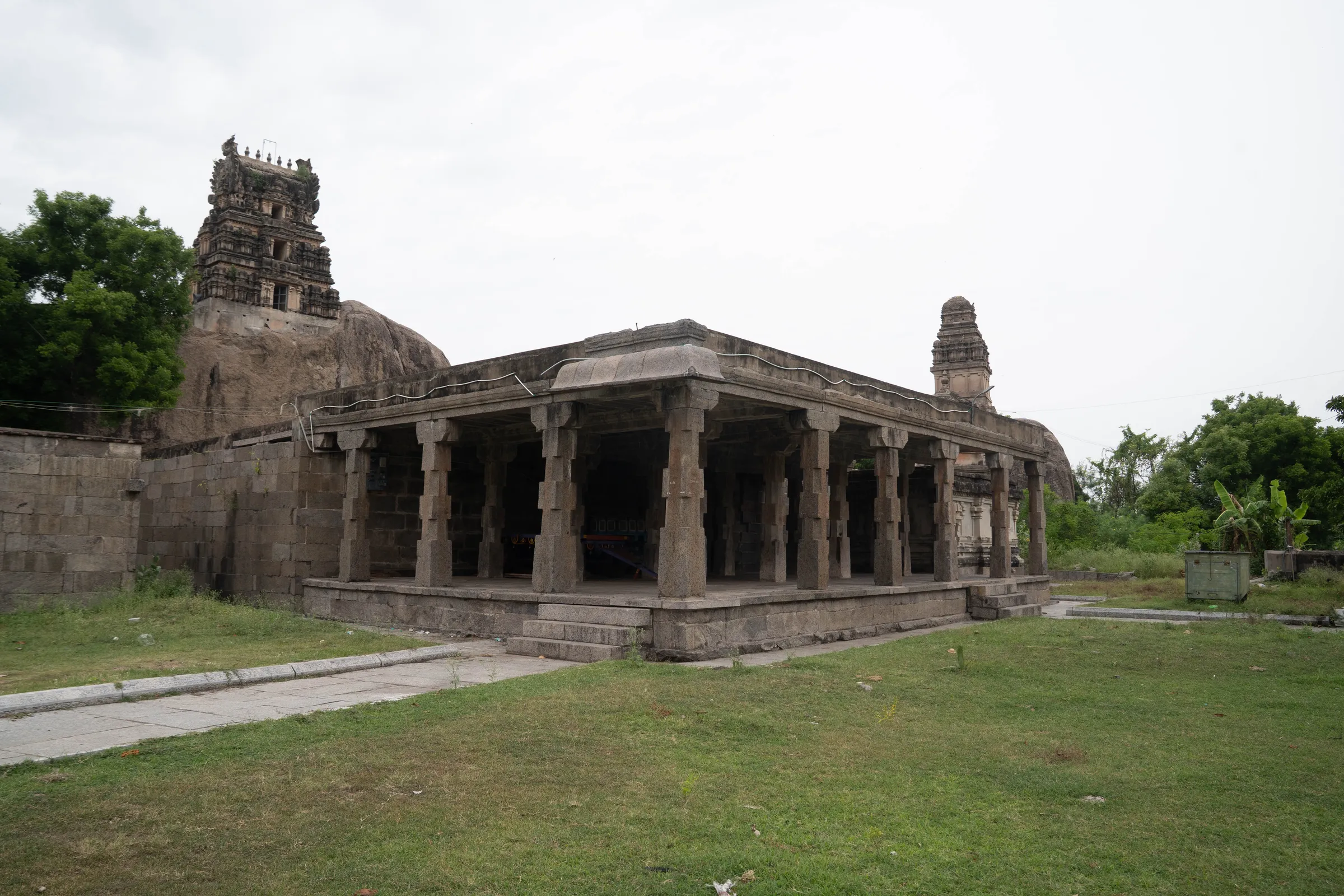
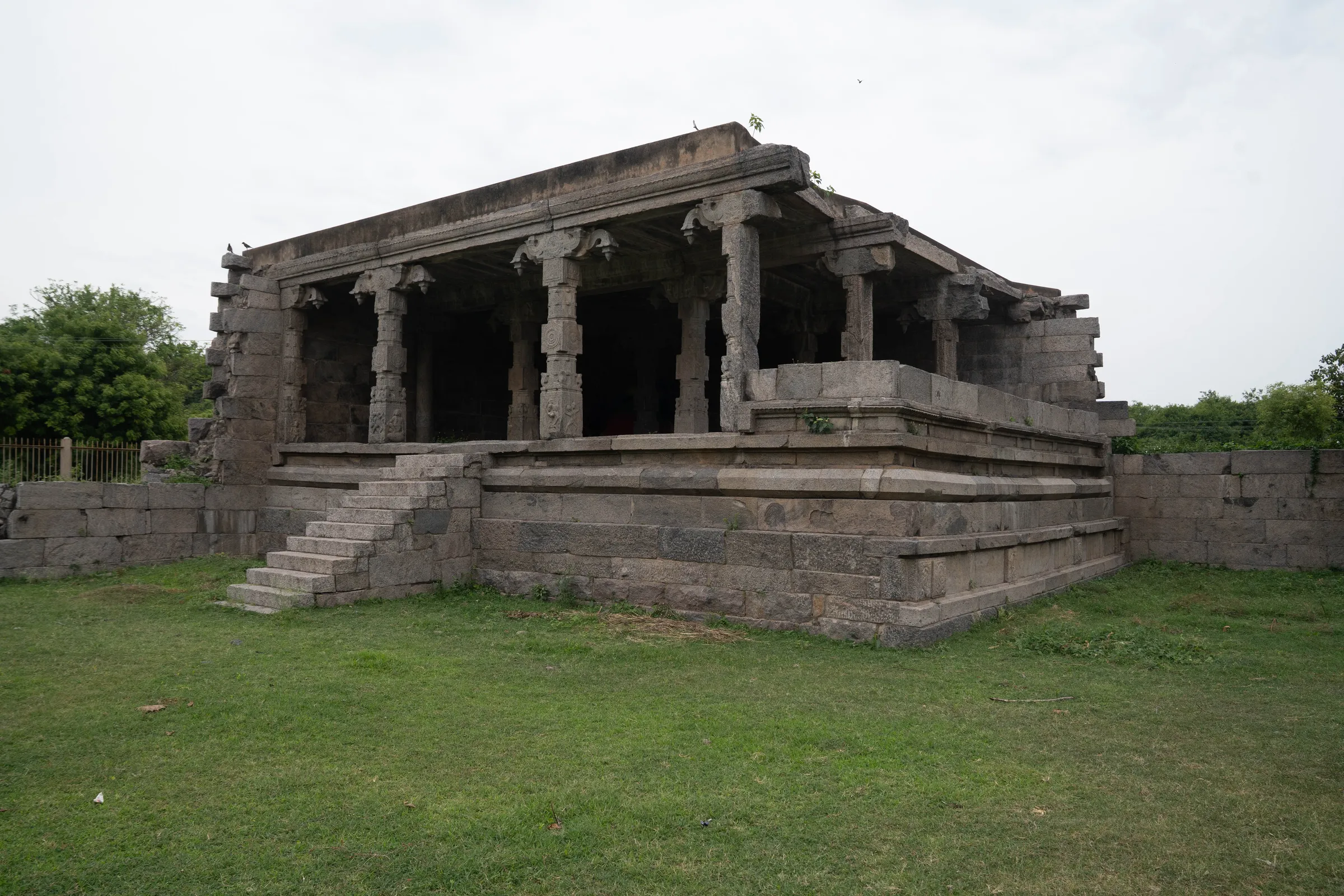
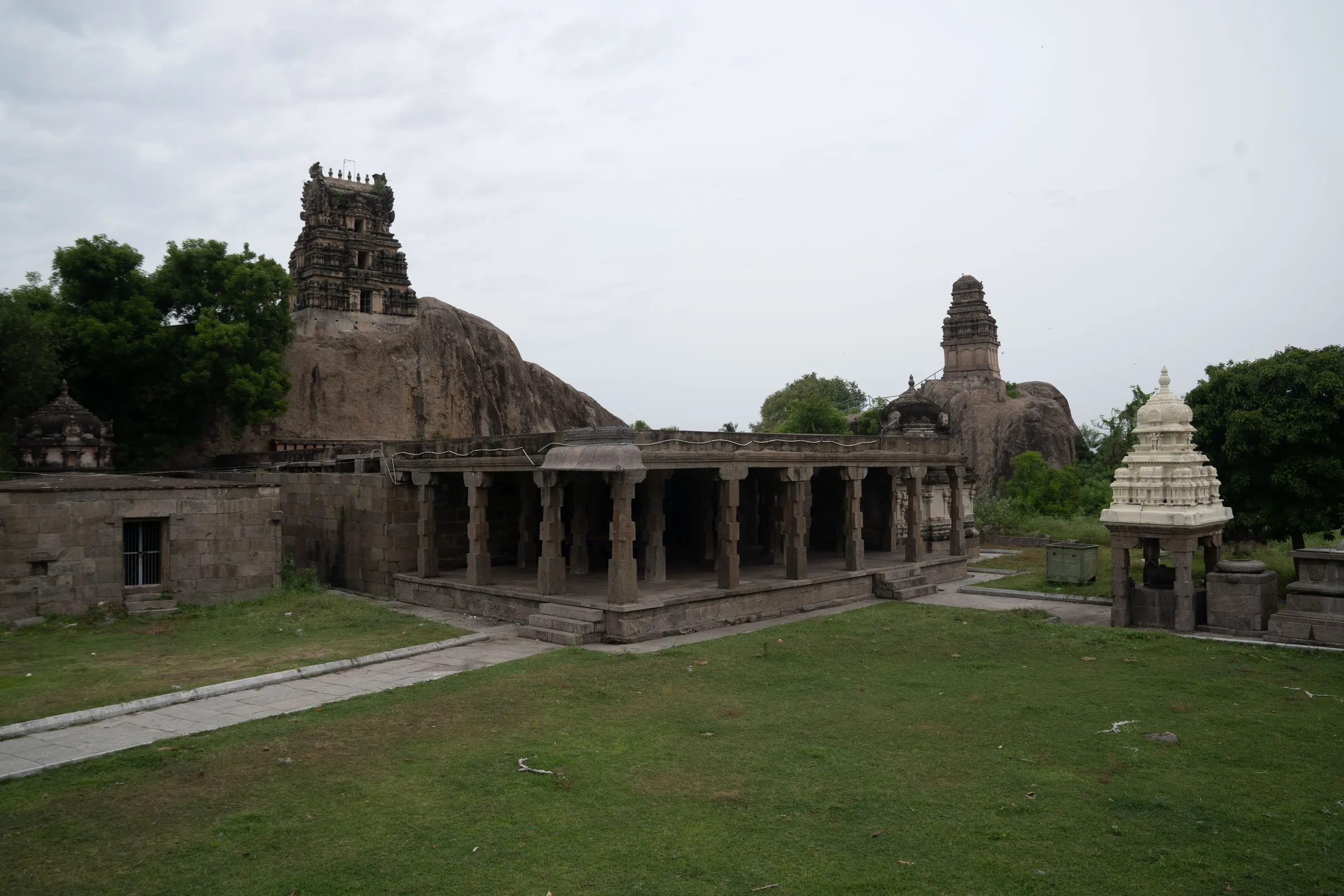
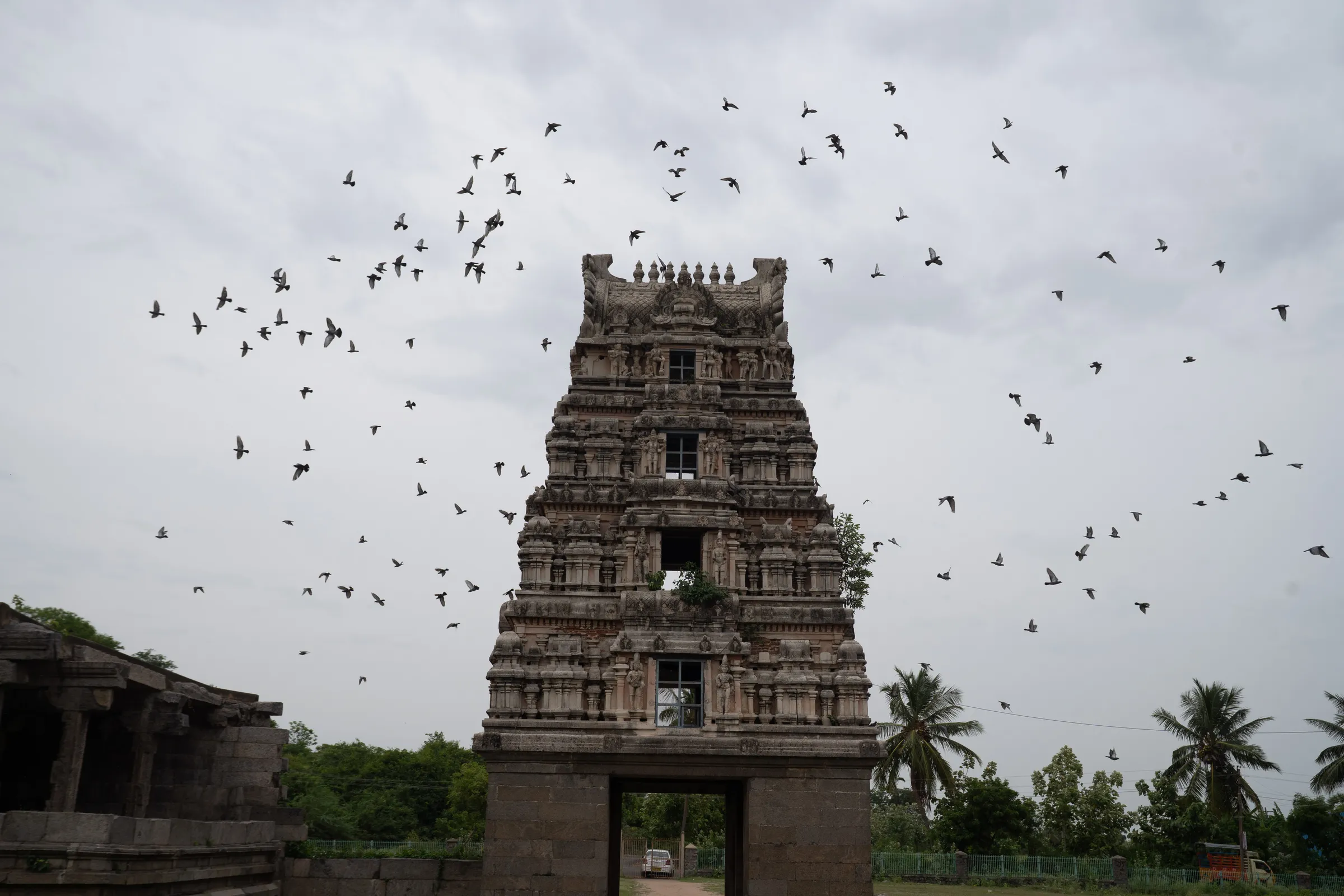
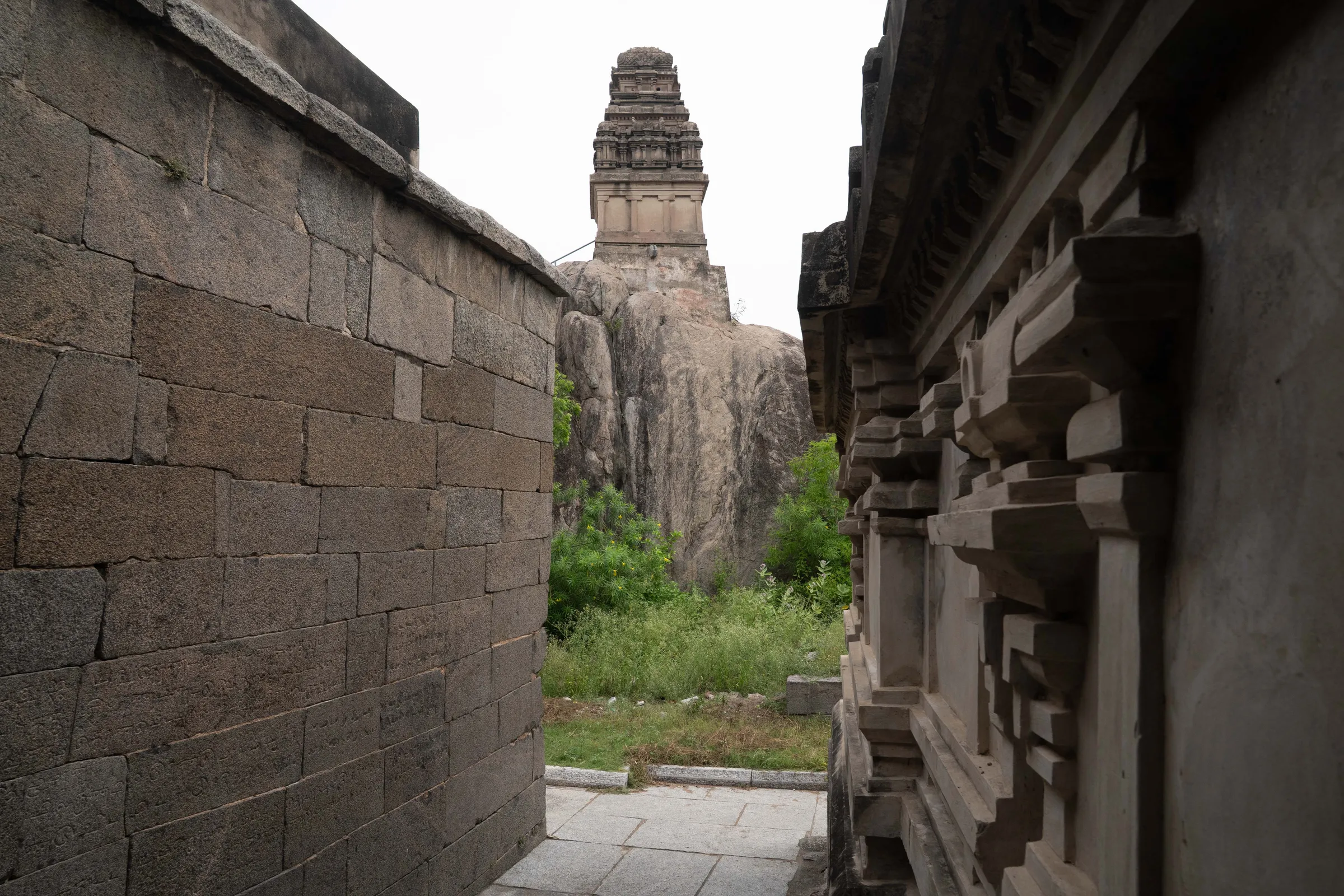
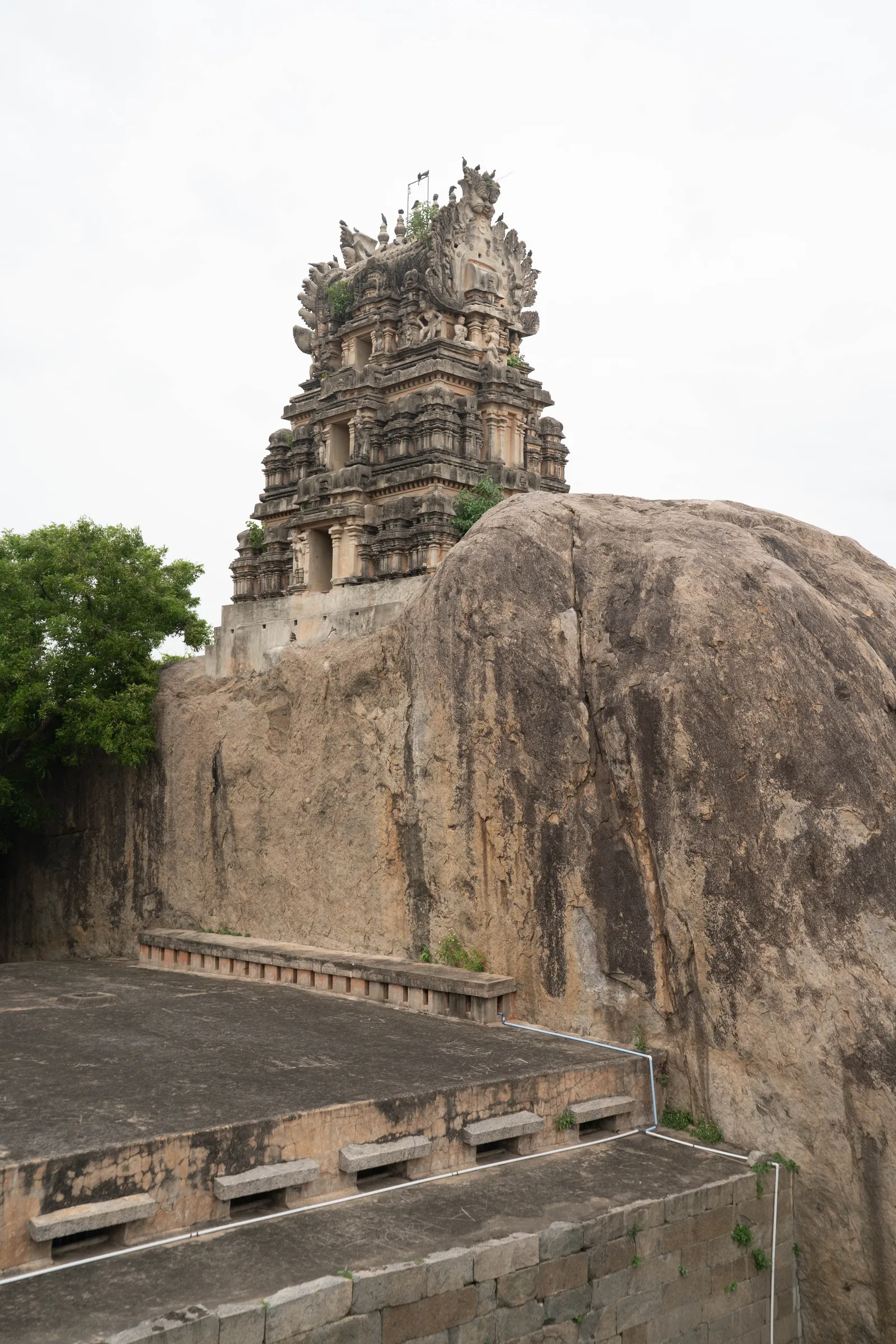
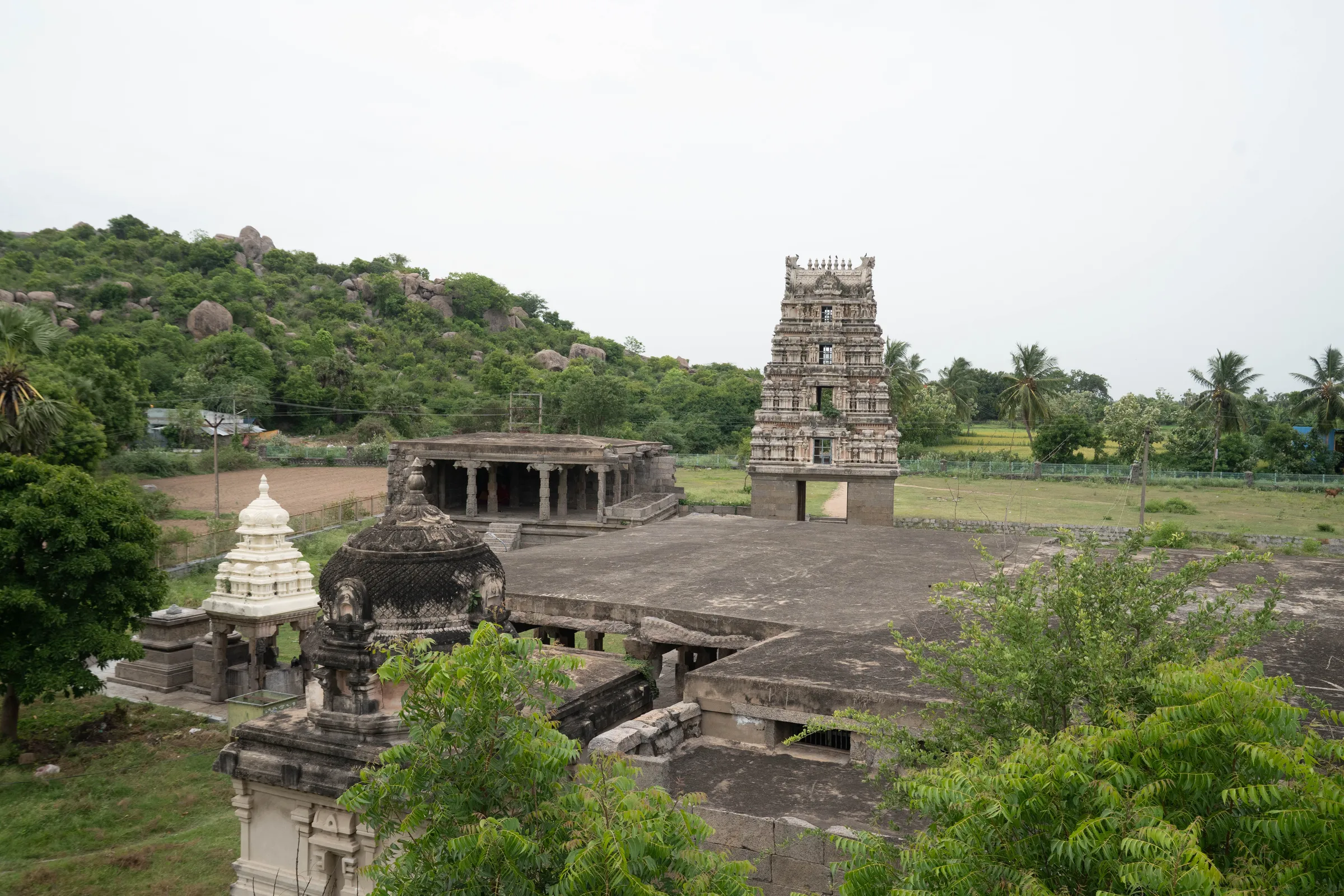
Shiva and Jain Temple, photograph
← Thondaimandalam
Entry 022

Shiva and Jain Temple

Siyamangalam · Tiruvannamalai · Pallava, with later Ganga inscriptions and Vijayanagara additions

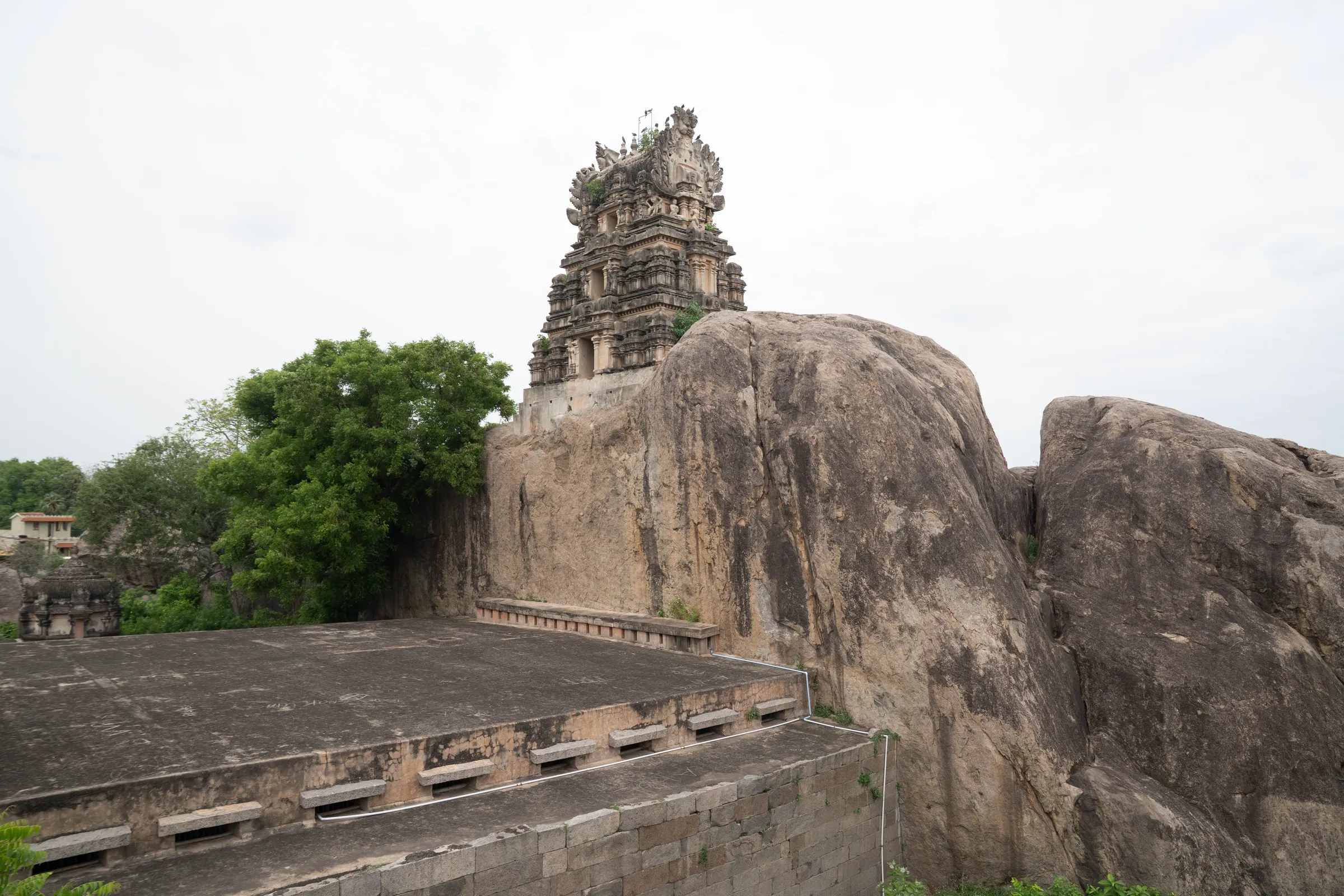
A Pallava rock-cut Śiva temple at Siyamangalam, hewn from a single boulder by Mahendra Varma Pallava, paired with a nearby Jain cave on Vijayadri hill whose bas-relief of Mahavira and the Tirthankaras is finely preserved.

This entry documents the temples across three registers, held deliberately apart: the architectural reading of what stands, the archaeological reading of what can be dated and cited, and the mythological reading of what is told.

The photographs

Plates · 17

Shiva and Jain Temple, photograph
© Sai Sanjay Prasath · All rights reserved
Shiva and Jain Temple, photograph
© Sai Sanjay Prasath · All rights reserved
Shiva and Jain Temple, photograph
© Sai Sanjay Prasath · All rights reserved
Shiva and Jain Temple, photograph
© Sai Sanjay Prasath · All rights reserved
Shiva and Jain Temple, photograph
© Sai Sanjay Prasath · All rights reserved
Shiva and Jain Temple, photograph
© Sai Sanjay Prasath · All rights reserved
Shiva and Jain Temple, photograph
© Sai Sanjay Prasath · All rights reserved
Shiva and Jain Temple, photograph
© Sai Sanjay Prasath · All rights reserved
Shiva and Jain Temple, photograph
© Sai Sanjay Prasath · All rights reserved
Shiva and Jain Temple, photograph
© Sai Sanjay Prasath · All rights reserved
Shiva and Jain Temple, photograph
© Sai Sanjay Prasath · All rights reserved
Shiva and Jain Temple, photograph
© Sai Sanjay Prasath · All rights reserved
Shiva and Jain Temple, photograph
© Sai Sanjay Prasath · All rights reserved
Shiva and Jain Temple, photograph
© Sai Sanjay Prasath · All rights reserved
Shiva and Jain Temple, photograph
© Sai Sanjay Prasath · All rights reserved
Shiva and Jain Temple, photograph
© Sai Sanjay Prasath · All rights reserved
01

Architectural

structure & vocabulary

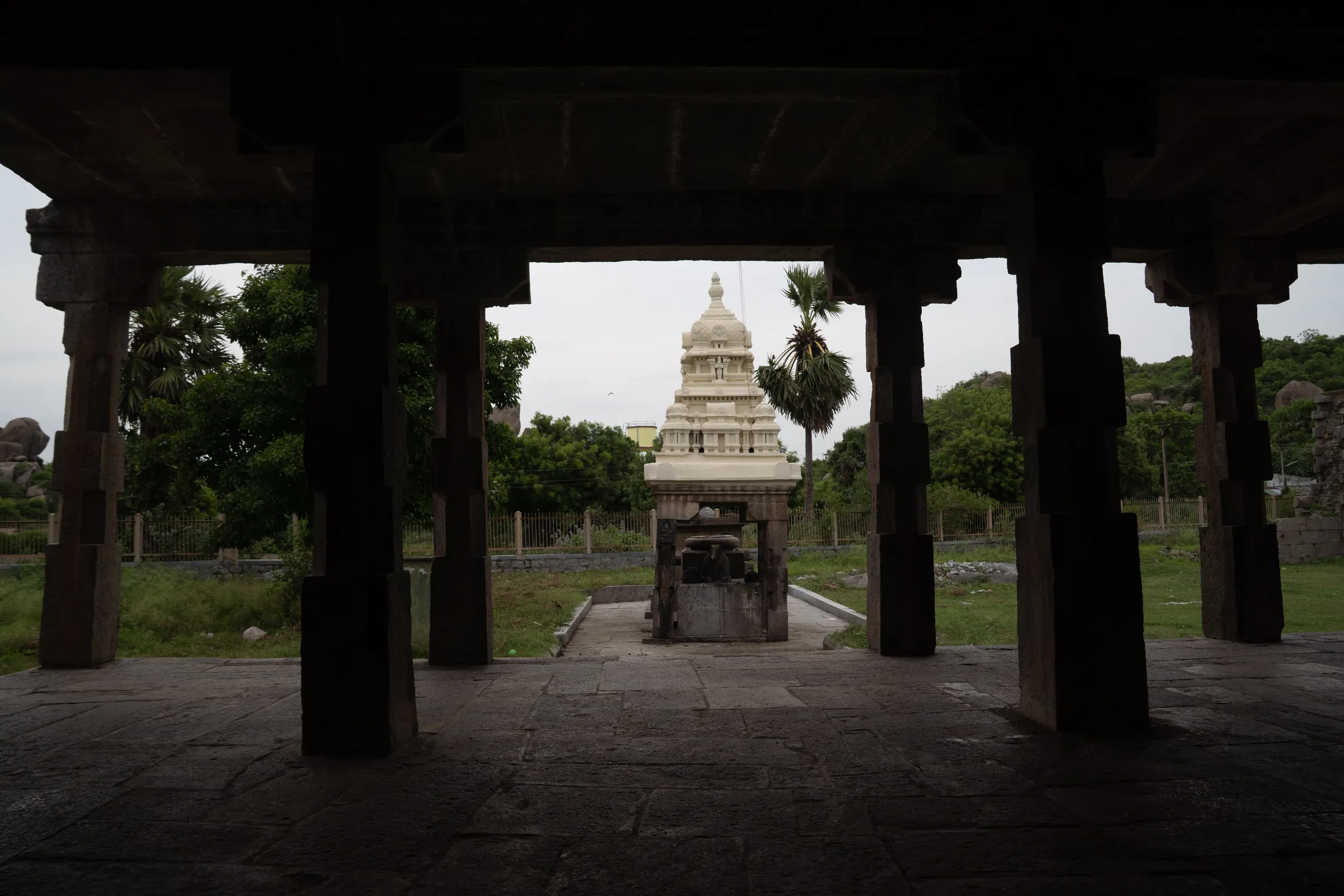
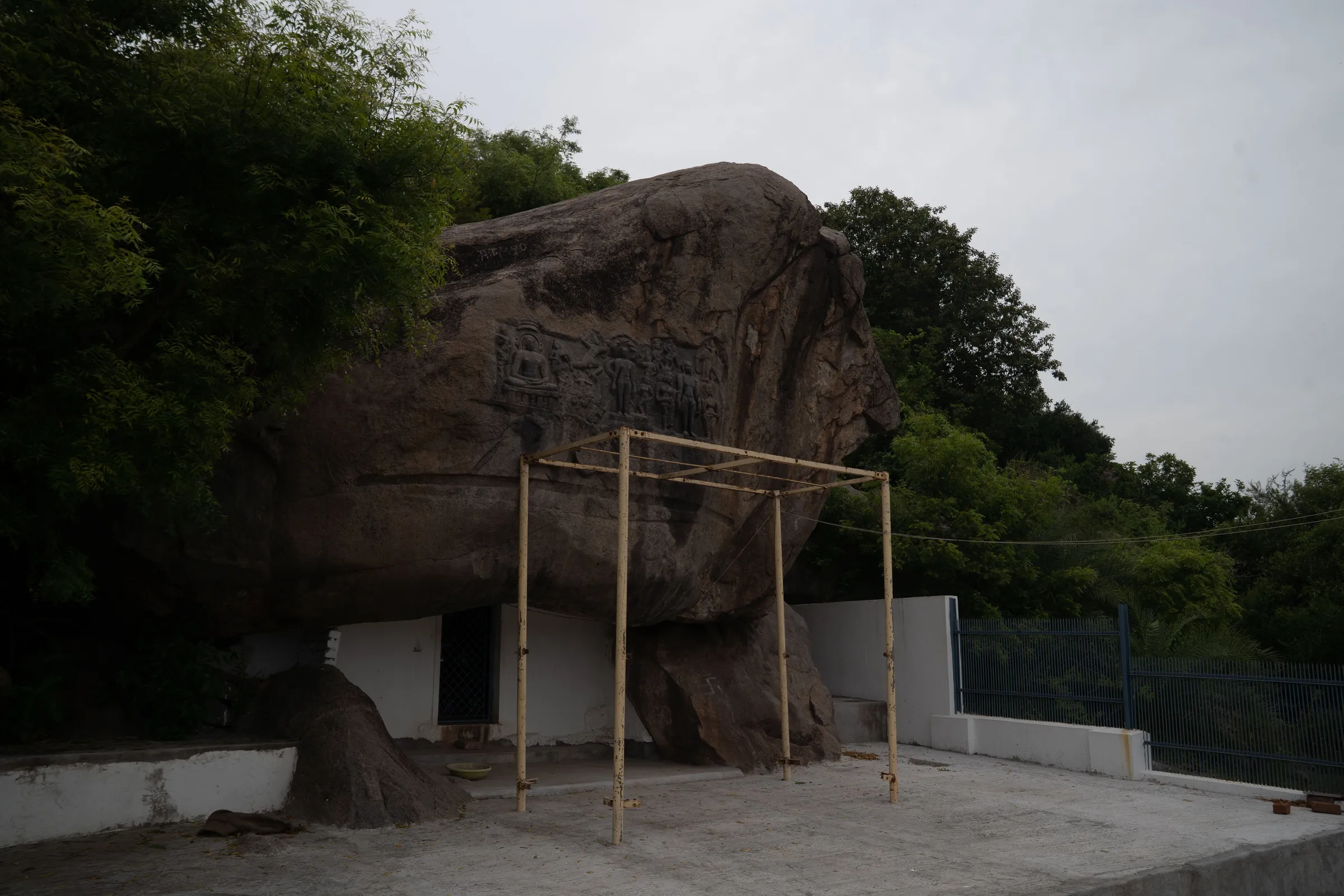
The Śiva temple is hewn out of a large boulder lying on a north-east-south-west axis. The main cave has a square sanctum with a large Śiva liṅga, two door guardians flanking the entrance. Hewn from the same boulder is a small rectangular mandapa with two rows of pillars, four complete and others as half pillars into the rock. A later closed room of cut stones from the late Pallava and Chōḷa periods holds shrines for Parvathi and a small Nandi. Other structures around the boulder include the entrance gopuram and a four-storeyed building. The town's tall upright boulder in the large reservoir gave the deity the name Stambeswara, in Tamil Tumandar, one who is like a pillar.

The most spectacular bas-reliefs are on the half pillars furthest from the sanctum. The northern panel shows Śiva as Vrishabantika with Parvathi and Nandi. The other is what scholars believe to be South India's oldest representation of Nataraja: four-armed, dancing the ananda-tandava, but with no apasmara, the demon of ignorance, beneath his feet, his swirling left leg a cobra showing its hood, holding the bowl of fire and a parasu. Missing is the prabhavali of fire typical of later Nataraja images.

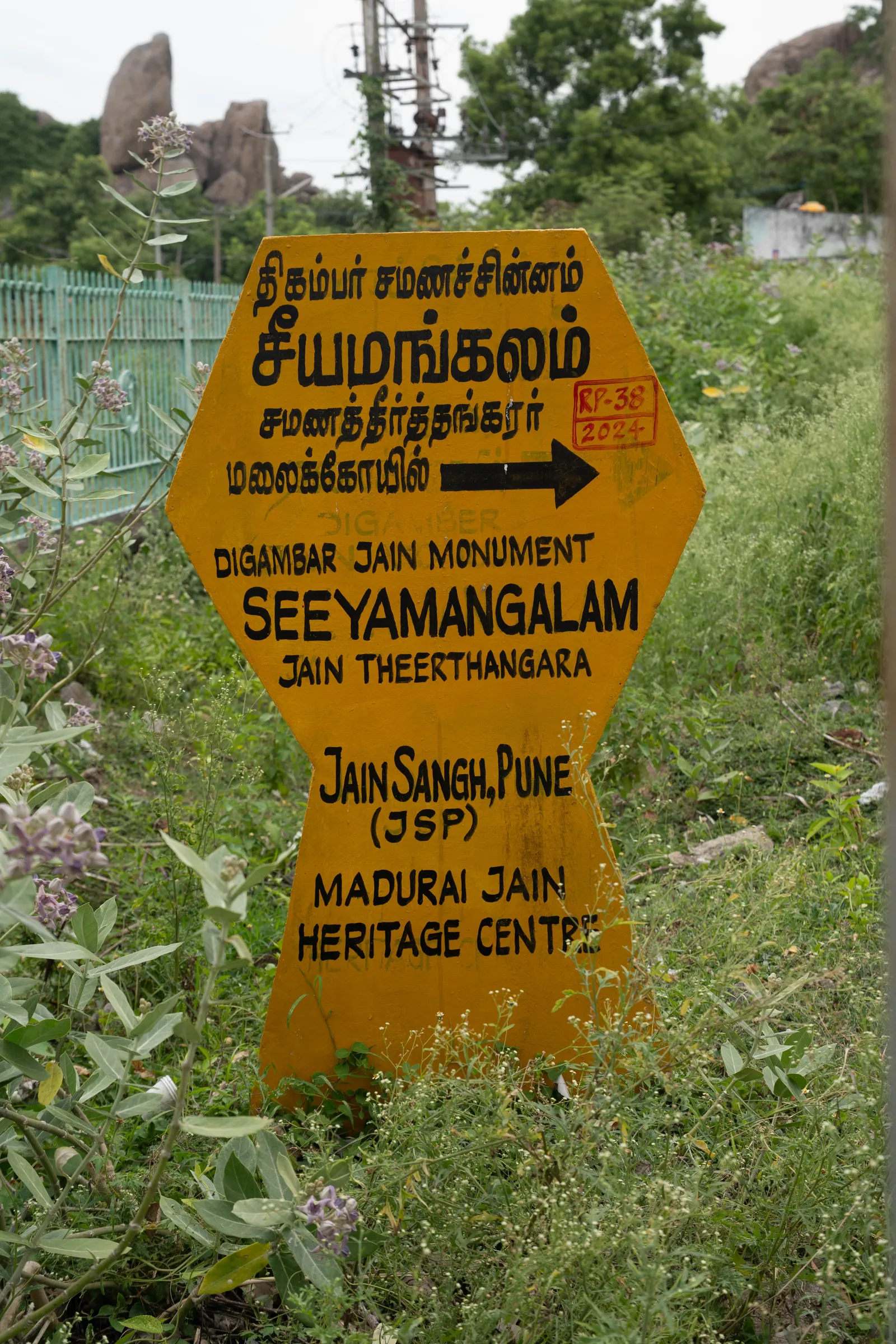
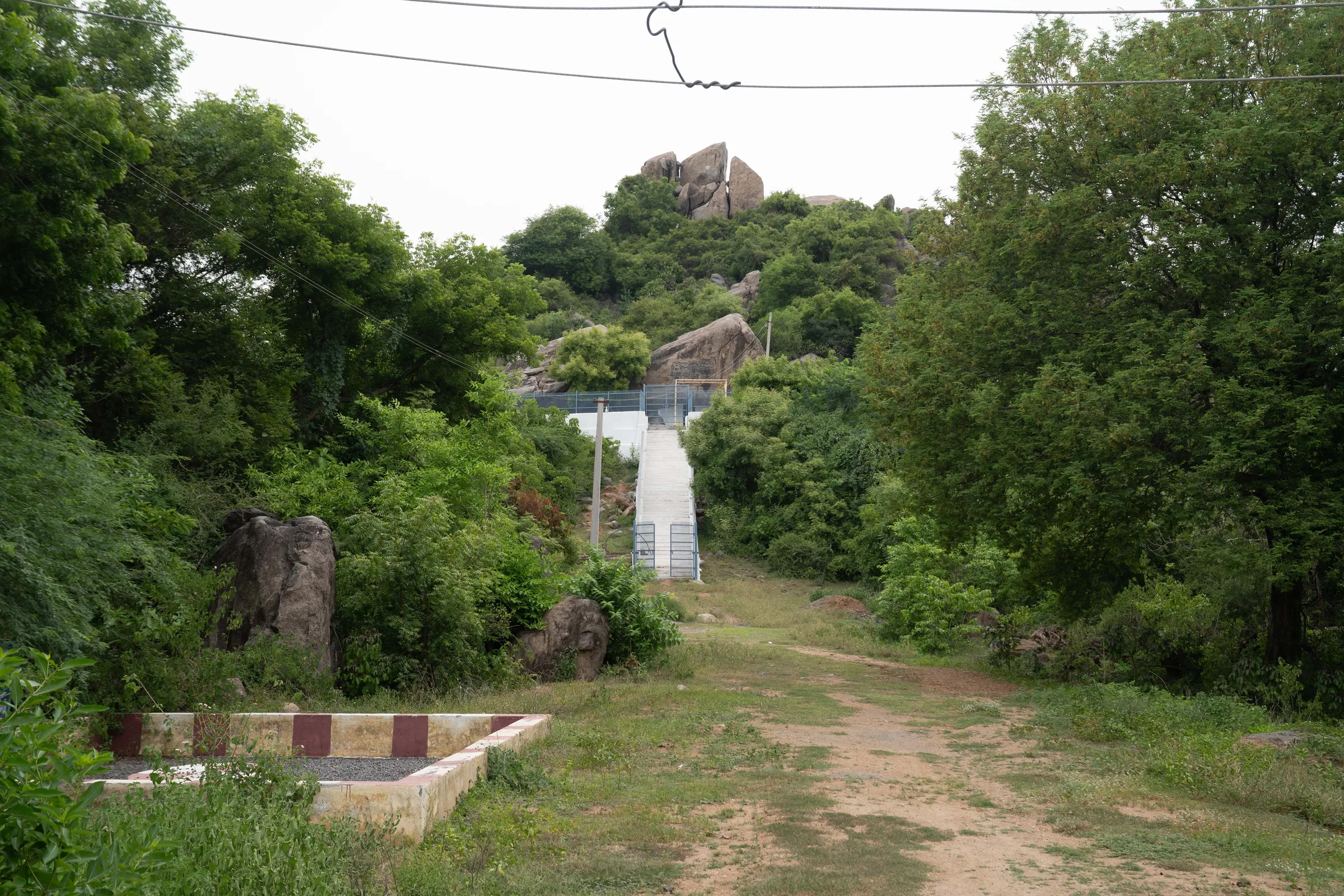
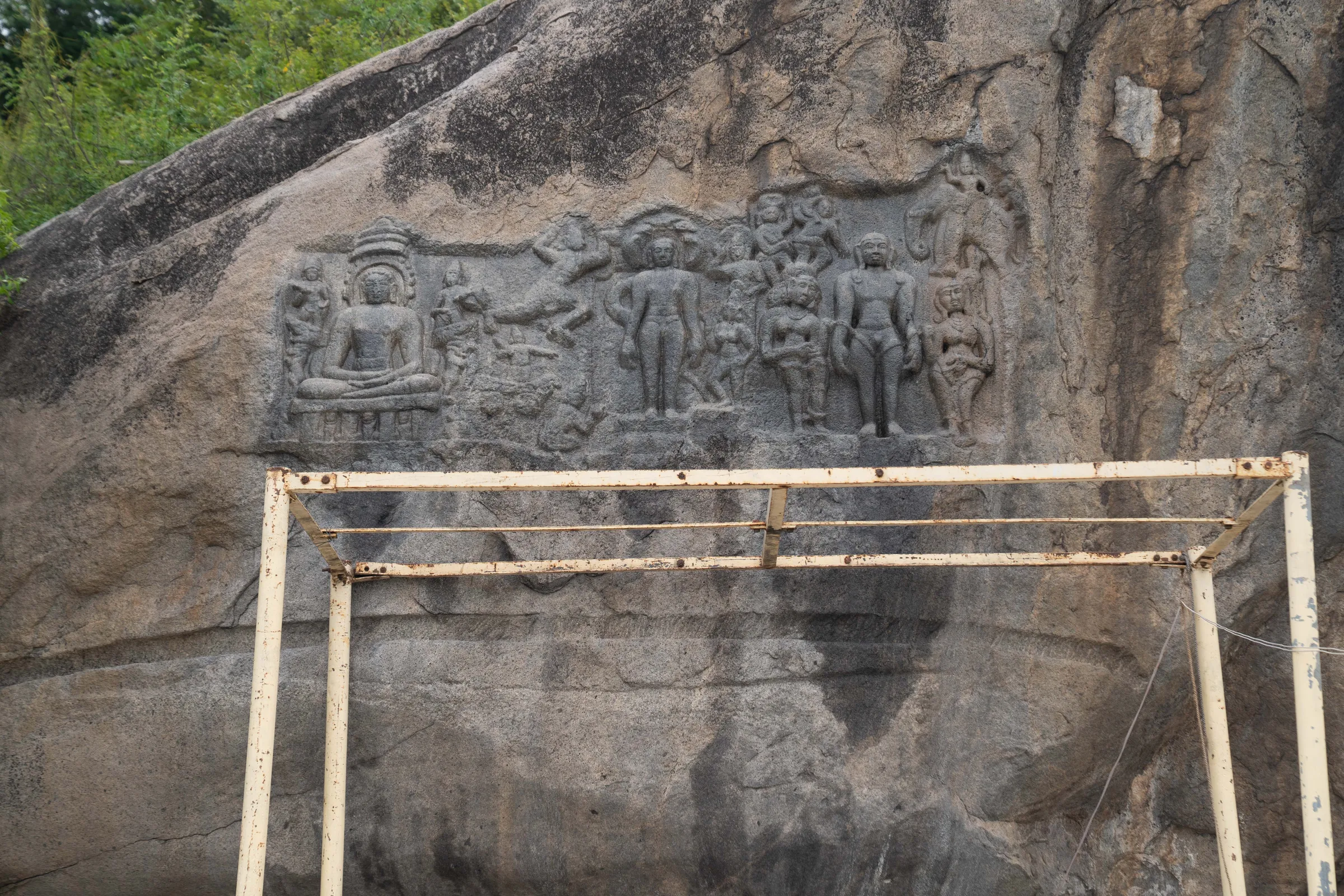
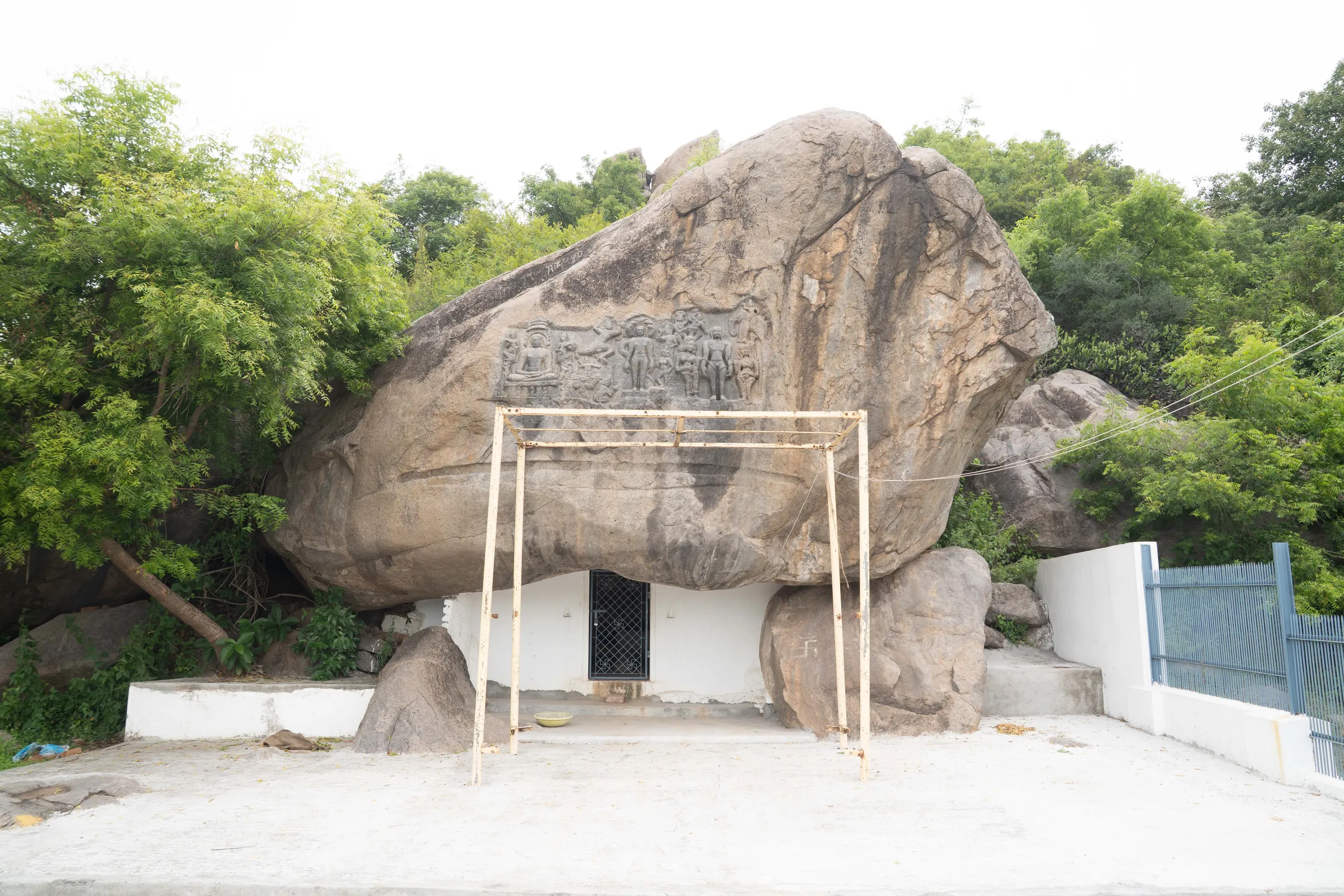
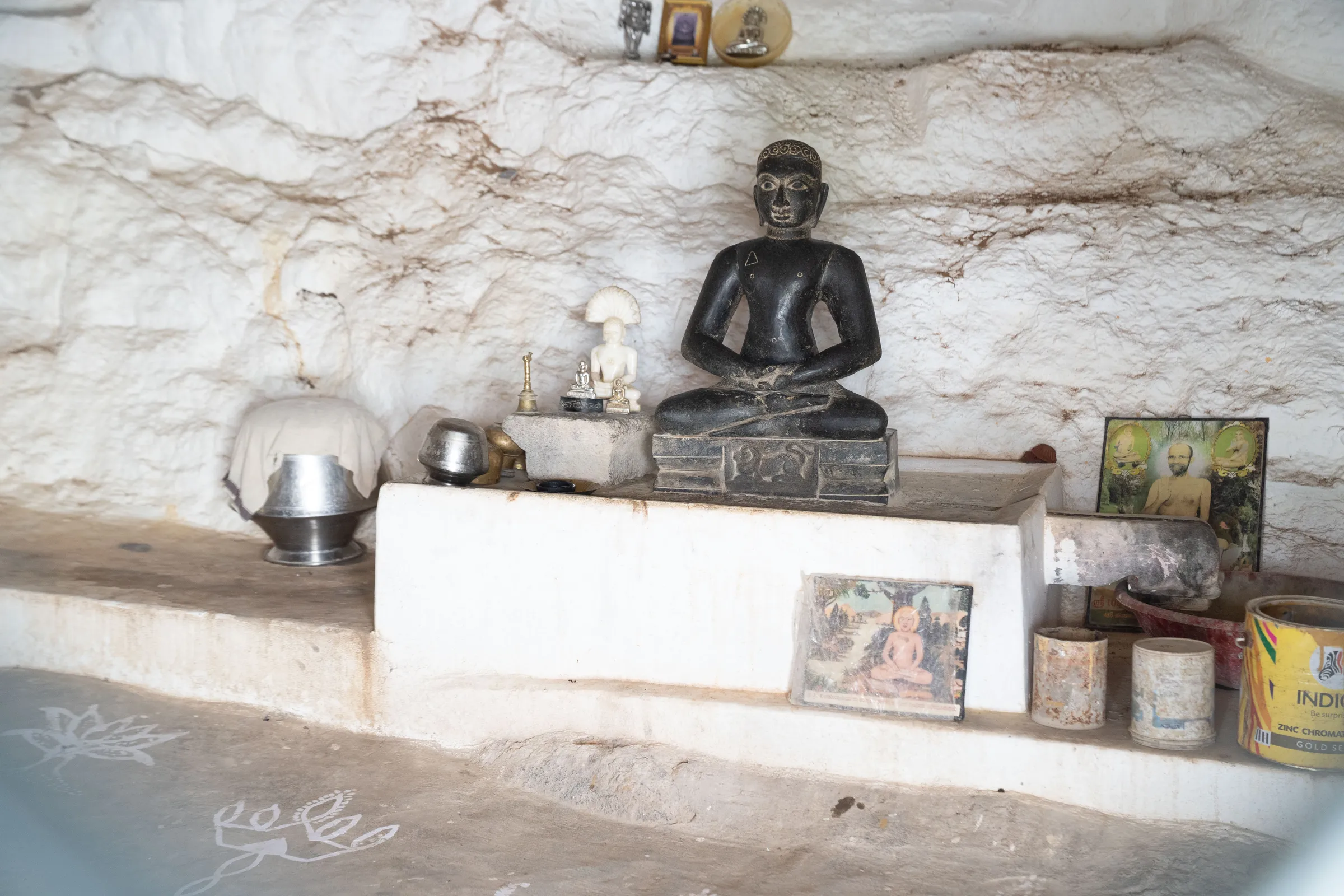
The Jain cave temple is on a small hill called Vijayadri, 300 metres north. The cave has a recently placed Mahavira statue, but the object of interest is the bas-relief on the outcrop above, open to the elements yet magnificent in preservation. It shows the Jain Mahavira, Parsvanatha, Bahubali and the Tirthankaras, with a few inscriptions.

02

Archaeological

dated & cited

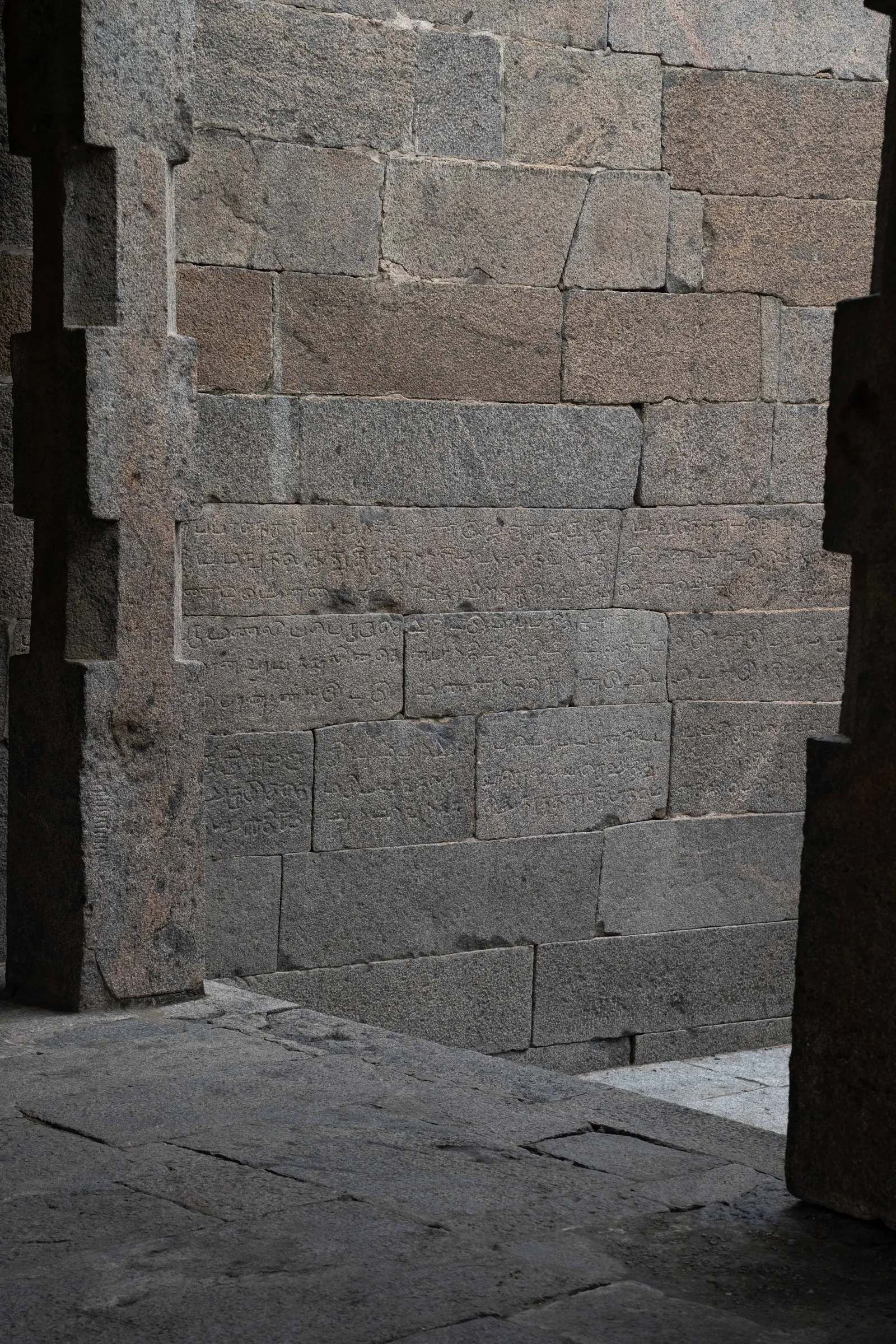
The earliest inscription in the Śiva cave is the foundation inscription in Sanskrit verse of Mahendra Varma Pallava (600-630 CE). He is called Lalitankura, Charming Scion, and the temple is called Avanibhajana Pallaveswaram, Avanibhajana being another title of Mahendra meaning possessor of the earth. The inscription says Lalitankura constructed this temple like a casket worked in his will enclosing jewels like his good deeds. The town seems to have been established in his son's time by Narasimha Varman I (630-668), or Mamalla, who is also credited with the monuments at Mamallapuram. The front mandapa was constructed in the 9th century under Pallava Vijaya Danti Vikrama Varma.

The Jain cave inscriptions are mostly from the Karnataka-based Ganga dynasty. From 893 CE is an inscription of Rachamalla II in two verses, recording the king establishing two temples for Jains (Jinaraya) on the Vijayadri hill. A Ganga inscription from Krishna III dated 961 CE records the gift of food offerings at the time of Sribali to the deity and mentions Akkaiya Devi, daughter of Kannaradeva, ruling the village on behalf of Rajadittan. Another inscription mentioning this king is the earliest inscription in the famous temple at Tirupathi.

Dating
Begun600-630 CE · Mahendra Varma Pallava

Foundation inscription of Mahendra Varma Pallava (600-630 CE); front mandapa built in the 9th century under Vijaya Danti Vikrama Varma. Jain cave inscriptions of the Ganga dynasty from 893 CE and 961 CE.

Protection & condition
ConditionOff the beaten path; in a district with one of the state's largest Jain populations
03

Mythological

as transmitted

Inscriptions name the deity as Stambeswara, in Tamil Tumandar, meaning one who is like a pillar, a name drawn from the tall upright boulder still standing in the large reservoir. By the time of a later 1365 inscription, the deity's name had changed from the Sanskrit Stambeshwara to the Tamil Tumandar.

Register interest in prints Buy the book
Improve this entry

This is an open, reviewed record. If you have spotted an error or have something to add — a correction, a date, a source, a name in another script — propose it. Every change is reviewed before it joins the record.

“Suggest an edit” opens this entry on GitHub and turns your change into a pull request. “Share feedback” opens a short form. Both go through review.