Sowmya Narayana Perumal Temple, photograph
← Pandya Nadu
Entry 061

Sowmya Narayana Perumal Temple

Thirukoshtiyur · Sivagangai

One of the 108 Divya Desams, in the Sivagangai district, with a rare Ashtanga Vimana that rises taller than its gateway tower. The temple is bound up with Ramanuja, who learnt the sacred eight-syllable mantra here.

The Sowmya Narayana Perumal temple at Thirukoshtiyur is one of the 108 Divya Desams of the Sivagangai district, known for its rare Ashtanga Vimana and for its association with Ramanuja.

The photographs

Plates · 10

Sowmya Narayana Perumal Temple, photograph
© Amar Ramesh and team · All rights reserved
Sowmya Narayana Perumal Temple, photograph
© Amar Ramesh and team · All rights reserved
Sowmya Narayana Perumal Temple, photograph
© Amar Ramesh and team · All rights reserved
Sowmya Narayana Perumal Temple, photograph
© Amar Ramesh and team · All rights reserved
Sowmya Narayana Perumal Temple, photograph
© Amar Ramesh and team · All rights reserved
Sowmya Narayana Perumal Temple, photograph
© Amar Ramesh and team · All rights reserved
Sowmya Narayana Perumal Temple, photograph
© Amar Ramesh and team · All rights reserved
Sowmya Narayana Perumal Temple, photograph
© Amar Ramesh and team · All rights reserved
Sowmya Narayana Perumal Temple, photograph
© Amar Ramesh · All rights reserved
01

Architectural

structure & vocabulary

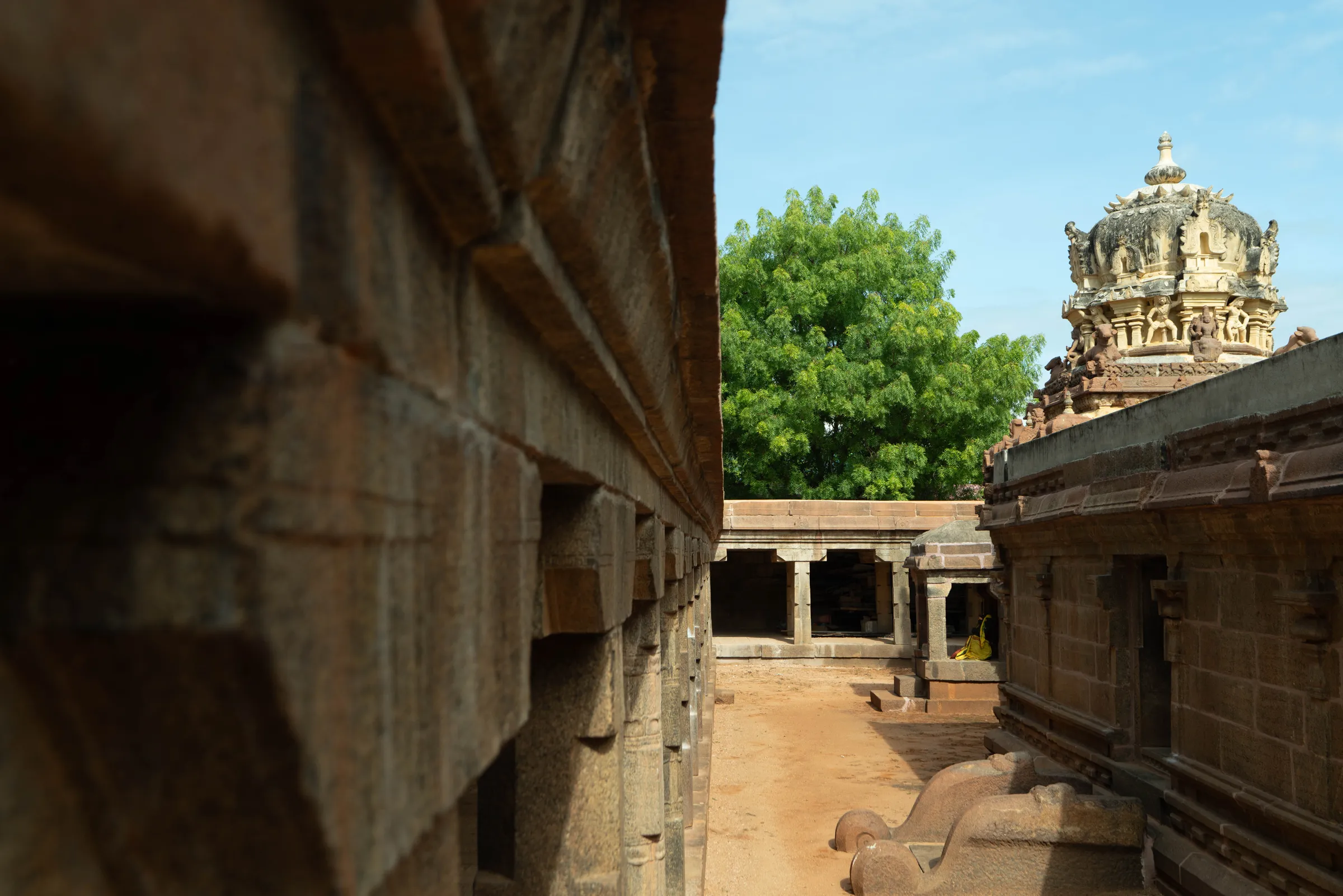
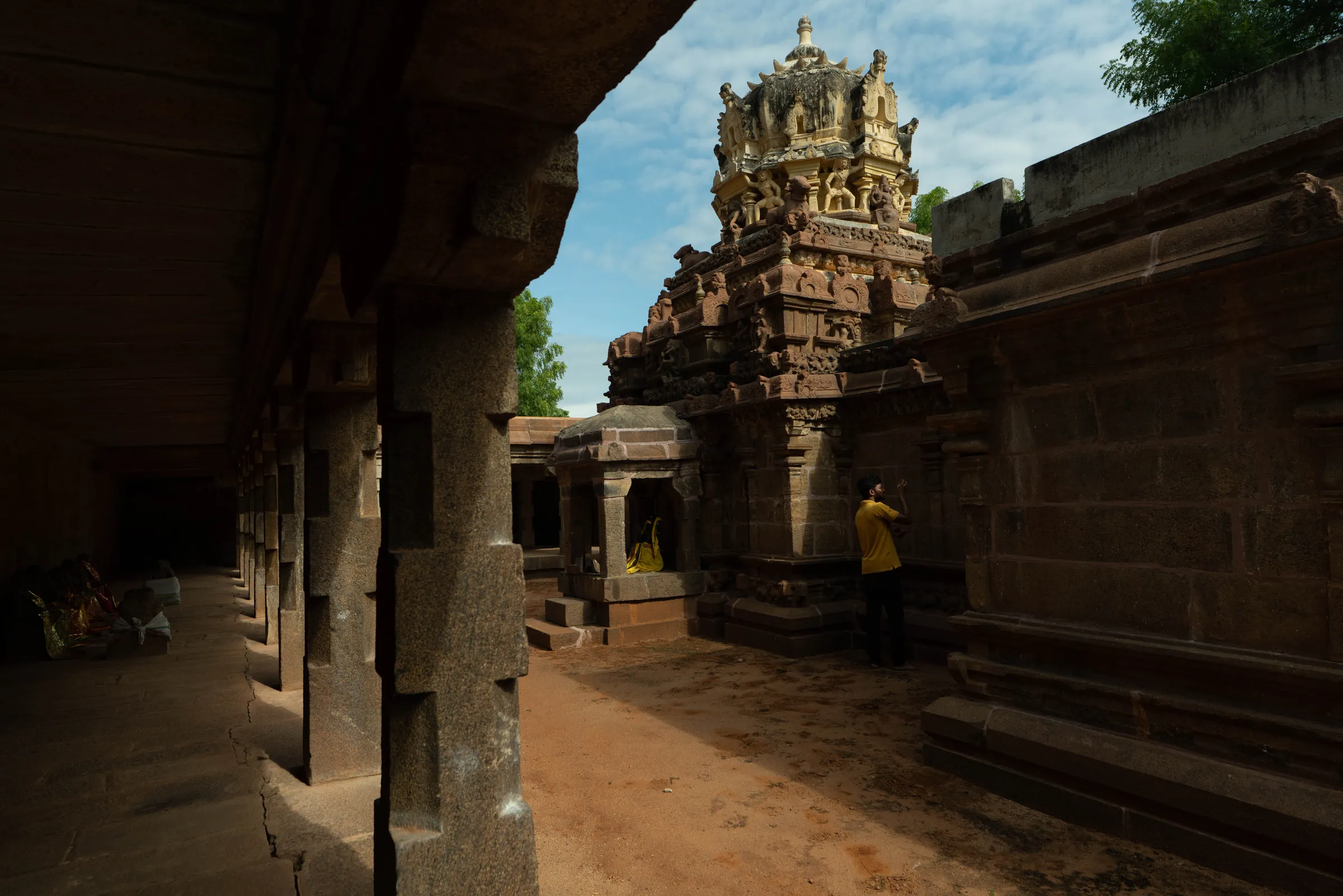
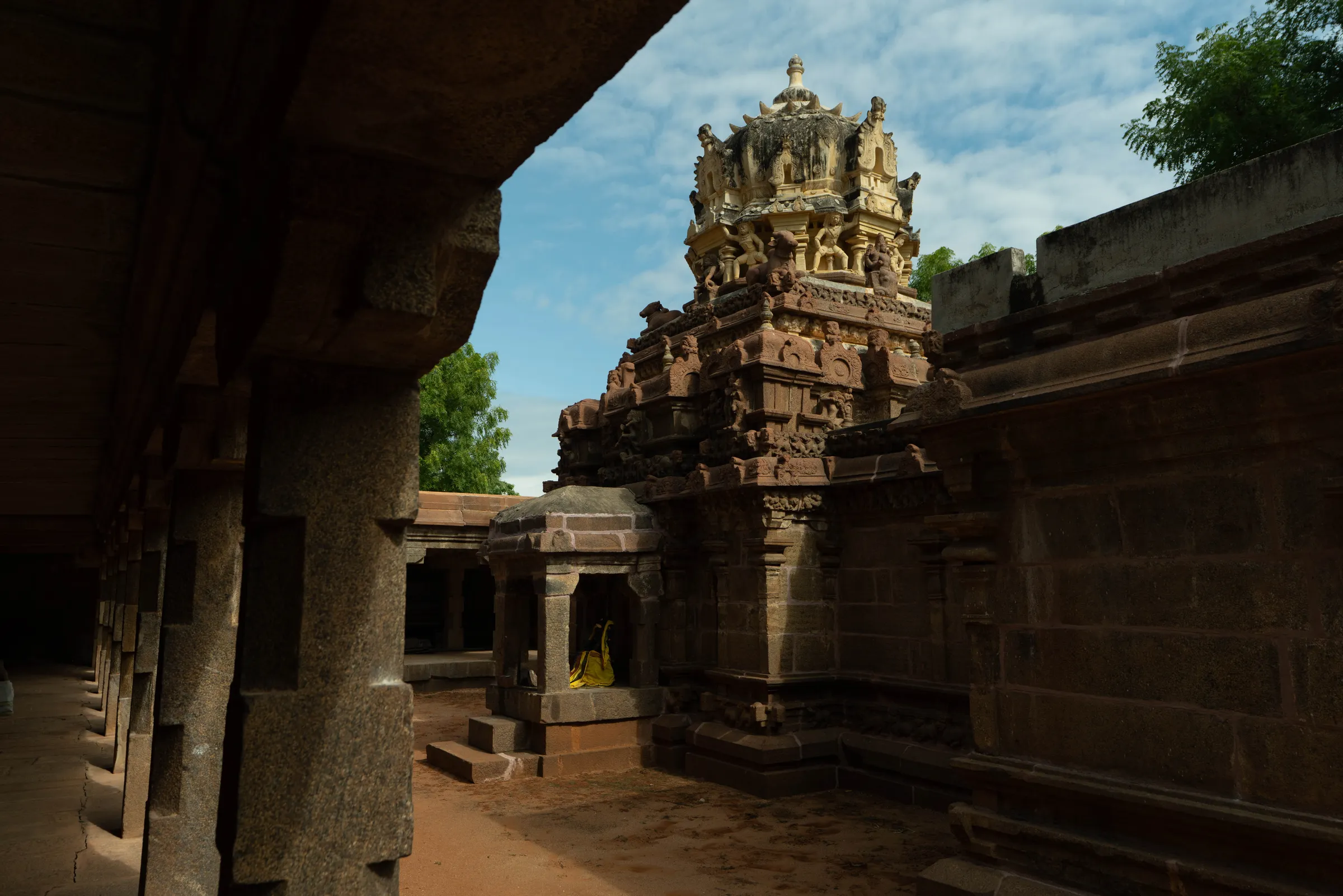
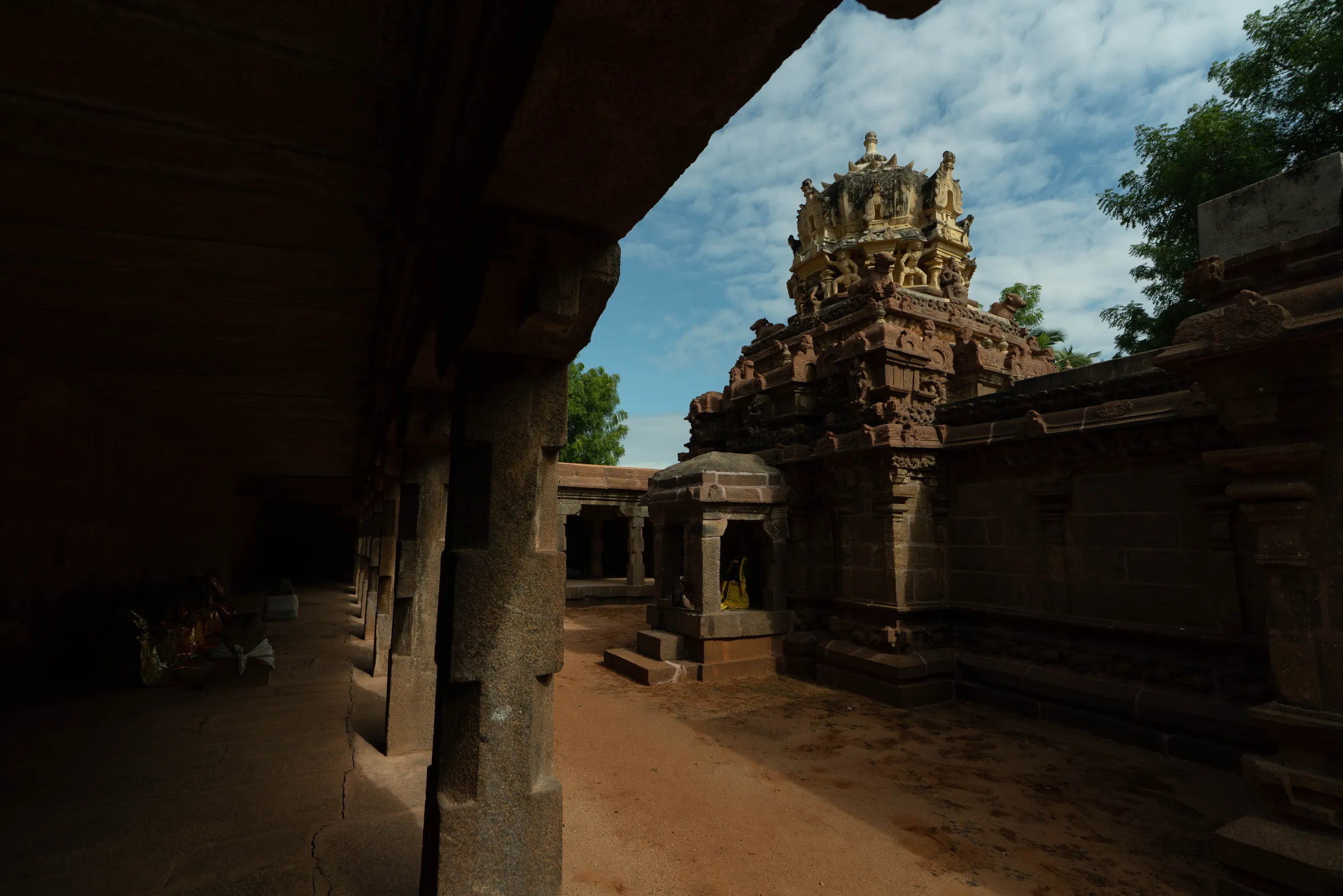
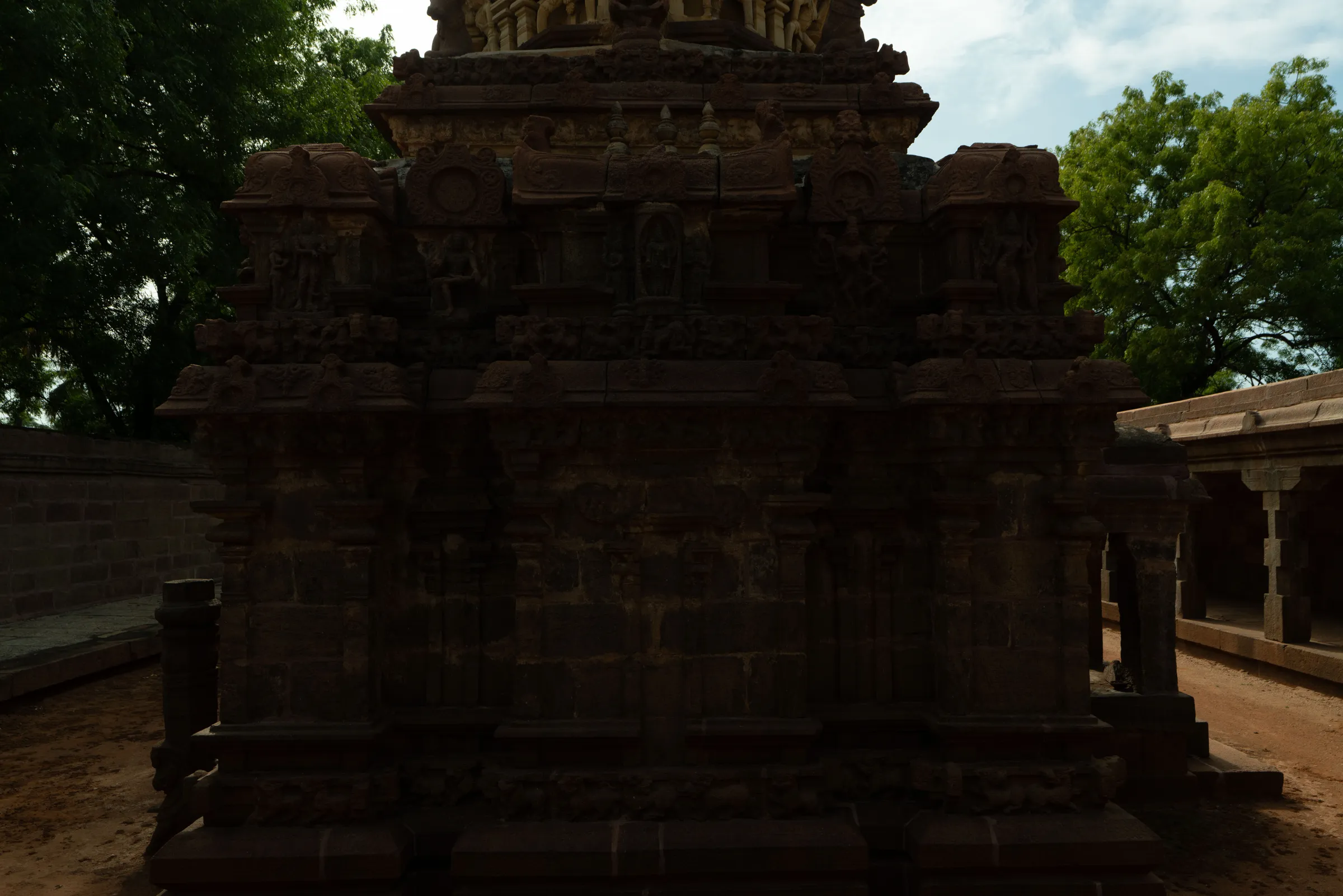
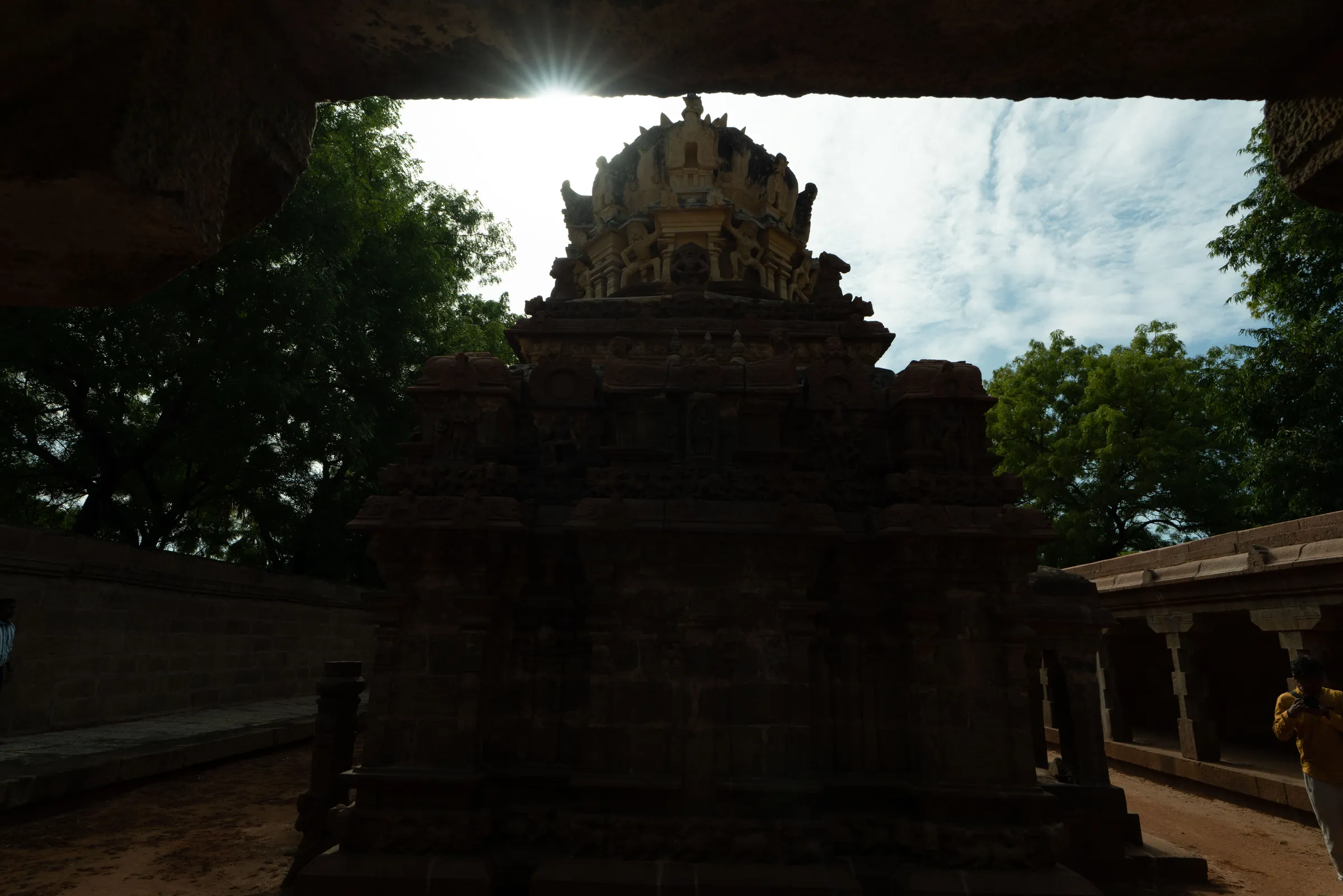
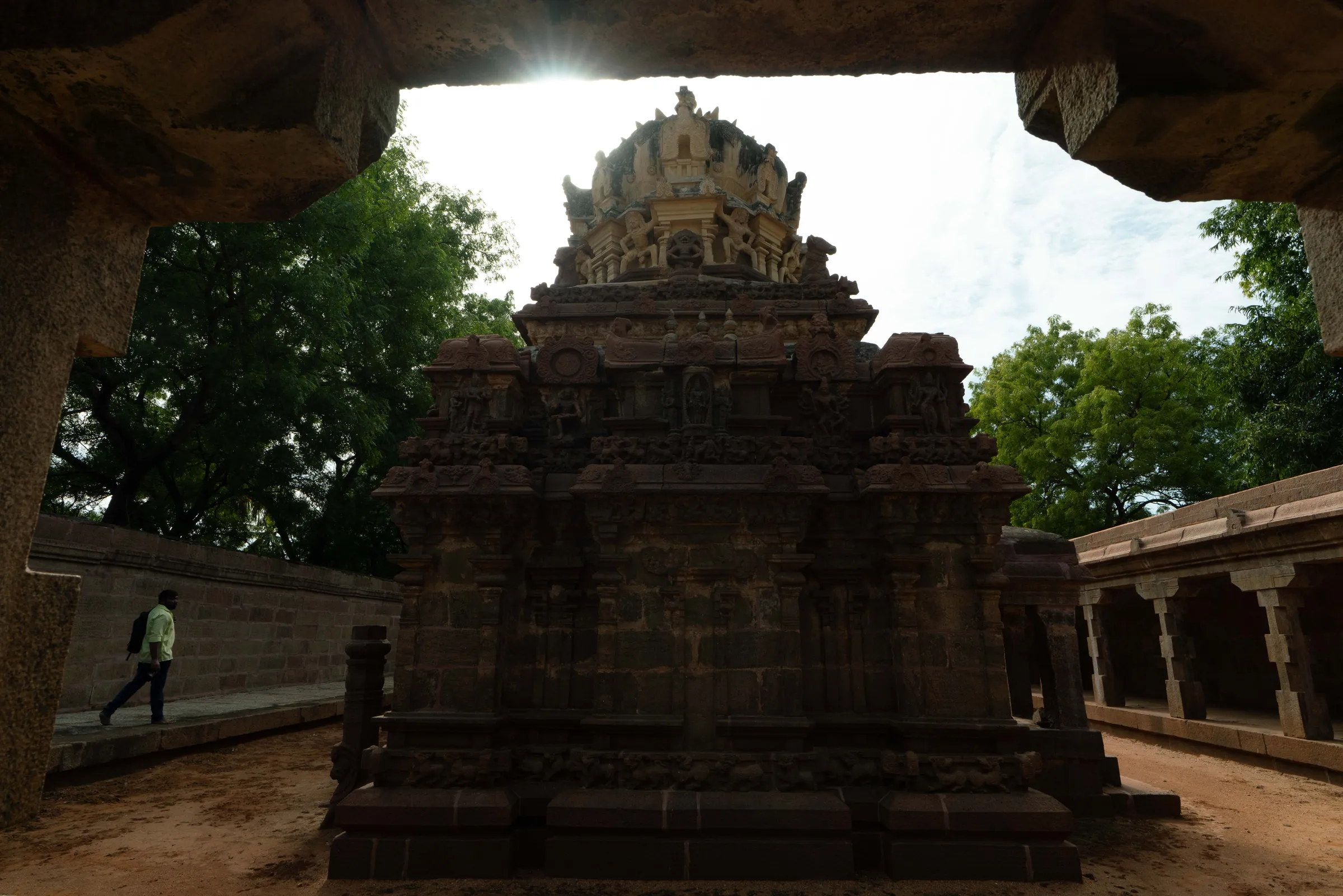
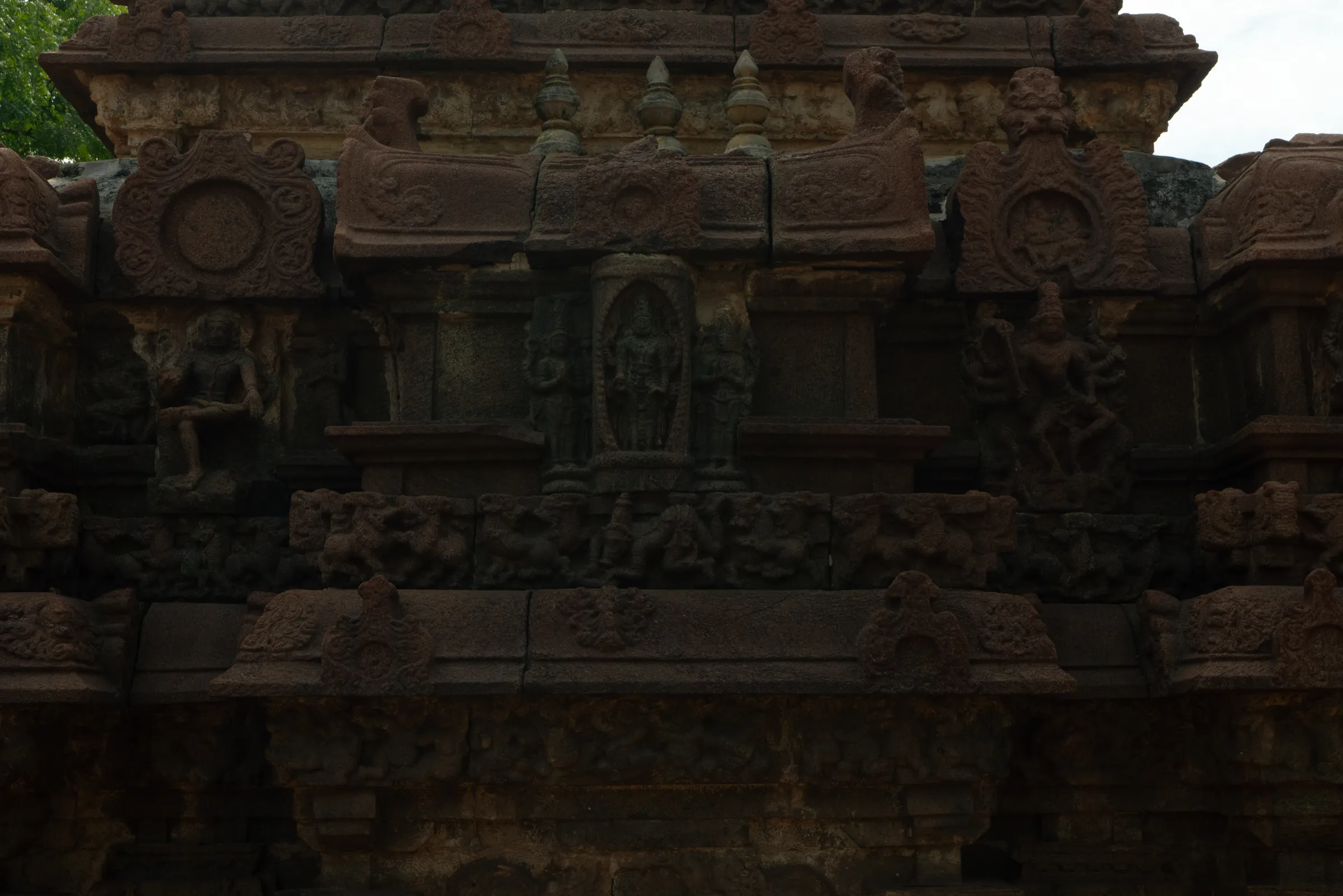
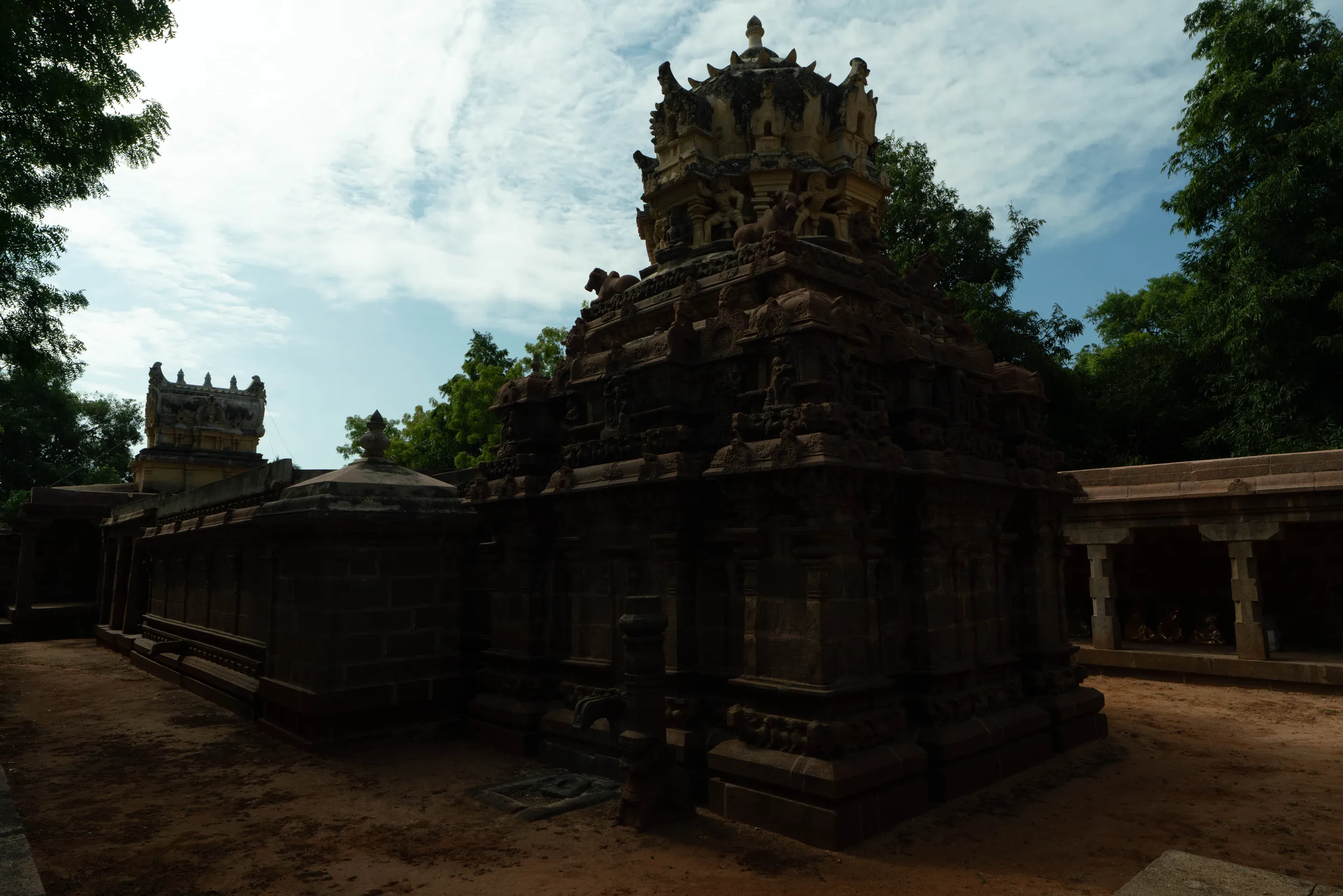
The temple is built in the Dravidian style and is enclosed by a granite wall. Its distinctive feature is the Ashtanga Vimana, the dome above the sanctum, which rises taller than the Rajagopura, the gateway tower. Uthiramerur, the Koodal Azhagar temple and Cheranmadevi are named as the only other three temples carrying an Ashtanga Vimana. Stucco figures of gods, sages and other mythical characters stand on the vimana.

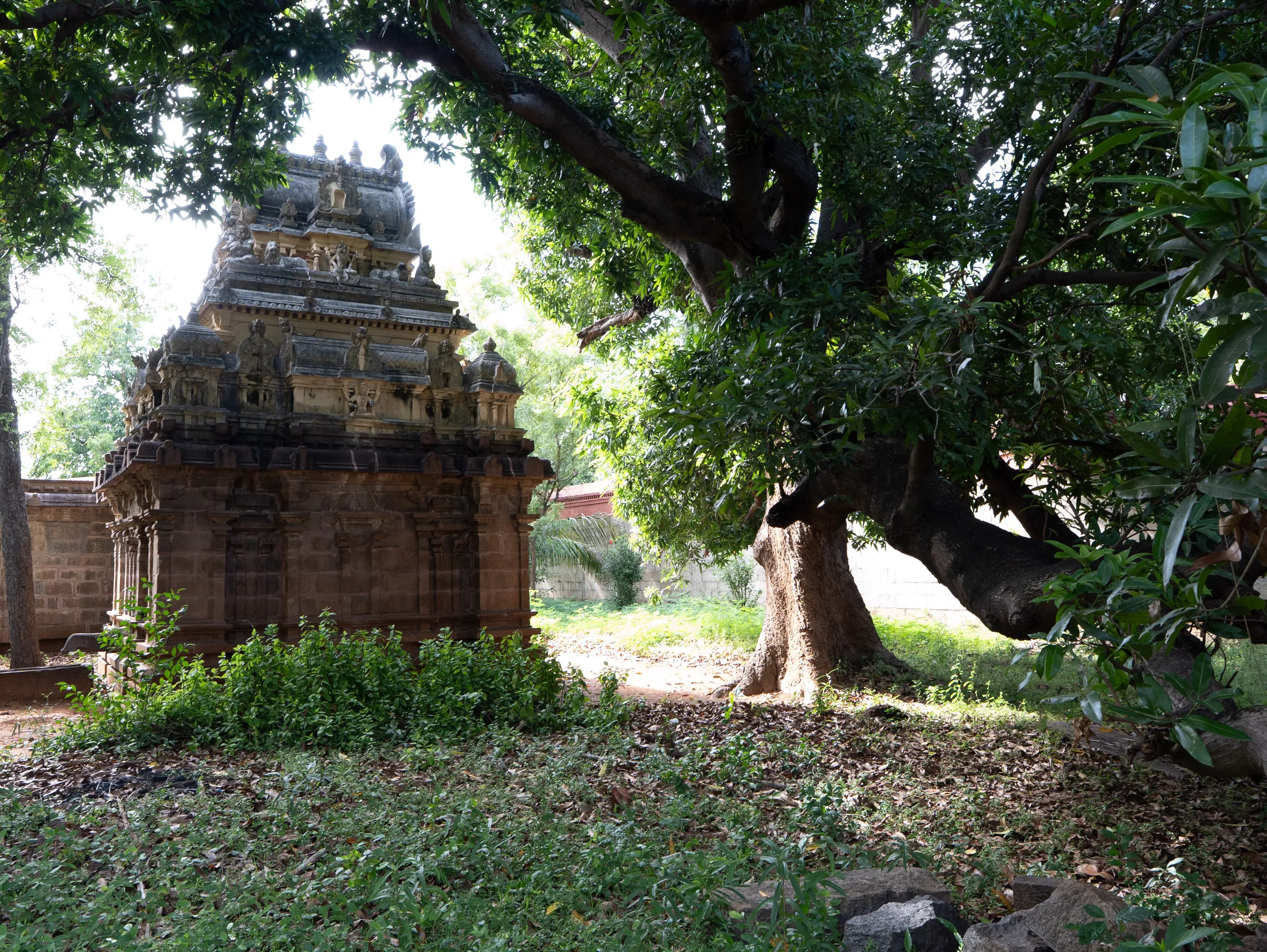
As its name implies, the Ashtanga Vimana at Thirukoshtiyur shows the eight parts: the Adhistana (base), three Padas (struts), Prasthana (limb), Griva (leading strut), Shikara (the cylindrical holder) and the Stupi (top). Another rare feature is a Siva (lingam) shrine at the entrance itself, with separate shrines for Vinayaka and Subramanya on either side, and a Nandi before Siva. The temple tank lies opposite the temple, on the outside.

The central shrine holds Vishnu, called Uragamellayan, reclining on his serpent bed like Sri Ranganatha, with Sridevi and Bhoodevi and many celestial beings. The festival deity Sowmya Narayana and his consort Thirumangai have a separate shrine, and smaller shrines for many gods are arranged through the inner and outer precincts. There are shrines for Thirukoshtiyur Nambi and for Ramanuja, who also appears on the vimana.

02

Archaeological

dated & cited

The temple is one of the 108 Divya Desams. It is hailed in the hymns of Periyalwar, Thirumalisai Alwar, Boothathalwar and Peyalwar, dated to the 8th to 11th centuries CE. Ramanuja lived in the 12th century.

03

Mythological

as transmitted

Thirukoshtiyur is where Ramanuja learnt the sacred eight-syllable mantra. In his time a great Vaishnava teacher called Nambi lived here. Ramanuja travelled many days to become his student and knocked on Nambi's door, but when asked who had come he answered, 'I am Ramanujan,' and Nambi replied, 'Naan seththu vaa,' meaning give up the pride of the 'I' and come as a humble person. This repeated seventeen times. Only when Ramanuja said, 'Adiyen vandhirukkiren,' the humble disciple has come, was he asked in.

Nambi then taught him the Ashtakshara mantra, 'Om Namo Narayanaya,' on the condition that he reveal it to no one, on pain of hell. Believing his own life expendable if the world could be freed from the cycle of birth and death, Ramanuja climbed the vimana of the temple and shouted the mantra and its power to the gathered crowd. On hearing of his act and his intentions, Nambi blessed his rebel disciple and called him Emperumanar, meaning he was greater than his teacher.

Register interest in prints Buy the book
Improve this entry

This is an open, reviewed record. If you have spotted an error or have something to add — a correction, a date, a source, a name in another script — propose it. Every change is reviewed before it joins the record.

“Suggest an edit” opens this entry on GitHub and turns your change into a pull request. “Share feedback” opens a short form. Both go through review.