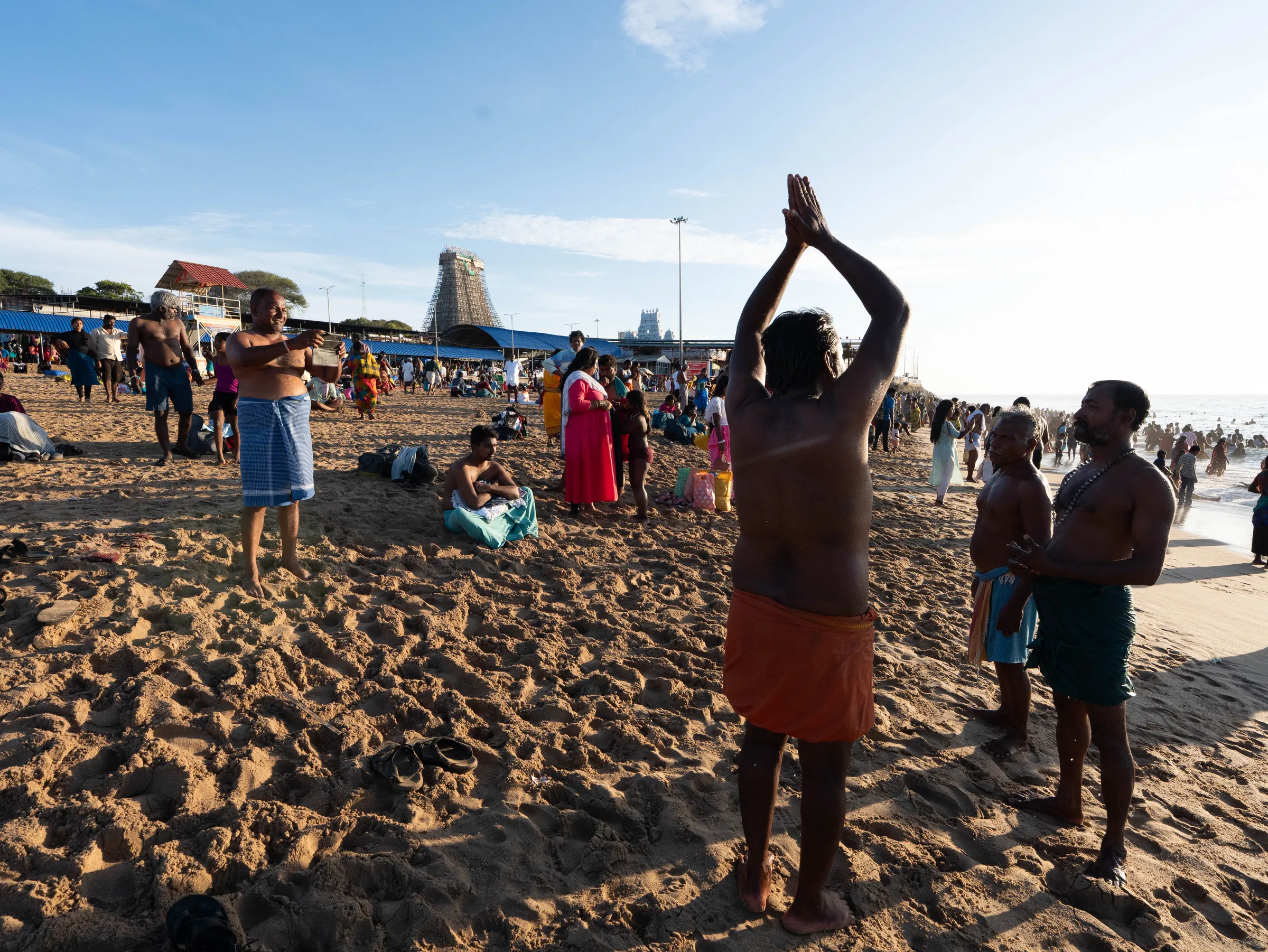
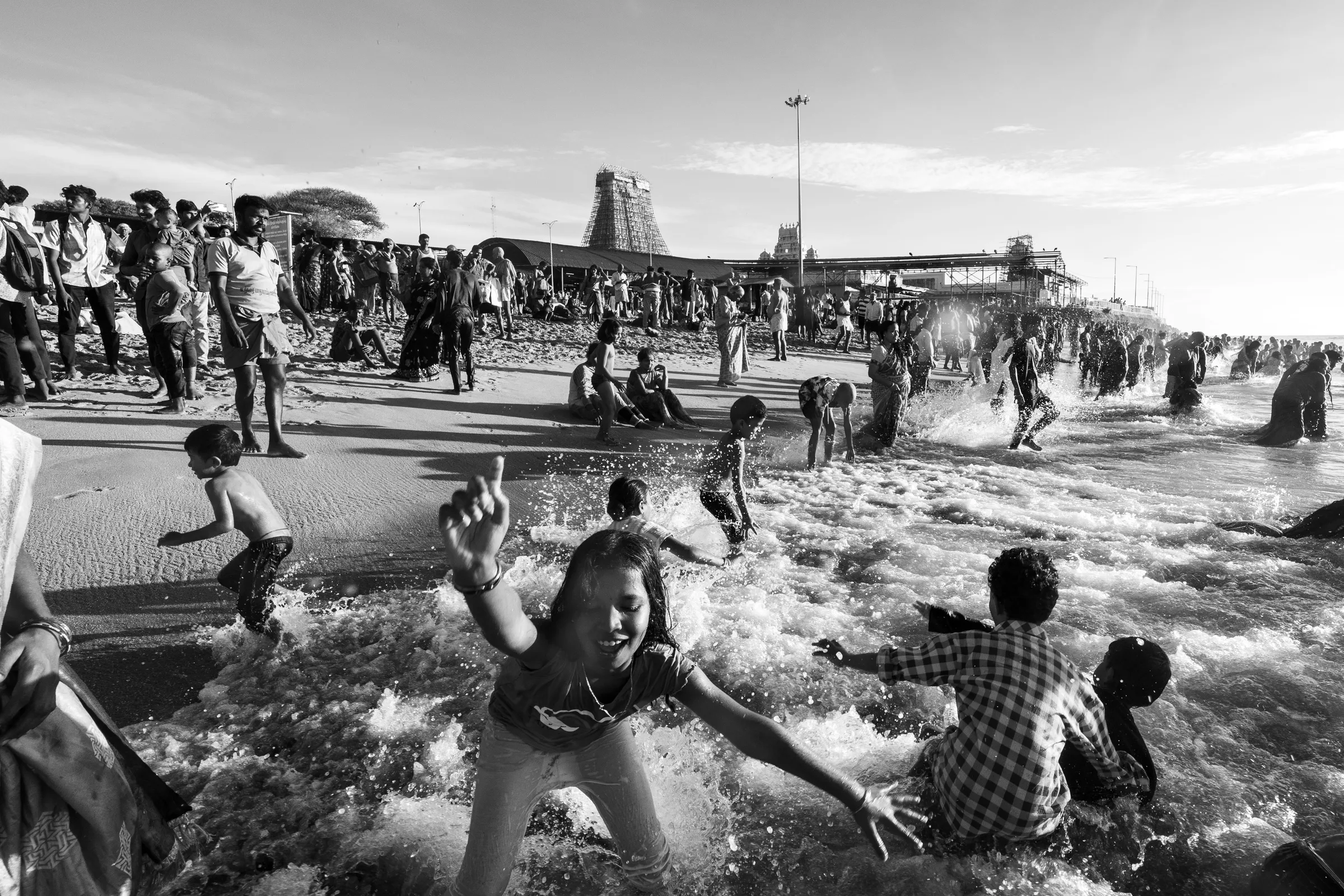
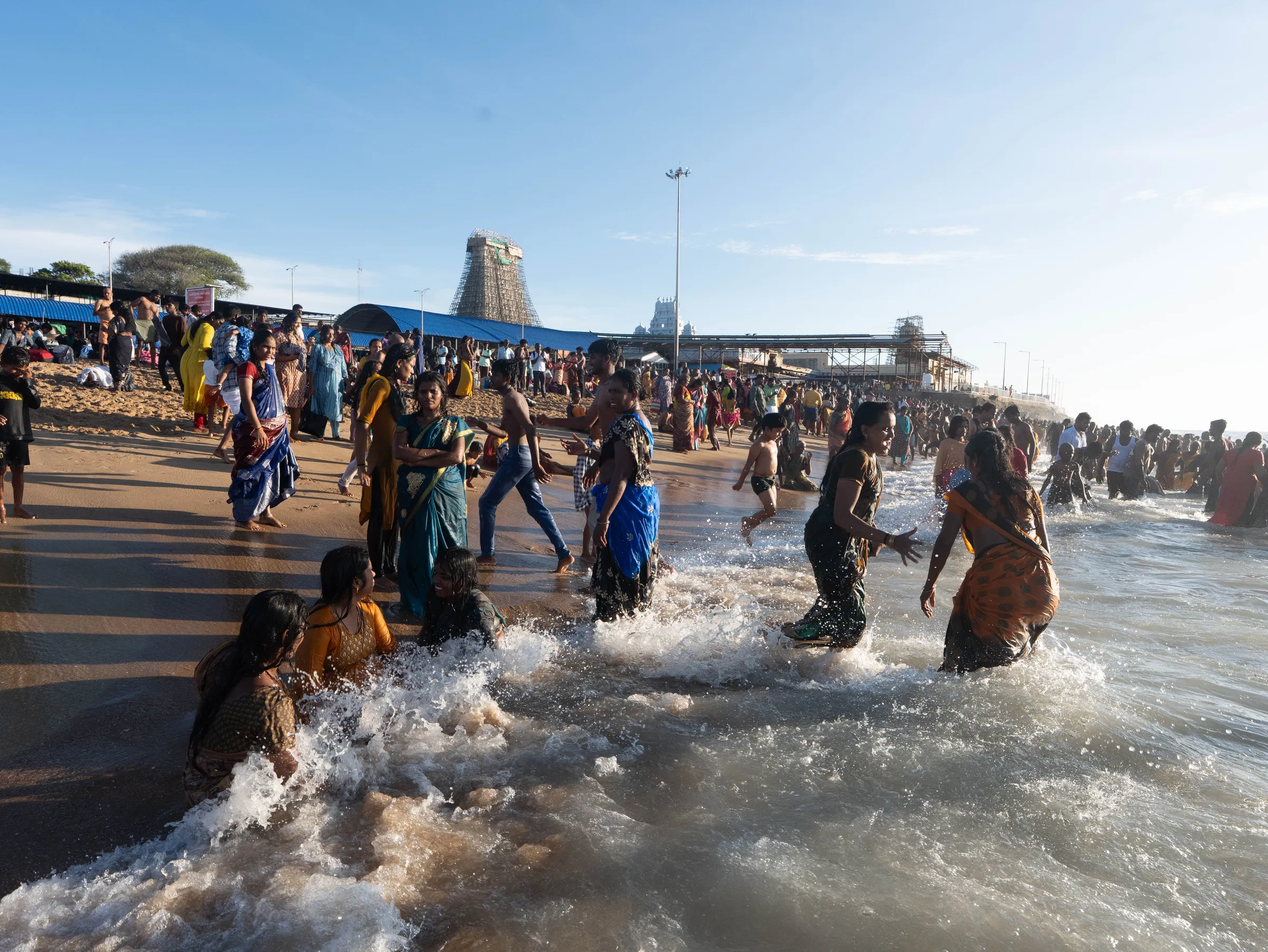
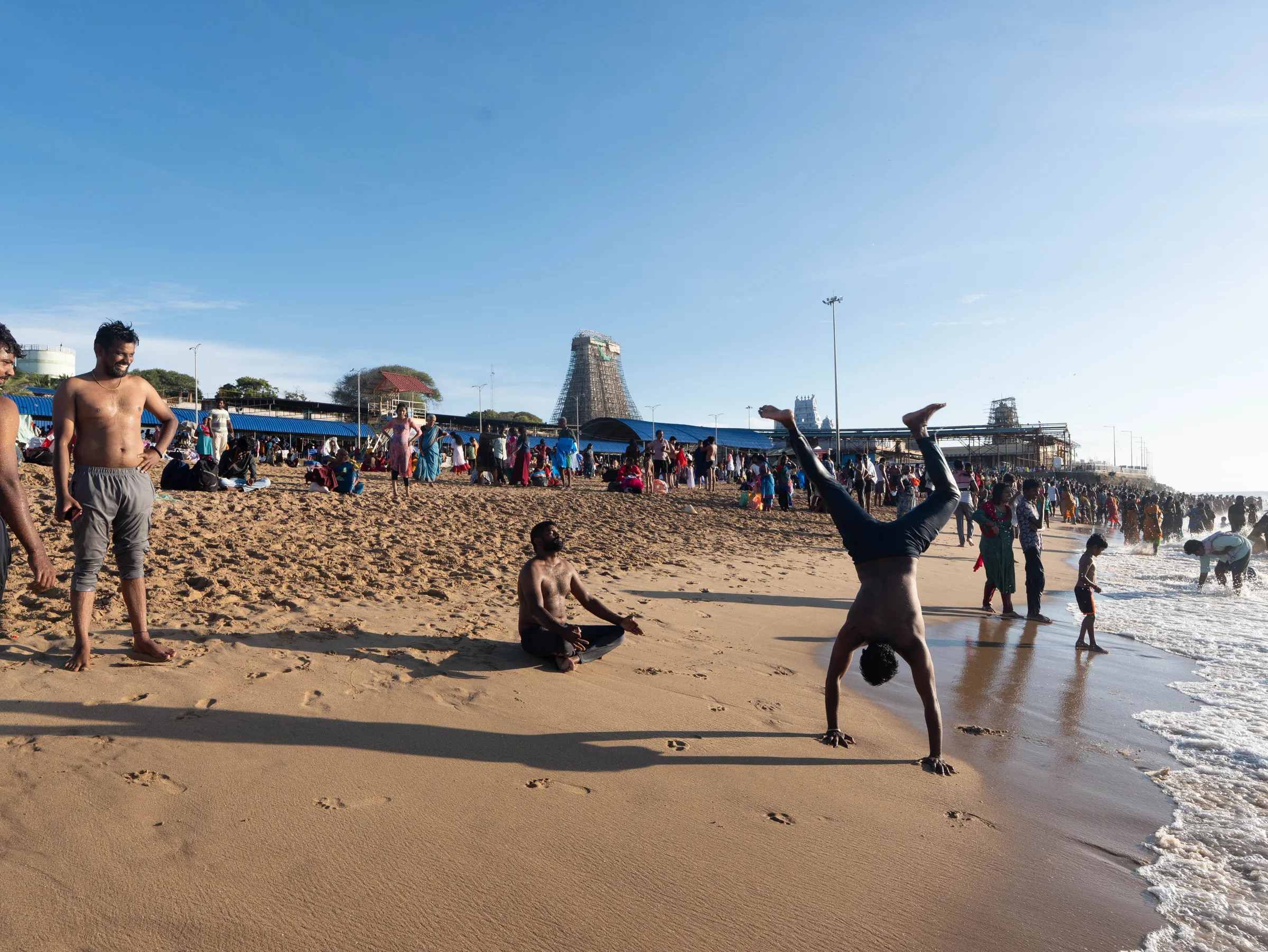
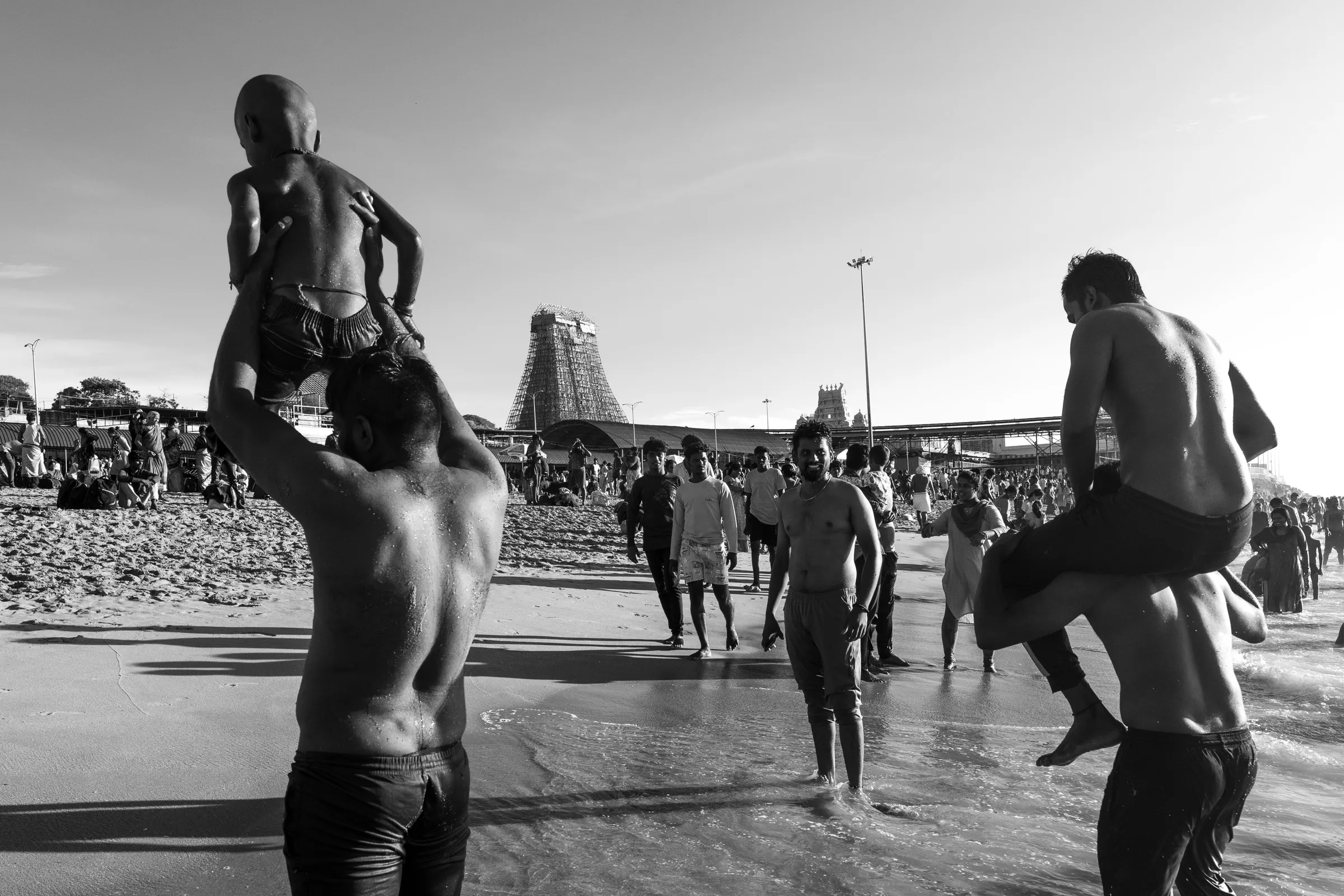
Subramania Swamy Temple, photograph
← Pandya Nadu
Entry 093

Subramania Swamy Temple

Tiruchendur · Thoothukudi · Pandya · 1941 CE · re-consecration after renovation

A seashore temple of Subramanya at Tiruchendur, one of the six Arupadaiveedu abodes of Muruga, set on the shore of the Bay of Bengal and praised by the Sangam poet Nakkeerar.

The seashore temple of Subramanya at Tiruchendur is one of the six Arupadaiveedu abodes of Muruga, set on the shore of the Bay of Bengal and known also as Tirucheeralaivai. This entry holds three registers apart: what stands, what can be dated and cited, and what is told.

The photographs

Plates · 5

Subramania Swamy Temple, photograph
© Amar Ramesh · All rights reserved
Subramania Swamy Temple, photograph
© Amar Ramesh · All rights reserved
Subramania Swamy Temple, photograph
© Amar Ramesh · All rights reserved
Subramania Swamy Temple, photograph
© Amar Ramesh · All rights reserved
01

Architectural

structure & vocabulary

The principal deity faces east, while the main entrance faces south and opens to the first of two prakara, lined with yali sculptures. The inner sanctum is set in a cave, with Subramanya as a divine child. To his left is the Shivalinga Jagannatha, who receives daily puja alongside Subramanya.

Veerabahu and Veera Mahendra guard the ardha mandapa entrance. Ganesha and Parvathi stand in the left of the mandapa with the shrine of Sendhilnatha and his consorts, while the right shrine holds processional bronzes of Nataraja and the Nayanmars. The second prakara carries the Valli and Devayanai shrines, the Valli shrine with its golden cradle, and three columns with life-size figures of Mouna Sami, Kasi Sami and Desika Murthy Thambiran, through whose work the renovation was completed.

A monolith of Subramanya on his peacock stands in the pillared corridor, with stucco scenes of Surapadhman pierced by the Vel. There is a shrine of Arunagirinadhar, composer of the Tirupugazh, whose hymns run along the lintels of the Shanmuga Vilas mandapa. To the north is a Vishnu temple with Venkatesa Perumal, Gaja Lakshmi in a grotto, and Palli Konda Ranganatha, its outer walls inscribed with the Nalayira Divya Prabandham. The sacred well Nazhi Kinar, fed by a freshwater spring, lies about a hundred metres away.

02

Archaeological

dated & cited

Four Pandya inscriptions now stand in the south-eastern corner of the first circuit: two of Varaguna Pandya (875 CE), one of Maravarman (1282 CE), and one of Vikrama Pandya (1413 CE). The Chera Maharaja Marthanda Varma (1729 to 1758 CE), architect of modern Travancore, endowed the first Udaya Marthanda kattalai each morning. An inscription by Vadamalaiyappan Pillai records the return and re-installation of looted images, placed by tradition in 1653 CE. The renovation by Mouna Sami, Kasi Sami and Desika Murthy Thambiran closed with consecration in 1941 CE.

Dating
Consecrated1941 CE · re-consecration after renovation

A seashore temple of long standing, with Pandya inscriptions from the 9th to 15th centuries; the modern renovation closed in 1941 CE.

Protection & condition
ConditionIn worship
03

Mythological

as transmitted

Legend says the temple was raised by the divine architect Mayan for Subramanya as he set out to destroy Surapadhman, the demon king, who had built his island capital Veeramahendram and troubled the Devas under a boon from Shiva. Shanmuga went to Chendur, sent Veerabahu to him, and when Surapadhman would not heed, waged a six-day war. He split the demon, who had taken the form of a mango tree, into two parts that became a rooster and a peacock. Shanmuga took the rooster on his flag and the peacock as his mount, so he is called Sevarkodiyon and Mayilvahanan. Pleased, Indra gave his daughter Devayanai in marriage, and he became Deva Senapathi.

Popular tradition tells of the Dutch marauding the temple in 1648 and carrying off the statues of Nataraja and Arumuga, thinking them gold. It is said a divine hand helped Vadamalaiyappan Pillai gather them from the mid-sea. What likely happened is that Tirumalai Nayaka, who ruled the south between 1623 and 1659 CE, shifted his trade from the Portuguese to the Dutch in a new contract, and in the feud that followed the Dutch sailed off with the temple images and money, demanding ransom. An emissary to the Dutch Governor in Ceylon secured their return in 1651 CE, and they were re-installed after consecration in 1653 CE.

Register interest in prints Buy the book
Improve this entry

This is an open, reviewed record. If you have spotted an error or have something to add — a correction, a date, a source, a name in another script — propose it. Every change is reviewed before it joins the record.

“Suggest an edit” opens this entry on GitHub and turns your change into a pull request. “Share feedback” opens a short form. Both go through review.