Architectural
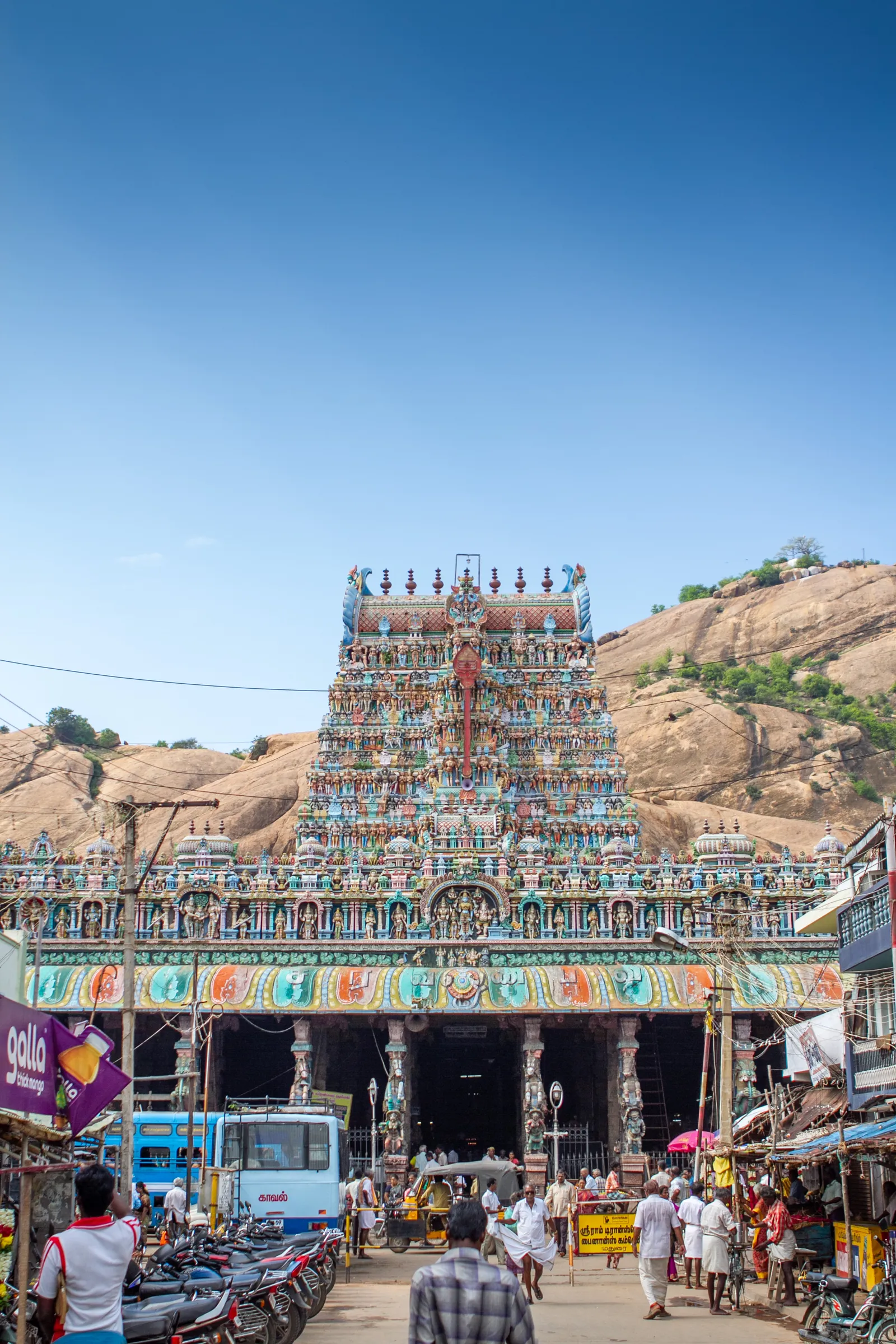
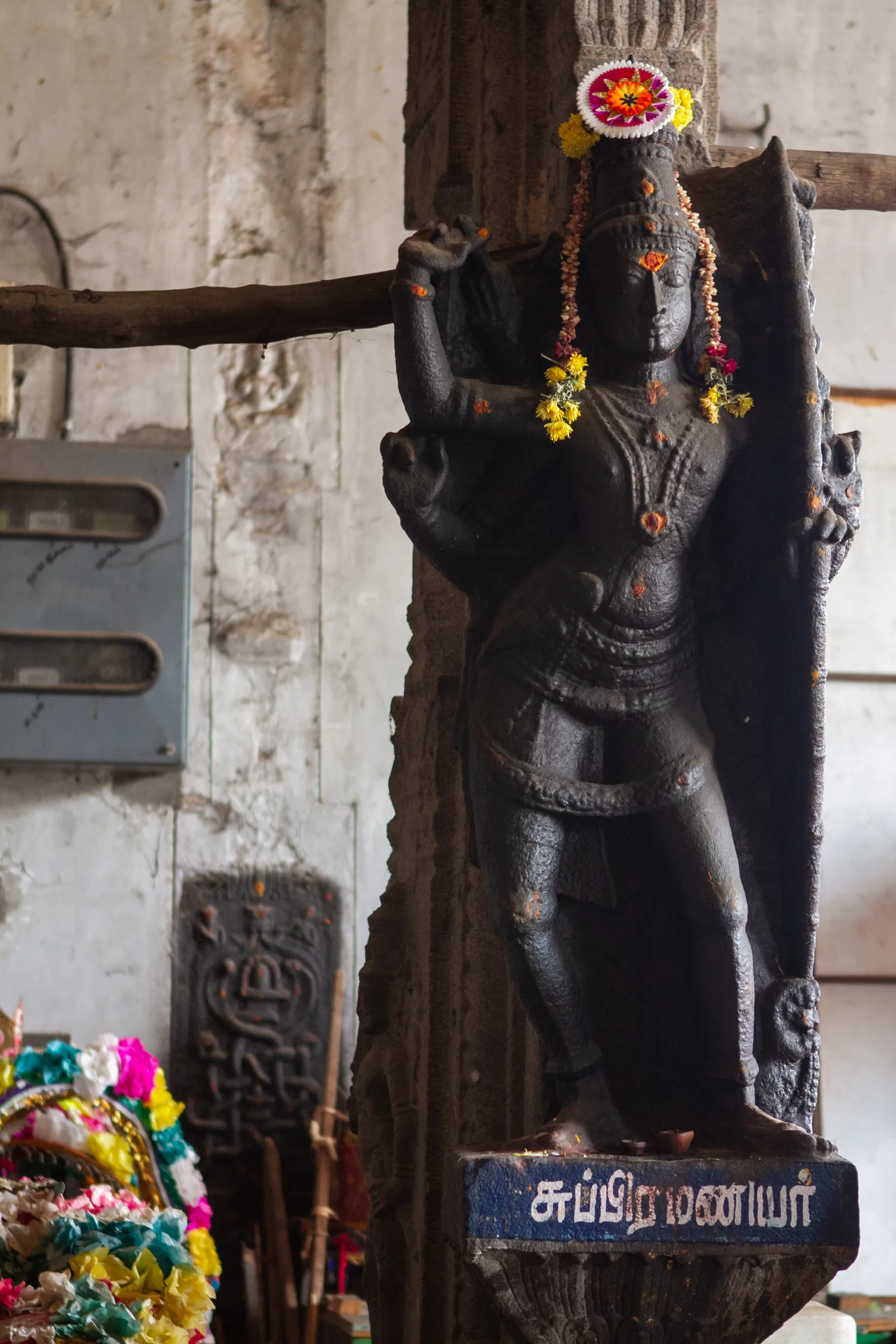
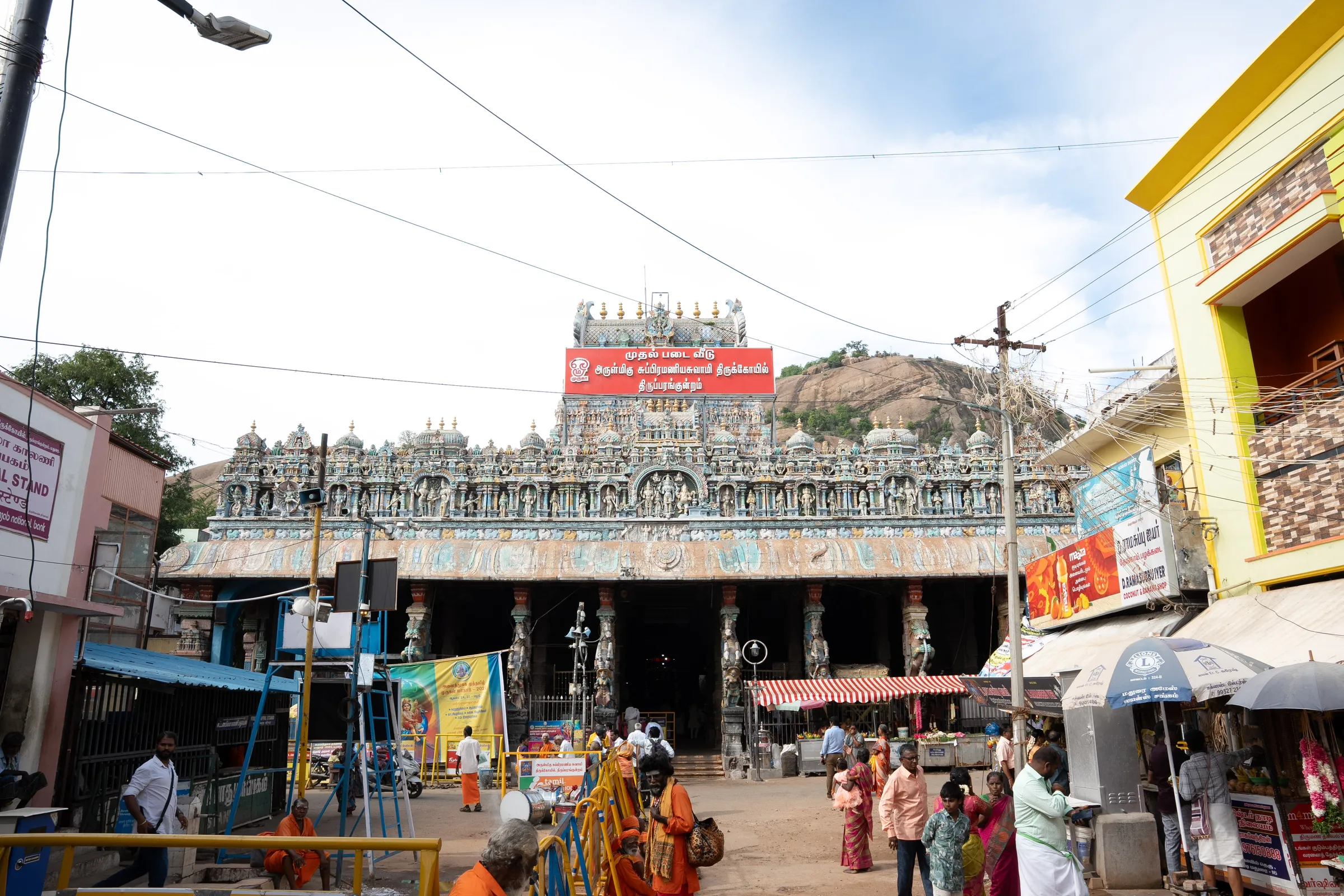
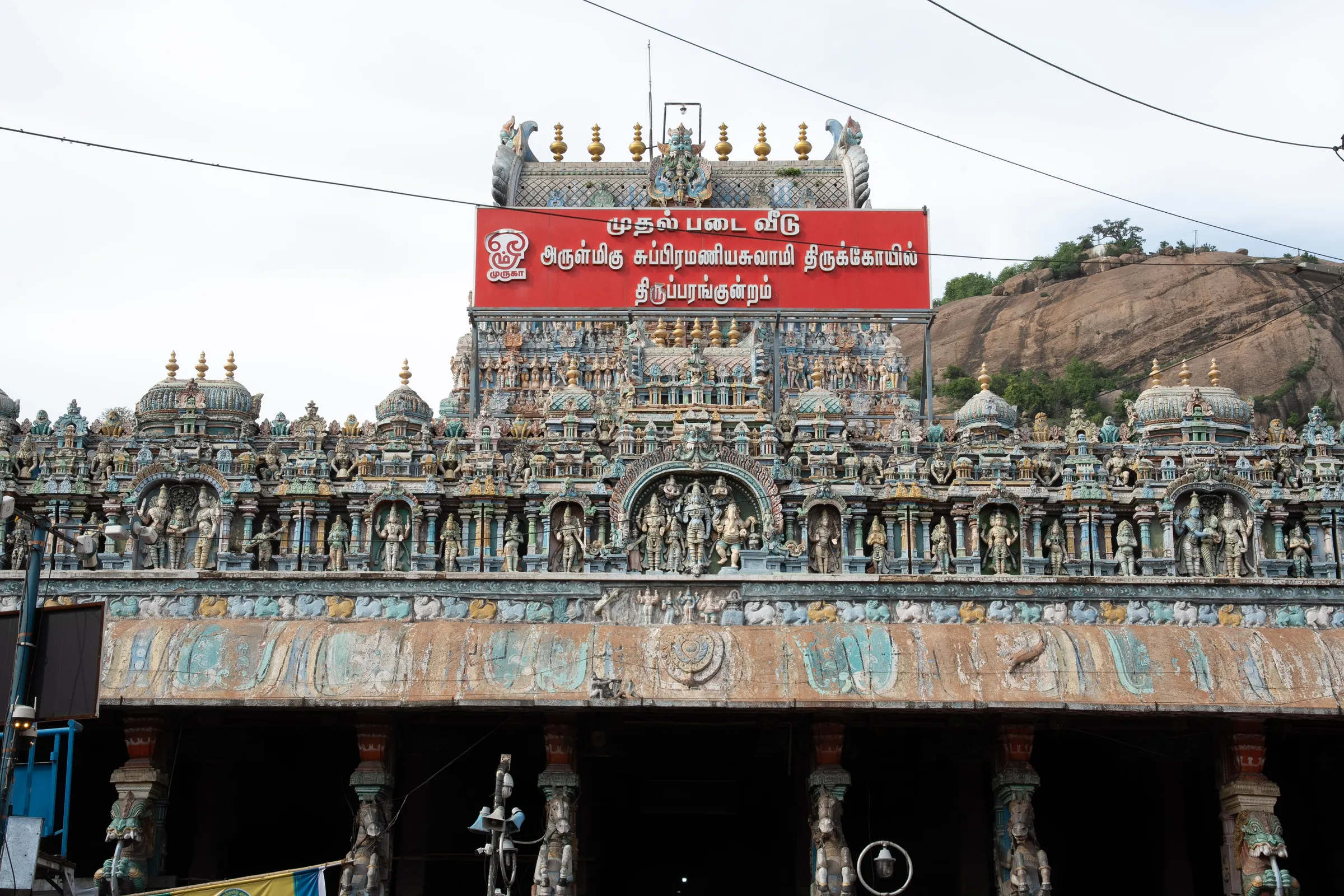
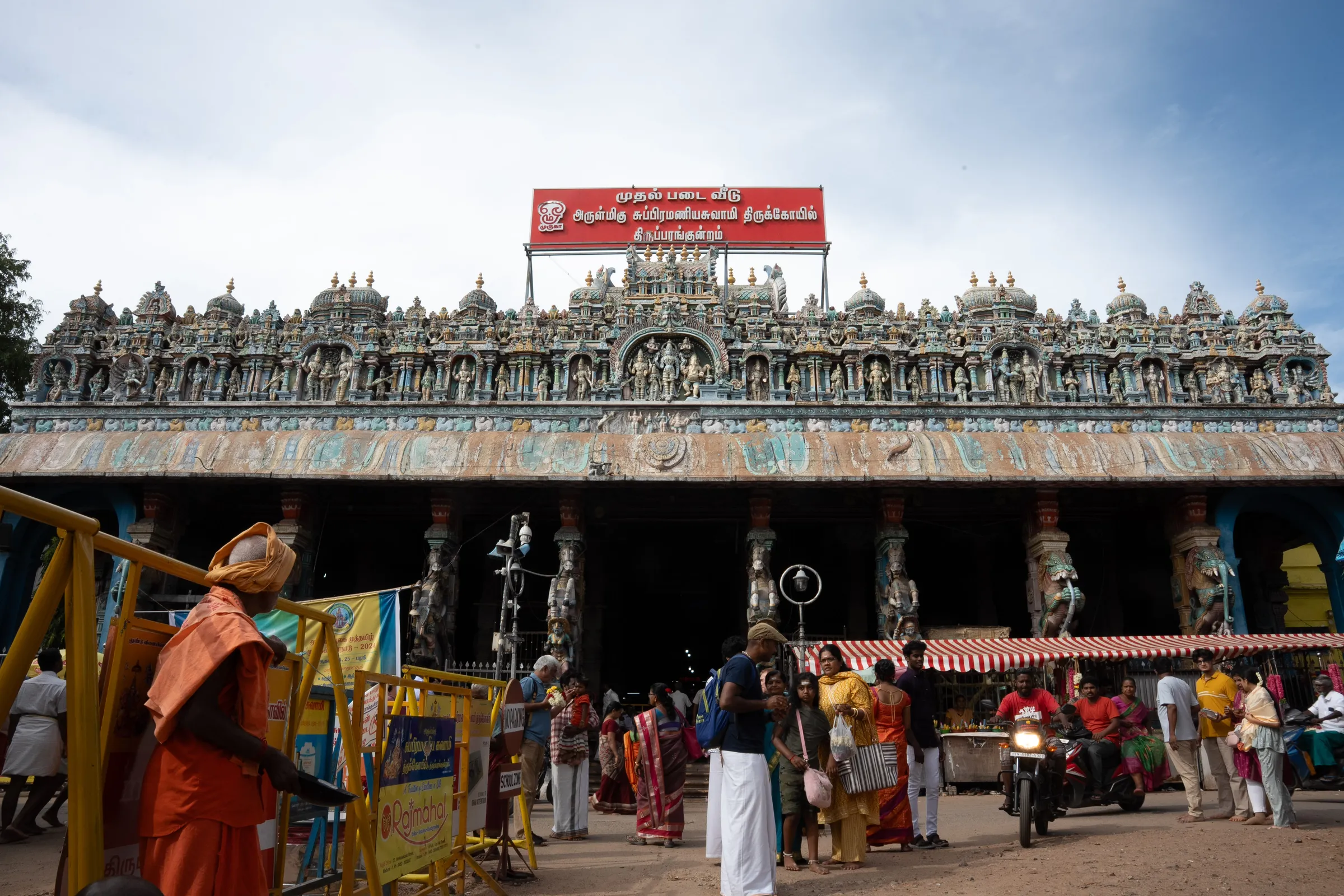
structure & vocabularyThis is the first in order of the Arupadaiveedu, the six abodes of Muruga, and here he is seated with Devayanai rather than standing, with Indra, Narada, Brahma, Sarasvati, Surya and Chandra beside him and his mounts, an elephant and a goat, below. The hill, shaped like a lingam, is known also as Tenparankundram, Parangiri, Kandamalai and Sathyagiri, and the temple was anciently called the Parangiri Nadhar temple. Satyagireeswara, or Parangiri Nadhar, is the principal deity on whose mast the festival flag is hoisted. There is no vimana or prakara, this being a rock-cut temple.
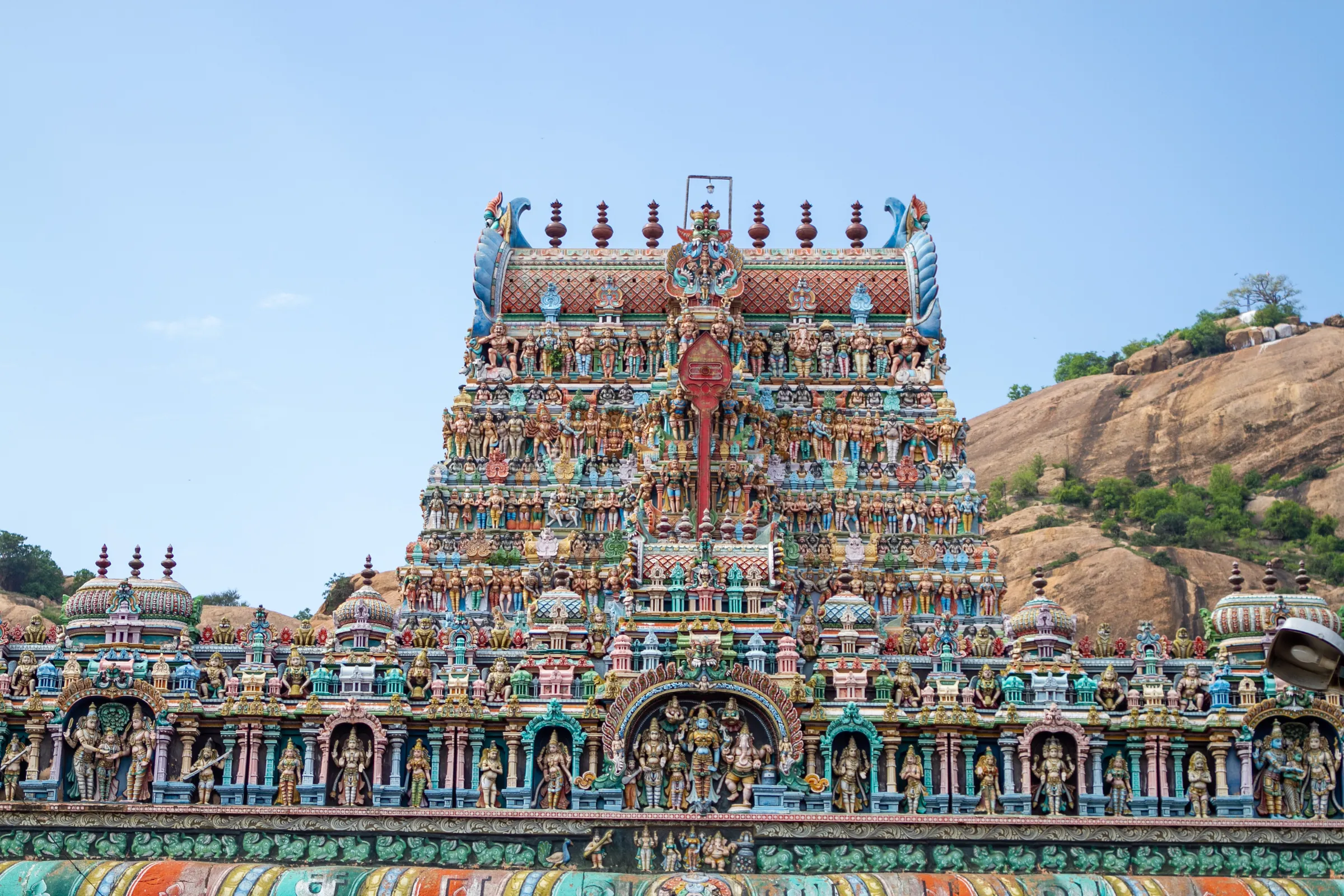
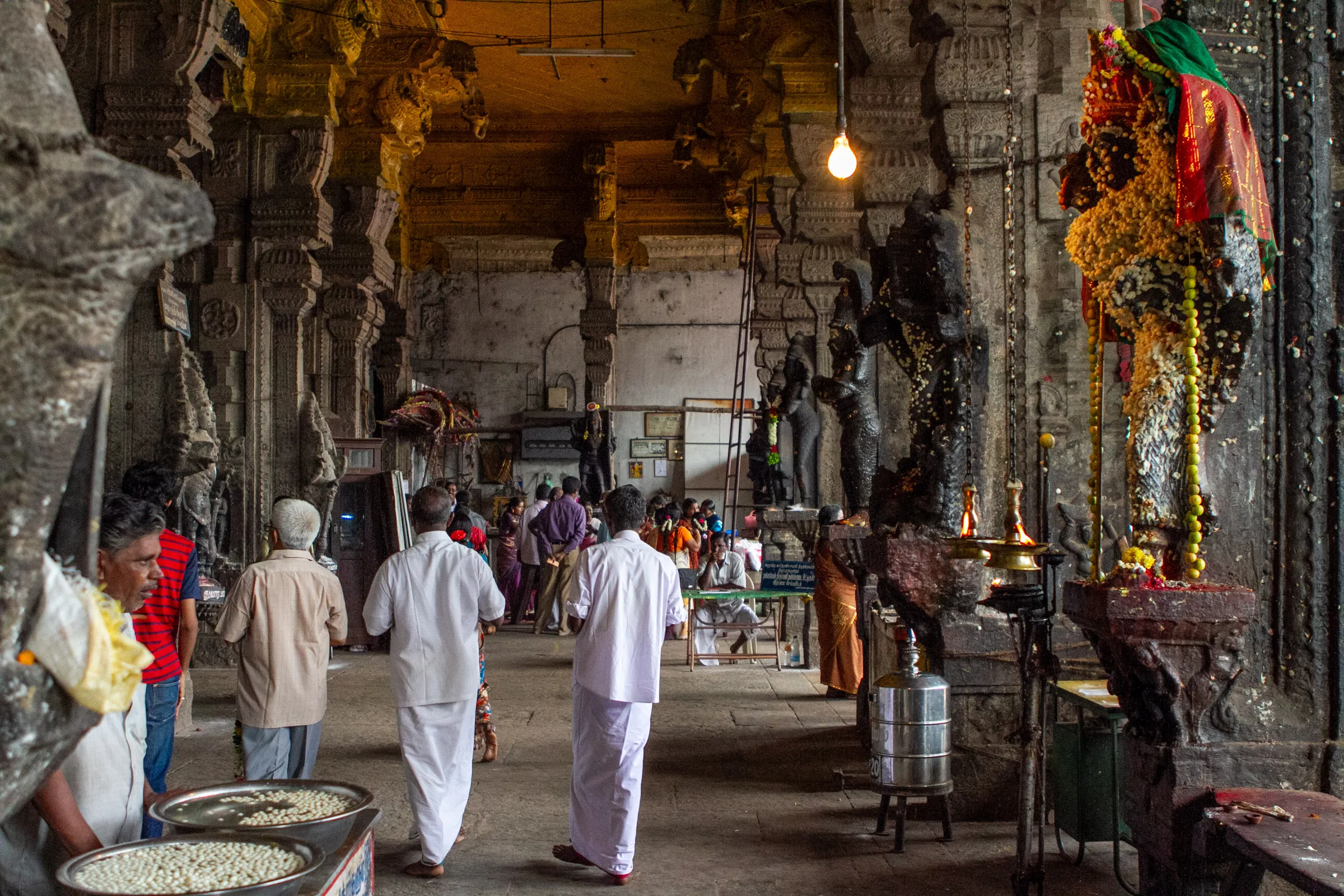
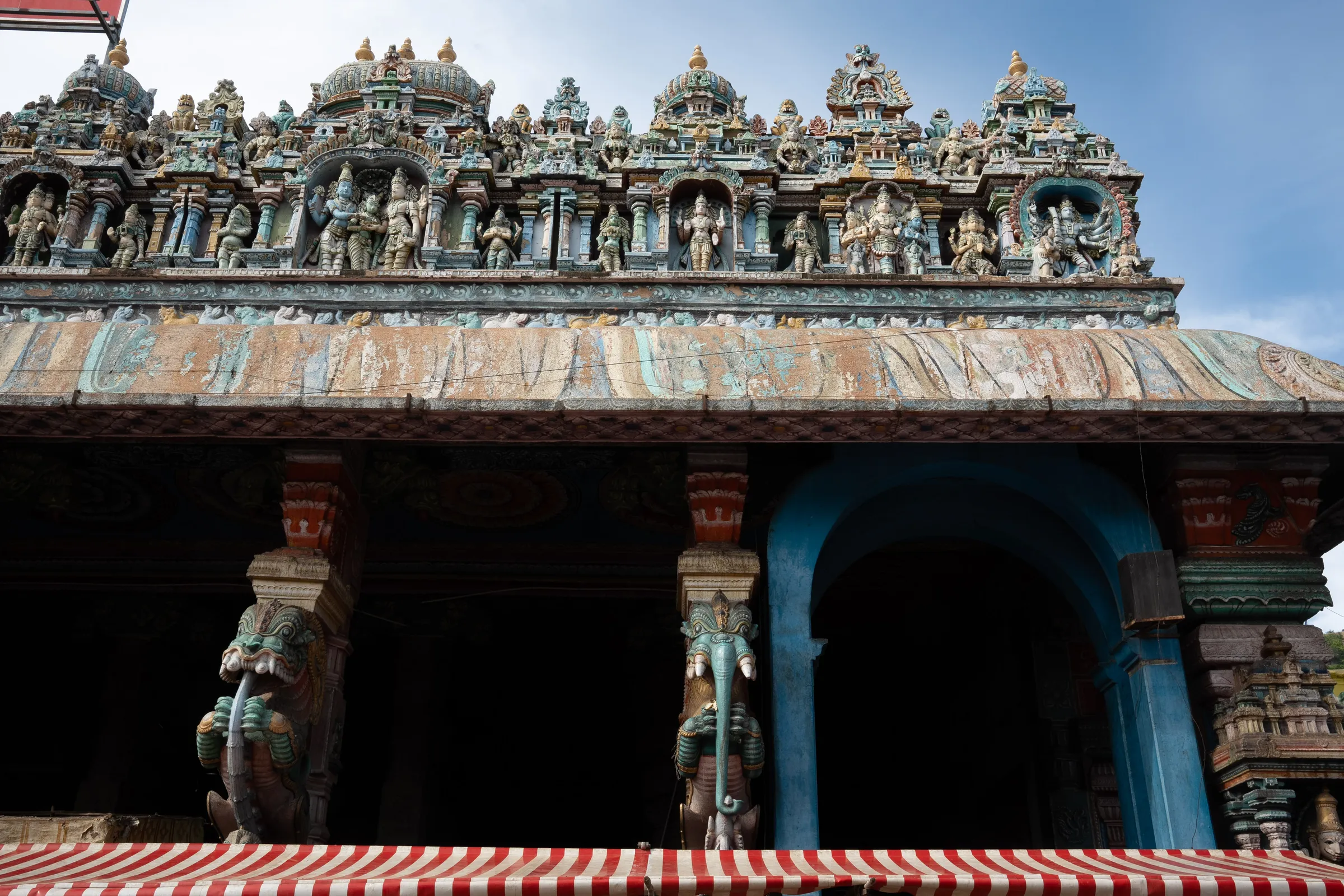
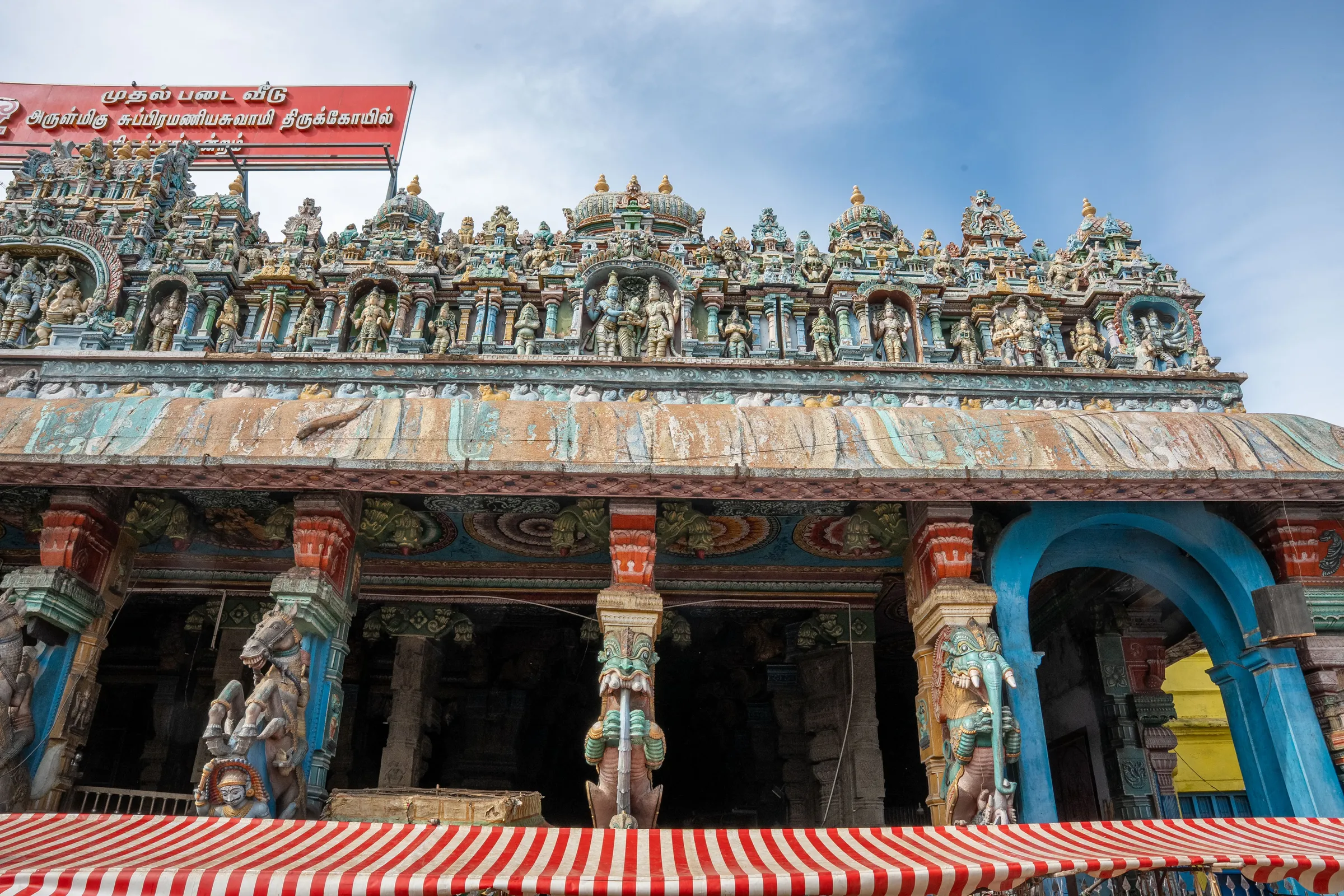
Before the Northern Gateway is the 48-pillared Asthana (Golu) Mandapa, built by Tirumalai Nayaka, its pillars carved with Nayaka soldiers, the marriage of Subramanya and Devayanai, Veerabahu, a dancing Ganesha, and Subramanya with a bow against Surapadhman, in a style close to the Meenakshi temple. Beyond are the seven-tiered Raja gopuram and the Kalyana Mandapa, also called Kudhiraipadi (horse steps) Mandapa, where two carved horses seem to pull it, an illusion of movement seen at Darasuram and Kumbakonam. The Kodi Mandapa is named for the flag mast, which Tirumalai Nayaka (1623 to 1659 CE) covered in gilded copper plates.
After the Kodi and Maha Mandapas comes the Ardha Mandapa, reached by six steps called the Shadkshara steps; the Ardha Mandapa and sanctum are rock-cut. The sanctum holds five shrines, for Vishnu (the west-facing Pavalakanivai Perumal, seated with Sridevi), Durga (worshipped with Nandi before her as Sivaswarupini), Karpaga Vinayaga, Satyagireeswara (Shiva, facing Vishnu), and Subramanya marrying Devayanai. The high-relief figures are not of hard stone, so they are anointed with oil and herbal mixes and never bathed with water; all pujas and abhishekam are done only to the Vel of Subramanya. On the hilltop is the temple of Kasi Vishwanatha and Visalakshi, with a statue of Nakkirar and the Kasi Theertham.