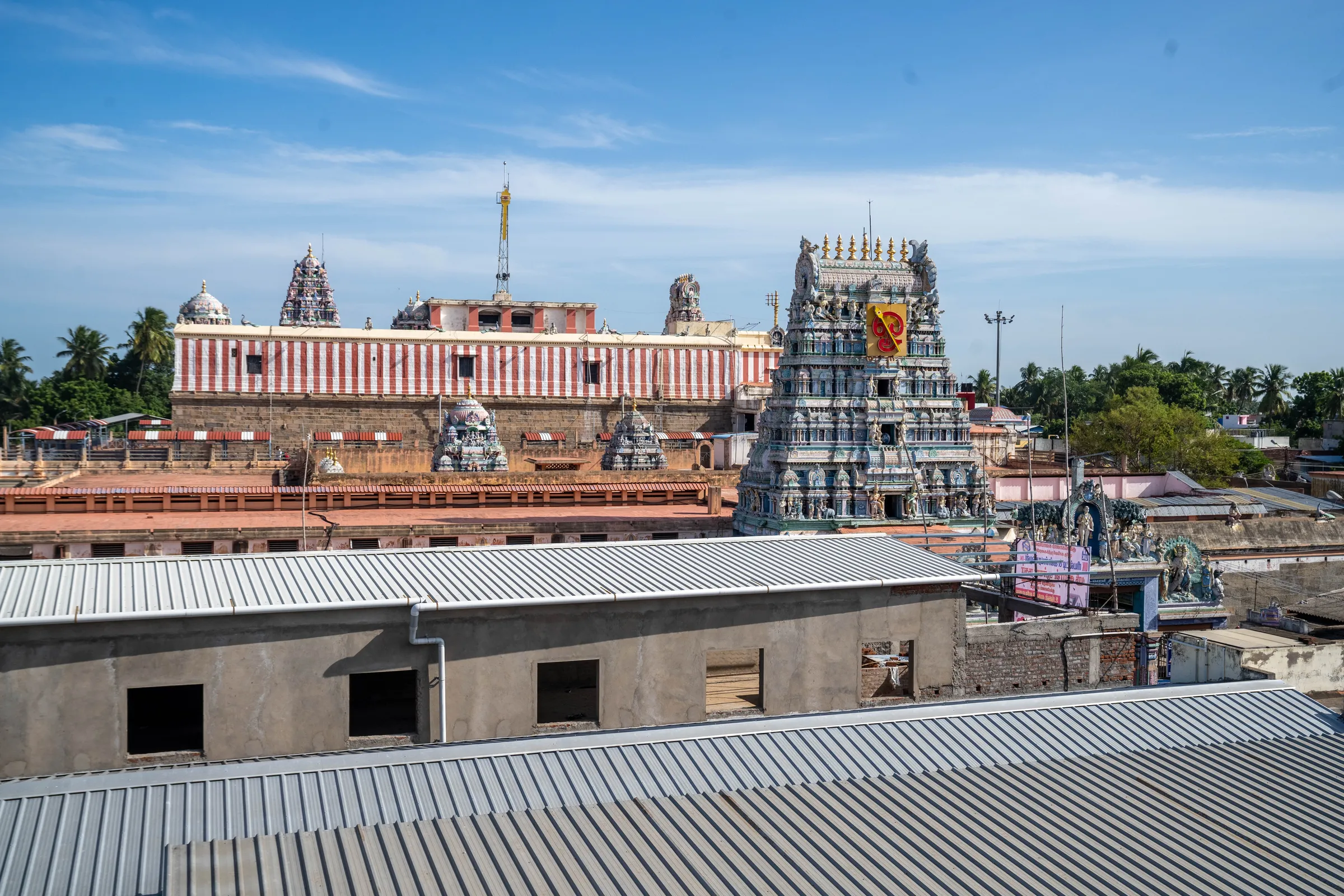
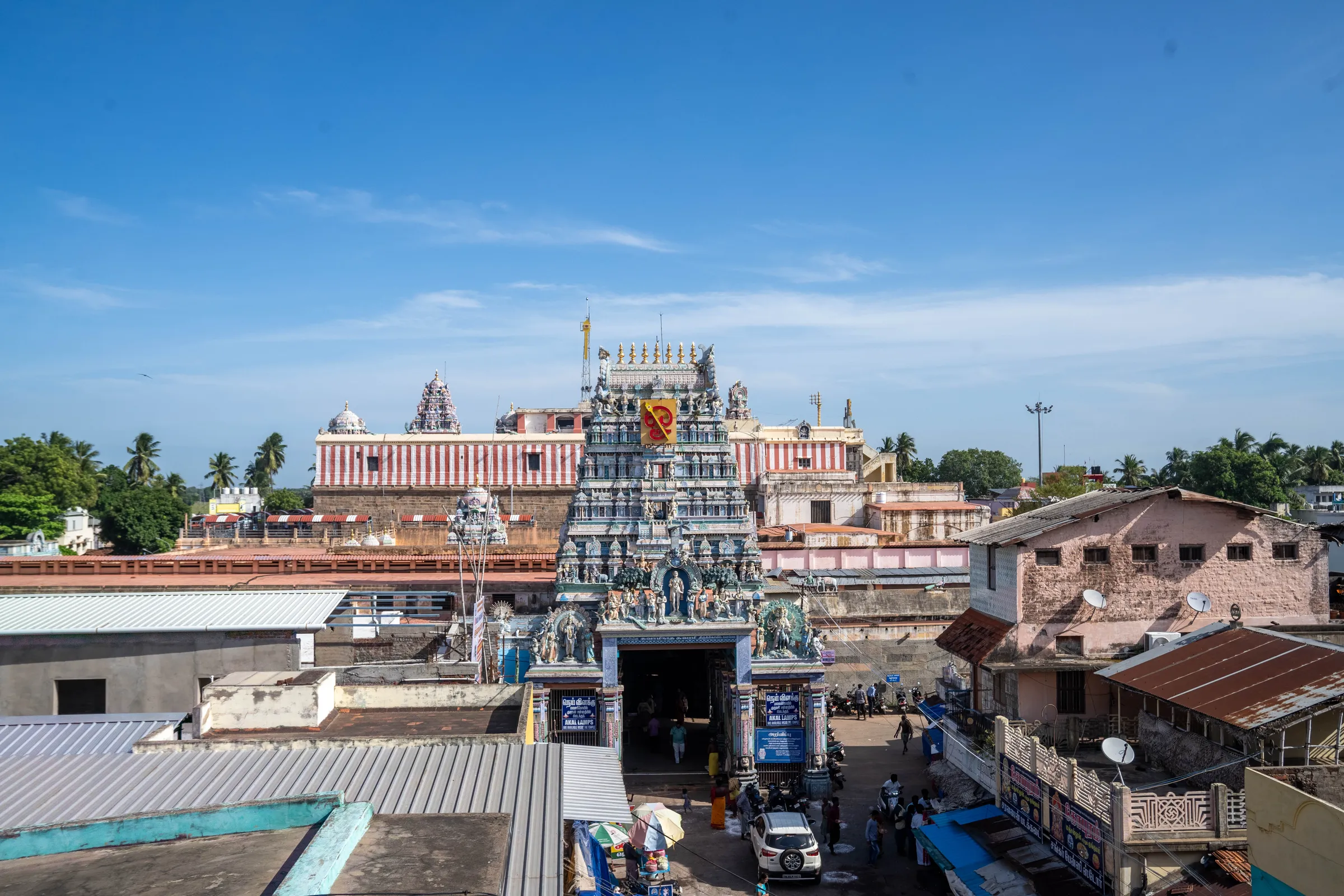
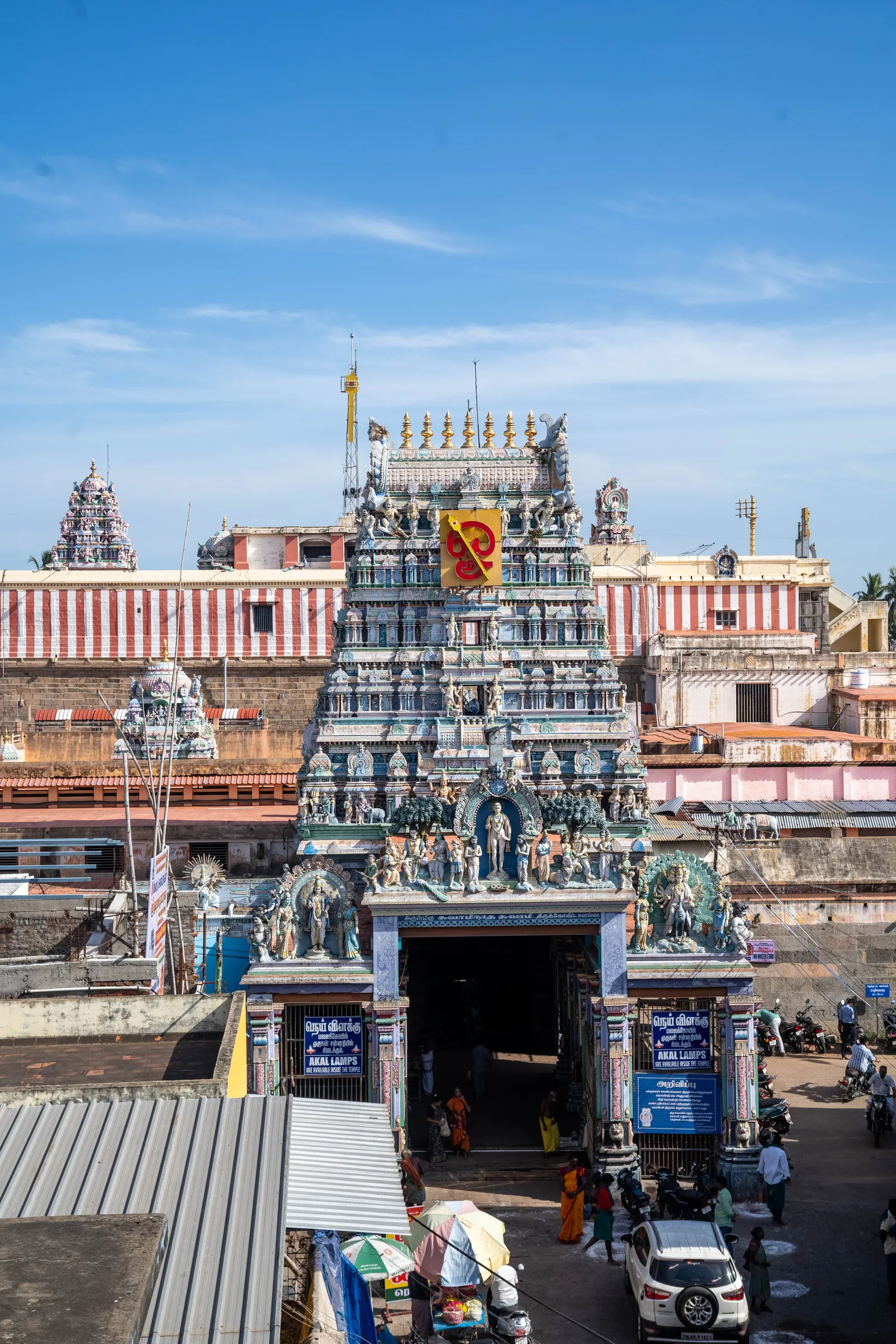
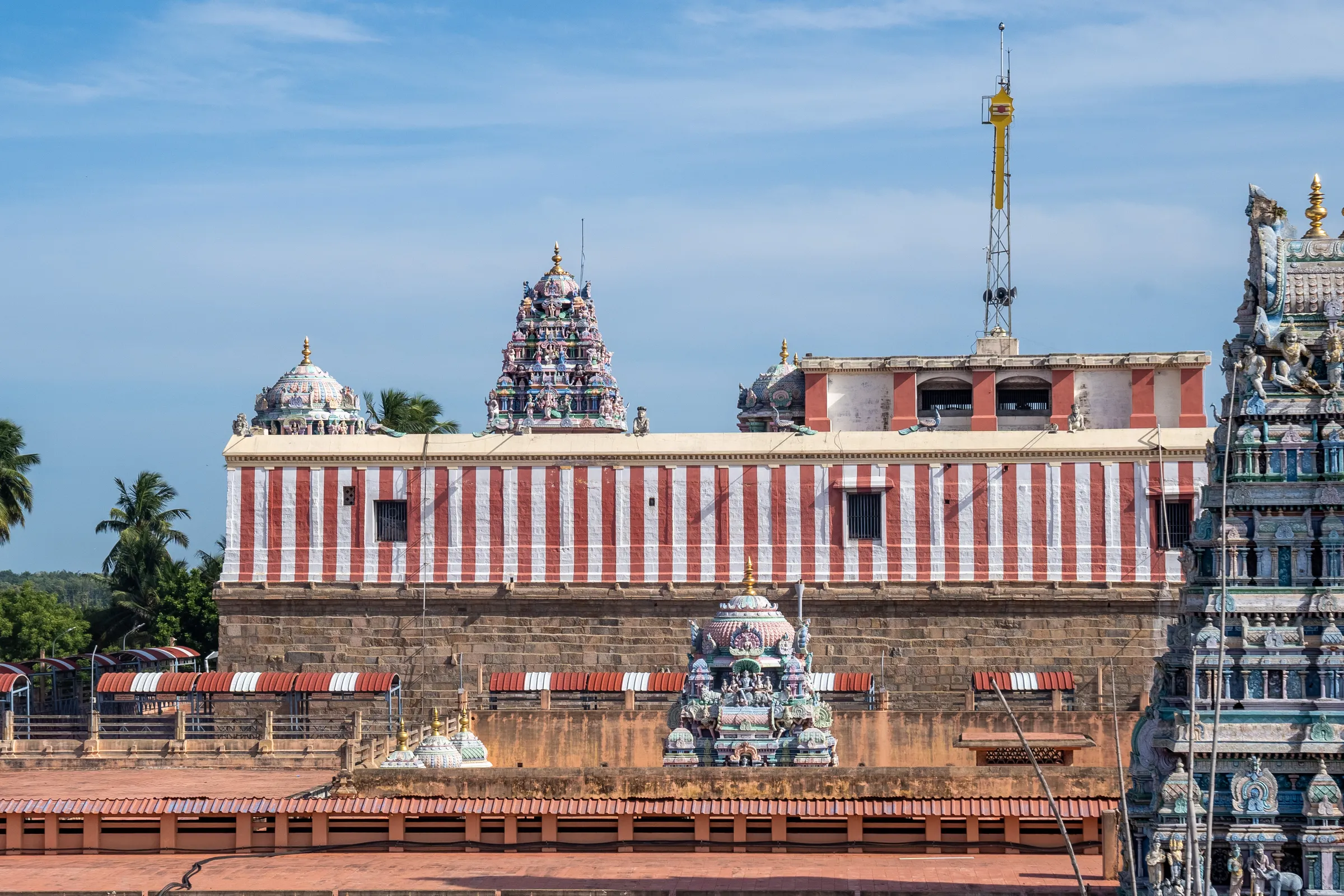
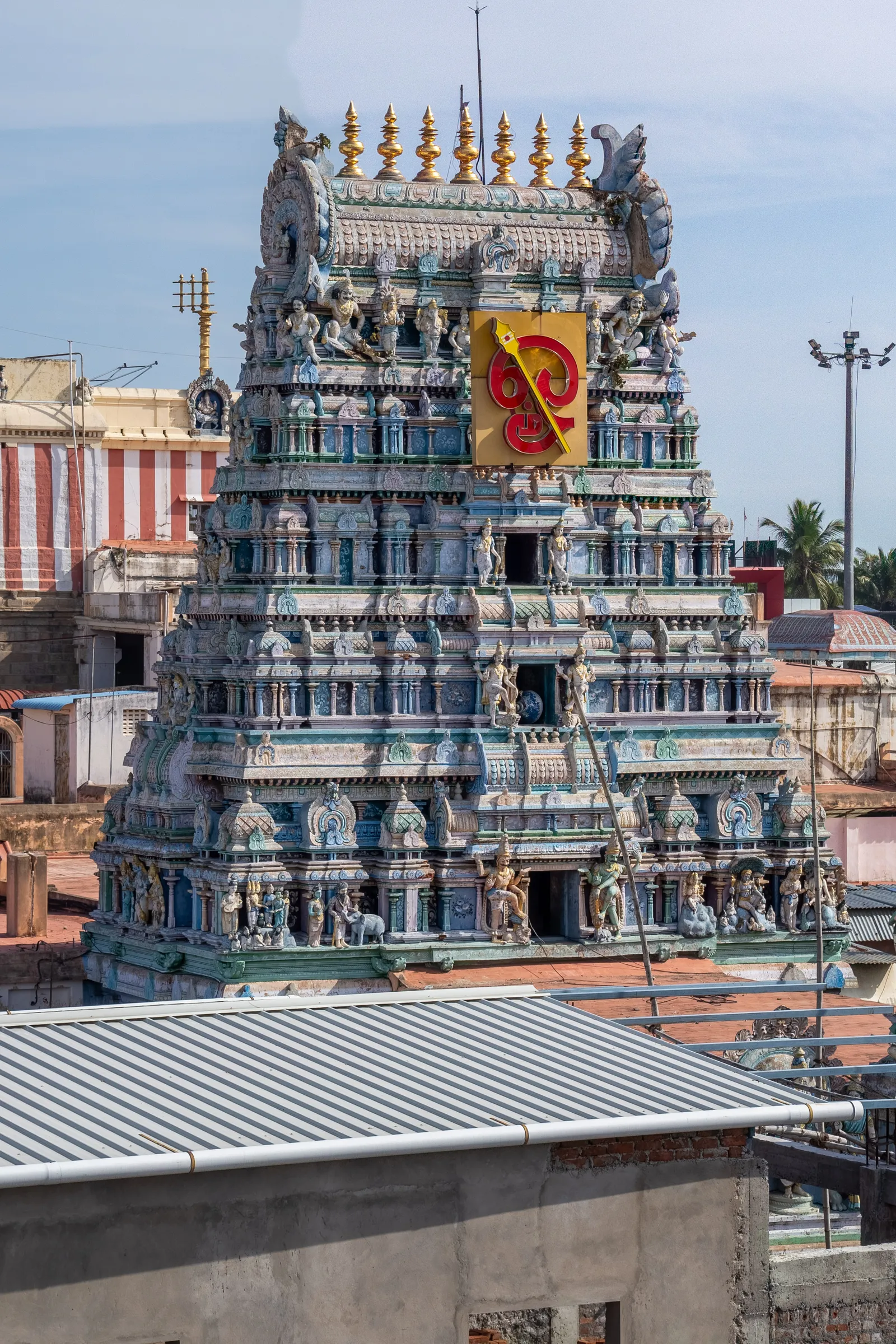
Swaminathaswami Temple, photograph
← Chola Nadu
Entry 032

Swaminathaswami Temple

Swamimalai · Chōḷa

Set on a man made hillock near Kumbakonam, Swamimalai is one of the six abodes of Murugan, who is worshipped here as Swaminātha, the teacher of Śiva, by the banks of a tributary of the Cauvery.

The photographs

Plates · 5

Swaminathaswami Temple, photograph
© Sai Sanjay Prasath · All rights reserved
Swaminathaswami Temple, photograph
© Sai Sanjay Prasath · All rights reserved
Swaminathaswami Temple, photograph
© Sai Sanjay Prasath · All rights reserved
Swaminathaswami Temple, photograph
© Sai Sanjay Prasath · All rights reserved
01

Architectural

structure & vocabulary

The temple is built on a man made hillock about 60 feet high, with 60 stone steps leading up, each step said to represent one year of the Hindu cycle of sixty. The shrine of Sundaresar and Devi Meenakshi lies at the foot of the hill, while Murugan's shrine stands atop. Sculptures along the way depict the legend of the temple.

There are three gopurams and three prakarams. One prakaram is at the foothill, the second midway up, and the third around the Swaminathaswami sanctum. The first prakaram holds shrines to Dakshinamoorthy, Durga, Chandikeswara and the utsavar of Swaminathaswami. The second is large, with a marriage hall and the temple chariot. In the main sanctum, atop the steps, Iravatham, the white elephant of Indra, stands before the Lord, a unique feature, for other Murugan temples place a peacock there.

02

Archaeological

dated & cited

The temple is believed to have existed from the Sangam period, around the second century BCE, and to have been modified and rebuilt by Parāntaka Chōḷa I. It was greatly damaged during the Anglo French war between Hyder Ali and the British in 1740. A noted inscription on the temple wall, in both Tamil and Sanskrit, records the visit of the Vijayanagara king Krishnadevaraya on what is in the modern calendar 30 October 1514, when he sought the blessings of Swaminatha and gifted the village tax free. The record names the deity as Swaminatha, showing the name was in use by his time. The Sanskrit portion at the end is damaged. The hill is given there as Harikanta purva malai.

03

Mythological

as transmitted

By Hindu belief, Swamimalai is where Murugan preached the Pranava mantra to his father Śiva while still young, and so received the name Swaminathaswami, the teacher of Śiva. When the fifteenth century poet Arunagirinathar visited, he wrote many hymns praising Murugan and the beauty of Swamimalai, collectively the Tiruppugazh, calling the town Thiruveragam. The Tamil poet Nakeerar wrote the Tirumurukatrupadai here.

Swamimalai and the nearby villages are a noted centre of bronze casting in the Chōḷa style. A few families of sthapathis, the bronze casters, worked in the village, and the tradition continues as traditional metal images grow more popular.

Register interest in prints Buy the book
Improve this entry

This is an open, reviewed record. If you have spotted an error or have something to add — a correction, a date, a source, a name in another script — propose it. Every change is reviewed before it joins the record.

“Suggest an edit” opens this entry on GitHub and turns your change into a pull request. “Share feedback” opens a short form. Both go through review.