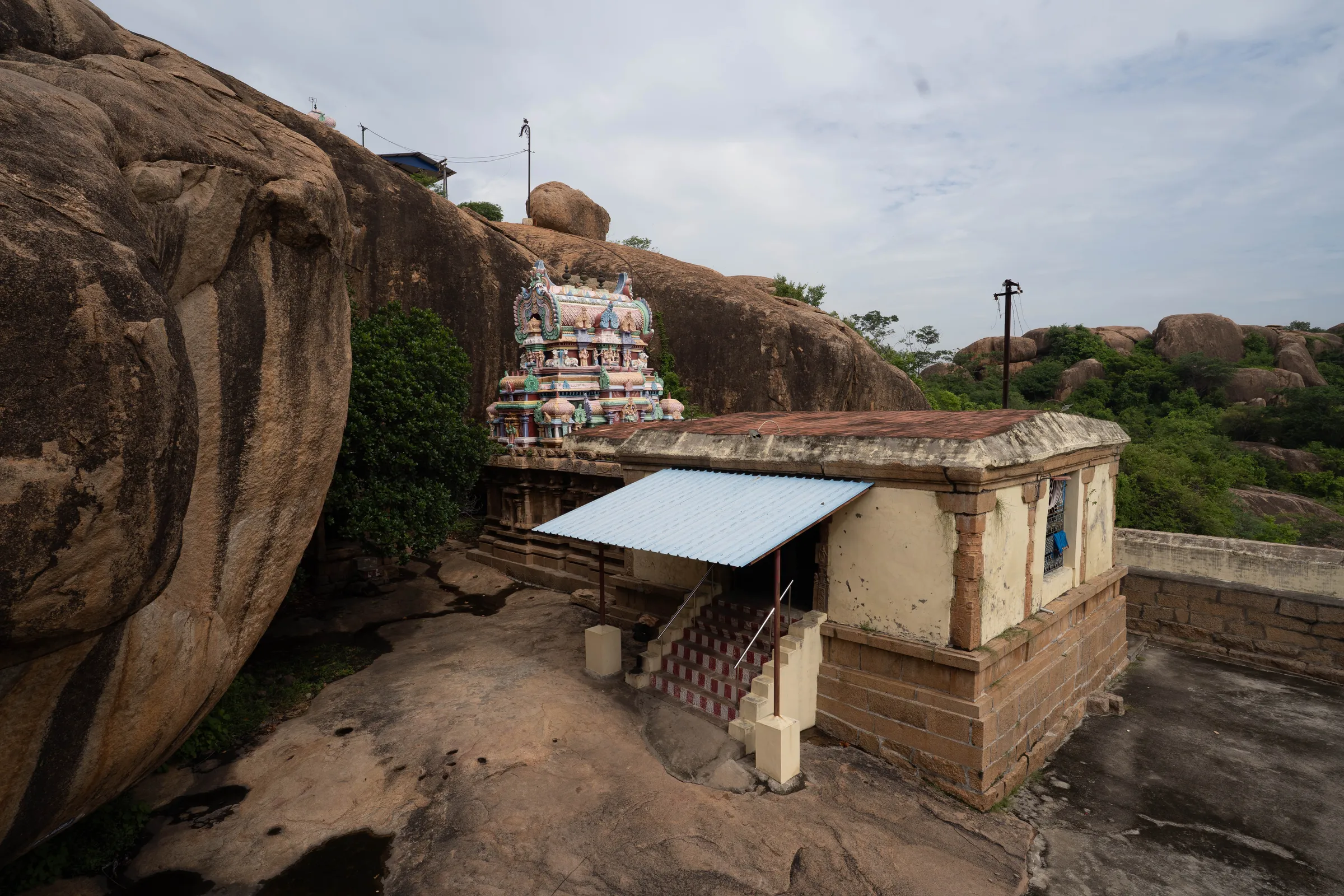
Thanthodreeswarar Temple, photograph
← Pandya Nadu
Entry 084

Thanthodreeswarar Temple

Tirukolakudi · Sivaganga · Pandya

A rock-cut Śiva cave at Tirukolakudi, one of the rare cave temples of the Pandya region, whose inscriptions open a window onto medieval crops, taxes and gifts.

The Thanthodreeswarar temple at Tirukolakudi in Sivaganga district is a rock-cut Śiva shrine, one of the rare cave temples of the Pandya region, set in a scenic hill with a spring and an early Ganesa relief. Its true wealth is in its inscriptions, which record gifts, a wooden temple car, a measuring rod and a detailed 13th-century scheme of crops and land tax.

The photographs

Plates · 5

Thanthodreeswarar Temple, photograph
© Sai Sanjay Prasath · All rights reserved
Thanthodreeswarar Temple, photograph
© Sai Sanjay Prasath · All rights reserved
Thanthodreeswarar Temple, photograph
© Sai Sanjay Prasath · All rights reserved
Thanthodreeswarar Temple, photograph
© Sai Sanjay Prasath · All rights reserved
01

Architectural

structure & vocabulary

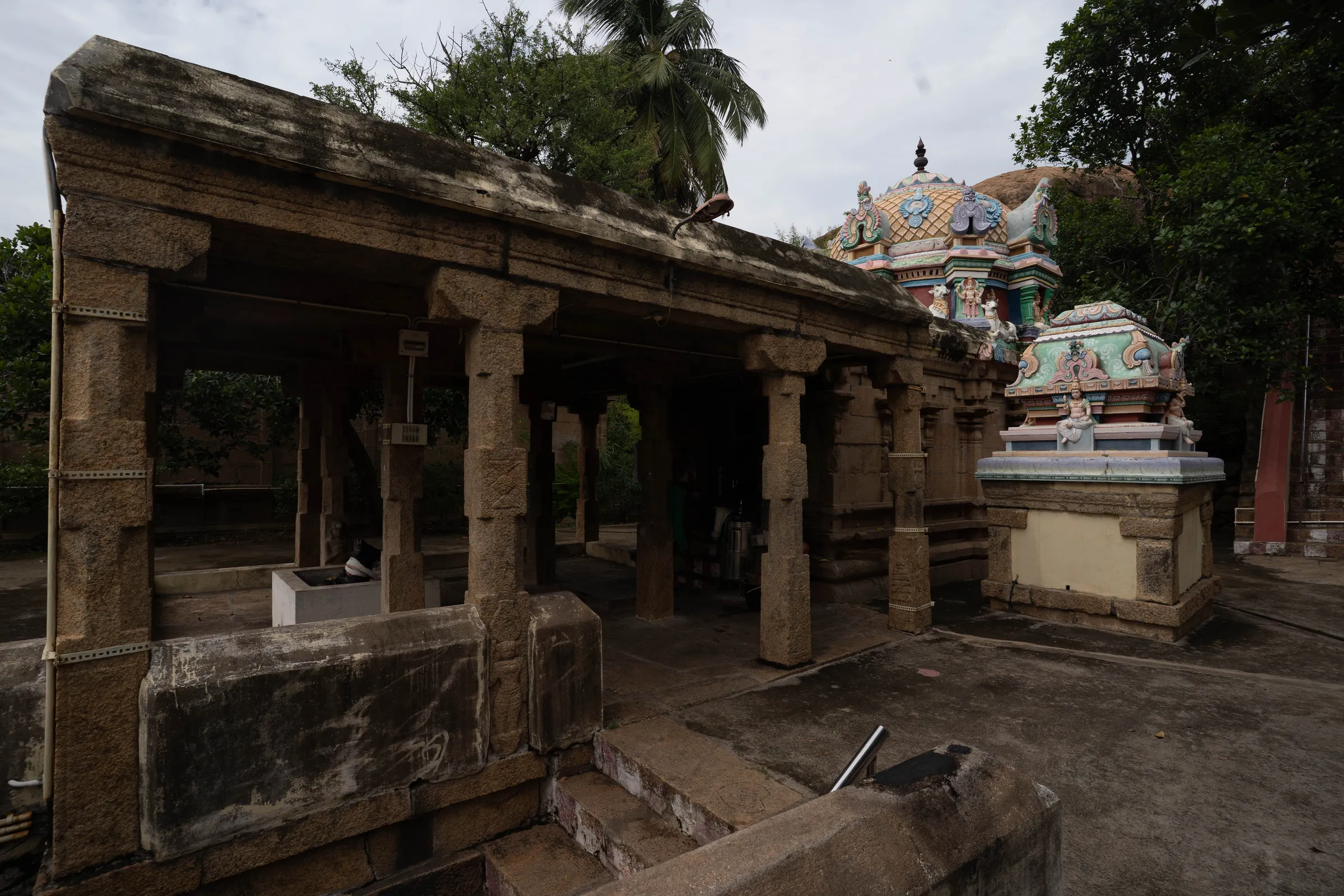
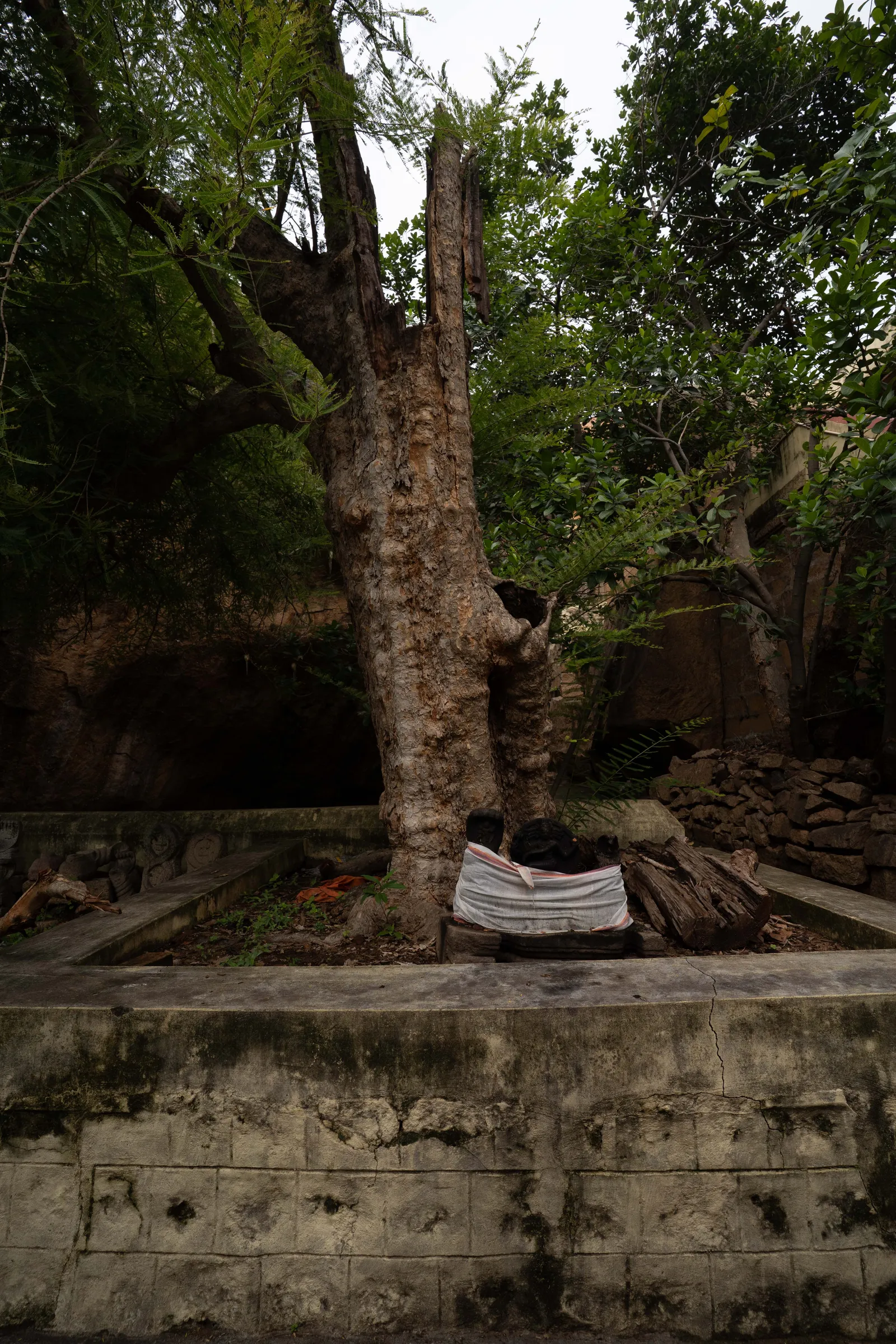
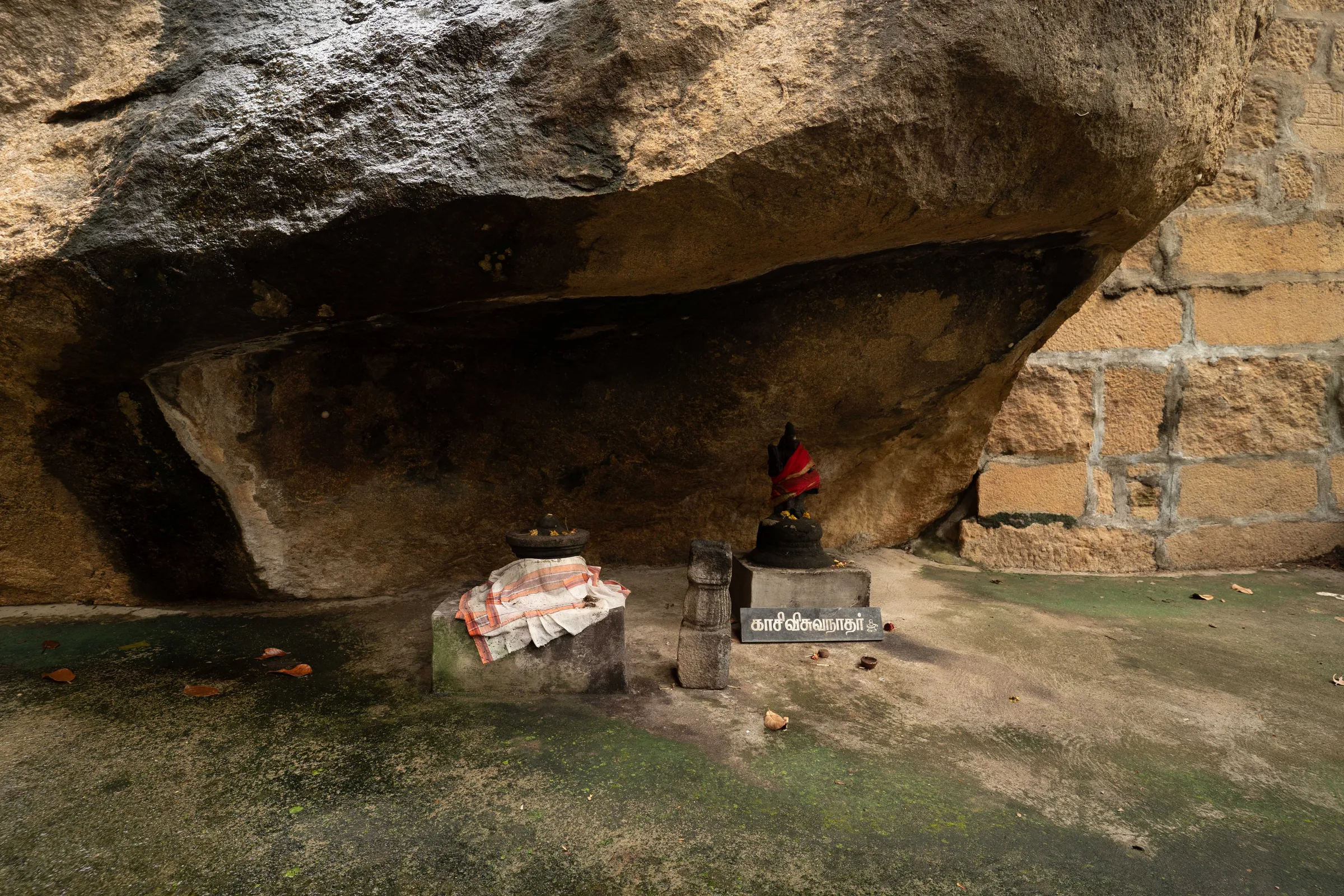
The main shrine is a cave temple hewn out of the parent hill rock, fully aligned and proportional, one of the rare cave temples of the Pandya region. It has since been added to with subsidiary shrines. Below it, beside a spring-water pool, a smaller cave holds an early bas-relief of Ganesa, among the oldest in the region.

Further temples stand here and at the foot of the hill, all plain structures with only one or two cells for pilgrims, and a small shrine for Muruga or Karthikeya crowns the hill. One inscription on the rock is a long line carved with decorative motifs at both ends, recording the length of a land-measuring rod, rare to find. The book notes there is no bhakti literature on these temples.

02

Archaeological

dated & cited

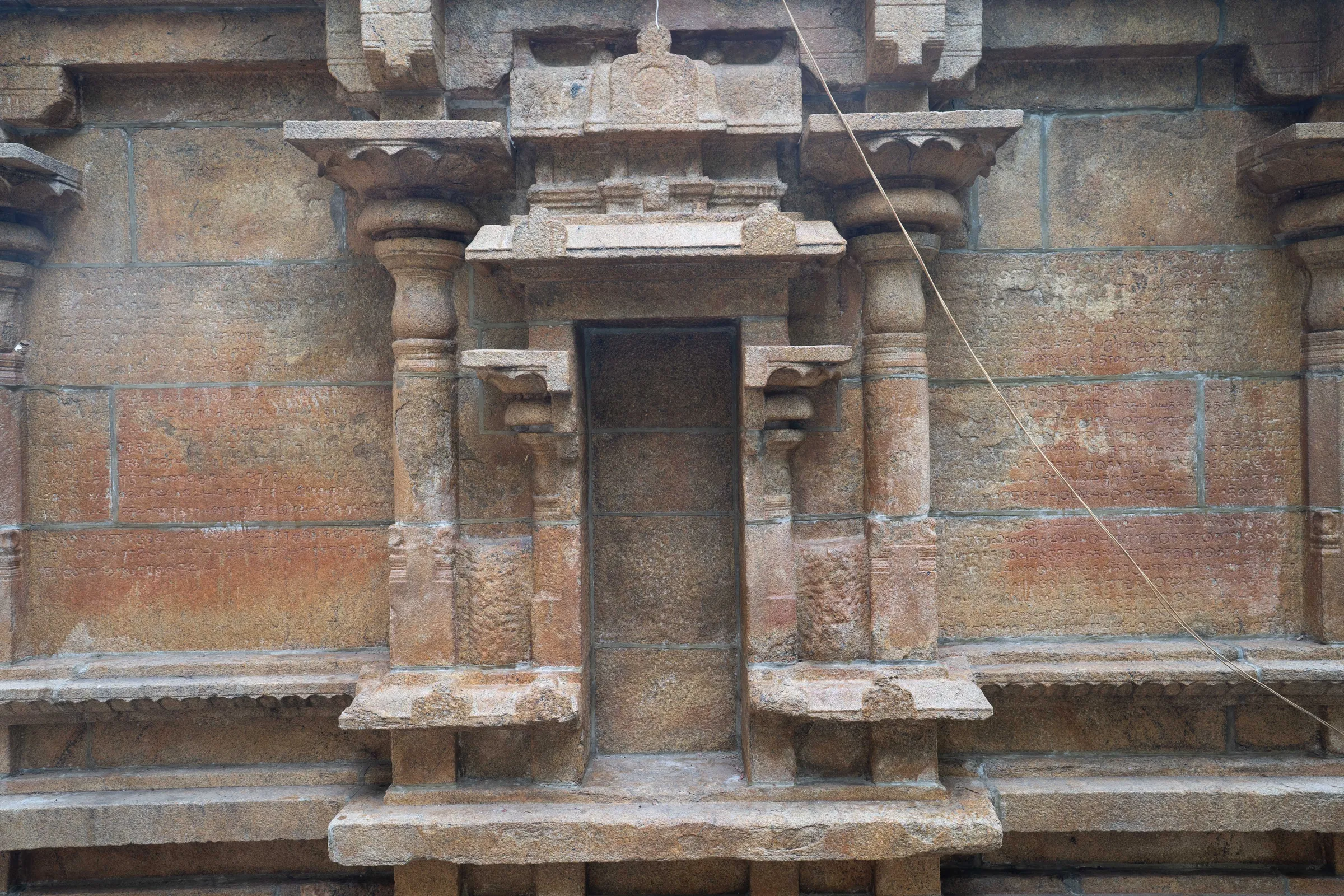
The cave is stylistically dated to at least the 9th century CE or earlier. The book groups the temple's inscriptions into gifts by individuals, gifts by groups, and records of agreements. In 1597 CE merchants from Ilayatangudi gave a wooden temple ratha with 50 gold coins and 500 kalam of paddy for the festival (ARE 1916, C45); goldsmiths and blacksmiths of Attur gave land in gratitude when a dispute between them was resolved (ARE 1916, C44).

An inscription of 1296 CE, in the reign of the Pandya king Jatavarman Sundara Pandya, records temple authorities granting land to one Sundara Pandya Narasingadevan on condition that he repair disused water sources, clear the jungle, and pay a melvaram, or land tax, to the temple. The tax fell to a third of the produce for crops such as millets, sesame, lentils, sugarcane, turmeric, ginger and banana, a fifth for coconut and areca, and a seventh for dry crops; newly cleared land was taxed lightly at first and rose by stages to a permanent third. The inscription states the temple's share belongs to the king, underlining the king and temple bond.

Dating
Begun9th century CE or earlier · inferred (stylistic)

The main cave shrine is stylistically dated to at least the 9th century or earlier.

Inscription · On the rock and on the temple pillars

In 1296 CE, in the reign of the Pandya king Jatavarman Sundara Pandya, the temple authorities granted land to Sundara Pandya Narasingadevan, who was to repair the disused water sources, clear the jungle, and pay a graduated land tax to the temple; the temple's share belongs to the king.

Register interest in prints Buy the book
Improve this entry

This is an open, reviewed record. If you have spotted an error or have something to add — a correction, a date, a source, a name in another script — propose it. Every change is reviewed before it joins the record.

“Suggest an edit” opens this entry on GitHub and turns your change into a pull request. “Share feedback” opens a short form. Both go through review.