Architectural
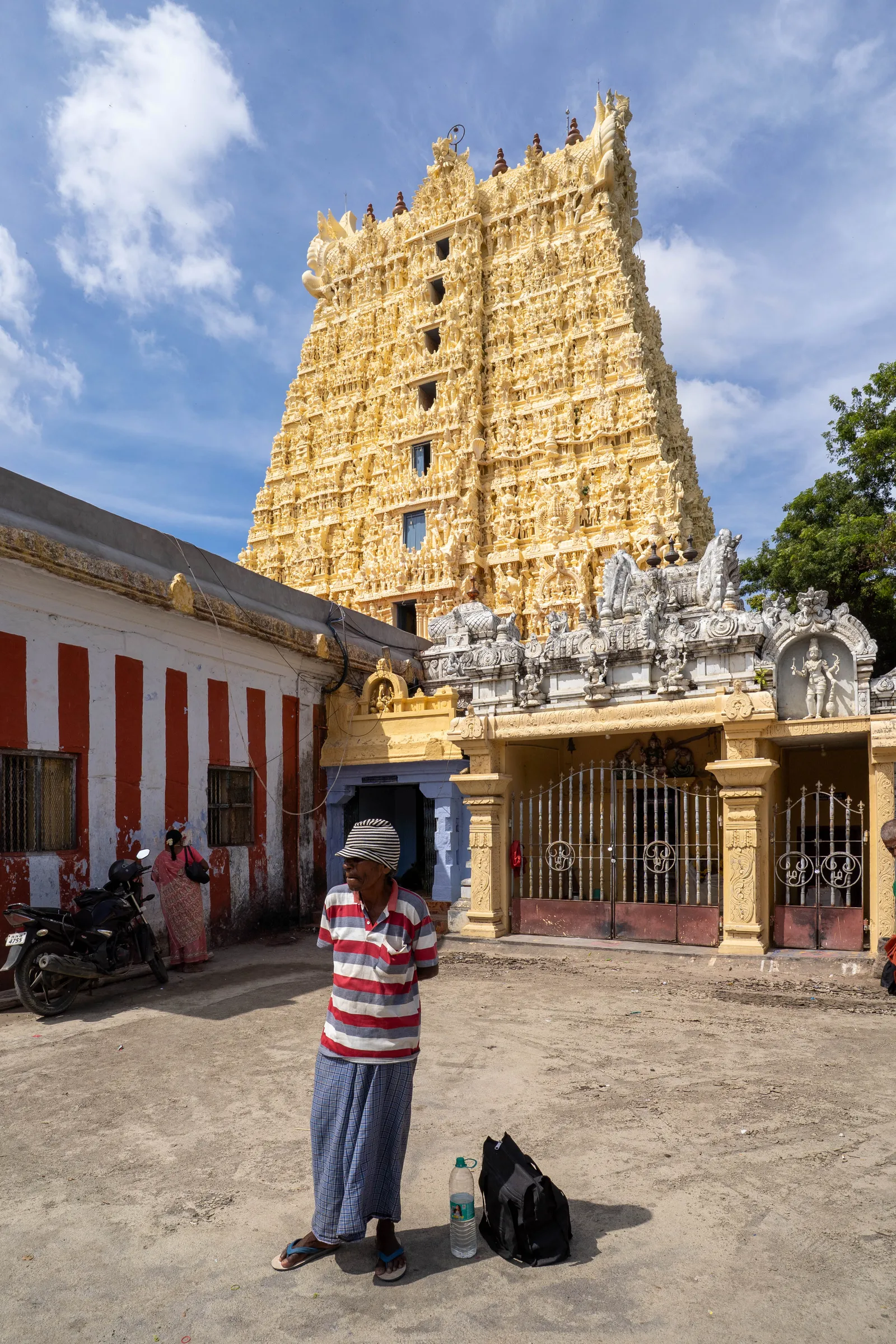
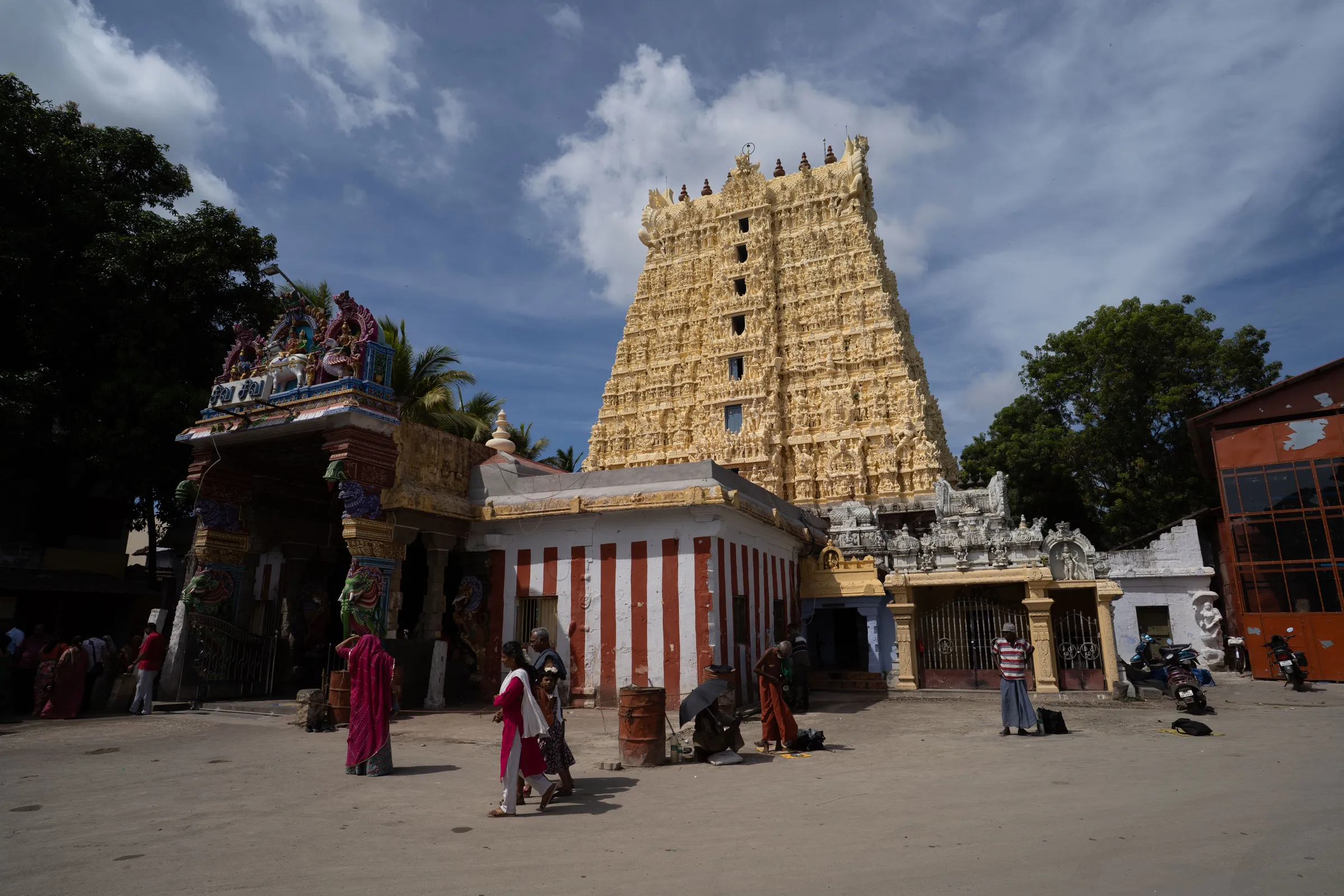
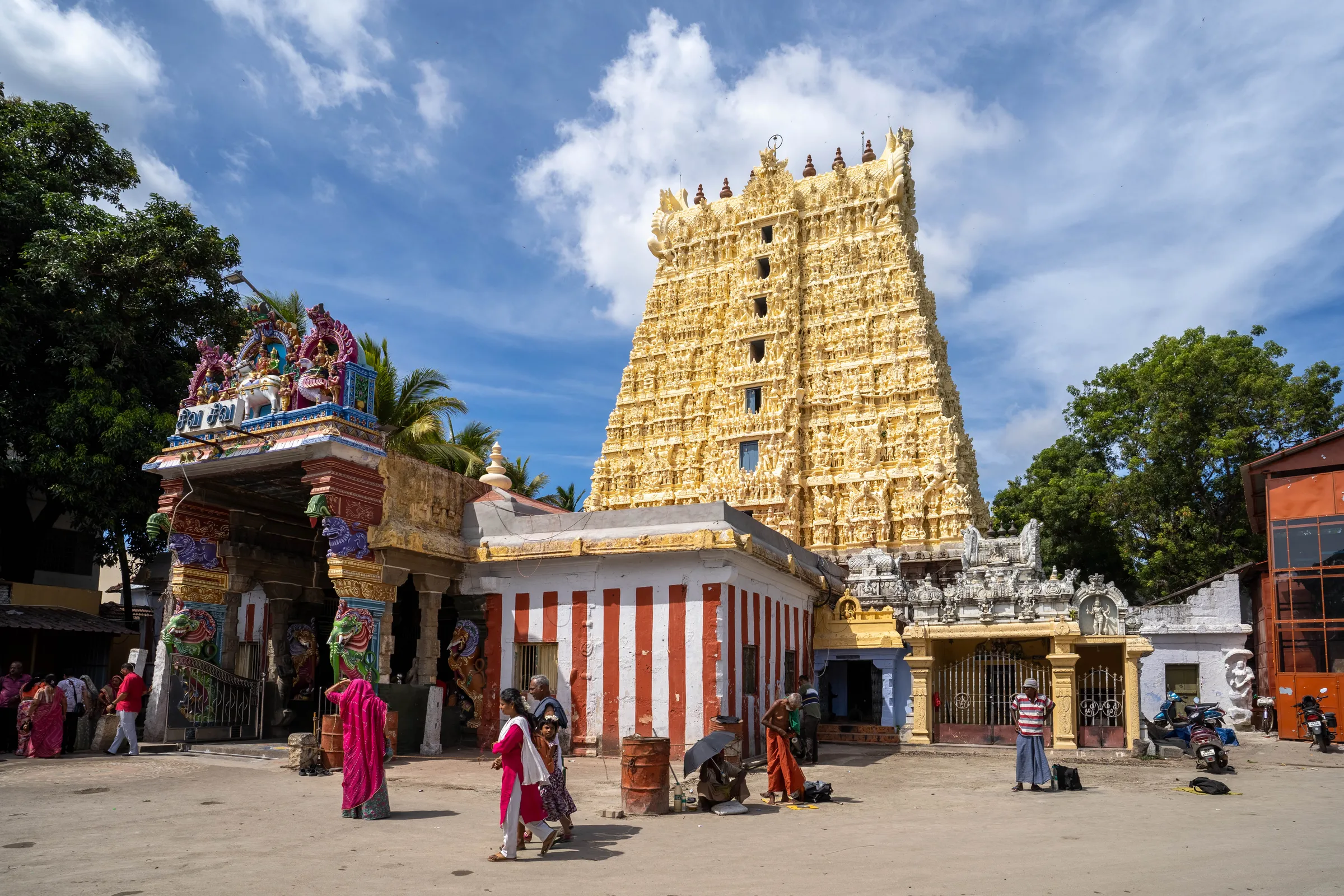
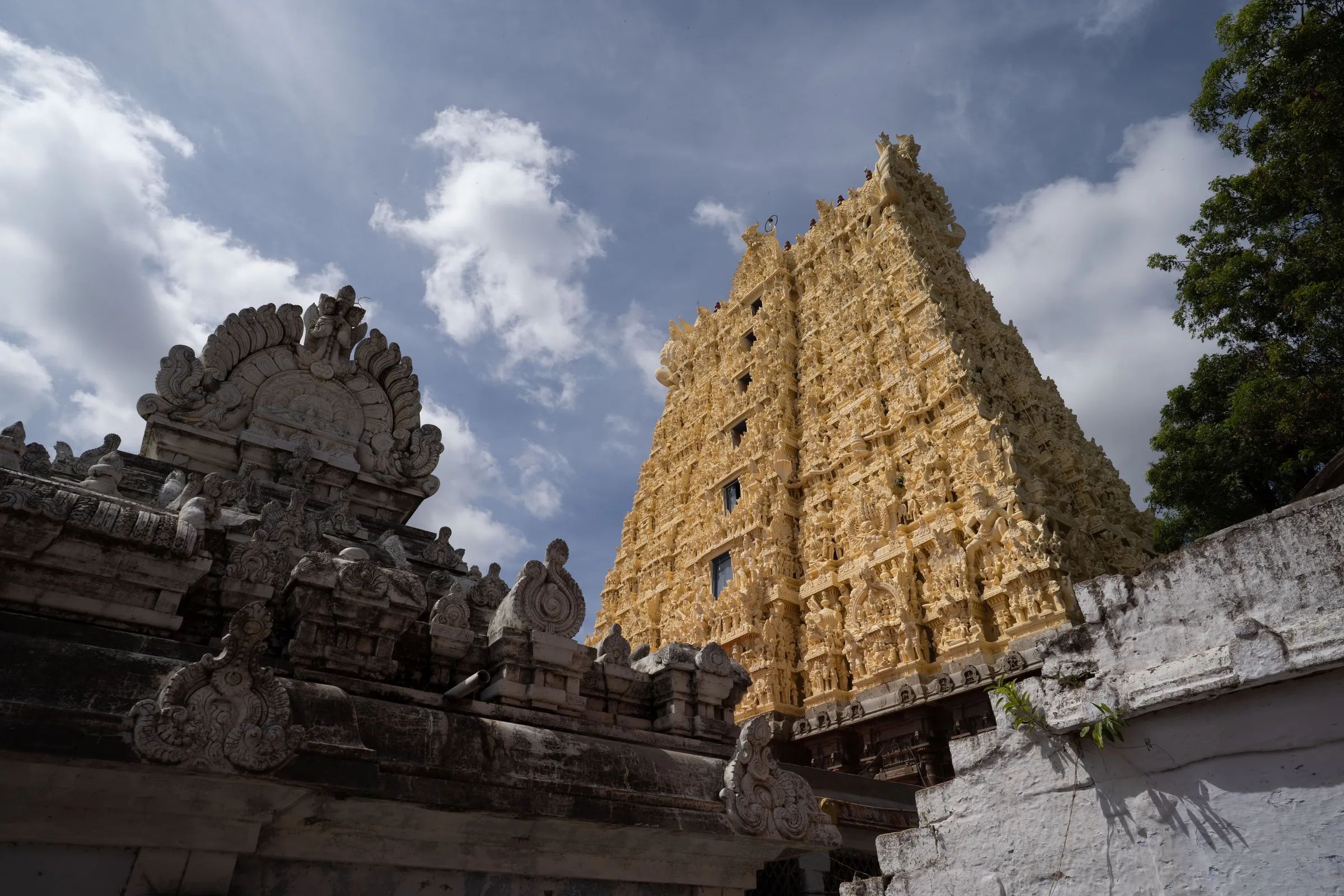
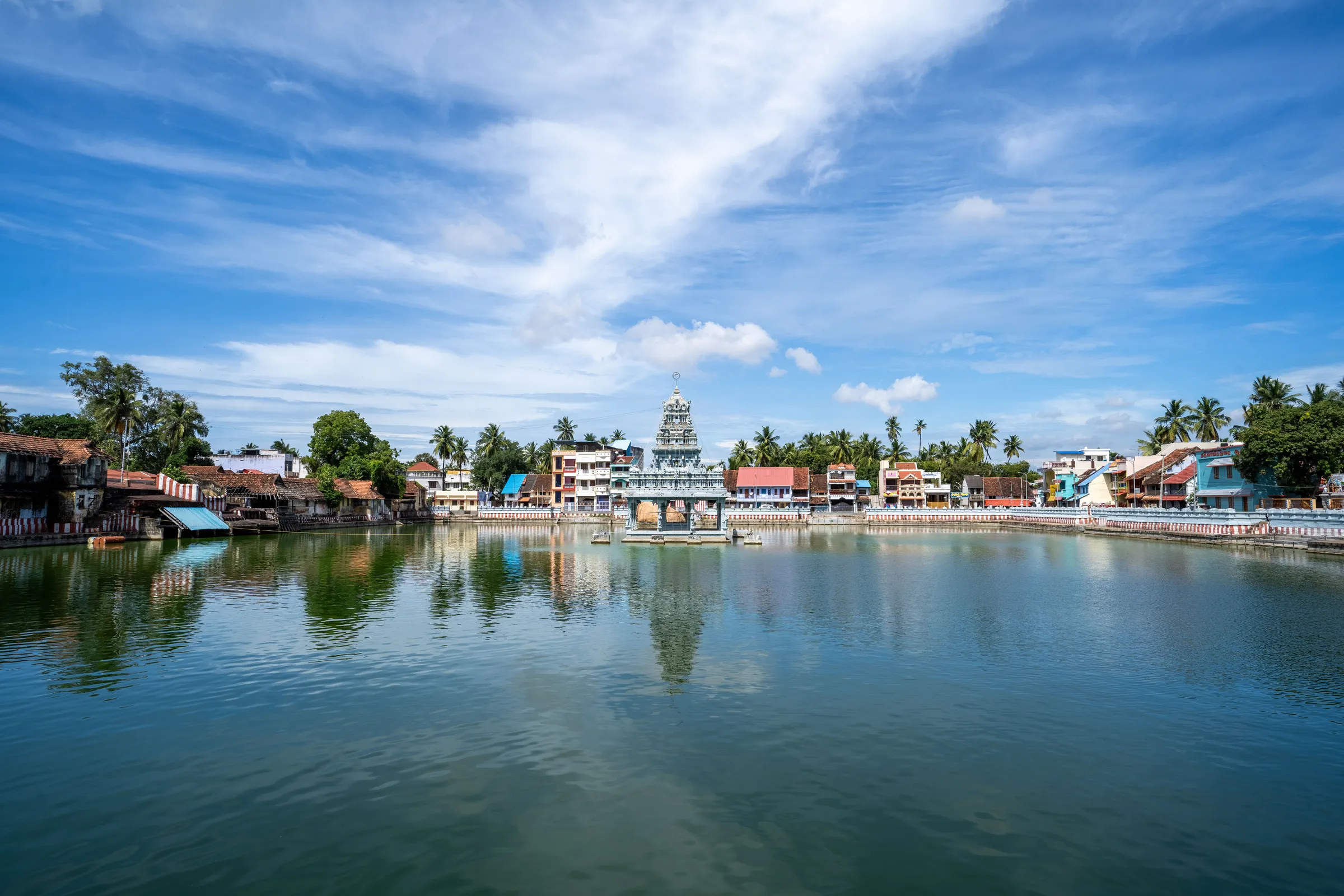
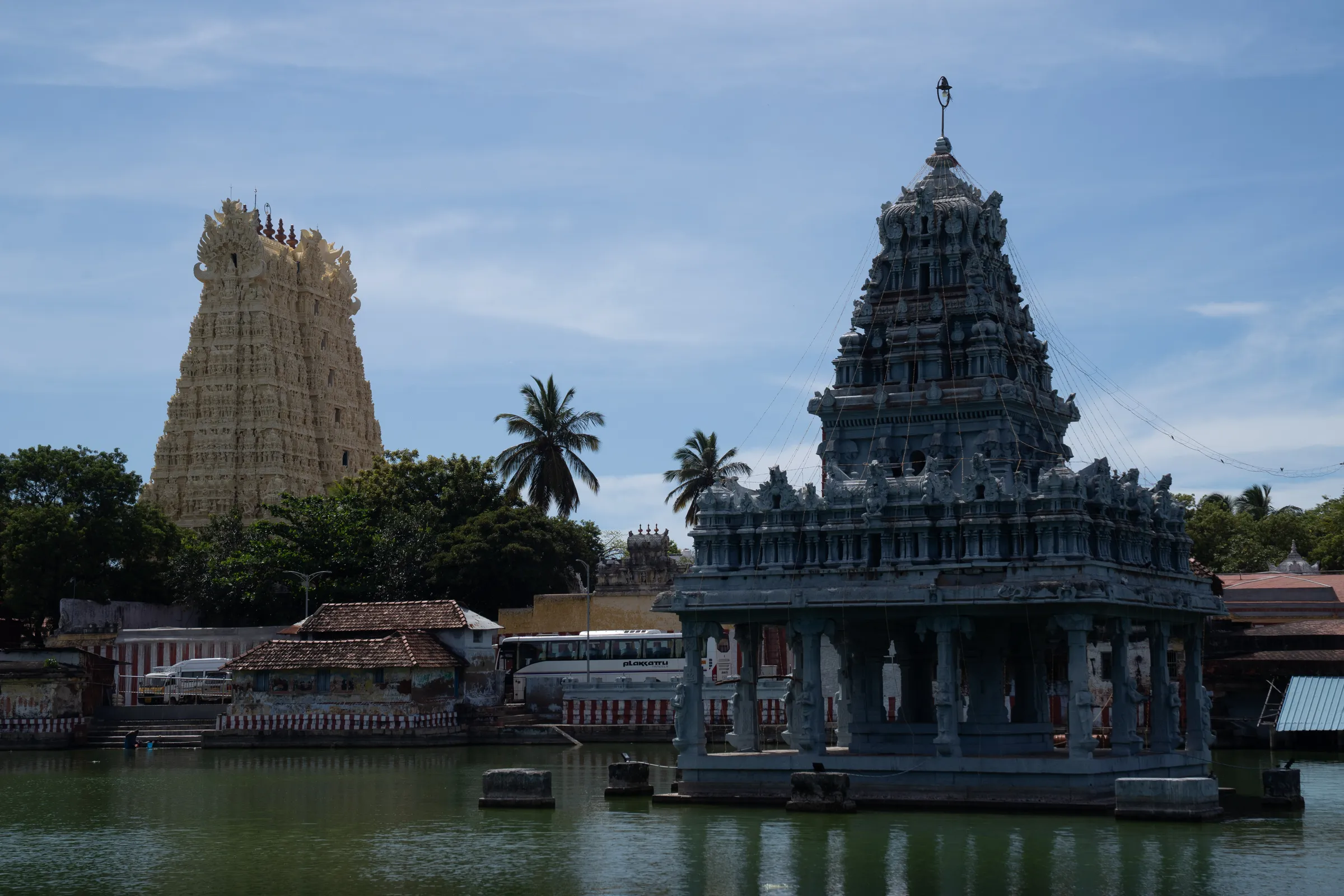
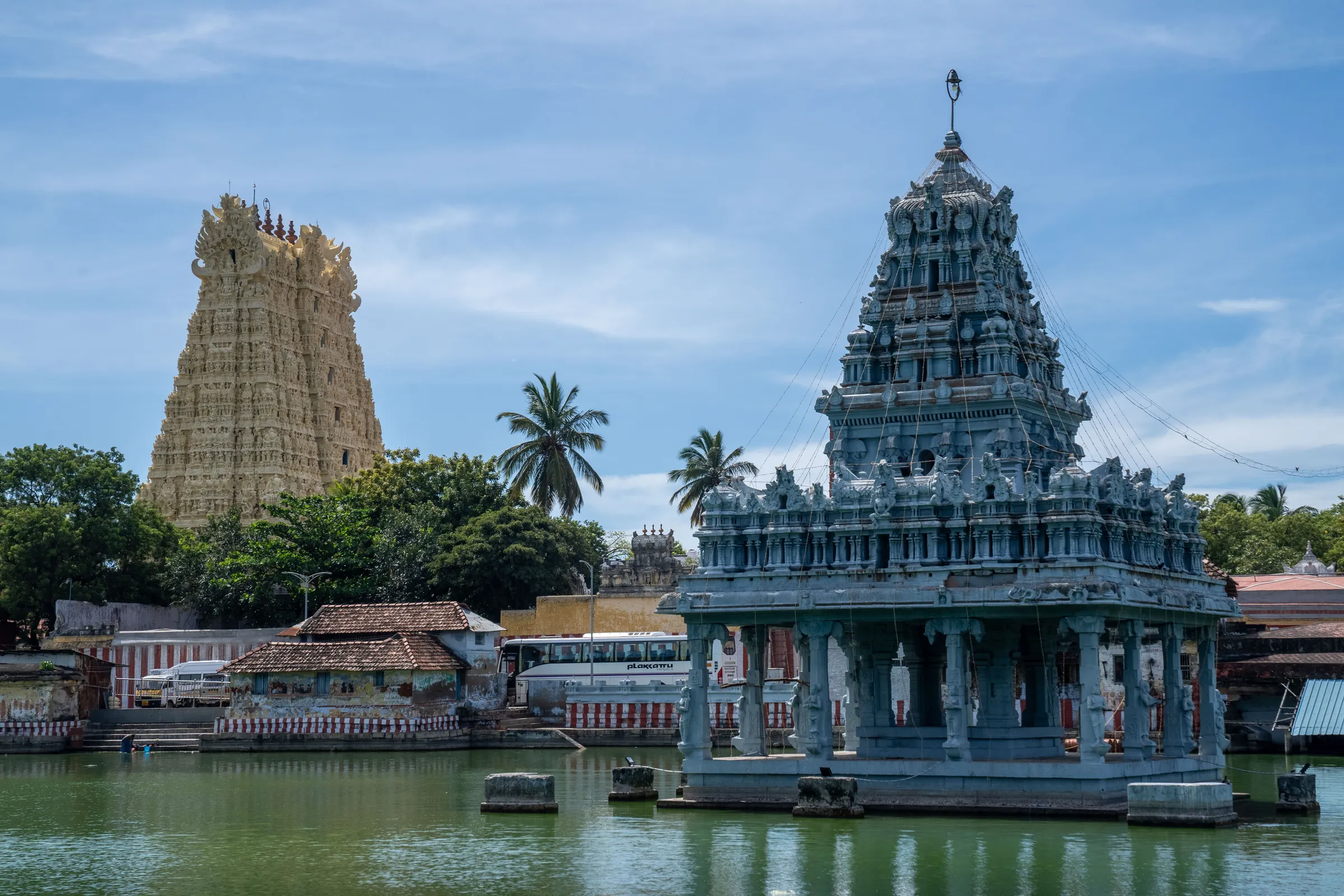
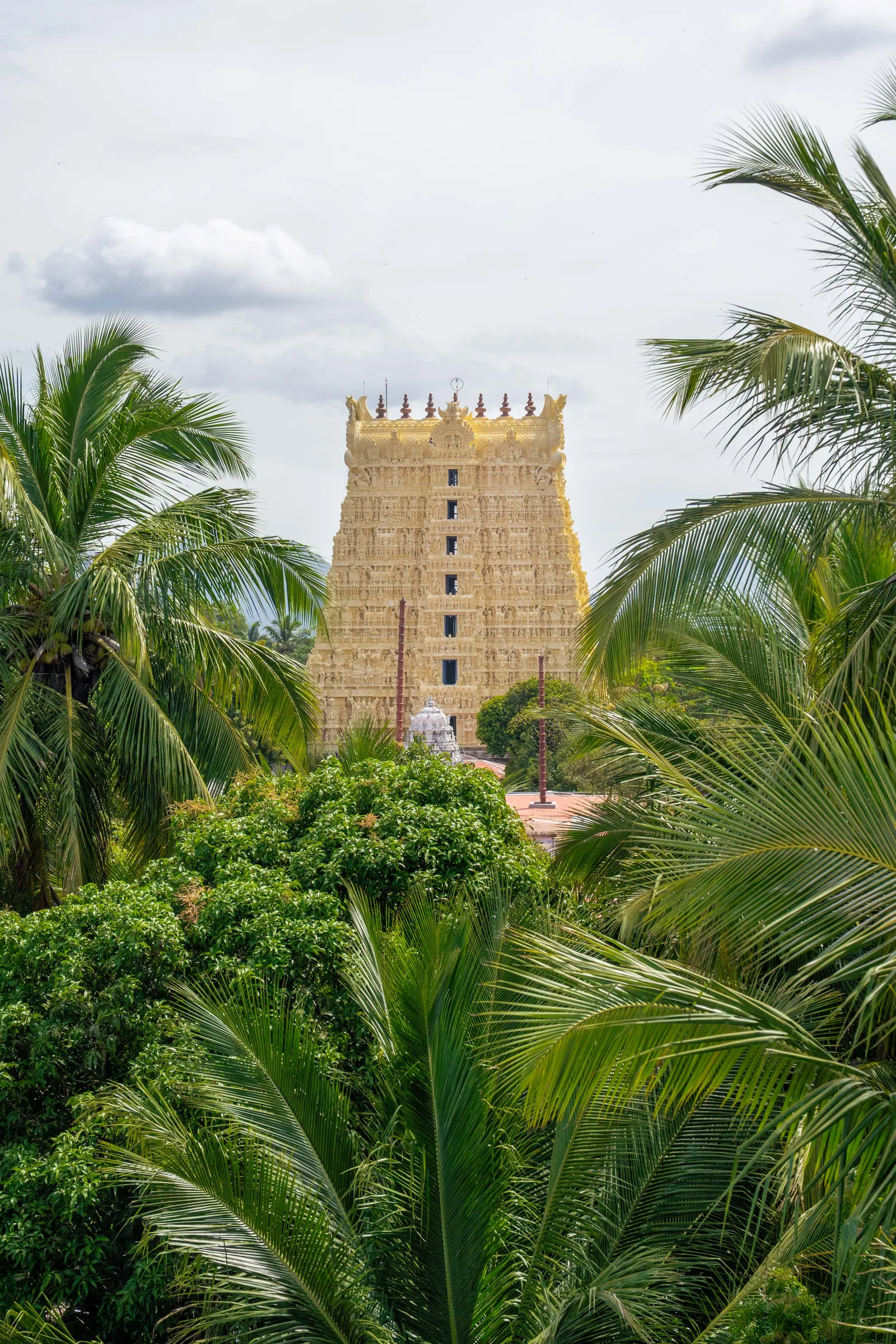
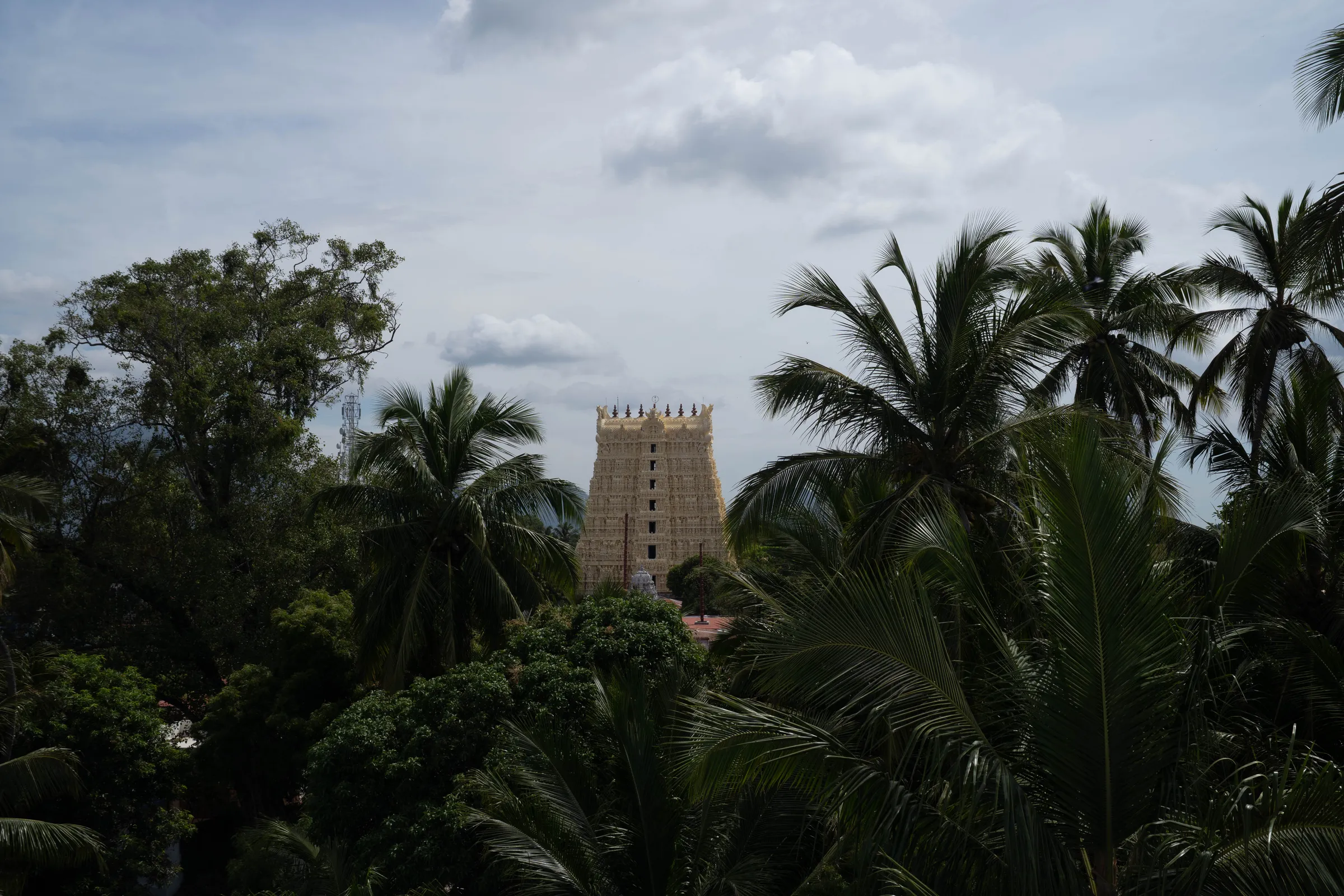
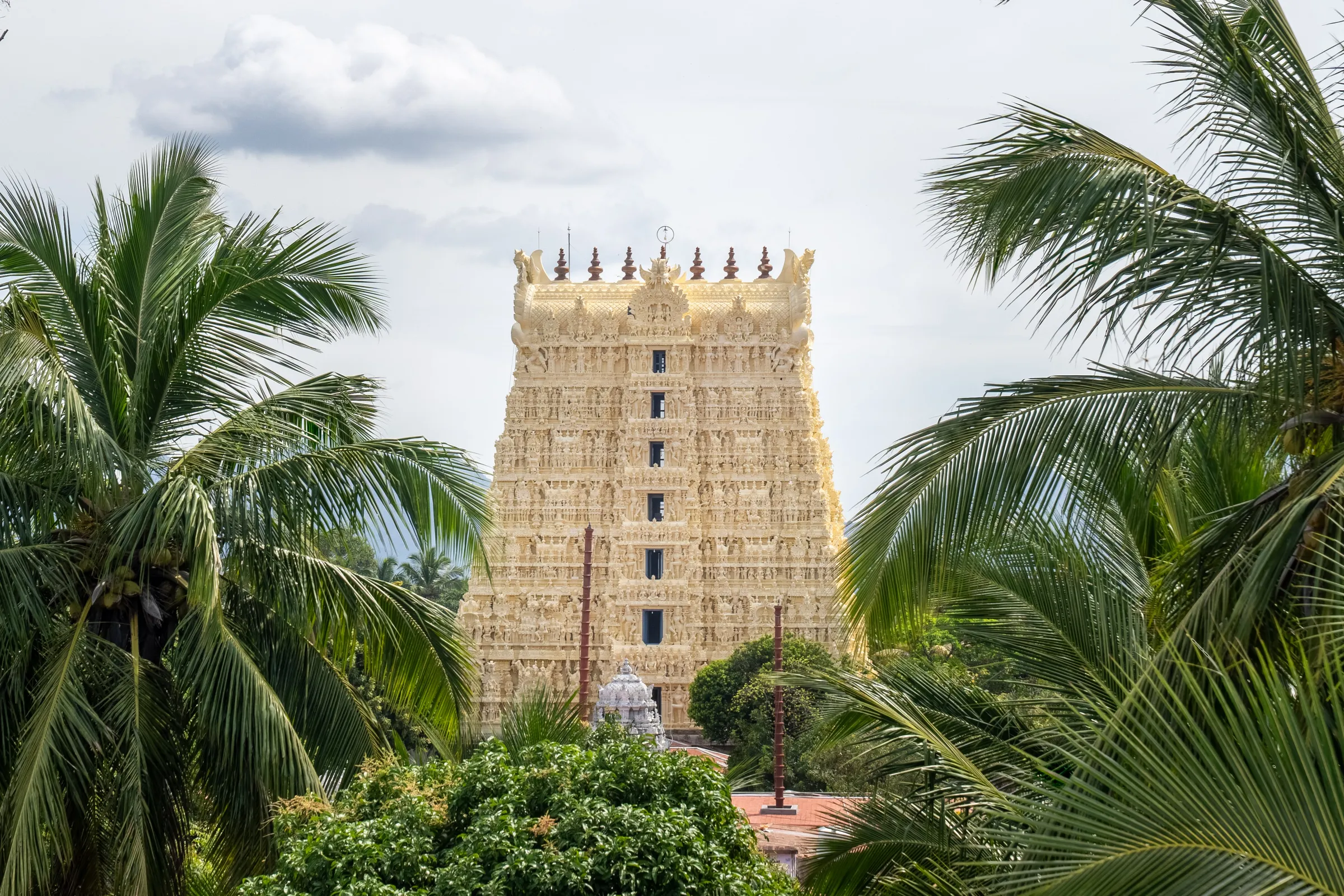
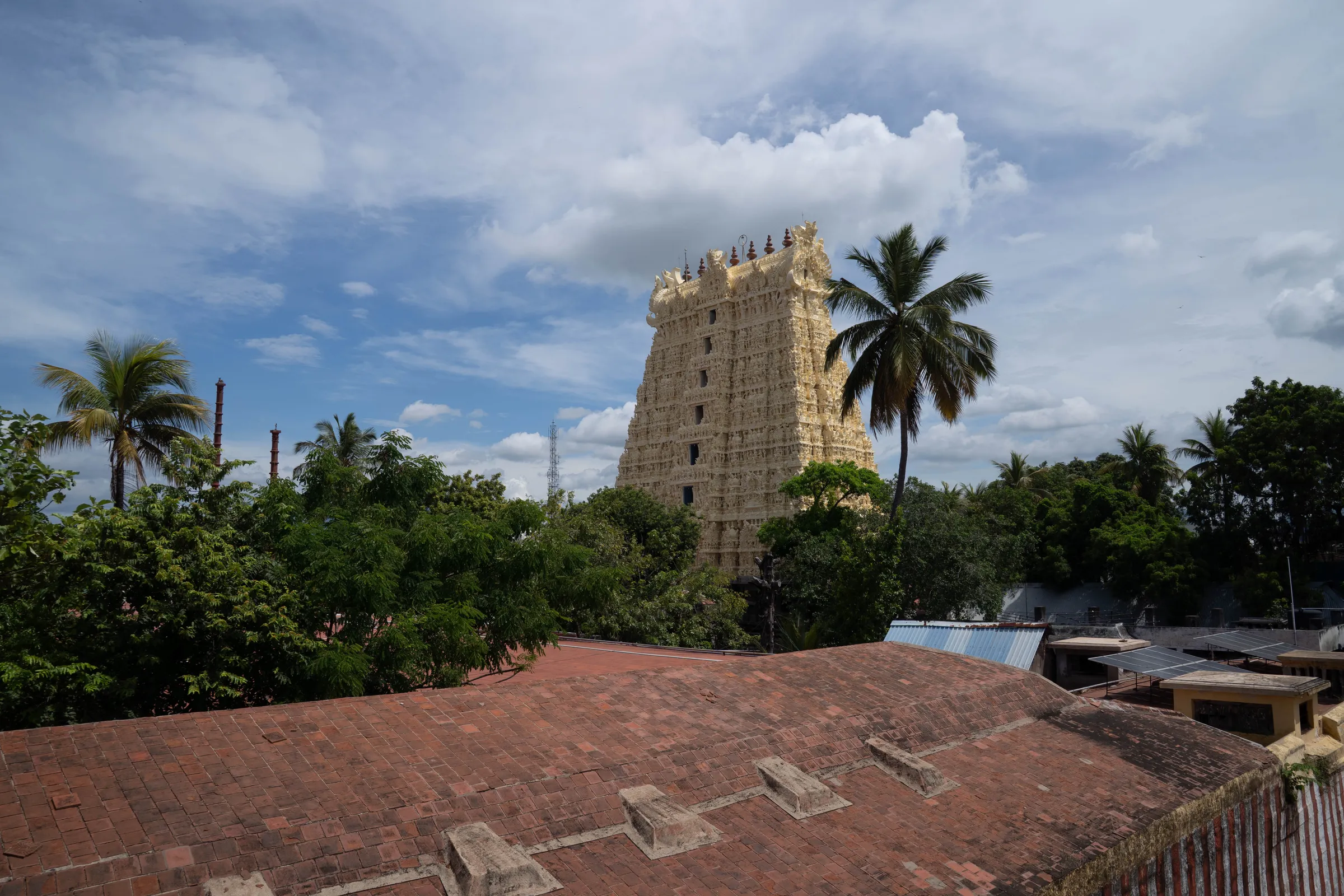
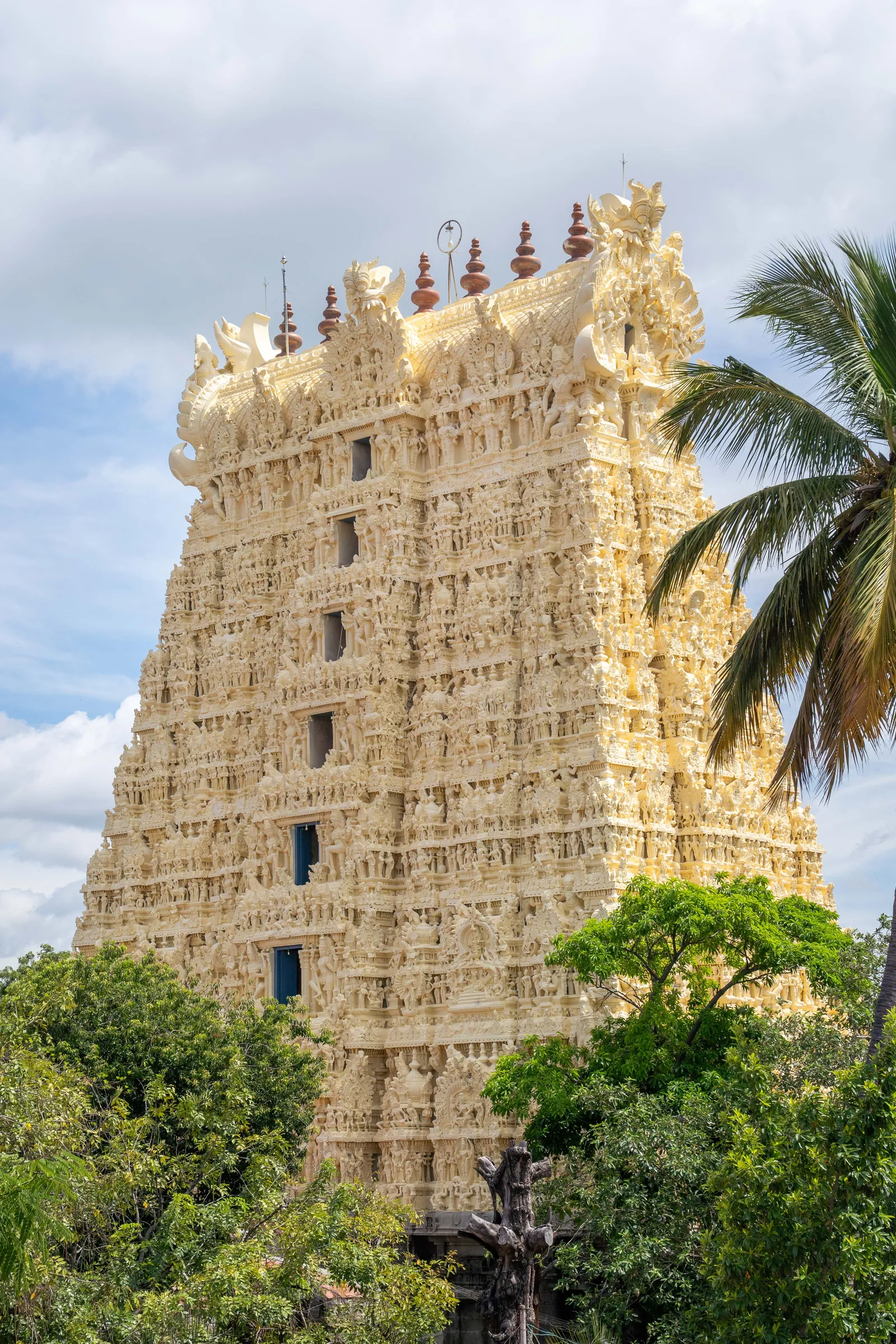
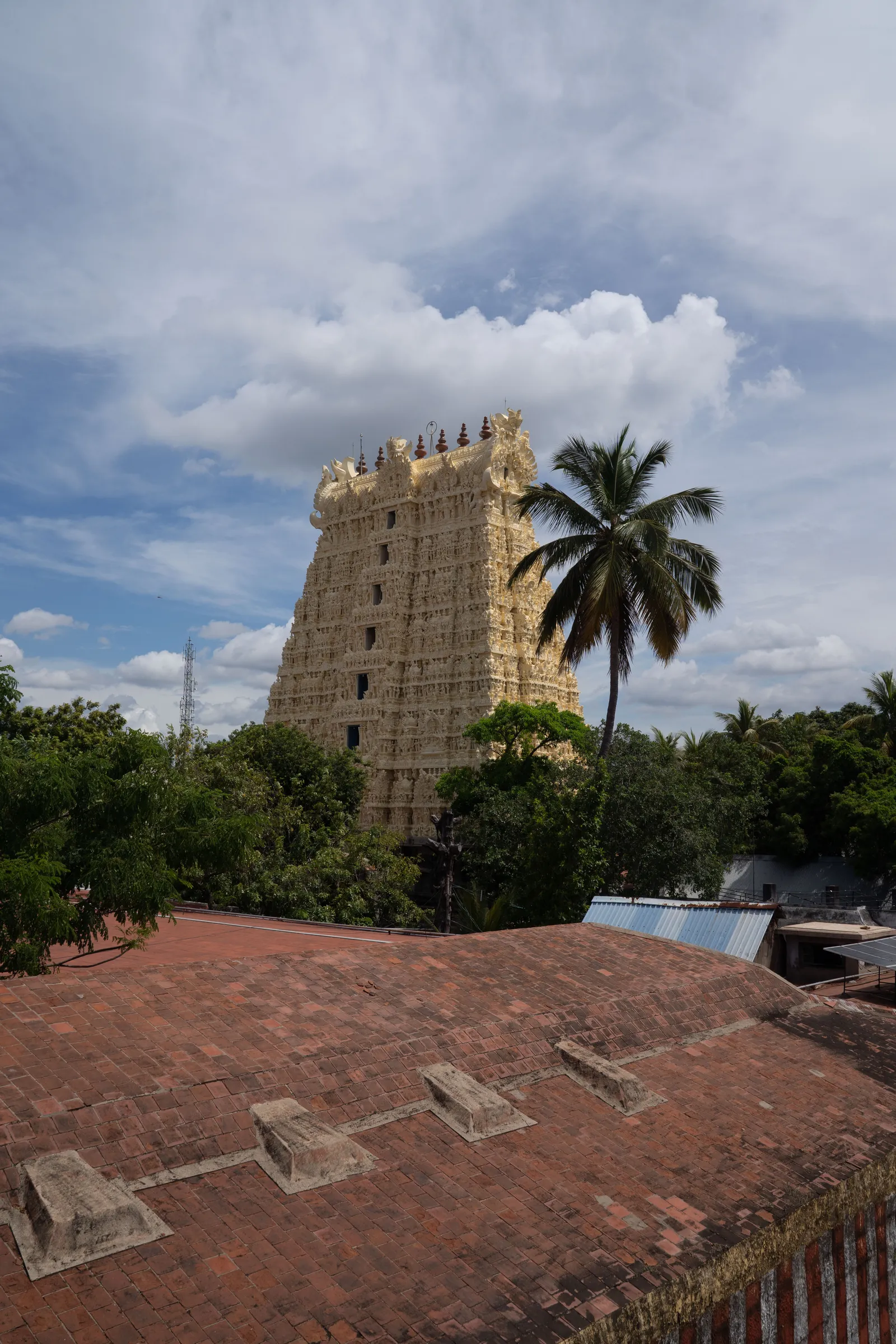
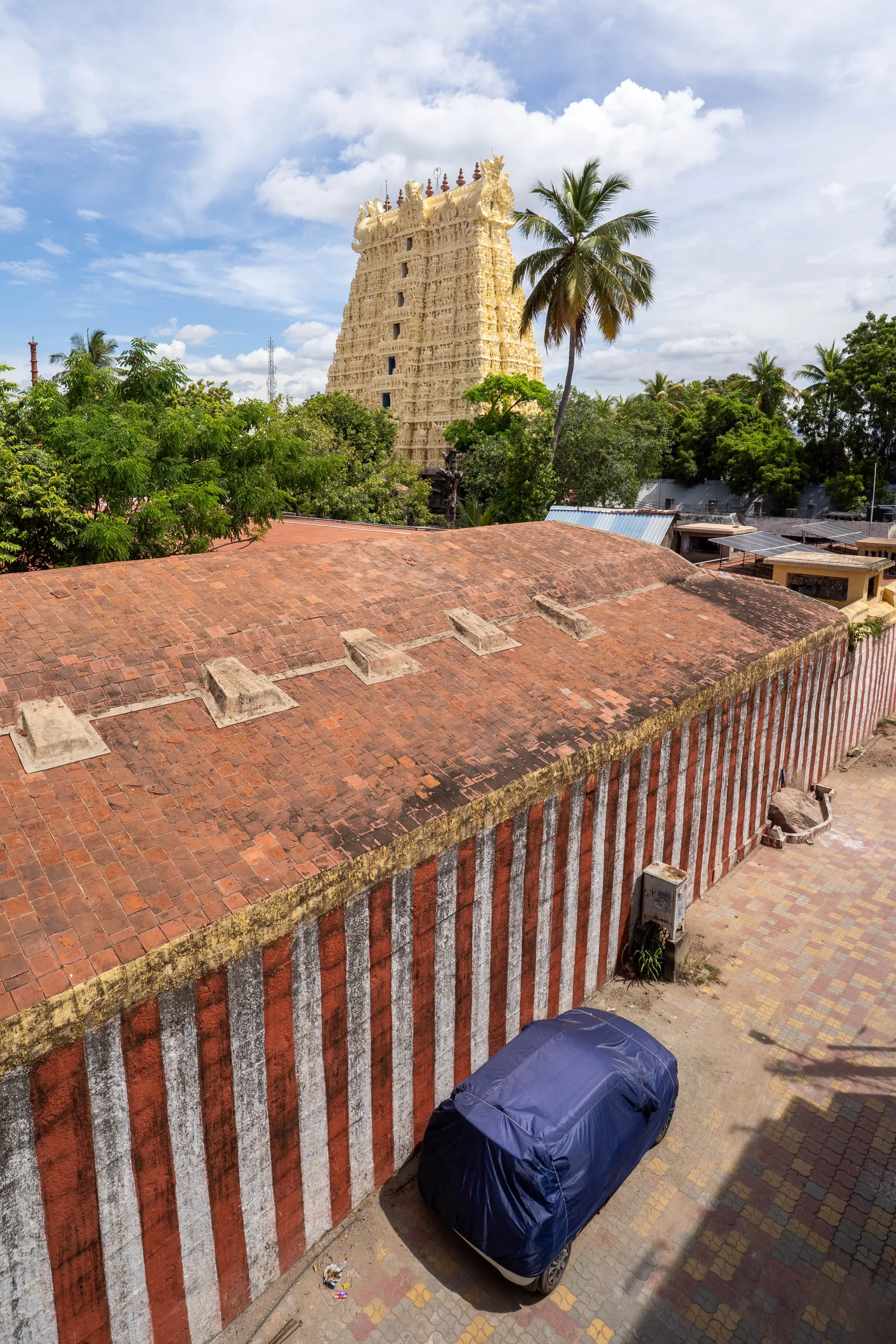
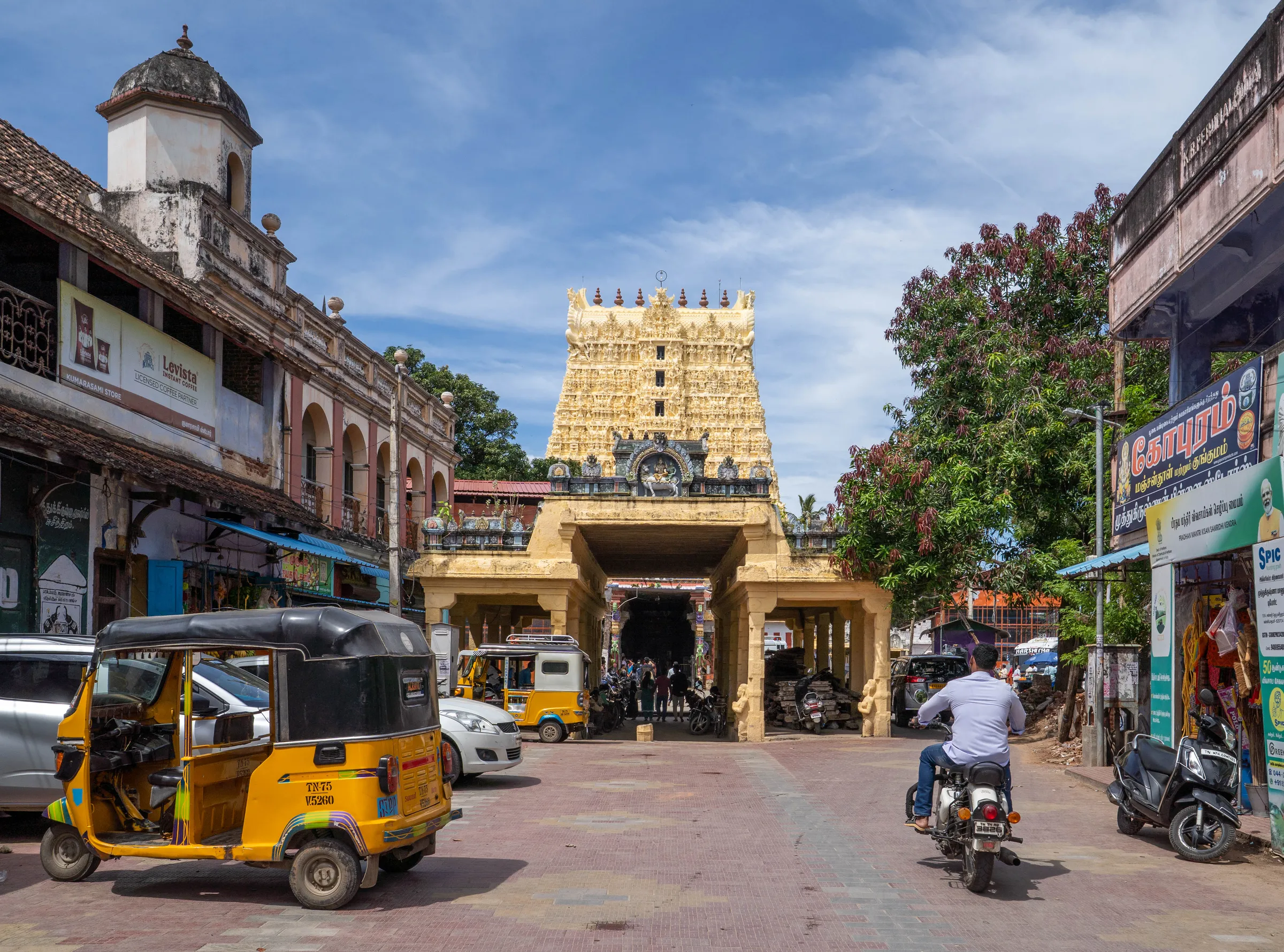
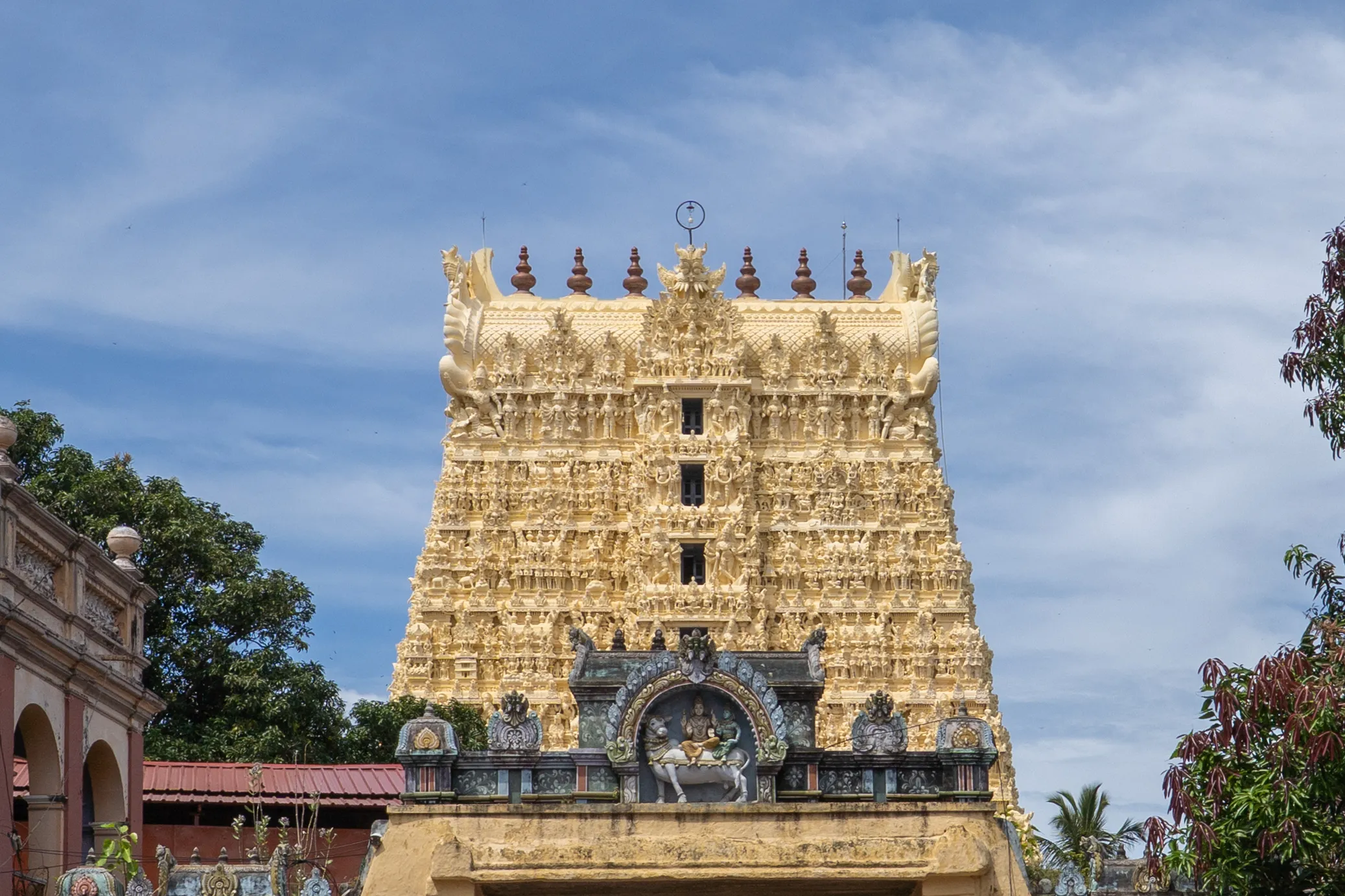
structure & vocabularyThe towering gopuram rises more than 130 feet and is visible from far off, with small shrines beside it for Teradi Madan, Teradi Bhuthathan and Udaya Marthanda Ganapathy, old local village deities now serving as the gopuram's guardians. Inside is the grand Nataka Shala, many of its pillars with women's sculptures donated by the temple's Devadasis, and at the front images of two donors to the gopuram, Nilakanta Purushottama of the Tekkuman Matha and a pontiff of the Tiruvavaduthurai Matha.
Through the second entrance is the unjal mandapa, with sculptures of Rati and Manmatha and some of the Pandavas. The Vasanta mandapa holds a large Nilakanta Ganesha with tiny mice at his side. Six shrines stand in a row from north to south for Gauri, Shambu (Śiva), Sri as the Sri Chakram where the Goddess is personified as nature, Krishna, and Śiva as a linga with Parvathi. Close by are musical pillars, as at the Nellaiyappar temple in Tirunelveli, and the shrine of the goddess Aram Valartha Nayaki.
The Kailasattu Mahadeva shrine inside is built on a rock dressed in 1917 and may predate the present main deity. A 16-foot-high Anjaneya, a rare image of its time, was buried between 1742 and 1872 and re-erected only in 1929. Rare Jayanteeswara shrines lie southwest of one shrine, suggesting the temple was once an important Devi or Shakta site. Other structures include the Chit Sabha and the Chempakaraman Mandapa, and the main deities, Śiva and a reclining Vishnu, stand close by.