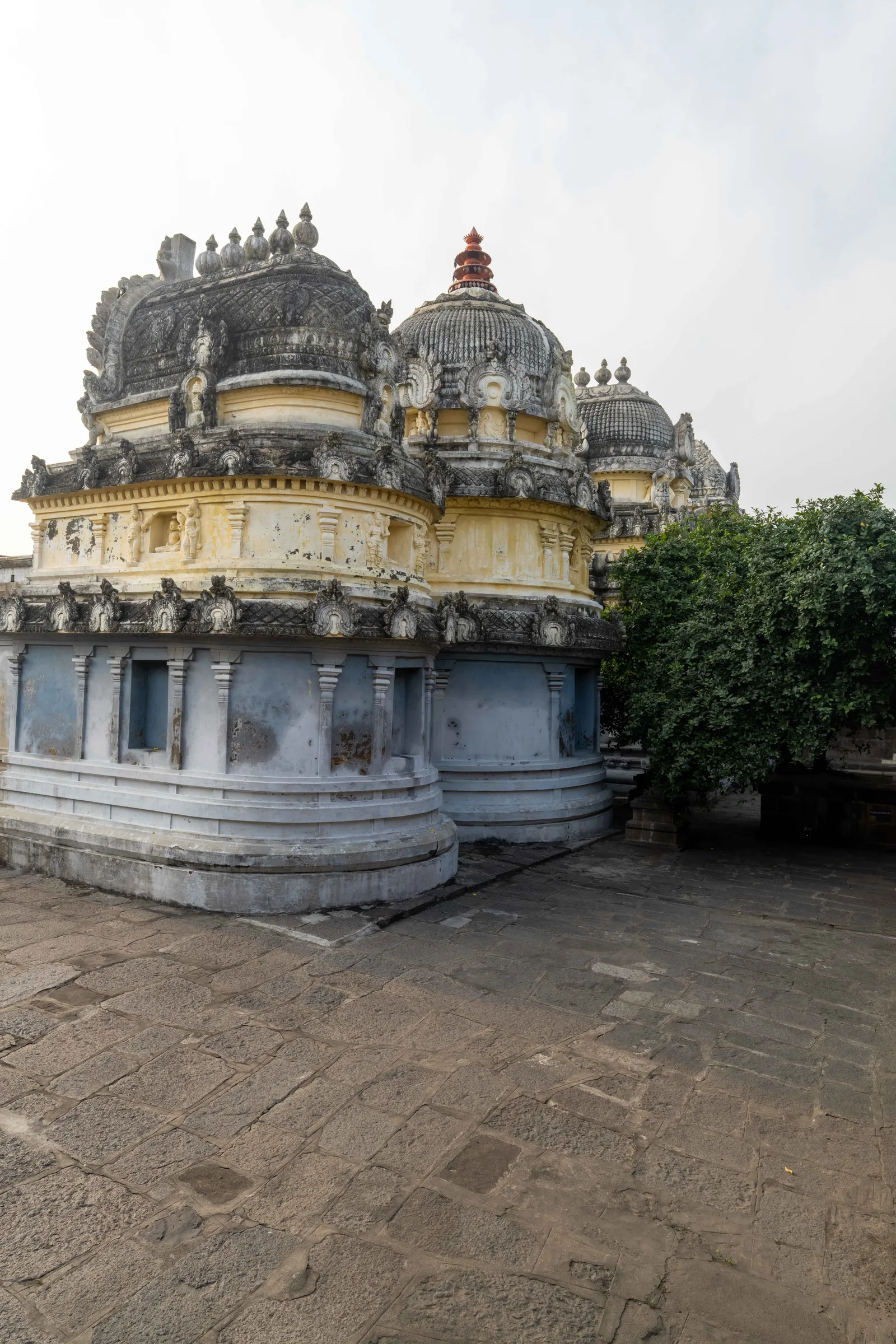
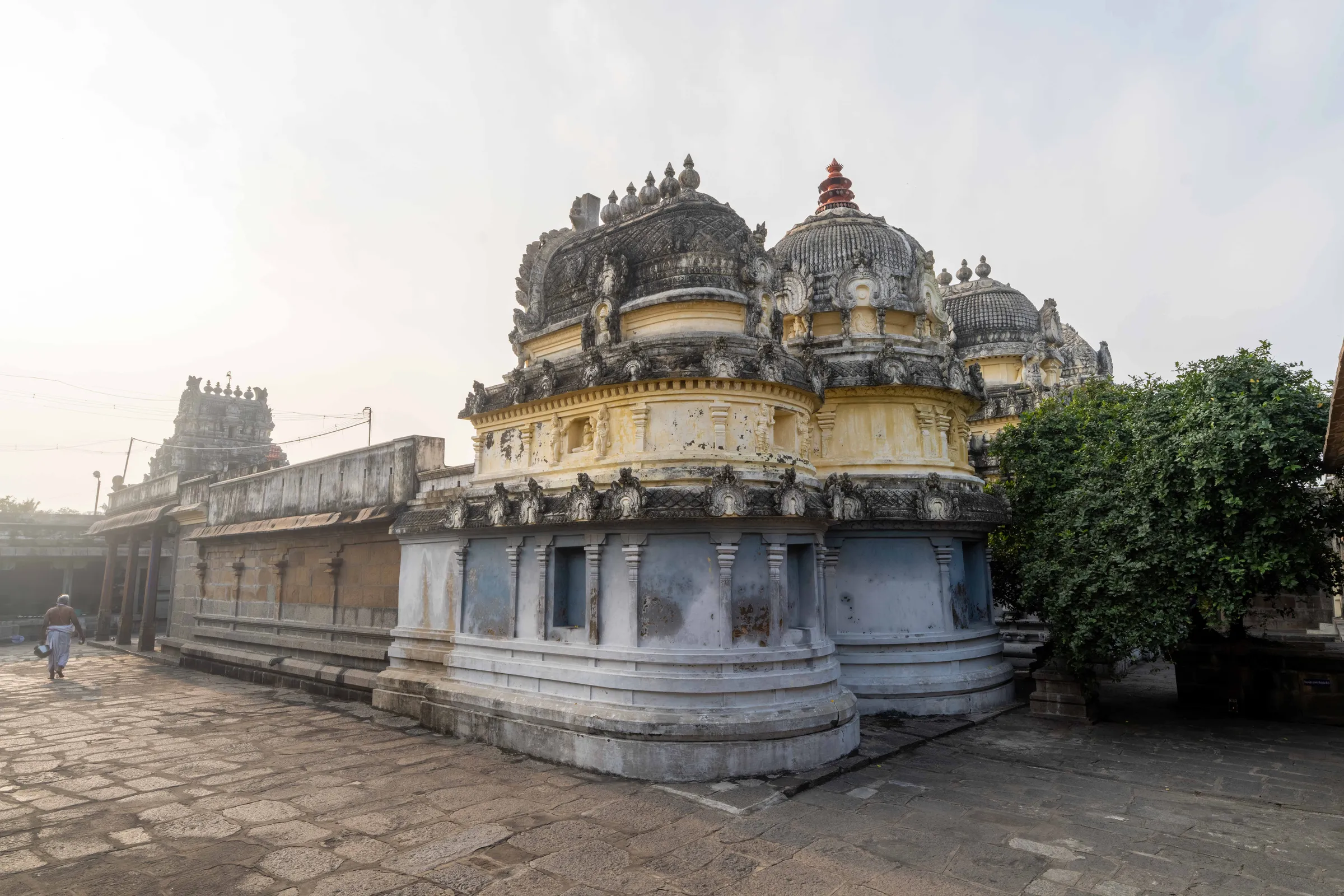
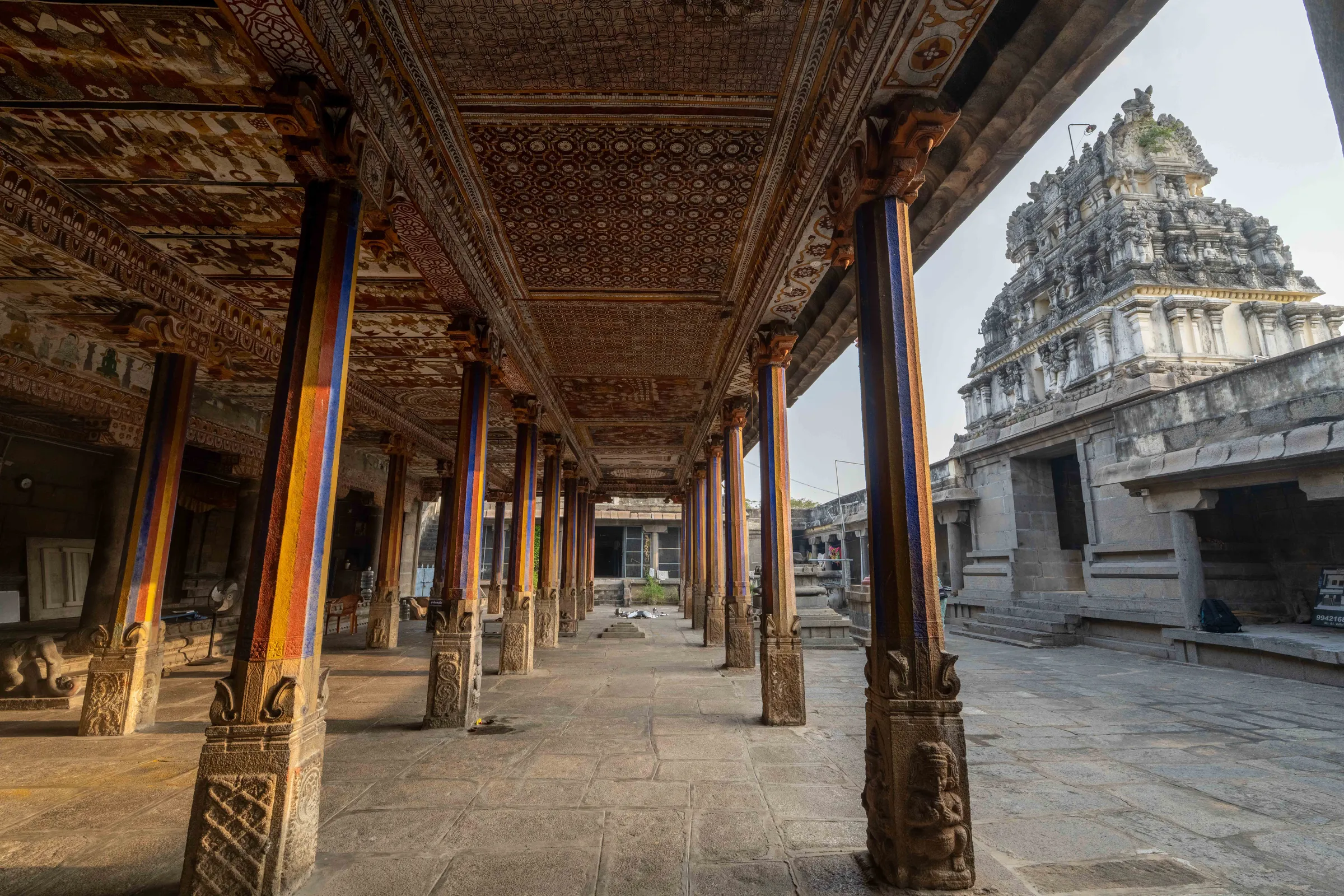
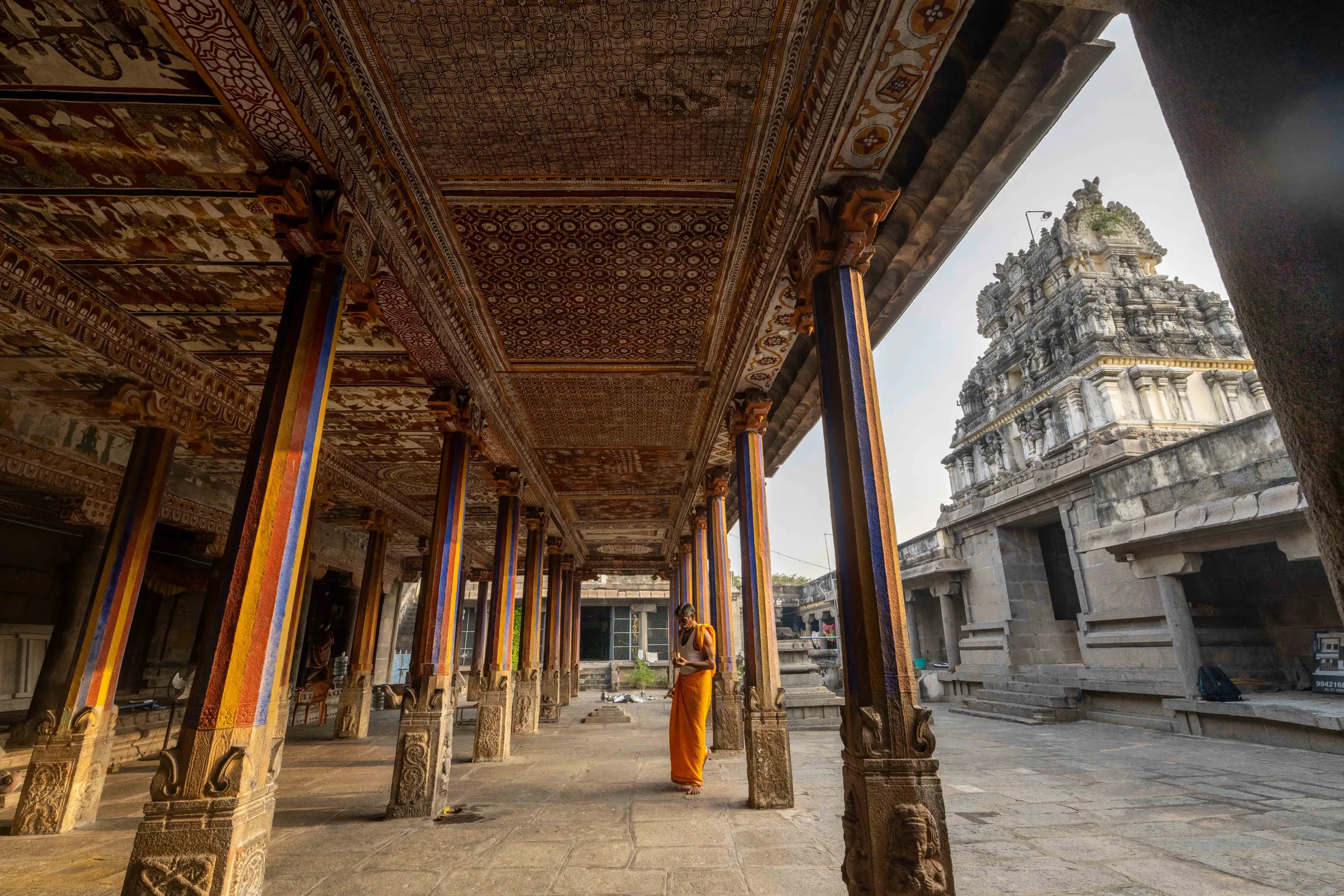
Trailokyanatha Jain Temple, photograph
← Thondaimandalam
Entry 017

Trailokyanatha Jain Temple

Tiruparuthikundram · Kanchipuram · Pallava (copper plate); Chola-era rebuild; Vijayanagara additions

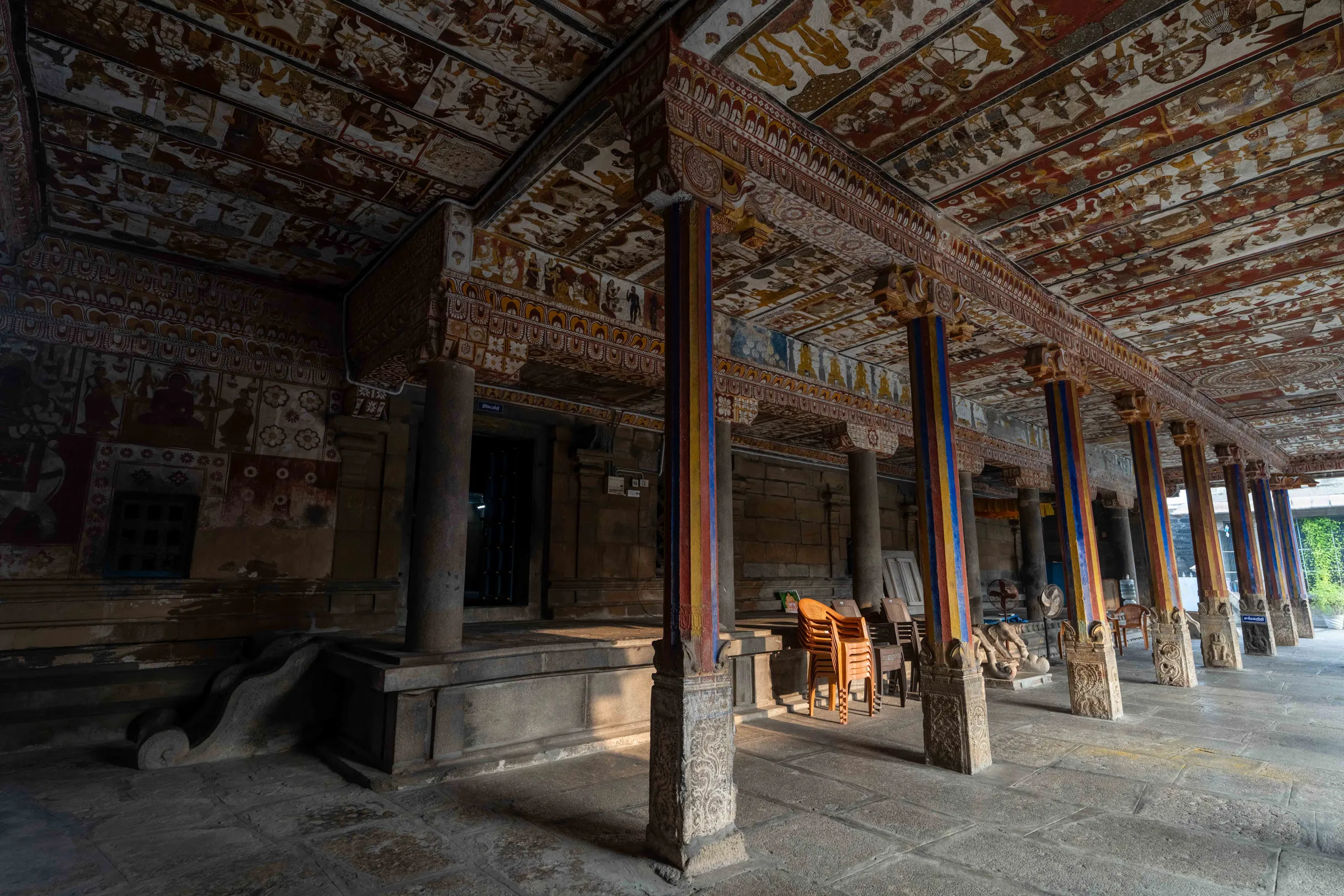
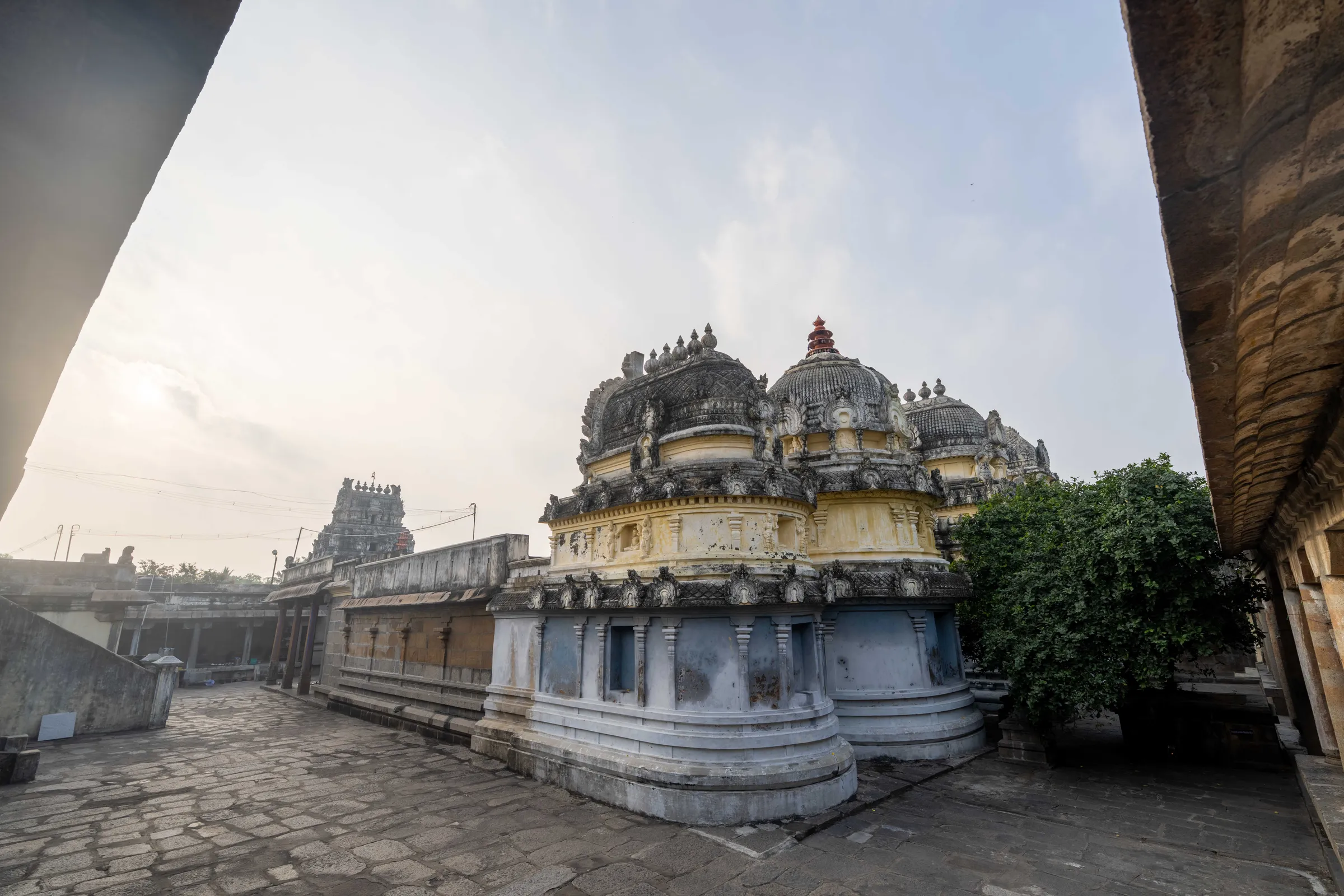
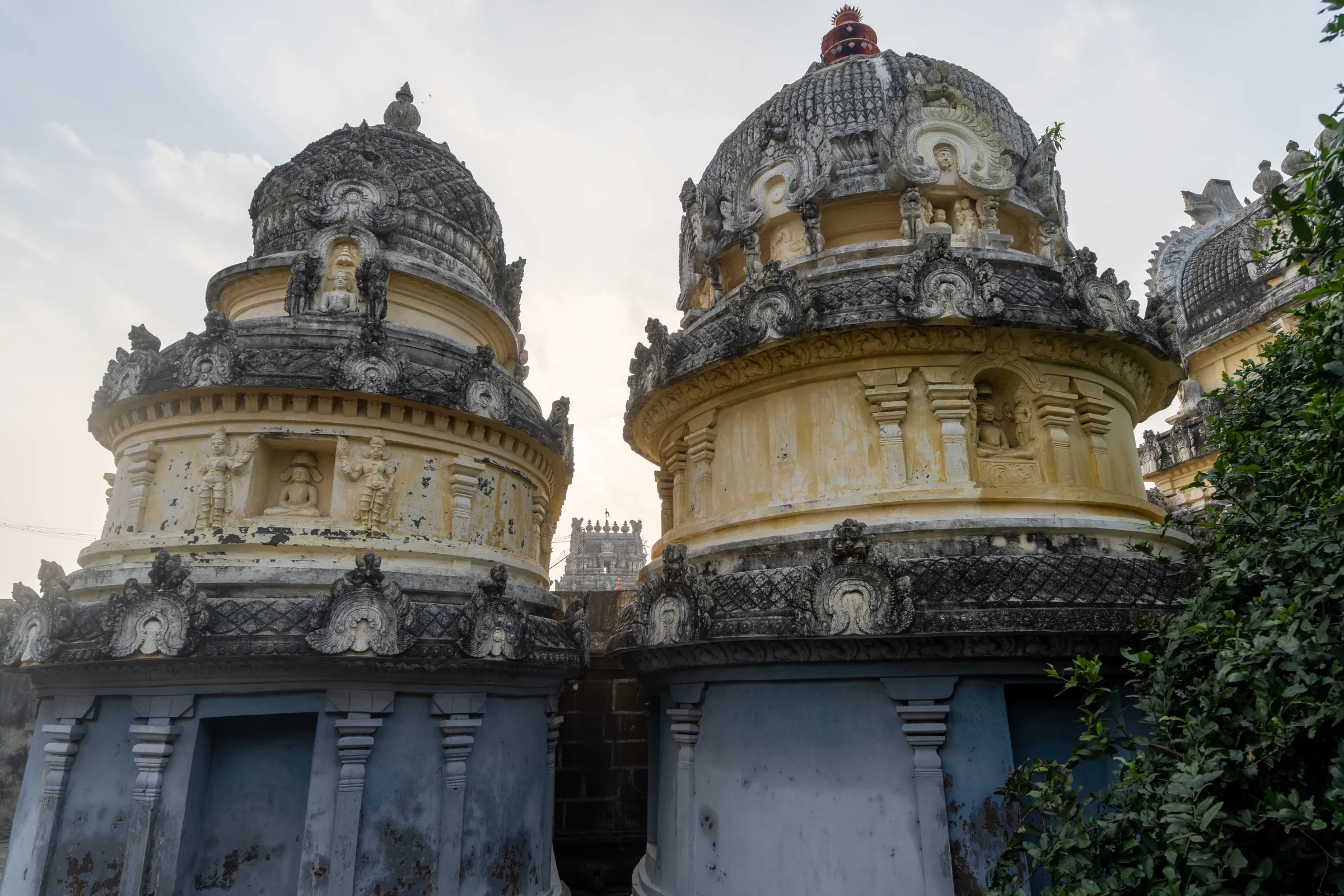
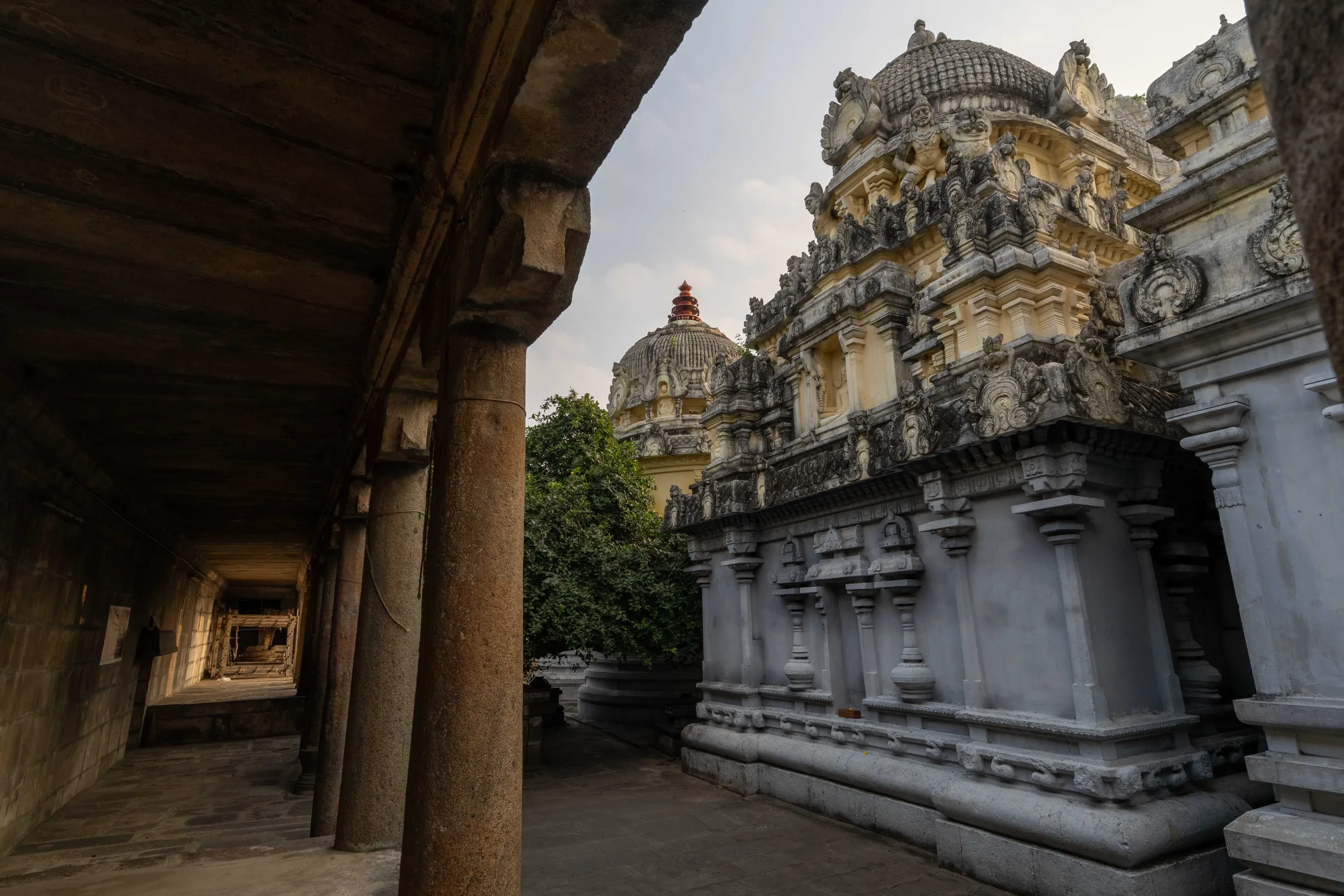
One of the largest Jain temples in Tamil Nadu, at Tiruparuthikundram in Jina-Kanchi, two shrines for Chandraprabha and Mahavira whose Sangeeta Mandapa ceiling carries painted scenes from the life of Rishabhanatha.

The Trailokyanatha Jain Temple at Tiruparuthikundram, in Jina-Kanchi, is one of the largest Jain temples in the state, its ceilings painted with the life of Rishabhanatha. The three registers below are held apart, as the book records them.

The photographs

Plates · 8

Trailokyanatha Jain Temple, photograph
© Amar Ramesh and team · All rights reserved
Trailokyanatha Jain Temple, photograph
© Amar Ramesh and team · All rights reserved
Trailokyanatha Jain Temple, photograph
© Amar Ramesh and team · All rights reserved
Trailokyanatha Jain Temple, photograph
© Amar Ramesh and team · All rights reserved
Trailokyanatha Jain Temple, photograph
© Amar Ramesh and team · All rights reserved
Trailokyanatha Jain Temple, photograph
© Amar Ramesh and team · All rights reserved
Trailokyanatha Jain Temple, photograph
© Amar Ramesh and team · All rights reserved
01

Architectural

structure & vocabulary

There are two temples here. The smaller, older one is for Chandraprabha, the 8th Tirthankara; the larger is for Vardhamana, the 24th Tirthankara, also known as Mahavira. The Trailokyanatha temple looks like a Hindu temple, with its Dhwajastambha and Bali pitham.

Going in through the pillared mandapa called the Sangeeta Mandapa, the walls carry stunning paintings of various stories from the life of Rishabhanatha, with captions in Tamil below, the sequence, colours and details of daily life all finely worked. Beyond this is a mandapa walled on all sides, from which the main shrines lead off. The main shrine is for Vardhamana / Mahavira, the others for Pushpadanta, the ninth Tirthankara, and Dharmadevi, with shrines for Padmaprabha (6th), Parsvanatha (23rd) and Vasupujya (12th).

The story painted in the Sangeeta Mahal is how Rishabhanatha, as a bull, entered the womb of Marudevi; the Gods raised a Samvatsara, twelve conferences shown in the center of the mandapa ceiling, where in twelve circles all the worlds gathered as he preached his first sermon. These scenes are painted on the ceiling.

02

Archaeological

dated & cited

A copper plate from the reign of Pallava Simha Varma (436 to 477 CE), now in private ownership, mentions the temple and lands gifted to Vajranandi Kuravar of Tiru Paruthi Kundram. Inscriptions from the time of Vikramachola record that much of the temple was rebuilt in about 1135 CE; other 12th-century inscriptions testify that it was a popular and wealthy temple.

In 1387 to 88, Irugappa, a minister for the Vijayanagara kingdom which ruled these parts, built the Sangeeta Mandapa at the insistence of his guru Pushpasena. One inscription of unknown date praises the Kura tree growing behind the main shrine, the Sthalam Vriksham of the temple, which the Tamil verse says neither grows tall nor short, protects the dharma of the king, and reminds him to rule wisely.

Dating
BegunPallava copper plate of Simha Varma (436 to 477 CE) names the temple; rebuilt about 1135 CE

A Pallava copper plate of Simha Varma (436 to 477 CE) names the temple and its land grants; inscriptions of Vikramachola record a rebuild about 1135 CE.

Protection & condition
GroupOne of the four great Digambara centres named with Kolhapur, Penukonda and Karnataka
ConditionA functioning temple, one of the largest Jain temples in the state
03

Mythological

as transmitted

By the 1st century CE Buddhism and Jainism were popular in Tamil Nadu. In the 5th and 7th centuries the Hindu traditions of the Alwars and Nayanmars rose against the Nasthikas and reframed the Mimamsa tradition into the Bhakti tradition; Buddhism slowly disappeared from Tamil Nadu, while Jainism fared better. Kanchi was one of the most important Jain centres of the early Common Era, named by Jain commentators with Kolhapur, Penukonda and Karnataka as the four great centres of the Digambara sub-sect; the most important temple for the small Jain population is at Tiruparuthikundram, a suburb of Kanchi known as Jina-Kanchi.

Tirthankaras are realized souls who, through perseverance and penance, have crossed over and become liberated, inspiring devotees to attain the tri-ratna or three gems of Jainism: right faith, knowledge and conduct. In conduct they hold five principles: ahimsa (non-violence), satya (truth), asteya (not taking what is not given), Brahmacharya, and aparigraha (non-attachment to material or psychological possessions).

Register interest in prints Buy the book
Improve this entry

This is an open, reviewed record. If you have spotted an error or have something to add — a correction, a date, a source, a name in another script — propose it. Every change is reviewed before it joins the record.

“Suggest an edit” opens this entry on GitHub and turns your change into a pull request. “Share feedback” opens a short form. Both go through review.