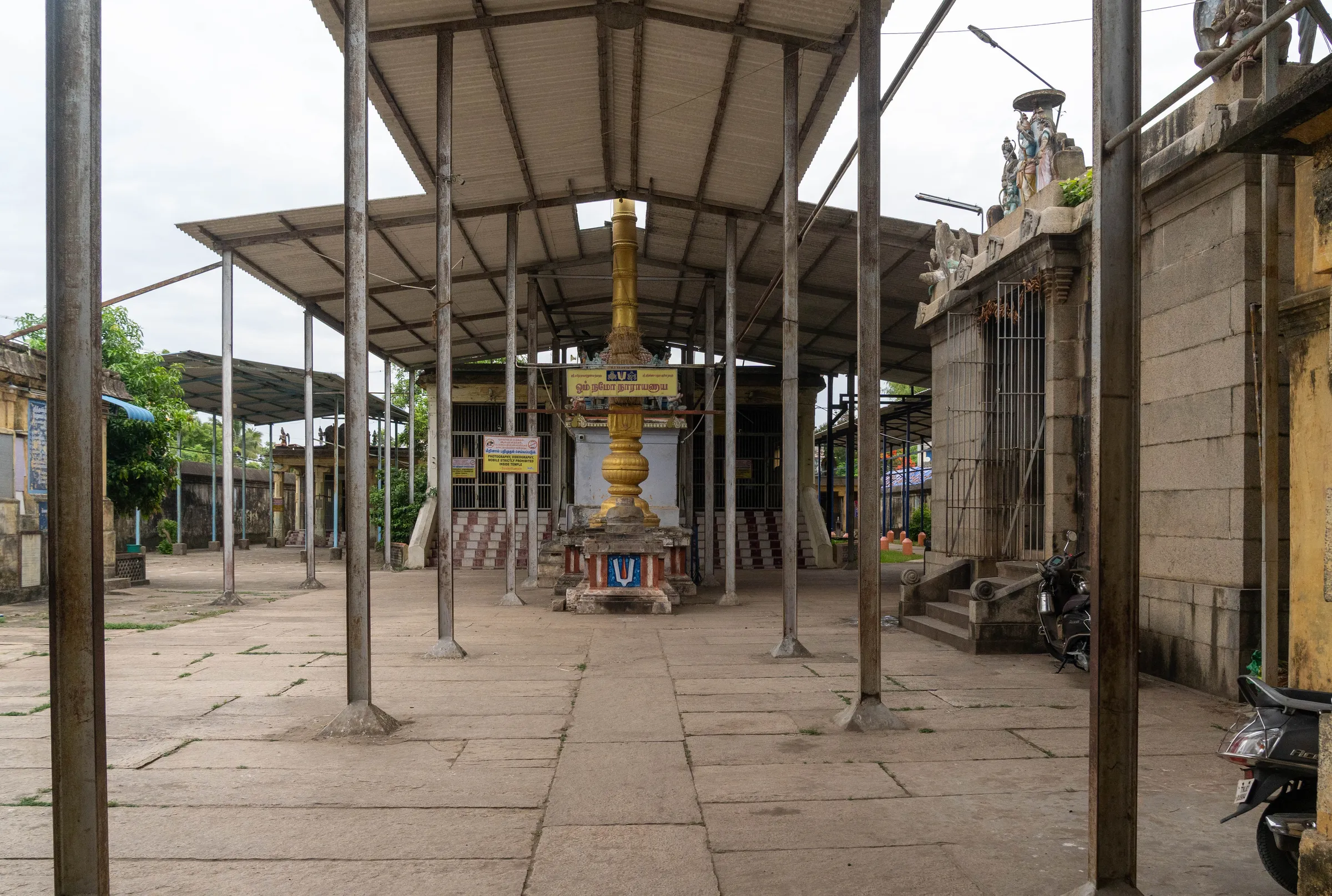
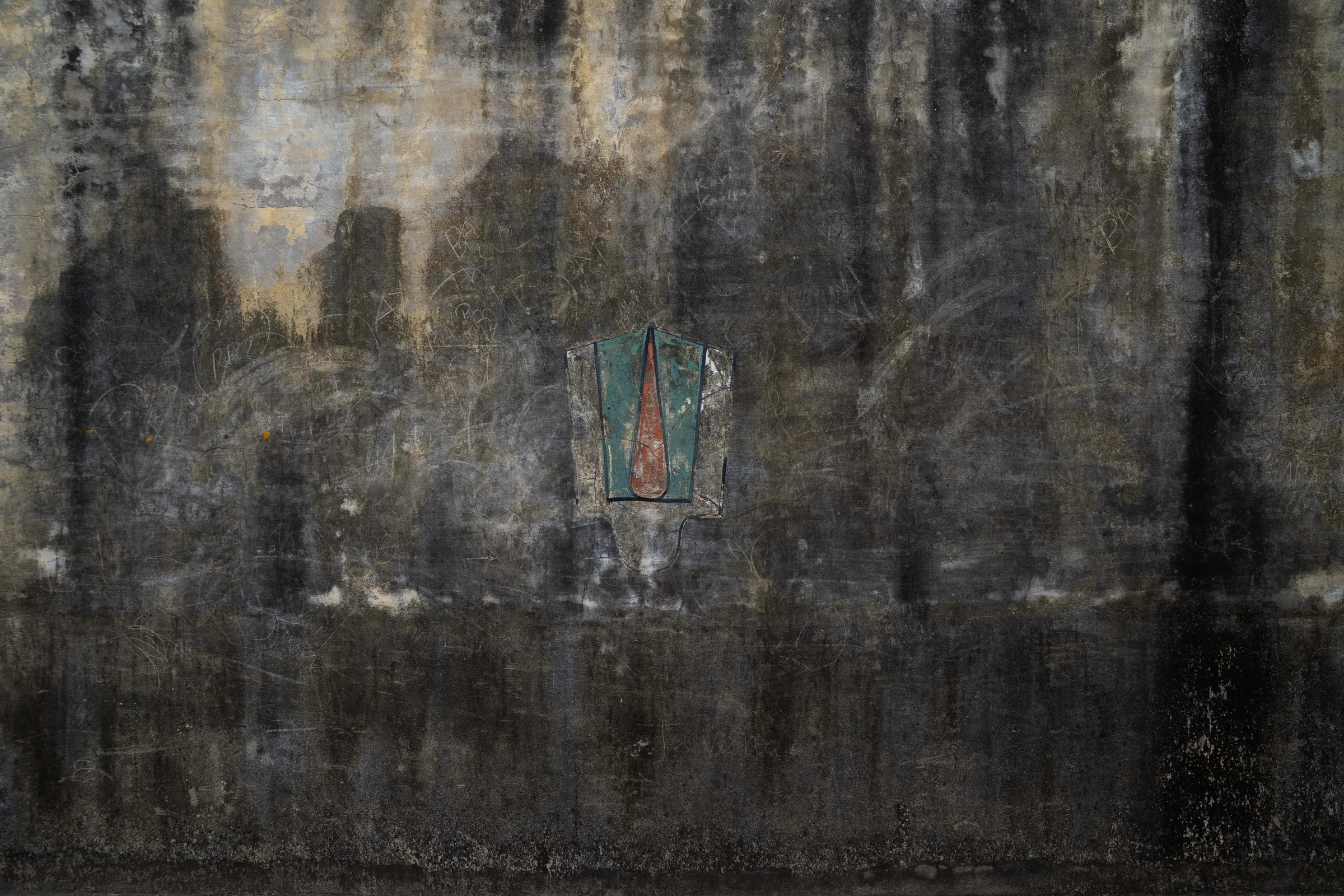
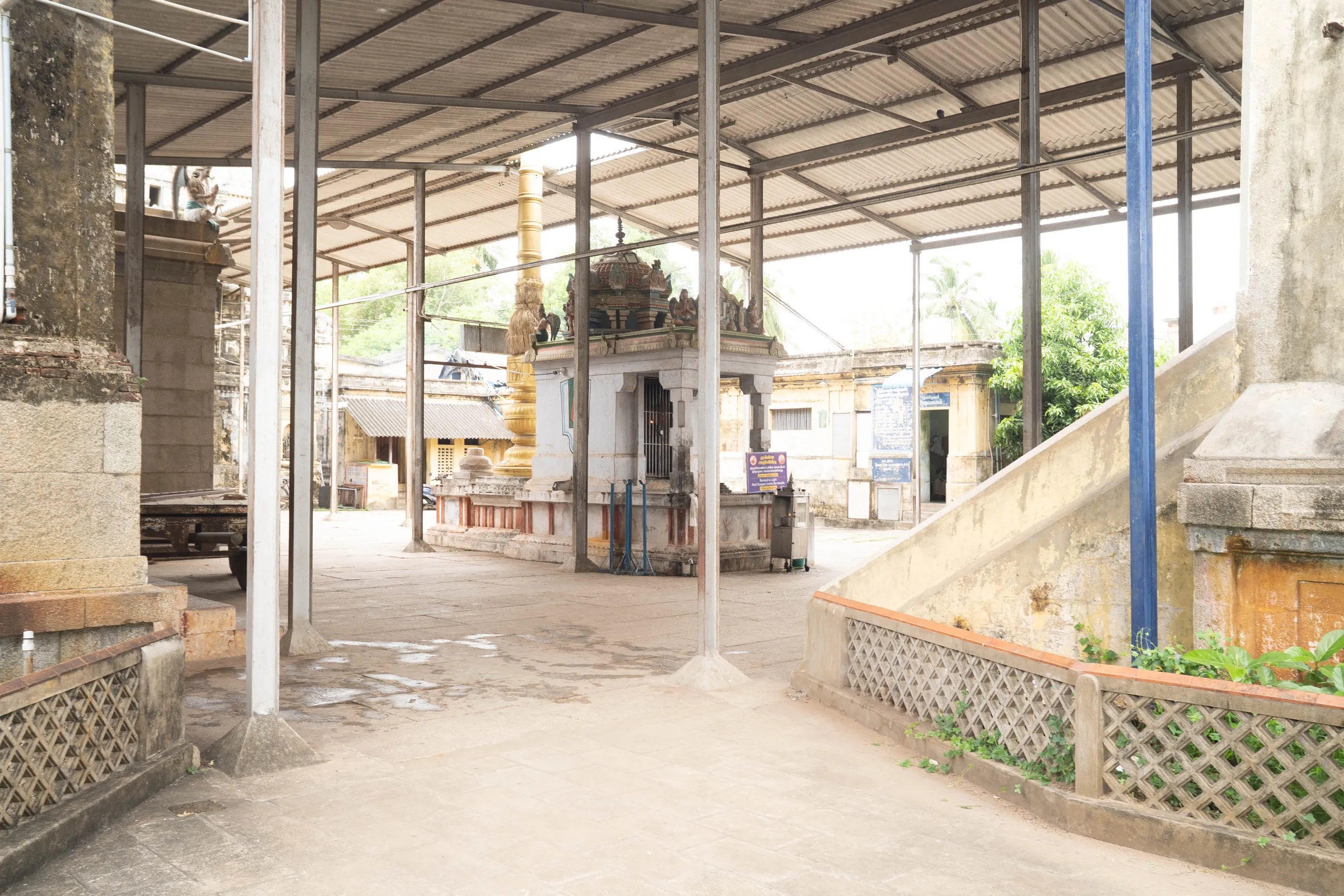
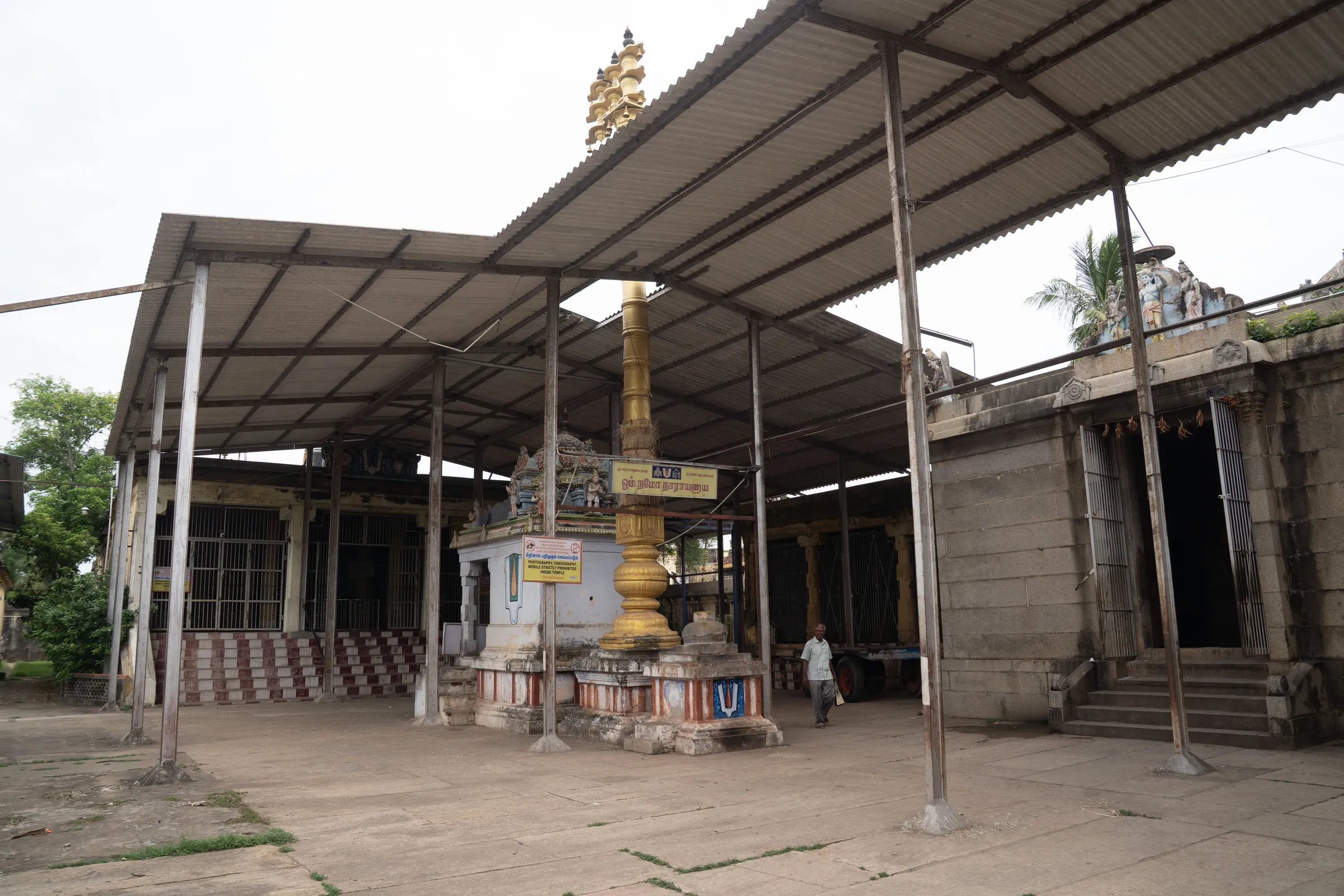
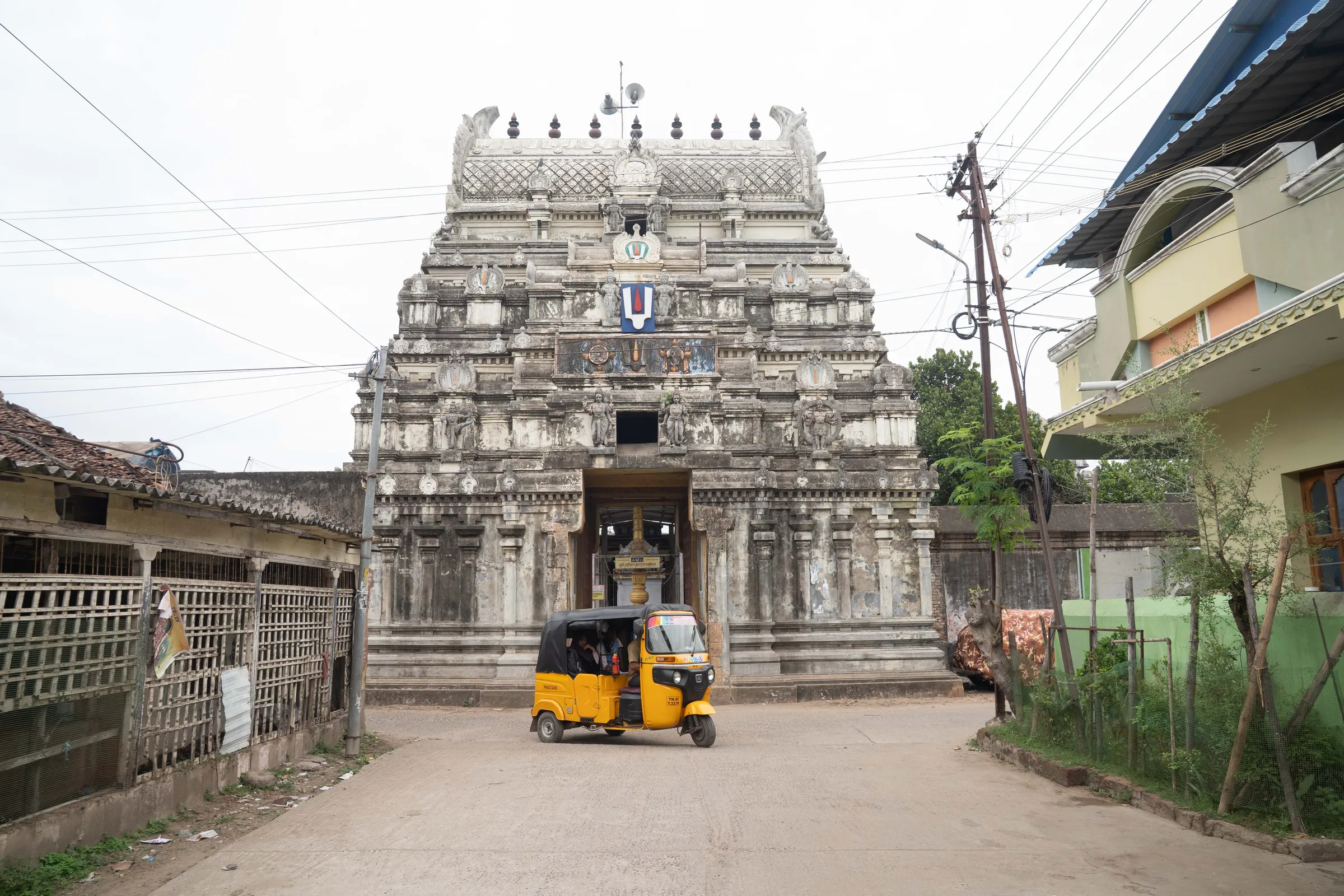
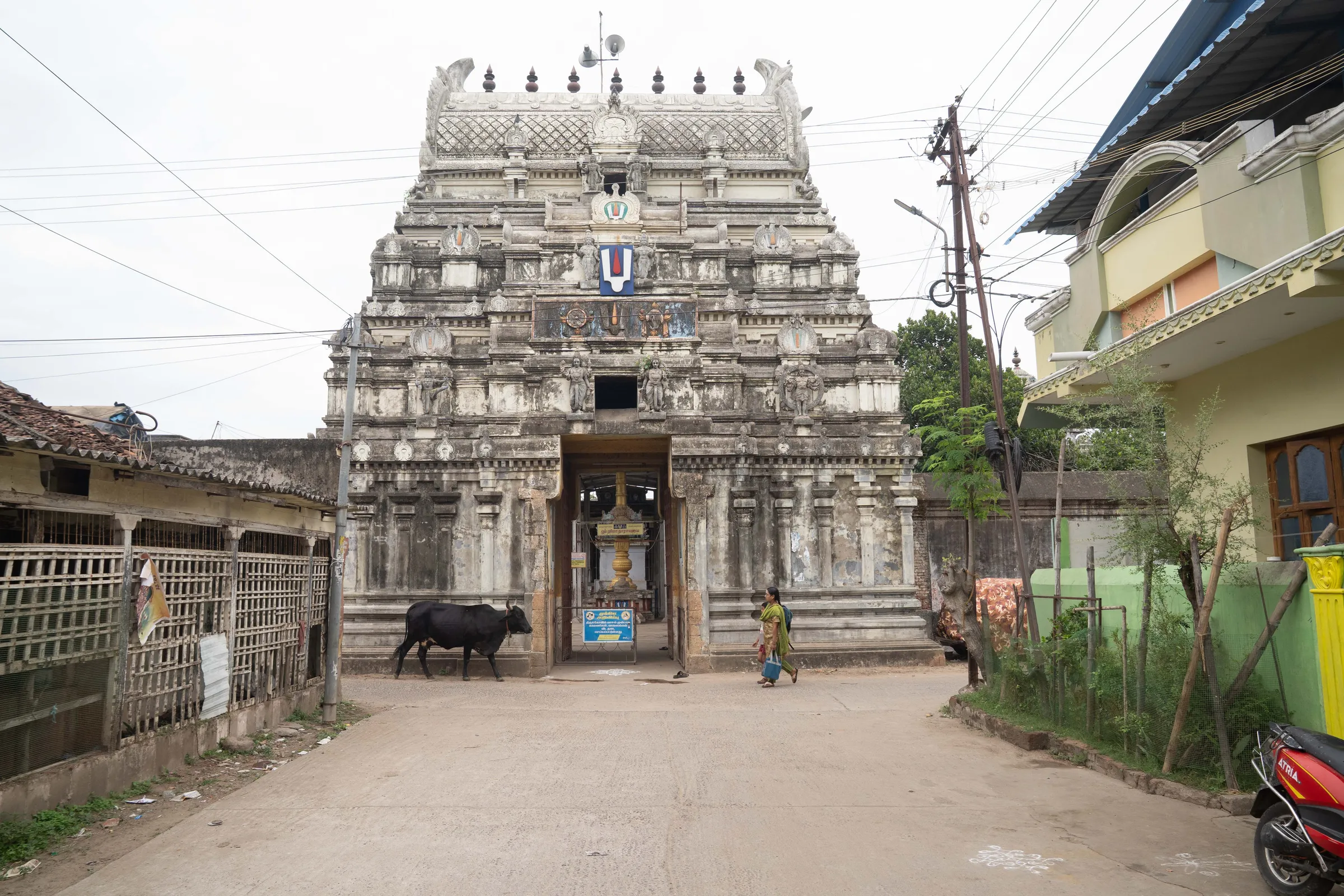
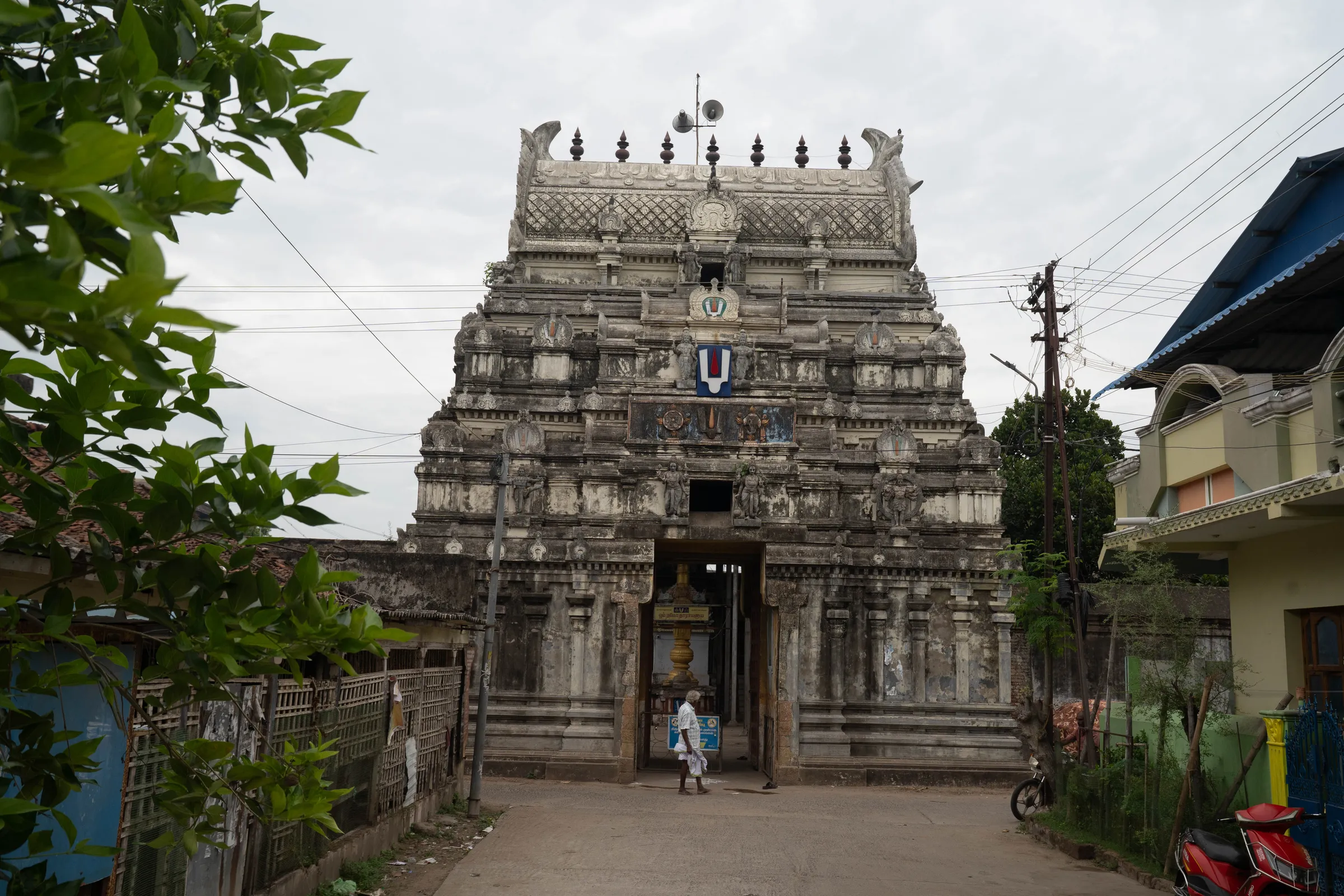
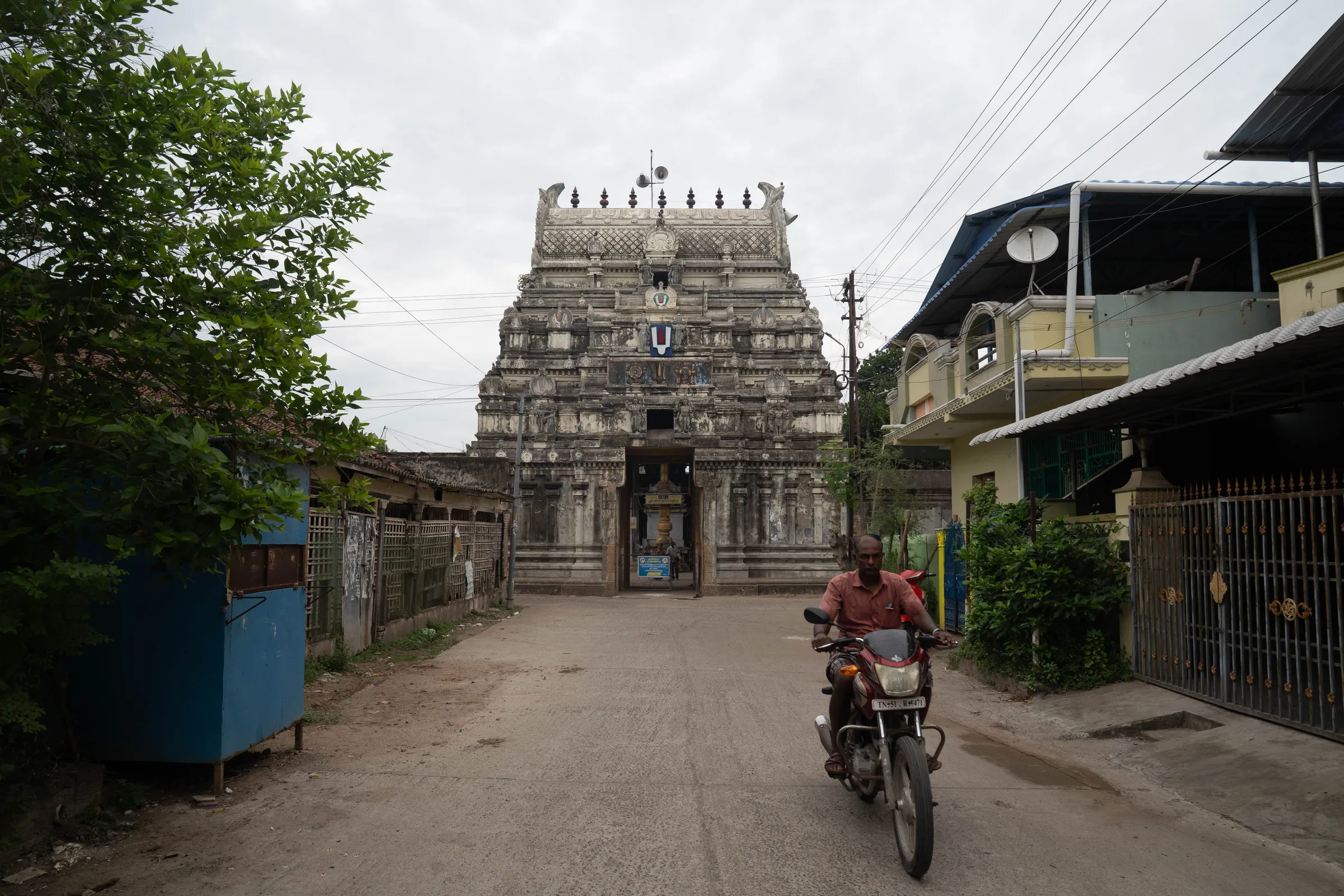
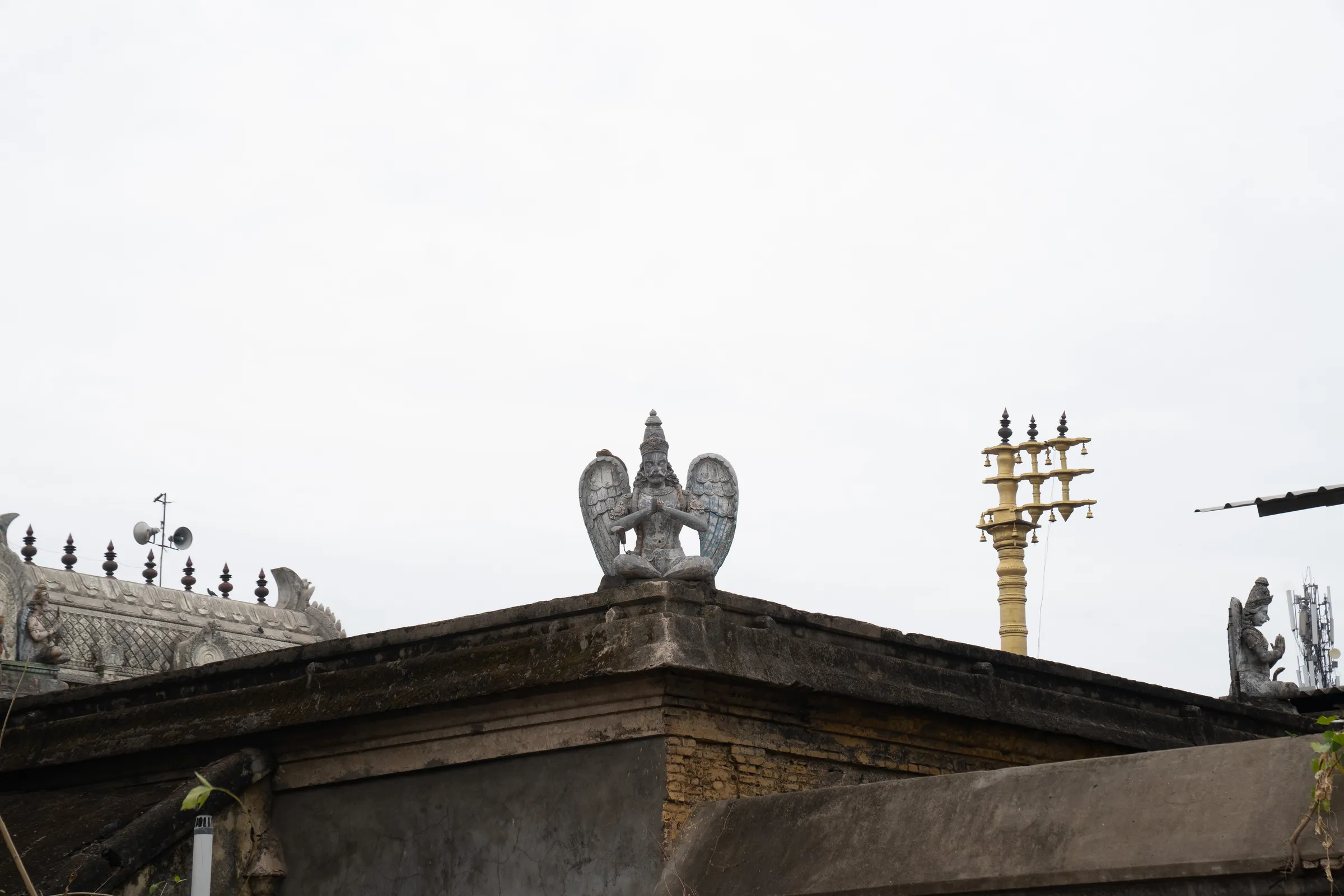
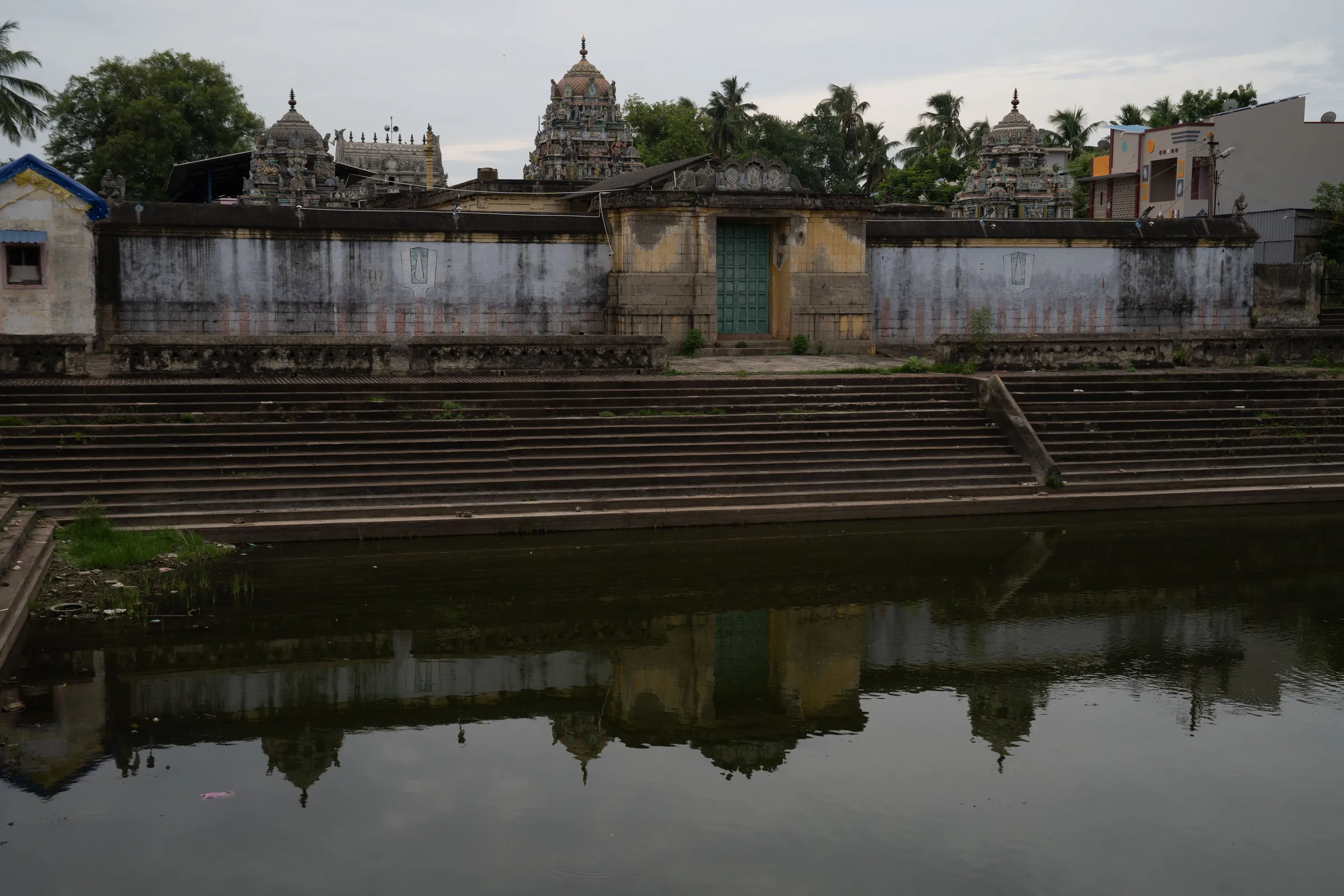
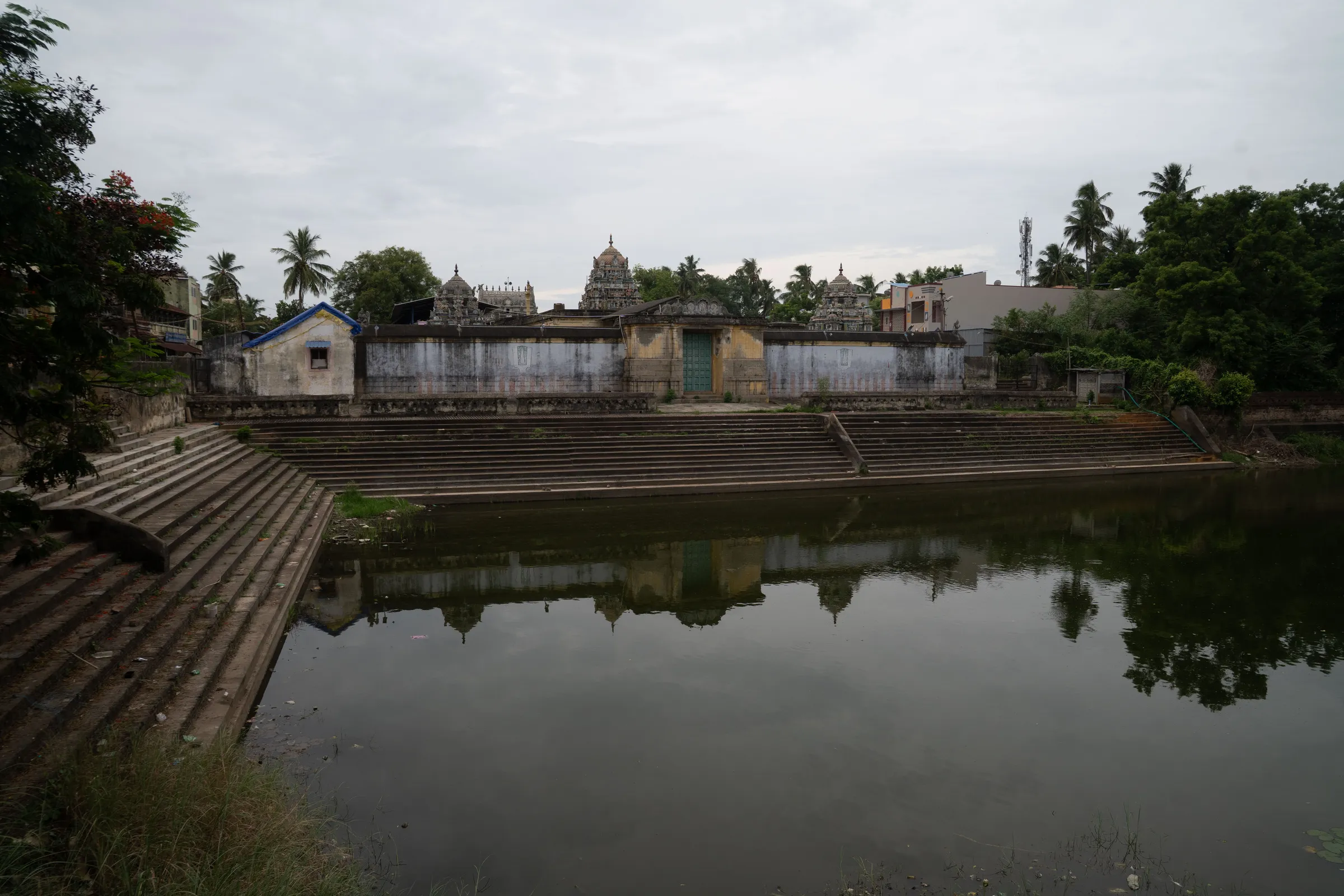
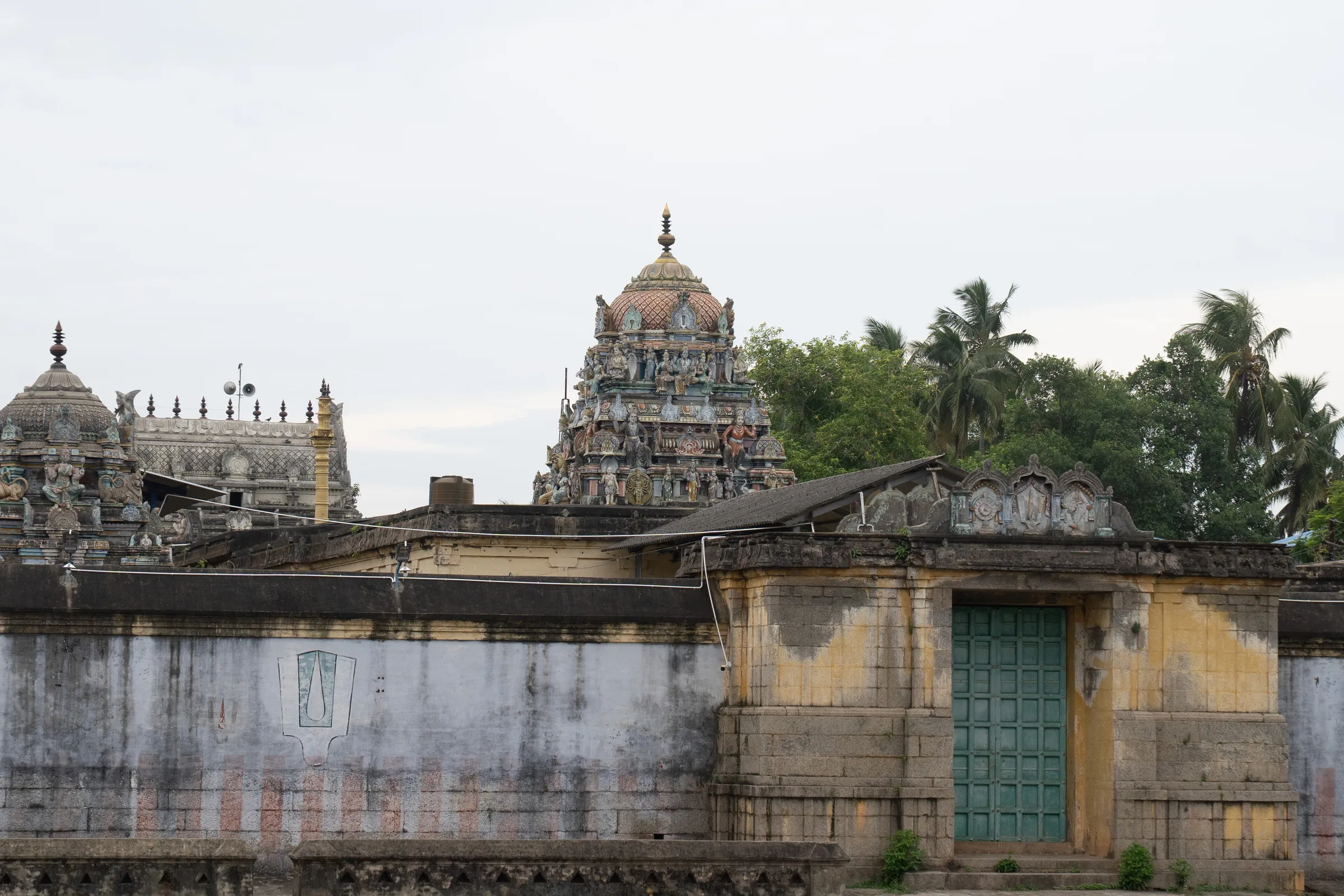
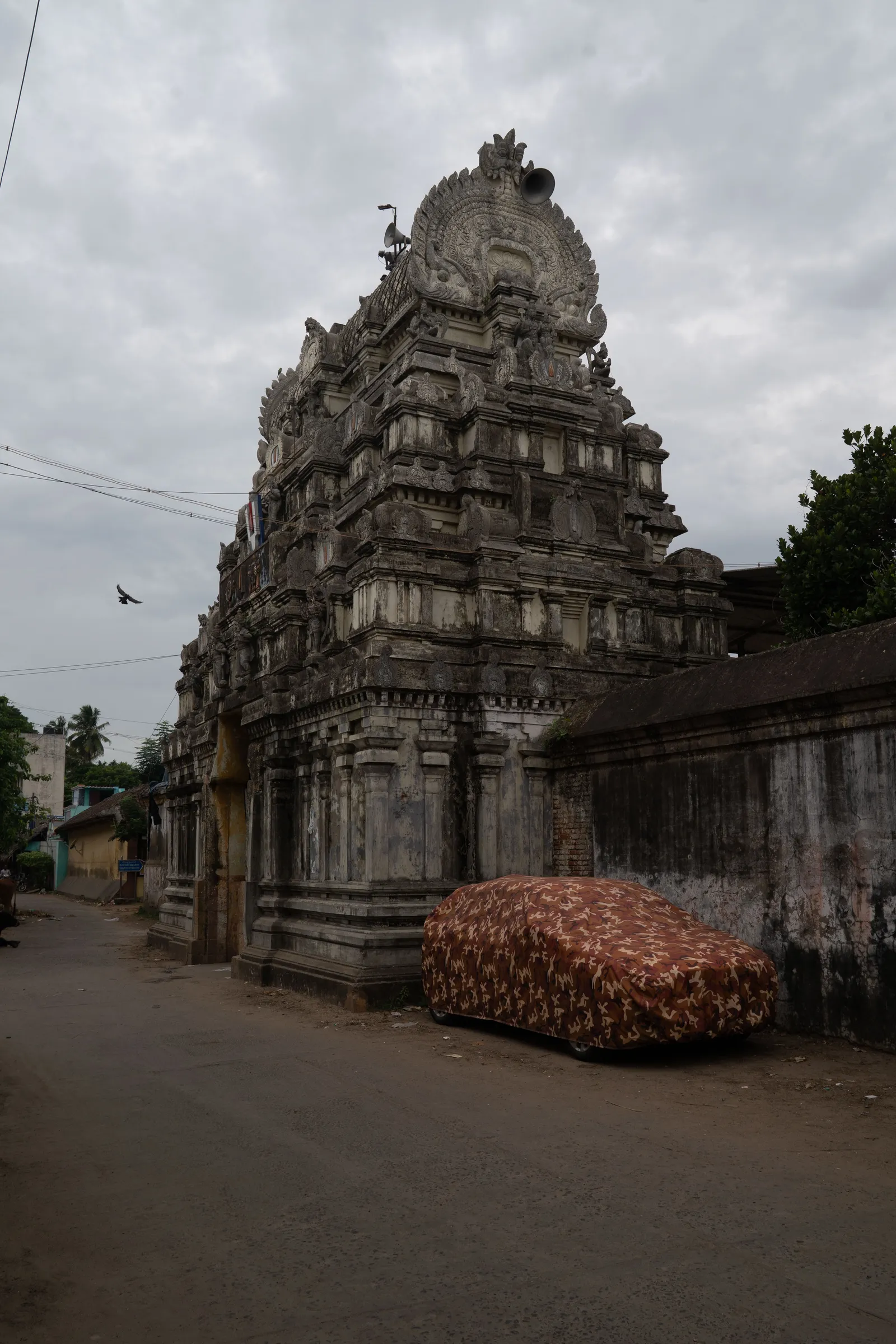
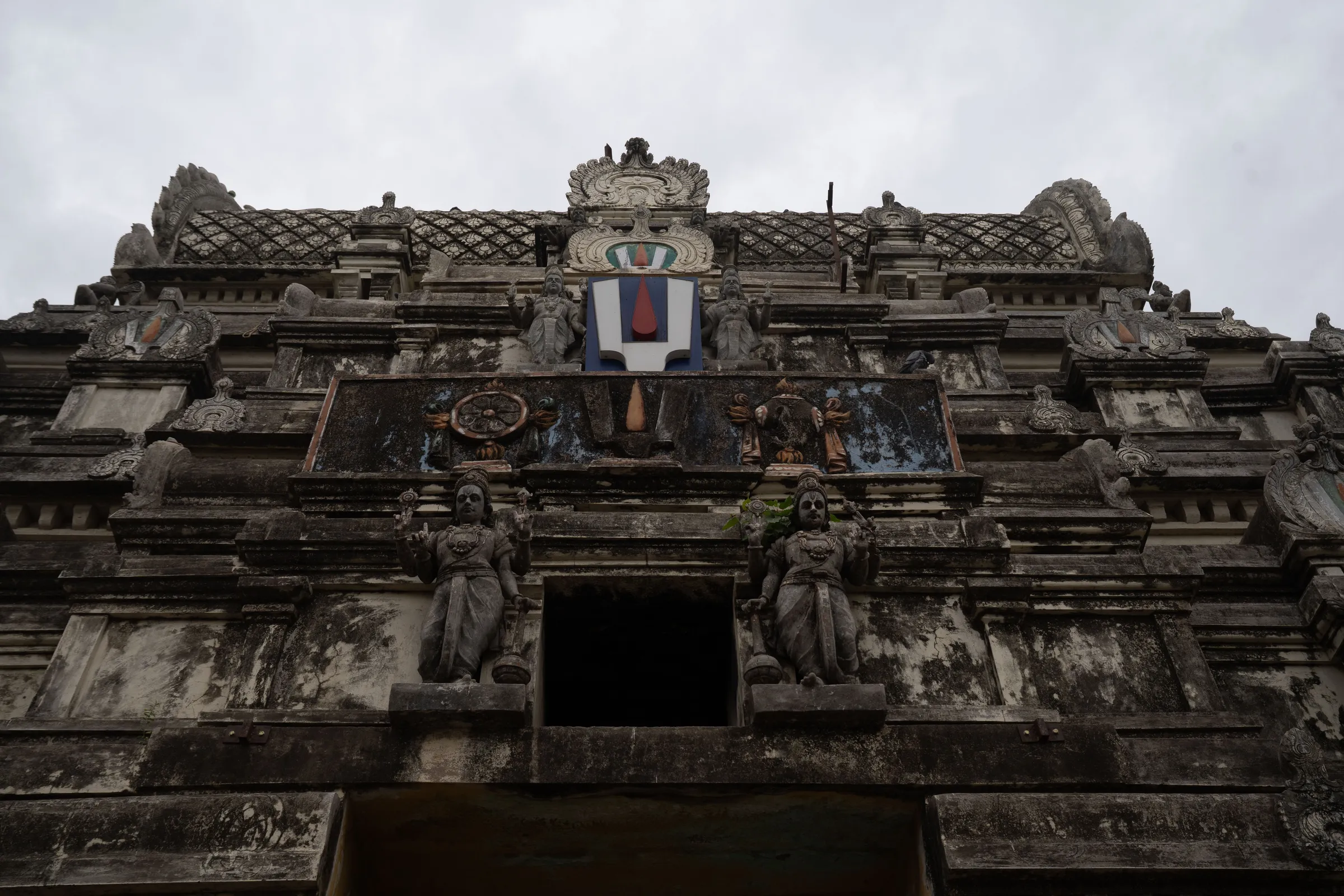
Tri Vikrama Temple, photograph
← Thondaimandalam
Entry 023

Tri Vikrama Temple

Tirukoilur · Chōḷa

A Divya Desam at Tirukoilur whose rare, towering image of Viṣṇu as Trivikrama is a must-see. In the old town, then Tirukovalur, the first three Alwars are said to have met on one dark and stormy night.

This entry documents the temple across three registers, held deliberately apart: the architectural reading of what stands, the archaeological reading of what can be dated and cited, and the mythological reading of what is told.

The photographs

Plates · 14

Tri Vikrama Temple, photograph
© Sai Sanjay Prasath · All rights reserved
Tri Vikrama Temple, photograph
© Sai Sanjay Prasath · All rights reserved
Tri Vikrama Temple, photograph
© Sai Sanjay Prasath · All rights reserved
Tri Vikrama Temple, photograph
© Sai Sanjay Prasath · All rights reserved
Tri Vikrama Temple, photograph
© Sai Sanjay Prasath · All rights reserved
Tri Vikrama Temple, photograph
© Sai Sanjay Prasath · All rights reserved
Tri Vikrama Temple, photograph
© Sai Sanjay Prasath · All rights reserved
Tri Vikrama Temple, photograph
© Sai Sanjay Prasath · All rights reserved
Tri Vikrama Temple, photograph
© Sai Sanjay Prasath · All rights reserved
Tri Vikrama Temple, photograph
© Sai Sanjay Prasath · All rights reserved
Tri Vikrama Temple, photograph
© Sai Sanjay Prasath · All rights reserved
Tri Vikrama Temple, photograph
© Sai Sanjay Prasath · All rights reserved
Tri Vikrama Temple, photograph
© Sai Sanjay Prasath · All rights reserved
01

Architectural

structure & vocabulary

The temple's main deity is the rare image of Viṣṇu as Trivikrama, the giant who measured the heavens with one step and the earth with another. The size and composition of the image make it a must-see. Tirukoilur is one of two Viṣṇu temples with this image as the main deity, the other being within Kanchi, which is close to a very tall seated Viṣṇu in the Pandava Dhuta Perumal Temple.

02

Archaeological

dated & cited

In the old days the village was Tirukovalur, or Kovalur, the capital of the Malayaman kings, mentioned in the Sangam texts of the 3rd century BCE to the 3rd century CE. An important inscription from the 6th year of Rajendra II (997-1064 CE) records how the old brick temple had cracked: he had the main shrine, a mandapa and an enclosed veranda rebuilt with five stupi in the roof, gifted a canopy of pearls, and re-engraved the older records into the new walls.

The temple holds other inscriptions concerning the trade guilds of medieval times, noting how they did business ethically and contributed to society. A nearby Shiva temple, little visited, has an important inscription from the reign of Raja Raja Chola listing the temple's employees, including a timekeeper who announced the hours of the day, and recording a gift in memory of his mother Vanavan Maha Devi, who committed sati leaving behind a small child.

A very fine metal image of Viṣṇu as Trivikrama is at Singanallur near Coimbatore. Some believe this metal deity was in the Kanchi Ulagalanda Perumal temple but was looted by Tipu Sultan; fortunately it was not destroyed.

Dating

Inscription from the 6th year of Rajendra II (997-1064 CE) records rebuilding of the old brick temple; the village was capital of the Malayaman kings, named in Sangam texts (3rd c. BCE to 3rd c. CE).

03

Mythological

as transmitted

To quell the pride of Mahabali, Viṣṇu took the form of a giant who measured the heavens with one step and the earth with another. This avatar has long been a favourite of the Alwars in their verses, perhaps to remind those in power not to let power go to their heads.

Tirukoilur is where the first three Alwars met on one dark and stormy night. Known only as Pey (ghost), Poigai (waterbody) and Bhuta (the five elements) Alwar, they huddled together in the rain and felt the presence of a fourth in the darkness, soon realising it was Viṣṇu himself. Poigai Alwar broke into song about the earth as his lamp, the ocean as the oil and the sun as the flame; Bhuta Alwar sang of love as the lamp, eagerness the oil and his heart the wick; and Pey Alwar spoke of seeing Goddess Lakshmi within the heart of Viṣṇu who holds the chakra and conch.

Thirumangai Alwar devotes many verses to this temple and mentions the Pennar River and the trees on its banks. Vedanta Desika, in the Dehalisa stuti, praises the deity here in words that convey the magnificence of his towering posture.

Register interest in prints Buy the book
Improve this entry

This is an open, reviewed record. If you have spotted an error or have something to add — a correction, a date, a source, a name in another script — propose it. Every change is reviewed before it joins the record.

“Suggest an edit” opens this entry on GitHub and turns your change into a pull request. “Share feedback” opens a short form. Both go through review.