01 Architectural
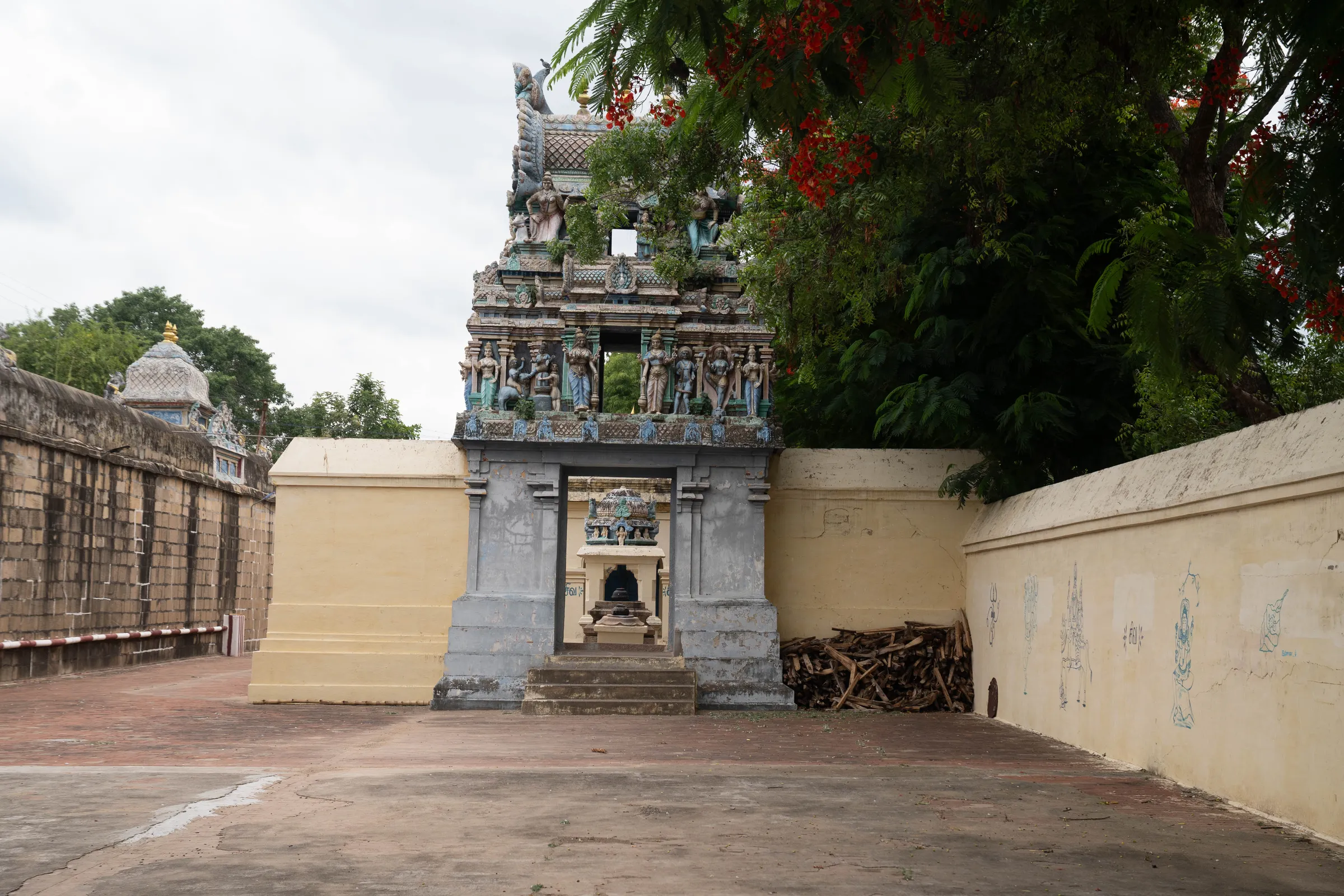
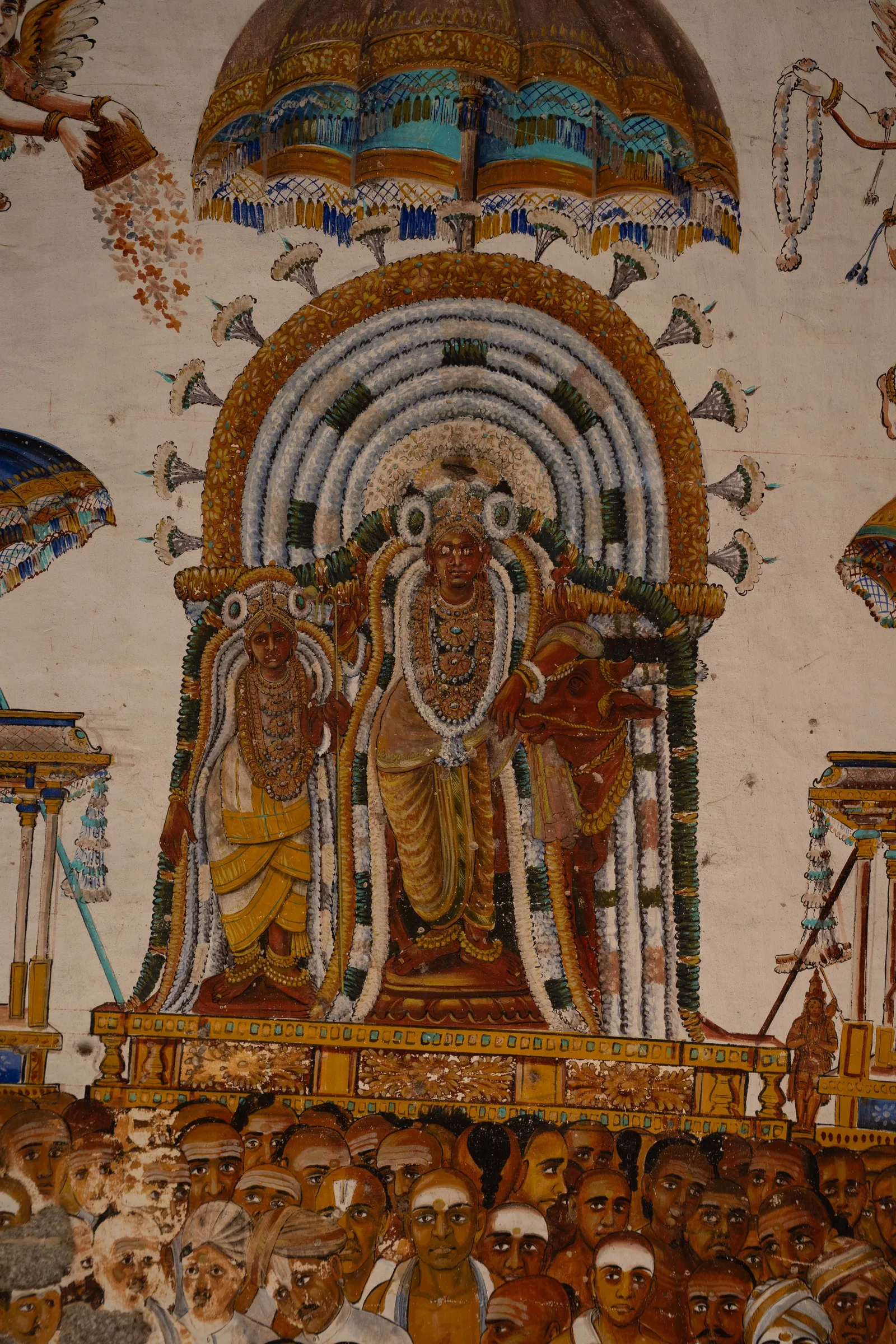
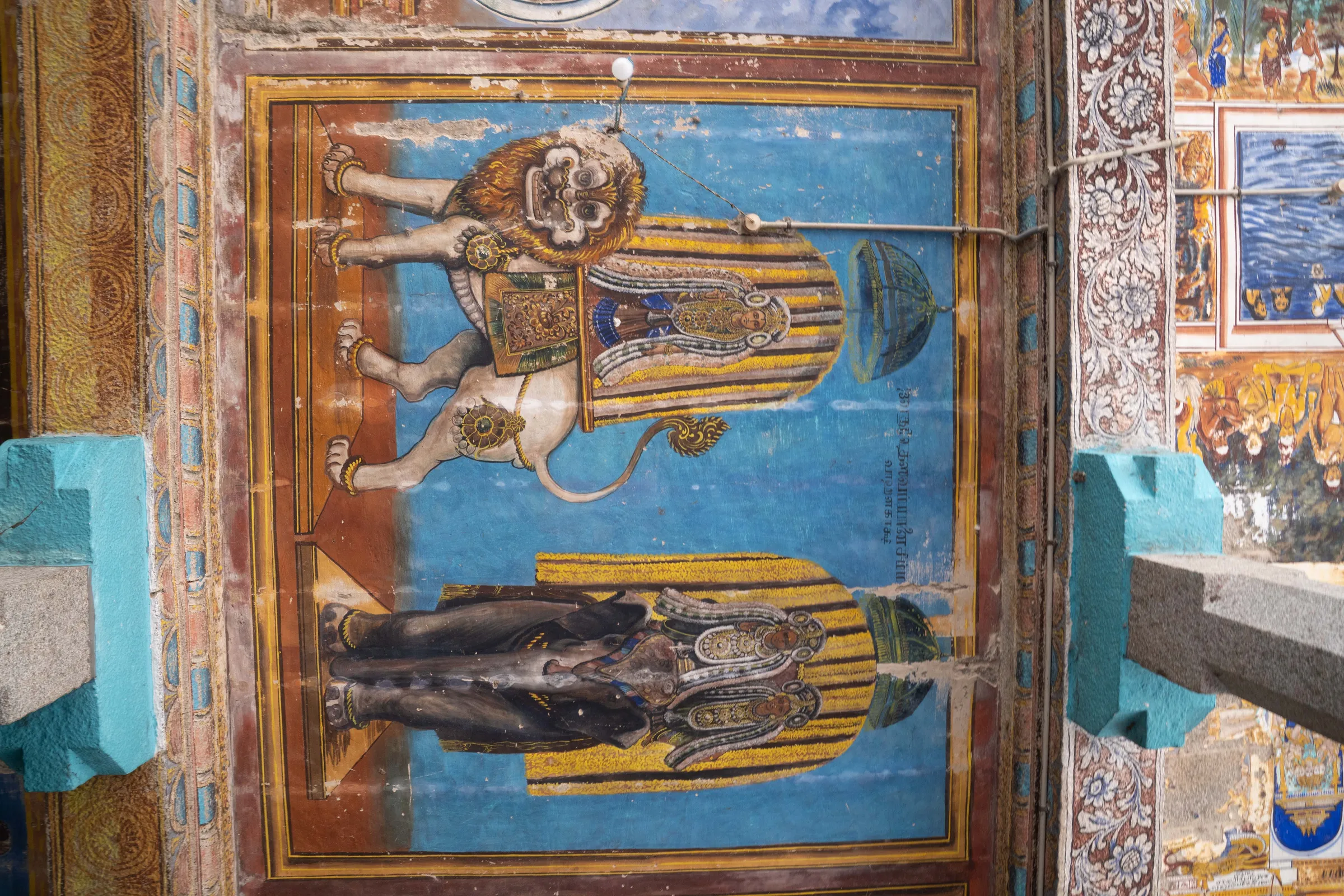
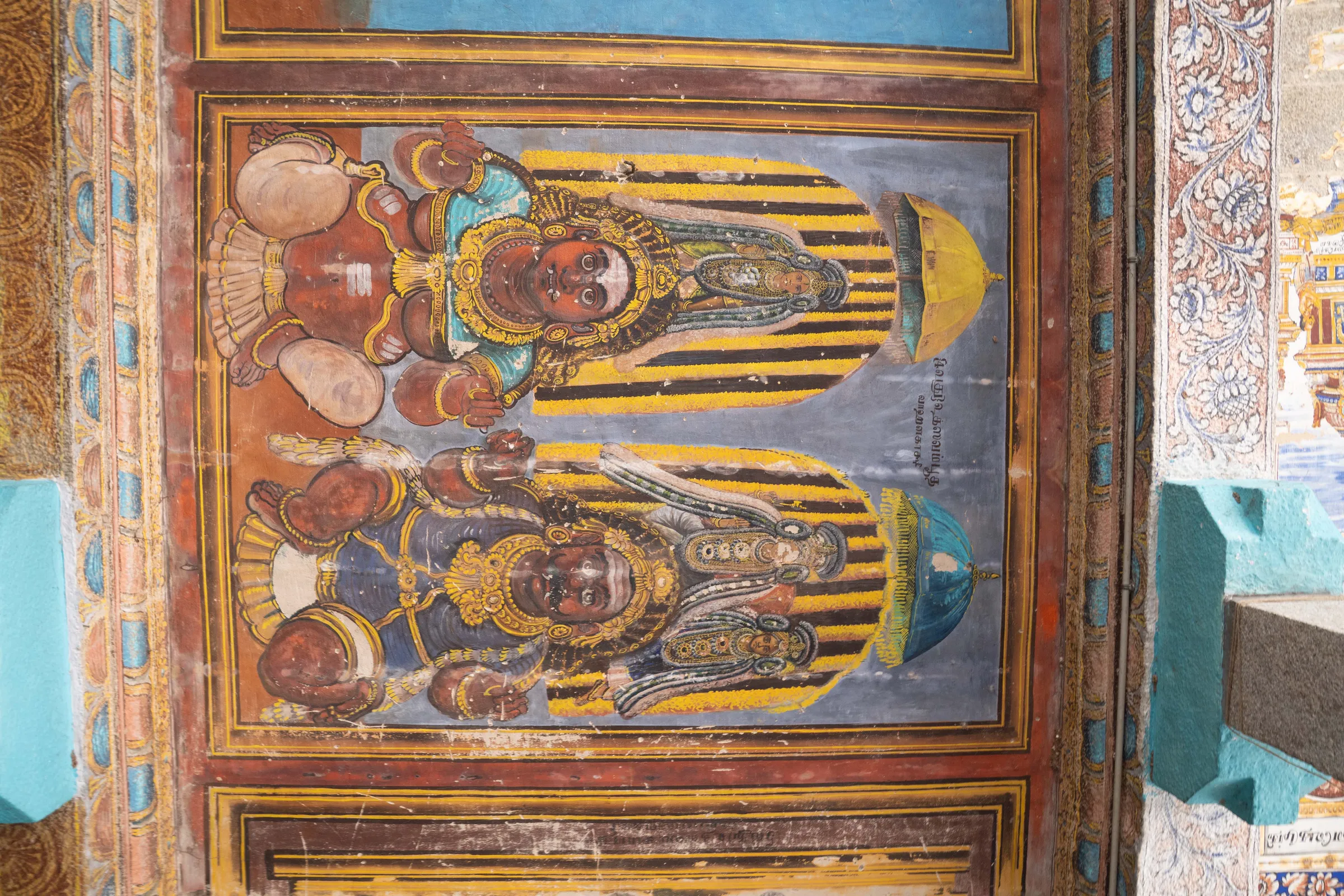
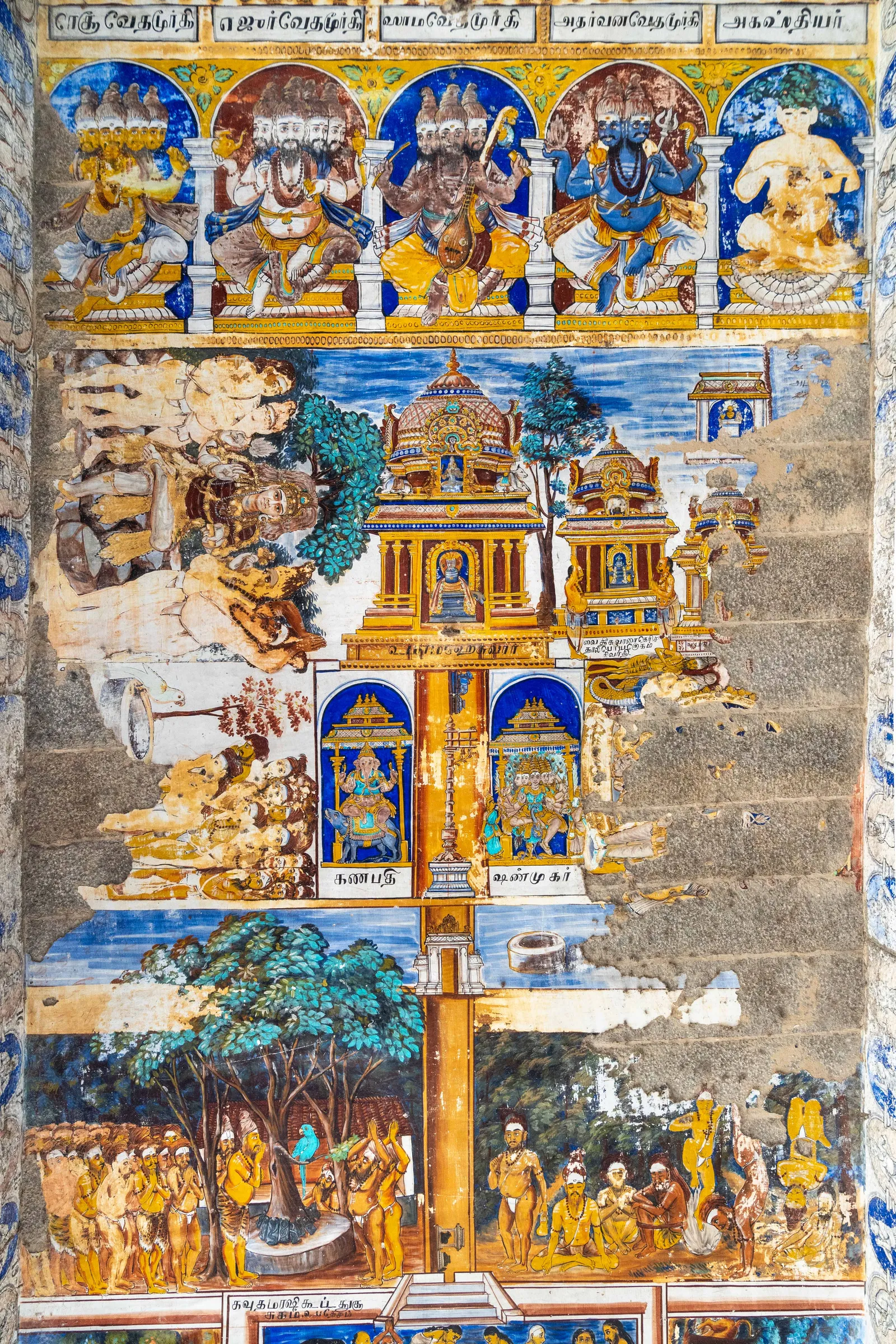
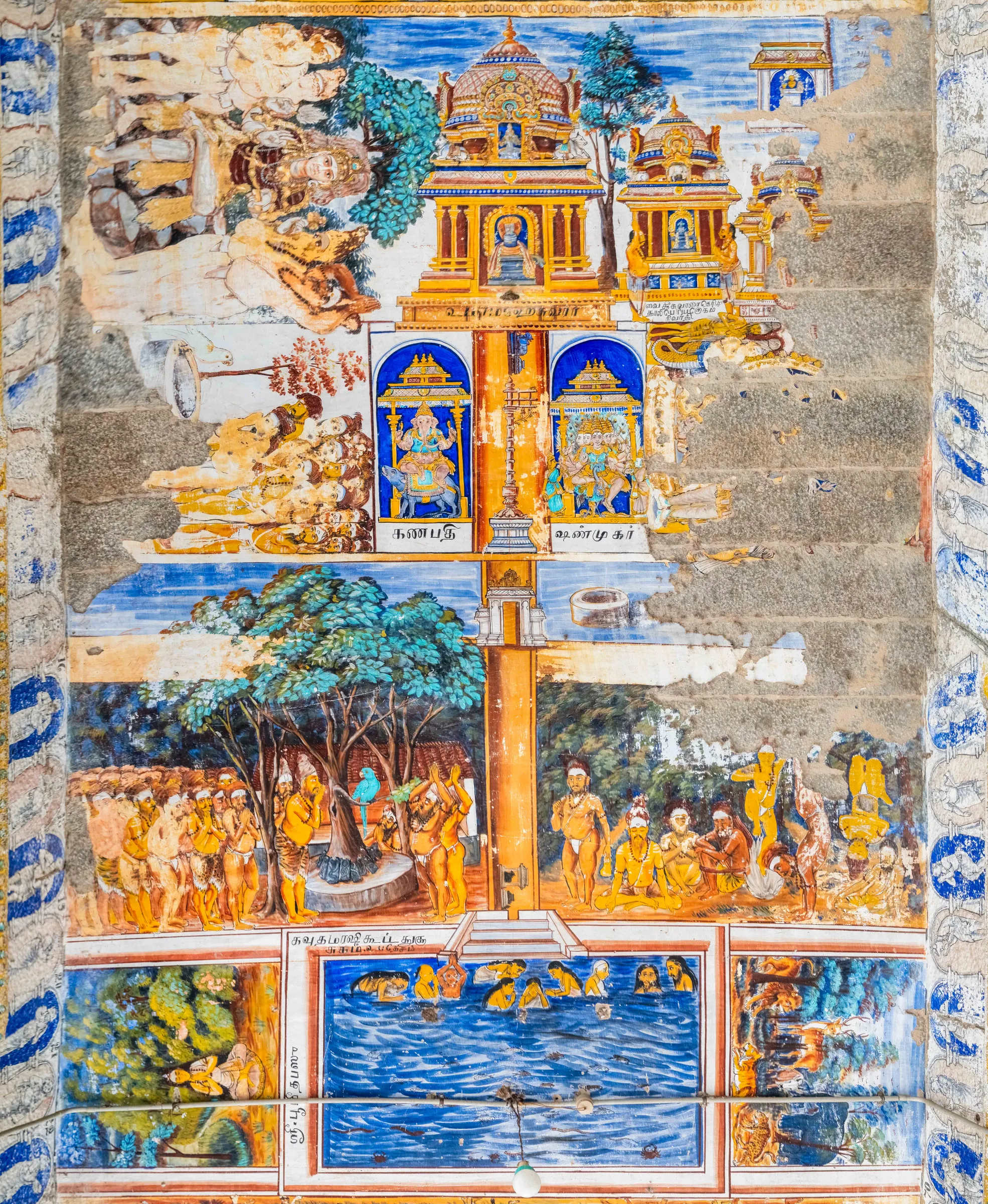
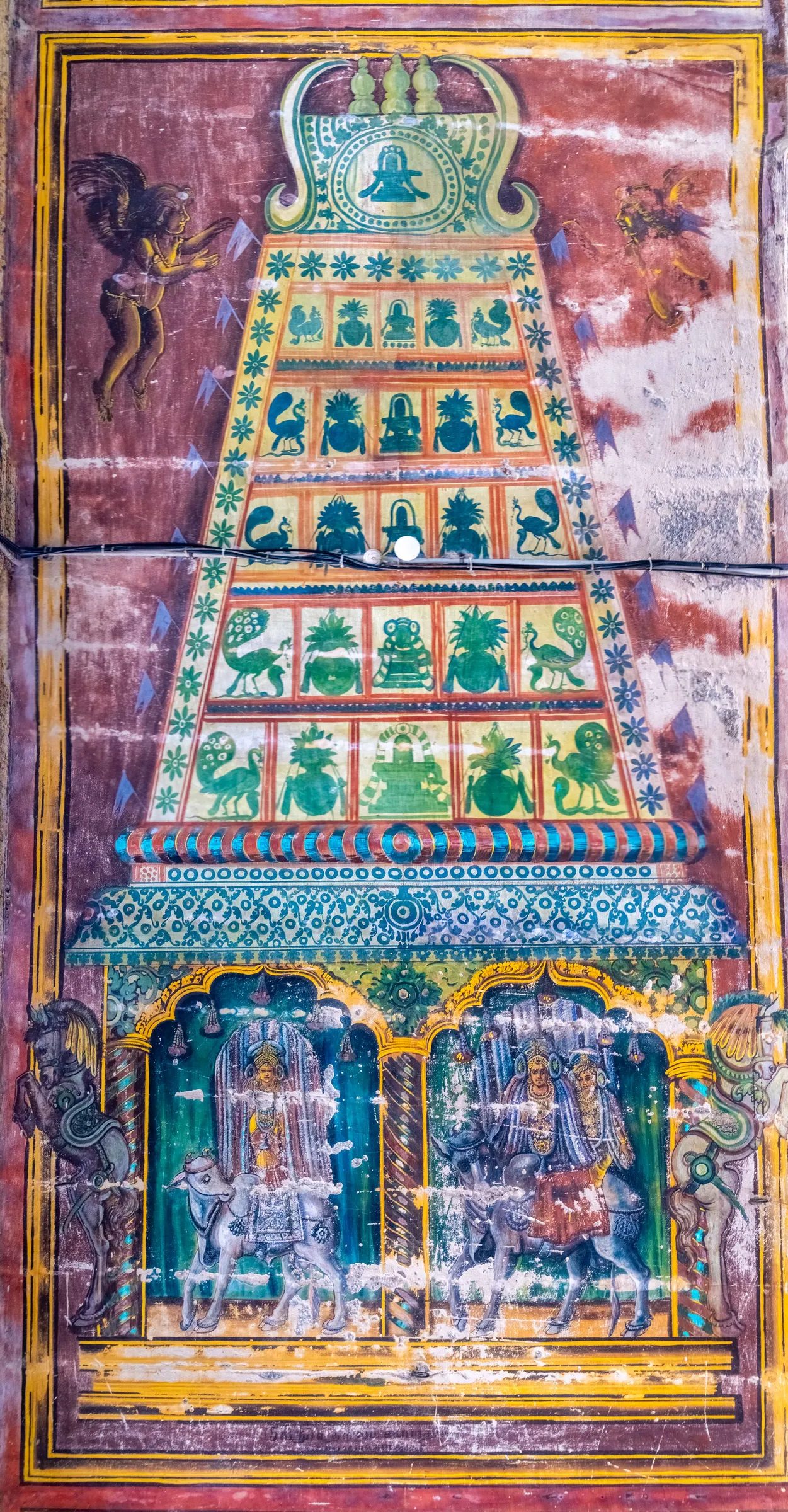
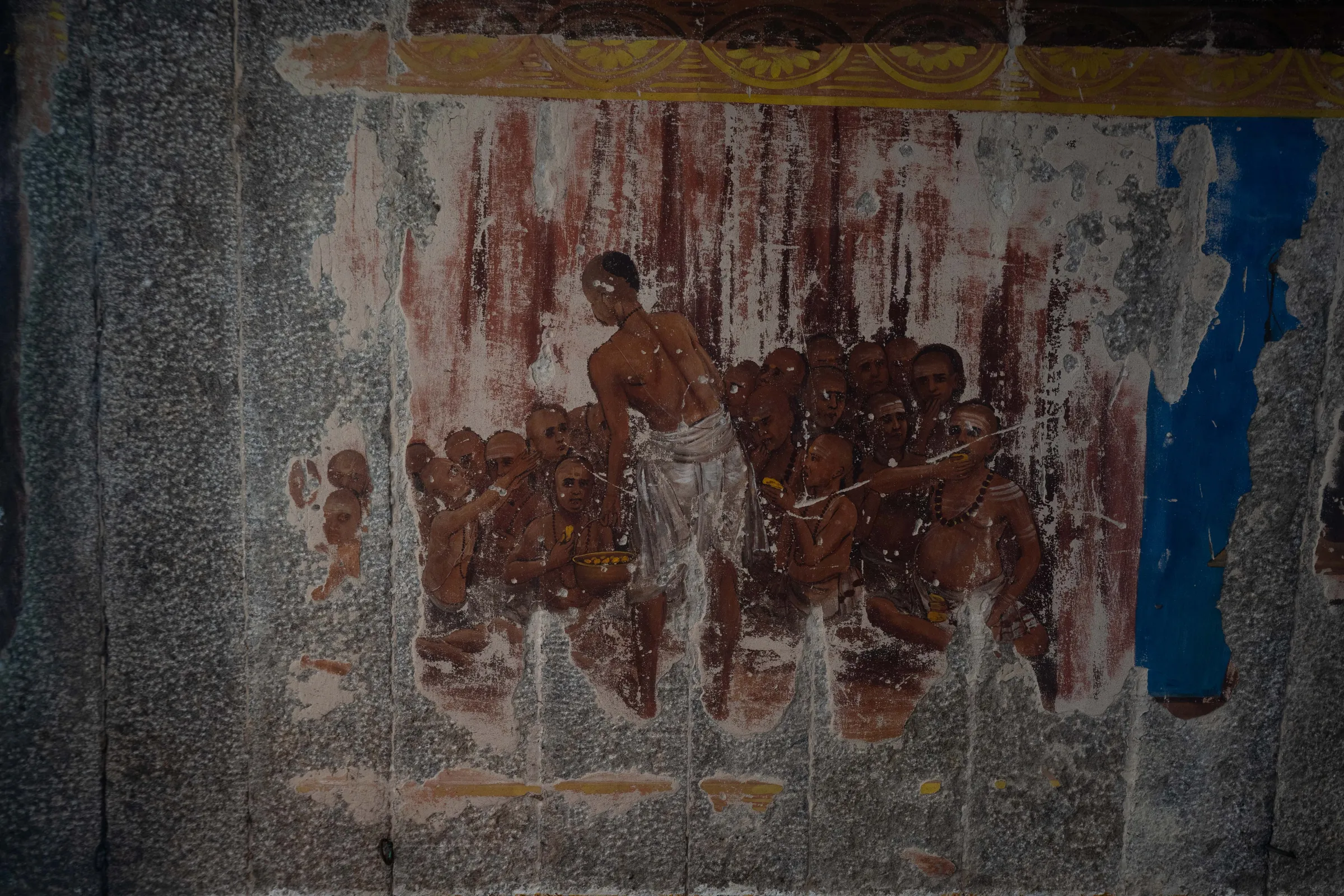
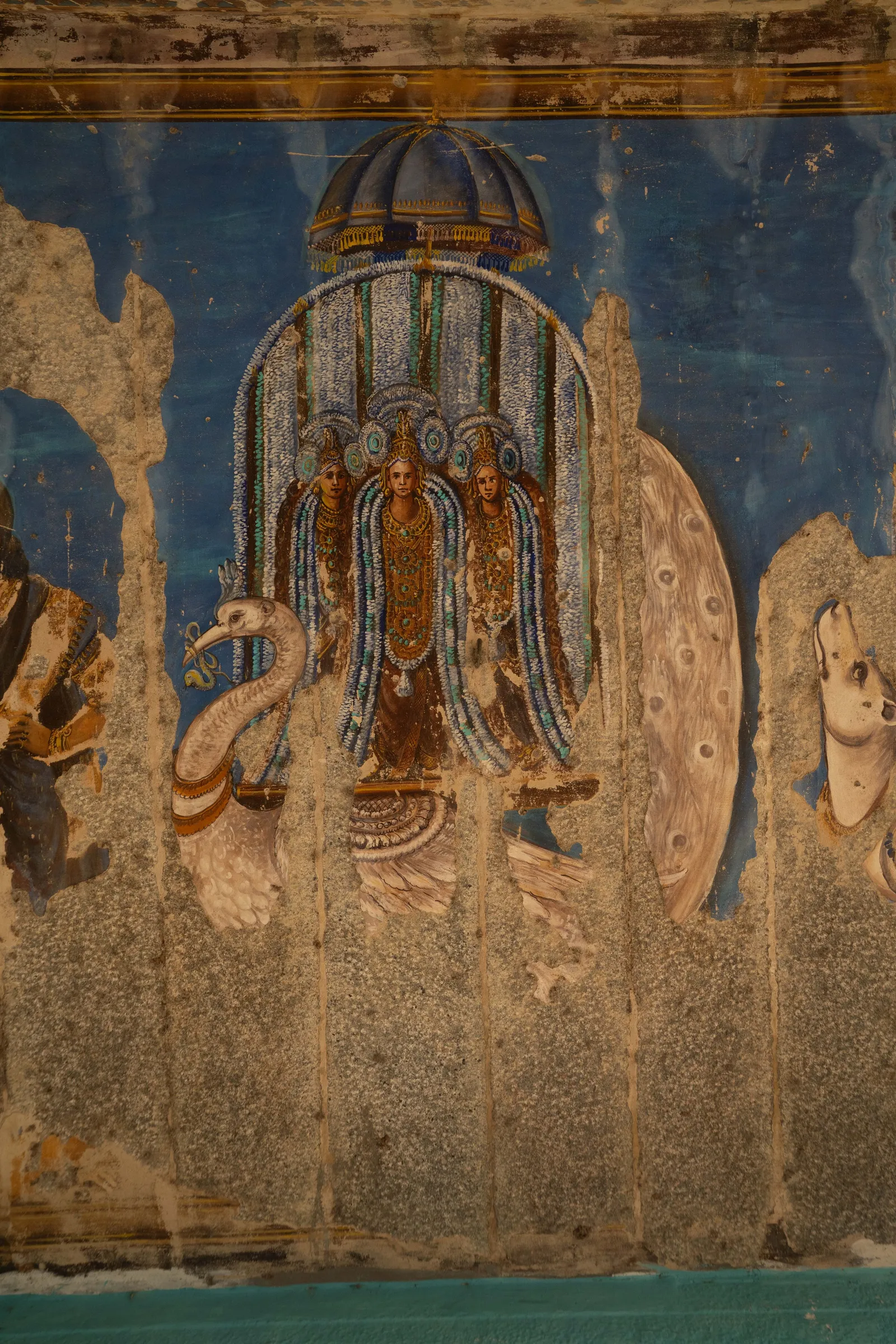
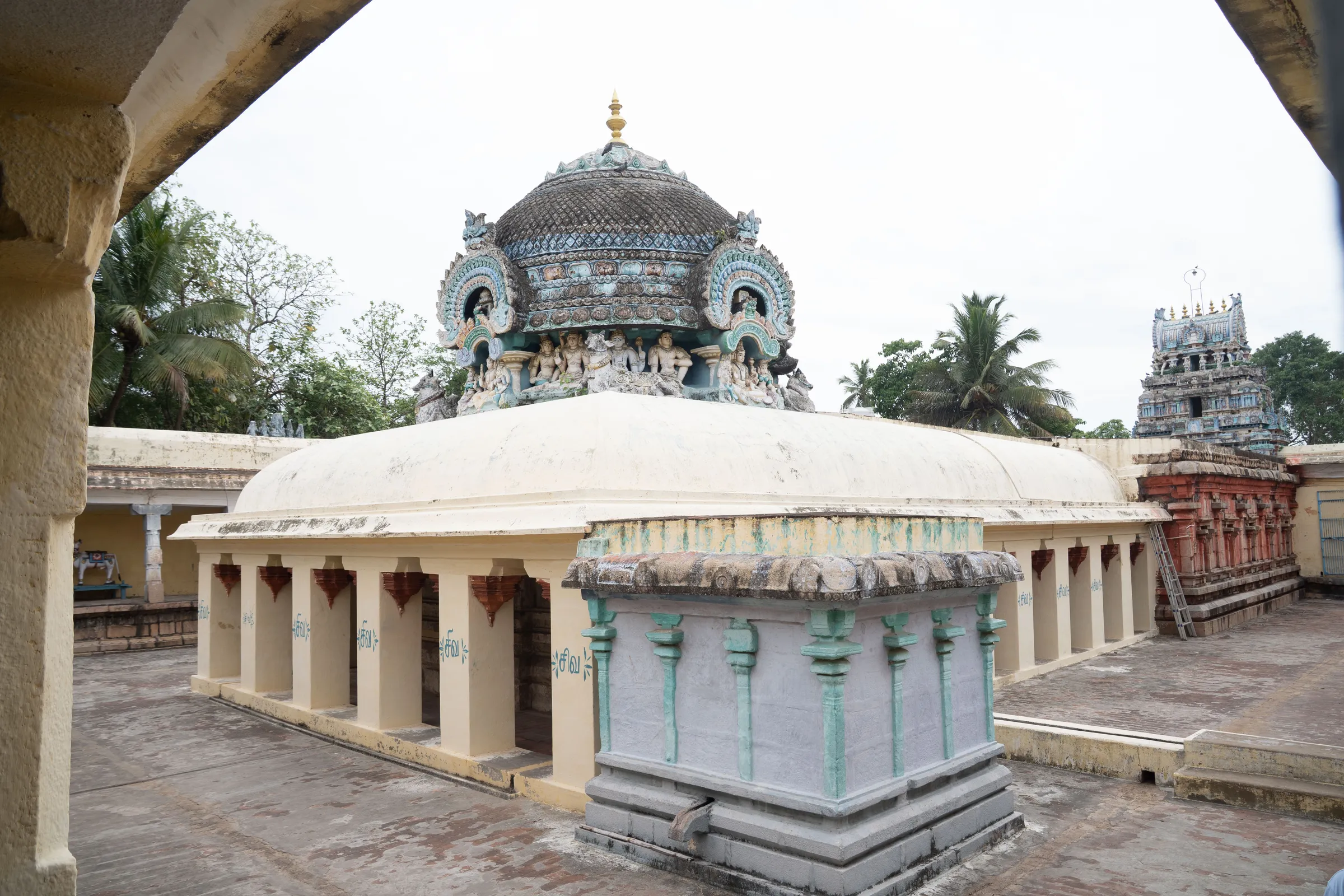
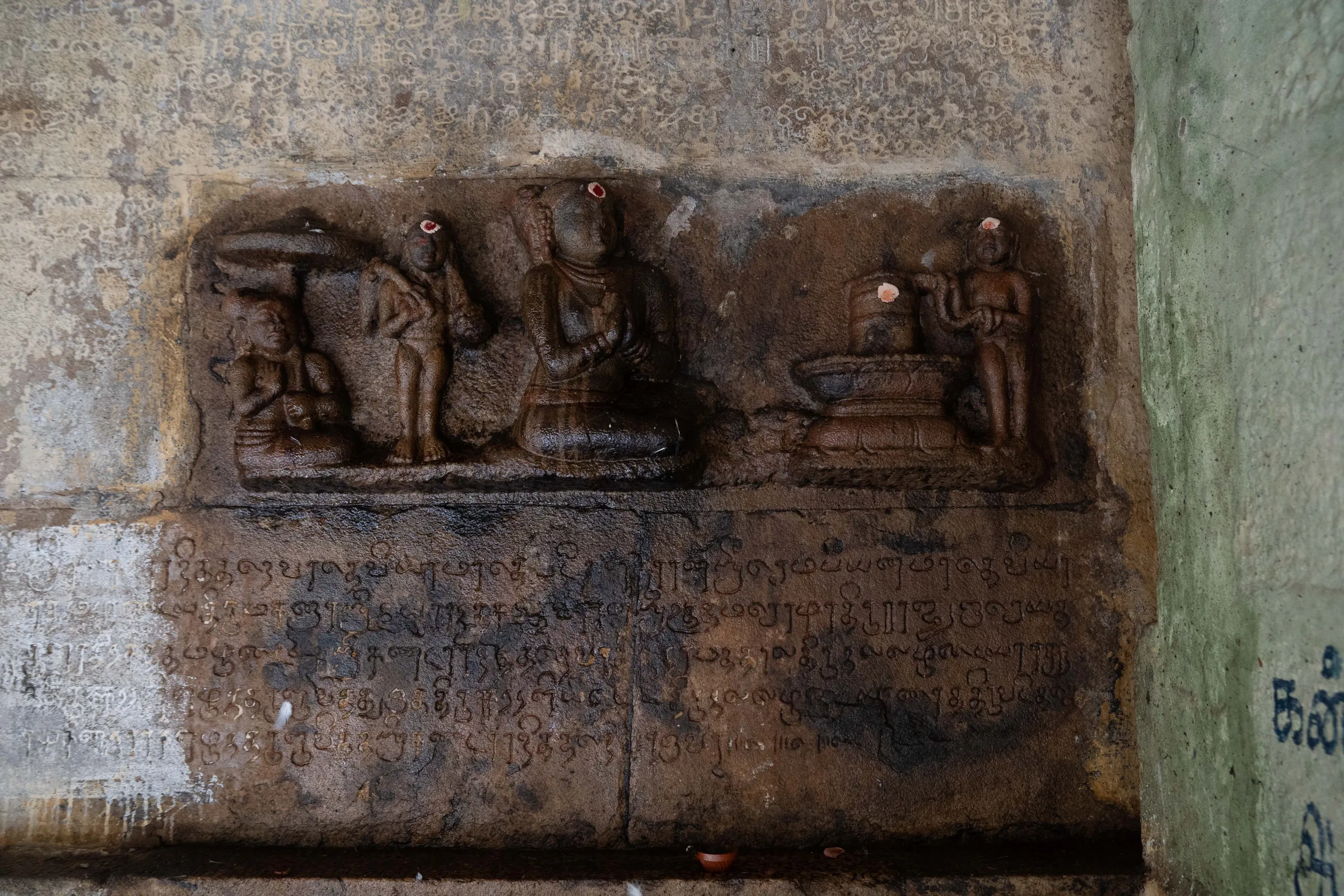
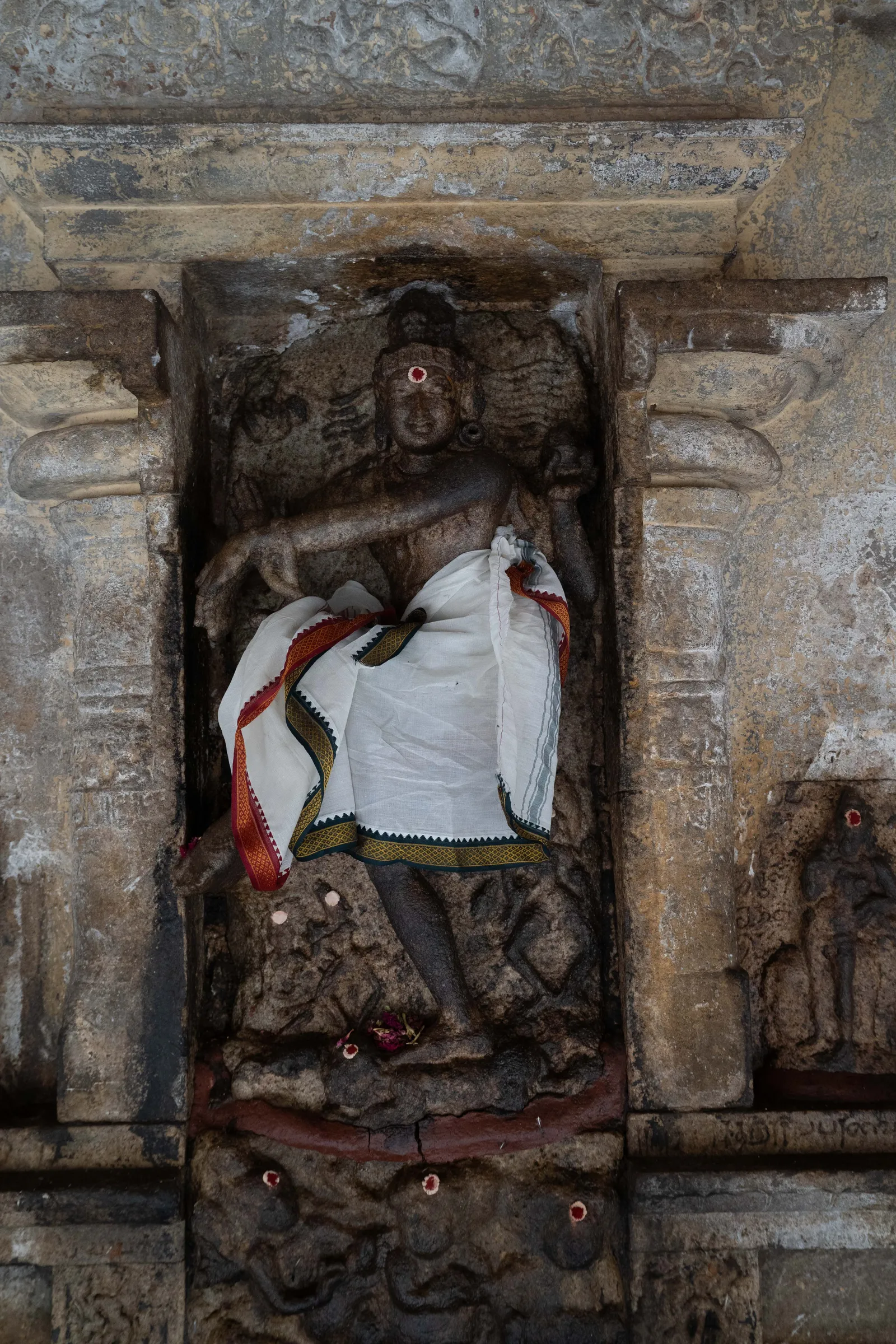
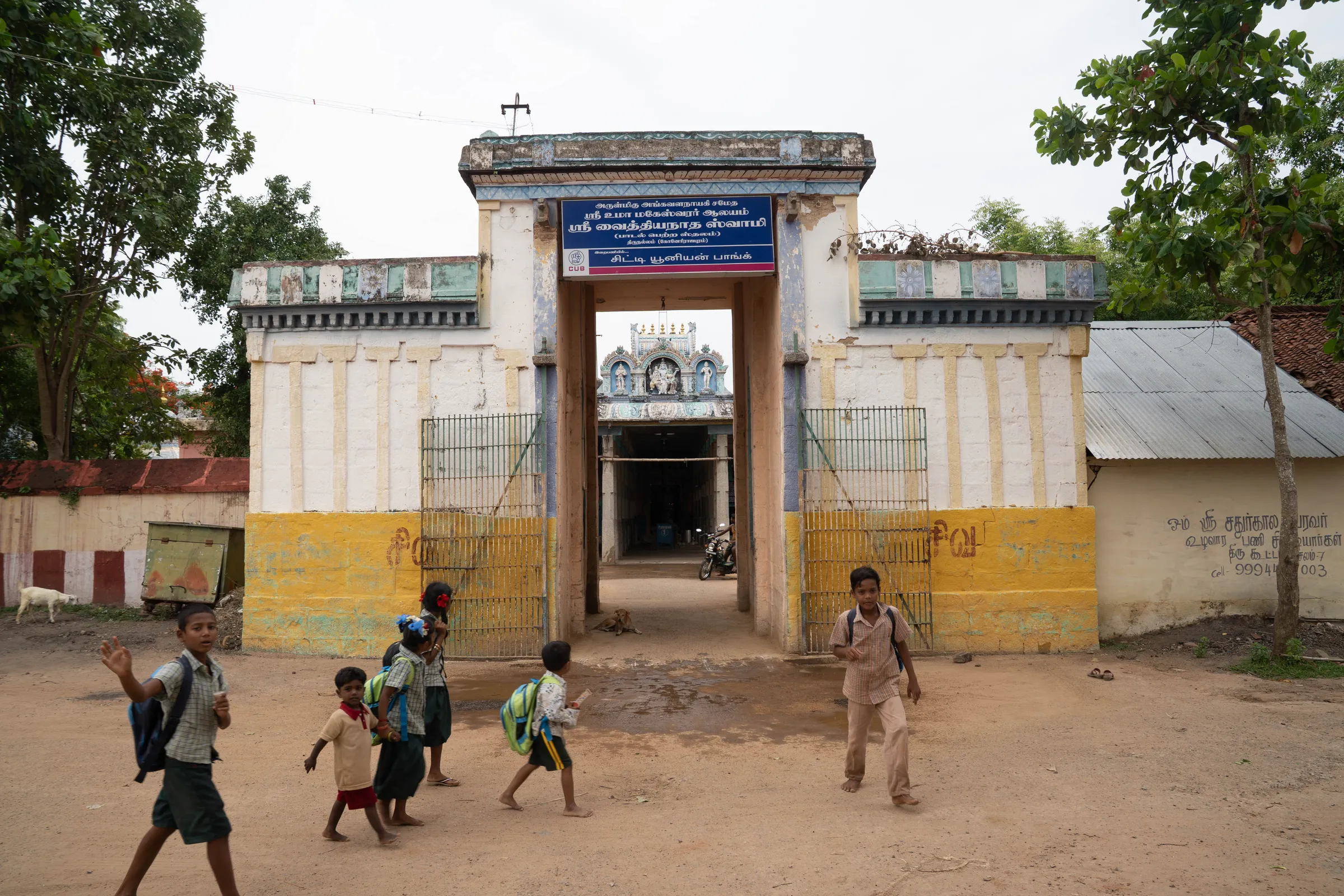
structure & vocabulary The exterior is plain and gives no clue to the temple's importance. It stands before a temple pond, with the untouched houses of the Vāthima Smārta Brāhmins alongside. On the south wall of the central shrine is a small group of sculptures, probably showing Gandarāditya worshipping here. By the late 10th century the temple held grand processional bronzes, including a large Naṭarāja and figures such as Bhōgēśvarī and Kalyāṇa Sundara. On the front maṇḍapa are paintings of processions dated to the 1930s, probably by Naṭēsan Piḷḷai of Tiruvārūr, now slowly fading.
02 Archaeological
dated & cited Historical evidence suggests Queen Sembiyan Mahādēvī created the stone temple for her husband Gandarāditya Chōḷa around 958 CE, though the temple was older, being named in the 7th century verses of Saint Sambandar. An inscription of 978 CE records the temple's flower garden and other gardens. The temple carries many inscriptions detailing gifts and the consecration of images.
An important inscription, set in the context of a festival on Queen Sembiyan Mahādēvī's birth star, lists the temple's employees and their wages in paddy in 978 CE. The roll is long for so small a temple: makers of sandal paste and of canopies, flower gatherers and garland makers, cleaners who washed the precincts with cow dung, singers, trumpeters and conch blowers, watchmen, reciters of sacred verse, a temple accountant of the potter caste, the Brāhmins who managed affairs, the potter who supplied pots, the dyer of the sacred cloth, the carrier of sacred water, a royal auditor, torchbearers, screen keepers, an astrologer who read the daily sky, a gardener with a uniformed team, the temple architect, and a team of blacksmiths and carpenters.
Dating
Begunc. 958 CE · inferred
Historical evidence suggests Queen Sembiyan Mahādēvī raised the stone temple around 958 CE; an older shrine is named in Sambandar's 7th century verses.