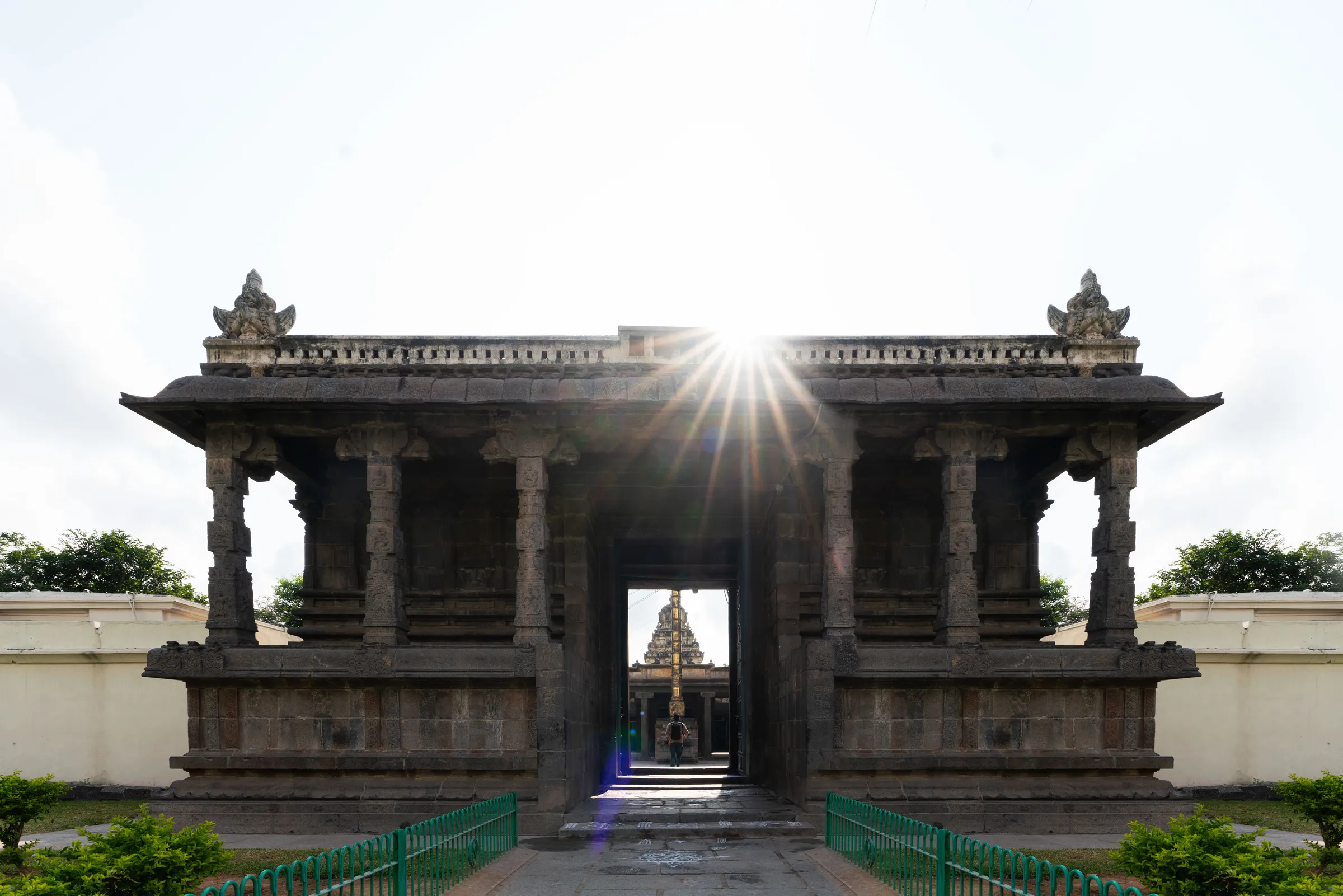
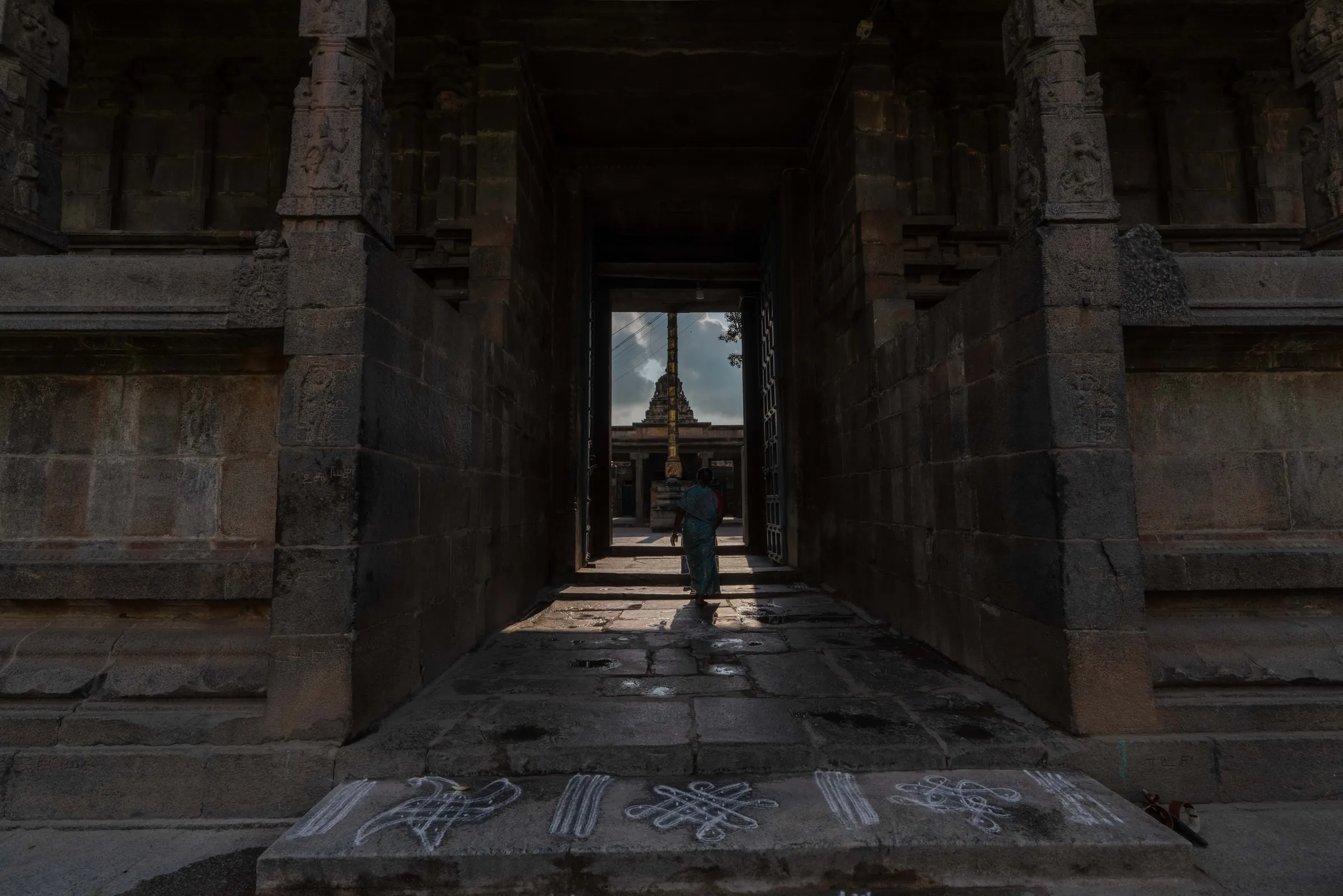
Architectural
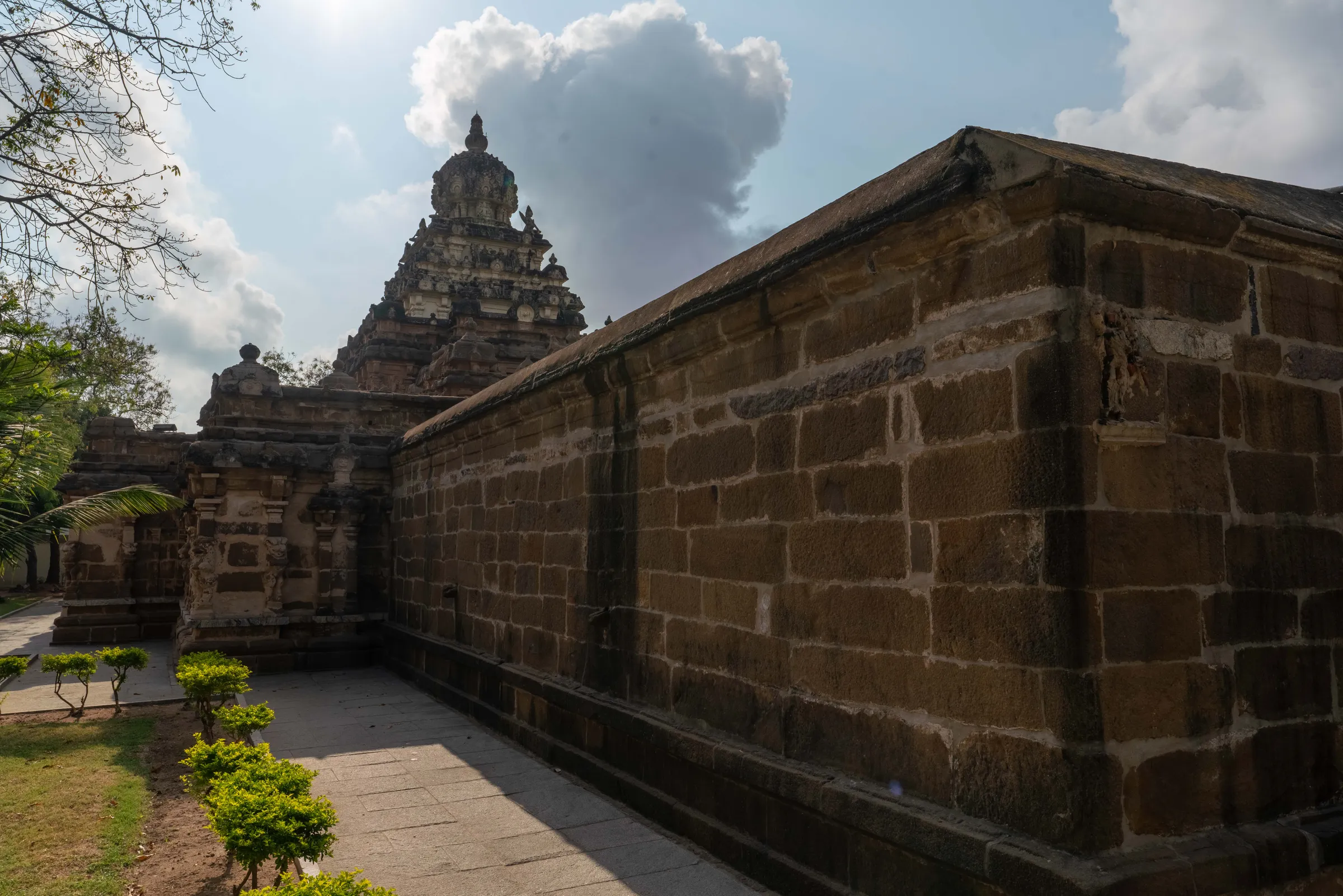
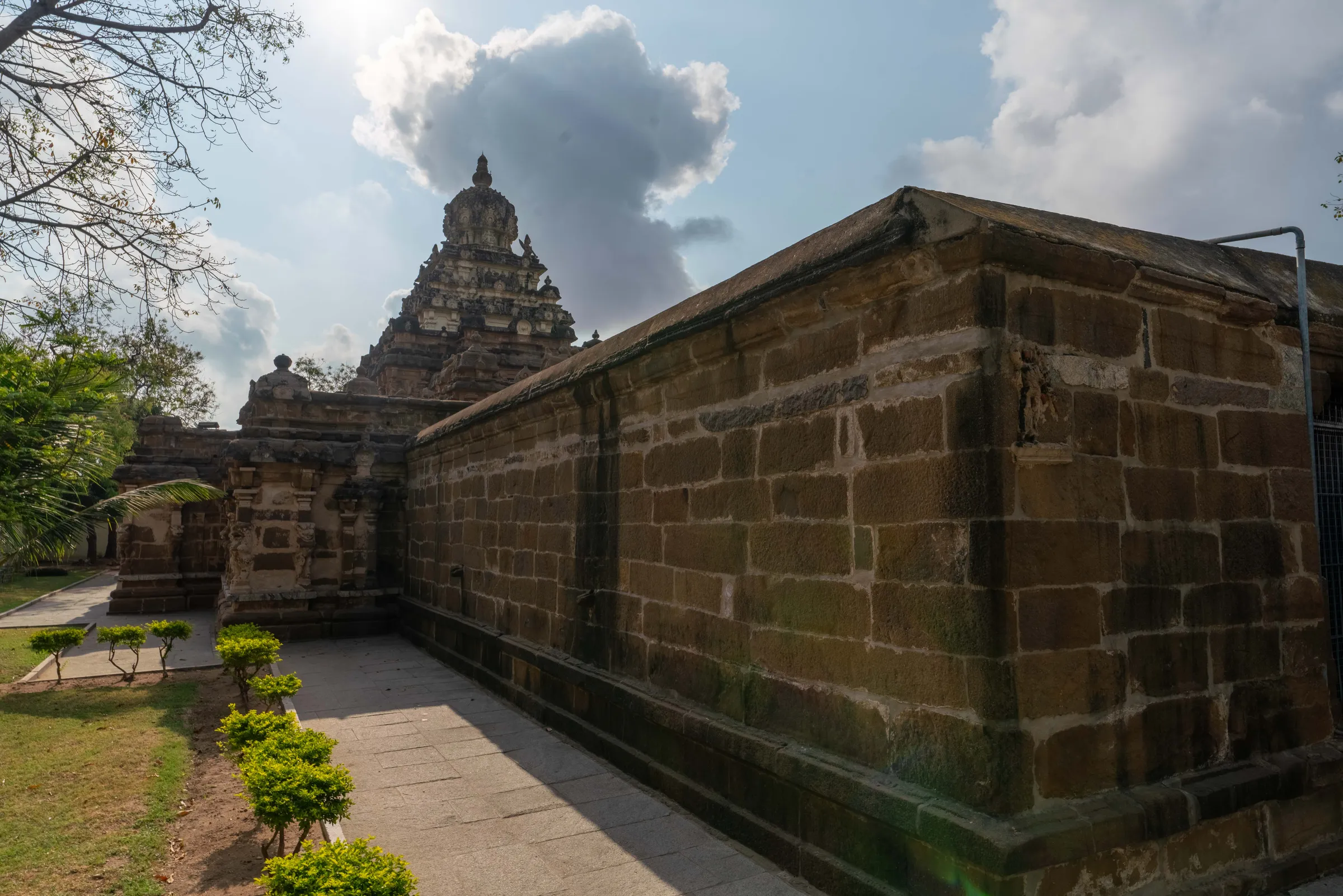
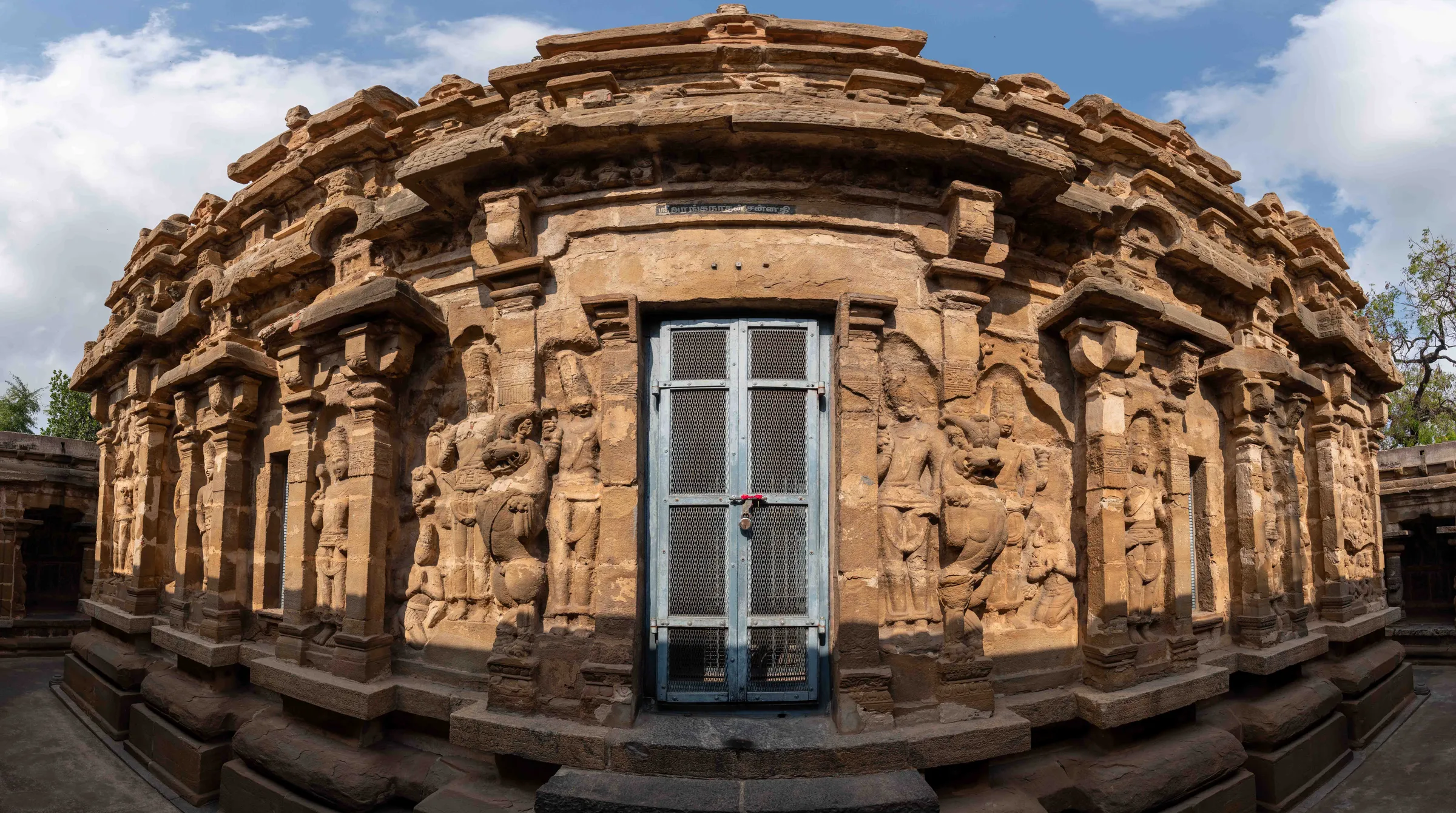
structure & vocabularyThe temple is a tri tala or Ashtanga vimāna, with a ground floor, first floor and second floor, each receding in size and all with separate pradakshina pada or circumambulatory paths, like the temple at Utiramerur.
The main temple wall carries a series of Pallava sculptures, once brightly painted over. In the main wall is a rare early image of Vishnu as Hayagriva with the face of a horse, and another of Vishnu as Varaha teaching someone. At eye level are the dasa-avatars of Vishnu. The heavily plastered first-floor outer walls show, in places, Garuda carrying Vishnu and an asura holding the head of Vasuki as they churned the ocean; the scene of Narasimha fighting Hiranyakasipu is relatively free of plaster, showing the best Pallava art.
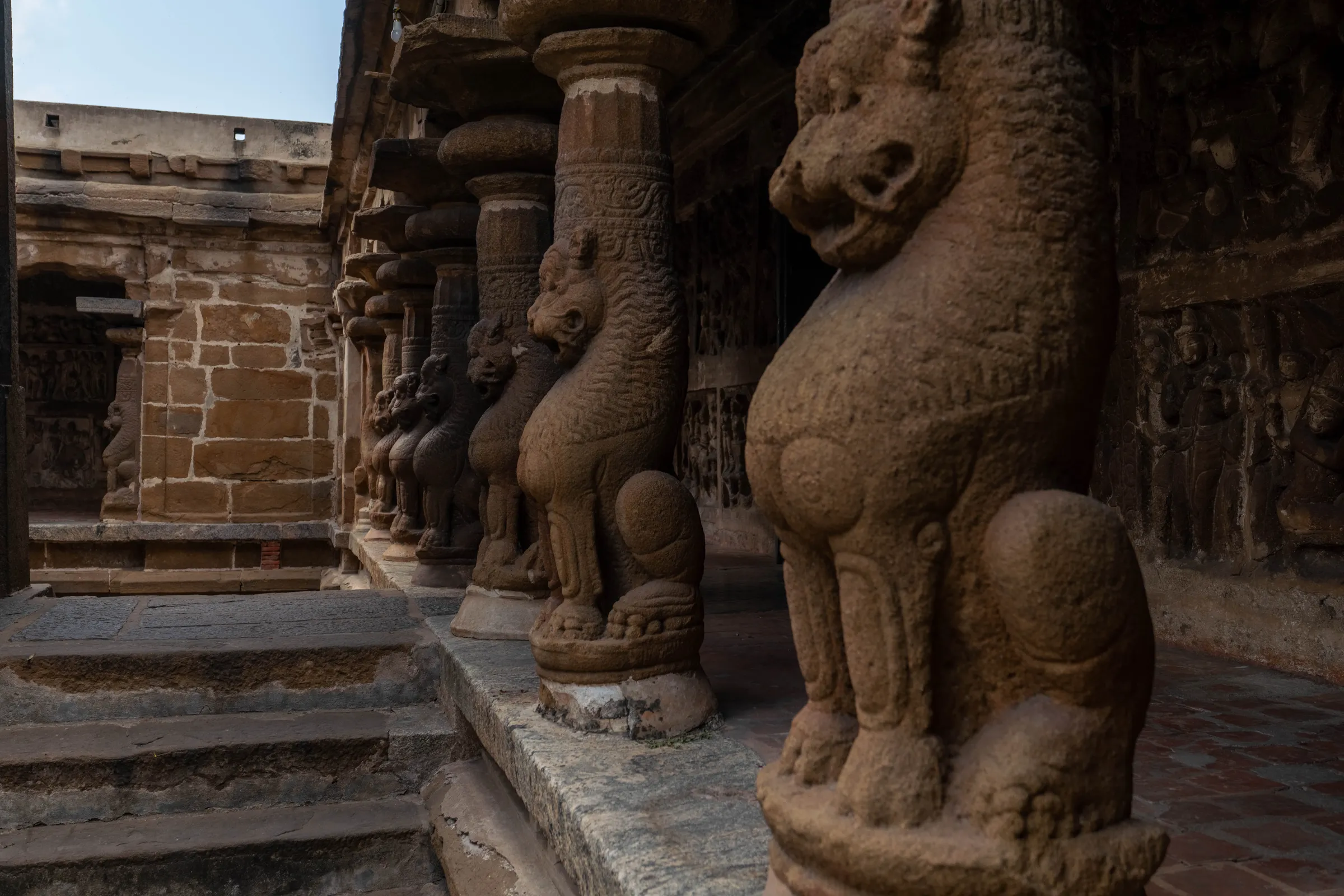
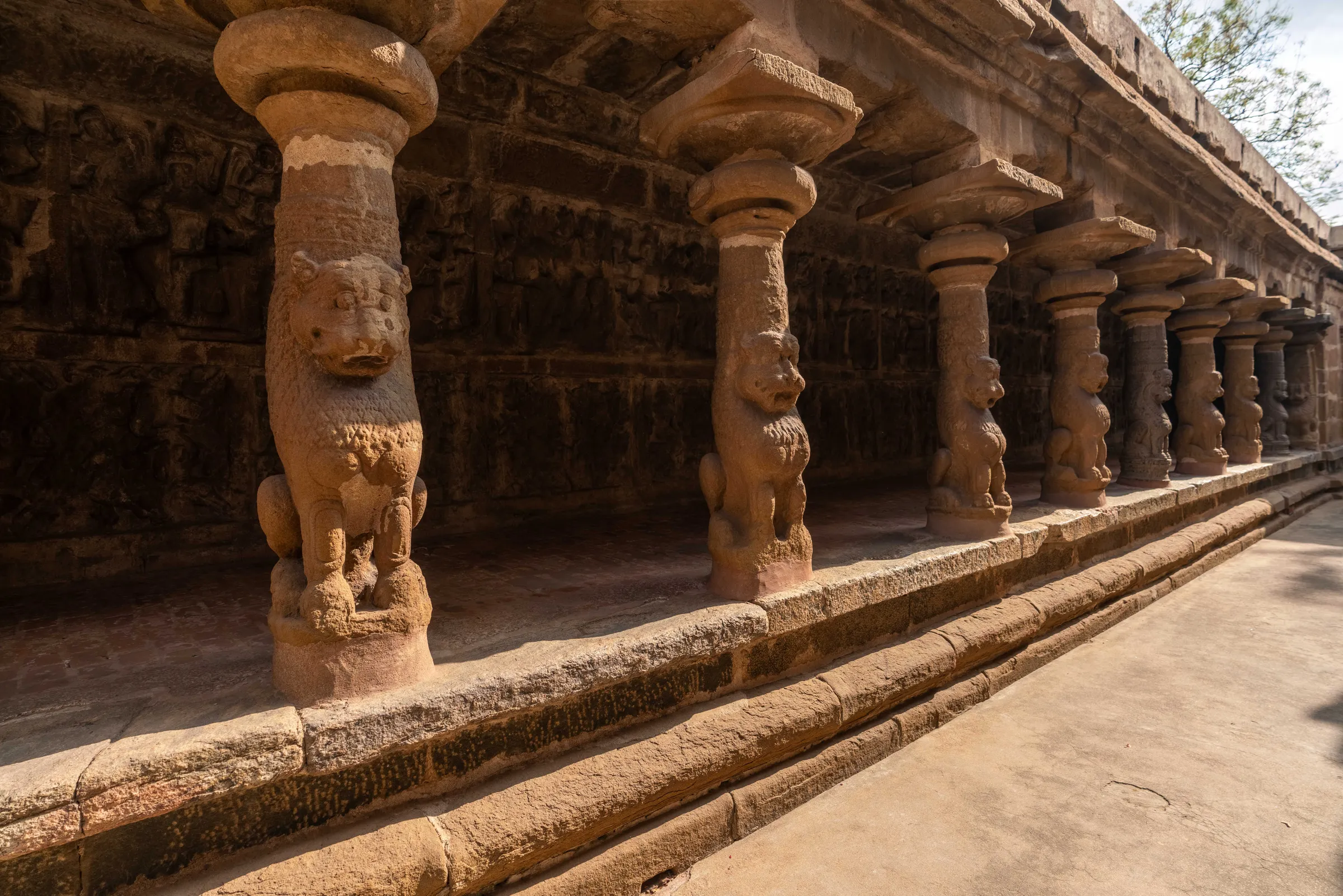
The main temple is enclosed by a pillared corridor whose walls bear panels of the entire story of the Pallavas, most of them sadly damaged, with a small band underneath where captions were probably painted, like a comic book in stone. An easy panel to identify is the coronation of the Pallava king, though the many figures cannot be named for lack of captions; another shows elephants in battle.