Kanchipuram · Kanchipuram · Chōḷa; later Vijayanagara
The largest Vishnu temple of Kanchipuram, a Divya Desam at Vishnu Kanchi whose Athi-wood mulavar is shown to pilgrims once every forty years, famed for the Kalyana mandapa with stone chains carved from single blocks.
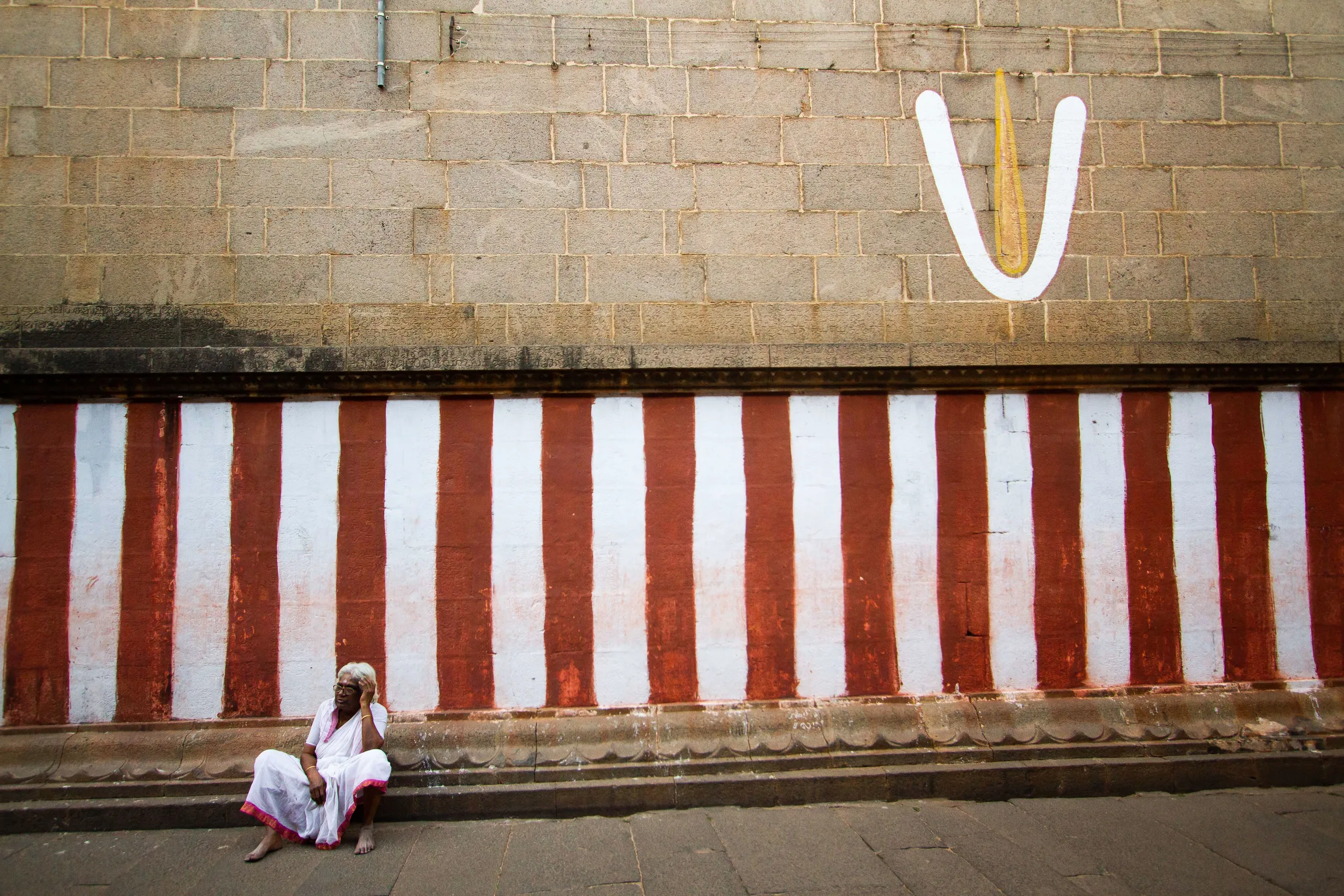
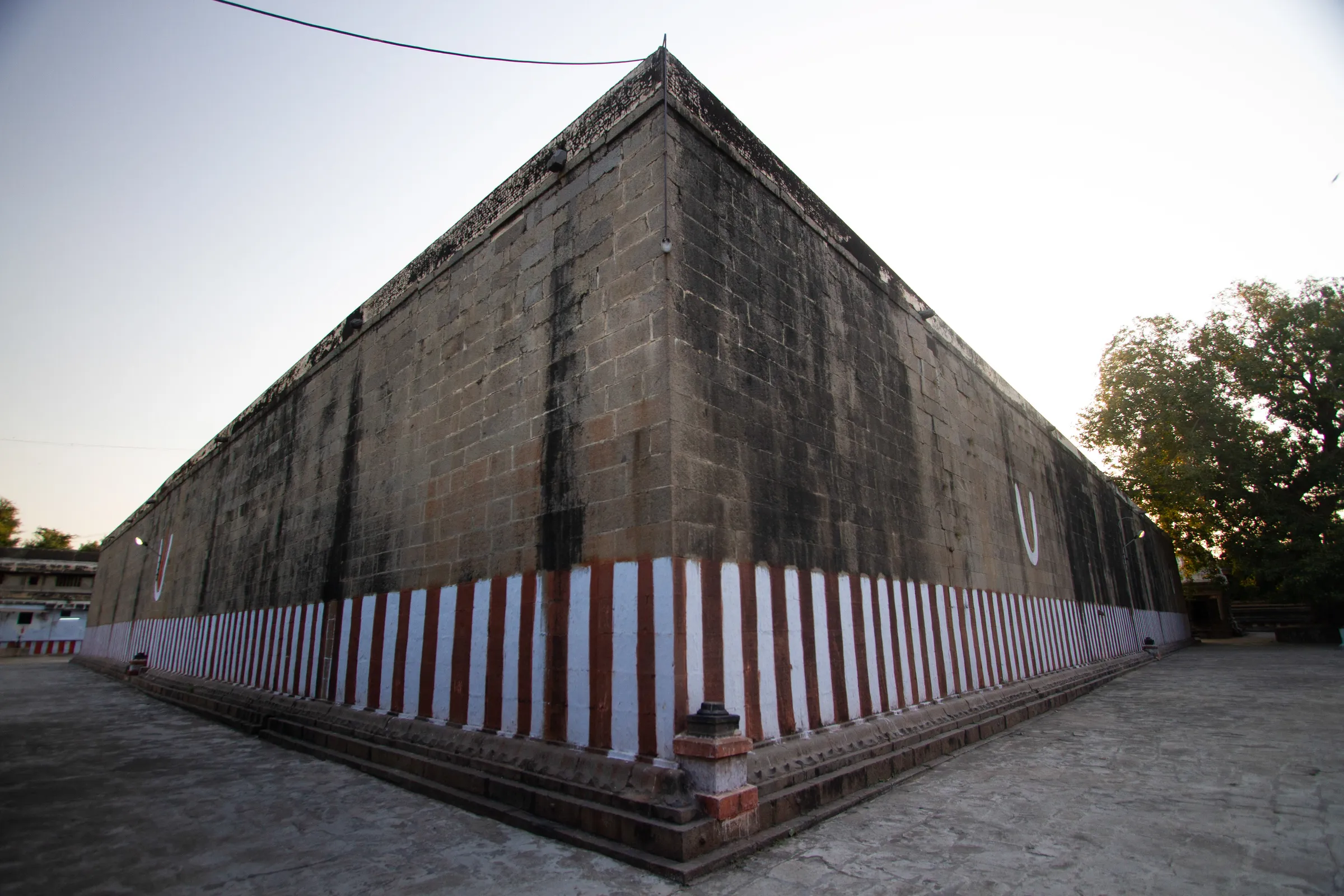
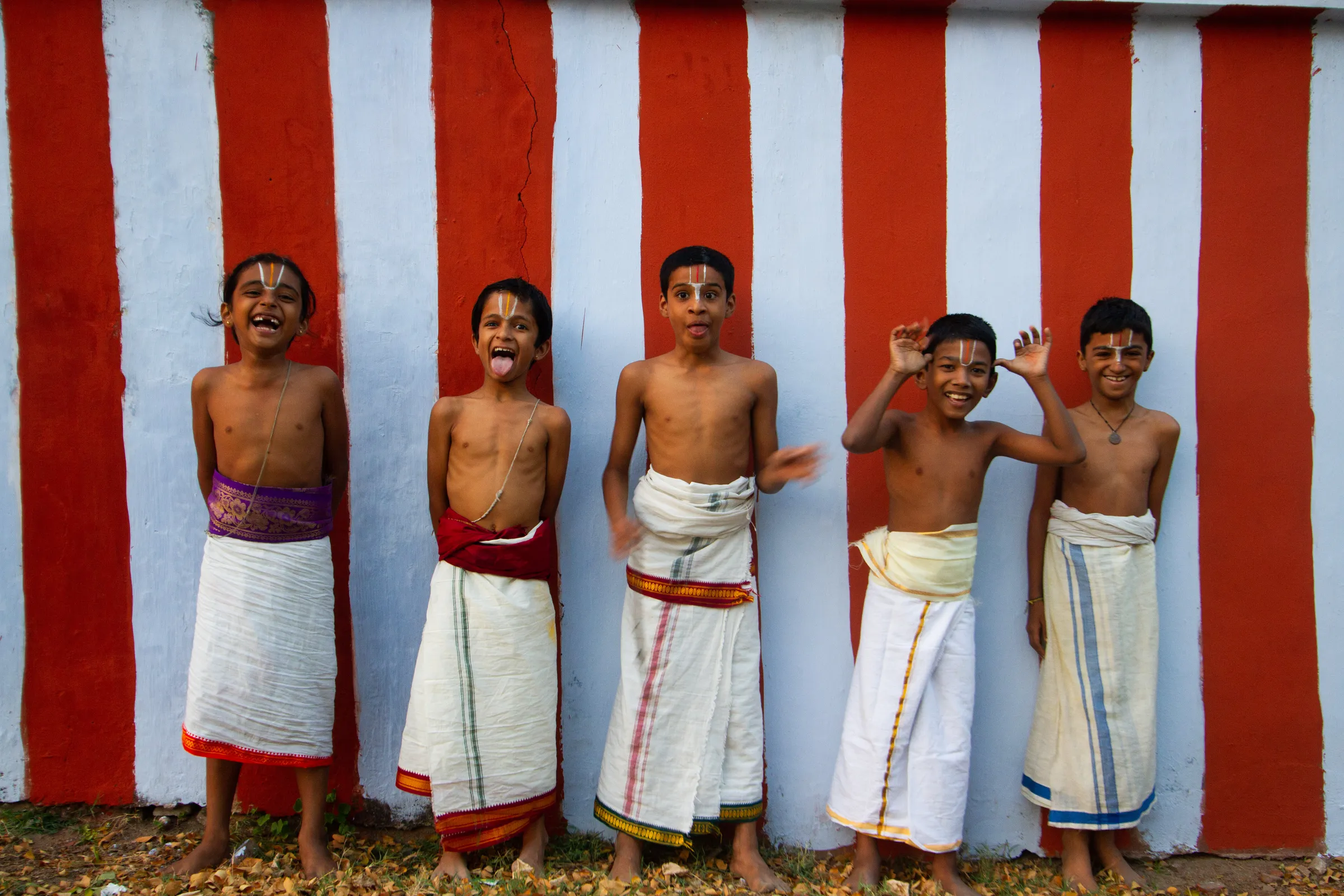
The Varadaraja Temple of Vishnu Kanchi is the largest Vishnu temple in the town
and a Divya Desam of great fame. The three registers below are held apart, as
the book records them.
The temple is dedicated to a standing Vishnu, Varadaraja, with his seated consort Perundevi Thayar, inside a plot of 1240ft by 693ft, the largest Vishnu temple in the town. The heart of the temple is the shrine for Vishnu on a small hill raised by about 24 steps, with a shrine for Narasimha at the base of the hill.
In this area is a 16-pillared hall with many sculptures, a rare shrine for Dhanvantri the god of medicine, Andal, and a Devi called Malayala Nachiar, probably installed when the Chera king Ravi Varma Kulasekhara conquered Kanchi in 1316 CE. In the next prakara are small shrines, the two most important being the elevated shrine for the Goddess Perundevi Thayar, built or renovated into stone in 1236 by Raja Raja Chola III, and the Abhisheka mandapa with fine pillars in the Chola style. On a high terrace is a dainty four-pillared Unjal or swing mandapa built by Achyuta Raya in 1530 CE, with carvings of the Vijayanagara coat of arms on the ceiling.
The most stunning building is the Kalyana mandapa, with stone chains in the corners carved from single blocks of stone. Every pillar bears sculptures, including two images of Alagia Manavala Jiyar, who funded it in the latter half of the 16th century. Behind it are the Anantasaras. Inside the wooden image is the original mulavar, made of Athi (Ficus) wood, removed and shown to pilgrims once every 40 years.
Two very tall four-pillared mandapas were built for the weighing ceremony of King Achyuta Deva Raya (1530 to 42), where he performed a mukta tulabhara ceremony, the pearls that matched his weight gifted to charity along with seventeen villages and a thousand cows.
02
Archaeological
dated & cited
Based on the inscriptions, much of the temple may date from about 1053 CE. The Perundevi shrine was built or renovated into stone in 1236 by Raja Raja Chola III, and the swing mandapa was added by Achyuta Raya in 1530 CE.
The temple has many inscriptions mentioning the irrigation system gardens, which even held pomegranate trees, gifted to the temple. King Achyuta Deva Raya had the gifts of his weighing ceremony inscribed in Tamil, Telugu and Kannada and a poem about the event included in the book Achyuta Raya Adhbudhayam.
Another inscription lists a long set of prasadams, including Panagam, Vadaparuppu, Kari amudhu, Dadhiyodhanam, Dosai, Adirasam, Appam, Vadai, Sukiyan, Puliyodharai, Ellorai, Kadugorai, Pongal, Iddli and Akkara Adisal.
Dating
BegunInscriptions place much of the temple around 1053 CE
The Perundevi shrine was built or renovated into stone in 1236 by Raja Raja Chola III; a swing mandapa was built by Achyuta Raya in 1530 CE.
Protection & condition
GroupOne of the 15 Divya Desams of Kanchi; the largest Vishnu temple in the town
03
Mythological
as transmitted
The temple is the most famous and enormous of the 15 Divya Desams in Kanchi, sung in the 4000 Divya Prabandham held close by Tamil-speaking Vishnu worshippers. Vedanta Desikar's (c.1269 to c.1370) Adaikala Pathu, ten Tamil verses on unconditional surrender to Varadaraja in the temple of Athigiri, ends here; when not composing Tamil or Sanskrit shlokas, some readable like a chessboard or a cartwheel, this polymath refused great riches to stay back in Kanchipuram.
Kanchipuram holds an ancient tradition of education. In the 7th century the Chinese traveller Hiuen-Tsang found worshippers of Vishnu and Shiva alongside Buddhists and a popular Jainism, all with many scholars and learning institutions. Mahendravarma Pallava (600 to 630 CE), in his farcical plays Bagavadajjuka and Mattavilasa, described the city in vivid detail, down to the trees of the king's palace garden.
This is an open, reviewed record. If you have spotted an error or have
something to add — a correction, a date, a source, a name in another script —
propose it. Every change is reviewed before it joins the record.